

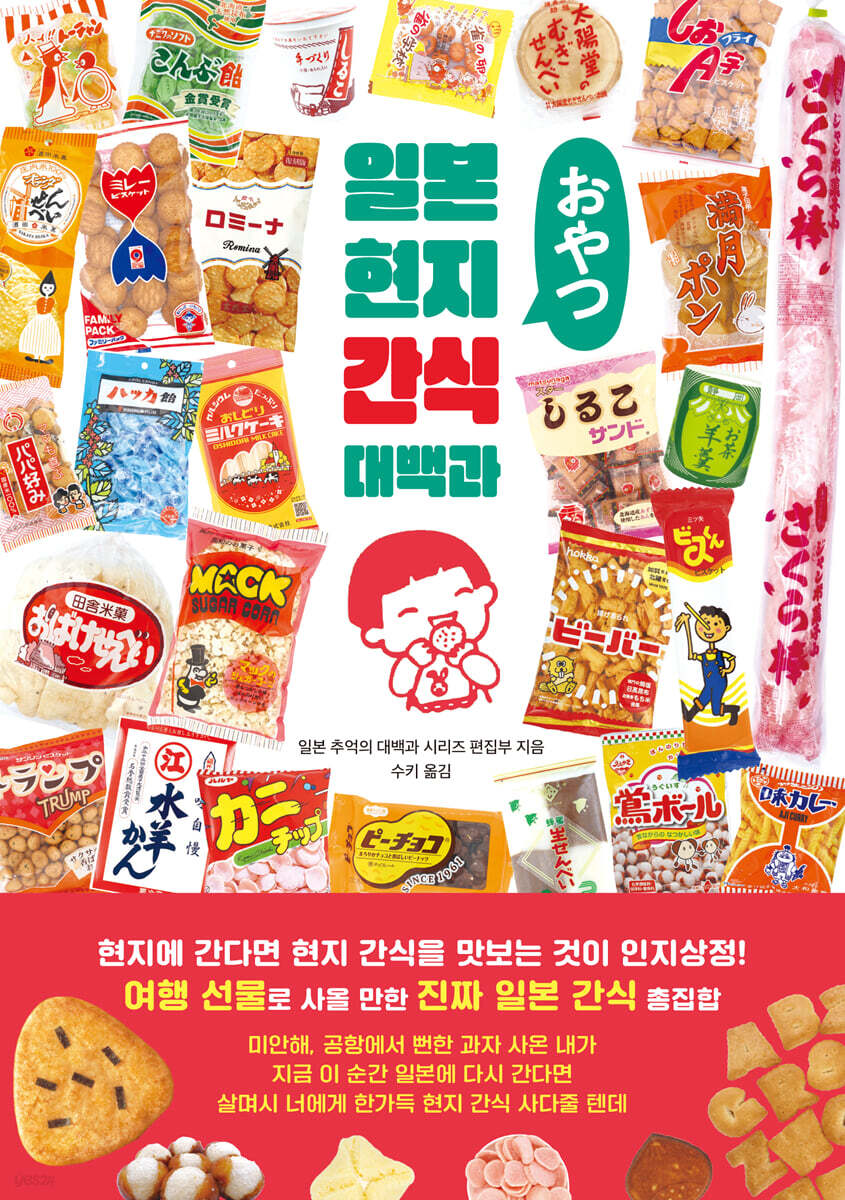
Encyclopedia of Japanese Local Snacks
 |
Description
Book Introduction
Continuing the fun of the must-read series for those traveling to Japan, “Encyclopedia of Japanese Local Bread” and “Encyclopedia of Japanese Local Ice Cream,” “Encyclopedia of Japanese Local Snacks” has been published, adding even more practicality in that you can take home what you buy locally.
We've compiled a comprehensive list of delicious and unique snacks that have been loved in Japan for a long time.
The history of snack manufacturing and old advertising images, which are organized together, add to the fun of reading.
At the back of the book, there's a list of regional snacks, making it a great souvenir guide for your travels.
We've compiled a comprehensive list of delicious and unique snacks that have been loved in Japan for a long time.
The history of snack manufacturing and old advertising images, which are organized together, add to the fun of reading.
At the back of the book, there's a list of regional snacks, making it a great souvenir guide for your travels.
- You can preview some of the book's contents.
Preview
index
Welcome to the world of 'Japanese local snacks'!
Part 1: Popular Then and Now! Local Snacks and Nostalgic Scenes
Mirebiscuit · Uguisu Ball · Shiruko Sandwich · Oshidori Milk Cake · French Papiro · Cigar Fries · Misuzu Ame · Bontan Ame · Konbu Ame · Chichibu Ame · Mixed Jelly · Betshiame · Kuroamenachiguro · Karaimo Ame · Shiruko/Ameyu · Onigiri Senbei · Romina · Long Salad · Kuri Senbei · Oranda Senbei · Nanbu Senbei · Tokusei Butter Senbei · Papagonomi · Ajiroyaki · Geiran Senbei · Lucky Cherry Mame · Honda Macoron · Gansoyoyori Yori · Yukigawara · Mizuyokan · Ochayokan · Yamayaki Dango · Jabonzuke · New Himix · Piccolo · Floret · Minatsune no Anzubo · Shirokuma · Green Soft · Ice Candy (Hokkoku) · Ice Candy (551 Horai) Parisian · Cheese Manju · Angiri Donut · Cinnamon Donut · Dannahwakuru
Local Snack Design Gallery①
Part 2: There's more! A roundup of local snacks!!
Biscuits, cookies, and snacks
Shio A-shaped Fries | Sapporo Beer Crackers | Line Sandwich | Agebis Norifumi | Biskun | Hachinoji | Soba Bolo | Cream Papiro | Sarabande | Papillo Sandwich | Cigar Fries | Heart Chips | Mire Fries | Crab Chips | Hi!! Do-chan | Aji Curry
Candy, jelly, and ice cream varieties
Hakkaame | Kyunyuame | Ryuhyoame | Shikwasaame | Kokutoame/Kokutonodoame | Eisakuame | Suisakaame | Mizoredama | Odamamix | Hi-mix Jelly | Mix Jelly | Menko-chan Mini Jelly | Momotaro | Vivarich | Black Mont Blanc | Hanmanju | Otpai Ice | Milcook | Kakigori/Gintoki | Cool Star
Local Snack Design Gallery②
Senbei, Arare, and Okaki varieties
Beaver | Salad Hope | Mangetsupon | Ebitaisho | Uzushio | Obanyaki | Arare/Namaarare | Yukiguniarare | Goro Mochi | Original Katayaki | Daiyodono Mugi Senbei | Tamaarare | Daikaku | Oban | Obake Senbei | Ajijiman | Daiko Senbei | Geiran Rakka Sei Senbei | Hajimitsu Fry | Shoga Senbei | Pikeate | Suzume no Gakko/Suzume no Tamago / Nangoku Chinchin Mame | Amesen | Tenpun Senbei | Kamesen (Ajiya Seika) | Kamesen (Tamaki Seika)
Local Snack Design Gallery ③
Snack bread and baked goods types
Manhattan | Rose Bread | Choco Brico | Beta Choco | Yotsuwari | Smile Sandwich | Choco Tanuki Bread | Shinkom No. 3 | Revival Danish Roll | Castella Sandwich | Vitamin Castella | Banana Boat | Ginoha Bread | King Donut | Deutz Rusk | Line Cake | Lemon Cake | Flower Bread
Individualistic and others
Ganso Eisei Bolo | Hashimoto no Tamago Bolo | Jichi Bolo | Trump | Dosanko Do Teiban Uzumaki Karinto | Tokujo Makoron | Nama Senbei | Suhama | Budo Manju | Asahi Mame | Mameten | Mametsukage | Hachimitsuiri Nikki Kanten | Ikenotsuki/Fuyaki | Kuroganekata Bread | Kata Bread | Yaki Bread | Ankodama | Amagashi | McSugar Cone | Sakura Bong | Suppai Man Amaumei Chiban | Sakura Daikon
Local Snack Design Gallery④
I want to slurp down some local juice with some mini special snacks!
Collection of local snacks
Column ① A welcome re-release of a long-time long-seller! Local cider
Column ② Gibi? Gibi? Gibidango? Gibidango? What is the origin of 'Gibidango'?
Column ③ Local milk, also popular as a school meal! Even the packaging is cute.
Column ④ Local Senbei from Hot Spring Areas
Column 5: Bread? Manchuria? Exploring the History of "Bread Masters"
List of snack shops
Part 1: Popular Then and Now! Local Snacks and Nostalgic Scenes
Mirebiscuit · Uguisu Ball · Shiruko Sandwich · Oshidori Milk Cake · French Papiro · Cigar Fries · Misuzu Ame · Bontan Ame · Konbu Ame · Chichibu Ame · Mixed Jelly · Betshiame · Kuroamenachiguro · Karaimo Ame · Shiruko/Ameyu · Onigiri Senbei · Romina · Long Salad · Kuri Senbei · Oranda Senbei · Nanbu Senbei · Tokusei Butter Senbei · Papagonomi · Ajiroyaki · Geiran Senbei · Lucky Cherry Mame · Honda Macoron · Gansoyoyori Yori · Yukigawara · Mizuyokan · Ochayokan · Yamayaki Dango · Jabonzuke · New Himix · Piccolo · Floret · Minatsune no Anzubo · Shirokuma · Green Soft · Ice Candy (Hokkoku) · Ice Candy (551 Horai) Parisian · Cheese Manju · Angiri Donut · Cinnamon Donut · Dannahwakuru
Local Snack Design Gallery①
Part 2: There's more! A roundup of local snacks!!
Biscuits, cookies, and snacks
Shio A-shaped Fries | Sapporo Beer Crackers | Line Sandwich | Agebis Norifumi | Biskun | Hachinoji | Soba Bolo | Cream Papiro | Sarabande | Papillo Sandwich | Cigar Fries | Heart Chips | Mire Fries | Crab Chips | Hi!! Do-chan | Aji Curry
Candy, jelly, and ice cream varieties
Hakkaame | Kyunyuame | Ryuhyoame | Shikwasaame | Kokutoame/Kokutonodoame | Eisakuame | Suisakaame | Mizoredama | Odamamix | Hi-mix Jelly | Mix Jelly | Menko-chan Mini Jelly | Momotaro | Vivarich | Black Mont Blanc | Hanmanju | Otpai Ice | Milcook | Kakigori/Gintoki | Cool Star
Local Snack Design Gallery②
Senbei, Arare, and Okaki varieties
Beaver | Salad Hope | Mangetsupon | Ebitaisho | Uzushio | Obanyaki | Arare/Namaarare | Yukiguniarare | Goro Mochi | Original Katayaki | Daiyodono Mugi Senbei | Tamaarare | Daikaku | Oban | Obake Senbei | Ajijiman | Daiko Senbei | Geiran Rakka Sei Senbei | Hajimitsu Fry | Shoga Senbei | Pikeate | Suzume no Gakko/Suzume no Tamago / Nangoku Chinchin Mame | Amesen | Tenpun Senbei | Kamesen (Ajiya Seika) | Kamesen (Tamaki Seika)
Local Snack Design Gallery ③
Snack bread and baked goods types
Manhattan | Rose Bread | Choco Brico | Beta Choco | Yotsuwari | Smile Sandwich | Choco Tanuki Bread | Shinkom No. 3 | Revival Danish Roll | Castella Sandwich | Vitamin Castella | Banana Boat | Ginoha Bread | King Donut | Deutz Rusk | Line Cake | Lemon Cake | Flower Bread
Individualistic and others
Ganso Eisei Bolo | Hashimoto no Tamago Bolo | Jichi Bolo | Trump | Dosanko Do Teiban Uzumaki Karinto | Tokujo Makoron | Nama Senbei | Suhama | Budo Manju | Asahi Mame | Mameten | Mametsukage | Hachimitsuiri Nikki Kanten | Ikenotsuki/Fuyaki | Kuroganekata Bread | Kata Bread | Yaki Bread | Ankodama | Amagashi | McSugar Cone | Sakura Bong | Suppai Man Amaumei Chiban | Sakura Daikon
Local Snack Design Gallery④
I want to slurp down some local juice with some mini special snacks!
Collection of local snacks
Column ① A welcome re-release of a long-time long-seller! Local cider
Column ② Gibi? Gibi? Gibidango? Gibidango? What is the origin of 'Gibidango'?
Column ③ Local milk, also popular as a school meal! Even the packaging is cute.
Column ④ Local Senbei from Hot Spring Areas
Column 5: Bread? Manchuria? Exploring the History of "Bread Masters"
List of snack shops
Detailed image

Into the book
This book contains a wealth of local snacks from all over Japan, from biscuits, cookies, and senbei to candies, chocolates, and other unique snacks that defy categorization, drinks like juice that are essential for snack time, and even local sweets that taste just like grandma made them at home.
We paid attention to not only the flavors and characteristics of each product, but also anecdotes about its creation, old scenes from the time of its founding or launch, changes in packaging design, and pride in its taste.
By looking back at the secrets of taste and history hidden in snacks we usually eat without thinking, we got closer to the charm of 'local snacks'.
When you learn about the background and history of those who make them, the snacks you always eat will taste even more delicious and feel even more precious.
As a travel companion who helps you discover local snacks you haven't seen yet, and as a "catalog" of local snacks, it's a pleasure to read.
Because no matter which page you open, you'll find unique, original, and incredibly delicious treats.
Enjoy Japan's rich snack culture to the fullest.
A light, bite-sized, nostalgic Mirebiscuit.
The secret cookie dough was developed by Meiji Seika (now Meiji) shortly after the end of World War II and released around 1955.
At that time, there were about 20 companies across Japan that manufactured Mirebiscuit, and sold it after "secondary processing" of frying the cookie dough in oil and seasoning it with salt. However, now only a few remain nationwide.
Nomurairi Mame Processing Shop has also been one of the places that has manufactured and sold Mirebiscuits since then.
It is said that when it was first released, it was sold individually, at 50 cents per sheet (1 yen for two sheets).
The packaging design was designed by an executive director in his eighties and has an overall retro image.
Konbuame is characterized by its faint ocean scent and soft, rice cake-like texture.
This is a soft candy with a rich flavor made by boiling natural kelp from Hokkaido in syrup and other ingredients.
It uses plenty of kelp, which contains three times more iron and magnesium than spinach, and is also rich in dietary fiber and minerals.
It is also a natural food product made with only carefully selected ingredients and no additives whatsoever.
Naniwa Confectionery, which opened in Osaka in 1927, had its factory closed during World War II due to the Japanese government's food control, but resumed manufacturing in Gifu City.
With the motto of 'putting sincerity into every single candy', they offer a variety of Konbuame products, including the soft type, which is their signature product, as well as the first hard type and products with jam.
Hiyashiame is characterized by a soft sweetness, ginger flavor, and moderate spiciness.
It is a familiar summer drink in Kansai.
It usually contains malt syrup and ginger, and when cold it becomes hiyashiame, and when warmed it becomes ameyue.
The Nihon Sangaria can has the words "Hiyashiame" written on one side and "Ameyu" written on the other, making it a design suitable for both summer and winter.
Okawa Food Industry's Hiyashiame has been sold as a bottled product for about 30 years.
Onan Foods sells it in cans and single-cup containers.
In Kansai, it is also a representative product of supermarkets and vending machines.
We paid attention to not only the flavors and characteristics of each product, but also anecdotes about its creation, old scenes from the time of its founding or launch, changes in packaging design, and pride in its taste.
By looking back at the secrets of taste and history hidden in snacks we usually eat without thinking, we got closer to the charm of 'local snacks'.
When you learn about the background and history of those who make them, the snacks you always eat will taste even more delicious and feel even more precious.
As a travel companion who helps you discover local snacks you haven't seen yet, and as a "catalog" of local snacks, it's a pleasure to read.
Because no matter which page you open, you'll find unique, original, and incredibly delicious treats.
Enjoy Japan's rich snack culture to the fullest.
A light, bite-sized, nostalgic Mirebiscuit.
The secret cookie dough was developed by Meiji Seika (now Meiji) shortly after the end of World War II and released around 1955.
At that time, there were about 20 companies across Japan that manufactured Mirebiscuit, and sold it after "secondary processing" of frying the cookie dough in oil and seasoning it with salt. However, now only a few remain nationwide.
Nomurairi Mame Processing Shop has also been one of the places that has manufactured and sold Mirebiscuits since then.
It is said that when it was first released, it was sold individually, at 50 cents per sheet (1 yen for two sheets).
The packaging design was designed by an executive director in his eighties and has an overall retro image.
Konbuame is characterized by its faint ocean scent and soft, rice cake-like texture.
This is a soft candy with a rich flavor made by boiling natural kelp from Hokkaido in syrup and other ingredients.
It uses plenty of kelp, which contains three times more iron and magnesium than spinach, and is also rich in dietary fiber and minerals.
It is also a natural food product made with only carefully selected ingredients and no additives whatsoever.
Naniwa Confectionery, which opened in Osaka in 1927, had its factory closed during World War II due to the Japanese government's food control, but resumed manufacturing in Gifu City.
With the motto of 'putting sincerity into every single candy', they offer a variety of Konbuame products, including the soft type, which is their signature product, as well as the first hard type and products with jam.
Hiyashiame is characterized by a soft sweetness, ginger flavor, and moderate spiciness.
It is a familiar summer drink in Kansai.
It usually contains malt syrup and ginger, and when cold it becomes hiyashiame, and when warmed it becomes ameyue.
The Nihon Sangaria can has the words "Hiyashiame" written on one side and "Ameyu" written on the other, making it a design suitable for both summer and winter.
Okawa Food Industry's Hiyashiame has been sold as a bottled product for about 30 years.
Onan Foods sells it in cans and single-cup containers.
In Kansai, it is also a representative product of supermarkets and vending machines.
---From the text
Publisher's Review
“I don’t know what you like...
“I’ve prepared everything.”
Candy, jelly, jelly bean jelly, cookies, biscuits, drinks, etc.
A variety of snacks for 100 years in the local area
Uni bean cookies, a long-standing snack that has been loved for a long time.
Special and unique snacks such as bracken starch mochi and lemon milk
Say goodbye to boring snacks like Tokyo Banana and Royce Chocolate!
With the "Encyclopedia of Japanese Local Snacks", which covers all famous local snacks.
Fill your suitcase with new and unique travel gifts.
When you go to Japan, aren't you tired of just trying the same old, famous snacks and bringing them home? For those who find themselves like that, "Encyclopedia of Japanese Local Snacks" has been published, offering a much broader and more unique snack culinary experience.
We have compiled a comprehensive list of snacks that have been loved in Japan for a long time and are still popular today, regardless of the category.
It contains information on traditional Japanese rice crackers such as Okaki and Arare, Senbei which are familiar names to us but made differently, Ame which is a traditional Japanese candy made with various ingredients, drinks such as cider, juice, and milk with regional characteristics, and even bread and ice cream.
For example, there are plenty of mouth-watering and intriguing snacks, such as kelp-flavored jelly, onigiri-shaped senbei, powdered milk-flavored cake, sea urchin-flavored bean snacks, and apricot-flavored ice cream bars that are great with alcohol.
It is packed with a variety of special snacks, so much so that it could be called a comprehensive gift set.
Most of the snacks included have a long history, with some having been sold for nearly 100 years.
As time has passed, the stories contained in each snack are also diverse.
It vividly describes the taste, aroma, texture, ingredients, and manufacturing method of the snack.
In addition, the book provides detailed information on the origins and history of snack manufacturing, as well as old advertising copies, making it even more enjoyable to read.
This book is both a fascinating read and an excellent guidebook.
The origin of each snack is written down, making it easy to find out what snacks to look for in each region.
At the back of the book, there's a list of snacks by region, so you can see things like this at a glance.
With "Encyclopedia of Japanese Local Snacks," finding delicious and innovative travel gifts while traveling in Japan will no longer feel difficult.
“I’ve prepared everything.”
Candy, jelly, jelly bean jelly, cookies, biscuits, drinks, etc.
A variety of snacks for 100 years in the local area
Uni bean cookies, a long-standing snack that has been loved for a long time.
Special and unique snacks such as bracken starch mochi and lemon milk
Say goodbye to boring snacks like Tokyo Banana and Royce Chocolate!
With the "Encyclopedia of Japanese Local Snacks", which covers all famous local snacks.
Fill your suitcase with new and unique travel gifts.
When you go to Japan, aren't you tired of just trying the same old, famous snacks and bringing them home? For those who find themselves like that, "Encyclopedia of Japanese Local Snacks" has been published, offering a much broader and more unique snack culinary experience.
We have compiled a comprehensive list of snacks that have been loved in Japan for a long time and are still popular today, regardless of the category.
It contains information on traditional Japanese rice crackers such as Okaki and Arare, Senbei which are familiar names to us but made differently, Ame which is a traditional Japanese candy made with various ingredients, drinks such as cider, juice, and milk with regional characteristics, and even bread and ice cream.
For example, there are plenty of mouth-watering and intriguing snacks, such as kelp-flavored jelly, onigiri-shaped senbei, powdered milk-flavored cake, sea urchin-flavored bean snacks, and apricot-flavored ice cream bars that are great with alcohol.
It is packed with a variety of special snacks, so much so that it could be called a comprehensive gift set.
Most of the snacks included have a long history, with some having been sold for nearly 100 years.
As time has passed, the stories contained in each snack are also diverse.
It vividly describes the taste, aroma, texture, ingredients, and manufacturing method of the snack.
In addition, the book provides detailed information on the origins and history of snack manufacturing, as well as old advertising copies, making it even more enjoyable to read.
This book is both a fascinating read and an excellent guidebook.
The origin of each snack is written down, making it easy to find out what snacks to look for in each region.
At the back of the book, there's a list of snacks by region, so you can see things like this at a glance.
With "Encyclopedia of Japanese Local Snacks," finding delicious and innovative travel gifts while traveling in Japan will no longer feel difficult.
GOODS SPECIFICS
- Date of issue: March 20, 2024
- Page count, weight, size: 168 pages | 422g | 148*210*13mm
- ISBN13: 9791192512693
- ISBN10: 1192512693
You may also like
카테고리
korean


korean

![GQ KOREA Mark (Monthly): December [2025]](http://librairie.coreenne.fr/cdn/shop/files/8ef265dbbfbf186523ed75ba7319009d.jpg?v=1765340328&width=3840)


