

Egypt Photo & Essay
 |
Description
Book Introduction
Capturing the breath of ancient civilization and modern times with photographs,
An Egyptian Exploration Beyond Travel
“A trip to Egypt is not just a tour.”
This book is your companion before, during, and after your trip.
Research your destination in advance, check it out on site, and write down your impressions when you return.
The blank spaces throughout the book are the author's invitation to readers to complete their own travel notes.
Recommended for those who want to remember Egypt more deeply and for a long time.
Egypt is a country where civilization flourished since 3000 BC.
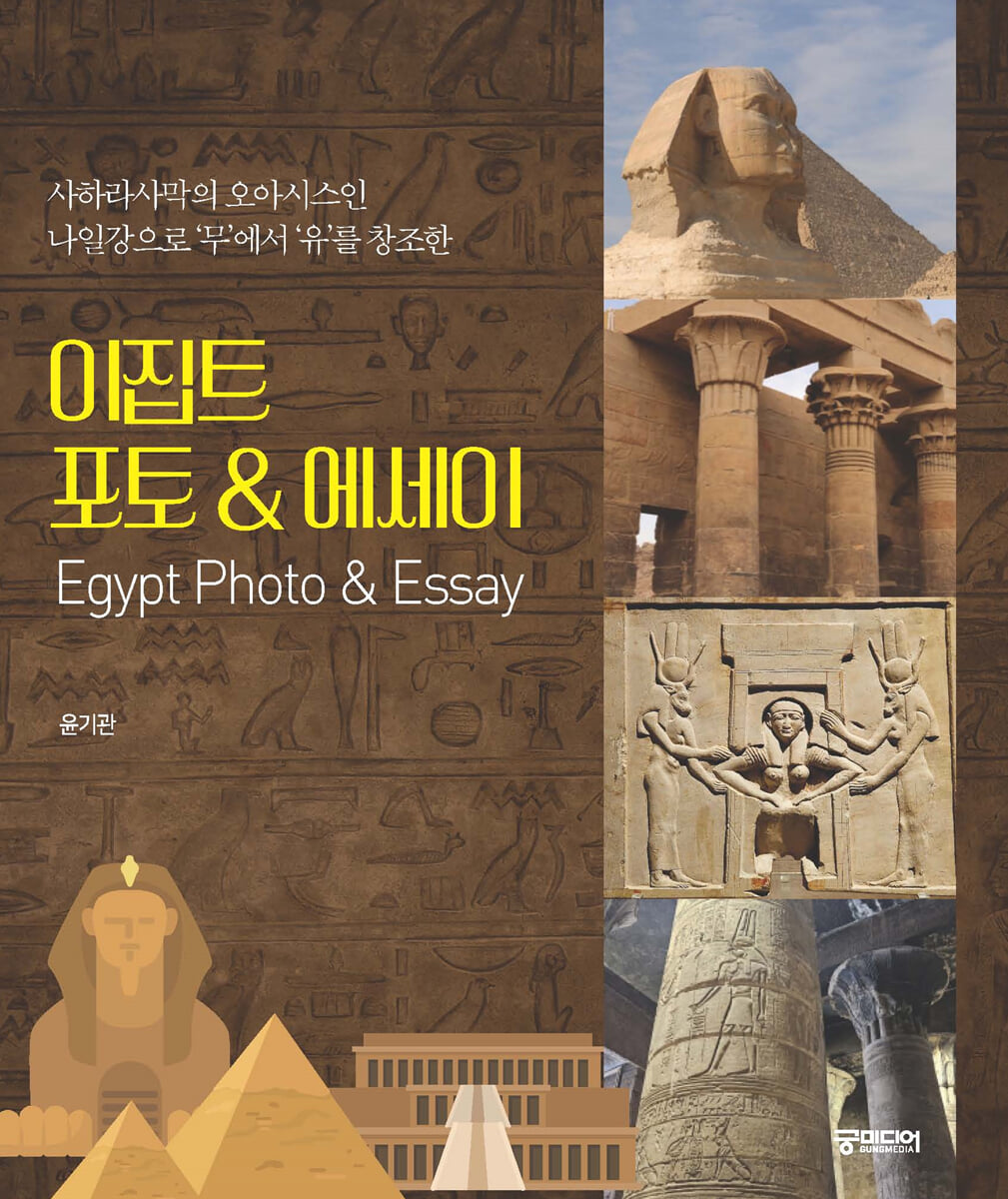
This book is a travel essay that unfolds the splendid legacy of ancient Egyptian civilization and the vivid local landscapes, from the source of the Nile River to the Mediterranean Sea, through photographs and stories.
Based on meticulous research and on-site experience before departure, the author provides an easy-to-understand explanation of the historical and cultural significance of ancient structures such as the Pyramids, the Sphinx, Luxor, and Abu Simbel, suggesting a "productive journey" rather than a simple sightseeing trip.
It is structured so that readers can read and review before, during, and after their trip, making them feel as if they are completing their own travel notes.
This book will serve as a guide for travelers who want to gain a deeper understanding of Egypt.
An Egyptian Exploration Beyond Travel
“A trip to Egypt is not just a tour.”
This book is your companion before, during, and after your trip.
Research your destination in advance, check it out on site, and write down your impressions when you return.
The blank spaces throughout the book are the author's invitation to readers to complete their own travel notes.
Recommended for those who want to remember Egypt more deeply and for a long time.
Egypt is a country where civilization flourished since 3000 BC.
This book is a travel essay that unfolds the splendid legacy of ancient Egyptian civilization and the vivid local landscapes, from the source of the Nile River to the Mediterranean Sea, through photographs and stories.
Based on meticulous research and on-site experience before departure, the author provides an easy-to-understand explanation of the historical and cultural significance of ancient structures such as the Pyramids, the Sphinx, Luxor, and Abu Simbel, suggesting a "productive journey" rather than a simple sightseeing trip.
It is structured so that readers can read and review before, during, and after their trip, making them feel as if they are completing their own travel notes.
This book will serve as a guide for travelers who want to gain a deeper understanding of Egypt.
index
Part 01 Before Going to Egypt… 10
· Let's leave knowing this... 13
1.
See Egypt at a Glance … 13
2.
The History of Love and Hate Between Egypt and Israel… 15
3.
Egypt's Past and Present… 16
4.
Understanding the Nile River in Egypt… 17
5.
The origin of the names of the Blue Nile and the White Nile… 17
6.
Is your purpose of visiting Egypt for travel or tourism? 18
7.
Heritage Sites to Explore in Egypt… 19
8.
Egyptian Civilization History… 19
9.
The Three Unified Dynasties of Ancient Egypt… 20
10.
Why the centralized rule of the Egyptian king (pharaoh) was possible… 21
11.
Egyptian Gods and Desert Religions… 22
12.
The Four Great Civilizations of the Ancient World… 22
13.
Characteristics of Egyptian civilization… 23
14.
Egyptian Culture and Civilization… 24
15.
Egyptian Geography… 24
16.
Egyptian Pharmacist… 25
17.
Ancient Egyptian Dynasty Table… 28
18.
Major temples of ancient Egypt… 33
19.
Famous Egyptian Gods… 33
20.
Egyptian civilization is a work of art from the ancient Egyptian period… 36
21.
Egyptian civilization is represented by Egyptian architecture… 44
22.
Egyptian sacred sites dedicated to major gods… 49
23.
Resources for Understanding Egyptian Temples… 50
24.
The Book of the Dead … 59
25.
What is 'Coptis' in Egypt?
… 59
26.
Drawing the Oases and Deserts of Egypt on a Map… 59
27.
What historical value does Elephantine Island, located in the middle reaches of the Nile near Aswan, Egypt, hold? … 60
28.
Things to check on your flight as you approach Egypt… 60
Part 02: Exploring the Temples of the Kings and Pharaohs of Egypt… 60
· Where to explore in Egypt… 62
A trip to Egypt is a trip to the temples along the Nile… 62
A Journey up the Nile … 62
· Tour order… 62
· Temples of the gods and kings of Egypt (from the Mediterranean in the north to Gebel Barkal in the south) … 64
1.
National Museum of Egyptian Civilization (NMEC), Cairo… 66
2.
Egyptian Museum of Antiquity … 68
3.
Abusarga Church (Jesus Refuge Church) … 70
4.
Aswan… 72
5.
Temple of Philae… 75
6.
Unfinished Obelisk … 76
7.
Abu Simbel Temples … 78
8.
Nubian Village… 82
9.
Nile Felucca… 83
10.
Kom Ombo Temple… 83
11.
Kom Ombo Crocodile Museum … 86
12.
Temple of Horus at Edfu… 86
13.
Colossi of Memnon … 87
14.
Mortuary Temple of Hatshepsut … 89
15, Valley of Kings … 90
16.
Comparing the Luxor Temple and the Karnak Temple… 91
17.
Temple of Amun at Luxor… 91
18.
Karnak Temple… 93
19.
Temple of Dendera (Temple of Hathor) … 94
20.
Luxor Museum … 95
21.
Great Pyramid of Giza, Pyramid of Giza … 96
22.
Sphinx… 100
23.
Bahariyah: White Desert and Black Desert… 100
24.
Alexandria… 102
Part 03 Egypt Travel Summary… 108
1.
Could the ancient Egyptian architect Imhotep be the biblical Joseph?… 109
2.
A small pyramid inside the Egyptian Museum… 110
3.
Egyptian tombs… 110
4.
What to Expect at the National Museum of Egyptian Civilization (NMEC)… 113
5.
"Carpet School" on the streets of Cairo… 114
6.
The Gods and Monotheism of Ancient Egypt… 114
7.
The Papyrus Story… 115
8.
Egypt, living with the past in its grasp… 116
9.
Cairo, Egypt, the venue for our country's trusteeship talks… 117
10.
The beard of Tutankhamun, the representative queen of Egypt… 117
11.
Why did the Sphinx have a human face and a lion body? … 118
12.
What is the Sphinx thinking?… 119
13.
Ancient Egyptian temple painter (muralist, sculptor) status… 119
14.
Advantages of Traveling to Egypt… 120
15.
The lowest class in ancient Egypt, slaves… 120
16.
Philae Temple Asmet Akom Graffiti… 121
17.
The language of ancient Egypt (hieroglyphs) … 121
18.
Why Did Ancient Egyptian Hieroglyphs Disappear?… 122
19.
Ankh and Cross… 123
20.
The monotheistic pharaoh, Akhenaten… 124
21.
The Aswan Upstream Dam has lost more… 124
22.
The Poor Nubians… 125
23.
Egypt, a land where life and death are divided between East and West… 126
24.
The historical value of Elephantine Island near Aswan… 126
25.
What is the fate of an Egyptian dog? … 127
Part 04 Egyptian Gallery… 130
· Search … 154
· Let's leave knowing this... 13
1.
See Egypt at a Glance … 13
2.
The History of Love and Hate Between Egypt and Israel… 15
3.
Egypt's Past and Present… 16
4.
Understanding the Nile River in Egypt… 17
5.
The origin of the names of the Blue Nile and the White Nile… 17
6.
Is your purpose of visiting Egypt for travel or tourism? 18
7.
Heritage Sites to Explore in Egypt… 19
8.
Egyptian Civilization History… 19
9.
The Three Unified Dynasties of Ancient Egypt… 20
10.
Why the centralized rule of the Egyptian king (pharaoh) was possible… 21
11.
Egyptian Gods and Desert Religions… 22
12.
The Four Great Civilizations of the Ancient World… 22
13.
Characteristics of Egyptian civilization… 23
14.
Egyptian Culture and Civilization… 24
15.
Egyptian Geography… 24
16.
Egyptian Pharmacist… 25
17.
Ancient Egyptian Dynasty Table… 28
18.
Major temples of ancient Egypt… 33
19.
Famous Egyptian Gods… 33
20.
Egyptian civilization is a work of art from the ancient Egyptian period… 36
21.
Egyptian civilization is represented by Egyptian architecture… 44
22.
Egyptian sacred sites dedicated to major gods… 49
23.
Resources for Understanding Egyptian Temples… 50
24.
The Book of the Dead … 59
25.
What is 'Coptis' in Egypt?
… 59
26.
Drawing the Oases and Deserts of Egypt on a Map… 59
27.
What historical value does Elephantine Island, located in the middle reaches of the Nile near Aswan, Egypt, hold? … 60
28.
Things to check on your flight as you approach Egypt… 60
Part 02: Exploring the Temples of the Kings and Pharaohs of Egypt… 60
· Where to explore in Egypt… 62
A trip to Egypt is a trip to the temples along the Nile… 62
A Journey up the Nile … 62
· Tour order… 62
· Temples of the gods and kings of Egypt (from the Mediterranean in the north to Gebel Barkal in the south) … 64
1.
National Museum of Egyptian Civilization (NMEC), Cairo… 66
2.
Egyptian Museum of Antiquity … 68
3.
Abusarga Church (Jesus Refuge Church) … 70
4.
Aswan… 72
5.
Temple of Philae… 75
6.
Unfinished Obelisk … 76
7.
Abu Simbel Temples … 78
8.
Nubian Village… 82
9.
Nile Felucca… 83
10.
Kom Ombo Temple… 83
11.
Kom Ombo Crocodile Museum … 86
12.
Temple of Horus at Edfu… 86
13.
Colossi of Memnon … 87
14.
Mortuary Temple of Hatshepsut … 89
15, Valley of Kings … 90
16.
Comparing the Luxor Temple and the Karnak Temple… 91
17.
Temple of Amun at Luxor… 91
18.
Karnak Temple… 93
19.
Temple of Dendera (Temple of Hathor) … 94
20.
Luxor Museum … 95
21.
Great Pyramid of Giza, Pyramid of Giza … 96
22.
Sphinx… 100
23.
Bahariyah: White Desert and Black Desert… 100
24.
Alexandria… 102
Part 03 Egypt Travel Summary… 108
1.
Could the ancient Egyptian architect Imhotep be the biblical Joseph?… 109
2.
A small pyramid inside the Egyptian Museum… 110
3.
Egyptian tombs… 110
4.
What to Expect at the National Museum of Egyptian Civilization (NMEC)… 113
5.
"Carpet School" on the streets of Cairo… 114
6.
The Gods and Monotheism of Ancient Egypt… 114
7.
The Papyrus Story… 115
8.
Egypt, living with the past in its grasp… 116
9.
Cairo, Egypt, the venue for our country's trusteeship talks… 117
10.
The beard of Tutankhamun, the representative queen of Egypt… 117
11.
Why did the Sphinx have a human face and a lion body? … 118
12.
What is the Sphinx thinking?… 119
13.
Ancient Egyptian temple painter (muralist, sculptor) status… 119
14.
Advantages of Traveling to Egypt… 120
15.
The lowest class in ancient Egypt, slaves… 120
16.
Philae Temple Asmet Akom Graffiti… 121
17.
The language of ancient Egypt (hieroglyphs) … 121
18.
Why Did Ancient Egyptian Hieroglyphs Disappear?… 122
19.
Ankh and Cross… 123
20.
The monotheistic pharaoh, Akhenaten… 124
21.
The Aswan Upstream Dam has lost more… 124
22.
The Poor Nubians… 125
23.
Egypt, a land where life and death are divided between East and West… 126
24.
The historical value of Elephantine Island near Aswan… 126
25.
What is the fate of an Egyptian dog? … 127
Part 04 Egyptian Gallery… 130
· Search … 154
Into the book
I like the papyrus plant, which grows in the upper reaches of the Nile River in Egypt, for its fresh, clear green color.
It was used as paper in ancient Egypt.
Papyrus is the origin of the word paper.
Pictures are also drawn on papyrus paper.
As a poet, essayist, and ink-and-wash landscape painter, there are few plants I like more than this one.
Making paper from the papyrus plant is still done today.
Papyrus is the name of a plant in the Egyptian flag-bearing genus Kayatsrig, and also refers to the writing material (paper) made from it, and sometimes to documents written on it.
When I say 'Egypt', I think of papyrus before the pyramids and the Sphinx.
It was used as paper in ancient Egypt.
Papyrus is the origin of the word paper.
Pictures are also drawn on papyrus paper.
As a poet, essayist, and ink-and-wash landscape painter, there are few plants I like more than this one.
Making paper from the papyrus plant is still done today.
Papyrus is the name of a plant in the Egyptian flag-bearing genus Kayatsrig, and also refers to the writing material (paper) made from it, and sometimes to documents written on it.
When I say 'Egypt', I think of papyrus before the pyramids and the Sphinx.
--- From the text
Publisher's Review
Egypt is not just a place to go for sightseeing.
If your purpose is sightseeing, it is sufficient to simply stay at a luxury hotel on the Nile River, charter a felucca to watch the sunrise, return to the hotel to rest, and then ride a felucca again in the evening to watch the sunset on the Nile River.
But that's too cruel.
When coming from Korea, the flight time and cost are too much.
The motivation for choosing Egypt as a travel destination is probably to go back to the BC era.
Because Egyptian civilization is one of the four great ancient civilizations.
But once you actually arrive at the site, you will see countless temples, so it is easy to get confused.
The temple looks like the temple itself and it gets boring quickly.
This won't do.
So, you need to get help from good books.
Egypt generally begins on a map in the south (BC region), that is, upstream (at the source) of the Nile River, and follows the river toward the Mediterranean Sea, where modern times (AD region) are located.
Upon arrival at Cairo Airport, we will head straight to Aswan the next day to begin our exploration of ancient Egypt.
Starting from the Aswan Dam, we travel across the Mediterranean via Luxor, Cairo and Alexandria.
Now it's time to go home.
I like the idea of finishing in Cairo.
This is the order from ancient times to modern times.
I prepared this book the way I did when I was in school: I previewed it at home, studied it in class, and reviewed it when I got home.
It's best to read (preview) before leaving for Egypt. If that's difficult, read on the plane, check thoroughly during the on-site class upon arrival in Cairo, and finish (review) on the plane when you return home.
Finish your Egypt tour by comparing the many photos included in the book.
It will be a meaningful and productive trip.
Author: Yoon Ki-Gwan
If your purpose is sightseeing, it is sufficient to simply stay at a luxury hotel on the Nile River, charter a felucca to watch the sunrise, return to the hotel to rest, and then ride a felucca again in the evening to watch the sunset on the Nile River.
But that's too cruel.
When coming from Korea, the flight time and cost are too much.
The motivation for choosing Egypt as a travel destination is probably to go back to the BC era.
Because Egyptian civilization is one of the four great ancient civilizations.
But once you actually arrive at the site, you will see countless temples, so it is easy to get confused.
The temple looks like the temple itself and it gets boring quickly.
This won't do.
So, you need to get help from good books.
Egypt generally begins on a map in the south (BC region), that is, upstream (at the source) of the Nile River, and follows the river toward the Mediterranean Sea, where modern times (AD region) are located.
Upon arrival at Cairo Airport, we will head straight to Aswan the next day to begin our exploration of ancient Egypt.
Starting from the Aswan Dam, we travel across the Mediterranean via Luxor, Cairo and Alexandria.
Now it's time to go home.
I like the idea of finishing in Cairo.
This is the order from ancient times to modern times.
I prepared this book the way I did when I was in school: I previewed it at home, studied it in class, and reviewed it when I got home.
It's best to read (preview) before leaving for Egypt. If that's difficult, read on the plane, check thoroughly during the on-site class upon arrival in Cairo, and finish (review) on the plane when you return home.
Finish your Egypt tour by comparing the many photos included in the book.
It will be a meaningful and productive trip.
Author: Yoon Ki-Gwan
GOODS SPECIFICS
- Date of issue: August 1, 2025
- Page count, weight, size: 158 pages | 210*297*20mm
- ISBN13: 9791165033163
- ISBN10: 116503316X
You may also like
카테고리
korean


korean

![GQ KOREA Mark (Monthly): December [2025]](http://librairie.coreenne.fr/cdn/shop/files/8ef265dbbfbf186523ed75ba7319009d.jpg?v=1765340328&width=3840)


