

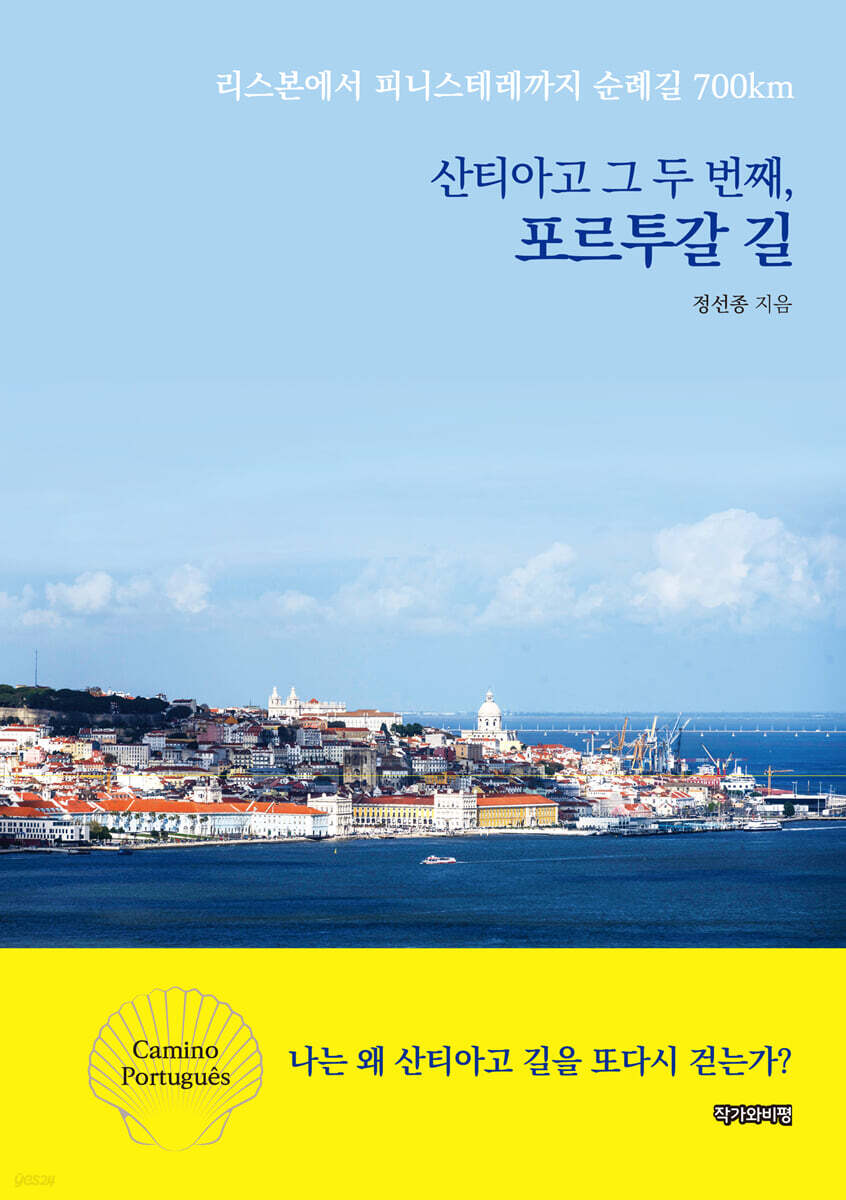
The second Portuguese Way of Santiago
 |
Description
Book Introduction
“Why am I walking the Camino de Santiago again?”
Walking and walking with one question in my heart
A pilgrimage of seeing, feeling, and thinking
People walk every day.
We have to walk to go to work, to meet someone, or to go somewhere.
Walking is a simple act, but it is also a special ability given to humans.
Because while walking, you can see beautiful scenery, meet new people, and gain some insight.
The path approaches differently depending on the walker's situation and state of mind.
The path that best demonstrates this aesthetic of walking is undoubtedly the Camino de Santiago.
"The Second Camino de Santiago, the Portuguese Way" is a travel essay about the second journey to Santiago.
The author, who is obsessed with walking, begins by asking himself the question, “Why do I walk?”
The 700km pilgrimage route, which took 36 days, starting from Lisbon, the capital of Portugal, passing through Santiago de Compostela and ending at Finisterre, the southernmost village of the land, is vividly captured in prose.
The author's photographs, along with his wife's sketches, are placed throughout the book to make the Portuguese road's scenery even more vivid.
The book is divided into five chapters, each covering a major city area.
Chapter 1, 'Before the Camino', tells the story of the author before he begins his walk in earnest, and provides a glimpse into his connection with Portugal.
Chapters 2 through 5 are stories of a pilgrimage where excitement and hardship intersect.
From the starting point, Lisbon, through Tomar, Porto, and Tuy, to the destination, Santiago, and even the walking paths of Finisterre and Muxia, this is a delightful read, with a uniquely honest and candid writing style.
The appendix contains information on how to prepare for the Camino de Santiago, equipment, and history, as well as a summary of the route by date, allowing you to see the entire journey at a glance.
This book is not simply a travel guide with travel information, but contains practical advice from the author who has personally experienced the Portuguese roads.
Therefore, I hope that the author's experience will provide good advice to those who want to experience or plan to go on the Portuguese Way to Santiago in the future.
I hope that those who walk the path of life, where they must make countless choices, will follow the author's journey, contemplate the meaning of life, and gain the courage to push through to the end.
Walking and walking with one question in my heart
A pilgrimage of seeing, feeling, and thinking
People walk every day.
We have to walk to go to work, to meet someone, or to go somewhere.
Walking is a simple act, but it is also a special ability given to humans.
Because while walking, you can see beautiful scenery, meet new people, and gain some insight.
The path approaches differently depending on the walker's situation and state of mind.
The path that best demonstrates this aesthetic of walking is undoubtedly the Camino de Santiago.
"The Second Camino de Santiago, the Portuguese Way" is a travel essay about the second journey to Santiago.
The author, who is obsessed with walking, begins by asking himself the question, “Why do I walk?”
The 700km pilgrimage route, which took 36 days, starting from Lisbon, the capital of Portugal, passing through Santiago de Compostela and ending at Finisterre, the southernmost village of the land, is vividly captured in prose.
The author's photographs, along with his wife's sketches, are placed throughout the book to make the Portuguese road's scenery even more vivid.
The book is divided into five chapters, each covering a major city area.
Chapter 1, 'Before the Camino', tells the story of the author before he begins his walk in earnest, and provides a glimpse into his connection with Portugal.
Chapters 2 through 5 are stories of a pilgrimage where excitement and hardship intersect.
From the starting point, Lisbon, through Tomar, Porto, and Tuy, to the destination, Santiago, and even the walking paths of Finisterre and Muxia, this is a delightful read, with a uniquely honest and candid writing style.
The appendix contains information on how to prepare for the Camino de Santiago, equipment, and history, as well as a summary of the route by date, allowing you to see the entire journey at a glance.
This book is not simply a travel guide with travel information, but contains practical advice from the author who has personally experienced the Portuguese roads.
Therefore, I hope that the author's experience will provide good advice to those who want to experience or plan to go on the Portuguese Way to Santiago in the future.
I hope that those who walk the path of life, where they must make countless choices, will follow the author's journey, contemplate the meaning of life, and gain the courage to push through to the end.
- You can preview some of the book's contents.
Preview
index
Recommendation 1
Recommendation 2
Prologue
Why do I walk? / Why the Portuguese Way? / In memory of my beloved daughter
Chapter 1 Before the Camino
Departure
To Lisbon
Memorial Service and Fado
Chapter 2 Lisboa ~ Tomar
1 day · No arrows?
Day 2 · Don't get sick!
3 days · No Pain, No Gain
4 days · Experience a 200-year-old house
Day 5 · Grandfather walking the Camino for the 8th time
Day 6 · A break from the familiar
Day 7 · Outlaws on the Road
8th · Thoughts may differ
9th · Fatima
Chapter 3 Tomar ~ Porto
10 days · The charm of the Camino
11th · Raytaong is not allowed!
12th · Oh my, brother, I didn't recognize you.
13th · Yahoo, it's a Korean restaurant!
Day 14 · Coimbra Tour
15th · A piglet for a man, a whole chicken for a woman
16th · Easter, What is faith?
Day 17 · 40km a day, breaking the record
18th · Did the prayer work?
19th · Porto, the disappointing Lello bookstore
Day 20 · Douro River and Winery Tour
Chapter 4 Porto ~ Tui
Day 21: What is life? What is death?
22nd · Rooster Legend Barcelos
23rd · Many people
24th · A path we walk alone, a path we walk together
25th · My wife got angry
26th · Crossing Borders Without Borders
Chapter 5: Tui ~ Santiago and Finisterre
27th · Drinking wine in a bowl
28th · No 100km
29th · The Pied Piper We Met Again
Day 30: What to Give Up and What to Gain
31st · Why is there such a fuss when they say they'll give more?
Day 32 · Ah, finally Santiago!
Day 33 · Walking the path with a bonus
Day 34 · A thirsty man digs a well
35 days · The end of the long journey to Finisterre
Day 36 · Apparitions of the Virgin Mary, Muxia
Epilogue
A Word from a Wife / A Companion's Note / Author's Note
supplement
What and how should I prepare?
History of the Camino de Santiago
Route summary by date
Recommendation 2
Prologue
Why do I walk? / Why the Portuguese Way? / In memory of my beloved daughter
Chapter 1 Before the Camino
Departure
To Lisbon
Memorial Service and Fado
Chapter 2 Lisboa ~ Tomar
1 day · No arrows?
Day 2 · Don't get sick!
3 days · No Pain, No Gain
4 days · Experience a 200-year-old house
Day 5 · Grandfather walking the Camino for the 8th time
Day 6 · A break from the familiar
Day 7 · Outlaws on the Road
8th · Thoughts may differ
9th · Fatima
Chapter 3 Tomar ~ Porto
10 days · The charm of the Camino
11th · Raytaong is not allowed!
12th · Oh my, brother, I didn't recognize you.
13th · Yahoo, it's a Korean restaurant!
Day 14 · Coimbra Tour
15th · A piglet for a man, a whole chicken for a woman
16th · Easter, What is faith?
Day 17 · 40km a day, breaking the record
18th · Did the prayer work?
19th · Porto, the disappointing Lello bookstore
Day 20 · Douro River and Winery Tour
Chapter 4 Porto ~ Tui
Day 21: What is life? What is death?
22nd · Rooster Legend Barcelos
23rd · Many people
24th · A path we walk alone, a path we walk together
25th · My wife got angry
26th · Crossing Borders Without Borders
Chapter 5: Tui ~ Santiago and Finisterre
27th · Drinking wine in a bowl
28th · No 100km
29th · The Pied Piper We Met Again
Day 30: What to Give Up and What to Gain
31st · Why is there such a fuss when they say they'll give more?
Day 32 · Ah, finally Santiago!
Day 33 · Walking the path with a bonus
Day 34 · A thirsty man digs a well
35 days · The end of the long journey to Finisterre
Day 36 · Apparitions of the Virgin Mary, Muxia
Epilogue
A Word from a Wife / A Companion's Note / Author's Note
supplement
What and how should I prepare?
History of the Camino de Santiago
Route summary by date
Into the book
There are two kinds of people in the world.
One group is people who have walked the Camino de Santiago, and the other group is people who have not walked the Camino de Santiago.
And there are people who have never walked the Camino de Santiago, but there is no one who has walked the Camino de Santiago only once.
--- From the text
Just as ships aren't built to stay in port, aren't we meant to grow old to remain at home? Just as we don't climb mountains to see how high they are, neither are we meant to walk a path to see if there's a way there.
Even if there is a mountain, if I don't climb it, even if there is a path, if I don't walk it, neither the mountain nor the path will have any meaning to me.
--- From the text
If you're driving a little too fast and an accident happens, whose fault is it? Even if it's a wrong law, if you're told to follow it, you have to follow it.
Everything has a reason and meaning.
If it's a law, it should be followed even more closely.
At this age, I learn about life from the road.
--- From the text
Is it fortunate or unfortunate that we are given the freedom to choose our own path? While there may be differences, there is no right or wrong.
What if I had chosen the coastal route and it had been cold, windy, and rainy? That too would have been a huge regret.
Life is a mix of good and bad.
This is the path and work I have chosen.
Let's not regret it.
--- From the text
The most difficult time on the Camino is not when the weather continues badly, but when the sun continues to shine without a single cloud.
Life is the same.
A person who endures well is more excellent than a person who is talented.
A truly great person is one who perseveres through tough times.
Only by going through hardships can you experience the sweetness of life.
So the Camino is the path of life.
One group is people who have walked the Camino de Santiago, and the other group is people who have not walked the Camino de Santiago.
And there are people who have never walked the Camino de Santiago, but there is no one who has walked the Camino de Santiago only once.
--- From the text
Just as ships aren't built to stay in port, aren't we meant to grow old to remain at home? Just as we don't climb mountains to see how high they are, neither are we meant to walk a path to see if there's a way there.
Even if there is a mountain, if I don't climb it, even if there is a path, if I don't walk it, neither the mountain nor the path will have any meaning to me.
--- From the text
If you're driving a little too fast and an accident happens, whose fault is it? Even if it's a wrong law, if you're told to follow it, you have to follow it.
Everything has a reason and meaning.
If it's a law, it should be followed even more closely.
At this age, I learn about life from the road.
--- From the text
Is it fortunate or unfortunate that we are given the freedom to choose our own path? While there may be differences, there is no right or wrong.
What if I had chosen the coastal route and it had been cold, windy, and rainy? That too would have been a huge regret.
Life is a mix of good and bad.
This is the path and work I have chosen.
Let's not regret it.
--- From the text
The most difficult time on the Camino is not when the weather continues badly, but when the sun continues to shine without a single cloud.
Life is the same.
A person who endures well is more excellent than a person who is talented.
A truly great person is one who perseveres through tough times.
Only by going through hardships can you experience the sweetness of life.
So the Camino is the path of life.
--- From the text
Publisher's Review
Into the charm of Portugal's Gilman
The most popular route among the pilgrimage routes to Santiago de Compostela is the French Way.
The author also walked the French Way as his first pilgrimage to Santiago de Compostela in 2017, and the Portuguese Way was his second choice.
Most people who leave for Portugal start from Porto, the second largest city, rather than Lisbon. This is because the infrastructure from Lisbon to Porto, including accommodations and restaurants, is not well-developed, and the road is mostly dangerous because it involves walking along the road.
The author took these risks and walked the 721km pilgrimage route from the capital city of Lisbon to Santiago de Compostela and finally to Finisterre to fully experience the Portuguese Way.
Although the environment was not as friendly to pilgrims as France, it was possible to fully enjoy the natural scenery and meet kind Portuguese people.
Thanks to the author's diligence in keeping a daily record, the charm of the Portuguese Gilman is conveyed to readers.
Like a basket of oranges encountered on a tiring road, this book will bring you warm comfort and a pleasant smile.
The meaning of life realized on the road
“Even if the road is there, if I don’t walk it, neither the mountain nor the road will have any meaning to me.”
Even though the author is in his mid-70s, he does not hesitate to take any path in front of him.
And he never gives up, keeping his promise to himself to walk 'slowly, steadily, but to the end'.
Through his pursuit of slowness rather than speed and his observation of his surroundings, we come to realize that the question, “Why do I walk?” is ultimately no different from the question, “Why do I live?”
Living life like this is like walking a long road.
Just as we walk down the street and choose where to stay and what to eat, we are faced with countless choices as we go through life.
As the author says, even if there is a road, it is meaningless if you don't walk it, and life is completed by decisions made in the moment and filled with the meaning of your own life.
"The Second Camino de Santiago, the Portuguese Way" will teach those who still live their lives quietly how to savor life slowly through a pilgrimage journey of seeing, feeling, and thinking while walking toward their destination every day.
I hope that everyone who reads this book will find meaning in life.
The most popular route among the pilgrimage routes to Santiago de Compostela is the French Way.
The author also walked the French Way as his first pilgrimage to Santiago de Compostela in 2017, and the Portuguese Way was his second choice.
Most people who leave for Portugal start from Porto, the second largest city, rather than Lisbon. This is because the infrastructure from Lisbon to Porto, including accommodations and restaurants, is not well-developed, and the road is mostly dangerous because it involves walking along the road.
The author took these risks and walked the 721km pilgrimage route from the capital city of Lisbon to Santiago de Compostela and finally to Finisterre to fully experience the Portuguese Way.
Although the environment was not as friendly to pilgrims as France, it was possible to fully enjoy the natural scenery and meet kind Portuguese people.
Thanks to the author's diligence in keeping a daily record, the charm of the Portuguese Gilman is conveyed to readers.
Like a basket of oranges encountered on a tiring road, this book will bring you warm comfort and a pleasant smile.
The meaning of life realized on the road
“Even if the road is there, if I don’t walk it, neither the mountain nor the road will have any meaning to me.”
Even though the author is in his mid-70s, he does not hesitate to take any path in front of him.
And he never gives up, keeping his promise to himself to walk 'slowly, steadily, but to the end'.
Through his pursuit of slowness rather than speed and his observation of his surroundings, we come to realize that the question, “Why do I walk?” is ultimately no different from the question, “Why do I live?”
Living life like this is like walking a long road.
Just as we walk down the street and choose where to stay and what to eat, we are faced with countless choices as we go through life.
As the author says, even if there is a road, it is meaningless if you don't walk it, and life is completed by decisions made in the moment and filled with the meaning of your own life.
"The Second Camino de Santiago, the Portuguese Way" will teach those who still live their lives quietly how to savor life slowly through a pilgrimage journey of seeing, feeling, and thinking while walking toward their destination every day.
I hope that everyone who reads this book will find meaning in life.
GOODS SPECIFICS
- Date of issue: November 20, 2024
- Page count, weight, size: 352 pages | 148*210*30mm
- ISBN13: 9791155923481
- ISBN10: 1155923480
You may also like
카테고리
korean


korean

![GQ KOREA Mark (Monthly): December [2025]](http://librairie.coreenne.fr/cdn/shop/files/8ef265dbbfbf186523ed75ba7319009d.jpg?v=1765340328&width=3840)


