

Japanese Local Ice Cream Encyclopedia
 |
Description
Book Introduction
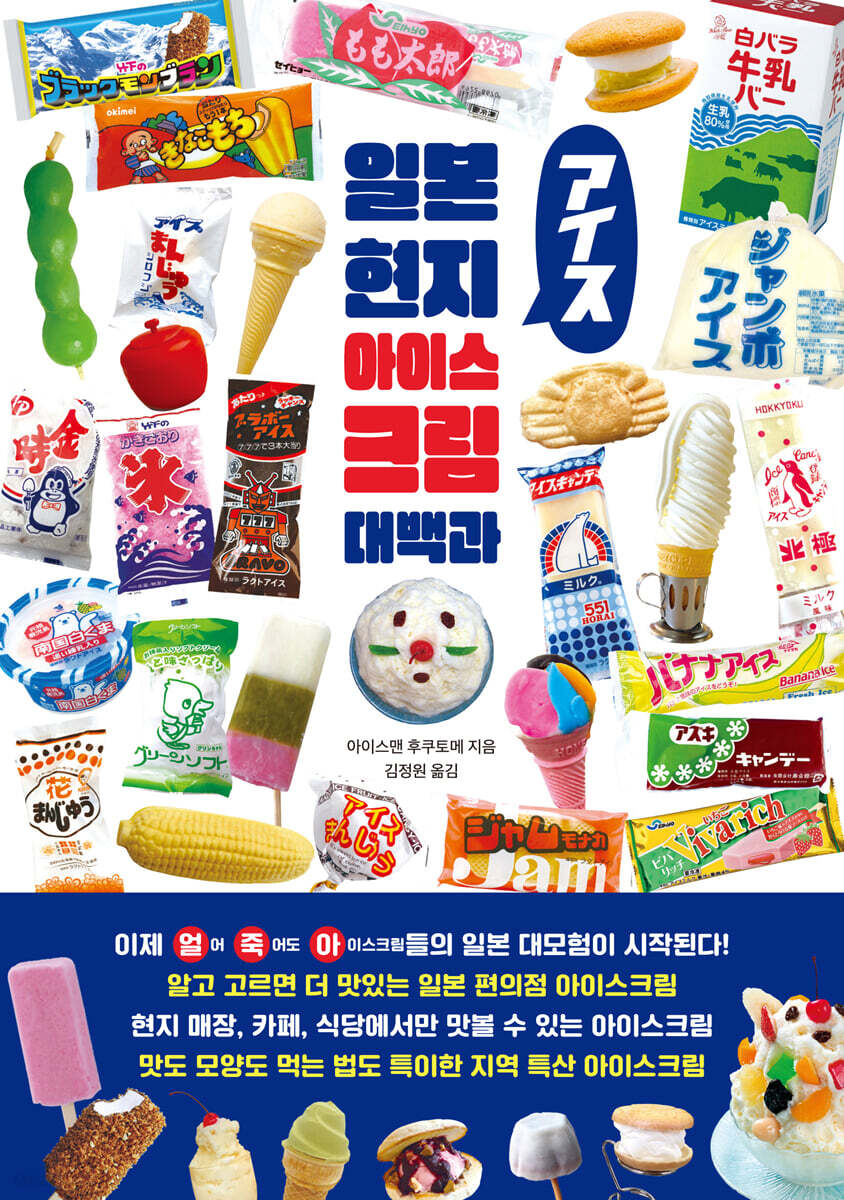
The second book, "Encyclopedia of Japanese Local Ice Cream," continues the fun and practicality of "Encyclopedia of Japanese Local Bread," which has become a must-read for travelers to Japan. An ice cream critic travels around Japan to select ice creams that are popular with locals or can only be found there. You can also visit the ice cream shops listed at the end. It also contains the unique history and culture of Japanese ice cream, making it a pleasure to read. |
- You can preview some of the book's contents.
Preview
index
Welcome to the world of 'Japanese local ice cream'!
Original ice cream with roots in the 1st region
Shirokuma, Ice Manju, Ice Monaka, Green Soft, Ice Cream, Jumbo Ice, Milkshake, Gori Zenzai, Ice Burger
Part 2: Ice Cream Pilgrimage from Everywhere
Eastern Japan:
Osanai Cold Confectionery Shop | Sweet House Wakaba | Marukanville Restaurant | Ice Cream Parlor Misono | Soma Ice Cream Shop | Roadside Station Futatsui | Matsushimaya | Coffee Gourmet | Tanishin | Iizuka Confectionery | Kawanishiya | Nomuraya | Matsubaya | Goeido | Stone Cold Confectionery | Takada Ice | Hachikyo | East Japan Ice Cream Pilgrimage Album
Packaging and Logo Design Gallery①
West Japan:
North Pole | Kotobuki Kaikan | Daiza Ice Cream | Mochiya Onishi | Kurooka Ice Cream | Moriwaka Houkokudo | Yaoki | Sefurigokayama Ice Cream | Michi-no-Eki Ainotsuchiyama | Makido Sightseeing Drive-In | Original Ice Dog | Okonomiyaki Matsuda | Suzuki Shoten | Nakatsuya | Sarita | Polar Bear | Kujukoen Kabo Izumiya | Ice Cream Cafe Arc | West Japan Ice Cream Pilgrimage Album
Packaging and Logo Design Gallery②
Packaging and Logo Design Gallery ③
Part 3 Local & Chain Ice Cream
551 Horai, Seihyo, Daiachi Foods / Maruhon, Sagawa Suehiro / Yokoyama Cold Confectionery, Kubota Foods, Takeshita Confectionery, Marunaga Confectionery / Seika Foods, Yokobatake Cold Confectionery / Seria Royle, Seicomart, Sakura Foods / Lotte, Okinawa Meiji Dairy, Blue Seal
Packaging and Logo Design Gallery④
Part 4: Ice cream in collaboration with local specialties
Kikyo Shingen Soft, Nagasaki Castella Ice Cream, Marusei Ice Sando / Akafuku Gori, Tsurunokonoko / Jindaiko Soft, Sasadango Ice Cream / Nure Senbei Ice Cream / Yomei Oiri Soft / Unagi Pie Gelato, Ice Cream with Lactic Acid Bacteria, Shinshurin Kodama / Biwanomi Ice Cream, La Pesca Momo Gelato / Shifuku no Momo Sorbet / Shikwasa, Miso Soft Cream / Soy Sauce Soft Cream, Soy Sauce Soft Cream / Miso Soft Cream / Zunda Mochi Parfait / Black Garlic Ice Cream, Fujiyama Ice Candy / Fujisan Soft Cream / Tsubame Sanjo Iron Ice Cream, Japanese Sword Ice Cream / Coal Soft Cream, Udon Soba Vending Machine Tsuyu Flavored Soft Cream / Kamatama Soft Cream, Jigoku-mushi Pudding Soft Cream / Yuagari Soft
Column 1.
Kyushu's summer essentials! We've rounded up some shaved ice treats.
Column 2.
Old-fashioned street food stall ice cream
Column 3.
Shinkansen Exclusive! Sujata's Ice Cream
Column 4.
Local drinks & snacks × ice cream
Mini Special
A trip to the Gonsen area of Hokkaido where you'll indulge in soft-serve ice cream.
Milk company's ice cream
List of ice cream shops
Original ice cream with roots in the 1st region
Shirokuma, Ice Manju, Ice Monaka, Green Soft, Ice Cream, Jumbo Ice, Milkshake, Gori Zenzai, Ice Burger
Part 2: Ice Cream Pilgrimage from Everywhere
Eastern Japan:
Osanai Cold Confectionery Shop | Sweet House Wakaba | Marukanville Restaurant | Ice Cream Parlor Misono | Soma Ice Cream Shop | Roadside Station Futatsui | Matsushimaya | Coffee Gourmet | Tanishin | Iizuka Confectionery | Kawanishiya | Nomuraya | Matsubaya | Goeido | Stone Cold Confectionery | Takada Ice | Hachikyo | East Japan Ice Cream Pilgrimage Album
Packaging and Logo Design Gallery①
West Japan:
North Pole | Kotobuki Kaikan | Daiza Ice Cream | Mochiya Onishi | Kurooka Ice Cream | Moriwaka Houkokudo | Yaoki | Sefurigokayama Ice Cream | Michi-no-Eki Ainotsuchiyama | Makido Sightseeing Drive-In | Original Ice Dog | Okonomiyaki Matsuda | Suzuki Shoten | Nakatsuya | Sarita | Polar Bear | Kujukoen Kabo Izumiya | Ice Cream Cafe Arc | West Japan Ice Cream Pilgrimage Album
Packaging and Logo Design Gallery②
Packaging and Logo Design Gallery ③
Part 3 Local & Chain Ice Cream
551 Horai, Seihyo, Daiachi Foods / Maruhon, Sagawa Suehiro / Yokoyama Cold Confectionery, Kubota Foods, Takeshita Confectionery, Marunaga Confectionery / Seika Foods, Yokobatake Cold Confectionery / Seria Royle, Seicomart, Sakura Foods / Lotte, Okinawa Meiji Dairy, Blue Seal
Packaging and Logo Design Gallery④
Part 4: Ice cream in collaboration with local specialties
Kikyo Shingen Soft, Nagasaki Castella Ice Cream, Marusei Ice Sando / Akafuku Gori, Tsurunokonoko / Jindaiko Soft, Sasadango Ice Cream / Nure Senbei Ice Cream / Yomei Oiri Soft / Unagi Pie Gelato, Ice Cream with Lactic Acid Bacteria, Shinshurin Kodama / Biwanomi Ice Cream, La Pesca Momo Gelato / Shifuku no Momo Sorbet / Shikwasa, Miso Soft Cream / Soy Sauce Soft Cream, Soy Sauce Soft Cream / Miso Soft Cream / Zunda Mochi Parfait / Black Garlic Ice Cream, Fujiyama Ice Candy / Fujisan Soft Cream / Tsubame Sanjo Iron Ice Cream, Japanese Sword Ice Cream / Coal Soft Cream, Udon Soba Vending Machine Tsuyu Flavored Soft Cream / Kamatama Soft Cream, Jigoku-mushi Pudding Soft Cream / Yuagari Soft
Column 1.
Kyushu's summer essentials! We've rounded up some shaved ice treats.
Column 2.
Old-fashioned street food stall ice cream
Column 3.
Shinkansen Exclusive! Sujata's Ice Cream
Column 4.
Local drinks & snacks × ice cream
Mini Special
A trip to the Gonsen area of Hokkaido where you'll indulge in soft-serve ice cream.
Milk company's ice cream
List of ice cream shops
Detailed image

Into the book
The greatest appeal of local ice cream is that it allows you to indirectly experience the charm of the region through its unique food culture that has taken root there.
If you visit an ice cream shop that has been in business for a long time in the countryside, you can see the Showa era scenery that you often saw as a child.
The homemade ice cream sticks made by sticking chopsticks in at an angle are handed out in a bag as is, and if you want to take them home, they wrap them in newspaper.
Meanwhile, street food ice cream vendors are out of the question.
There are stores that sell colorful beach umbrellas by setting them up on the roadside, in rest areas, and in parks, and there are also stores that sell them on carts, ringing bells every day as they please, just as they have in the past.
A Kyushu specialty, shaved ice is a summer treat.
The so-called 'Fukurogori' is known to have started around 1955.
It is shaved ice sold fresh from street vendors or food stalls at summer festivals, packaged in a plastic bag, and the concept is to 'allow you to eat shaved ice conveniently.'
It is a strong support for people who work under the hot sun or students who want to cool off after club activities.
Even today, you can find various types of shaved ice in convenience stores, supermarkets, and rest areas in Kyushu, but it is said that during the peak summer, half of the showcases were filled with shaved ice.
The way to eat it is simple and crude: just tear off the corner of the bag and eat it as is.
In the 1930s, when even white soft ice cream was rare, 'Green Soft', a soft ice cream with matcha, was created.
It was created by managers who were concerned about the summer deficit of tea houses and wondered if there were any products that could be sold in the summer.
It is said that Green Soft was created by combining the taste of matcha in milk and soft ice cream, which is enjoyed on hot days.
Although matcha soft serve ice cream is one of the most popular flavors today, it was reportedly quite shocking when it was first released because of its green color.
The Gonsen region, located in eastern Hokkaido, boasts the largest production of raw milk in Japan.
It is a dairy farming area that takes advantage of its cool climate and vast pastures, but it is also a battleground for soft ice cream.
The vast blue sky, endless pastures, and the leisurely scenery of cows grazing are very similar to the images of Hokkaido that many people have in mind.
As you drive by, you will see soft serve ice cream signs and flags erected everywhere, and you can enjoy high-quality, handmade soft serve ice cream made with fresh, locally produced milk without any burden.
For those who love soft ice cream, this place is truly a 'holy land'.
Takeshita Confectionery, headquartered in Ogi City, Saga Prefecture.
The popular Black Mont Blanc is a steady seller that anyone from Kyushu has tried at least once.
This unique product name was created by the former chairman of Takeshita Confectionery, who, upon seeing Mont Blanc, the highest peak in the Alps, thought, "How delicious would it be to sprinkle chocolate on this pure white mountain and eat it?"
Regional names such as Nagasaki's Castella and Yamanashi's Shingenmochi, as well as Nagano's apples, Fukushima's peaches, and even soy sauce, miso, and udon.
There are also a variety of ice creams that are collaborations with local specialties and famous products.
Additionally, new specialty ice creams are being created one after another in collaboration with local governments and tourist attractions such as Mt. Fuji, Japanese swords, and iron.
If you visit an ice cream shop that has been in business for a long time in the countryside, you can see the Showa era scenery that you often saw as a child.
The homemade ice cream sticks made by sticking chopsticks in at an angle are handed out in a bag as is, and if you want to take them home, they wrap them in newspaper.
Meanwhile, street food ice cream vendors are out of the question.
There are stores that sell colorful beach umbrellas by setting them up on the roadside, in rest areas, and in parks, and there are also stores that sell them on carts, ringing bells every day as they please, just as they have in the past.
A Kyushu specialty, shaved ice is a summer treat.
The so-called 'Fukurogori' is known to have started around 1955.
It is shaved ice sold fresh from street vendors or food stalls at summer festivals, packaged in a plastic bag, and the concept is to 'allow you to eat shaved ice conveniently.'
It is a strong support for people who work under the hot sun or students who want to cool off after club activities.
Even today, you can find various types of shaved ice in convenience stores, supermarkets, and rest areas in Kyushu, but it is said that during the peak summer, half of the showcases were filled with shaved ice.
The way to eat it is simple and crude: just tear off the corner of the bag and eat it as is.
In the 1930s, when even white soft ice cream was rare, 'Green Soft', a soft ice cream with matcha, was created.
It was created by managers who were concerned about the summer deficit of tea houses and wondered if there were any products that could be sold in the summer.
It is said that Green Soft was created by combining the taste of matcha in milk and soft ice cream, which is enjoyed on hot days.
Although matcha soft serve ice cream is one of the most popular flavors today, it was reportedly quite shocking when it was first released because of its green color.
The Gonsen region, located in eastern Hokkaido, boasts the largest production of raw milk in Japan.
It is a dairy farming area that takes advantage of its cool climate and vast pastures, but it is also a battleground for soft ice cream.
The vast blue sky, endless pastures, and the leisurely scenery of cows grazing are very similar to the images of Hokkaido that many people have in mind.
As you drive by, you will see soft serve ice cream signs and flags erected everywhere, and you can enjoy high-quality, handmade soft serve ice cream made with fresh, locally produced milk without any burden.
For those who love soft ice cream, this place is truly a 'holy land'.
Takeshita Confectionery, headquartered in Ogi City, Saga Prefecture.
The popular Black Mont Blanc is a steady seller that anyone from Kyushu has tried at least once.
This unique product name was created by the former chairman of Takeshita Confectionery, who, upon seeing Mont Blanc, the highest peak in the Alps, thought, "How delicious would it be to sprinkle chocolate on this pure white mountain and eat it?"
Regional names such as Nagasaki's Castella and Yamanashi's Shingenmochi, as well as Nagano's apples, Fukushima's peaches, and even soy sauce, miso, and udon.
There are also a variety of ice creams that are collaborations with local specialties and famous products.
Additionally, new specialty ice creams are being created one after another in collaboration with local governments and tourist attractions such as Mt. Fuji, Japanese swords, and iron.
--- From the text
Publisher's Review
A variety of cone, cup, stick and soft serve ice cream,
From shaved ice, sherbet, and milkshakes with a variety of ingredients and ways to eat them,
Monaka, manju, burgers, hot dogs, sandwiches with ice cream,
From soy sauce, soybean paste, and udon broth ice cream in collaboration with local specialties.
A guide to exploring the special ice creams of each region of Japan!
When traveling in Japan, it's all about ice cream! An ice cream critic explores every nook and cranny of Japan, from Hokkaido to Okinawa, to discover a diverse array of ice creams.
"Encyclopedia of Japanese Local Ice Cream" features hundreds of local specialty ice creams, each with a unique flavor, shape, and way of eating, available only at local shops, cafes, and restaurants.
We also recommend lesser-known ice creams found in convenience stores and supermarkets, as well as items made by local businesses and only available locally.
This book was produced with the same format and concept as the 『Encyclopedia of Japanese Local Bread』, which has already been published in Korea and received much love, and is both faithful and witty in its introduction to the ingredients and flavor characteristics of ice cream, the history and individuality of ice cream shops, and the main menu.
Part 1 presents ice creams representing each region.
We have selected ice creams that you must try while traveling in each region, including Shirokuma, a shaved ice dessert that started in Kagoshima and has become famous nationwide, Mie's Ice Manju, Osaka's Ice Monaka, Kochi's Ice Kurin, Aomori's Jumbo Ice, Nagasaki's Milkshake, and Okinawa's Kori Zenzai, as well as shops that have become famous for their ice creams.
Part 2 is a record of the author personally traveling all over the country to find ice cream.
A variety of unique ice cream menus are available in small ice cream shops, cafes, and restaurants that only locals know about, divided into eastern and western Japan.
There are plenty of ice creams that travelers would love to post on social media, such as ice cream you can eat with chopsticks, 30-centimeter soft serve ice cream, and ice cream on fried bread.
Part 3 introduces ice creams made by traditional local businesses and sold at local convenience stores and supermarkets.
These are products that are distributed locally, such as Osaka 551 Horai Ice Candy, a 70-year-old tradition that sells 100,000 pieces a year, and Seihyo's Momotaro, which in Niigata surpasses Japan's national ice cream, Garigari-kun, in fame, so they have the advantage of being easier to purchase.
Part 4 features unique ice creams created in collaboration with local specialties.
Just looking at the Kikyo Shingen ice cream with rice cakes on top, ice cream sandwiched between Nagasaki Castella, various ice creams that make generous use of local fruits, and the unimaginable ice creams made with green onions, miso, soy sauce, udon broth, and even edible iron powder are all delightful.
In addition, the Gonsen region of Hokkaido, the mecca of soft ice cream, and ice cream made by dairy companies were featured as special features.
At the very back of this book, there is a list of ice cream shops that are not in the original Japanese book, so it also serves as a great travel guide.
From shaved ice, sherbet, and milkshakes with a variety of ingredients and ways to eat them,
Monaka, manju, burgers, hot dogs, sandwiches with ice cream,
From soy sauce, soybean paste, and udon broth ice cream in collaboration with local specialties.
A guide to exploring the special ice creams of each region of Japan!
When traveling in Japan, it's all about ice cream! An ice cream critic explores every nook and cranny of Japan, from Hokkaido to Okinawa, to discover a diverse array of ice creams.
"Encyclopedia of Japanese Local Ice Cream" features hundreds of local specialty ice creams, each with a unique flavor, shape, and way of eating, available only at local shops, cafes, and restaurants.
We also recommend lesser-known ice creams found in convenience stores and supermarkets, as well as items made by local businesses and only available locally.
This book was produced with the same format and concept as the 『Encyclopedia of Japanese Local Bread』, which has already been published in Korea and received much love, and is both faithful and witty in its introduction to the ingredients and flavor characteristics of ice cream, the history and individuality of ice cream shops, and the main menu.
Part 1 presents ice creams representing each region.
We have selected ice creams that you must try while traveling in each region, including Shirokuma, a shaved ice dessert that started in Kagoshima and has become famous nationwide, Mie's Ice Manju, Osaka's Ice Monaka, Kochi's Ice Kurin, Aomori's Jumbo Ice, Nagasaki's Milkshake, and Okinawa's Kori Zenzai, as well as shops that have become famous for their ice creams.
Part 2 is a record of the author personally traveling all over the country to find ice cream.
A variety of unique ice cream menus are available in small ice cream shops, cafes, and restaurants that only locals know about, divided into eastern and western Japan.
There are plenty of ice creams that travelers would love to post on social media, such as ice cream you can eat with chopsticks, 30-centimeter soft serve ice cream, and ice cream on fried bread.
Part 3 introduces ice creams made by traditional local businesses and sold at local convenience stores and supermarkets.
These are products that are distributed locally, such as Osaka 551 Horai Ice Candy, a 70-year-old tradition that sells 100,000 pieces a year, and Seihyo's Momotaro, which in Niigata surpasses Japan's national ice cream, Garigari-kun, in fame, so they have the advantage of being easier to purchase.
Part 4 features unique ice creams created in collaboration with local specialties.
Just looking at the Kikyo Shingen ice cream with rice cakes on top, ice cream sandwiched between Nagasaki Castella, various ice creams that make generous use of local fruits, and the unimaginable ice creams made with green onions, miso, soy sauce, udon broth, and even edible iron powder are all delightful.
In addition, the Gonsen region of Hokkaido, the mecca of soft ice cream, and ice cream made by dairy companies were featured as special features.
At the very back of this book, there is a list of ice cream shops that are not in the original Japanese book, so it also serves as a great travel guide.
GOODS SPECIFICS
- Date of issue: November 20, 2023
- Page count, weight, size: 168 pages | 424g | 148*210*12mm
- ISBN13: 9791192512624
- ISBN10: 1192512626
You may also like
카테고리
korean


korean

![GQ KOREA Mark (Monthly): December [2025]](http://librairie.coreenne.fr/cdn/shop/files/8ef265dbbfbf186523ed75ba7319009d.jpg?v=1765340328&width=3840)


