

Princess City Walk
 |
Description
Book Introduction
Six syllables full of pride, 'Exciting Princess'
The ultimate small-town getaway: meeting the princess.
The slogan and catchphrase of Gongju City is 'Exciting Gongju'.
The pride of being a city that is fun enough to be called that is full of these short six syllables.
A travel book dedicated solely to the 'exciting princess' has been published.
Meanwhile, the princess was either grouped with Buyeo, a city on the banks of the Geumgang River and also a capital of Baekje, or introduced together with it as one of several small cities.
It was a shame for a city rich in travel content like a princess.
Princess is a city worth traveling to.
It is a place full of fun and plenty to see, eat, and do.
Gongju is where the first Paleolithic artifacts were discovered in our country.
It was the center of the Ungjin Baekje period, when the capital was moved to Hanseong Baekje, which was on the verge of collapse, and the foundation for its revival was laid.
It was a city representing the Chungcheong region along with Hongseong, Chungju, and Cheongju, and after the Imjin War, it was a city with a provincial government that encompassed the entire Chungcheong region.
Since the modern era, it has been strengthened as an educational and historical city.
When the tomb of King Muryeong was excavated in 1971, the treasures containing the splendid Baekje culture astonished the world.
The natural environment, with Gyeryongsan Mountain on one side and Geumgang River on the other, is also wonderful and beautiful.
In Gongju, there are three UNESCO-designated World Heritage sites (Gongsanseong Fortress, King Muryeong's Tomb and Royal Tomb Park, and Magoksa Temple).
It's so exciting! Discover every nook and cranny of this fascinating princess firsthand through a book.
The ultimate small-town getaway: meeting the princess.
The slogan and catchphrase of Gongju City is 'Exciting Gongju'.
The pride of being a city that is fun enough to be called that is full of these short six syllables.
A travel book dedicated solely to the 'exciting princess' has been published.
Meanwhile, the princess was either grouped with Buyeo, a city on the banks of the Geumgang River and also a capital of Baekje, or introduced together with it as one of several small cities.
It was a shame for a city rich in travel content like a princess.
Princess is a city worth traveling to.
It is a place full of fun and plenty to see, eat, and do.
Gongju is where the first Paleolithic artifacts were discovered in our country.
It was the center of the Ungjin Baekje period, when the capital was moved to Hanseong Baekje, which was on the verge of collapse, and the foundation for its revival was laid.
It was a city representing the Chungcheong region along with Hongseong, Chungju, and Cheongju, and after the Imjin War, it was a city with a provincial government that encompassed the entire Chungcheong region.
Since the modern era, it has been strengthened as an educational and historical city.
When the tomb of King Muryeong was excavated in 1971, the treasures containing the splendid Baekje culture astonished the world.
The natural environment, with Gyeryongsan Mountain on one side and Geumgang River on the other, is also wonderful and beautiful.
In Gongju, there are three UNESCO-designated World Heritage sites (Gongsanseong Fortress, King Muryeong's Tomb and Royal Tomb Park, and Magoksa Temple).
It's so exciting! Discover every nook and cranny of this fascinating princess firsthand through a book.
- You can preview some of the book's contents.
Preview
index
In publishing a book
Simple Luxury: 5 Must-Visit Princess Trips
Gongsanseong ∥ A beautiful place where mountains, rivers, and history overlap.
National Gongju Museum ∥ Let's get some flower rain
Princess Muryeong's Tomb and Royal Tomb Garden ∥ A place that holds the mystery of Baekje
Magoksa Temple ∥ Our Buddhist culture recognized by the world
Gyeryongsan Mountain ∥ Climbing Hoseo's most famous mountain
The more you learn, the deeper you become, a journey through history that deepens your princess experience.
Seokjangni Museum ∥ Human civilization began with stone.
Chungcheong Gamyeong and Hyanggyo ∥ Princess of Joseon, Princess's Joseon
Gapsa ∥ The road to Gapsa, good in any season
Donghaksa ∥ Thinking about a good 'friend'
Shinwonsa Temple ∥ A place that protects the country and grants wishes
Middle East Cathedral and Stork Rock Holy Land ∥ A landscape of faith that began with the history of martyrdom
Gongju First Church and Missionary Sites ∥ Traces of the Gongju Church's history, which willingly dedicated itself to Korea.
Okay, let's walk wherever our feet take us, Princess City Tour
Yeonmisan Natural Art Park ∥ What did you see on that mountain?
Korean Folk Drama Museum ∥ A Thousand and One Nights told by an ancient world
Limlip Art Museum ∥ Our town's art museum
Gyeryongsan Ceramic Village ∥ Anticipation of going to see pottery
Park Dong-jin Pansori Transmission Center ∥ The pride of the clown, what is ours is precious!
Jemincheon Stream ∥ A festival-like time that targets every taste
Gongjusanseong Market ∥ The market is fun
Simple Luxury: 5 Must-Visit Princess Trips
Gongsanseong ∥ A beautiful place where mountains, rivers, and history overlap.
National Gongju Museum ∥ Let's get some flower rain
Princess Muryeong's Tomb and Royal Tomb Garden ∥ A place that holds the mystery of Baekje
Magoksa Temple ∥ Our Buddhist culture recognized by the world
Gyeryongsan Mountain ∥ Climbing Hoseo's most famous mountain
The more you learn, the deeper you become, a journey through history that deepens your princess experience.
Seokjangni Museum ∥ Human civilization began with stone.
Chungcheong Gamyeong and Hyanggyo ∥ Princess of Joseon, Princess's Joseon
Gapsa ∥ The road to Gapsa, good in any season
Donghaksa ∥ Thinking about a good 'friend'
Shinwonsa Temple ∥ A place that protects the country and grants wishes
Middle East Cathedral and Stork Rock Holy Land ∥ A landscape of faith that began with the history of martyrdom
Gongju First Church and Missionary Sites ∥ Traces of the Gongju Church's history, which willingly dedicated itself to Korea.
Okay, let's walk wherever our feet take us, Princess City Tour
Yeonmisan Natural Art Park ∥ What did you see on that mountain?
Korean Folk Drama Museum ∥ A Thousand and One Nights told by an ancient world
Limlip Art Museum ∥ Our town's art museum
Gyeryongsan Ceramic Village ∥ Anticipation of going to see pottery
Park Dong-jin Pansori Transmission Center ∥ The pride of the clown, what is ours is precious!
Jemincheon Stream ∥ A festival-like time that targets every taste
Gongjusanseong Market ∥ The market is fun
Detailed image

Into the book
Whether you are a visitor from abroad or a Korean thinking about traveling domestically, you ask this question.
If I had to recommend just one place in Korea, which would it be? I'd have to think about it for a long time.
Gyeongju? Busan? Jeju? Or Seoul? There are many places in Seoul alone.
National Museum of Korea… Bukhansan Mountain… Hanyangdoseong… .
But, no, still, communism! Communism is that kind of place.
A national emergency center representing Gongju and Chungcheong.
And globally, it is a place that can be confidently recommended to the entire world.
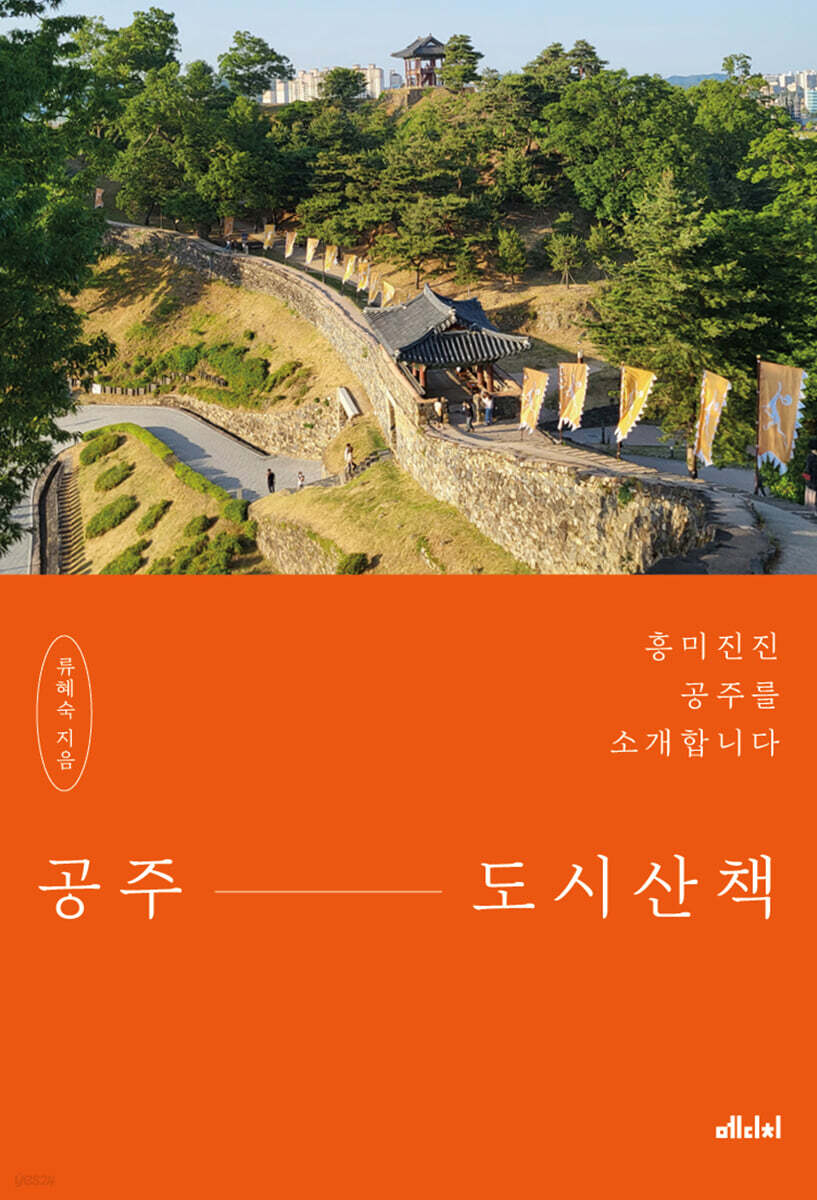
Gongsanseong Fortress has the beauty of a Korean mountain fortress, and is nestled right next to the large river Geumgang River and embraces an old forest.
Here, you can encounter layers of history dating back to the Baekje period, passing by old pavilions, tower gates, and castle walls that rise and fall along the terrain of the river and mountains.
--- p.10-11, from “Gongsanseong∥A beautiful place where mountains, rivers, and history overlap”
The process by which King Muryeong's tomb was revealed to the world was truly dramatic.
The joys and sorrows of human history were also evident in the excavation process.
And relics.
Baekje's culture is considered the most splendid and beautiful in Korean history.
Thousands of artifacts made with the highest level of technology and craftsmanship of the time were unearthed from the tomb of King Muryeong, who led the revival of Baekje.
The National Gongju Museum holds virtually all of these artifacts.
The splendor and beauty are so extreme that I can't help but sigh.
--- p.28, from “National Gongju Museum∥Where can I get some flower rain?”
I can't say for sure why, but there's something about the tomb that makes me feel moved.
Just as the most memorable things about Gyeongju are not Bulguksa Temple, Seokguram Grotto, or Cheomseongdae, but the numerous ancient tombs, in Gongju, the sight of the semicircular, round tombs in the royal tomb complex brings a sense of peace and makes you fall in love with their true beauty.
Princess Songsan Nam, "There are seven burial mounds rising on the slope of a low hill.
This is the royal tomb of King Muryeong and the royal tomb garden.
Since it is called Wangneungwon, they must all be tombs of kings, queens, or royal family members.
Although it is smaller in scale compared to the royal tombs of Silla or Joseon, it is not so small as to be considered small.
The royal tombs are connected in a series, with tombs 5, 6, and 7 forming one group and tombs 1 through 4 forming another group.
They are all presumed to be the tombs of the royal family during the Ungjin capital period of Baekje.
Among the seven tombs in Wangneungwon, one is particularly special.
This is because there is a tomb whose owner has been revealed, and it is the lucky number 7, King Muryeong's tomb.
--- p.44-45, from “Princess Muryeong’s Tomb and Royal Tomb Garden∥A Place Embracing the Mystery of Baekje”
Magoksa Temple has a history of over a thousand years.
During that long period, all kinds of legends and history were created and a unique culture was created.
In addition to 7 treasures, 8 provincial tangible cultural assets, 1 provincial folk cultural asset, and 5 cultural asset materials, there are many other valuable cultural assets remaining.
Magoksa Temple was first designated as a UNESCO World Heritage Site in 2018 as a "Sansa, Korean Mountain Monasteries."
It has become the history of the world, not just our history.
“When you walk across a snow-covered field/ Do not walk carelessly or in a disorderly manner./ The footsteps I take today/ Will become a milestone for those who follow.” This is a Zen poem by Seosan Daesa that hangs in Baekbeomdang.
It is said to be a calligraphy that Baekbeom Kim Gu often used.
Today's Magoksa Temple, which has become a part of the history of the world, feels like a koan that is being passed on to the world.
--- p.73-74, from “Magoksa Temple ∥ Our Buddhist Culture Recognized by the World”
The Seokjang-ri Paleolithic Festival is held every May at the Seokjang-ri Historic Site.
In the Paleolithic village formed around the Seokjang-ri Museum, people make stone tools, make fire, and build houses just as the ancient people did.
It is a festival that brings back to life a truly ancient time spanning tens of thousands of years.
It is a joyful festival of learning about how human life began.
Where did we come from? A visit to the Seokjangni Museum offers another answer to that question.
--- p.107-108, from “Seokjangni Museum∥Human civilization began with stones”
“The country is broken and the king is ruined. How can I live alone?
I will be a Lee person while I am alive, and I will be a Lee ghost even after I die.
Confucius said to cultivate humanity, and Mencius said to pursue righteousness. Gray hair, red loyalty, only death, there are no double minds.”
Mui, the saying that there are no two minds comes from here.
The princess of Joseon ended in tragedy.
It was something that not only the princess experienced, but the entire Korean peninsula experienced as well.
The lost function of the Hyanggyo, or the newly built or relocated Pojeongsa Gate and Seonhwadang Hall, evoke that history.
The history of failure teaches us more profound lessons than the history of success.
I think of it in the buildings that tell the story of Joseon's princesses.
--- p.122, from “Chungcheong Gamyeong and Hyanggyo ∥ Joseon’s Princess, Princess’s Joseon”
There is no mention of Gapsa Temple in the essay “The Road to Gapsa Temple.”
Moreover, it is different from our ‘road to Gapsa’.
But whenever I go to Gapsa Temple, “The Road to Gapsa Temple” always comes to mind.
This is especially true in winter.
On a day when snow falls consistently, visiting Gapsa Temple to follow old writings is one of the luxuries of winter.
Ultimately, no matter what season, the 'road to Gapsa Temple' is beautiful and stimulates the interest of travelers.
In that sense, the most important thing in Gapsa Temple may be the steps and heart of each person who goes to Gapsa Temple.
Stand tall in front of the main gate.
My heart sinks as I look at the forest path that stretches far and wide through the door.
It is a green tunnel of beautiful giant trees.
Wow! The road to Gapsa Temple is fascinating in every season.
--- p.127-128, from “Gapsa∥A road to Gapsa that is good in any season”
The tower stands as affectionately as the legend says.
In Buddhism, a friend who practices Buddhism together with you is called a doban.
The Buddha's disciple, Venerable Ananda, asked the Buddha.
“World Honored One, if a practitioner has a good companion, does that mean he has completed half of his practice?” The Buddha shook his head and said,
“Ananda, that is not true.
“Having good friends, having good companions, and being surrounded by good people is no different from completing the entire practice.”
Did the Buddha realize the meaning of theft in the fearful and lonely moment when he was the only one in heaven and earth?
The monk and the maiden may have been siblings and each other's accomplices.
The reason Donghaksa Temple is the birthplace of the Doban movement today may be because of the legend of the Sibling Pagodas that originated there.
--- p.154, from “Donghaksa ∥ Thinking about a good ‘friend’”
The charm of the central orchestra is seeing the old paintings on the two doors.
The painting on the front gate is so faint that it is difficult to even make out the outline.
In comparison, the painting of the central gate is still faint, but its shape is still quite recognizable.
The coloring remains partially, giving us an idea of how splendid it must have been when it was first painted.
What does it look like to be a general?
Buddhism employs numerous statues of divine generals who protect the Buddhist law.
The people painted on both sides of the central gate are probably among those gods.
One traveler, based on the objects held by the guardian deities, speculated that the guardian deity wearing a blue hat is the Heavenly King Guangmu, one of the Four Heavenly Kings who protects the West, and the guardian deity holding a lute (which appears to be holding a sword, but is actually a lute) on the other side is the Heavenly King Damun, who protects the North.
That's a plausible analogy.
Whether it is actually the Four Heavenly Kings or an image of another god, we should first take a closer look before investigating their identity.
The traces of old paintings, their colors and shapes fading away and being mercilessly consumed by time, are profound.
--- p.165, from “Shinwonsa Temple ∥ A place that protects the country and grants wishes”
The Jungdong Cathedral in downtown Gongju and the Yogol Church in Myeonggok-ri, Yugu-eup are each valuable cultural heritages that show the stages of the spread of Catholicism and religious life.
These are places that showcase the princess's modern architecture and the landscape of her heart and faith, and are worth visiting even if you are not a Catholic pilgrim.
Along with these two places, the Stork Rock Holy Site in downtown Gongju, where numerous martyrs passed through, is recommended as a place to visit for the princess's heart.
The days of making sacrifices for one's beliefs are not so long ago.
Where did today's freedom to believe, think, and speak freely come from? Perhaps this long history of faith, sacrifice, and martyrdom was one of its starting points.
--- p.188, from “Middle East Cathedral and Stork Rock Holy Land∥A Landscape of Faith Beginning from the History of Martyrdom”
Unlike many museums or art galleries, most of the works at Yeonmisan Natural Art Park can be touched, stroked, sat on, or leaned against.
There are no ominous warnings like 'Don't Touch'.
After visiting once, it is also nice to come back again in different weather, at different times, and in different seasons.
(…)
While it's wonderful to see great works that stand as if they will be remembered forever, it's a wonderful experience to encounter works like those at Yeonmisan Natural Art Park that clearly bear the imminent fate of disappearing.
Which is more similar to life?
Where is there more nature?
It would be a good idea to come to Yeonmisan Natural Art Park to ask such questions.
--- p.222, from “Yeonmisan Natural Art Park∥What did you see on that mountain?”
The moment you enter the second floor, the first thing that catches your eye beyond the exhibition halls on either side and in the middle is the funeral bier placed in the center.
A bier is a tool used to carry a human body to a cemetery.
It is long and can be carried by about 10 people, and its shape resembles a palanquin.
If you look at it that way, it is a palanquin where dead souls burn.
In America, they say that even the poorest people ride in a limousine at their funerals. But in ancient Joseon, was it possible for even the most humble people to ride in a palanquin after death?
--- p.231, from “The Museum of Korean Folk Drama ∥A Thousand and One Nights Told by the Old World”
It's fun to look at the dishes.
Buying dishes is more enjoyable.
It is more enjoyable to buy good dishes and use them often.
So, Gyeryongsan Ceramics Village is a place to go to experience joy.
If you go there, you can see and buy pottery made by artists in their workshops, and taste the dishes served in those pots.
If you buy a bowl, the pleasure will continue at home.
Gyeryongsan Ceramic Village is an art-centered community that has preserved and inherited the region's cultural heritage and history, which can already be considered world-class, including 'Cheolhwa Buncheong ware', and has formed a village based on this.
(…) Potters gathered and formed a village near the site of the old Guryongsa Temple in Sangsin-ri, Banpo-myeon, on the northern slope of Gyeryongsan Mountain.
This is a community village formed around 1993 by 18 young ceramic artists who majored in ceramics at university.
The potters build their own houses and workshops on land funded by the community, where they make a living by firing pottery.
Although each person's artistic style is different, the foundation of making pottery in Gyeryongsan Mountain is the idea of continuing the tradition of 'Gyeryongsan Iron-painted Buncheong Ware'.
--- p.252-253, from “Gyeryongsan Ceramics Village ∥ Expectations of Going to See Pottery”
Every year in early September, an autumn festival called the 'Gongju Cultural Heritage Night Tour' is held in the Jemincheon area.
This is an urban festival where you can walk along the illuminated Jemincheon River on a cool autumn night, see various cultural assets, and participate in various programs.
Even if it's not a festival with a specific name and date, the time spent along the Jemincheon Stream in downtown Gongju will feel like a festival.
If it's a festival, 1 night and 2 days is short.
A week, a fortnight, a month…! To fully enjoy the life and charm of downtown Gongju, you'll need more time.
The princess is a small town.
It is neither a typical tourist destination nor a large city like Seoul or other metropolitan cities.
Experience the everyday life of an ordinary small town, enjoy the unique character and culture of the downtown area, and experience the true face of historical cities like Baekje from thousands of years ago, Joseon from hundreds of years ago, and even modern-day Gongju. Fall in love with the charm of the downtown area along the Jemincheon River.
--- p.291, from “Jemincheonbyeon ∥ A festival-like time that targets tastes”
Gongju Sanseong Market was selected as a 'Gongju City Future Heritage' in July 2022.
The reason for its selection was that it is a valuable heritage that many citizens have experienced or remembered against the backdrop of Gongju's modern and contemporary history, and that it has great significance in forming the urban historical landscape of Gongju.
If you wander the alleys of Sanseong Market, sometimes eating, sometimes buying, and sometimes bargaining, you will experience a different kind of fun and excitement than you would find in online shopping or large shopping malls.
At the entrance to Gongjusanseong Market, there is a large sign that reads ‘Happy Gongjusanseong Market.’
Fun, excitement, and enjoyment.
This must be an important reason to pass on the acid market to the future.
If I had to recommend just one place in Korea, which would it be? I'd have to think about it for a long time.
Gyeongju? Busan? Jeju? Or Seoul? There are many places in Seoul alone.
National Museum of Korea… Bukhansan Mountain… Hanyangdoseong… .
But, no, still, communism! Communism is that kind of place.
A national emergency center representing Gongju and Chungcheong.
And globally, it is a place that can be confidently recommended to the entire world.
Gongsanseong Fortress has the beauty of a Korean mountain fortress, and is nestled right next to the large river Geumgang River and embraces an old forest.
Here, you can encounter layers of history dating back to the Baekje period, passing by old pavilions, tower gates, and castle walls that rise and fall along the terrain of the river and mountains.
--- p.10-11, from “Gongsanseong∥A beautiful place where mountains, rivers, and history overlap”
The process by which King Muryeong's tomb was revealed to the world was truly dramatic.
The joys and sorrows of human history were also evident in the excavation process.
And relics.
Baekje's culture is considered the most splendid and beautiful in Korean history.
Thousands of artifacts made with the highest level of technology and craftsmanship of the time were unearthed from the tomb of King Muryeong, who led the revival of Baekje.
The National Gongju Museum holds virtually all of these artifacts.
The splendor and beauty are so extreme that I can't help but sigh.
--- p.28, from “National Gongju Museum∥Where can I get some flower rain?”
I can't say for sure why, but there's something about the tomb that makes me feel moved.
Just as the most memorable things about Gyeongju are not Bulguksa Temple, Seokguram Grotto, or Cheomseongdae, but the numerous ancient tombs, in Gongju, the sight of the semicircular, round tombs in the royal tomb complex brings a sense of peace and makes you fall in love with their true beauty.
Princess Songsan Nam, "There are seven burial mounds rising on the slope of a low hill.
This is the royal tomb of King Muryeong and the royal tomb garden.
Since it is called Wangneungwon, they must all be tombs of kings, queens, or royal family members.
Although it is smaller in scale compared to the royal tombs of Silla or Joseon, it is not so small as to be considered small.
The royal tombs are connected in a series, with tombs 5, 6, and 7 forming one group and tombs 1 through 4 forming another group.
They are all presumed to be the tombs of the royal family during the Ungjin capital period of Baekje.
Among the seven tombs in Wangneungwon, one is particularly special.
This is because there is a tomb whose owner has been revealed, and it is the lucky number 7, King Muryeong's tomb.
--- p.44-45, from “Princess Muryeong’s Tomb and Royal Tomb Garden∥A Place Embracing the Mystery of Baekje”
Magoksa Temple has a history of over a thousand years.
During that long period, all kinds of legends and history were created and a unique culture was created.
In addition to 7 treasures, 8 provincial tangible cultural assets, 1 provincial folk cultural asset, and 5 cultural asset materials, there are many other valuable cultural assets remaining.
Magoksa Temple was first designated as a UNESCO World Heritage Site in 2018 as a "Sansa, Korean Mountain Monasteries."
It has become the history of the world, not just our history.
“When you walk across a snow-covered field/ Do not walk carelessly or in a disorderly manner./ The footsteps I take today/ Will become a milestone for those who follow.” This is a Zen poem by Seosan Daesa that hangs in Baekbeomdang.
It is said to be a calligraphy that Baekbeom Kim Gu often used.
Today's Magoksa Temple, which has become a part of the history of the world, feels like a koan that is being passed on to the world.
--- p.73-74, from “Magoksa Temple ∥ Our Buddhist Culture Recognized by the World”
The Seokjang-ri Paleolithic Festival is held every May at the Seokjang-ri Historic Site.
In the Paleolithic village formed around the Seokjang-ri Museum, people make stone tools, make fire, and build houses just as the ancient people did.
It is a festival that brings back to life a truly ancient time spanning tens of thousands of years.
It is a joyful festival of learning about how human life began.
Where did we come from? A visit to the Seokjangni Museum offers another answer to that question.
--- p.107-108, from “Seokjangni Museum∥Human civilization began with stones”
“The country is broken and the king is ruined. How can I live alone?
I will be a Lee person while I am alive, and I will be a Lee ghost even after I die.
Confucius said to cultivate humanity, and Mencius said to pursue righteousness. Gray hair, red loyalty, only death, there are no double minds.”
Mui, the saying that there are no two minds comes from here.
The princess of Joseon ended in tragedy.
It was something that not only the princess experienced, but the entire Korean peninsula experienced as well.
The lost function of the Hyanggyo, or the newly built or relocated Pojeongsa Gate and Seonhwadang Hall, evoke that history.
The history of failure teaches us more profound lessons than the history of success.
I think of it in the buildings that tell the story of Joseon's princesses.
--- p.122, from “Chungcheong Gamyeong and Hyanggyo ∥ Joseon’s Princess, Princess’s Joseon”
There is no mention of Gapsa Temple in the essay “The Road to Gapsa Temple.”
Moreover, it is different from our ‘road to Gapsa’.
But whenever I go to Gapsa Temple, “The Road to Gapsa Temple” always comes to mind.
This is especially true in winter.
On a day when snow falls consistently, visiting Gapsa Temple to follow old writings is one of the luxuries of winter.
Ultimately, no matter what season, the 'road to Gapsa Temple' is beautiful and stimulates the interest of travelers.
In that sense, the most important thing in Gapsa Temple may be the steps and heart of each person who goes to Gapsa Temple.
Stand tall in front of the main gate.
My heart sinks as I look at the forest path that stretches far and wide through the door.
It is a green tunnel of beautiful giant trees.
Wow! The road to Gapsa Temple is fascinating in every season.
--- p.127-128, from “Gapsa∥A road to Gapsa that is good in any season”
The tower stands as affectionately as the legend says.
In Buddhism, a friend who practices Buddhism together with you is called a doban.
The Buddha's disciple, Venerable Ananda, asked the Buddha.
“World Honored One, if a practitioner has a good companion, does that mean he has completed half of his practice?” The Buddha shook his head and said,
“Ananda, that is not true.
“Having good friends, having good companions, and being surrounded by good people is no different from completing the entire practice.”
Did the Buddha realize the meaning of theft in the fearful and lonely moment when he was the only one in heaven and earth?
The monk and the maiden may have been siblings and each other's accomplices.
The reason Donghaksa Temple is the birthplace of the Doban movement today may be because of the legend of the Sibling Pagodas that originated there.
--- p.154, from “Donghaksa ∥ Thinking about a good ‘friend’”
The charm of the central orchestra is seeing the old paintings on the two doors.
The painting on the front gate is so faint that it is difficult to even make out the outline.
In comparison, the painting of the central gate is still faint, but its shape is still quite recognizable.
The coloring remains partially, giving us an idea of how splendid it must have been when it was first painted.
What does it look like to be a general?
Buddhism employs numerous statues of divine generals who protect the Buddhist law.
The people painted on both sides of the central gate are probably among those gods.
One traveler, based on the objects held by the guardian deities, speculated that the guardian deity wearing a blue hat is the Heavenly King Guangmu, one of the Four Heavenly Kings who protects the West, and the guardian deity holding a lute (which appears to be holding a sword, but is actually a lute) on the other side is the Heavenly King Damun, who protects the North.
That's a plausible analogy.
Whether it is actually the Four Heavenly Kings or an image of another god, we should first take a closer look before investigating their identity.
The traces of old paintings, their colors and shapes fading away and being mercilessly consumed by time, are profound.
--- p.165, from “Shinwonsa Temple ∥ A place that protects the country and grants wishes”
The Jungdong Cathedral in downtown Gongju and the Yogol Church in Myeonggok-ri, Yugu-eup are each valuable cultural heritages that show the stages of the spread of Catholicism and religious life.
These are places that showcase the princess's modern architecture and the landscape of her heart and faith, and are worth visiting even if you are not a Catholic pilgrim.
Along with these two places, the Stork Rock Holy Site in downtown Gongju, where numerous martyrs passed through, is recommended as a place to visit for the princess's heart.
The days of making sacrifices for one's beliefs are not so long ago.
Where did today's freedom to believe, think, and speak freely come from? Perhaps this long history of faith, sacrifice, and martyrdom was one of its starting points.
--- p.188, from “Middle East Cathedral and Stork Rock Holy Land∥A Landscape of Faith Beginning from the History of Martyrdom”
Unlike many museums or art galleries, most of the works at Yeonmisan Natural Art Park can be touched, stroked, sat on, or leaned against.
There are no ominous warnings like 'Don't Touch'.
After visiting once, it is also nice to come back again in different weather, at different times, and in different seasons.
(…)
While it's wonderful to see great works that stand as if they will be remembered forever, it's a wonderful experience to encounter works like those at Yeonmisan Natural Art Park that clearly bear the imminent fate of disappearing.
Which is more similar to life?
Where is there more nature?
It would be a good idea to come to Yeonmisan Natural Art Park to ask such questions.
--- p.222, from “Yeonmisan Natural Art Park∥What did you see on that mountain?”
The moment you enter the second floor, the first thing that catches your eye beyond the exhibition halls on either side and in the middle is the funeral bier placed in the center.
A bier is a tool used to carry a human body to a cemetery.
It is long and can be carried by about 10 people, and its shape resembles a palanquin.
If you look at it that way, it is a palanquin where dead souls burn.
In America, they say that even the poorest people ride in a limousine at their funerals. But in ancient Joseon, was it possible for even the most humble people to ride in a palanquin after death?
--- p.231, from “The Museum of Korean Folk Drama ∥A Thousand and One Nights Told by the Old World”
It's fun to look at the dishes.
Buying dishes is more enjoyable.
It is more enjoyable to buy good dishes and use them often.
So, Gyeryongsan Ceramics Village is a place to go to experience joy.
If you go there, you can see and buy pottery made by artists in their workshops, and taste the dishes served in those pots.
If you buy a bowl, the pleasure will continue at home.
Gyeryongsan Ceramic Village is an art-centered community that has preserved and inherited the region's cultural heritage and history, which can already be considered world-class, including 'Cheolhwa Buncheong ware', and has formed a village based on this.
(…) Potters gathered and formed a village near the site of the old Guryongsa Temple in Sangsin-ri, Banpo-myeon, on the northern slope of Gyeryongsan Mountain.
This is a community village formed around 1993 by 18 young ceramic artists who majored in ceramics at university.
The potters build their own houses and workshops on land funded by the community, where they make a living by firing pottery.
Although each person's artistic style is different, the foundation of making pottery in Gyeryongsan Mountain is the idea of continuing the tradition of 'Gyeryongsan Iron-painted Buncheong Ware'.
--- p.252-253, from “Gyeryongsan Ceramics Village ∥ Expectations of Going to See Pottery”
Every year in early September, an autumn festival called the 'Gongju Cultural Heritage Night Tour' is held in the Jemincheon area.
This is an urban festival where you can walk along the illuminated Jemincheon River on a cool autumn night, see various cultural assets, and participate in various programs.
Even if it's not a festival with a specific name and date, the time spent along the Jemincheon Stream in downtown Gongju will feel like a festival.
If it's a festival, 1 night and 2 days is short.
A week, a fortnight, a month…! To fully enjoy the life and charm of downtown Gongju, you'll need more time.
The princess is a small town.
It is neither a typical tourist destination nor a large city like Seoul or other metropolitan cities.
Experience the everyday life of an ordinary small town, enjoy the unique character and culture of the downtown area, and experience the true face of historical cities like Baekje from thousands of years ago, Joseon from hundreds of years ago, and even modern-day Gongju. Fall in love with the charm of the downtown area along the Jemincheon River.
--- p.291, from “Jemincheonbyeon ∥ A festival-like time that targets tastes”
Gongju Sanseong Market was selected as a 'Gongju City Future Heritage' in July 2022.
The reason for its selection was that it is a valuable heritage that many citizens have experienced or remembered against the backdrop of Gongju's modern and contemporary history, and that it has great significance in forming the urban historical landscape of Gongju.
If you wander the alleys of Sanseong Market, sometimes eating, sometimes buying, and sometimes bargaining, you will experience a different kind of fun and excitement than you would find in online shopping or large shopping malls.
At the entrance to Gongjusanseong Market, there is a large sign that reads ‘Happy Gongjusanseong Market.’
Fun, excitement, and enjoyment.
This must be an important reason to pass on the acid market to the future.
--- p.302, from “Gongjusanseong Market∥The Market is Fun”
Publisher's Review
How Cities Become Attractive Places
Six syllables full of pride, an exciting princess
19 travel letters telling that story
Seeing once is better than hearing a hundred times
'Seeing is believing' means hearing a hundred times is not as good as seeing once.
The saying, “Seeing once is better than hearing a hundred times” is suitable for princesses.
Seeing something a hundred times isn't as good as seeing it once! While photos and stories abound on social media and elsewhere, nothing compares to seeing it in person.
"Princess City Walk" is a travel book introducing Gongju, one of the most charming small cities in Korea.
This is the first full-fledged travel book that deals solely with princesses.
Meanwhile, the princess was introduced together with Buyeo, which was geographically close and had the same history as the capital of Baekje, or appeared in a place where several small cities were introduced together.
It was a pity for Gongju, which is a representative travel destination in the Chungcheong region, has the advantage of being only an hour away from Seoul by high-speed rail, and offers the possibility of any travel content, including history, nature, religion, art, and gastronomy, depending on one's taste and interests.
Now, let's say goodbye to that regret and meet the princess in a deep, wide, diverse, and fun way through "Princess City Walk."
The Princess's Treasure Places, From "Once in a Lifetime" to "See Once, Forever"
The phrase 'once in a lifetime' is not something that can be easily applied.
First, we have selected five must-see travel destinations in Gongju at least once in your lifetime.
The three sites designated as World Heritage Sites, King Muryeong's Tomb and Royal Tomb Garden, Gongsanseong Fortress, and Magoksa Temple, are valuable treasures that should be preserved and passed down to future generations not only by Gongju, South Chungcheong Province, and the Republic of Korea, but by all of humanity.
Since the excavation of King Muryeong's tomb in 1971, Gongju has become one of the most important sites in ancient Korean history.
The excavation story is fascinating, but the refined splendor of the artifacts excavated from King Muryeong's tomb on display at the National Gongju Museum can only be truly appreciated when seen in person.
The seven semicircular tombs in the royal tomb complex, including the tomb of King Muryeong, are impressive.
Gongsanseong Fortress is a beautiful mountain fortress located next to the Geumgang River.
Walking along the city walls, going up and down the terrain, can be said to be the representative pleasure of walking around the city of Gongju.
Magoksa Temple, located deep in the mountains, is also famous as the place where Baekbeom Kim Gu hid.
You can see numerous masterpieces of Buddhist painting centered around the two main buildings, Daegwangbojeon and Daeungbojeon.
Gyeryongsan Mountain, which represents the Hoseo region along with Songnisan Mountain, was an important national mountain and an object of worship until the Joseon Dynasty, and is also a famous mountain with high geological value.
At the National Gongju Museum, you can encounter the culture that flourished in the Chungcheongnam-do region from the Paleolithic Age, including artifacts excavated from the Tomb of King Muryeong, to the Baekje, Unified Silla, Goryeo, and Joseon Dynasties, including Seokjang-ri.
Although it is said to be 'at least once in a lifetime', once you visit all five places, you will want to keep coming back for the rest of your life.
The origins of cities dating back to the Paleolithic Age
Gongju is a city that has been home to people from the Paleolithic Age tens of thousands of years ago to the present day.
It is rare in the world to find a city with such a long and uninterrupted history.
The Paleolithic stone tools found in Seokjang-ri were a great discovery that forced a rewriting of Korean history textbooks.
The impression given by the place where civilization began is no less impressive than any other splendid historical site.
Gongju is famous as the capital of Baekje, but its identity as a representative city of the Hoseo region, where the Chungcheong Gamyeong was established after the Imjin War, also had a long-lasting influence on the city.
There are not many buildings left that testify to the Joseon Dynasty in Gongju, but you can feel the atmosphere, however faintly, at the Chungcheong Gamyeong and Hyanggyo.
The three major temples of Gyeryongsan Mountain, Gapsa, Donghaksa, and Sinwonsa, are historic temples with fascinating stories.
The essay, “The Road to Gapsa,” is a short prose piece that records the journey from Donghaksa Temple to Gapsa Temple via Nammaetap.
We trace the journey of that prose at Gapsa and Donghaksa.
Sinwonsa Temple is the site of the Jungakdan, which performed mountain god rituals along with Myohyangsan Mountain (Bukakdan) to the north and Jirisan Mountain (Namakdan) to the south.
The mountain was powerful, and its traces can be found in the Sinwonsa Jungakdan.
The princess and the modern world did not meet smoothly.
Stork Rock Holy Ground commemorates those who sacrificed themselves during the Catholic missionary work.
I think about the ancient beliefs that willingly offered sacrifices at the Middle East Cathedral and the Stork Rock Shrine.
Among the many attempts to dream of modernity is the effort and dedication of foreign missionaries.
Gongju First Church is closely connected to the modern history of Gongju, including Yeongmyeong School, various missionaries, and Yu Gwan-sun.
The historical city of Gongju has many different aspects.
One person's hard work becomes a legacy
Cities evolve.
The capital of Baekje and the city of Chungcheong Gamyeong… Gongju does not only have the appearance of a historical city.
The city is complex and sparkling with various aspects of life.
Art is one of the things that gives people comfort and strength.
Gongju is also a city of art.
People who pondered the relationship between nature and art gathered together as an art group called 'Yatoo', which led to the Geumgang Nature Art Biennale and then to the Yeonmi Mountain Nature Art Park.
The works of art encountered in the forests leading from Yeonmisan Mountain to Geumgang River leave a lasting impression.
The authentically Korean iconography at the Korean Folk Drama Museum is humorous.
In the collection of Mr. Sim Woo-seong's life, we see how one person's hard work can leave a great legacy.
The Imlip Art Museum and Gyeryongsan Ceramic Village pose yet another question: how art, region, village, and community intersect.
“The swallows are flying away… What we have is precious~” Park Dong-jin, a performer from Gongju, now remains as a pansori instructor and provides inspiration.
The Jemincheon River, reborn as an ecological stream, is a great force for regenerating people and cities.
And there is a market, so life goes on.
The Sanseong Market is responsible for the vitality of Gongju.
The places introduced here will make you see Gongju, previously known only as a historical city, in a completely new light.
Gongju, a city worth traveling to
The slogan and catchphrase of Gongju City is 'Exciting Gongju'.
The pride of being a city that is fun enough to be called that is full of these short six syllables.
Princess is a city worth traveling to.
It is a place full of fun and plenty to see, eat, and do.
Gongju is where the first Paleolithic artifacts were discovered in our country.
It was the center of the Ungjin Baekje period, when the capital was moved to Hanseong Baekje, which was on the verge of collapse, and the foundation for its revival was laid.
It was a city representing the Chungcheong region along with Hongseong, Chungju, and Cheongju, and after the Imjin War, it was a city with a provincial government that encompassed the entire Chungcheong region.
Since the modern era, it has been strengthened as an educational and historical city.
When the tomb of King Muryeong was excavated in 1971, the treasures containing the splendid Baekje culture astonished the world.
The natural environment, with Gyeryongsan Mountain on one side and Geumgang River on the other, is also wonderful and beautiful.
In Gongju, there are three UNESCO-designated World Heritage sites (Gongsanseong Fortress, King Muryeong's Tomb and Royal Tomb Park, and Magoksa Temple).
It's so exciting! Discover every nook and cranny of this fascinating princess firsthand through a book.
Six syllables full of pride, an exciting princess
19 travel letters telling that story
Seeing once is better than hearing a hundred times
'Seeing is believing' means hearing a hundred times is not as good as seeing once.
The saying, “Seeing once is better than hearing a hundred times” is suitable for princesses.
Seeing something a hundred times isn't as good as seeing it once! While photos and stories abound on social media and elsewhere, nothing compares to seeing it in person.
"Princess City Walk" is a travel book introducing Gongju, one of the most charming small cities in Korea.
This is the first full-fledged travel book that deals solely with princesses.
Meanwhile, the princess was introduced together with Buyeo, which was geographically close and had the same history as the capital of Baekje, or appeared in a place where several small cities were introduced together.
It was a pity for Gongju, which is a representative travel destination in the Chungcheong region, has the advantage of being only an hour away from Seoul by high-speed rail, and offers the possibility of any travel content, including history, nature, religion, art, and gastronomy, depending on one's taste and interests.
Now, let's say goodbye to that regret and meet the princess in a deep, wide, diverse, and fun way through "Princess City Walk."
The Princess's Treasure Places, From "Once in a Lifetime" to "See Once, Forever"
The phrase 'once in a lifetime' is not something that can be easily applied.
First, we have selected five must-see travel destinations in Gongju at least once in your lifetime.
The three sites designated as World Heritage Sites, King Muryeong's Tomb and Royal Tomb Garden, Gongsanseong Fortress, and Magoksa Temple, are valuable treasures that should be preserved and passed down to future generations not only by Gongju, South Chungcheong Province, and the Republic of Korea, but by all of humanity.
Since the excavation of King Muryeong's tomb in 1971, Gongju has become one of the most important sites in ancient Korean history.
The excavation story is fascinating, but the refined splendor of the artifacts excavated from King Muryeong's tomb on display at the National Gongju Museum can only be truly appreciated when seen in person.
The seven semicircular tombs in the royal tomb complex, including the tomb of King Muryeong, are impressive.
Gongsanseong Fortress is a beautiful mountain fortress located next to the Geumgang River.
Walking along the city walls, going up and down the terrain, can be said to be the representative pleasure of walking around the city of Gongju.
Magoksa Temple, located deep in the mountains, is also famous as the place where Baekbeom Kim Gu hid.
You can see numerous masterpieces of Buddhist painting centered around the two main buildings, Daegwangbojeon and Daeungbojeon.
Gyeryongsan Mountain, which represents the Hoseo region along with Songnisan Mountain, was an important national mountain and an object of worship until the Joseon Dynasty, and is also a famous mountain with high geological value.
At the National Gongju Museum, you can encounter the culture that flourished in the Chungcheongnam-do region from the Paleolithic Age, including artifacts excavated from the Tomb of King Muryeong, to the Baekje, Unified Silla, Goryeo, and Joseon Dynasties, including Seokjang-ri.
Although it is said to be 'at least once in a lifetime', once you visit all five places, you will want to keep coming back for the rest of your life.
The origins of cities dating back to the Paleolithic Age
Gongju is a city that has been home to people from the Paleolithic Age tens of thousands of years ago to the present day.
It is rare in the world to find a city with such a long and uninterrupted history.
The Paleolithic stone tools found in Seokjang-ri were a great discovery that forced a rewriting of Korean history textbooks.
The impression given by the place where civilization began is no less impressive than any other splendid historical site.
Gongju is famous as the capital of Baekje, but its identity as a representative city of the Hoseo region, where the Chungcheong Gamyeong was established after the Imjin War, also had a long-lasting influence on the city.
There are not many buildings left that testify to the Joseon Dynasty in Gongju, but you can feel the atmosphere, however faintly, at the Chungcheong Gamyeong and Hyanggyo.
The three major temples of Gyeryongsan Mountain, Gapsa, Donghaksa, and Sinwonsa, are historic temples with fascinating stories.
The essay, “The Road to Gapsa,” is a short prose piece that records the journey from Donghaksa Temple to Gapsa Temple via Nammaetap.
We trace the journey of that prose at Gapsa and Donghaksa.
Sinwonsa Temple is the site of the Jungakdan, which performed mountain god rituals along with Myohyangsan Mountain (Bukakdan) to the north and Jirisan Mountain (Namakdan) to the south.
The mountain was powerful, and its traces can be found in the Sinwonsa Jungakdan.
The princess and the modern world did not meet smoothly.
Stork Rock Holy Ground commemorates those who sacrificed themselves during the Catholic missionary work.
I think about the ancient beliefs that willingly offered sacrifices at the Middle East Cathedral and the Stork Rock Shrine.
Among the many attempts to dream of modernity is the effort and dedication of foreign missionaries.
Gongju First Church is closely connected to the modern history of Gongju, including Yeongmyeong School, various missionaries, and Yu Gwan-sun.
The historical city of Gongju has many different aspects.
One person's hard work becomes a legacy
Cities evolve.
The capital of Baekje and the city of Chungcheong Gamyeong… Gongju does not only have the appearance of a historical city.
The city is complex and sparkling with various aspects of life.
Art is one of the things that gives people comfort and strength.
Gongju is also a city of art.
People who pondered the relationship between nature and art gathered together as an art group called 'Yatoo', which led to the Geumgang Nature Art Biennale and then to the Yeonmi Mountain Nature Art Park.
The works of art encountered in the forests leading from Yeonmisan Mountain to Geumgang River leave a lasting impression.
The authentically Korean iconography at the Korean Folk Drama Museum is humorous.
In the collection of Mr. Sim Woo-seong's life, we see how one person's hard work can leave a great legacy.
The Imlip Art Museum and Gyeryongsan Ceramic Village pose yet another question: how art, region, village, and community intersect.
“The swallows are flying away… What we have is precious~” Park Dong-jin, a performer from Gongju, now remains as a pansori instructor and provides inspiration.
The Jemincheon River, reborn as an ecological stream, is a great force for regenerating people and cities.
And there is a market, so life goes on.
The Sanseong Market is responsible for the vitality of Gongju.
The places introduced here will make you see Gongju, previously known only as a historical city, in a completely new light.
Gongju, a city worth traveling to
The slogan and catchphrase of Gongju City is 'Exciting Gongju'.
The pride of being a city that is fun enough to be called that is full of these short six syllables.
Princess is a city worth traveling to.
It is a place full of fun and plenty to see, eat, and do.
Gongju is where the first Paleolithic artifacts were discovered in our country.
It was the center of the Ungjin Baekje period, when the capital was moved to Hanseong Baekje, which was on the verge of collapse, and the foundation for its revival was laid.
It was a city representing the Chungcheong region along with Hongseong, Chungju, and Cheongju, and after the Imjin War, it was a city with a provincial government that encompassed the entire Chungcheong region.
Since the modern era, it has been strengthened as an educational and historical city.
When the tomb of King Muryeong was excavated in 1971, the treasures containing the splendid Baekje culture astonished the world.
The natural environment, with Gyeryongsan Mountain on one side and Geumgang River on the other, is also wonderful and beautiful.
In Gongju, there are three UNESCO-designated World Heritage sites (Gongsanseong Fortress, King Muryeong's Tomb and Royal Tomb Park, and Magoksa Temple).
It's so exciting! Discover every nook and cranny of this fascinating princess firsthand through a book.
GOODS SPECIFICS
- Publication date: October 10, 2022
- Page count, weight, size: 304 pages | 328g | 128*188*30mm
- ISBN13: 9791157062706
- ISBN10: 1157062709
You may also like
카테고리
korean


korean

![GQ KOREA Mark (Monthly): December [2025]](http://librairie.coreenne.fr/cdn/shop/files/8ef265dbbfbf186523ed75ba7319009d.jpg?v=1765340328&width=3840)


