

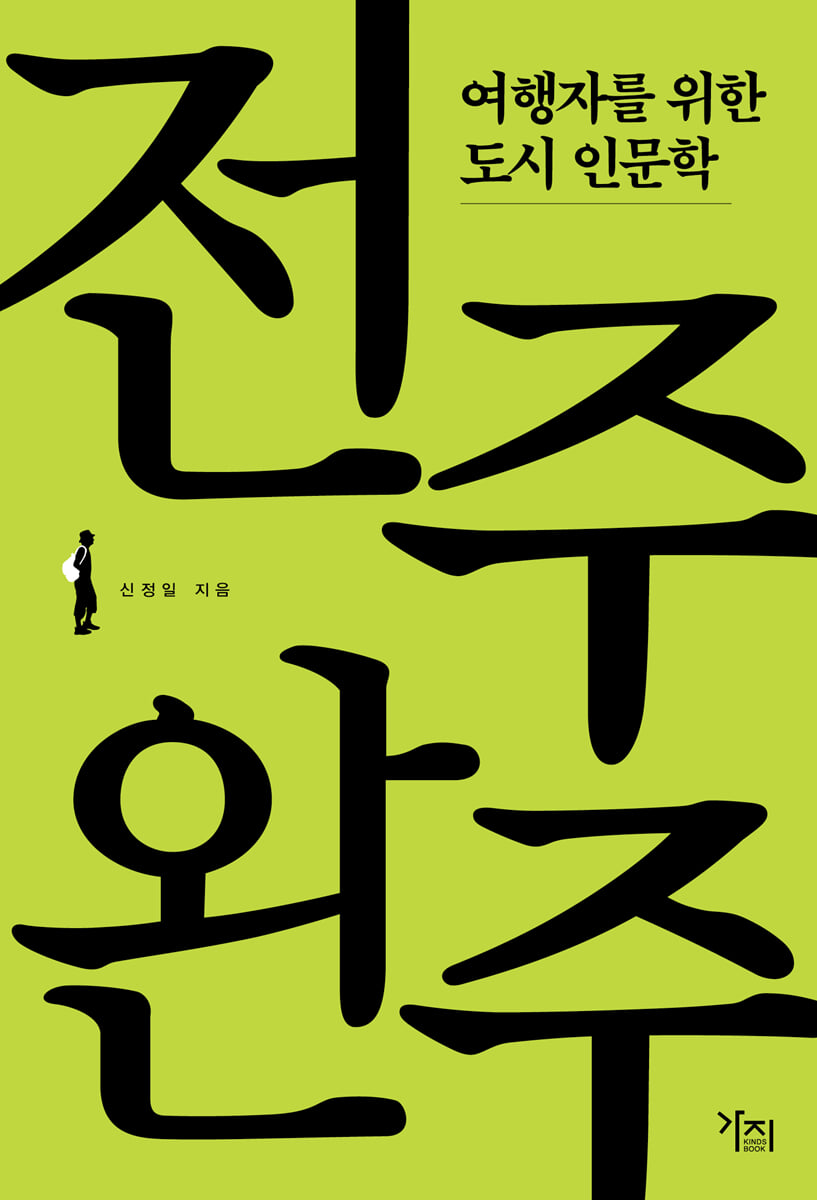
Jeonju Wanju
 |
Description
Book Introduction
"Honestly, you're pretty" "Yeah, that's right"
A land of two yet one: Jeonju and Wanju, a time to experience the culture and elegance of history.
A guide to Jeonju and Wanju's cultural travels for discerning city travelers.
Jeonju is a city steeped in culture and tradition, with a long history and tradition, and a unique personality unlike any other region.
Jeonju, where the name of the guest house was given as Pungpaejigwan (豊沛之館) because the ancestors of King Taejo Lee Seong-gye, the founder of the Joseon Dynasty, lived, is also the historical site where the Donghak Peasant Army entered the city without bloodshed and signed the Jeonju Peace Treaty.
Wanju County, nestled in the heart of Jeollabuk-do and encompassing Jeonju City, shares history and nature with Jeonju and boasts a remarkable number of famous mountains and temples.
While writing over 100 books, the author left writing about Jeonju and Wanju, where life's hopes and despair are tightly woven like a net, as a future assignment. In this book, the author weaves together his own story, etched into the city's time, as naturally as poetry.
This is truly a customized urban humanities book for travelers heading to Jeonju or Wanju.
A land of two yet one: Jeonju and Wanju, a time to experience the culture and elegance of history.
A guide to Jeonju and Wanju's cultural travels for discerning city travelers.
Jeonju is a city steeped in culture and tradition, with a long history and tradition, and a unique personality unlike any other region.
Jeonju, where the name of the guest house was given as Pungpaejigwan (豊沛之館) because the ancestors of King Taejo Lee Seong-gye, the founder of the Joseon Dynasty, lived, is also the historical site where the Donghak Peasant Army entered the city without bloodshed and signed the Jeonju Peace Treaty.
Wanju County, nestled in the heart of Jeollabuk-do and encompassing Jeonju City, shares history and nature with Jeonju and boasts a remarkable number of famous mountains and temples.
While writing over 100 books, the author left writing about Jeonju and Wanju, where life's hopes and despair are tightly woven like a net, as a future assignment. In this book, the author weaves together his own story, etched into the city's time, as naturally as poetry.
This is truly a customized urban humanities book for travelers heading to Jeonju or Wanju.
- You can preview some of the book's contents.
Preview
index
introduction
Jeonju and Wanju Humanities Map
Part 1 / Preface
Into history
1. The capital city of Later Baekje has become a cultural and tourist city full of Gaeseong.
2 The revival of the Baekje Dynasty dreamed of by Gyeon Hwon
3. Donggosanseong and Namgosanseong, the only Later Baekje relics in Korea
4 The world's first republican, Jeong Yeo-rip and the Gichuk Oksa
5. The Battle of Jeonju Castle during the Donghak Peasant Revolution, which wrote the history of the people's victory.
6 Why did Geonjisan become Jeonju’s guardian mountain?
7. The oldest road in Jeonju, Bogwangjae
Into space
1. The face of Jeonju, the face of Yi Seong-gye, Hanok Village and Gyeonggijeon
Omokdae, where traces of the two kings remain
3. Hanbyeokdang, a beautiful pavilion along the Jeonjucheon Stream
4. Autumn scenery I want to show you, Jeonju Hyanggyo
Jeondong Cathedral, built on the faith of five martyrs
Pungnammun Gate, a symbol of the 6,000-year-old capital
7. Jeonju Guesthouse in Memories, Pungpaejigwan
Jeolla Provincial Office restored after 70 years
9. Deokjin Park, a lake saturated with the scent of lotus flowers
Into the culture
1 Jeonju Daesa Seupnori, the birthplace of pansori masters
2 Hanji and fans made by skilled craftsmen
3 Shin Seok-jeong, a pastoral poet who lived in Bisabeolchosa
4 Choi Myung-hee, who left behind the spirit of "Honbul"
5 Modern calligraphers who formed a pair: Song Seong-yong and Hwang Uk
6 Bibimbap, bean sprout soup, gamjaekjib…, the taste of Jeonju
Part 2 / Wanju
Into history
1 Two yet one, Jeonju and Wanju
2 The lifeline of the Honam Plain, the source of the Mangyeong River
3 The Battle of Ungchi, which forced the surrender of Jeonju Castle
The Battle of Ichi, one of the four major battles of the Imjin War
5 Peasant uprising in Samrye, a transportation hub, the Donghak Peasant Revolution Samrye Uprising
6. Bongnimsa Temple Site, where cultural heritages are scattered
Into nature
1. The Great Mother's Mountain, Moaksan Mountain
2. Flame-like rocks and Geumgang Stairs, Daedunsan Mountain and Ansimsa Temple
Wibongsanseong Fortress, which holds Wibongsa Temple and Wibong Falls
4. Hwaamsa Temple, a tower in the sky on a rocky cliff
5. A historical walk to empty your mind: Bongseonsa Temple and Songgwangsa Temple
Wondeungsa Temple, rebuilt with Buddhist faith
7. Oseong Hanok Village, where you can enjoy a leisurely stroll and find happiness.
Into the culture
There is no trace of the 1-person group, only traces left in Gosan-myeon
2 Chonam Holy Land, where the first Korean Catholic martyr is buried
3. The flowing handwriting of Changam Lee Sam-man
4. Master singer Kwon Sam-deuk, who created the 'Pansori Seolleongje'
5. Kang Il-sun, who achieved enlightenment at Daewonsa Temple on Mt. Moak
6. Bibi Nakan and Bibi Jeong Art Train viewed from the Mangyeonggang Bridge
7 Ginger, dried persimmons, jujubes…, special products of Wanju
supplement
Recommended Walking Tour of Jeonju and Wanju
Jeonju #1: A beautiful forest in the city center, Geonjisan Trail
Jeonju #2 Namgosanseong Trail, overlooking Jeonju
Jeonju #3 The Essence of Jeonju Travel: Hanok Village
Wanju #1 People climbing Seobangsan Mountain
Wanju #2 People climbing Mt. Moak
Wanju #3 From Songgwangsa Temple to Wibongsa Temple, a Conversation with History
Search_Reading Jeonju and Wanju by keyword
Jeonju and Wanju Humanities Map
Part 1 / Preface
Into history
1. The capital city of Later Baekje has become a cultural and tourist city full of Gaeseong.
2 The revival of the Baekje Dynasty dreamed of by Gyeon Hwon
3. Donggosanseong and Namgosanseong, the only Later Baekje relics in Korea
4 The world's first republican, Jeong Yeo-rip and the Gichuk Oksa
5. The Battle of Jeonju Castle during the Donghak Peasant Revolution, which wrote the history of the people's victory.
6 Why did Geonjisan become Jeonju’s guardian mountain?
7. The oldest road in Jeonju, Bogwangjae
Into space
1. The face of Jeonju, the face of Yi Seong-gye, Hanok Village and Gyeonggijeon
Omokdae, where traces of the two kings remain
3. Hanbyeokdang, a beautiful pavilion along the Jeonjucheon Stream
4. Autumn scenery I want to show you, Jeonju Hyanggyo
Jeondong Cathedral, built on the faith of five martyrs
Pungnammun Gate, a symbol of the 6,000-year-old capital
7. Jeonju Guesthouse in Memories, Pungpaejigwan
Jeolla Provincial Office restored after 70 years
9. Deokjin Park, a lake saturated with the scent of lotus flowers
Into the culture
1 Jeonju Daesa Seupnori, the birthplace of pansori masters
2 Hanji and fans made by skilled craftsmen
3 Shin Seok-jeong, a pastoral poet who lived in Bisabeolchosa
4 Choi Myung-hee, who left behind the spirit of "Honbul"
5 Modern calligraphers who formed a pair: Song Seong-yong and Hwang Uk
6 Bibimbap, bean sprout soup, gamjaekjib…, the taste of Jeonju
Part 2 / Wanju
Into history
1 Two yet one, Jeonju and Wanju
2 The lifeline of the Honam Plain, the source of the Mangyeong River
3 The Battle of Ungchi, which forced the surrender of Jeonju Castle
The Battle of Ichi, one of the four major battles of the Imjin War
5 Peasant uprising in Samrye, a transportation hub, the Donghak Peasant Revolution Samrye Uprising
6. Bongnimsa Temple Site, where cultural heritages are scattered
Into nature
1. The Great Mother's Mountain, Moaksan Mountain
2. Flame-like rocks and Geumgang Stairs, Daedunsan Mountain and Ansimsa Temple
Wibongsanseong Fortress, which holds Wibongsa Temple and Wibong Falls
4. Hwaamsa Temple, a tower in the sky on a rocky cliff
5. A historical walk to empty your mind: Bongseonsa Temple and Songgwangsa Temple
Wondeungsa Temple, rebuilt with Buddhist faith
7. Oseong Hanok Village, where you can enjoy a leisurely stroll and find happiness.
Into the culture
There is no trace of the 1-person group, only traces left in Gosan-myeon
2 Chonam Holy Land, where the first Korean Catholic martyr is buried
3. The flowing handwriting of Changam Lee Sam-man
4. Master singer Kwon Sam-deuk, who created the 'Pansori Seolleongje'
5. Kang Il-sun, who achieved enlightenment at Daewonsa Temple on Mt. Moak
6. Bibi Nakan and Bibi Jeong Art Train viewed from the Mangyeonggang Bridge
7 Ginger, dried persimmons, jujubes…, special products of Wanju
supplement
Recommended Walking Tour of Jeonju and Wanju
Jeonju #1: A beautiful forest in the city center, Geonjisan Trail
Jeonju #2 Namgosanseong Trail, overlooking Jeonju
Jeonju #3 The Essence of Jeonju Travel: Hanok Village
Wanju #1 People climbing Seobangsan Mountain
Wanju #2 People climbing Mt. Moak
Wanju #3 From Songgwangsa Temple to Wibongsa Temple, a Conversation with History
Search_Reading Jeonju and Wanju by keyword
Detailed image

Into the book
Gyeon Hwon, who established the capital in Jeonju, declared the name of the country to be 'Baekje', meaning that he would proudly carry on the tradition of Baekje.
Later Baekje is simply a name given by later historians to distinguish it from former Baekje.
And he proclaimed himself the Great King and proclaimed the reign title Jeonggae.
Unlike Kim Chun-chu and Kim Yu-sin, who used the Tang era name after bringing in the foreign power Tang to destroy Goguryeo and Baekje, they used an independent era name.
--- p.26
Although the 'Cheonha Gongmul Theory' and the 'Daedong Thought' failed before they could bloom, his thoughts led to Heo Gyun's revolutionary ideology of Hominron, which in turn led to the Tangmu Revolutionary Theory of Dasan Jeong Yak-yong, a Silhak scholar during the reign of King Jeongjo.
After the Gichuk Oksa incident, the Honam region was forced to face discrimination like the northwestern region, and this phenomenon led to numerous civil unrest, which eventually erupted into the Donghak Peasant Revolution of 1894, the starting point of modern history.
--- p.45
The Donghak Peasant Revolution, which began with the corrupt official Jo Byeong-gap in Gobu, Jeolla Province, is considered the starting point of modern and contemporary history in Korea, and Jeonju is a monumental city in the history of Donghak.
It is also a place that witnessed a sad history.
--- p.51
The Hanok Village is home to cultural heritage sites and facilities such as Gyeonggijeon (Eojin Museum), Kimchi Culture Center, Sound Culture Center, Fan Culture Center, Wanpanbon Culture Center, Jeonju Traditional Literature Museum, and Choi Myeong-hee Literature Center.
Hanbyeokdang, Jeonju Hyanggyo, Omokdae and Imokdae, and Jeondong Cathedral are also famous landmarks of Jeonju located within the Hanok Village.
Hanok Village is the face and symbol of Jeonju and the starting point of any trip to Jeonju.
--- p.73
The cathedral was built using gray and red bricks in a mixture of Byzantine and Romanesque styles.
Some of the bricks were made by baking the soil that was found when the Japanese Residency-General demolished Jeonju Castle, and the cornerstone was made from stones from the castle wall near Pungnammun Gate.
It is the largest of the early Catholic churches and has a splendid exterior that catches people's attention.
--- p.95
The first thing that catches the eye at Jeonju Guest House is the plaque that reads ‘Pungpaejigwan (沛之館)’.
Pungpae refers to the hometown of Liu Bang, the founder of the Han dynasty in China, and the name was written on the guest house to indicate that Jeonju was the hometown of Taejo Lee Seong-gye, the founder of the Joseon dynasty.
It is known to be the handwriting of the Chinese writer Zhu Jifan, who came as an envoy during the reign of King Seonjo and was welcomed by Heo Gyun.
--- p.104
At that time, it was considered a greater honor to gain fame in Jeonju than to gain fame in Hanyang.
The treatment of the clowns was also generous. Not only were they paid generously for their singing, but they were also allowed to stay at a gisaeng house with excellent cooking skills until the end of the competition.
The 15 clowns who won the competition, including Kwon Sam-deuk, Shin Jae-ho, and Song Man-gap, were awarded government posts such as Uigwan, Tongjeong, Prosecutor, Owijang, Chambong, and Seondal, and were also given the title of Myeongsang.
--- p.117
The reason Jeonju Hanji became a national specialty is because the clean water of Jeonjucheon and the mulberry trees, the raw material for Hanji, were produced in large quantities in the Jeonju area, and because skilled craftsmen have lived there for generations with a long history and tradition.
Jeonju institutionalized the cultivation of mulberry trees since the Goryeo Dynasty, requiring local government offices to cultivate mulberry fields.
--- p.122
It vividly depicts the elegance of the yangban society that maintained its traditional way of life and the joys and sorrows of the common people. The culture of the Honam region, including rites of passage such as weddings, seasonal customs such as the first full moon of the lunar year, and dialects, are depicted in detail.
He cited numerous scholars' anthologies, including Chogan Gwonmunhae's Choganjip, to inspire writers and provide guidance on how to live.
--- p.130
The source of the Man-gyeong River, which was nothing more than a nameless valley, was given the beautiful name of ‘Bamsam’ in 2001.
The name was given by members of the Jeonbuk Mountain Love Association after the village of ‘Bamti’, which was named after the many chestnut trees there.
The number of people going on overnight treks to enjoy the breathtaking natural beauty of the ancient world is also increasing.
--- p.149
The Japanese army, which won this battle, was so impressed by the courage and bravery of the Joseon army that they gathered the remains of the Joseon soldiers scattered around Ungchijae and built a large tomb. They erected a sign on top of it and wrote, “We pay our respects to the loyalty and righteous courage of the Joseon nation (吊朝鮮國忠肝義膽).”
Although the Battle of Ungchi did not defeat the enemy, it created an opportunity for the Japanese army to give up on occupying Jeonju Castle.
--- p.152
It is said that so many residents participated in the Samrye Uprising that there was a saying, "There is no one in Samrye who is not a follower of the Donghak religion." If that is true, it is estimated that after the peasant revolution failed, one person from every household in Samrye would have died.
--- p.162
What kind of mountain is Moaksan? It's where the Silla Dynasty's Jinpyo Yulsa cultivated the Maitreya philosophy, and where Jeong Yeo-rip's Daedong thought flourished.
Wasn't this one of the epicenters of the Donghak Peasant Revolution of 1894 and the place where Jeungsan Kang Il-sun attained enlightenment and developed the Hwaeom philosophy of opening up the world to the future?
--- p.171
Wibongsanseong Fortress was built in the first year of King Sukjong's reign (1675) to house a portrait of King Taejo, Yi Seong-gye.
During the Imjin War, the Jeongyu War, and the Byeongja War, the portrait of King Taejo and the Annals of the Joseon Dynasty, which were enshrined in Gyeonggijeon in Jeonju, suffered the ordeal of being taken away several times.
It was moved to places such as Yonggul Rock in Naejangsan Mountain in Jeongeup, Ganghwa in Gyeonggi-do, Myohyangsan Mountain in Pyeongan-do, and Jeoksangsanseong Fortress in Muju.
--- p.179
Uhwaru, which has the wonderful name of 'It's Raining Flowers', is a place that is beautiful both from the outside and the inside, making you want to stay there forever.
It is estimated to have been built around the same time as Geukrakjeon, and is a wooden building in the shape of a pavilion with a gable roof, three bays in the front and three bays on the side.
The front pillars facing the Daeungjeon are two-story, and the rear facing the valley is in the form of a pavilion built after building a foundation.
--- p.186
Bau Baegi was a place that Father Kim Jin-so, who had been working on identifying the remains of martyrs, had planned to excavate in October 1995 while searching for Yun Ji-chung's grave, presuming it to be the martyr's grave.
However, by chance, an incident occurred in which Father Kim lost the church history materials he had collected over 20 years, and in the meantime, the excavation of the Bau-Baegi was forgotten.
It's a strange coincidence that I couldn't find it then and found it this time by chance.
--- p.219
Kwon Sam-deuk's real name is Sa-in, and his family origin is Andong.
He was one of the eight famous pansori singers who were active during the reigns of King Jeongjo and King Sunjo of the Joseon Dynasty. He created a unique pansori melody called ‘Pansori Seolleongje’ by applying the melody of Gwonmaseong (勸馬聲).
It is a vocal sound that is made by shouting out loud for a long time, and is still used in many songs today, such as the part where the swallows go out to catch a swallow in “Heungboga” and the part where the military officer goes out to catch a swallow in “Chunhyangga.”
--- p.226
Unlike other religious leaders, Kang Il-sun emphasized the resolution of grievances. He believed that resolution could not be achieved through the resolution of personal grudges, but could only be achieved by thoroughly correcting the way of the operation of heaven and earth.
Through such a solution, he emphasized that 'we must create a paradise filled with reconciliation and harmony in this life, not in the afterlife or the next.'
Later Baekje is simply a name given by later historians to distinguish it from former Baekje.
And he proclaimed himself the Great King and proclaimed the reign title Jeonggae.
Unlike Kim Chun-chu and Kim Yu-sin, who used the Tang era name after bringing in the foreign power Tang to destroy Goguryeo and Baekje, they used an independent era name.
--- p.26
Although the 'Cheonha Gongmul Theory' and the 'Daedong Thought' failed before they could bloom, his thoughts led to Heo Gyun's revolutionary ideology of Hominron, which in turn led to the Tangmu Revolutionary Theory of Dasan Jeong Yak-yong, a Silhak scholar during the reign of King Jeongjo.
After the Gichuk Oksa incident, the Honam region was forced to face discrimination like the northwestern region, and this phenomenon led to numerous civil unrest, which eventually erupted into the Donghak Peasant Revolution of 1894, the starting point of modern history.
--- p.45
The Donghak Peasant Revolution, which began with the corrupt official Jo Byeong-gap in Gobu, Jeolla Province, is considered the starting point of modern and contemporary history in Korea, and Jeonju is a monumental city in the history of Donghak.
It is also a place that witnessed a sad history.
--- p.51
The Hanok Village is home to cultural heritage sites and facilities such as Gyeonggijeon (Eojin Museum), Kimchi Culture Center, Sound Culture Center, Fan Culture Center, Wanpanbon Culture Center, Jeonju Traditional Literature Museum, and Choi Myeong-hee Literature Center.
Hanbyeokdang, Jeonju Hyanggyo, Omokdae and Imokdae, and Jeondong Cathedral are also famous landmarks of Jeonju located within the Hanok Village.
Hanok Village is the face and symbol of Jeonju and the starting point of any trip to Jeonju.
--- p.73
The cathedral was built using gray and red bricks in a mixture of Byzantine and Romanesque styles.
Some of the bricks were made by baking the soil that was found when the Japanese Residency-General demolished Jeonju Castle, and the cornerstone was made from stones from the castle wall near Pungnammun Gate.
It is the largest of the early Catholic churches and has a splendid exterior that catches people's attention.
--- p.95
The first thing that catches the eye at Jeonju Guest House is the plaque that reads ‘Pungpaejigwan (沛之館)’.
Pungpae refers to the hometown of Liu Bang, the founder of the Han dynasty in China, and the name was written on the guest house to indicate that Jeonju was the hometown of Taejo Lee Seong-gye, the founder of the Joseon dynasty.
It is known to be the handwriting of the Chinese writer Zhu Jifan, who came as an envoy during the reign of King Seonjo and was welcomed by Heo Gyun.
--- p.104
At that time, it was considered a greater honor to gain fame in Jeonju than to gain fame in Hanyang.
The treatment of the clowns was also generous. Not only were they paid generously for their singing, but they were also allowed to stay at a gisaeng house with excellent cooking skills until the end of the competition.
The 15 clowns who won the competition, including Kwon Sam-deuk, Shin Jae-ho, and Song Man-gap, were awarded government posts such as Uigwan, Tongjeong, Prosecutor, Owijang, Chambong, and Seondal, and were also given the title of Myeongsang.
--- p.117
The reason Jeonju Hanji became a national specialty is because the clean water of Jeonjucheon and the mulberry trees, the raw material for Hanji, were produced in large quantities in the Jeonju area, and because skilled craftsmen have lived there for generations with a long history and tradition.
Jeonju institutionalized the cultivation of mulberry trees since the Goryeo Dynasty, requiring local government offices to cultivate mulberry fields.
--- p.122
It vividly depicts the elegance of the yangban society that maintained its traditional way of life and the joys and sorrows of the common people. The culture of the Honam region, including rites of passage such as weddings, seasonal customs such as the first full moon of the lunar year, and dialects, are depicted in detail.
He cited numerous scholars' anthologies, including Chogan Gwonmunhae's Choganjip, to inspire writers and provide guidance on how to live.
--- p.130
The source of the Man-gyeong River, which was nothing more than a nameless valley, was given the beautiful name of ‘Bamsam’ in 2001.
The name was given by members of the Jeonbuk Mountain Love Association after the village of ‘Bamti’, which was named after the many chestnut trees there.
The number of people going on overnight treks to enjoy the breathtaking natural beauty of the ancient world is also increasing.
--- p.149
The Japanese army, which won this battle, was so impressed by the courage and bravery of the Joseon army that they gathered the remains of the Joseon soldiers scattered around Ungchijae and built a large tomb. They erected a sign on top of it and wrote, “We pay our respects to the loyalty and righteous courage of the Joseon nation (吊朝鮮國忠肝義膽).”
Although the Battle of Ungchi did not defeat the enemy, it created an opportunity for the Japanese army to give up on occupying Jeonju Castle.
--- p.152
It is said that so many residents participated in the Samrye Uprising that there was a saying, "There is no one in Samrye who is not a follower of the Donghak religion." If that is true, it is estimated that after the peasant revolution failed, one person from every household in Samrye would have died.
--- p.162
What kind of mountain is Moaksan? It's where the Silla Dynasty's Jinpyo Yulsa cultivated the Maitreya philosophy, and where Jeong Yeo-rip's Daedong thought flourished.
Wasn't this one of the epicenters of the Donghak Peasant Revolution of 1894 and the place where Jeungsan Kang Il-sun attained enlightenment and developed the Hwaeom philosophy of opening up the world to the future?
--- p.171
Wibongsanseong Fortress was built in the first year of King Sukjong's reign (1675) to house a portrait of King Taejo, Yi Seong-gye.
During the Imjin War, the Jeongyu War, and the Byeongja War, the portrait of King Taejo and the Annals of the Joseon Dynasty, which were enshrined in Gyeonggijeon in Jeonju, suffered the ordeal of being taken away several times.
It was moved to places such as Yonggul Rock in Naejangsan Mountain in Jeongeup, Ganghwa in Gyeonggi-do, Myohyangsan Mountain in Pyeongan-do, and Jeoksangsanseong Fortress in Muju.
--- p.179
Uhwaru, which has the wonderful name of 'It's Raining Flowers', is a place that is beautiful both from the outside and the inside, making you want to stay there forever.
It is estimated to have been built around the same time as Geukrakjeon, and is a wooden building in the shape of a pavilion with a gable roof, three bays in the front and three bays on the side.
The front pillars facing the Daeungjeon are two-story, and the rear facing the valley is in the form of a pavilion built after building a foundation.
--- p.186
Bau Baegi was a place that Father Kim Jin-so, who had been working on identifying the remains of martyrs, had planned to excavate in October 1995 while searching for Yun Ji-chung's grave, presuming it to be the martyr's grave.
However, by chance, an incident occurred in which Father Kim lost the church history materials he had collected over 20 years, and in the meantime, the excavation of the Bau-Baegi was forgotten.
It's a strange coincidence that I couldn't find it then and found it this time by chance.
--- p.219
Kwon Sam-deuk's real name is Sa-in, and his family origin is Andong.
He was one of the eight famous pansori singers who were active during the reigns of King Jeongjo and King Sunjo of the Joseon Dynasty. He created a unique pansori melody called ‘Pansori Seolleongje’ by applying the melody of Gwonmaseong (勸馬聲).
It is a vocal sound that is made by shouting out loud for a long time, and is still used in many songs today, such as the part where the swallows go out to catch a swallow in “Heungboga” and the part where the military officer goes out to catch a swallow in “Chunhyangga.”
--- p.226
Unlike other religious leaders, Kang Il-sun emphasized the resolution of grievances. He believed that resolution could not be achieved through the resolution of personal grudges, but could only be achieved by thoroughly correcting the way of the operation of heaven and earth.
Through such a solution, he emphasized that 'we must create a paradise filled with reconciliation and harmony in this life, not in the afterlife or the next.'
--- p.232
Publisher's Review
The hometown of King Taejo Yi Seong-gye and the home of pansori and complete versions
Walking the Millennium Road, a Blend of Pride and Individuality
In 1905, when the Japanese Government-General of Korea established a plan to build the Honam Line, conflict over attracting the railway line became acute.
Japan initially considered the Geumma-Jeonju-Mokpo route, but fierce opposition arose in Jeonju.
The Jeonju Confucian scholars said, “When the train passes through Yongmeori Pass in Wansan-dong, the pulse of Jeonju is cut off, the ground shakes, and the geomantic sites shake.
Then, he argued, “we cannot avoid the ‘disaster of destruction’ where public sentiment changes and both talent and wealth become impoverished.”
Local residents, concerned that traditional commercial districts would collapse, also joined the opposition.
On the other hand, the Japanese living in Gunsan, Jeonju, and Iri (present-day Iksan) risked their lives to bring the route into their sphere of influence.
Eventually, the Japanese Government-General of Korea decided on the Iri-Mokcheonpo-Gimje route, and Iksan subsequently developed into a key land transportation hub that connected the entire Jeolla Province like a spider web.
In 1915, when Iksan rapidly developed into a new city with 2,053 Japanese and 1,367 Koreans living there, the Japanese rejoiced, calling it an "unprecedented event," while the Koreans were shocked by the power and speed of the railroad.
Jeonju, the capital of Later Baekje for 36 years, the central city of Jeolla Province during the Goryeo and Joseon Dynasties, and the location of the Jeolla Provincial Office, which governed the entire Jeolla Province and Jeju Island for 500 years during the Joseon Dynasty, was left as a small provincial city as it was neglected in transportation and industrialization.
However, today's Jeonju has created new value as a cultural tourism city that shines with its own unique character, 'Jeonju-ness', despite its small size.
The home of Pansori, a UNESCO World Heritage Site, and a "City of Creative Gastronomy," is always bustling with visitors.
Hanok Village, visited by over 10 million domestic and foreign tourists every year, is considered one of the most visited places in Korea.
As befitting the home of Hanji and books, Jeonju is also known as a 'city of books' with many libraries.
Starting with the Book Pillar Library in the lobby of Jeonju City Hall, dozens of libraries have opened, including the City Library Kkotsim, the Traveler's Library, the Poplar Tree Picture Library at the Palbok Art Factory, and the Haksan Poetry Library. Korea's first street library is also being built.
Meanwhile, Wanju was called Wansanju during the Baekje period, Jeonju during the Unified Silla period, Wansanju during the Goryeo period, and Jeonju-bu during the Joseon period, and was changed to Jeonju-gun in 1895.
In 1935, Jeonju and Wanju were separated, and later some of Wanju's towns and districts were incorporated into Jeonju City.
Although the administrative districts were one and then two, people in the past did not divide Jeonju and Wanju, but enjoyed them as one large landscape.
The 'Wansan Palgyeong', which refers to the eight scenic spots of Jeonju and Wanju, includes six scenes from Jeonju and two scenes from Wanju.
If you add two more to these eight scenic views, you get the 'Ten Scenic Views of Wansan', and one of them is also a landscape of Wanju.
This book introduces Jeonju and Wanju, two cities that are one, in a concise manner.
The rise and fall of the ancient kingdom of Later Baekje, the glory enjoyed by the ancestors of King Taejo Yi Seong-gye, who founded the Joseon Dynasty, the meaningful uprisings and gatherings of the Donghak Peasant Army, Jeong Yeo-rip's Great Unity Thought and Gichuk Oksa, Jeungsan Kang Il-sun's Later Heavenly Opening Thought, Korean traditions contained in Choi Myeong-hui's "Honbul," Jeondong Cathedral and Chonam-i Holy Land, which bear witness to the history of Korean Catholicism, and the mountains and fields that have witnessed history...
So many stories are crammed into a small space.
Here, the author's earnest hope that Jeonju and Wanju will become one again and make a greater leap forward was added to the story through his actual experiences and activities, adding depth to the story.
The book is largely divided into the Jeonju and Wanju sections.
The Jeonju section is composed of history, space, and culture, while the Wanju section is composed of history, nature, and culture.
In the Jeonju chapter, the story of Gyeon Hwon and the Donghak Peasant Army forms the core.
Gyeon Hwon's great ambition to proclaim the independent era name Jeonggae and take the first bold step to revive the Baekje Dynasty that had fallen miserably ended in an internal conflict with his son.
Donggosanseong Fortress and Namgosanseong Fortress are precious historical sites that contain the breath and story of Gyeon Hwon.
Jeong Yeo-rip's 'theory of public ownership of the world' and 'the idea of unity' failed before they could blossom, but his ideas led to Heo Gyun's theory of the people's welfare and Dasan Jeong Yak-yong's theory of the Tangmu Revolution.
After the Gichuk Oksa incident, the public sentiment of the Honam region, which had been discriminated against, was expressed in numerous civil unrests, which eventually erupted into the Donghak Peasant Revolution in 1894.
The Donghak Peasant Revolution is the starting point of modern and contemporary history in our country, and Jeonju is a monumental city in the history of Donghak.
In the Wanju section, stories about nature, such as Mt. Moak, Mt. Daedun, and Mangyeong River, form the core.
At Daedunsan Mountain, known as the “Geumgangsan of Honam,” you can see the Geumgang Stairs of Ansimsa Temple (Treasure No. 1434), which enshrines the Buddha’s relics, along with a forest of bizarre rocks that burn like flames.
There are about 1,300 mountain fortresses remaining in our country, but the names of many of them are not well known.
In that sense, Wibongsanseong Fortress in Soyang-myeon has great historical value as it was built to house a portrait of King Taejo Yi Seong-gye.
The author's achievements are also interestingly revealed, such as launching the 'Moaksan Saving Movement' in 1995 when the wind of development for Mt. Moak blew, preventing indiscriminate development, and reviving Mt. Apdae, which was on the verge of disappearing when National Road No. 17 was reoriented in the early 2000s, by digging a tunnel.
In May, filled with the warm breeze, let's take this book and set out to discover the living, breathing soul of Jeonju and Wanju.
Exclamations like “Honestly, it’s pretty” and “That’s right” will come out naturally.
Walking the Millennium Road, a Blend of Pride and Individuality
In 1905, when the Japanese Government-General of Korea established a plan to build the Honam Line, conflict over attracting the railway line became acute.
Japan initially considered the Geumma-Jeonju-Mokpo route, but fierce opposition arose in Jeonju.
The Jeonju Confucian scholars said, “When the train passes through Yongmeori Pass in Wansan-dong, the pulse of Jeonju is cut off, the ground shakes, and the geomantic sites shake.
Then, he argued, “we cannot avoid the ‘disaster of destruction’ where public sentiment changes and both talent and wealth become impoverished.”
Local residents, concerned that traditional commercial districts would collapse, also joined the opposition.
On the other hand, the Japanese living in Gunsan, Jeonju, and Iri (present-day Iksan) risked their lives to bring the route into their sphere of influence.
Eventually, the Japanese Government-General of Korea decided on the Iri-Mokcheonpo-Gimje route, and Iksan subsequently developed into a key land transportation hub that connected the entire Jeolla Province like a spider web.
In 1915, when Iksan rapidly developed into a new city with 2,053 Japanese and 1,367 Koreans living there, the Japanese rejoiced, calling it an "unprecedented event," while the Koreans were shocked by the power and speed of the railroad.
Jeonju, the capital of Later Baekje for 36 years, the central city of Jeolla Province during the Goryeo and Joseon Dynasties, and the location of the Jeolla Provincial Office, which governed the entire Jeolla Province and Jeju Island for 500 years during the Joseon Dynasty, was left as a small provincial city as it was neglected in transportation and industrialization.
However, today's Jeonju has created new value as a cultural tourism city that shines with its own unique character, 'Jeonju-ness', despite its small size.
The home of Pansori, a UNESCO World Heritage Site, and a "City of Creative Gastronomy," is always bustling with visitors.
Hanok Village, visited by over 10 million domestic and foreign tourists every year, is considered one of the most visited places in Korea.
As befitting the home of Hanji and books, Jeonju is also known as a 'city of books' with many libraries.
Starting with the Book Pillar Library in the lobby of Jeonju City Hall, dozens of libraries have opened, including the City Library Kkotsim, the Traveler's Library, the Poplar Tree Picture Library at the Palbok Art Factory, and the Haksan Poetry Library. Korea's first street library is also being built.
Meanwhile, Wanju was called Wansanju during the Baekje period, Jeonju during the Unified Silla period, Wansanju during the Goryeo period, and Jeonju-bu during the Joseon period, and was changed to Jeonju-gun in 1895.
In 1935, Jeonju and Wanju were separated, and later some of Wanju's towns and districts were incorporated into Jeonju City.
Although the administrative districts were one and then two, people in the past did not divide Jeonju and Wanju, but enjoyed them as one large landscape.
The 'Wansan Palgyeong', which refers to the eight scenic spots of Jeonju and Wanju, includes six scenes from Jeonju and two scenes from Wanju.
If you add two more to these eight scenic views, you get the 'Ten Scenic Views of Wansan', and one of them is also a landscape of Wanju.
This book introduces Jeonju and Wanju, two cities that are one, in a concise manner.
The rise and fall of the ancient kingdom of Later Baekje, the glory enjoyed by the ancestors of King Taejo Yi Seong-gye, who founded the Joseon Dynasty, the meaningful uprisings and gatherings of the Donghak Peasant Army, Jeong Yeo-rip's Great Unity Thought and Gichuk Oksa, Jeungsan Kang Il-sun's Later Heavenly Opening Thought, Korean traditions contained in Choi Myeong-hui's "Honbul," Jeondong Cathedral and Chonam-i Holy Land, which bear witness to the history of Korean Catholicism, and the mountains and fields that have witnessed history...
So many stories are crammed into a small space.
Here, the author's earnest hope that Jeonju and Wanju will become one again and make a greater leap forward was added to the story through his actual experiences and activities, adding depth to the story.
The book is largely divided into the Jeonju and Wanju sections.
The Jeonju section is composed of history, space, and culture, while the Wanju section is composed of history, nature, and culture.
In the Jeonju chapter, the story of Gyeon Hwon and the Donghak Peasant Army forms the core.
Gyeon Hwon's great ambition to proclaim the independent era name Jeonggae and take the first bold step to revive the Baekje Dynasty that had fallen miserably ended in an internal conflict with his son.
Donggosanseong Fortress and Namgosanseong Fortress are precious historical sites that contain the breath and story of Gyeon Hwon.
Jeong Yeo-rip's 'theory of public ownership of the world' and 'the idea of unity' failed before they could blossom, but his ideas led to Heo Gyun's theory of the people's welfare and Dasan Jeong Yak-yong's theory of the Tangmu Revolution.
After the Gichuk Oksa incident, the public sentiment of the Honam region, which had been discriminated against, was expressed in numerous civil unrests, which eventually erupted into the Donghak Peasant Revolution in 1894.
The Donghak Peasant Revolution is the starting point of modern and contemporary history in our country, and Jeonju is a monumental city in the history of Donghak.
In the Wanju section, stories about nature, such as Mt. Moak, Mt. Daedun, and Mangyeong River, form the core.
At Daedunsan Mountain, known as the “Geumgangsan of Honam,” you can see the Geumgang Stairs of Ansimsa Temple (Treasure No. 1434), which enshrines the Buddha’s relics, along with a forest of bizarre rocks that burn like flames.
There are about 1,300 mountain fortresses remaining in our country, but the names of many of them are not well known.
In that sense, Wibongsanseong Fortress in Soyang-myeon has great historical value as it was built to house a portrait of King Taejo Yi Seong-gye.
The author's achievements are also interestingly revealed, such as launching the 'Moaksan Saving Movement' in 1995 when the wind of development for Mt. Moak blew, preventing indiscriminate development, and reviving Mt. Apdae, which was on the verge of disappearing when National Road No. 17 was reoriented in the early 2000s, by digging a tunnel.
In May, filled with the warm breeze, let's take this book and set out to discover the living, breathing soul of Jeonju and Wanju.
Exclamations like “Honestly, it’s pretty” and “That’s right” will come out naturally.
GOODS SPECIFICS
- Date of issue: June 1, 2022
- Page count, weight, size: 264 pages | 280g | 128*188*18mm
- ISBN13: 9791186440889
- ISBN10: 1186440880
You may also like
카테고리
korean


korean

![GQ KOREA Mark (Monthly): December [2025]](http://librairie.coreenne.fr/cdn/shop/files/8ef265dbbfbf186523ed75ba7319009d.jpg?v=1765340328&width=3840)


