

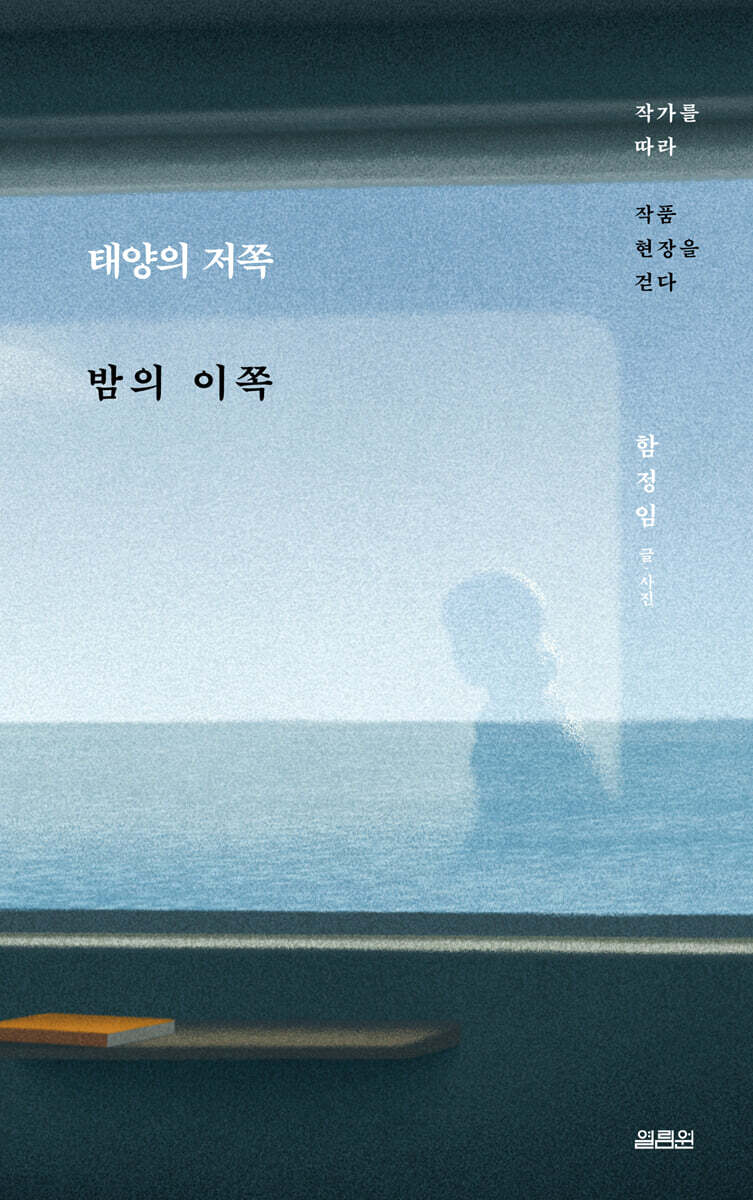
That side of the sun, this side of the night
 |
Description
Book Introduction
“I can’t live a single day without novels, and I can’t live without traveling.” A world literature travelogue by Ham Jeong-im, a writer who loves novels and travel.
From Proust's Paris, Thomas Mann's Venice, Camus's Lourmarin, Park Wan-seo's Archiul Village, to the Han River and Park Sol-moe's Gwangju.
He seeks to discover what captivated these writers throughout their lives, as they spent their days “day and night” in the writers’ spaces, creating immortal works.
In order to discover “the archetypes from which someone’s literature originates, the true forces that make life literature,” he inevitably gets up and leaves again.
“Into the scene, where the author and his work live and breathe forever.”
From Proust's Paris, Thomas Mann's Venice, Camus's Lourmarin, Park Wan-seo's Archiul Village, to the Han River and Park Sol-moe's Gwangju.
He seeks to discover what captivated these writers throughout their lives, as they spent their days “day and night” in the writers’ spaces, creating immortal works.
In order to discover “the archetypes from which someone’s literature originates, the true forces that make life literature,” he inevitably gets up and leaves again.
“Into the scene, where the author and his work live and breathe forever.”
- You can preview some of the book's contents.
Preview
index
Part 1
Love and life flow along the river
Beyond the sun, this side of the night
After a long journey, we arrived at Great Neck.
Lost Time, Regained Paris
Memories, vertigo, and the emotions of travel
On some of Benjamin's scenes that are more dramatic than the novel's protagonist.
Part 2
Origin of Wandering, Eternal Dwelling
If not here, then anywhere
Normandy, the constellation of novels
Places and aspects of places in short stories
A long journey to a simple life
Remembering Park Wan-seo in Camus's Lourmarin
Part 3
To the hill of myth along the two waves
Istanbul, near and far
A fleeting spring, slow thinking
Metaphors of Love, the Long Journey to Reconciliation
Mount Fuji and its three scenic views, as seen through a personal novel
Writing and Mourning, From Life to Literature
Part 4
St. Petersburg, into the novel of the white nights
Fall in love with beauty, die in love with beauty
Elegy of the Soul toward Purity
A way or place to seek newness
Novella Paradiso on the beach
The Sea of Life, the Illusion of a Boat
Epilogue
References and Citations
Love and life flow along the river
Beyond the sun, this side of the night
After a long journey, we arrived at Great Neck.
Lost Time, Regained Paris
Memories, vertigo, and the emotions of travel
On some of Benjamin's scenes that are more dramatic than the novel's protagonist.
Part 2
Origin of Wandering, Eternal Dwelling
If not here, then anywhere
Normandy, the constellation of novels
Places and aspects of places in short stories
A long journey to a simple life
Remembering Park Wan-seo in Camus's Lourmarin
Part 3
To the hill of myth along the two waves
Istanbul, near and far
A fleeting spring, slow thinking
Metaphors of Love, the Long Journey to Reconciliation
Mount Fuji and its three scenic views, as seen through a personal novel
Writing and Mourning, From Life to Literature
Part 4
St. Petersburg, into the novel of the white nights
Fall in love with beauty, die in love with beauty
Elegy of the Soul toward Purity
A way or place to seek newness
Novella Paradiso on the beach
The Sea of Life, the Illusion of a Boat
Epilogue
References and Citations
Detailed image

Into the book
Hemingway lived in Pinkavihia, meaning "farm with a view," and hung out with fishermen. In his thirteenth year, he wrote a novel about an old fisherman who fights marlin alone for four days and nights in a sailboat.
Hemingway's house had a large garden, and on one side stood the old man's ship, the Fila.
In front of it were graves of the dogs and cats he had raised.
--- p.28
As we walked along the curved road with Village Hall on our left, a “red and white Georgian colonial-style mansion” quietly awaited us beneath the lush branches of old trees.
6 Great Neck Gateway Drive.
The scene of Zelda holding her daughter Scotty in the grass seemed like a hallucination.
--- p.56
Sometimes I spend hours, or even days, chasing scenes triggered by dreams, but Benjamin, unexpectedly awakened on a clear morning, urged me to put aside worldly matters for a moment and relive the streets, arcades, and libraries I had wandered through on my constant trips to and from Paris.
I was so captivated by the scenes surrounding Benjamin that I even incorporated them into my writings, even into my novels.
--- p.96
When I think of the teacher's newly built house in Archiul Village at the foot of Acha Mountain, the first thing that comes to mind is peppermint tea.
Teacher Park Wan-seo planted mint in her newly cultivated garden and served her guests tea made from steeping the mint leaves.
After moving, the teacher would tell us about the sunrise he would see every morning from his living room window.
But since I had never personally seen the spectacle that the teacher had excitedly described, the scent of peppermint tea was more etched in my mind than the sunrise.
--- p.189
I walked along the sandy beach where Aschenbach died.
As I walked, a trail followed me.
I turned my back to the sunset and went to the beach where the boy was standing.
For Thomas Mann, or rather for Aschenbach, the boy was beauty, nothing more, nothing less.
In reality, the people who dedicate their lives to something that is either there or not are writers and artists.
The sunset had disappeared, and the way back was long.
--- pp.298~299
Whether it's Han River's narrative of mourning as a list, or Park Sol-mae's strangely interwoven tales, they offer a mysterious healing power by properly calling out the old sorrows trapped within oneself, or the names floating around inside and outside of oneself, on every page.
Healing is becoming lighter, becoming free.
Hemingway's house had a large garden, and on one side stood the old man's ship, the Fila.
In front of it were graves of the dogs and cats he had raised.
--- p.28
As we walked along the curved road with Village Hall on our left, a “red and white Georgian colonial-style mansion” quietly awaited us beneath the lush branches of old trees.
6 Great Neck Gateway Drive.
The scene of Zelda holding her daughter Scotty in the grass seemed like a hallucination.
--- p.56
Sometimes I spend hours, or even days, chasing scenes triggered by dreams, but Benjamin, unexpectedly awakened on a clear morning, urged me to put aside worldly matters for a moment and relive the streets, arcades, and libraries I had wandered through on my constant trips to and from Paris.
I was so captivated by the scenes surrounding Benjamin that I even incorporated them into my writings, even into my novels.
--- p.96
When I think of the teacher's newly built house in Archiul Village at the foot of Acha Mountain, the first thing that comes to mind is peppermint tea.
Teacher Park Wan-seo planted mint in her newly cultivated garden and served her guests tea made from steeping the mint leaves.
After moving, the teacher would tell us about the sunrise he would see every morning from his living room window.
But since I had never personally seen the spectacle that the teacher had excitedly described, the scent of peppermint tea was more etched in my mind than the sunrise.
--- p.189
I walked along the sandy beach where Aschenbach died.
As I walked, a trail followed me.
I turned my back to the sunset and went to the beach where the boy was standing.
For Thomas Mann, or rather for Aschenbach, the boy was beauty, nothing more, nothing less.
In reality, the people who dedicate their lives to something that is either there or not are writers and artists.
The sunset had disappeared, and the way back was long.
--- pp.298~299
Whether it's Han River's narrative of mourning as a list, or Park Sol-mae's strangely interwoven tales, they offer a mysterious healing power by properly calling out the old sorrows trapped within oneself, or the names floating around inside and outside of oneself, on every page.
Healing is becoming lighter, becoming free.
--- p.307
Publisher's Review
Proust's Paris, Thomas Mann's Venice,
Camus's Lourmarin and Park Wan-seo's Archiul Village,
From the Han River and Baksolmoe to Gwangju
Ham Jeong-im, a writer who loves novels and travel
Follow the author through the world's art scenes
I came to realize that beauty is not only the work itself, but also the person who created it, the author himself.
I realized that chasing it was a kind of illness.
─ From the text
I can't live a single day without a novel, and I can't live without going on a trip.
Ham Jeong-im says that the desire to pursue writers and their works, dreaming of 'somewhere other than here' while thinking of Proust and heading to Paris, is like an incurable disease for him.
“Whether it’s a novel that once stirred my heart, or a novel that still smells of ink from the printing house after leaving the author’s hands,” to him, “it’s all a novella paradiso, a paradise found in novels.” Jeong-im Ham, a literature lover who devours both poetry and novels, seeks to find out what captivated ‘them’ throughout their lives, wandering around various creative sites “day and night” to write immortal works.
On the Mirabeau Bridge on the Seine, memories of Apollinaire and Laurencin's love and the pain of unrequited love; in Chicago and Paris, clues to Hemingway's novel; in Great Neck, the tragic fate surrounding Fitzgerald and 'The Great Gatsby'; and in Portbou, through Paris, Capri, and San Remo, Benjamin's last scene...
The author, overwhelmed by the “unique atmosphere (aura)” of the scene that “cannot be replaced by anything else,” is unable to move, caught up in the “concrete scenes” of the work that appear beyond time.
He breathlessly crosses the other side of the sun and this side of the night to discover the writer's breath that lives beyond the bookshelf, "the archetypes from which someone's literature originates, the true forces that make life literature."
Ham Jeong-im said, “I often recommend that people who go on a trip to London, New York, Dublin, or Paris take a novel written in that place with them.
For example, in Dublin, Joyce's Ulysses; in New York, Paul Auster's New York Trilogy and The Brooklyn Revue; in London, Virginia Woolf's Mrs. Dalloway or Charles Dickens's Oliver Twist or A Tale of Two Cities." Regardless of the author or work, "you must spend at least a month walking around, seeing, listening, reading, and embracing it." In a "world where novels are neither necessary nor necessary," this ecstatic journey, which can easily seem futile, becomes a strong force that sustains his life.
'Novel' is love and adventure toward the unknown world.
As I read and write, I get up and leave.
Novels love the world.
Because novels blend and embrace the world.
─ From 『Roland Barthes, The Last Lecture』
Although it is said that “it is a world where novels are either there or not,” Ham Jeong-im says that “writing novels, making a living from them, even if it means suffering the pain of a thousand needle points pricking one side of the head countless times, is an ecstatic and grateful thing.”
No, he goes on to say with a confident voice, “I feel blessed to have been born as a human being who can write and read sentences.”
And ask yourself:
“What a novel can give you.
What can the genre of the novel prove?
“It is clear and transparent, yet it is painful and makes you tremble with its beauty.”
“A spoonful of tea with a piece of madeleine melted in it” awakens “the universe of childhood I thought was lost”, the ‘me’ of ‘In Search of Lost Time’, ‘Emma’ of ‘Madame Bovary’ who dreams of the life of a Parisian noblewoman in a quiet small town and meets a tragic end, ‘Raskolnikov’ of ‘Crime and Punishment’ who commits murder while wandering the damp back alleys of bustling St. Petersburg, ‘Aschenbach’ of ‘Death in Venice’ who is intoxicated by the fatal beauty of a boy he meets at a resort and rushes to his death… … .
“Thanks to novels, these people transcend time and space, becoming characters born or arriving here and now anew each time, and becoming immortal names loved forever by readers.” “Reality gives birth to countless novels, but sometimes novels complement and enrich reality.” The names mentioned above become stories that represent all of us.
Could there be a better reason to read a novel?
“As you read and write, you will eventually get up and leave.
“Into the field, where the author and his work live and breathe forever.”
Camus's Lourmarin and Park Wan-seo's Archiul Village,
From the Han River and Baksolmoe to Gwangju
Ham Jeong-im, a writer who loves novels and travel
Follow the author through the world's art scenes
I came to realize that beauty is not only the work itself, but also the person who created it, the author himself.
I realized that chasing it was a kind of illness.
─ From the text
I can't live a single day without a novel, and I can't live without going on a trip.
Ham Jeong-im says that the desire to pursue writers and their works, dreaming of 'somewhere other than here' while thinking of Proust and heading to Paris, is like an incurable disease for him.
“Whether it’s a novel that once stirred my heart, or a novel that still smells of ink from the printing house after leaving the author’s hands,” to him, “it’s all a novella paradiso, a paradise found in novels.” Jeong-im Ham, a literature lover who devours both poetry and novels, seeks to find out what captivated ‘them’ throughout their lives, wandering around various creative sites “day and night” to write immortal works.
On the Mirabeau Bridge on the Seine, memories of Apollinaire and Laurencin's love and the pain of unrequited love; in Chicago and Paris, clues to Hemingway's novel; in Great Neck, the tragic fate surrounding Fitzgerald and 'The Great Gatsby'; and in Portbou, through Paris, Capri, and San Remo, Benjamin's last scene...
The author, overwhelmed by the “unique atmosphere (aura)” of the scene that “cannot be replaced by anything else,” is unable to move, caught up in the “concrete scenes” of the work that appear beyond time.
He breathlessly crosses the other side of the sun and this side of the night to discover the writer's breath that lives beyond the bookshelf, "the archetypes from which someone's literature originates, the true forces that make life literature."
Ham Jeong-im said, “I often recommend that people who go on a trip to London, New York, Dublin, or Paris take a novel written in that place with them.
For example, in Dublin, Joyce's Ulysses; in New York, Paul Auster's New York Trilogy and The Brooklyn Revue; in London, Virginia Woolf's Mrs. Dalloway or Charles Dickens's Oliver Twist or A Tale of Two Cities." Regardless of the author or work, "you must spend at least a month walking around, seeing, listening, reading, and embracing it." In a "world where novels are neither necessary nor necessary," this ecstatic journey, which can easily seem futile, becomes a strong force that sustains his life.
'Novel' is love and adventure toward the unknown world.
As I read and write, I get up and leave.
Novels love the world.
Because novels blend and embrace the world.
─ From 『Roland Barthes, The Last Lecture』
Although it is said that “it is a world where novels are either there or not,” Ham Jeong-im says that “writing novels, making a living from them, even if it means suffering the pain of a thousand needle points pricking one side of the head countless times, is an ecstatic and grateful thing.”
No, he goes on to say with a confident voice, “I feel blessed to have been born as a human being who can write and read sentences.”
And ask yourself:
“What a novel can give you.
What can the genre of the novel prove?
“It is clear and transparent, yet it is painful and makes you tremble with its beauty.”
“A spoonful of tea with a piece of madeleine melted in it” awakens “the universe of childhood I thought was lost”, the ‘me’ of ‘In Search of Lost Time’, ‘Emma’ of ‘Madame Bovary’ who dreams of the life of a Parisian noblewoman in a quiet small town and meets a tragic end, ‘Raskolnikov’ of ‘Crime and Punishment’ who commits murder while wandering the damp back alleys of bustling St. Petersburg, ‘Aschenbach’ of ‘Death in Venice’ who is intoxicated by the fatal beauty of a boy he meets at a resort and rushes to his death… … .
“Thanks to novels, these people transcend time and space, becoming characters born or arriving here and now anew each time, and becoming immortal names loved forever by readers.” “Reality gives birth to countless novels, but sometimes novels complement and enrich reality.” The names mentioned above become stories that represent all of us.
Could there be a better reason to read a novel?
“As you read and write, you will eventually get up and leave.
“Into the field, where the author and his work live and breathe forever.”
GOODS SPECIFICS
- Publication date: February 25, 2022
- Page count, weight, size: 344 pages | 414g | 118*188*20mm
- ISBN13: 9791170400752
- ISBN10: 1170400752
You may also like
카테고리
korean


korean

![GQ KOREA Mark (Monthly): December [2025]](http://librairie.coreenne.fr/cdn/shop/files/8ef265dbbfbf186523ed75ba7319009d.jpg?v=1765340328&width=3840)


