

The aesthetics of a temple
 |
Description
Book Introduction
Climb the mountain and walk around to feel it
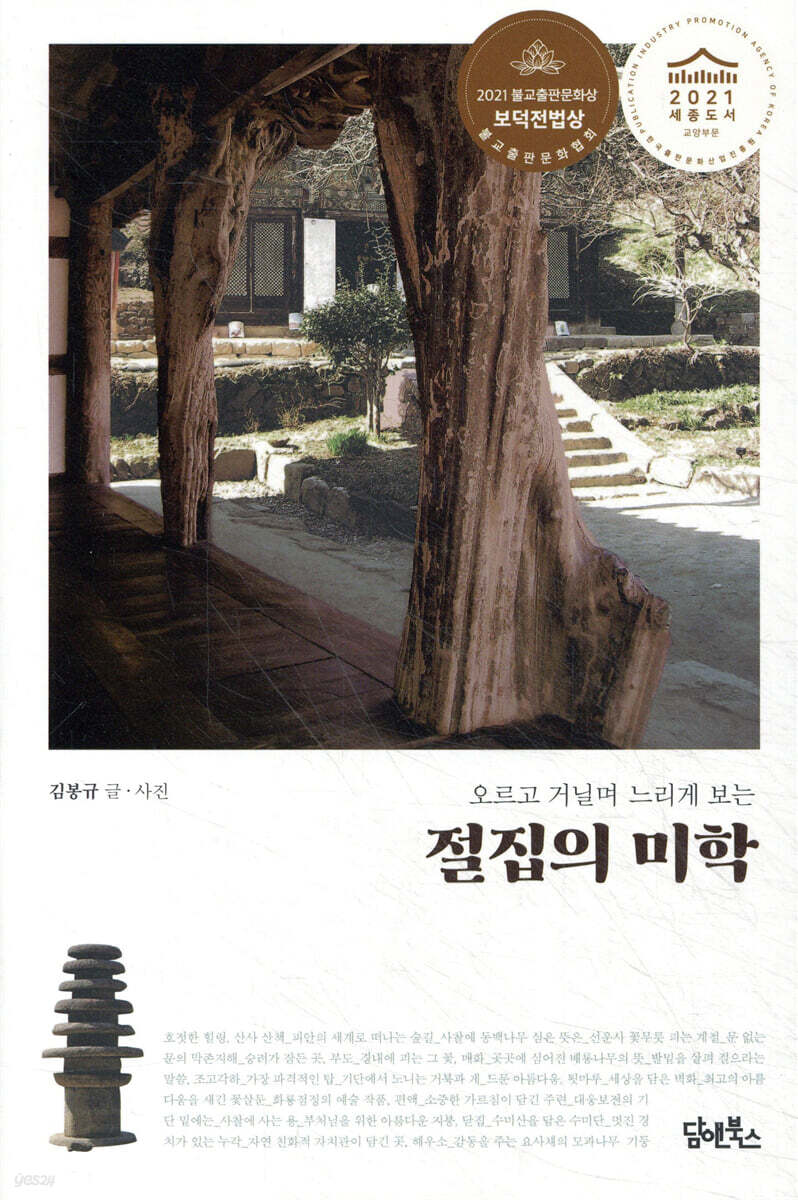
A small temple exploration story in search of unexpected surprises.
A temple where the rituals and culture of monks and Buddhist believers have taken root over many years, forming the unique emotions and aesthetics of Korean Buddhism.
The fragrant forest paths, seasonal flowers, tranquil scenery and atmosphere, and the intellectual and aesthetic inspiration of temples with historical and cultural value are all attractive elements that even non-religious visitors will find endearing.
"The Aesthetics of a Temple" is a book that helps anyone appreciate these elements 'easily, interestingly' and 'properly'.
The author, who has long been interested in Korean thought, culture, and arts, has captured the small yet precious beauties of temples, which he discovered while climbing the forest paths of Korean temples, strolling through the temple grounds, and observing the inside and outside of the buildings, along with abundant photos.
Before arriving at the temple, we first encountered the forest path, the lotus and tablets within the temple grounds, the dragon and Sumidan inside the main hall, and even the Yosa-chae and Haewoo-so, which are less known to the general public, and the charm of the dawn prayer were all thoroughly examined.
In addition, 『The Aesthetics of Temples』 provides intellectual pleasure by comparing the aesthetic differences between temples in China, Japan, and Korea.
Now is the time to set out to discover the unexpected surprises and delightful charms of Korean temples.
A small temple exploration story in search of unexpected surprises.
A temple where the rituals and culture of monks and Buddhist believers have taken root over many years, forming the unique emotions and aesthetics of Korean Buddhism.
The fragrant forest paths, seasonal flowers, tranquil scenery and atmosphere, and the intellectual and aesthetic inspiration of temples with historical and cultural value are all attractive elements that even non-religious visitors will find endearing.
"The Aesthetics of a Temple" is a book that helps anyone appreciate these elements 'easily, interestingly' and 'properly'.
The author, who has long been interested in Korean thought, culture, and arts, has captured the small yet precious beauties of temples, which he discovered while climbing the forest paths of Korean temples, strolling through the temple grounds, and observing the inside and outside of the buildings, along with abundant photos.
Before arriving at the temple, we first encountered the forest path, the lotus and tablets within the temple grounds, the dragon and Sumidan inside the main hall, and even the Yosa-chae and Haewoo-so, which are less known to the general public, and the charm of the dawn prayer were all thoroughly examined.
In addition, 『The Aesthetics of Temples』 provides intellectual pleasure by comparing the aesthetic differences between temples in China, Japan, and Korea.
Now is the time to set out to discover the unexpected surprises and delightful charms of Korean temples.
- You can preview some of the book's contents.
Preview
index
introduction
Chapter 1: Feeling while climbing the mountain
When you go to the mountain temple
A quiet healing walk in the mountains
A forest path leading to the world of peace
The meaning of planting camellia trees in temples
The season when the flower pots of Seonunsa Temple bloom
The door without a door is a door that is completely hidden
A stupa, a place where monks sleep
Mountain Temple Tour_The Road to Bongjeongam Temple on Seoraksan Mountain
Chapter 2: Crossing the Boundary of the Mountain Temple
The flower that blooms in the garden, plum blossoms
The meaning of the crape myrtle trees planted everywhere
In search of the best banyan tree
Your Majesty, you are told to watch your step as you walk.
The most unconventional tower
All One Body, World Oneness
Mountain Temple Tour: The Aesthetics of Abandoned Temple Sites, Yeongamsa Temple Site
Chapter 3 Walking around the temple
Turtles and crabs playing on the platform
A rare beauty, the veranda
A mural containing the world
A lattice door engraved with the utmost beauty
Hwarongjeomjeong's artwork and plaque
A verse containing valuable teachings
Sansa Travelogue_The Flower-Lattice Gate of Seonghyeolsa Temple That Makes You Exclaim in Admiration
Go inside Chapter 4 and look back
Under the base of Daeungjeon Hall
The dragon living in the temple
Is there a temple without a Buddha statue?
A beautiful roof for Buddha, a closed house
Sumeru altar containing Mount Sumeru
Sansa Travels_Where the Merry Lion Lives
Chapter 5: Body and Mind Are Moved
A pavilion with a great view
Haewooso, a place with eco-friendly values
The impressive apple tree pillars of the Yosachae
Feel the power of dawn prayer at Haeinsa Temple in Hapcheon.
The quiet sound of the moktak at dawn, Unmunsa Temple in Cheongdo
Mountain Temple Journey_The Aesthetics of Baekheungam in Palgongsan Mountain
Chapter 6: The Aesthetics of Korean Mountain Temples
Chinese temples and warm Buddha statues
Where the Inwangmun Gate is located
Japanese temple gardens
A unique sand garden, Karesansui
Natural beauty and artificial beauty
Sansa Journey: Natural Beauty is the Essence of Korean Sansa Aesthetics
Chapter 1: Feeling while climbing the mountain
When you go to the mountain temple
A quiet healing walk in the mountains
A forest path leading to the world of peace
The meaning of planting camellia trees in temples
The season when the flower pots of Seonunsa Temple bloom
The door without a door is a door that is completely hidden
A stupa, a place where monks sleep
Mountain Temple Tour_The Road to Bongjeongam Temple on Seoraksan Mountain
Chapter 2: Crossing the Boundary of the Mountain Temple
The flower that blooms in the garden, plum blossoms
The meaning of the crape myrtle trees planted everywhere
In search of the best banyan tree
Your Majesty, you are told to watch your step as you walk.
The most unconventional tower
All One Body, World Oneness
Mountain Temple Tour: The Aesthetics of Abandoned Temple Sites, Yeongamsa Temple Site
Chapter 3 Walking around the temple
Turtles and crabs playing on the platform
A rare beauty, the veranda
A mural containing the world
A lattice door engraved with the utmost beauty
Hwarongjeomjeong's artwork and plaque
A verse containing valuable teachings
Sansa Travelogue_The Flower-Lattice Gate of Seonghyeolsa Temple That Makes You Exclaim in Admiration
Go inside Chapter 4 and look back
Under the base of Daeungjeon Hall
The dragon living in the temple
Is there a temple without a Buddha statue?
A beautiful roof for Buddha, a closed house
Sumeru altar containing Mount Sumeru
Sansa Travels_Where the Merry Lion Lives
Chapter 5: Body and Mind Are Moved
A pavilion with a great view
Haewooso, a place with eco-friendly values
The impressive apple tree pillars of the Yosachae
Feel the power of dawn prayer at Haeinsa Temple in Hapcheon.
The quiet sound of the moktak at dawn, Unmunsa Temple in Cheongdo
Mountain Temple Journey_The Aesthetics of Baekheungam in Palgongsan Mountain
Chapter 6: The Aesthetics of Korean Mountain Temples
Chinese temples and warm Buddha statues
Where the Inwangmun Gate is located
Japanese temple gardens
A unique sand garden, Karesansui
Natural beauty and artificial beauty
Sansa Journey: Natural Beauty is the Essence of Korean Sansa Aesthetics
Detailed image
Into the book
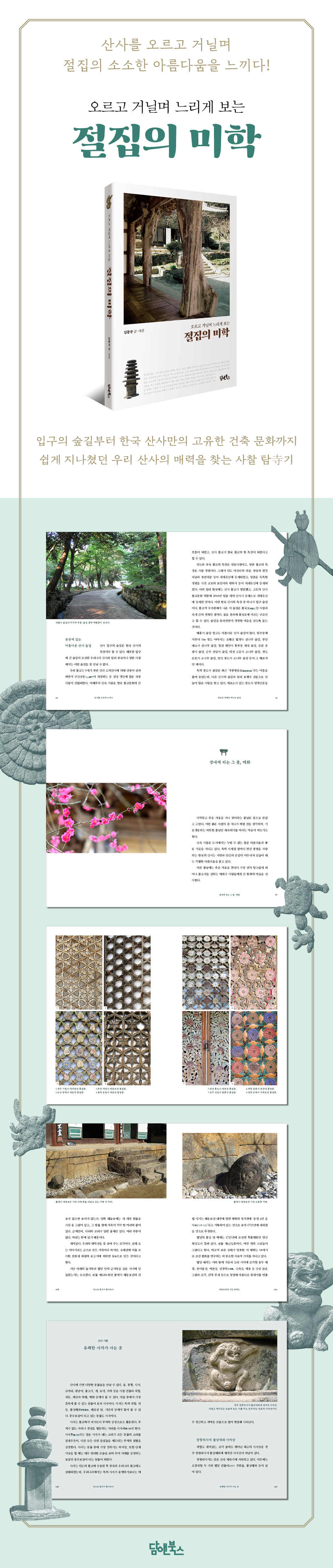
Sansa has many 'gates' such as Iljumun, Cheonwangmun, and Bul-ilmun, but none of them have door leaves.
The temple also has doors, but most of them are always open.
The mountain temple does not stop those who come, and does not catch those who leave.
It doesn't matter if you wander off alone and disappear, and if you want to talk to the monk, you can ask him out for a cup of tea.
Unless something special comes up, I'll respond to everything.
If it's mealtime and you want to eat, you can ask for a bowl.
You don't need a pass to enter the mountain temple, and you don't have to be a Buddhist to enter.
Since all the mental suffering and stress caused by human affairs are caused by a lack of proper control over the mind, talking to a monk who is an expert in mind study may provide a clue to a solution.
--- From "A Quiet Healing, A Walk in the Mountain Temple"
Why did monks and Buddhist practitioners plant plum trees? Perhaps it was because plum blossoms heralded the arrival of spring, and their flowers were beautiful and fragrant. But perhaps they also wanted to emulate the precedent of plum blossoms becoming a vehicle for achieving "enlightenment," the goal for which they risked their lives.
Anything can bring about the affinity for enlightenment, but the plum blossom is not just a fragrant flower that brings the early news of spring, but is also a representative flower that presents the miraculous affinity for enlightenment.
--- From "The Plum Blossom That Blooms in the Garden"
In particular, when looking at the Hall of Paradise, the turtle and crab carved on the largest stone of the pedestal on the right side catch the eye first.
It is engraved on the vertical band that is wider than the horizontal band among the intersections of the horizontal and vertical bands.
There is a small baby turtle in front of the mother turtle's head facing downwards.
The head is turned to the left.
It looks like he's out for a walk with his mom and playing around.
The crab is down there.
Walking upwards towards the turtle family.
It seems like the crab and turtle decided to meet on the embankment.
--- From "Turtles and Crabs Playing on the Platform"
If you pass the pagoda and go around the shrine with the signboard that reads ‘Gucheongam’, you can see the entire Gucheongam building at a glance.
There is a courtyard in front of the Cheonbulbojeon, and there are shrines on both sides in front of the Cheonbulbojeon.
There is a pillar in this temple that makes your eyes sparkle.
A pillar made from natural wood with the branches removed and only the bark peeled off, almost without any processing, is called a 'dorangju' or 'doryangju'. The most representative example of a dorangju is the toekan pillar of the Gucheongam Yosa.
The temple also has doors, but most of them are always open.
The mountain temple does not stop those who come, and does not catch those who leave.
It doesn't matter if you wander off alone and disappear, and if you want to talk to the monk, you can ask him out for a cup of tea.
Unless something special comes up, I'll respond to everything.
If it's mealtime and you want to eat, you can ask for a bowl.
You don't need a pass to enter the mountain temple, and you don't have to be a Buddhist to enter.
Since all the mental suffering and stress caused by human affairs are caused by a lack of proper control over the mind, talking to a monk who is an expert in mind study may provide a clue to a solution.
--- From "A Quiet Healing, A Walk in the Mountain Temple"
Why did monks and Buddhist practitioners plant plum trees? Perhaps it was because plum blossoms heralded the arrival of spring, and their flowers were beautiful and fragrant. But perhaps they also wanted to emulate the precedent of plum blossoms becoming a vehicle for achieving "enlightenment," the goal for which they risked their lives.
Anything can bring about the affinity for enlightenment, but the plum blossom is not just a fragrant flower that brings the early news of spring, but is also a representative flower that presents the miraculous affinity for enlightenment.
--- From "The Plum Blossom That Blooms in the Garden"
In particular, when looking at the Hall of Paradise, the turtle and crab carved on the largest stone of the pedestal on the right side catch the eye first.
It is engraved on the vertical band that is wider than the horizontal band among the intersections of the horizontal and vertical bands.
There is a small baby turtle in front of the mother turtle's head facing downwards.
The head is turned to the left.
It looks like he's out for a walk with his mom and playing around.
The crab is down there.
Walking upwards towards the turtle family.
It seems like the crab and turtle decided to meet on the embankment.
--- From "Turtles and Crabs Playing on the Platform"
If you pass the pagoda and go around the shrine with the signboard that reads ‘Gucheongam’, you can see the entire Gucheongam building at a glance.
There is a courtyard in front of the Cheonbulbojeon, and there are shrines on both sides in front of the Cheonbulbojeon.
There is a pillar in this temple that makes your eyes sparkle.
A pillar made from natural wood with the branches removed and only the bark peeled off, almost without any processing, is called a 'dorangju' or 'doryangju'. The most representative example of a dorangju is the toekan pillar of the Gucheongam Yosa.
--- From "The Impressive Apple Tree Pillars of the Yosachae"
Publisher's Review
Treasure Hunt in Our Temple
In search of traces of delicate value and simple beauty
The Korean landscape is called a land of beautiful silk and is called a land of gold and silver.
A mountain temple nestled in the mountains and rivers like a painting.
Mountain temple Buddhism, one of the characteristics of Korean Buddhism, was recognized for its unique culture and seven mountain temples were registered as UNESCO World Heritage Sites in 2018.
I feel proud, but at the same time I wonder what is so valuable and special about Korean mountain temples.
《The Aesthetics of Temples》 focuses on the infinite value and charm of Korean mountain temples and shrines, focusing on materials that general readers can easily access and discover by visiting mountain temples themselves, as if searching for hidden treasures.
This book contains every nook and cranny of the forest path and flower path leading to the mountain temple, the plum and crape myrtle trees that are the monks' guides, as well as the temple's closed doors, flower lattice doors, pedestals, pillars, stupas and plaques, and even the Haewooso, which contain the essence of Buddhist art.
In addition, the aesthetics of Korean temples were analyzed by comparing them with temples and temple gardens in nearby China and Japan.
Additionally, each chapter is titled “Mountain Temple Journey,” adding special travel stories such as climbing rugged mountains, visiting abandoned temple sites, and finding cheerful lions to make it even more interesting.
Walking between serenity and innovation!
A fun trip to Buddha's land through the eyes of a working journalist.
《The Aesthetics of Temples》 is not a book that simply seeks out and analyzes the symbols of temples and the aesthetics hidden within them.
The author, a former journalist, uses his characteristically sharp and meticulous perspective to unravel the legends surrounding the Buddhist temples, the anecdotes and teachings of Zen masters, and conversations with monks. This book is a delightful read for both domestic travelers and temple visitors.
In “The Season of Blooming Flower Pots at Seonunsa Temple,” the author introduces the legend of “unrequited love” in relation to the abundance of flower pots around the temple. In “The Words to Walk, Jogogakha,” the author tells the story of “Monk Beopyeon of the Five Patriarchs and His Three Disciples,” which is a precedent for “Jogogakha.” In “The Art of Hwalongjeomjeong, Tablets” and “Lymphony Tablets Containing Precious Teachings,” the author introduces the works of Chusa Kim Jeong-hui, who wrote many tablets, and provides detailed interpretations and sources of the Chinese character lymphony tablets hanging in the temple.
《The Aesthetics of Temples》 is designed to help us naturally understand the unconventional, pleasant, yet profound beauty of Korea that we can enjoy at temples through various sections such as 《The Impressive Apple Tree Pillars of the Temples》 and 《Natural Beauty and Artificial Beauty》.
While reading this book, which will serve as a reliable companion on your temple tour, readers will enjoy the pleasure of walking between the profound and the extraordinary.
In search of traces of delicate value and simple beauty
The Korean landscape is called a land of beautiful silk and is called a land of gold and silver.
A mountain temple nestled in the mountains and rivers like a painting.
Mountain temple Buddhism, one of the characteristics of Korean Buddhism, was recognized for its unique culture and seven mountain temples were registered as UNESCO World Heritage Sites in 2018.
I feel proud, but at the same time I wonder what is so valuable and special about Korean mountain temples.
《The Aesthetics of Temples》 focuses on the infinite value and charm of Korean mountain temples and shrines, focusing on materials that general readers can easily access and discover by visiting mountain temples themselves, as if searching for hidden treasures.
This book contains every nook and cranny of the forest path and flower path leading to the mountain temple, the plum and crape myrtle trees that are the monks' guides, as well as the temple's closed doors, flower lattice doors, pedestals, pillars, stupas and plaques, and even the Haewooso, which contain the essence of Buddhist art.
In addition, the aesthetics of Korean temples were analyzed by comparing them with temples and temple gardens in nearby China and Japan.
Additionally, each chapter is titled “Mountain Temple Journey,” adding special travel stories such as climbing rugged mountains, visiting abandoned temple sites, and finding cheerful lions to make it even more interesting.
Walking between serenity and innovation!
A fun trip to Buddha's land through the eyes of a working journalist.
《The Aesthetics of Temples》 is not a book that simply seeks out and analyzes the symbols of temples and the aesthetics hidden within them.
The author, a former journalist, uses his characteristically sharp and meticulous perspective to unravel the legends surrounding the Buddhist temples, the anecdotes and teachings of Zen masters, and conversations with monks. This book is a delightful read for both domestic travelers and temple visitors.
In “The Season of Blooming Flower Pots at Seonunsa Temple,” the author introduces the legend of “unrequited love” in relation to the abundance of flower pots around the temple. In “The Words to Walk, Jogogakha,” the author tells the story of “Monk Beopyeon of the Five Patriarchs and His Three Disciples,” which is a precedent for “Jogogakha.” In “The Art of Hwalongjeomjeong, Tablets” and “Lymphony Tablets Containing Precious Teachings,” the author introduces the works of Chusa Kim Jeong-hui, who wrote many tablets, and provides detailed interpretations and sources of the Chinese character lymphony tablets hanging in the temple.
《The Aesthetics of Temples》 is designed to help us naturally understand the unconventional, pleasant, yet profound beauty of Korea that we can enjoy at temples through various sections such as 《The Impressive Apple Tree Pillars of the Temples》 and 《Natural Beauty and Artificial Beauty》.
While reading this book, which will serve as a reliable companion on your temple tour, readers will enjoy the pleasure of walking between the profound and the extraordinary.
GOODS SPECIFICS
- Date of issue: May 24, 2021
- Page count, weight, size: 356 pages | 652g | 152*225*21mm
- ISBN13: 9791162012932
- ISBN10: 1162012935
You may also like
카테고리
korean


korean

![GQ KOREA Mark (Monthly): December [2025]](http://librairie.coreenne.fr/cdn/shop/files/8ef265dbbfbf186523ed75ba7319009d.jpg?v=1765340328&width=3840)


