

Jecheon, twenty-two aspirins
 |
Description
Book Introduction
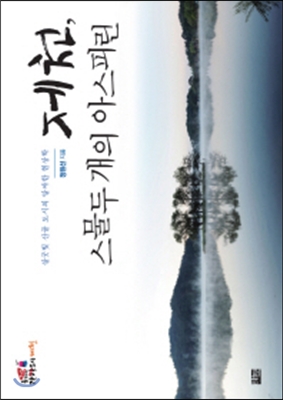
'10,000 Hours of Small-City Traveler', urban essayist Jeong Won-seon's writings on 22 scenic landscape paintings of Jecheon.
Tomorrow, the rustic panorama of Jecheon, a mountain town for train travelers and historic small-town walkers, unfolds before your eyes.
Not only famous places like Uirimji, Bakdaljae, Cheongpungho, Baeronseongji, Wolaksan Mountain, Geumsusan Mountain, and Jeongbangsa Temple, but also Deoksan Nuri Village Bakery Cafe, Yanghwari Mireukbul, Baekbong Sanmaru Inn, Jayang Yeongdang, Jecheon Oil Market, Sangcheon Sansuyu Village, Slow City Susang-myeon, Goegok-ri, home of zelkova trees, Jeommal Cave, evidence of the Korean Peninsula's subtropical zone, and even strawberry fields in the open fields, you can experience the simple and refreshing charm of a rural village in a genuine and lively way.
Tomorrow, the rustic panorama of Jecheon, a mountain town for train travelers and historic small-town walkers, unfolds before your eyes.
Not only famous places like Uirimji, Bakdaljae, Cheongpungho, Baeronseongji, Wolaksan Mountain, Geumsusan Mountain, and Jeongbangsa Temple, but also Deoksan Nuri Village Bakery Cafe, Yanghwari Mireukbul, Baekbong Sanmaru Inn, Jayang Yeongdang, Jecheon Oil Market, Sangcheon Sansuyu Village, Slow City Susang-myeon, Goegok-ri, home of zelkova trees, Jeommal Cave, evidence of the Korean Peninsula's subtropical zone, and even strawberry fields in the open fields, you can experience the simple and refreshing charm of a rural village in a genuine and lively way.
- You can preview some of the book's contents.
Preview
index
0.
As a prologue, Park Dal-jae 1.
Gwanranjeong and Wonho Memorial Monument
A very obvious story on this side of the hill
2.
Cheongpung Lake and Cheongpung Cultural Heritage Complex 3.
Uirimji
Lakeside Fantasy Bowl
4.
Strawberry field in front of the city library 5.
Geumsu Mountain Jeongbangsa Temple, Neunggang Valley, and Eoreumgol
A piece of paper instead of a bouquet
6.
Baron's Holy Land 7.
Deoksan Nuri Village Bakery Cafe
Hoping for what is seen is not hope, so let's go
8.
Yangwha-ri Maitreya Buddha 9.
Jangrak-dong seven-story stone pagoda
The best temple site in Bangasayu
10.
Jeommal Cave 11.
Susan-myeon Shinpung Restaurant
Just one place with two pictures and one photo
12.
Goegok-ri Zelkova 13.
Byeolsaekkotdol Science Museum
Jinkyungsansu Hardboiled Wonderland
14.
Jecheon International Music & Film Festival 15.
Wolaksan Mountain 1
Obladi Oblada Sansansan
16.
Jecheon Oil Market and Gwangjang Bunsik, Red Odeng 17.
Wolaksan Mountain 2
There are a thousand plateaus and ten thousand valleys.
18.
Baekbong Mountain Ridge Inn 19.
Wolaksan Mountain 3
Until a single stone pagoda of a drinker's reward was erected
20.
Jayangyeongdang 21.
Sangcheon Cornelian Cherry Village
Yellow Ribbon, City of Fools
22.
Epilogue
Jecheon Pyohae-rok
As a prologue, Park Dal-jae 1.
Gwanranjeong and Wonho Memorial Monument
A very obvious story on this side of the hill
2.
Cheongpung Lake and Cheongpung Cultural Heritage Complex 3.
Uirimji
Lakeside Fantasy Bowl
4.
Strawberry field in front of the city library 5.
Geumsu Mountain Jeongbangsa Temple, Neunggang Valley, and Eoreumgol
A piece of paper instead of a bouquet
6.
Baron's Holy Land 7.
Deoksan Nuri Village Bakery Cafe
Hoping for what is seen is not hope, so let's go
8.
Yangwha-ri Maitreya Buddha 9.
Jangrak-dong seven-story stone pagoda
The best temple site in Bangasayu
10.
Jeommal Cave 11.
Susan-myeon Shinpung Restaurant
Just one place with two pictures and one photo
12.
Goegok-ri Zelkova 13.
Byeolsaekkotdol Science Museum
Jinkyungsansu Hardboiled Wonderland
14.
Jecheon International Music & Film Festival 15.
Wolaksan Mountain 1
Obladi Oblada Sansansan
16.
Jecheon Oil Market and Gwangjang Bunsik, Red Odeng 17.
Wolaksan Mountain 2
There are a thousand plateaus and ten thousand valleys.
18.
Baekbong Mountain Ridge Inn 19.
Wolaksan Mountain 3
Until a single stone pagoda of a drinker's reward was erected
20.
Jayangyeongdang 21.
Sangcheon Cornelian Cherry Village
Yellow Ribbon, City of Fools
22.
Epilogue
Jecheon Pyohae-rok
Into the book
Wonho's love was unhappy.
Because his love could not save her.
However, Wonho did not change his beliefs even after Im's death.
He turned his back on the world that had taken his love away, rejected all temptations, and completed his love independently from reality.
His love was unhappy, but in that unhappy love he was passionate until the day he died.
I don't know if I can say that his love was necessarily unhappy.
Wonho knew.
That love is a relationship between two people.
No matter how harsh reality may be, as long as you and I understand each other, that's enough.
That the world is not a condition that makes love exist, but is merely a background for love.
Even if you leave, love doesn't end.
That it is better to honor you and destroy the world than to destroy you and gain the world.
No, to me the world is just another word for you.
- Pages 37-38, from On the Hills of This Side, which deals with Gwanranjeong and Wonho Yuheobi
Spring in April, blazing along Provincial Road No. 82, reaches its peak as it crosses Cheongpung Lake and reaches Multeri, where the Cultural Heritage Complex is located.
The lakeside paths are thick with cherry trees, and the petals, like embers or white smoke, float around as if floating.
Jecheon City sets up tents in a row in front of the Multaeri Multipurpose Hall and declares the entire neighborhood a cherry blossom festival site. Then, not only Jecheon residents but also people from Danyang, Chungju, Yeongwol, and Mungyeong flock to Cheongpung Lake, and Provincial Road No. 82 becomes crowded with cars from morning.
Around mid-April, in Multeri, where cherry trees have taken over every alley, a large-scale funeral service is held, inspiring life with the blossoms and leaves. Visitors, or rather believers of spring, are reminded of the grandeur of living under the shade of cherry trees, which dazzlingly scatter the miracle of beauty.
Within the festival tents, chaos unfolds, songs flow out, and shadows turn like the hands of a clock, completing the day.
Even after night finally falls and all the cars that came out to tour have gone back, the scent still lingers faintly in the windows of the houses with their lights off.
The old village of Multeri is a countryside where spring wraps itself around my body.
Even in the deserted, ink-colored dawn, the cherry trees would occasionally shake their arms as if they remembered something, sending petals drifting toward the lake.
- Pages 51-52, from Lakeside Rhapsody, which deals with Cheongpung Lake and the Cultural Heritage Complex
The presence of Uirimji is not limited to Jecheon.
The word 'Hoseo (湖西)' referring to Chungcheong-do means the west side of the lake, and that lake refers to Uirimji.
Chungcheong-do is the region west of Uirimji.
Yeongnam (嶺南), which refers to Gyeongsang-do, is the southern region based on Joryeong (鳥嶺) and Saejae Pass in Mungyeong, and Honam (湖南), which refers to Jeolla-do, is the southern region based on Byeokgolje (or Geumgang) in Gimje.
Since all of our livelihood depends on farming, it was the starting point for dividing regions in the old days.
All of these were based on major transportation routes such as agricultural reservoirs and grain transport routes.
Among them, along with Susanje in Miryang and Byeokgolje in Gimje, Uirimji in Jecheon is a representative artificial reservoir in this land that has existed since the Three Kingdoms Period.
Among them, there is only one place that still nurtures and wets the surrounding fields, Uirimji.
From a diachronic perspective that sees humans as the center of the world, we view Uirimji as a single dot and recognize that the world outside of it has changed infinitely. However, if we look at the world from Uirimji's perspective, we may be convinced that the world has not changed much despite numerous upheavals.
To that extent, Uirimji is still the center of Jecheon, and continues to provide food and support to all living creatures in the surrounding area.
Uirimji is tall.
- Pages 65-66, among the vessels dealing with Uirimji
Jecheon was a 'city of fools' that made countless sacrifices with its bare body.
Unlike other places, the reason Jecheon has barely preserved its old, well-maintained buildings to this day is because of the large-scale massacre and destruction committed by the Japanese in 1907, enraged by the Righteous Army.
In 1962, the government honored Yu In-seok with the Order of Merit for National Foundation, Presidential Medal, in recognition of his courage and sacrifice.
The determination to die as a human being rather than live as a slave has something to shake up our lives in the 2000s, when we have become sufficiently affluent but still live as slaves to something.
For whom and against what should we rise up now?
Because his love could not save her.
However, Wonho did not change his beliefs even after Im's death.
He turned his back on the world that had taken his love away, rejected all temptations, and completed his love independently from reality.
His love was unhappy, but in that unhappy love he was passionate until the day he died.
I don't know if I can say that his love was necessarily unhappy.
Wonho knew.
That love is a relationship between two people.
No matter how harsh reality may be, as long as you and I understand each other, that's enough.
That the world is not a condition that makes love exist, but is merely a background for love.
Even if you leave, love doesn't end.
That it is better to honor you and destroy the world than to destroy you and gain the world.
No, to me the world is just another word for you.
- Pages 37-38, from On the Hills of This Side, which deals with Gwanranjeong and Wonho Yuheobi
Spring in April, blazing along Provincial Road No. 82, reaches its peak as it crosses Cheongpung Lake and reaches Multeri, where the Cultural Heritage Complex is located.
The lakeside paths are thick with cherry trees, and the petals, like embers or white smoke, float around as if floating.
Jecheon City sets up tents in a row in front of the Multaeri Multipurpose Hall and declares the entire neighborhood a cherry blossom festival site. Then, not only Jecheon residents but also people from Danyang, Chungju, Yeongwol, and Mungyeong flock to Cheongpung Lake, and Provincial Road No. 82 becomes crowded with cars from morning.
Around mid-April, in Multeri, where cherry trees have taken over every alley, a large-scale funeral service is held, inspiring life with the blossoms and leaves. Visitors, or rather believers of spring, are reminded of the grandeur of living under the shade of cherry trees, which dazzlingly scatter the miracle of beauty.
Within the festival tents, chaos unfolds, songs flow out, and shadows turn like the hands of a clock, completing the day.
Even after night finally falls and all the cars that came out to tour have gone back, the scent still lingers faintly in the windows of the houses with their lights off.
The old village of Multeri is a countryside where spring wraps itself around my body.
Even in the deserted, ink-colored dawn, the cherry trees would occasionally shake their arms as if they remembered something, sending petals drifting toward the lake.
- Pages 51-52, from Lakeside Rhapsody, which deals with Cheongpung Lake and the Cultural Heritage Complex
The presence of Uirimji is not limited to Jecheon.
The word 'Hoseo (湖西)' referring to Chungcheong-do means the west side of the lake, and that lake refers to Uirimji.
Chungcheong-do is the region west of Uirimji.
Yeongnam (嶺南), which refers to Gyeongsang-do, is the southern region based on Joryeong (鳥嶺) and Saejae Pass in Mungyeong, and Honam (湖南), which refers to Jeolla-do, is the southern region based on Byeokgolje (or Geumgang) in Gimje.
Since all of our livelihood depends on farming, it was the starting point for dividing regions in the old days.
All of these were based on major transportation routes such as agricultural reservoirs and grain transport routes.
Among them, along with Susanje in Miryang and Byeokgolje in Gimje, Uirimji in Jecheon is a representative artificial reservoir in this land that has existed since the Three Kingdoms Period.
Among them, there is only one place that still nurtures and wets the surrounding fields, Uirimji.
From a diachronic perspective that sees humans as the center of the world, we view Uirimji as a single dot and recognize that the world outside of it has changed infinitely. However, if we look at the world from Uirimji's perspective, we may be convinced that the world has not changed much despite numerous upheavals.
To that extent, Uirimji is still the center of Jecheon, and continues to provide food and support to all living creatures in the surrounding area.
Uirimji is tall.
- Pages 65-66, among the vessels dealing with Uirimji
Jecheon was a 'city of fools' that made countless sacrifices with its bare body.
Unlike other places, the reason Jecheon has barely preserved its old, well-maintained buildings to this day is because of the large-scale massacre and destruction committed by the Japanese in 1907, enraged by the Righteous Army.
In 1962, the government honored Yu In-seok with the Order of Merit for National Foundation, Presidential Medal, in recognition of his courage and sacrifice.
The determination to die as a human being rather than live as a slave has something to shake up our lives in the 2000s, when we have become sufficiently affluent but still live as slaves to something.
For whom and against what should we rise up now?
---From the text
Publisher's Review
Aspirin to relieve city-induced headaches and fevers, a small city full of nature
“Living in a city, despite the conveniences of concentration and the pleasures of densely packed spaces, is a loss and a loss for all of humanity, who retain deep roots in their natural DNA.
People suffer from pain for no reason.
Things like unexplained headaches, sudden fevers, and sudden lethargy wash over our daily lives like a tidal wave.
In the end, we have no choice but to go in search of what we have lost.
… … Travel is the way for the body to regain contact with nature.”
As the advertising slogan 'Escape from the City' suggests, there are many city dwellers who want to escape the stuffy daily life of the congested big city.
The irony is that we are so tied to the fact that the scenes we see on our smartphones, which we can't put down, are either lush green forests or open beaches.
However, there are not many people who can abandon everything and leave the situation where they are both a slave and a host to life.
To us, small-town essayist Jeong Won-seon presents twenty-two aspirins that awaken us to the true face of Jecheon, a mountain town in Chungcheong Province, quietly breathing between Gangwon-do and Gyeongsang-do, two hours by train from Seoul.
A stream slowly licking through the village with a cheerful tone under an old bridge, the blue shadows of summer mountains reflecting in an old reservoir, the warm rays of the setting sun highlighting the smile of Buddha carved into a cliff, the snow combed as finely as grains of rice on the slope leading up to the tomb of a stubborn scholar, the deep, old silence falling on the courtyard of a deserted Paleolithic cave, the croaking of frogs rising where a lonely stone pagoda stands in a ruined temple.
The gentle breeze caressing a pair of Maitreya statues that have been guarding the fields for 1,000 years, the elegance of the hill on the other side of the high, lonely, and desolate river where one man's lament seems to be heard...
Rather than simply skimming the surface of the mountain village, let's follow the author's bright gaze as he delves into the village's inner depths, as if he were giving it the nickname "10,000-hour traveler," and traces the history of the road and even historical and cultural changes.
A balanced story because it is biased
“Now, there is a tunnel under the pass, and the pass is neatly paved with asphalt, so you can easily pass by car, but in the past, you had to risk your life to cross it because of wild animals, thieves, riots, the bribery of officials, and foreign powers.
Among the records and historical facts of those who passed through this pass, those covered in this book are clearly biased.”
This book, which begins with a story about a pass famous for its weeping Bakdaljae Pass, is, as the author says, biased.
However, because this bias embraces and illuminates those who have been ignored by public history, yet who have always made history, we strive to correct the 'tilted playing field' as much as possible to realize people's equality rather than mechanical equality.
However, it is not simply about striking a balance; each story is the story of people who have personally investigated and inquired, and is filled with the voices of the residents, giving it an irresistible charm.
As you read, you may sometimes feel a sore throat and tears welling up in your eyes, but rather than a trip that ends with a few certified photos and a few famous restaurants, you will have a hazy experience where the leisurely space of Jecheon becomes engraved in each of your lives.
The reality of the lives of the people of Jecheon, which cannot be encountered without digging deep like a cave hidden beyond the layers of mountains, gently shakes the hearts of readers.
Sometimes cleverly, sometimes humorously
“It felt like we had already climbed several mountains, but the road seemed endless.
The road became narrower as it entered Okjeon-ri, and as it started to go uphill, it became so narrow that only one car could barely pass.
If you encounter a car coming down, you must back up until there is enough space for both cars to pass.
As I held the steering wheel tightly in tension, complaints came out of my mouth without me realizing it.
I didn't know it was this far, and it was so rough.
As I was going up the steep dirt road, almost brushing the trees with their branches spread out towards the road, a badger or a raccoon suddenly jumped out and I stopped suddenly, cursing without realizing it.
“Oh shit, this is just boring.”
“It is often thought that drinkers are happy only when they have alcohol, but in fact, the opposite is true.
A drinker is only unhappy when he has no alcohol.
He is simple.
One bottle will satisfy you in no time.
Two bottles will fill you with joy, three bottles will take you to paradise.
Drinking more doesn't necessarily mean you'll feel more satisfied.
Since alcohol is also food, overeating is not good.
You can eat it for a long time without harming your health.
Just because you're a drinker doesn't mean you only count the bottles in front of you.
I also think about the future.
“The alcohol I’ll drink tomorrow, the alcohol I’ll drink the day after tomorrow.”
Jeongwonseon's story of Jecheon also strikes another balance.
Balance the flow of the story, such as strong-weak-medium-strong-weak, slow-slow-quick-quick.
Sometimes, he slips in comedic episodes into the midst of solemn and flowing stories, and sometimes, he mixes satire and humor into serious and desperate stories, giving us a moment to catch our breath.
Sometimes, the story unfolds with a cat as the main character, humorously reinterpreting reality.
Just as a trip cannot be taken too seriously, this may also be the author's consideration to allow people to experience more of Jecheon's inner self with a light and cheerful excitement.
Jecheon, a small city that grows bigger and bigger in the story, is reconstructed.
“The Paleolithic people who came all the way from Africa to Jeommal Cave, the Wonho who burned down the pavilion on the hill overlooking the Seogang River, the old couple in their twilight years who cannot forget the village they left submerged in water and come back again, the landlady who opened a restaurant in her husband’s name and cannot leave, the bakers who cannot let the rural village become a mere urban colony and restore the community, the villagers of the mountain village who endured finger pointing and survived in the tragedy of civil war…
I wanted to talk about how beautiful it is to live rooted in the era of 'mobile', 'global travel', 'mega-cities', and 'hubs'.
Even though most of them ended in failure, became refugees, or ultimately met death, that failure was not simply defeat, and that is why we, the future generations, still remember it.”
The book contains many stories.
Some of them are lighthearted, while others shed light on moments of serious and profound tragedy that history has trampled upon.
In the twenty-two episodes that reenact the colorful patterns and meanings of life in a city, traveling back tens of thousands of years and across historical periods, modern times, and post-modern times, Jecheon, a small mountain village with a population of 130,000, becomes a city that is by no means small, with lights on in every small village and old grandmothers waving their hands clearly visible.
Modern people often think of travel as simply enjoying nature while enjoying all the amenities, but in the end, true travel is about deeply experiencing the lives of others, understanding the hearts of strangers, and sharing their thoughts.
This book, which covers Jecheon, a mountain village with an average altitude of 700 meters and a city filled with mountains, draws readers into a classic visit rather than a modern journey.
It showcases the charm of a neighborhood city where people live, not just service people and hotels, and makes us see Jecheon as a small, radial universe made up of villages, rather than a linear Jecheon made up of hot places.
A small story like an aspirin.
But it's a story with a distinct presence, like aspirin.
《Jecheon, Twenty-Two Aspirins》 is not used.
The downside may actually be that it is quite sweet.
“Living in a city, despite the conveniences of concentration and the pleasures of densely packed spaces, is a loss and a loss for all of humanity, who retain deep roots in their natural DNA.
People suffer from pain for no reason.
Things like unexplained headaches, sudden fevers, and sudden lethargy wash over our daily lives like a tidal wave.
In the end, we have no choice but to go in search of what we have lost.
… … Travel is the way for the body to regain contact with nature.”
As the advertising slogan 'Escape from the City' suggests, there are many city dwellers who want to escape the stuffy daily life of the congested big city.
The irony is that we are so tied to the fact that the scenes we see on our smartphones, which we can't put down, are either lush green forests or open beaches.
However, there are not many people who can abandon everything and leave the situation where they are both a slave and a host to life.
To us, small-town essayist Jeong Won-seon presents twenty-two aspirins that awaken us to the true face of Jecheon, a mountain town in Chungcheong Province, quietly breathing between Gangwon-do and Gyeongsang-do, two hours by train from Seoul.
A stream slowly licking through the village with a cheerful tone under an old bridge, the blue shadows of summer mountains reflecting in an old reservoir, the warm rays of the setting sun highlighting the smile of Buddha carved into a cliff, the snow combed as finely as grains of rice on the slope leading up to the tomb of a stubborn scholar, the deep, old silence falling on the courtyard of a deserted Paleolithic cave, the croaking of frogs rising where a lonely stone pagoda stands in a ruined temple.
The gentle breeze caressing a pair of Maitreya statues that have been guarding the fields for 1,000 years, the elegance of the hill on the other side of the high, lonely, and desolate river where one man's lament seems to be heard...
Rather than simply skimming the surface of the mountain village, let's follow the author's bright gaze as he delves into the village's inner depths, as if he were giving it the nickname "10,000-hour traveler," and traces the history of the road and even historical and cultural changes.
A balanced story because it is biased
“Now, there is a tunnel under the pass, and the pass is neatly paved with asphalt, so you can easily pass by car, but in the past, you had to risk your life to cross it because of wild animals, thieves, riots, the bribery of officials, and foreign powers.
Among the records and historical facts of those who passed through this pass, those covered in this book are clearly biased.”
This book, which begins with a story about a pass famous for its weeping Bakdaljae Pass, is, as the author says, biased.
However, because this bias embraces and illuminates those who have been ignored by public history, yet who have always made history, we strive to correct the 'tilted playing field' as much as possible to realize people's equality rather than mechanical equality.
However, it is not simply about striking a balance; each story is the story of people who have personally investigated and inquired, and is filled with the voices of the residents, giving it an irresistible charm.
As you read, you may sometimes feel a sore throat and tears welling up in your eyes, but rather than a trip that ends with a few certified photos and a few famous restaurants, you will have a hazy experience where the leisurely space of Jecheon becomes engraved in each of your lives.
The reality of the lives of the people of Jecheon, which cannot be encountered without digging deep like a cave hidden beyond the layers of mountains, gently shakes the hearts of readers.
Sometimes cleverly, sometimes humorously
“It felt like we had already climbed several mountains, but the road seemed endless.
The road became narrower as it entered Okjeon-ri, and as it started to go uphill, it became so narrow that only one car could barely pass.
If you encounter a car coming down, you must back up until there is enough space for both cars to pass.
As I held the steering wheel tightly in tension, complaints came out of my mouth without me realizing it.
I didn't know it was this far, and it was so rough.
As I was going up the steep dirt road, almost brushing the trees with their branches spread out towards the road, a badger or a raccoon suddenly jumped out and I stopped suddenly, cursing without realizing it.
“Oh shit, this is just boring.”
“It is often thought that drinkers are happy only when they have alcohol, but in fact, the opposite is true.
A drinker is only unhappy when he has no alcohol.
He is simple.
One bottle will satisfy you in no time.
Two bottles will fill you with joy, three bottles will take you to paradise.
Drinking more doesn't necessarily mean you'll feel more satisfied.
Since alcohol is also food, overeating is not good.
You can eat it for a long time without harming your health.
Just because you're a drinker doesn't mean you only count the bottles in front of you.
I also think about the future.
“The alcohol I’ll drink tomorrow, the alcohol I’ll drink the day after tomorrow.”
Jeongwonseon's story of Jecheon also strikes another balance.
Balance the flow of the story, such as strong-weak-medium-strong-weak, slow-slow-quick-quick.
Sometimes, he slips in comedic episodes into the midst of solemn and flowing stories, and sometimes, he mixes satire and humor into serious and desperate stories, giving us a moment to catch our breath.
Sometimes, the story unfolds with a cat as the main character, humorously reinterpreting reality.
Just as a trip cannot be taken too seriously, this may also be the author's consideration to allow people to experience more of Jecheon's inner self with a light and cheerful excitement.
Jecheon, a small city that grows bigger and bigger in the story, is reconstructed.
“The Paleolithic people who came all the way from Africa to Jeommal Cave, the Wonho who burned down the pavilion on the hill overlooking the Seogang River, the old couple in their twilight years who cannot forget the village they left submerged in water and come back again, the landlady who opened a restaurant in her husband’s name and cannot leave, the bakers who cannot let the rural village become a mere urban colony and restore the community, the villagers of the mountain village who endured finger pointing and survived in the tragedy of civil war…
I wanted to talk about how beautiful it is to live rooted in the era of 'mobile', 'global travel', 'mega-cities', and 'hubs'.
Even though most of them ended in failure, became refugees, or ultimately met death, that failure was not simply defeat, and that is why we, the future generations, still remember it.”
The book contains many stories.
Some of them are lighthearted, while others shed light on moments of serious and profound tragedy that history has trampled upon.
In the twenty-two episodes that reenact the colorful patterns and meanings of life in a city, traveling back tens of thousands of years and across historical periods, modern times, and post-modern times, Jecheon, a small mountain village with a population of 130,000, becomes a city that is by no means small, with lights on in every small village and old grandmothers waving their hands clearly visible.
Modern people often think of travel as simply enjoying nature while enjoying all the amenities, but in the end, true travel is about deeply experiencing the lives of others, understanding the hearts of strangers, and sharing their thoughts.
This book, which covers Jecheon, a mountain village with an average altitude of 700 meters and a city filled with mountains, draws readers into a classic visit rather than a modern journey.
It showcases the charm of a neighborhood city where people live, not just service people and hotels, and makes us see Jecheon as a small, radial universe made up of villages, rather than a linear Jecheon made up of hot places.
A small story like an aspirin.
But it's a story with a distinct presence, like aspirin.
《Jecheon, Twenty-Two Aspirins》 is not used.
The downside may actually be that it is quite sweet.
GOODS SPECIFICS
- Date of issue: December 8, 2015
- Page count, weight, size: 348 pages | 128*190*30mm
- ISBN13: 9788990978943
- ISBN10: 8990978947
You may also like
카테고리
korean


korean

![GQ KOREA Mark (Monthly): December [2025]](http://librairie.coreenne.fr/cdn/shop/files/8ef265dbbfbf186523ed75ba7319009d.jpg?v=1765340328&width=3840)


