

Strange Zoo
 |
Description
Book Introduction
A strange zoo? What's so strange about it?
Kids love the zoo.
You can actually meet rare animals that are not easily seen or animals that live far away in Africa.
The main character of this book also heads to the zoo with an excited heart.
The protagonist's steps as he hums along are very light.
The zoo where the protagonist arrives is landscaped with grass and trees here and there, and the animals live in cages or glass rooms.
It looks not much different from the zoos we usually visit.
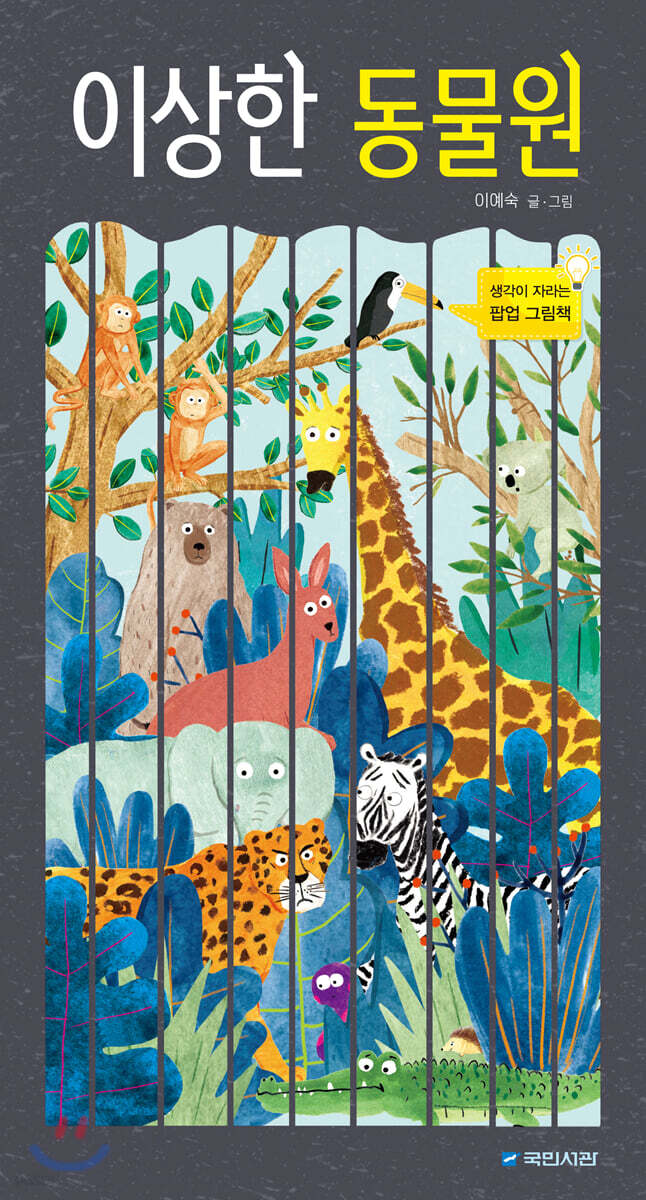
The protagonist, who was looking around the zoo, feels something strange when he sees a giraffe.
And I look at the monkey and get lost in thought.
What could possibly be so strange? A bear slumped on a rock, a crocodile with no energy at all, a zebra sitting blankly, a monkey that has forgotten how to play.
Unlike the main character, none of the animals look happy.
The zoo, which is a fun and exciting place for us, is a prison-like place that is not fun at all for the animals.
Kids love the zoo.
You can actually meet rare animals that are not easily seen or animals that live far away in Africa.
The main character of this book also heads to the zoo with an excited heart.
The protagonist's steps as he hums along are very light.
The zoo where the protagonist arrives is landscaped with grass and trees here and there, and the animals live in cages or glass rooms.
It looks not much different from the zoos we usually visit.
The protagonist, who was looking around the zoo, feels something strange when he sees a giraffe.
And I look at the monkey and get lost in thought.
What could possibly be so strange? A bear slumped on a rock, a crocodile with no energy at all, a zebra sitting blankly, a monkey that has forgotten how to play.
Unlike the main character, none of the animals look happy.
The zoo, which is a fun and exciting place for us, is a prison-like place that is not fun at all for the animals.
Detailed image
Publisher's Review
A zoo is not a place to exhibit animals!
One day, the animals were suddenly brought to the zoo, locked in narrow cages, and made into a spectacle for people to watch.
Instead of soft grass and dirt, they had to lie on cold cement floors, and instead of fresh leaves and meat, they had to eat feed given to them by humans.
The world that animals see is fragmented and obscured by the iron bars, and the animals cannot run freely or hide and rest comfortably inside the bars.
Animals in zoos have been robbed of their freedom and happiness and have become like paintings hanging in an art gallery, objects for people to admire and enjoy.
Animals also have a right to life comparable to human rights and the right not to suffer or be abused.
As interest in animal rights grows, public opinion is increasingly critical of zoos that exhibit animals.
If zoos must exist, their purpose should be to study and educate about the ecology and habits of animals, protect endangered species, and preserve biodiversity, not for entertainment purposes.
In countries such as France, England, and the Netherlands, zoos have already appeared that provide a wide space with an environment as similar as possible to the animals' native habitats, allowing them to live freely according to their natural habits.
Some places have announced that they will stop exhibiting popular species such as elephants and bears, citing animal welfare concerns.
The Seoul Metropolitan Government has also established and is adhering to the five principles of welfare for animals that are observed, experienced, or performed.
Freedom from hunger and thirst, freedom from environmental or physical discomfort, freedom from pain, disease or injury, freedom to express normal habits, and freedom from fear and stress.
In addition to efforts by zoos and local governments, improving the awareness of zoo visitors is also necessary.
Some people throw stones at the animals, shout at them, or complain that they cannot see the animals clearly.
Of course, animals also have the freedom and right to sleep and rest.
What kind of educational value can we derive from observing animals circling and exhibiting stereotyped behavior up close? Even if we can't see them up close, wouldn't observing them foraging for food and playing be far more educational? What if we shifted our thinking from visiting the zoo to seeing the lives of animals who share our planet with us, and spending a moment with them? Furthermore, beyond simply observing animals, let's consider the kind of environment they need to survive, and how we can best foster a happy coexistence between people and animals.
Touch and play with books and think for yourself
The Strange Zoo is a strange book.
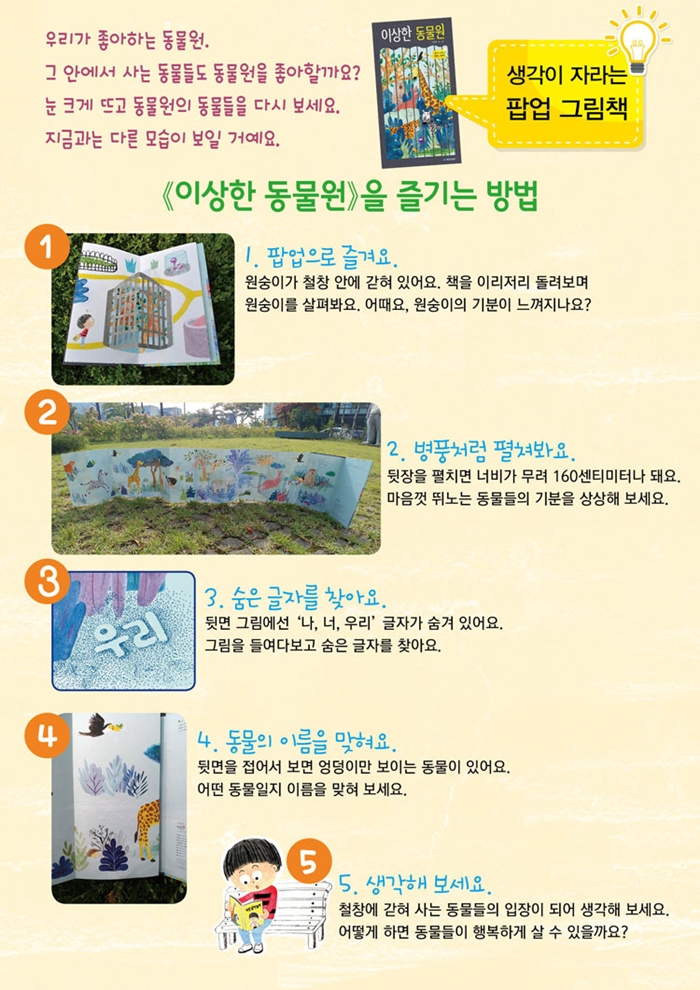
Compared to regular picture books, it has less text, has pop-ups, and even opens up like a folding screen.
The author raises awareness of animal welfare through pictures instead of words and through the physicality of pop-ups.
When children see the giraffe in the book, they may question it like the main character, or they may just pass it by.
If you turn the page, you will see a pop-up monkey cage.
It is impossible to see at a glance what the monkey is doing or what its expression is.
To see the monkey, you have to turn the book around and look through the cracks in the iron bars.
It's uncomfortable enough to look inside from the outside, so imagine how uncomfortable it must be for the monkeys trapped inside. By touching and examining the book, children can experience firsthand the discomfort and frustration of the animals' lives behind bars.
If the front of the text is designed to help children become aware of the problem through pop-ups, the back is designed to be long and unfold like a folding screen, creating a contrast with the front.
The animals on the front are again confined to small cages on the two-page spread, while the animals on the back are free to run around without cages on the eleven-page spread.
Through changes in the size of the book and the animals' facial expressions and behavior, children can think about what animals need.
This book is not saying what is right or wrong.
Instead, let children play with the book, discovering and thinking about the strange things in it.
By identifying and thinking about problems on their own like this, children will develop their thinking skills and open new eyes to see the world.
Finally, the author poses a question to the readers.
A zoo where animals are locked in cages, a zoo where animals run around like they did in the wild.
Which one is weird?
One day, the animals were suddenly brought to the zoo, locked in narrow cages, and made into a spectacle for people to watch.
Instead of soft grass and dirt, they had to lie on cold cement floors, and instead of fresh leaves and meat, they had to eat feed given to them by humans.
The world that animals see is fragmented and obscured by the iron bars, and the animals cannot run freely or hide and rest comfortably inside the bars.
Animals in zoos have been robbed of their freedom and happiness and have become like paintings hanging in an art gallery, objects for people to admire and enjoy.
Animals also have a right to life comparable to human rights and the right not to suffer or be abused.
As interest in animal rights grows, public opinion is increasingly critical of zoos that exhibit animals.
If zoos must exist, their purpose should be to study and educate about the ecology and habits of animals, protect endangered species, and preserve biodiversity, not for entertainment purposes.
In countries such as France, England, and the Netherlands, zoos have already appeared that provide a wide space with an environment as similar as possible to the animals' native habitats, allowing them to live freely according to their natural habits.
Some places have announced that they will stop exhibiting popular species such as elephants and bears, citing animal welfare concerns.
The Seoul Metropolitan Government has also established and is adhering to the five principles of welfare for animals that are observed, experienced, or performed.
Freedom from hunger and thirst, freedom from environmental or physical discomfort, freedom from pain, disease or injury, freedom to express normal habits, and freedom from fear and stress.
In addition to efforts by zoos and local governments, improving the awareness of zoo visitors is also necessary.
Some people throw stones at the animals, shout at them, or complain that they cannot see the animals clearly.
Of course, animals also have the freedom and right to sleep and rest.
What kind of educational value can we derive from observing animals circling and exhibiting stereotyped behavior up close? Even if we can't see them up close, wouldn't observing them foraging for food and playing be far more educational? What if we shifted our thinking from visiting the zoo to seeing the lives of animals who share our planet with us, and spending a moment with them? Furthermore, beyond simply observing animals, let's consider the kind of environment they need to survive, and how we can best foster a happy coexistence between people and animals.
Touch and play with books and think for yourself
The Strange Zoo is a strange book.
Compared to regular picture books, it has less text, has pop-ups, and even opens up like a folding screen.
The author raises awareness of animal welfare through pictures instead of words and through the physicality of pop-ups.
When children see the giraffe in the book, they may question it like the main character, or they may just pass it by.
If you turn the page, you will see a pop-up monkey cage.
It is impossible to see at a glance what the monkey is doing or what its expression is.
To see the monkey, you have to turn the book around and look through the cracks in the iron bars.
It's uncomfortable enough to look inside from the outside, so imagine how uncomfortable it must be for the monkeys trapped inside. By touching and examining the book, children can experience firsthand the discomfort and frustration of the animals' lives behind bars.
If the front of the text is designed to help children become aware of the problem through pop-ups, the back is designed to be long and unfold like a folding screen, creating a contrast with the front.
The animals on the front are again confined to small cages on the two-page spread, while the animals on the back are free to run around without cages on the eleven-page spread.
Through changes in the size of the book and the animals' facial expressions and behavior, children can think about what animals need.
This book is not saying what is right or wrong.
Instead, let children play with the book, discovering and thinking about the strange things in it.
By identifying and thinking about problems on their own like this, children will develop their thinking skills and open new eyes to see the world.
Finally, the author poses a question to the readers.
A zoo where animals are locked in cages, a zoo where animals run around like they did in the wild.
Which one is weird?
GOODS SPECIFICS
- Date of issue: September 30, 2019
- Format: Hardcover book binding method guide
- Page count, weight, size: 24 pages | 272g | 145*275*15mm
- ISBN13: 9788911126651
- ISBN10: 8911126659
- KC Certification: Certification Type: Conformity Confirmation
You may also like
카테고리
korean


korean

![GQ KOREA Mark (Monthly): December [2025]](http://librairie.coreenne.fr/cdn/shop/files/8ef265dbbfbf186523ed75ba7319009d.jpg?v=1765340328&width=3840)


