

Ross
 |
Description
Book Introduction
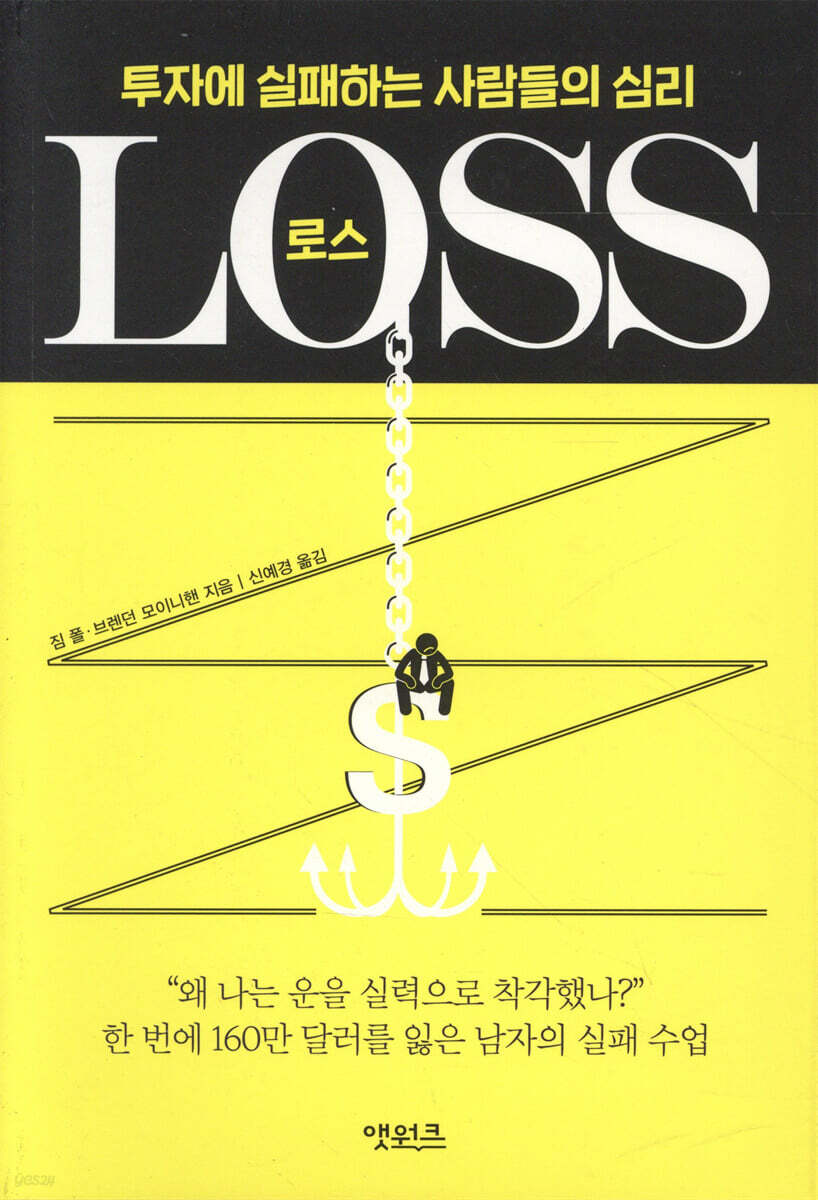
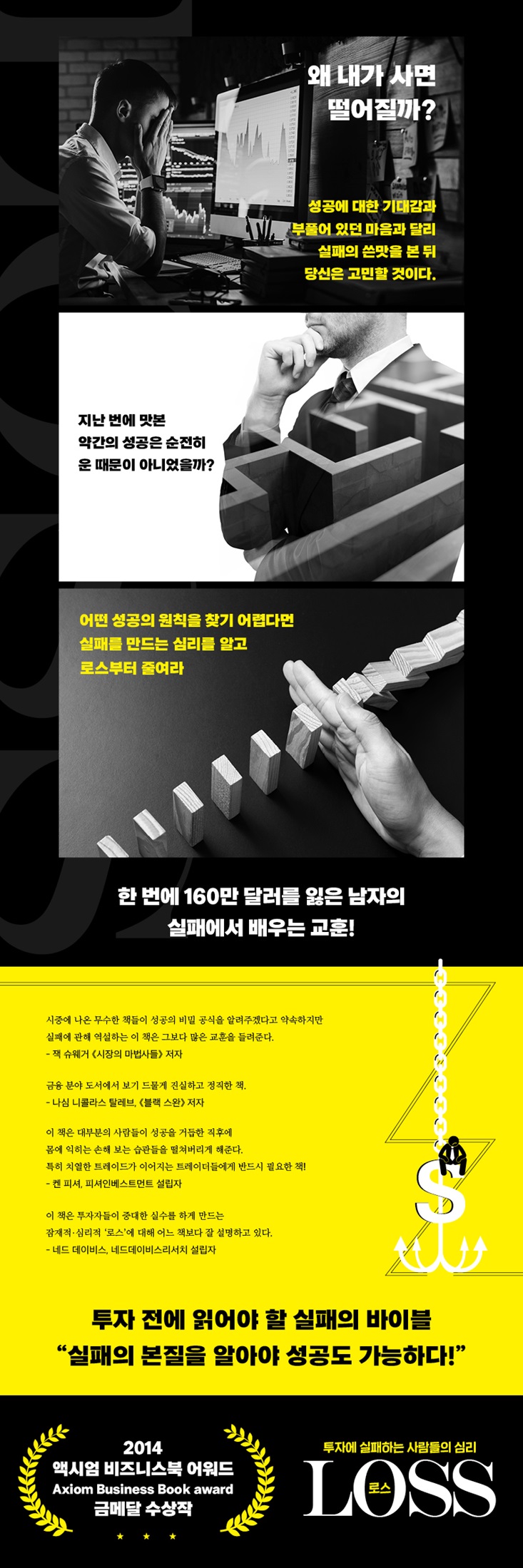
“Why do I fall when I buy it?”
Before you talk about success, learn how not to fail!
Most people go to bookstores and read stories about how rich people made their money.
They believe that their secrets are hidden in the book and that if they follow what they do, they too will become rich.
But if you look at the principles of success of the rich, there are many contradictions.
The reason the principles of success are so different is because luck plays as big a role as skill.
So, rather than trying to find an uncertain recipe for success, it's better to first learn how to avoid failure.
This book reveals the secrets of failure that a successful investor, who once made $1 million a day, learned firsthand when he lost his money overnight.
According to him, there are as many ways to make money in the market as there are people participating in it, but all failures stem from a few psychological causes.
Let's learn how to avoid losses by finding the psychological causes of failure!
Before you talk about success, learn how not to fail!
Most people go to bookstores and read stories about how rich people made their money.
They believe that their secrets are hidden in the book and that if they follow what they do, they too will become rich.
But if you look at the principles of success of the rich, there are many contradictions.
The reason the principles of success are so different is because luck plays as big a role as skill.
So, rather than trying to find an uncertain recipe for success, it's better to first learn how to avoid failure.
This book reveals the secrets of failure that a successful investor, who once made $1 million a day, learned firsthand when he lost his money overnight.
According to him, there are as many ways to make money in the market as there are people participating in it, but all failures stem from a few psychological causes.
Let's learn how to avoid losses by finding the psychological causes of failure!
- You can preview some of the book's contents.
Preview
index
Recommendation
Preface to the Revised Edition
Preface to the first edition
PART ONE: An Investor's Memories
1. A rustic and poor time
2 Into the real world
3 Timber Trade and the Touch of Midas
4. Meet the floor
5 Expert Advice
PART TWO The Psychology of Failure
6 Psychological Dynamics of Loss
7 Investment and Gambling
8 Emotions and Crowds
PART THREE: Integrating Psychology and Investing
9 Rules, Tools, and Fools
conclusion
Additional remarks
supplement
annotation
References
Preface to the Revised Edition
Preface to the first edition
PART ONE: An Investor's Memories
1. A rustic and poor time
2 Into the real world
3 Timber Trade and the Touch of Midas
4. Meet the floor
5 Expert Advice
PART TWO The Psychology of Failure
6 Psychological Dynamics of Loss
7 Investment and Gambling
8 Emotions and Crowds
PART THREE: Integrating Psychology and Investing
9 Rules, Tools, and Fools
conclusion
Additional remarks
supplement
annotation
References
Detailed image
Into the book
No one in their right mind would believe that they could go to a bookstore, go to the medical section, pick out a book on brain surgery, read it diligently over the weekend, and then go into the operating room on Monday morning and successfully perform brain surgery.
The key here is the expression 'in good spirits'.
On the other hand, it's quite common to see people who, after pulling a book from the investment section of a bookstore with a title like "How I Made a Million Dollars in Stocks Last Year," devour it over the weekend, then jump right into investing on Monday morning, expecting to outperform the experts, thinking that's perfectly reasonable.
Why do people think in such dichotomous ways? (pp. 5-6)
So why write a book about failure? In the market, there are as many ways to make money as there are participants, but there are relatively few ways to lose money.
And while there are all kinds of books out there telling us how to make money in the markets, most of us aren't rich! (p. 19)
Oh my gosh! That's exactly what I want to do.
Making a lot of money.
Whenever people ask me what I want to do when I graduate from school, I always answer like this.
“I’m going to make a lot of money.” “So what are you going to do?” “I’m thinking of starting a business.” I didn’t know exactly what I was going to do.
I never even thought about what to do.
What matters is not what you do, but how much you get paid for it.
(Page 51)
For example, was the reason I was sent to Korea and became an intelligence officer as a so-called "specialist" because I was exceptionally talented or because I was lucky? It was luck.
Since everyone else was sent to Vietnam, there was a shortage of manpower to send to Korea.
Was it because I was talented or lucky that I happened to join a stock brokerage the day after Cohan's assistant quit? It was because I was lucky.
Was it my talent or my luck that I ended up on the Steering Committee and Executive Board just six months after arriving in Chicago? It was luck.
My success in life has given me a false sense of omnipotence and absolute certainty.
Most of the success I've had in life has been due to luck, not because I was particularly smart, brilliant, or different.
I didn't realize that until my life had come to this point.
(Pages 86-87)
Learning how to not lose money is more important than learning how to make money.
Unfortunately, the experts didn't explain how to master this skill.
So I decided to study failure in general, and my failure in particular, to see if I could figure out the root cause of my losses in the markets.
As I explained at the beginning of this book, I may not be wise, but I am a very smart person now.
In the end, it is because we learned a lesson by using failure as a mirror.
(Pages 128-129)
Most people don't know whether they are investing, speculating, or gambling.
And to the untrained eye, these three look remarkably similar.
Looking back on my last trip to Las Vegas, I was struck by the similarity between casinos and stock brokerages.
A broker is like a baccarat dealer.
The commission rate is also similar to that of the house.
The executive conference room is the casino itself.
The stock exchange and ticker tape are gambling tools.
However, the only similarity between markets and gambling is that both involve the possibility of financial loss.
They are different not only in legal terms but also in economic terms.
The biggest difference is that gambling creates risk, whereas investing and speculation anticipate and manage existing risks.
(Page 163)
The noun 'plan' refers to a very detailed structure, program, or method thought out in advance to achieve a goal.
The verb 'plan' means to think before acting, not to think and act at the same time or to act before thinking.
People without plans fall into two categories.
If your main concern is whether your judgment is right or wrong, you are a bettor; if your main concern is entertainment, you are a gambler.
If you have an opinion about what the market will do next, you are already personally involved in the market.
You start to think of what the market does as a reflection of your own personal thoughts.
When the market price moves as expected, it feels like you're proven right, but when it doesn't, something feels wrong.
Moreover, if the market moves against your thoughts, you feel obligated to say something to justify your opinion.
To make matters worse, you may feel obligated to increase your losing positions to show that you have the courage to act on your convictions, or you may even feel obligated to do something.
Participating in an activity to check whether one's judgment is correct is betting, that is, placing a wager, and betting for excitement and stimulation is gambling.
To make a guess, you must have a plan.
(Pages 213-214)
Rather than giving you a formula for success to follow and stick to, this book identifies a formula for failure that you should definitely avoid.
Wang An, founder of the Wang Institute, explained:
“I believe there is no ‘secret’ to success.” The formula for failure is not a lack of knowledge, brains, skills, or hard work, nor is it a lack of luck.
It's about personalizing the loss.
Especially if you have a history of consistent winning or profiting.
When loss occurs, you refuse to acknowledge and accept the reality of it.
Because when you acknowledge and accept it, it seems like it reflects your negative side.
(Pages 276-277)
The key here is the expression 'in good spirits'.
On the other hand, it's quite common to see people who, after pulling a book from the investment section of a bookstore with a title like "How I Made a Million Dollars in Stocks Last Year," devour it over the weekend, then jump right into investing on Monday morning, expecting to outperform the experts, thinking that's perfectly reasonable.
Why do people think in such dichotomous ways? (pp. 5-6)
So why write a book about failure? In the market, there are as many ways to make money as there are participants, but there are relatively few ways to lose money.
And while there are all kinds of books out there telling us how to make money in the markets, most of us aren't rich! (p. 19)
Oh my gosh! That's exactly what I want to do.
Making a lot of money.
Whenever people ask me what I want to do when I graduate from school, I always answer like this.
“I’m going to make a lot of money.” “So what are you going to do?” “I’m thinking of starting a business.” I didn’t know exactly what I was going to do.
I never even thought about what to do.
What matters is not what you do, but how much you get paid for it.
(Page 51)
For example, was the reason I was sent to Korea and became an intelligence officer as a so-called "specialist" because I was exceptionally talented or because I was lucky? It was luck.
Since everyone else was sent to Vietnam, there was a shortage of manpower to send to Korea.
Was it because I was talented or lucky that I happened to join a stock brokerage the day after Cohan's assistant quit? It was because I was lucky.
Was it my talent or my luck that I ended up on the Steering Committee and Executive Board just six months after arriving in Chicago? It was luck.
My success in life has given me a false sense of omnipotence and absolute certainty.
Most of the success I've had in life has been due to luck, not because I was particularly smart, brilliant, or different.
I didn't realize that until my life had come to this point.
(Pages 86-87)
Learning how to not lose money is more important than learning how to make money.
Unfortunately, the experts didn't explain how to master this skill.
So I decided to study failure in general, and my failure in particular, to see if I could figure out the root cause of my losses in the markets.
As I explained at the beginning of this book, I may not be wise, but I am a very smart person now.
In the end, it is because we learned a lesson by using failure as a mirror.
(Pages 128-129)
Most people don't know whether they are investing, speculating, or gambling.
And to the untrained eye, these three look remarkably similar.
Looking back on my last trip to Las Vegas, I was struck by the similarity between casinos and stock brokerages.
A broker is like a baccarat dealer.
The commission rate is also similar to that of the house.
The executive conference room is the casino itself.
The stock exchange and ticker tape are gambling tools.
However, the only similarity between markets and gambling is that both involve the possibility of financial loss.
They are different not only in legal terms but also in economic terms.
The biggest difference is that gambling creates risk, whereas investing and speculation anticipate and manage existing risks.
(Page 163)
The noun 'plan' refers to a very detailed structure, program, or method thought out in advance to achieve a goal.
The verb 'plan' means to think before acting, not to think and act at the same time or to act before thinking.
People without plans fall into two categories.
If your main concern is whether your judgment is right or wrong, you are a bettor; if your main concern is entertainment, you are a gambler.
If you have an opinion about what the market will do next, you are already personally involved in the market.
You start to think of what the market does as a reflection of your own personal thoughts.
When the market price moves as expected, it feels like you're proven right, but when it doesn't, something feels wrong.
Moreover, if the market moves against your thoughts, you feel obligated to say something to justify your opinion.
To make matters worse, you may feel obligated to increase your losing positions to show that you have the courage to act on your convictions, or you may even feel obligated to do something.
Participating in an activity to check whether one's judgment is correct is betting, that is, placing a wager, and betting for excitement and stimulation is gambling.
To make a guess, you must have a plan.
(Pages 213-214)
Rather than giving you a formula for success to follow and stick to, this book identifies a formula for failure that you should definitely avoid.
Wang An, founder of the Wang Institute, explained:
“I believe there is no ‘secret’ to success.” The formula for failure is not a lack of knowledge, brains, skills, or hard work, nor is it a lack of luck.
It's about personalizing the loss.
Especially if you have a history of consistent winning or profiting.
When loss occurs, you refuse to acknowledge and accept the reality of it.
Because when you acknowledge and accept it, it seems like it reflects your negative side.
(Pages 276-277)
--- From the text
Publisher's Review
The Bible of Failure: Read Before Investing
“You need to understand the nature of failure to recover!”
Before we invest, we read stories of people who became rich.
People think that the secret to their wealth is hidden in the book and that if they follow what they say, they will become rich.
But there is a big problem here.
If you look at what successful investors say are their success principles, you'll see that their methods are all different and even contradictory.
Some people say to diversify your investments, while others argue that diversification is an ignorant excuse.
Some people say don't try to time it, while others say timing is key.
The problem is that all of these people making these different claims have made their mark on investment history with outstanding returns.
But can we truly verify which of these different principles of success is correct? Is verification even possible?
So, it is better to learn about failure than to try to find a recipe for success that is not even certain.
Failure is less influenced by luck than success, and therefore it is easier to find the reasons for it. In investing, it is better to not succeed while trying to avoid failure than to fail while trying to succeed.
By learning from failure, you can reduce future failures and your exposure to risk.
Traders who make money all have one thing in common: they understand that losses are part of the game and have learned to tolerate them.
As André Kostolany said, “The only way to become a successful investor is through serious analysis of failure.” By losing everything, author Jim Paul became an expert in failure, and only then was he able to become a trader who made real money, not just a trader who got lucky temporarily.
Winner of the 2014 Axiom Business Book Award Gold Medal
Born in a poor rural town in Kentucky, Jim Paul entered the world of investing and became a member of the board of directors of the Chicago Mercantile Exchange.
But his pride grew with his success, and his arrogance eventually led to fatal mistakes.
His brokerage firm took his job, his reputation was ruined, and he lost $1.6 million.
However, after a thorough analysis of his failures, Jim Paul succeeded in getting back on his feet and worked with investment expert Brendan Moynihan in Morgan Stanley's futures research department, which led to the two teaming up to publish this book.
The book begins with author Jim Paul, who was born in a poor rural town in Kentucky, USA, and started working as a caddy at a country club for the first time at the age of nine.
After learning the importance of money there, he entered the world of investing and became a board member of the Chicago Mercantile Exchange and a jet-setting millionaire.
But his arrogant view of money led to fatal mistakes, which resulted in huge losses and collapse.
To get back on track, he explores how other investment experts have made money in the markets and follows their example, believing that he can become rich again.
Just as one would consult a doctor when sick, he reviewed all the information provided by investment experts to learn the secrets of making money, but all he found was that each method was different and even contradictory.
It was like one investment expert making a claim and another expert contradicting it.
Jim Paul eventually realizes that learning how to not lose money is more important than learning how to make money.
I decided to study failure in general, and my own failures in particular, to find out the root causes of losing money in the markets.
So why is it more important to learn how to avoid failure than how to succeed? After losing money in investing, people typically seek out new ways to make money.
However, if you try to make money by following the many methods of the rich, you may spend your whole life failing.
On the other hand, if you learn why you fail and can control your failures, you will be able to make profits.
According to the authors, when people lose money, they tend to internalize it.
They tend to equate their self-worth with their net worth.
It is to equate one's failure with one's identity.
For example, if you lose a large sum of money, you may see yourself as a failure and retreat rather than looking for opportunities to bounce back.
We are human.
Therefore, it is natural to have an emotional reaction to a situation, whether positive or negative.
Before making a decision, you must learn to control your emotions and look at things objectively.
Jim Paul says his soybean oil investment, which led to his downfall, was an example of letting emotions drive trading.
According to the authors, having a plan before investing, sticking to that plan, and recognizing the emotional impulses that lead you away from your plan will help you avoid pitfalls that can lead to failure.
“You need to understand the nature of failure to recover!”
Before we invest, we read stories of people who became rich.
People think that the secret to their wealth is hidden in the book and that if they follow what they say, they will become rich.
But there is a big problem here.
If you look at what successful investors say are their success principles, you'll see that their methods are all different and even contradictory.
Some people say to diversify your investments, while others argue that diversification is an ignorant excuse.
Some people say don't try to time it, while others say timing is key.
The problem is that all of these people making these different claims have made their mark on investment history with outstanding returns.
But can we truly verify which of these different principles of success is correct? Is verification even possible?
So, it is better to learn about failure than to try to find a recipe for success that is not even certain.
Failure is less influenced by luck than success, and therefore it is easier to find the reasons for it. In investing, it is better to not succeed while trying to avoid failure than to fail while trying to succeed.
By learning from failure, you can reduce future failures and your exposure to risk.
Traders who make money all have one thing in common: they understand that losses are part of the game and have learned to tolerate them.
As André Kostolany said, “The only way to become a successful investor is through serious analysis of failure.” By losing everything, author Jim Paul became an expert in failure, and only then was he able to become a trader who made real money, not just a trader who got lucky temporarily.
Winner of the 2014 Axiom Business Book Award Gold Medal
Born in a poor rural town in Kentucky, Jim Paul entered the world of investing and became a member of the board of directors of the Chicago Mercantile Exchange.
But his pride grew with his success, and his arrogance eventually led to fatal mistakes.
His brokerage firm took his job, his reputation was ruined, and he lost $1.6 million.
However, after a thorough analysis of his failures, Jim Paul succeeded in getting back on his feet and worked with investment expert Brendan Moynihan in Morgan Stanley's futures research department, which led to the two teaming up to publish this book.
The book begins with author Jim Paul, who was born in a poor rural town in Kentucky, USA, and started working as a caddy at a country club for the first time at the age of nine.
After learning the importance of money there, he entered the world of investing and became a board member of the Chicago Mercantile Exchange and a jet-setting millionaire.
But his arrogant view of money led to fatal mistakes, which resulted in huge losses and collapse.
To get back on track, he explores how other investment experts have made money in the markets and follows their example, believing that he can become rich again.
Just as one would consult a doctor when sick, he reviewed all the information provided by investment experts to learn the secrets of making money, but all he found was that each method was different and even contradictory.
It was like one investment expert making a claim and another expert contradicting it.
Jim Paul eventually realizes that learning how to not lose money is more important than learning how to make money.
I decided to study failure in general, and my own failures in particular, to find out the root causes of losing money in the markets.
So why is it more important to learn how to avoid failure than how to succeed? After losing money in investing, people typically seek out new ways to make money.
However, if you try to make money by following the many methods of the rich, you may spend your whole life failing.
On the other hand, if you learn why you fail and can control your failures, you will be able to make profits.
According to the authors, when people lose money, they tend to internalize it.
They tend to equate their self-worth with their net worth.
It is to equate one's failure with one's identity.
For example, if you lose a large sum of money, you may see yourself as a failure and retreat rather than looking for opportunities to bounce back.
We are human.
Therefore, it is natural to have an emotional reaction to a situation, whether positive or negative.
Before making a decision, you must learn to control your emotions and look at things objectively.
Jim Paul says his soybean oil investment, which led to his downfall, was an example of letting emotions drive trading.
According to the authors, having a plan before investing, sticking to that plan, and recognizing the emotional impulses that lead you away from your plan will help you avoid pitfalls that can lead to failure.
GOODS SPECIFICS
- Date of publication: September 13, 2018
- Page count, weight, size: 287 pages | 453g | 140*205*18mm
- ISBN13: 9791157061327
You may also like
카테고리
korean


korean

![GQ KOREA Mark (Monthly): December [2025]](http://librairie.coreenne.fr/cdn/shop/files/8ef265dbbfbf186523ed75ba7319009d.jpg?v=1765340328&width=3840)


