

Writing a thesis in English
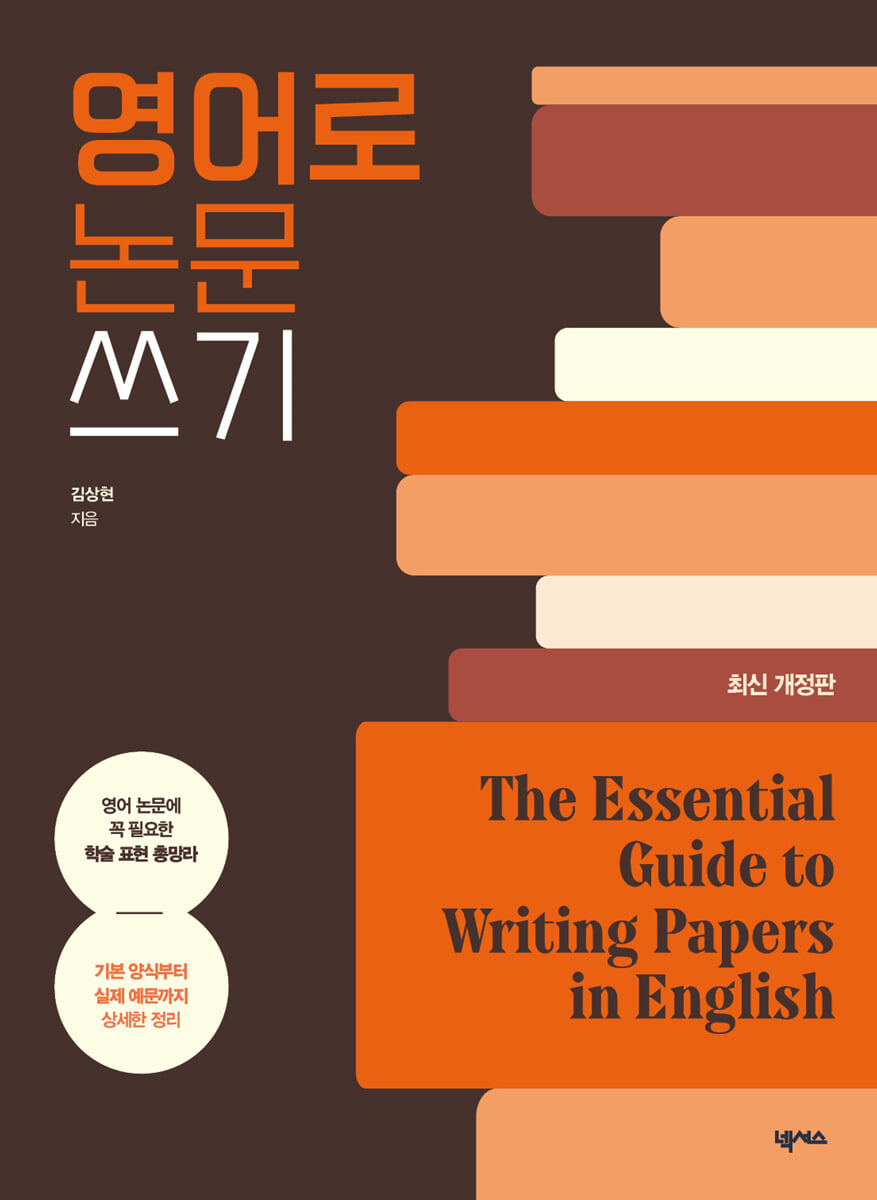 |
Description
Book Introduction
From basic forms to real-world examples
When writing a paper in English
Essential Academic English Expression Notes!
A comprehensive guide to essential academic expressions for English-language paper writers across all disciplines.
Detailed introduction to paper submission and abstract writing, including actual resume examples.
Includes real-world samples to help you prepare for various formats of English papers.
Includes detailed explanations with expressions and examples for writing effective English papers.
The appendix reveals the author's learning know-how and includes helpful advice for graduate students.
When writing a paper in English
Essential Academic English Expression Notes!
A comprehensive guide to essential academic expressions for English-language paper writers across all disciplines.
Detailed introduction to paper submission and abstract writing, including actual resume examples.
Includes real-world samples to help you prepare for various formats of English papers.
Includes detailed explanations with expressions and examples for writing effective English papers.
The appendix reveals the author's learning know-how and includes helpful advice for graduate students.
- You can preview some of the book's contents.
Preview
index
PART 1
Ⅰ Basic contents of the paper
1.
Traditional thesis writing process
2.
Key Differences Between Humanities and Social Sciences Papers and Natural Sciences Papers
Ⅱ Expressions that frequently appear in the introduction
1.
Raising an issue
2.
Scope of the paper
3.
Purpose/Direction/Outline of the Paper
Ⅲ Expressions that frequently appear in the main text
1.
Fullness / Dominance / Consistency / Dotted
2.
Interpretability / Validity
3.
Similarity / Identification / Equivalence / Juxtaposition
4.
Differences / Contrasts
5.
aspect / viewpoint / position / consideration
6.
Present / Provide / Grant
7.
Function/Role
8.
center point / focus / allocation
9.
Mention / Relationship / Relevance
10.
hint / foreshadowing / prediction / hint
11.
Ventilation / Recall / Reminiscence
12.
Techniques used
13.
Speech / Speaker / Narrative Technique
14.
Work structure
15.
Parentheses / adverbial phrases / conjunctions
16.
Text quotes
17.
Various uses of the It ~ That structure
18.
Inverted sentence structure
19.
Rank, take the rank
Ⅳ Expressions that frequently appear in conclusions
1.
Summary and conclusion of the main text
2.
The author's hope for a correction / Pointing out remaining problems
Expressions that frequently appear in Chapter V transitions and contextual flow references
Ⅵ Expressions that frequently appear in footnotes and endnotes
1.
How to recite
2.
Citation of the source of text used in the paper
3.
Repeated omissions of key text and special mentions by the author
4.
References to other papers
5.
Comments on the current status of research
6.
Expression of gratitude
7.
References to papers presented at academic conferences, etc. and references to doctoral theses
Ⅶ Expressions that frequently appear in book reviews
1.
The fruit of affection/passion/growth/fruition of interest
2.
Specific references to the contents of the book
3.
Notes on the structure and editing of the book
4.
Comments on the book's pros and cons
Ⅷ Acknowledgement
1.
Motivation for research / Time
2.
Mention of various benefits such as research expenses, scholarships, and library facilities
3.
Special expression of gratitude
4.
Expressing gratitude to family, parents, acquaintances, and teachers
5.
A comment on the reader's statement
Ⅸ Expressions that frequently appear in the introduction to Curriculum vitae
RESUME Sample-1~7
X Example of paper submission and abstract writing
Sample-1~36
PART 2
Ⅰ Basic format of a paper
1.
Basic format
2.
Basic configuration
3.
Chapter structure
4.
Punctuation
supplement
1.
Introduction to thesis writing method
2.
Common Scholarly Abbreviations
3.
Glossary of Basic Terms
4.
Foreign words expressed in italics
5.
', with ~' prepositional construction
6.
Advice for Graduate Students
Ⅰ Basic contents of the paper
1.
Traditional thesis writing process
2.
Key Differences Between Humanities and Social Sciences Papers and Natural Sciences Papers
Ⅱ Expressions that frequently appear in the introduction
1.
Raising an issue
2.
Scope of the paper
3.
Purpose/Direction/Outline of the Paper
Ⅲ Expressions that frequently appear in the main text
1.
Fullness / Dominance / Consistency / Dotted
2.
Interpretability / Validity
3.
Similarity / Identification / Equivalence / Juxtaposition
4.
Differences / Contrasts
5.
aspect / viewpoint / position / consideration
6.
Present / Provide / Grant
7.
Function/Role
8.
center point / focus / allocation
9.
Mention / Relationship / Relevance
10.
hint / foreshadowing / prediction / hint
11.
Ventilation / Recall / Reminiscence
12.
Techniques used
13.
Speech / Speaker / Narrative Technique
14.
Work structure
15.
Parentheses / adverbial phrases / conjunctions
16.
Text quotes
17.
Various uses of the It ~ That structure
18.
Inverted sentence structure
19.
Rank, take the rank
Ⅳ Expressions that frequently appear in conclusions
1.
Summary and conclusion of the main text
2.
The author's hope for a correction / Pointing out remaining problems
Expressions that frequently appear in Chapter V transitions and contextual flow references
Ⅵ Expressions that frequently appear in footnotes and endnotes
1.
How to recite
2.
Citation of the source of text used in the paper
3.
Repeated omissions of key text and special mentions by the author
4.
References to other papers
5.
Comments on the current status of research
6.
Expression of gratitude
7.
References to papers presented at academic conferences, etc. and references to doctoral theses
Ⅶ Expressions that frequently appear in book reviews
1.
The fruit of affection/passion/growth/fruition of interest
2.
Specific references to the contents of the book
3.
Notes on the structure and editing of the book
4.
Comments on the book's pros and cons
Ⅷ Acknowledgement
1.
Motivation for research / Time
2.
Mention of various benefits such as research expenses, scholarships, and library facilities
3.
Special expression of gratitude
4.
Expressing gratitude to family, parents, acquaintances, and teachers
5.
A comment on the reader's statement
Ⅸ Expressions that frequently appear in the introduction to Curriculum vitae
RESUME Sample-1~7
X Example of paper submission and abstract writing
Sample-1~36
PART 2
Ⅰ Basic format of a paper
1.
Basic format
2.
Basic configuration
3.
Chapter structure
4.
Punctuation
supplement
1.
Introduction to thesis writing method
2.
Common Scholarly Abbreviations
3.
Glossary of Basic Terms
4.
Foreign words expressed in italics
5.
', with ~' prepositional construction
6.
Advice for Graduate Students
Detailed image

GOODS SPECIFICS
- Date of issue: May 25, 2024
- Page count, weight, size: 404 pages | 188*257*30mm
- ISBN13: 9791166835551
- ISBN10: 1166835553
You may also like
카테고리
korean


korean

![GQ KOREA Mark (Monthly): December [2025]](http://librairie.coreenne.fr/cdn/shop/files/8ef265dbbfbf186523ed75ba7319009d.jpg?v=1765340328&width=3840)


