

Young Stalin
 |
Description
Book Introduction
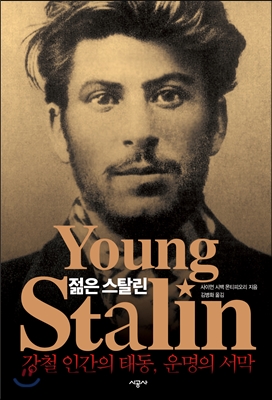
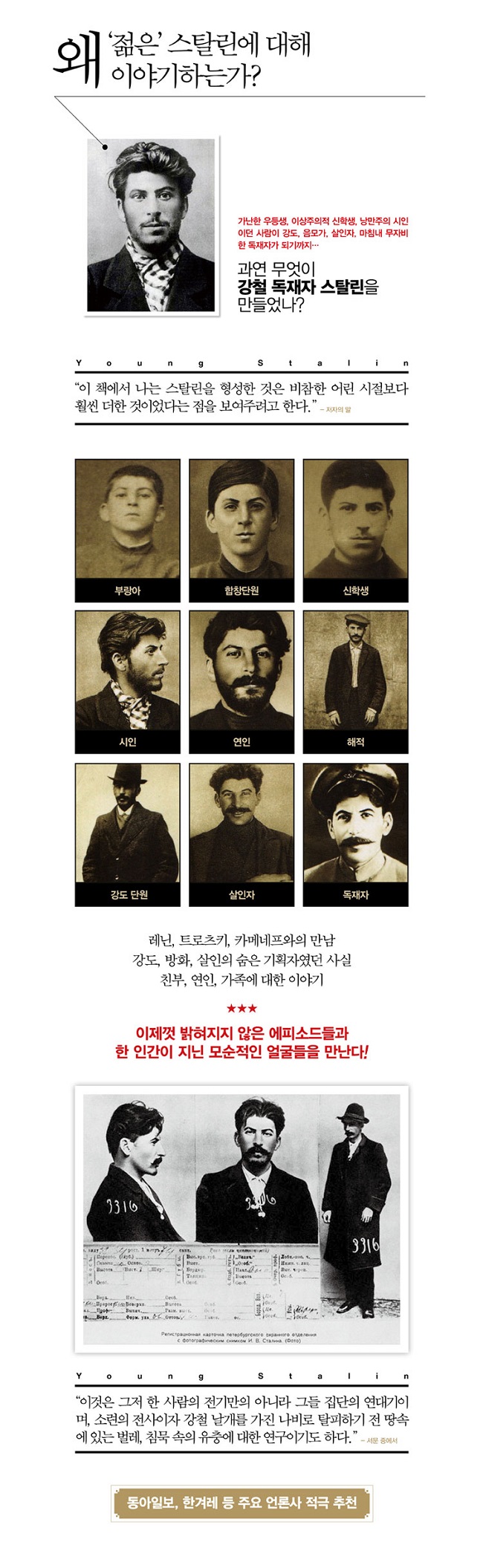
This book, Young Stalin, tells the story of Stalin's childhood, his career as a revolutionary, his time as a gangster, a poet, a trainee priest, a husband and a passionate lover, and a man who fathered an illegitimate child and abandoned women and children.
The reason I want to tell the story of the 'young' Stalin is to gain a deeper and more unbiased understanding of his atrocious later life and the events that shook world history by looking into the first half of his life.
Moreover, through this we can glimpse the essence of Russian society represented by the Bolsheviks.
The author of this book is Simon Sebag Montefiore, who wrote “Jerusalem Chronicles,” which received great attention from major domestic and international media outlets and readers.
True to his reputation for producing masterpieces through extensive research and a tenacious pursuit of depth, he has once again produced a monumental work about Stalin's youth.
Through extensive research and detailed interviews across 23 cities and nine countries, including newly opened archives in Moscow, Tbilisi, and Batumi, Stalin's early life is brought to life.
In particular, this book contains many contents that have been made public for the first time, including parts of Stalin's mother's memoirs.
From the most trivial anecdotes to long-held misconceptions, the most detailed and fascinating account of Stalin unfolds.
The reason I want to tell the story of the 'young' Stalin is to gain a deeper and more unbiased understanding of his atrocious later life and the events that shook world history by looking into the first half of his life.
Moreover, through this we can glimpse the essence of Russian society represented by the Bolsheviks.
The author of this book is Simon Sebag Montefiore, who wrote “Jerusalem Chronicles,” which received great attention from major domestic and international media outlets and readers.
True to his reputation for producing masterpieces through extensive research and a tenacious pursuit of depth, he has once again produced a monumental work about Stalin's youth.
Through extensive research and detailed interviews across 23 cities and nine countries, including newly opened archives in Moscow, Tbilisi, and Batumi, Stalin's early life is brought to life.
In particular, this book contains many contents that have been made public for the first time, including parts of Stalin's mother's memoirs.
From the most trivial anecdotes to long-held misconceptions, the most detailed and fascinating account of Stalin unfolds.
- You can preview some of the book's contents.
Preview
index
Preface / Stalin's Family Tree / Map / Character Introduction / Stalin's Names, Nicknames, Pen Names, and Pseudonyms / Note
Prologue_ Bank Robbery
Part 1: Chapter 1: The Miracle of Keke, Soso / Chapter 2: The Mad Beso / Chapter 3: The Fighter, the Wrestler, the Choir Member / Chapter 4: The Hanging in the Ring / Chapter 5: The Poet and the Priest / Chapter 6: The Young Man with the Burning Eyes / Chapter 7: The Confrontation of Soso and the 'Black Dot' / Chapter 8: The Meteorological Observatory Staff: The Party and the Workers / Chapter 9: Stalin Goes Underground: Conspiracia / Chapter 10: The Batumi Fire, Massacres, and Arrests
Part II: Chapter 11 The Prisoner / Chapter 12 The Frozen Georgian: Siberian Exile / Chapter 13 The Seductive Bolshevik Woman / Chapter 14 1905: The King of the Mountains / Chapter 15 1905: The Brawler, the Tramp, the Tailor / Chapter 16 1905: Stalin Meets Lenin / Chapter 17 Marriage, Turmoil (and Sweden) / Chapter 18 Pirates and Fathers / Chapter 19 Stalin in London / Chapter 20 The Game of Robbers and Cossacks / Chapter 21 Stalin's Heart of Stone / Chapter 22 The Black City Boss / Chapter 23 Murder, Madness, and the Prison Game / Chapter 24 The 'River Rooster' and the Noble Woman / Chapter 25 Was Stalin a Tsarist Agent?
Part 3: Chapter 26: The Two Lost Fiancées and the Pregnant Peasant Woman / Chapter 27: The Central Committee and the "Pretty" Schoolgirl / Chapter 28: Don't Forget That Name, and Be Extremely Careful! / Chapter 29: Kamo's Leap and the Last Bank Robbery / Chapter 30: A Journey with the Enigmatic Valentina / Chapter 31: Vienna, 1913: The Amazing Georgian, the Austrian Painter, and the Old Emperor / Chapter 32: The Secret Police's Ball: The Betrayed Crossdresser
Part 4: Chapter 33: Stalin in Desperate Plight / Chapter 34: 1914: A Sex Comedy in the Arctic Circle / Chapter 35: The Hunters / Chapter 36: Robinson Crusoe in Siberia / Chapter 37: Stalin's Reindeer Sleigh and the Son Born in Siberia
Part 5: Chapter 38 Spring 1917: The Staggering Leader / Chapter 39 Summer 1917: Sailors Take to the Streets / Chapter 40 Autumn 1917: Soso and Nadya / Chapter 41 Winter 1917: The Countdown / Chapter 42 Glorious October 1917: The Uprising Goes Wrong / Chapter 43 Power: Stalin Steps Out of the Shadows
Epilogue_ The Old Dictator
Acknowledgements / References / Index
Prologue_ Bank Robbery
Part 1: Chapter 1: The Miracle of Keke, Soso / Chapter 2: The Mad Beso / Chapter 3: The Fighter, the Wrestler, the Choir Member / Chapter 4: The Hanging in the Ring / Chapter 5: The Poet and the Priest / Chapter 6: The Young Man with the Burning Eyes / Chapter 7: The Confrontation of Soso and the 'Black Dot' / Chapter 8: The Meteorological Observatory Staff: The Party and the Workers / Chapter 9: Stalin Goes Underground: Conspiracia / Chapter 10: The Batumi Fire, Massacres, and Arrests
Part II: Chapter 11 The Prisoner / Chapter 12 The Frozen Georgian: Siberian Exile / Chapter 13 The Seductive Bolshevik Woman / Chapter 14 1905: The King of the Mountains / Chapter 15 1905: The Brawler, the Tramp, the Tailor / Chapter 16 1905: Stalin Meets Lenin / Chapter 17 Marriage, Turmoil (and Sweden) / Chapter 18 Pirates and Fathers / Chapter 19 Stalin in London / Chapter 20 The Game of Robbers and Cossacks / Chapter 21 Stalin's Heart of Stone / Chapter 22 The Black City Boss / Chapter 23 Murder, Madness, and the Prison Game / Chapter 24 The 'River Rooster' and the Noble Woman / Chapter 25 Was Stalin a Tsarist Agent?
Part 3: Chapter 26: The Two Lost Fiancées and the Pregnant Peasant Woman / Chapter 27: The Central Committee and the "Pretty" Schoolgirl / Chapter 28: Don't Forget That Name, and Be Extremely Careful! / Chapter 29: Kamo's Leap and the Last Bank Robbery / Chapter 30: A Journey with the Enigmatic Valentina / Chapter 31: Vienna, 1913: The Amazing Georgian, the Austrian Painter, and the Old Emperor / Chapter 32: The Secret Police's Ball: The Betrayed Crossdresser
Part 4: Chapter 33: Stalin in Desperate Plight / Chapter 34: 1914: A Sex Comedy in the Arctic Circle / Chapter 35: The Hunters / Chapter 36: Robinson Crusoe in Siberia / Chapter 37: Stalin's Reindeer Sleigh and the Son Born in Siberia
Part 5: Chapter 38 Spring 1917: The Staggering Leader / Chapter 39 Summer 1917: Sailors Take to the Streets / Chapter 40 Autumn 1917: Soso and Nadya / Chapter 41 Winter 1917: The Countdown / Chapter 42 Glorious October 1917: The Uprising Goes Wrong / Chapter 43 Power: Stalin Steps Out of the Shadows
Epilogue_ The Old Dictator
Acknowledgements / References / Index
Detailed image
Into the book
There is little written about Stalin's early years (compared to the numerous books on Hitler's youth).
I think it was because there was little data.
But now things are different.
Hidden in newly opened archives are new documents that vividly tell the story of his childhood, his career as a revolutionary, his time as a gangster, a poet, a trainee priest, a husband and a passionate lover, and a man who fathered an illegitimate child and abandoned women and children.
Georgia's often overlooked archives were a particular treasure trove.
Stalin's early years are shrouded in darkness, but by all accounts they were quite unusual.
It was even more turbulent than the childhood of Lenin or Trotsky.
His childhood prepared him for the triumphs and tragedies, as well as the beastly nature, that come with supreme power, and the destruction it can bring.
--- From the "Preface" on p.11-12
How was the element of empathy missing from Stalin's upbringing, allowing him to kill so easily and prepare so well for political life? How did the man born the son of a shoemaker in 1878 and an idealistic seminarian in 1898 end up becoming a bank robber in 1907, a hunter in oblivious Siberia in 1914, a fanatical Marxist mass murderer in the 1930s, and the conqueror of Berlin in 1945? --- From the "Preface" on pp. 13-14
For a century afterward, Stalin's role that day was questioned but never proven.
But now, with the opening of archives in Moscow and Tbilisi, it has been revealed that he orchestrated the entire operation and had infiltrated the bank months earlier.
His executioner, Sashiko Svanidze, has unpublished memoirs in Georgian archives, in which he publicly admits that Stalin himself masterminded the entire operation.
Stalin excelled at the “dirty business of politics,” the conspiratorial drama of revolution.
When he became the dictator of Soviet Russia, he even fondly recalled, in a cryptic manner, the game of "Kazaki I razboyniki", a Russian version of "Cossacks and Robbers" or "Police and Thieves".
But he never went into detail about anything that might damage his credibility as a politician.
--- pp.50-51 From "Prologue_Bank Robbery"
Aside from these absurd rumors, who was Stalin's biological father? Egnatashvili was clearly the family's guardian, comforting his wife and caring for his son from behind the scenes.
He was married, had children, and lived a comfortable life. He was a successful wine merchant in a town with many successful taverns and a winery.
Not only that, but this lanky wrestler with a glossy mustache was considered the first wrestler in a land that worshipped fighters.
As already pointed out, Keke himself writes that he “always tried to help our family.”
Unfortunately, this may contain some hidden meaning.
It's unlikely that what she said was literally true, but could it be that she was trying to reveal something? --- p.80 From "Chapter 1_Keke's Miracle, Soso"
Throw into this seething cauldron of suspicion the accusations of his being a traitor, dating back to 1902, his secret police connections, and his escapes from exile and prison, and the theory that he was a spy for the Tsarist regime begins to seem plausible.
Was the future high priest of international Marxism a delusional, unprincipled traitor? If Stalin were a spy, wouldn't the entire Soviet experiment have been a fraud? And was everything he did, especially the Great Purges, an attempt to cover up his own guilt? It's a compelling story.
This was especially true during the Cold War.
--- p.413 From “Chapter 25_ Was Stalin a spy for the Tsarist regime?”
Lydia's memoir contains a story about a drinking party that ended in a drunken stupor.
So we get a glimpse of Stalin and Lidia going out for a drink together and staggering back.
“Whenever he had time, Stalin went dancing in the evening.
He could have been a very interesting person.
He was very fond of singing and dancing.
Especially 'I am guarding the gold, the gold.
I'm burying gold, I'm burying gold.
Guess where it is.
I liked the song 'Pure Lady with Blonde Hair'.
He was also a frequent guest at birthday parties,” wrote the memoirs of Stalin’s thirteen-year-old lover, written twenty years later, at the height of his dictatorship.
At that time she was a housewife living in Siberia.
The official who recorded her old memories would not have dared to record the incident of seduction, but he could not completely erase its traces from his memoirs.
“He liked to drop by someone’s house.” “Someone” was referring to himself.
"And we drank too." Did he seduce her in this way? Or did she seduce him? Women in places like Kureika grow up early.
And judging by what she said, it seems Lydia wasn't the shy, cowering type.
--- pp.522-523 From "Chapter 34_ 1914: Sex Comedy in the Arctic Circle"
Stalin moved his residence five times during the three days Kerensky was pursuing the commander (Lenin).
Trotsky and Kamenev were arrested, but Lenin returned underground under Stalin's escort.
The police raided Lenin's sister's house.
Krupskaya hurried to Stalin and Molotov's house on Shirokaya Street to find out Lenin's whereabouts.
On the night of July 6, Stalin moved Lenin to the fifth hiding place.
It was the Alliluyev family's neat new apartment at 10 Rozhdestvenskaya Street.
There was a uniformed guard and a maid in the house.
“Tell me all the entrances and exits,” Lenin said as he checked the attic as soon as he arrived.
“We gave him Stalin’s room,” Olga said.
Lenin was surprisingly cheerful during the four days he spent in the midst of tension.
When Anna Alliluyeva returned home, she found her apartment full of anxious strangers.
“I immediately recognized the person I was introduced to,” Lenin said, “sitting on the sofa in a shirt, vest, light-colored shirt and tie.” In the “unbearably hot” room, Lenin questioned her in detail.
What did you see on the street? --- p.590-591 From "Chapter 40_ Autumn 1917: Soso and Nadiya"
Even at this moment, a game of tactical humility, a game of ascetic denial that had become part of Bolshevik culture, was being played out.
Lenin offered Trotsky the premiership.
But a Jew could not become Prime Minister of Russia.
Trotsky refused, insisting that Lenin should become Prime Minister.
It was probably Lenin who suggested to Stalin that he take up the post of People's Commissar for Nationality.
According to what Yenukidze later told Sagirashvili, Stalin also humbly declined, saying that he was inexperienced, that the Central Committee was too busy, and that he was happy just doing the party's work.
It was probably Stalin who made Lenin laugh when he said this.
“Which of us do you think has experience in this kind of thing?” Lenin kept insisting, and Stalin accepted his first real job, his first since working as a meteorological clerk seventeen years earlier.
In fact, it didn't look real.
Some members of the Central Committee even considered this cabinet formation exercise a joke.
I think it was because there was little data.
But now things are different.
Hidden in newly opened archives are new documents that vividly tell the story of his childhood, his career as a revolutionary, his time as a gangster, a poet, a trainee priest, a husband and a passionate lover, and a man who fathered an illegitimate child and abandoned women and children.
Georgia's often overlooked archives were a particular treasure trove.
Stalin's early years are shrouded in darkness, but by all accounts they were quite unusual.
It was even more turbulent than the childhood of Lenin or Trotsky.
His childhood prepared him for the triumphs and tragedies, as well as the beastly nature, that come with supreme power, and the destruction it can bring.
--- From the "Preface" on p.11-12
How was the element of empathy missing from Stalin's upbringing, allowing him to kill so easily and prepare so well for political life? How did the man born the son of a shoemaker in 1878 and an idealistic seminarian in 1898 end up becoming a bank robber in 1907, a hunter in oblivious Siberia in 1914, a fanatical Marxist mass murderer in the 1930s, and the conqueror of Berlin in 1945? --- From the "Preface" on pp. 13-14
For a century afterward, Stalin's role that day was questioned but never proven.
But now, with the opening of archives in Moscow and Tbilisi, it has been revealed that he orchestrated the entire operation and had infiltrated the bank months earlier.
His executioner, Sashiko Svanidze, has unpublished memoirs in Georgian archives, in which he publicly admits that Stalin himself masterminded the entire operation.
Stalin excelled at the “dirty business of politics,” the conspiratorial drama of revolution.
When he became the dictator of Soviet Russia, he even fondly recalled, in a cryptic manner, the game of "Kazaki I razboyniki", a Russian version of "Cossacks and Robbers" or "Police and Thieves".
But he never went into detail about anything that might damage his credibility as a politician.
--- pp.50-51 From "Prologue_Bank Robbery"
Aside from these absurd rumors, who was Stalin's biological father? Egnatashvili was clearly the family's guardian, comforting his wife and caring for his son from behind the scenes.
He was married, had children, and lived a comfortable life. He was a successful wine merchant in a town with many successful taverns and a winery.
Not only that, but this lanky wrestler with a glossy mustache was considered the first wrestler in a land that worshipped fighters.
As already pointed out, Keke himself writes that he “always tried to help our family.”
Unfortunately, this may contain some hidden meaning.
It's unlikely that what she said was literally true, but could it be that she was trying to reveal something? --- p.80 From "Chapter 1_Keke's Miracle, Soso"
Throw into this seething cauldron of suspicion the accusations of his being a traitor, dating back to 1902, his secret police connections, and his escapes from exile and prison, and the theory that he was a spy for the Tsarist regime begins to seem plausible.
Was the future high priest of international Marxism a delusional, unprincipled traitor? If Stalin were a spy, wouldn't the entire Soviet experiment have been a fraud? And was everything he did, especially the Great Purges, an attempt to cover up his own guilt? It's a compelling story.
This was especially true during the Cold War.
--- p.413 From “Chapter 25_ Was Stalin a spy for the Tsarist regime?”
Lydia's memoir contains a story about a drinking party that ended in a drunken stupor.
So we get a glimpse of Stalin and Lidia going out for a drink together and staggering back.
“Whenever he had time, Stalin went dancing in the evening.
He could have been a very interesting person.
He was very fond of singing and dancing.
Especially 'I am guarding the gold, the gold.
I'm burying gold, I'm burying gold.
Guess where it is.
I liked the song 'Pure Lady with Blonde Hair'.
He was also a frequent guest at birthday parties,” wrote the memoirs of Stalin’s thirteen-year-old lover, written twenty years later, at the height of his dictatorship.
At that time she was a housewife living in Siberia.
The official who recorded her old memories would not have dared to record the incident of seduction, but he could not completely erase its traces from his memoirs.
“He liked to drop by someone’s house.” “Someone” was referring to himself.
"And we drank too." Did he seduce her in this way? Or did she seduce him? Women in places like Kureika grow up early.
And judging by what she said, it seems Lydia wasn't the shy, cowering type.
--- pp.522-523 From "Chapter 34_ 1914: Sex Comedy in the Arctic Circle"
Stalin moved his residence five times during the three days Kerensky was pursuing the commander (Lenin).
Trotsky and Kamenev were arrested, but Lenin returned underground under Stalin's escort.
The police raided Lenin's sister's house.
Krupskaya hurried to Stalin and Molotov's house on Shirokaya Street to find out Lenin's whereabouts.
On the night of July 6, Stalin moved Lenin to the fifth hiding place.
It was the Alliluyev family's neat new apartment at 10 Rozhdestvenskaya Street.
There was a uniformed guard and a maid in the house.
“Tell me all the entrances and exits,” Lenin said as he checked the attic as soon as he arrived.
“We gave him Stalin’s room,” Olga said.
Lenin was surprisingly cheerful during the four days he spent in the midst of tension.
When Anna Alliluyeva returned home, she found her apartment full of anxious strangers.
“I immediately recognized the person I was introduced to,” Lenin said, “sitting on the sofa in a shirt, vest, light-colored shirt and tie.” In the “unbearably hot” room, Lenin questioned her in detail.
What did you see on the street? --- p.590-591 From "Chapter 40_ Autumn 1917: Soso and Nadiya"
Even at this moment, a game of tactical humility, a game of ascetic denial that had become part of Bolshevik culture, was being played out.
Lenin offered Trotsky the premiership.
But a Jew could not become Prime Minister of Russia.
Trotsky refused, insisting that Lenin should become Prime Minister.
It was probably Lenin who suggested to Stalin that he take up the post of People's Commissar for Nationality.
According to what Yenukidze later told Sagirashvili, Stalin also humbly declined, saying that he was inexperienced, that the Central Committee was too busy, and that he was happy just doing the party's work.
It was probably Stalin who made Lenin laugh when he said this.
“Which of us do you think has experience in this kind of thing?” Lenin kept insisting, and Stalin accepted his first real job, his first since working as a meteorological clerk seventeen years earlier.
In fact, it didn't look real.
Some members of the Central Committee even considered this cabinet formation exercise a joke.
--- pp.623-624 From "Chapter 42_ Glorious October 1917: The Uprising in Disarray"
Publisher's Review
1878~1917,
A prequel to a dictator and his group
From poor honor student, idealistic theologian, and romantic poet
From robber to conspirator to murderer, and finally to ruthless dictator.
Here was a man born the son of a shoemaker, who became a poor, idealistic theology student, wrote romantic poetry, and enjoyed the company of his friends.
On the other hand, there was one who surpassed such capable politicians as Lenin, Bukharin, and Trotsky, who carried out industrialization programs, waged war against the peasants, and carried out horrific purges.
A man of ordinary birth and a giant of the 20th century, these two seemingly different people are in fact the same person.
He is none other than Stalin.
Stalin, considered one of the greatest monsters of the 20th century, was the Russian dictator who executed anything that threatened or obstructed him, and was not afraid to sacrifice human lives in the process.
But what was it about his younger days that made him so capable of killing people so easily and so well-prepared for political life?
This book, Young Stalin, tells the story of Stalin's childhood, his career as a revolutionary, his time as a gangster, a poet, a trainee priest, a husband and a passionate lover, and a man who fathered an illegitimate child and abandoned women and children.
The reason I want to tell the story of the 'young' Stalin is to gain a deeper and more unbiased understanding of his atrocious later life and the events that shook world history by looking into the first half of his life.
Moreover, through this we can glimpse the essence of Russian society represented by the Bolsheviks.
The author of this book is Simon Sebag Montefiore, who wrote “Jerusalem Chronicles,” which received great attention from major domestic and international media outlets and readers.
True to his reputation for producing masterpieces through extensive research and a tenacious pursuit of depth, he has once again produced a monumental work about Stalin's youth.
Through extensive research and detailed interviews across 23 cities and nine countries, including newly opened archives in Moscow, Tbilisi, and Batumi, Stalin's early life is brought to life.
In particular, this book contains many contents that have been made public for the first time, including parts of Stalin's mother's memoirs.
From the most trivial anecdotes to long-held misconceptions, the most detailed and fascinating account of Stalin unfolds.
Why talk about the 'young' Stalin?
There are many curious questions about Stalin's youth.
What made Stalin, was he an illegitimate child, a spy for the Tsarist regime, a bandit leader under Lenin, was he responsible for the death of his wife Keke, when did the killings begin… .
Thus, Stalin's actions before he emerged from the shadows after the October Revolution of 1917 were always shrouded in mystery.
But now, thanks to this book, the hidden story of a boy born into poverty, abandoned by his father, a brilliant student, a charismatic romantic poet, who entered seminary with dreams of becoming a priest, only to discover his revolutionary calling there has been brought to light.
It also tells the story of his dirty underground work and his personal life, including the fact that he was the secret mastermind behind bank robberies, arson, and murder, and his love affairs with various governments and fathered illegitimate children.
This book, "The Young Stalin," does not follow the conventional psychological-historical view that makes Stalin too simplistic and unclear.
In other words, it is not just his unfortunate childhood that caused him to become a brutal dictator.
The author says, “In this book I want to show that Stalin was shaped by much more than a miserable childhood.
“It’s in the same vein that the Soviet Union was formed by much more than just Marxist ideology,” he says.
The book thus focuses on the intimate and secret political and private life of Stalin and the small circle around him.
And this perspective ultimately allows us to understand from the bottom up that the essence of politics under Lenin and Stalin was a dictatorship of an elite based on personality and patronage.
The protagonists of the world's first socialist revolution-
The meeting and subsequent story of Lenin, Trotsky, Kamenev, and Stalin
The book also introduces little-known anecdotes related to key figures of the Bolshevik Party, such as Lenin, Trotsky, and Kamenev.
It is particularly interesting that Lenin, who initially considered Stalin of little importance, gradually came to recognize him and receive his help as he distinguished himself by not shying away from the 'dirty work', and eventually came to regard him as the ideal adjutant who could bring about the success of the October Revolution in 1917, which was facing difficulties.
Moreover, in the case of Trotsky, his relationship with Stalin, which began as a lifelong rivalry from their first meeting, is described without hesitation.
In addition to these, there are many stories about the various figures surrounding Stalin, and it is very important to be familiar with these relationships when understanding Stalin's politics.
Because Stalin's rule was of a very personal nature, and moreover, Lenin and Stalin created the bizarre Soviet system by imitating the small groups of ruthless conspirators they each led before the revolution.
From this perspective, the book provides a very conscientious read.
Anyone who had a relationship with Stalin has even the most trivial encounters recorded in great detail.
The anecdote about Kungarov, the sled driver who gave Stalin a sled ride when he escaped from exile (the story is in Chapter 12; after Stalin came to power, Kungarov asked Stalin for help, but Stalin was reluctant to help him, perhaps because he initially refused to help him), and the story of his vacation with Devdariani, a friend from seminary (the story is in Chapter 6; Stalin broke up with Devdariani only after spending the vacation at his house) are very helpful in understanding Stalin's personality during his reign.
It is remarkable that a man who could have had the destiny of a shoemaker and struggled through life in the underworld ended up creating and industrializing the Soviet Union, cooking up Churchill and Roosevelt, commanding the Battle of Stalingrad, and defeating Hitler.
However, until now, the existing evaluations and descriptions of Stalin have been either narrow-minded views based on cult-oriented views led by Stalin himself or anti-Stalin views derived from 'Trotsky's perspective'.
Now we have the true story, the original account, of Stalin's upbringing, which does not take sides with either of these two views.
Although this book covers the period from 1878 to 1917, it remains relevant today.
Let us listen to what the young Stalin has to say to our times through this book.
“This is not just a biography of one man, but a chronicle of a group, a study of the Soviet warriors, the worms in the ground, the silent larvae before they transform into butterflies with steel wings.”
A prequel to a dictator and his group
From poor honor student, idealistic theologian, and romantic poet
From robber to conspirator to murderer, and finally to ruthless dictator.
Here was a man born the son of a shoemaker, who became a poor, idealistic theology student, wrote romantic poetry, and enjoyed the company of his friends.
On the other hand, there was one who surpassed such capable politicians as Lenin, Bukharin, and Trotsky, who carried out industrialization programs, waged war against the peasants, and carried out horrific purges.
A man of ordinary birth and a giant of the 20th century, these two seemingly different people are in fact the same person.
He is none other than Stalin.
Stalin, considered one of the greatest monsters of the 20th century, was the Russian dictator who executed anything that threatened or obstructed him, and was not afraid to sacrifice human lives in the process.
But what was it about his younger days that made him so capable of killing people so easily and so well-prepared for political life?
This book, Young Stalin, tells the story of Stalin's childhood, his career as a revolutionary, his time as a gangster, a poet, a trainee priest, a husband and a passionate lover, and a man who fathered an illegitimate child and abandoned women and children.
The reason I want to tell the story of the 'young' Stalin is to gain a deeper and more unbiased understanding of his atrocious later life and the events that shook world history by looking into the first half of his life.
Moreover, through this we can glimpse the essence of Russian society represented by the Bolsheviks.
The author of this book is Simon Sebag Montefiore, who wrote “Jerusalem Chronicles,” which received great attention from major domestic and international media outlets and readers.
True to his reputation for producing masterpieces through extensive research and a tenacious pursuit of depth, he has once again produced a monumental work about Stalin's youth.
Through extensive research and detailed interviews across 23 cities and nine countries, including newly opened archives in Moscow, Tbilisi, and Batumi, Stalin's early life is brought to life.
In particular, this book contains many contents that have been made public for the first time, including parts of Stalin's mother's memoirs.
From the most trivial anecdotes to long-held misconceptions, the most detailed and fascinating account of Stalin unfolds.
Why talk about the 'young' Stalin?
There are many curious questions about Stalin's youth.
What made Stalin, was he an illegitimate child, a spy for the Tsarist regime, a bandit leader under Lenin, was he responsible for the death of his wife Keke, when did the killings begin… .
Thus, Stalin's actions before he emerged from the shadows after the October Revolution of 1917 were always shrouded in mystery.
But now, thanks to this book, the hidden story of a boy born into poverty, abandoned by his father, a brilliant student, a charismatic romantic poet, who entered seminary with dreams of becoming a priest, only to discover his revolutionary calling there has been brought to light.
It also tells the story of his dirty underground work and his personal life, including the fact that he was the secret mastermind behind bank robberies, arson, and murder, and his love affairs with various governments and fathered illegitimate children.
This book, "The Young Stalin," does not follow the conventional psychological-historical view that makes Stalin too simplistic and unclear.
In other words, it is not just his unfortunate childhood that caused him to become a brutal dictator.
The author says, “In this book I want to show that Stalin was shaped by much more than a miserable childhood.
“It’s in the same vein that the Soviet Union was formed by much more than just Marxist ideology,” he says.
The book thus focuses on the intimate and secret political and private life of Stalin and the small circle around him.
And this perspective ultimately allows us to understand from the bottom up that the essence of politics under Lenin and Stalin was a dictatorship of an elite based on personality and patronage.
The protagonists of the world's first socialist revolution-
The meeting and subsequent story of Lenin, Trotsky, Kamenev, and Stalin
The book also introduces little-known anecdotes related to key figures of the Bolshevik Party, such as Lenin, Trotsky, and Kamenev.
It is particularly interesting that Lenin, who initially considered Stalin of little importance, gradually came to recognize him and receive his help as he distinguished himself by not shying away from the 'dirty work', and eventually came to regard him as the ideal adjutant who could bring about the success of the October Revolution in 1917, which was facing difficulties.
Moreover, in the case of Trotsky, his relationship with Stalin, which began as a lifelong rivalry from their first meeting, is described without hesitation.
In addition to these, there are many stories about the various figures surrounding Stalin, and it is very important to be familiar with these relationships when understanding Stalin's politics.
Because Stalin's rule was of a very personal nature, and moreover, Lenin and Stalin created the bizarre Soviet system by imitating the small groups of ruthless conspirators they each led before the revolution.
From this perspective, the book provides a very conscientious read.
Anyone who had a relationship with Stalin has even the most trivial encounters recorded in great detail.
The anecdote about Kungarov, the sled driver who gave Stalin a sled ride when he escaped from exile (the story is in Chapter 12; after Stalin came to power, Kungarov asked Stalin for help, but Stalin was reluctant to help him, perhaps because he initially refused to help him), and the story of his vacation with Devdariani, a friend from seminary (the story is in Chapter 6; Stalin broke up with Devdariani only after spending the vacation at his house) are very helpful in understanding Stalin's personality during his reign.
It is remarkable that a man who could have had the destiny of a shoemaker and struggled through life in the underworld ended up creating and industrializing the Soviet Union, cooking up Churchill and Roosevelt, commanding the Battle of Stalingrad, and defeating Hitler.
However, until now, the existing evaluations and descriptions of Stalin have been either narrow-minded views based on cult-oriented views led by Stalin himself or anti-Stalin views derived from 'Trotsky's perspective'.
Now we have the true story, the original account, of Stalin's upbringing, which does not take sides with either of these two views.
Although this book covers the period from 1878 to 1917, it remains relevant today.
Let us listen to what the young Stalin has to say to our times through this book.
“This is not just a biography of one man, but a chronicle of a group, a study of the Soviet warriors, the worms in the ground, the silent larvae before they transform into butterflies with steel wings.”
GOODS SPECIFICS
- Date of issue: August 26, 2015
- Page count, weight, size: 712 pages | 1,318g | 153*224*45mm
- ISBN13: 9788952774583
- ISBN10: 8952774582
You may also like
카테고리
korean


korean

![GQ KOREA Mark (Monthly): December [2025]](http://librairie.coreenne.fr/cdn/shop/files/8ef265dbbfbf186523ed75ba7319009d.jpg?v=1765340328&width=3840)


