

Ah, so this is what parenting is all about!
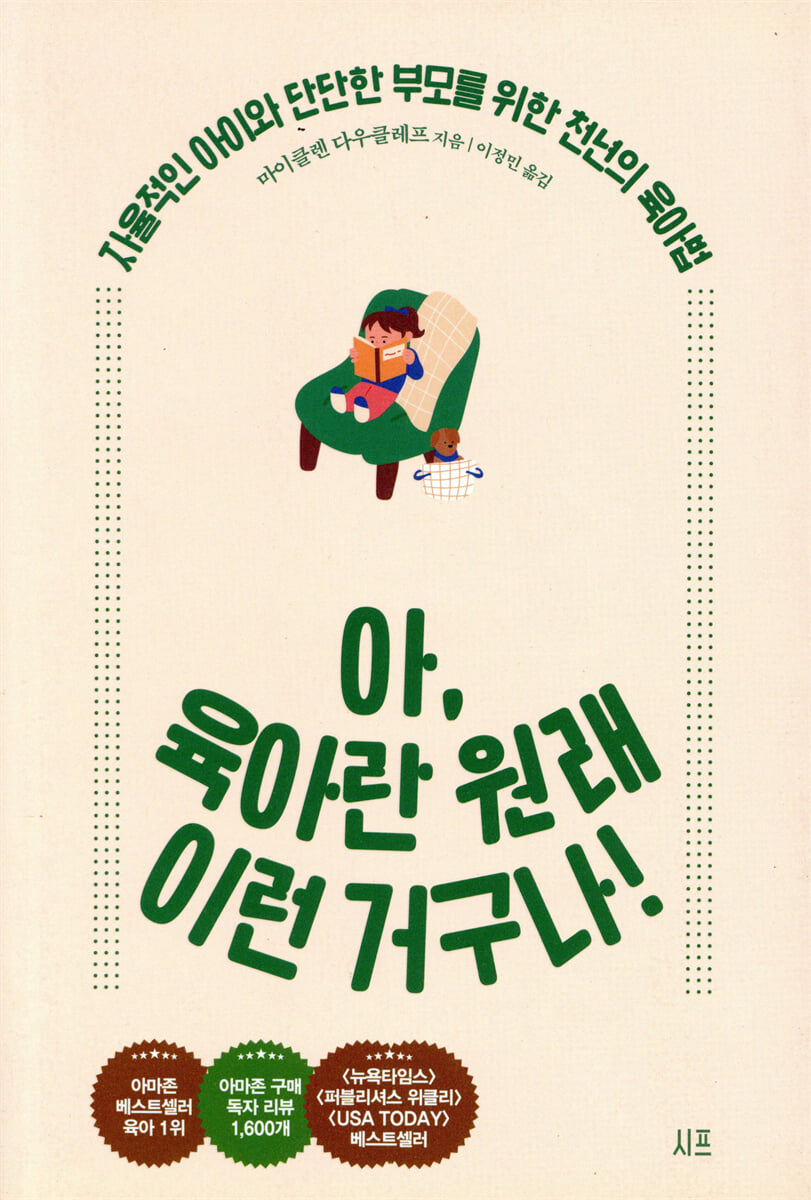 |
Description
Book Introduction
I thought parenting was a battle for dominance.
Until you discover a millennium-old parenting method that breaks free from one-sided discipline!
Author Michaelen Dowclef, who is raising her three-year-old daughter, Rose, was going through a difficult time.
I was looking forward to days filled with happiness after giving birth to my long-awaited daughter, but it was incredibly difficult raising a child who didn't eat or sleep well, and I was also stressed out from not being able to work.
I had to worry every day about how to raise my stubborn and strong-willed daughter and how to win the battle for control with her.
I tried to find numerous parenting methods to escape from this parenting struggle, but modern parenting methods did not provide an answer.
From feeding methods that originated in orphanages in the 1700s, to sleep methods invented by amateurs, to countless toys that were the product of industrialization, the methods were hopelessly unfounded and unrealistic.
Up until now, we have been forced to realize that we have been raising our children strangely, being swayed by unreliable parenting methods.
How should parenting change in the future? What does true parenting mean?
Until you discover a millennium-old parenting method that breaks free from one-sided discipline!
Author Michaelen Dowclef, who is raising her three-year-old daughter, Rose, was going through a difficult time.
I was looking forward to days filled with happiness after giving birth to my long-awaited daughter, but it was incredibly difficult raising a child who didn't eat or sleep well, and I was also stressed out from not being able to work.
I had to worry every day about how to raise my stubborn and strong-willed daughter and how to win the battle for control with her.
I tried to find numerous parenting methods to escape from this parenting struggle, but modern parenting methods did not provide an answer.
From feeding methods that originated in orphanages in the 1700s, to sleep methods invented by amateurs, to countless toys that were the product of industrialization, the methods were hopelessly unfounded and unrealistic.
Up until now, we have been forced to realize that we have been raising our children strangely, being swayed by unreliable parenting methods.
How should parenting change in the future? What does true parenting mean?
- You can preview some of the book's contents.
Preview
index
Prologue I thought parenting was a battle for dominance.
Part 1: The Strange and Bleak Future of Parenting Today
The world's strangest parents
Why do we raise our children this way?
Part 2: Maya's Parenting Method: Motivation
Children who voluntarily help their parents
Recognize the child as a member of the family
Raising flexible and cooperative children
The best motivation is better than praise.
Part 3: Inuit Parenting: Emotional Intelligence
Children with developed executive functions
Teach your child to control his or her anger
Never get angry at your child
Using Parenting Tools to Change Behavior
Creating Action Through 'Stories'
Changing behavior through 'drama'
Part 4: Hardjave's Parenting Method: Confidence
How did our ancestors raise children?
The most confident kids in the world
Part 5: Parenting for a Strong and Healthy Tomorrow
The importance of being together
Sometimes the need to let go
The art of natural sleep training
Epilogue I encountered new, yet old, wisdom in parenting.
Acknowledgements
Part 1: The Strange and Bleak Future of Parenting Today
The world's strangest parents
Why do we raise our children this way?
Part 2: Maya's Parenting Method: Motivation
Children who voluntarily help their parents
Recognize the child as a member of the family
Raising flexible and cooperative children
The best motivation is better than praise.
Part 3: Inuit Parenting: Emotional Intelligence
Children with developed executive functions
Teach your child to control his or her anger
Never get angry at your child
Using Parenting Tools to Change Behavior
Creating Action Through 'Stories'
Changing behavior through 'drama'
Part 4: Hardjave's Parenting Method: Confidence
How did our ancestors raise children?
The most confident kids in the world
Part 5: Parenting for a Strong and Healthy Tomorrow
The importance of being together
Sometimes the need to let go
The art of natural sleep training
Epilogue I encountered new, yet old, wisdom in parenting.
Acknowledgements
Detailed image
.jpg)
Into the book
Westerners usually use two methods to motivate themselves.
Rewards (praise, gifts, stickers, allowance) and punishments (time out, exclusion from the home, threats).
But many other cultures use different methods to motivate people.
It is the desire to belong, the desire to do everything together as a member of a team called family.
This kind of motivation is truly powerful.
So, if parents can't motivate their children by tapping into these desires, they're essentially raising them with their hands tied.
The need to belong not only makes children more willing to take on chores, but also makes them more cooperative and flexible overall.
He gets ready for school on his own in the morning, gets into the car on his own when it's time to go home after playing at the park, eats his food without complaint, and gets moving immediately when asked to help set the table.
--- p.
111
So, if you want your child to have high energy, you have to do it yourself.
Constantly ask your child questions and give him directions.
When making numerous demands and speaking, speak quickly and forcefully in an impatient manner.
It is an extreme behavior, such as repeatedly repeating the same thing in a raised voice.
But if you want your children to be calm, you have to be calm too.
Be quiet and gentle.
As time goes by, your child will come to see you as a refuge from the storm of emotions.
--- p.
213
During my time in the Arctic, I realized that most Inuit parenting comes after a child has exhibited behavioral problems.
Not at the moment or immediately after the child commits the offense, but later, after the child has regained composure.
When children are that calm, they can accept any story.
Inoafiq Sagueatuk, 89, of Iqaluit, Canada, said:
When a child is upset or rejecting what their parents are saying, their emotions are so intense that they cannot hear anything.
So, there is no reason to be desperate to teach your child an 'important lesson'.
“You just have to stay calm and wait for the child to calm down.
“That way, the child can learn too,” said Inoapiq.
--- p.
257
Self-reliance and independence are easily confused.
Before writing this book, I also thought the two concepts were the same.
But they have different meanings, and knowing the difference is essential to understanding how parents in hunter-gatherer societies raised self-reliant and kind children.
It is also key to understanding parenting methods that do not control children, but rather create a comfortable relationship by cooperating with them and making them feel less anxious.
--- p.
326
For Homo sapiens, social support acts like a miracle drug.
It resonates throughout our body, from our minds to our hearts and bones.
Numerous studies over the past several decades have shown that deep friendships and camaraderie improve health.
It reduces the incidence of cardiovascular disease, strengthens immunity, and protects us from stress, anxiety, and depression.
And the more we believe we have family and friends to support us when we're mired in mental illness, the more likely we are to shake off anxiety and depression.
Rewards (praise, gifts, stickers, allowance) and punishments (time out, exclusion from the home, threats).
But many other cultures use different methods to motivate people.
It is the desire to belong, the desire to do everything together as a member of a team called family.
This kind of motivation is truly powerful.
So, if parents can't motivate their children by tapping into these desires, they're essentially raising them with their hands tied.
The need to belong not only makes children more willing to take on chores, but also makes them more cooperative and flexible overall.
He gets ready for school on his own in the morning, gets into the car on his own when it's time to go home after playing at the park, eats his food without complaint, and gets moving immediately when asked to help set the table.
--- p.
111
So, if you want your child to have high energy, you have to do it yourself.
Constantly ask your child questions and give him directions.
When making numerous demands and speaking, speak quickly and forcefully in an impatient manner.
It is an extreme behavior, such as repeatedly repeating the same thing in a raised voice.
But if you want your children to be calm, you have to be calm too.
Be quiet and gentle.
As time goes by, your child will come to see you as a refuge from the storm of emotions.
--- p.
213
During my time in the Arctic, I realized that most Inuit parenting comes after a child has exhibited behavioral problems.
Not at the moment or immediately after the child commits the offense, but later, after the child has regained composure.
When children are that calm, they can accept any story.
Inoafiq Sagueatuk, 89, of Iqaluit, Canada, said:
When a child is upset or rejecting what their parents are saying, their emotions are so intense that they cannot hear anything.
So, there is no reason to be desperate to teach your child an 'important lesson'.
“You just have to stay calm and wait for the child to calm down.
“That way, the child can learn too,” said Inoapiq.
--- p.
257
Self-reliance and independence are easily confused.
Before writing this book, I also thought the two concepts were the same.
But they have different meanings, and knowing the difference is essential to understanding how parents in hunter-gatherer societies raised self-reliant and kind children.
It is also key to understanding parenting methods that do not control children, but rather create a comfortable relationship by cooperating with them and making them feel less anxious.
--- p.
326
For Homo sapiens, social support acts like a miracle drug.
It resonates throughout our body, from our minds to our hearts and bones.
Numerous studies over the past several decades have shown that deep friendships and camaraderie improve health.
It reduces the incidence of cardiovascular disease, strengthens immunity, and protects us from stress, anxiety, and depression.
And the more we believe we have family and friends to support us when we're mired in mental illness, the more likely we are to shake off anxiety and depression.
--- p.
360
360
Publisher's Review
Exploring the strange and desolate world of parenting today
As society becomes more nuclear-based, modern parents are burdened with an unprecedentedly high burden of childcare.
The help of grandparents, aunts, uncles, and loving neighbors who had experience raising children themselves, as well as their parenting knowledge and skills, have disappeared.
As a result, we are left with isolation, fatigue, stress, and parenting methods of unknown origin.
The guideline that babies should be fed every two hours was originally doctor's advice to nurses caring for hundreds of babies in the 1700s, and a few decades later, a surgeon-turned-sports journalist suggested sleep training by letting babies sleep alone.
Additionally, the mass production that followed the Industrial Revolution in the 1800s led to numerous advertisements claiming that numerous items, such as toys, dolls, and puzzles, affected children's brains.
Are these parenting methods, which fail to keep pace with the rapidly changing modern society, truly the right answer? How long will we have to follow the ineffective results of small-scale studies? It's time for doubt and inquiry.
Finding the Truth About Parenting among the Maya, Inuit, and Hadjabe
To find the answer, the author looked to three cultures.
The Mayans naturally motivate children, the Inuit teach children how to regulate their emotions, and the Hadjabe help children develop autonomy.
The author, a science journalist, visited the Mayan people of the Yucatan Peninsula and discovered a small light in their lives.
I discovered a new meaning to parenting as I watched children helping their parents as if it were natural and family members quietly doing their part.
Mayan parents make their children feel like members of the family from the moment they learn to walk, without relying on excessive praise or chore charts.
Inuit parents do not fight for control with their children, but rather teach them that adults and children are different.
Always treat your child calmly and gently, teaching them how to control their anger and reflect on their own behavior.
Hard-working parents allow their children to have autonomy and experience the benefits firsthand.
Not only do they encourage children to do whatever they want, they also provide an invisible safety net to stand by.
Meet the strong and healthy parenting of tomorrow
The stories of the three families the author met cannot be dismissed as mere personal experiences.
Based on that experience, we discuss with psychologists, neuroscientists, anthropologists, and sociologists how their parenting methods can affect children's mental health and development, and what solutions can be provided for children's anxiety and depression.
The book also provides practical advice that parents can put into practice immediately, showing them how to raise their children without being swayed by the countless parenting methods and how to free themselves from the overwhelming responsibility of providing the best environment for their children.
Let's break away from the strange and desolate parenting of today and imagine a strong and healthy parenting of tomorrow through these surprisingly interesting, entertaining, and honest stories.
“This book contains vivid stories of studying parenting techniques while traveling around the world with my three-year-old daughter, Rosie.
After reading this book, the author's curiosity will be infectious and you will gain new courage in parenting.”
_ Publisher's Weekly
As society becomes more nuclear-based, modern parents are burdened with an unprecedentedly high burden of childcare.
The help of grandparents, aunts, uncles, and loving neighbors who had experience raising children themselves, as well as their parenting knowledge and skills, have disappeared.
As a result, we are left with isolation, fatigue, stress, and parenting methods of unknown origin.
The guideline that babies should be fed every two hours was originally doctor's advice to nurses caring for hundreds of babies in the 1700s, and a few decades later, a surgeon-turned-sports journalist suggested sleep training by letting babies sleep alone.
Additionally, the mass production that followed the Industrial Revolution in the 1800s led to numerous advertisements claiming that numerous items, such as toys, dolls, and puzzles, affected children's brains.
Are these parenting methods, which fail to keep pace with the rapidly changing modern society, truly the right answer? How long will we have to follow the ineffective results of small-scale studies? It's time for doubt and inquiry.
Finding the Truth About Parenting among the Maya, Inuit, and Hadjabe
To find the answer, the author looked to three cultures.
The Mayans naturally motivate children, the Inuit teach children how to regulate their emotions, and the Hadjabe help children develop autonomy.
The author, a science journalist, visited the Mayan people of the Yucatan Peninsula and discovered a small light in their lives.
I discovered a new meaning to parenting as I watched children helping their parents as if it were natural and family members quietly doing their part.
Mayan parents make their children feel like members of the family from the moment they learn to walk, without relying on excessive praise or chore charts.
Inuit parents do not fight for control with their children, but rather teach them that adults and children are different.
Always treat your child calmly and gently, teaching them how to control their anger and reflect on their own behavior.
Hard-working parents allow their children to have autonomy and experience the benefits firsthand.
Not only do they encourage children to do whatever they want, they also provide an invisible safety net to stand by.
Meet the strong and healthy parenting of tomorrow
The stories of the three families the author met cannot be dismissed as mere personal experiences.
Based on that experience, we discuss with psychologists, neuroscientists, anthropologists, and sociologists how their parenting methods can affect children's mental health and development, and what solutions can be provided for children's anxiety and depression.
The book also provides practical advice that parents can put into practice immediately, showing them how to raise their children without being swayed by the countless parenting methods and how to free themselves from the overwhelming responsibility of providing the best environment for their children.
Let's break away from the strange and desolate parenting of today and imagine a strong and healthy parenting of tomorrow through these surprisingly interesting, entertaining, and honest stories.
“This book contains vivid stories of studying parenting techniques while traveling around the world with my three-year-old daughter, Rosie.
After reading this book, the author's curiosity will be infectious and you will gain new courage in parenting.”
_ Publisher's Weekly
GOODS SPECIFICS
- Publication date: April 25, 2022
- Page count, weight, size: 384 pages | 626g | 152*225*20mm
- ISBN13: 9791197737770
- ISBN10: 1197737774
You may also like
카테고리
korean


korean

![ELLE 엘르 스페셜 에디션 A형 : 12월 [2025]](http://librairie.coreenne.fr/cdn/shop/files/b8e27a3de6c9538896439686c6b0e8fb.jpg?v=1766436872&width=3840)


