

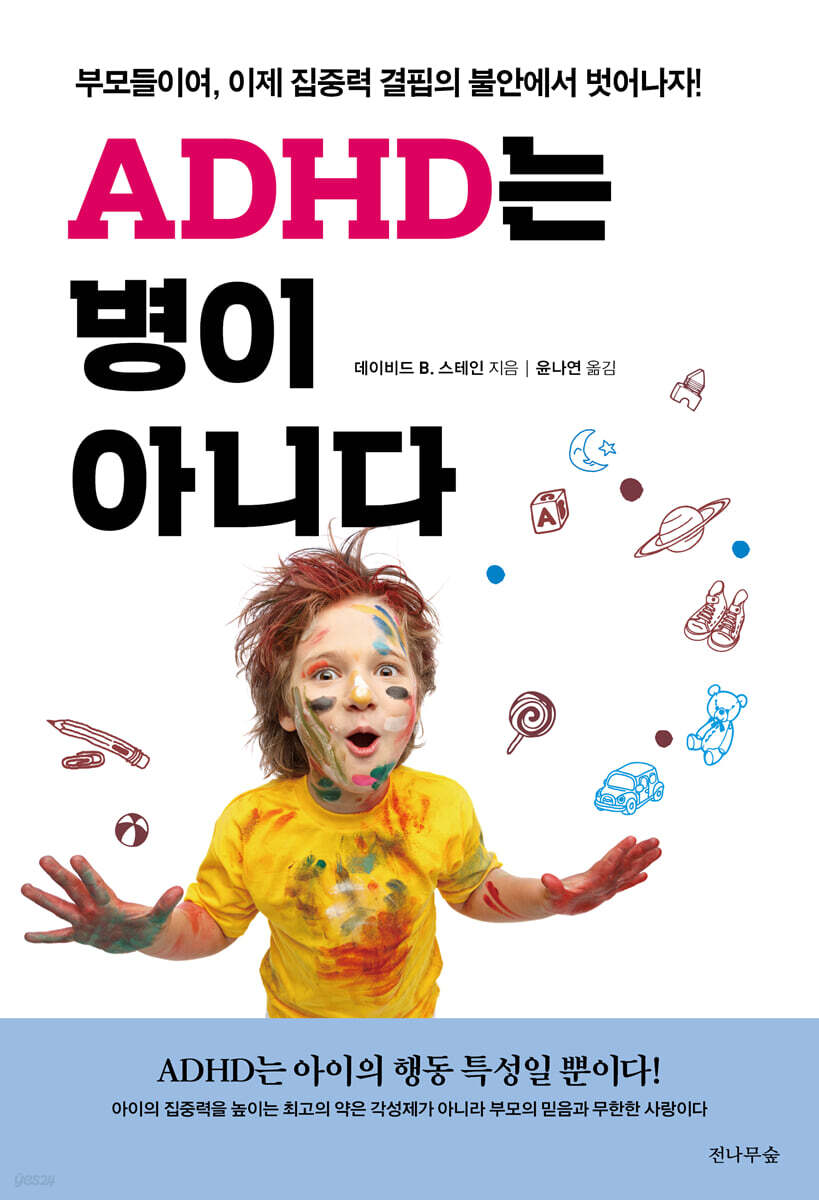
ADHD is not a disease
 |
Description
Book Introduction
Parents, let's break free from the anxiety of lack of concentration!
ADHD is just a behavioral characteristic of a child.
· This guidebook is for children and parents suffering from ADHD, as well as teachers, therapists, and doctors. What sets it apart from other ADHD-related books is that it views ADHD not as a 'disease' but as a 'behavioral characteristic' of the child.
· Refutes the disease theory of ADHD and warns of the dangers of medication, particularly Ritalin. ADHD medications not only cause various side effects, such as nausea, loss of appetite, growth retardation, night terrors, and insomnia, but also exacerbate symptoms and are even addictive. Therefore, drug treatment is not appropriate. ADHD medications, which have numerous side effects, should be discontinued immediately.
It emphasizes that what children need is not stimulants, but their parents' faith and boundless love.
· Also, changes in children are only possible through changes in the parents' parenting attitudes.
As a specific method for this, we propose a ‘parenting role training’ program.
Parenting training is a program that teaches parents how to handle their children according to their characteristics.
As a doctor and researcher, I developed this over 25 years of counseling hundreds of children. It is the most basic parenting guideline that all parents, not just parents of children with ADHD, should remember and practice.
· In fact, it includes various cases of solving problems by changing the inattention and misconduct behavior of many ADD and ADHD children without ‘taking medication’ through the ‘Parent Role Training’ program, as well as a specific manual that can help children learn, the ‘School and Teacher Linkage Program.’
· Parents who want their children to change will be able to examine their parent-child relationship through the 'Becoming a True Parent' discussed in this book, and learn how to truly encourage and guide their beloved and precious children.
ADHD is just a behavioral characteristic of a child.
· This guidebook is for children and parents suffering from ADHD, as well as teachers, therapists, and doctors. What sets it apart from other ADHD-related books is that it views ADHD not as a 'disease' but as a 'behavioral characteristic' of the child.
· Refutes the disease theory of ADHD and warns of the dangers of medication, particularly Ritalin. ADHD medications not only cause various side effects, such as nausea, loss of appetite, growth retardation, night terrors, and insomnia, but also exacerbate symptoms and are even addictive. Therefore, drug treatment is not appropriate. ADHD medications, which have numerous side effects, should be discontinued immediately.
It emphasizes that what children need is not stimulants, but their parents' faith and boundless love.
· Also, changes in children are only possible through changes in the parents' parenting attitudes.
As a specific method for this, we propose a ‘parenting role training’ program.
Parenting training is a program that teaches parents how to handle their children according to their characteristics.
As a doctor and researcher, I developed this over 25 years of counseling hundreds of children. It is the most basic parenting guideline that all parents, not just parents of children with ADHD, should remember and practice.
· In fact, it includes various cases of solving problems by changing the inattention and misconduct behavior of many ADD and ADHD children without ‘taking medication’ through the ‘Parent Role Training’ program, as well as a specific manual that can help children learn, the ‘School and Teacher Linkage Program.’
· Parents who want their children to change will be able to examine their parent-child relationship through the 'Becoming a True Parent' discussed in this book, and learn how to truly encourage and guide their beloved and precious children.
- You can preview some of the book's contents.
Preview
index
Recommendation_ If you really love your child and want to raise him/her properly (Peter R.
Bregin)
Recommendation_ Warm attention changes children (Seo Jae-geol)
Recommendation_Distracted Creators (Kang Dong-hwa)
Recommendation_Understanding ADHD Children (Yoo Jeon-hee)
Author's Preface: The Risks of Taking Drugs Doctors Don't Tell You About
Part 1.
What are we doing to our children?
- The Truth About ADHD
01 Parents, Don't Be Fooled by the System! _ Let's Protect Our Children
The dangers of drug addiction as seen through Kyle's case
Doctors' ambivalent attitude toward drugs
The growing anti-drug movement
Whether or not a disease is diagnosed determines the treatment.
●● Changes in parenting methods recommended by experts
A New Model for Caring for Children with ADD and ADHD Without Medication
Alternatives for Doctors
02 ADHD is not a disease _ 7 misconceptions about ADHD
Misconceptions and Truths About ADD and ADHD
03 Why ADHD is On the Rise - Why Parents, Not Children, Should Be Educated
lack of motivation
Factors that increase ADHD
●● Criteria for diagnosing attention-deficit/hyperactivity disorder in the Diagnostic and Statistical Manual of Mental Disorders
Why Children with Distraction and Conduct Problems Have Emotional Problems
It is more effective for parents to change than for children to change.
04 Parental Mistakes That Promote ADHD - Self-esteem and love are the most important
Are you loving your child properly?
10 Common Mistakes
If you love your child for who he or she is, he or she will grow up to love himself or herself.
Understanding your child's characteristics will help you understand how to handle them.
Distractible and impulsive children need quiet time to calm their minds.
●● 7 Ways to Reduce Distracted and Impulsive Behavior
Part 2.
Parents must change for children to change.
- What is parenting training?
05 Developing Parenting Skills - Beginning Parenting Role Training
What is parenting training?
Is parenting ability innate or learned?
Features of parenting role training
First, let's set specific goals for what behavior to correct.
Define target behavior
Identify target behaviors to focus on in parenting training.
My Child's Target Behavior Checklist
Sudden behavioral changes may be due to external factors.
Make a list of target behaviors to fix.
06 Build trust with your child first - Praise is the best medicine.
Discipline or Reinforcement?
Social and material reinforcement
Effective reinforcement principles
Timing is everything when it comes to compliments.
Praise motivates
Praise fosters self-reliance and independence.
The best teachers change problem behavior through praise.
Sometimes use material reinforcement
The key to successful discipline is consistency.
07 Parents who punish and spank their children increase their children's anxiety_ Things you should never do to your children
Punishment can make the problem worse
The Effects of Punishment on Children
Punishment also has a negative impact on parents.
Punishment can reinforce undesirable behavior.
The most effective punishment is ignorance.
08 Effective and Side Effect-Free Discipline Method 1 - Ignoring
General Procedures for Dealing with Inattentive and Misbehaving Children
Standards for Effective Discipline
Actively praise good behavior.
Ignoring is the most effective discipline.
Traps of all strengthening techniques
09 Effective and Side Effect-Free Discipline Method 2 - Time-out
Timeouts increase cognitive factors
Time-out Tips for Distractable and Misbehaving Children
●● Things parents should keep in mind when giving time-outs
10 Effective and Side Effect-Free Discipline Methods 3 - Don't Reward
Reinforcement removal
Part 3.
Raising my child's grades
- Teacher and school linkage program
11 Our children can also study well.
The key to improving grades is motivation
Things to check before starting the program
12. Create a daily log
Ask your homeroom teacher for cooperation
How to write a daily log
Use of daily log sheets
Intrinsic motivation snowballs
What to prepare before starting a school program
13 Teach the value of education and reading
Teach the joy of learning
Children who like to read also get good grades in school.
10 Tips for Raising a Child Who Loves Reading
Editor's Note: If your child has ADHD, give them endless love instead of pills.
Appendix_ Where to get help without medication & institutions
Bregin)
Recommendation_ Warm attention changes children (Seo Jae-geol)
Recommendation_Distracted Creators (Kang Dong-hwa)
Recommendation_Understanding ADHD Children (Yoo Jeon-hee)
Author's Preface: The Risks of Taking Drugs Doctors Don't Tell You About
Part 1.
What are we doing to our children?
- The Truth About ADHD
01 Parents, Don't Be Fooled by the System! _ Let's Protect Our Children
The dangers of drug addiction as seen through Kyle's case
Doctors' ambivalent attitude toward drugs
The growing anti-drug movement
Whether or not a disease is diagnosed determines the treatment.
●● Changes in parenting methods recommended by experts
A New Model for Caring for Children with ADD and ADHD Without Medication
Alternatives for Doctors
02 ADHD is not a disease _ 7 misconceptions about ADHD
Misconceptions and Truths About ADD and ADHD
03 Why ADHD is On the Rise - Why Parents, Not Children, Should Be Educated
lack of motivation
Factors that increase ADHD
●● Criteria for diagnosing attention-deficit/hyperactivity disorder in the Diagnostic and Statistical Manual of Mental Disorders
Why Children with Distraction and Conduct Problems Have Emotional Problems
It is more effective for parents to change than for children to change.
04 Parental Mistakes That Promote ADHD - Self-esteem and love are the most important
Are you loving your child properly?
10 Common Mistakes
If you love your child for who he or she is, he or she will grow up to love himself or herself.
Understanding your child's characteristics will help you understand how to handle them.
Distractible and impulsive children need quiet time to calm their minds.
●● 7 Ways to Reduce Distracted and Impulsive Behavior
Part 2.
Parents must change for children to change.
- What is parenting training?
05 Developing Parenting Skills - Beginning Parenting Role Training
What is parenting training?
Is parenting ability innate or learned?
Features of parenting role training
First, let's set specific goals for what behavior to correct.
Define target behavior
Identify target behaviors to focus on in parenting training.
My Child's Target Behavior Checklist
Sudden behavioral changes may be due to external factors.
Make a list of target behaviors to fix.
06 Build trust with your child first - Praise is the best medicine.
Discipline or Reinforcement?
Social and material reinforcement
Effective reinforcement principles
Timing is everything when it comes to compliments.
Praise motivates
Praise fosters self-reliance and independence.
The best teachers change problem behavior through praise.
Sometimes use material reinforcement
The key to successful discipline is consistency.
07 Parents who punish and spank their children increase their children's anxiety_ Things you should never do to your children
Punishment can make the problem worse
The Effects of Punishment on Children
Punishment also has a negative impact on parents.
Punishment can reinforce undesirable behavior.
The most effective punishment is ignorance.
08 Effective and Side Effect-Free Discipline Method 1 - Ignoring
General Procedures for Dealing with Inattentive and Misbehaving Children
Standards for Effective Discipline
Actively praise good behavior.
Ignoring is the most effective discipline.
Traps of all strengthening techniques
09 Effective and Side Effect-Free Discipline Method 2 - Time-out
Timeouts increase cognitive factors
Time-out Tips for Distractable and Misbehaving Children
●● Things parents should keep in mind when giving time-outs
10 Effective and Side Effect-Free Discipline Methods 3 - Don't Reward
Reinforcement removal
Part 3.
Raising my child's grades
- Teacher and school linkage program
11 Our children can also study well.
The key to improving grades is motivation
Things to check before starting the program
12. Create a daily log
Ask your homeroom teacher for cooperation
How to write a daily log
Use of daily log sheets
Intrinsic motivation snowballs
What to prepare before starting a school program
13 Teach the value of education and reading
Teach the joy of learning
Children who like to read also get good grades in school.
10 Tips for Raising a Child Who Loves Reading
Editor's Note: If your child has ADHD, give them endless love instead of pills.
Appendix_ Where to get help without medication & institutions
Publisher's Review
The risks of medication for ADHD
Refuting the theory of disease!
How do so many children receive a diagnosis of ADHD? Many children come to the attention of teachers and seek medical attention because of conduct disorder, which manifests as inattention, impulse control difficulties, and aggression at school.
And most of them are diagnosed with attention deficit hyperactivity disorder (ADHD) and are prescribed medication (Ritalin).
Start taking (sold under various names such as Concerta, Phenid, etc.).
Parents don't want to give their children medicine, but they think it's necessary for their children's school life.
However, children who take Ritalin experience side effects such as headaches, loss of appetite, growth problems, and nausea.
Parents who watch this scene look for ways other than medication.
However, we come to the conclusion that the only immediate solution that does not significantly affect lifestyle patterns is medication.
This is how the child's medication begins.
However, the number of children diagnosed with ADHD has been increasing explosively over the past several years.
In Korea, the number of children and adolescents aged 6 to 18 who received treatment for ADHD increased by more than 82% in four years, from 44,741 in 2018 to 81,512 in 2022.
Moreover, this figure only accounts for those who visited hospitals and received "insurance coverage." The actual number of children suffering from ADHD is estimated to be much higher. ADHD isn't an epidemic, yet the number is increasing so suddenly.
The author says that this is evidence that reflects the fact that ADHD is a social disease (a disease of civilization) rather than a genetic disease.
The background of ADHD is that many children are growing up without receiving the attention and affection of their parents due to the increase in dual-income couples, single-parent families, and divorce rates, job insecurity and extended working hours caused by the economic crisis, and excessive educational fervor.
ADHD is not a disease
It's just a child's behavioral trait.
But what is clear is that a pill shoved down a child's throat is not the answer, and ADHD is not a disease caused by a problem in the brain.
We also need to break away from the stigma by changing the name from ADHD (Attention Deficit Hyperactivity Disorder) or ADD (Attention Deficit Disorder) to “Inattention-Disordered Behavior Disorder.”
To do this, we must first break the following stereotypes about ADHD.
Just by changing your thinking, a child who was perceived as a problem child will look different.
■ ADHD is not a problem with the child's brain or an innate or genetic disease.
■ ADHD is a problem caused by an inappropriate parenting environment, and is also a problem in our society.
■ ADHD is a behavioral characteristic of children, not a disease.
If you have broken the stereotypes, you are ready to love your child.
The next step is to throw away the pills, understand the child's mind, and change the parenting attitude.
The author, Dr. Stein, points out that the fact that children in their growth period take medication despite the side effects even though they do not have a disease is a convenient way of thinking of adults who want to solve everything easily with a single pill rather than trying to solve the fundamental problem.
As an alternative, we suggest ‘parenting role training’ that seeks to change parenting attitudes instead of drug treatment.
This is the most fundamental solution to change a child's 'distractable, misbehaving' behavior.
The characteristics of parenting role training are as follows:
■ Parent role training is a program that increases parents’ love and strength for their children.
■ Parenting role training helps children with ADD and ADHD to behave properly without medication, perform tasks independently, pay attention, and develop the ability to think and solve problems.
■ Parenting role training is a parenting method that restores trust between parents and children and helps children grow up healthy and happy.
As a physician and researcher, the author has spent 25 years developing a "parenting training" program, meeting hundreds of children.
This program doesn't require charts, tokens, or stickers to correct a child's behavior through behavioral therapy or rewards.
Moreover, the child is viewed as a normal child, not a patient.
Parenting training includes grandparents and siblings who care for the child.
When everyone who cares for a child is trained, consistency and stability in parenting are maintained, which reduces confusion in the child and ultimately eliminates behavioral problems.
In short, parenting training is a program that teaches parents how to handle their children according to their characteristics, and it can be said to be the most basic parenting guideline that all parents, not just parents of children with ADHD, should remember and practice.
Parents who wish to see their children change will be able to examine their parent-child relationship through the "Becoming a True Parent" section of this book, and learn how to truly encourage and guide their beloved and precious children.
In fact, the author has seen many children change their 'distractable, misbehaving' behaviors through this program!
If your child has been told by school or the doctor that he or she may have ADHD, read this book first.
Never worry or nag your child about getting sick, or worry about their grades falling.
Don't be afraid.
Instead of believing the doctor's advice that your child has a brain problem and needs medication, let's examine the parent-child relationship, lifestyle, and the state of our society.
I hope that through this book, you will realize that what children need is not medicine, but sincere attention and care.
Refuting the theory of disease!
How do so many children receive a diagnosis of ADHD? Many children come to the attention of teachers and seek medical attention because of conduct disorder, which manifests as inattention, impulse control difficulties, and aggression at school.
And most of them are diagnosed with attention deficit hyperactivity disorder (ADHD) and are prescribed medication (Ritalin).
Start taking (sold under various names such as Concerta, Phenid, etc.).
Parents don't want to give their children medicine, but they think it's necessary for their children's school life.
However, children who take Ritalin experience side effects such as headaches, loss of appetite, growth problems, and nausea.
Parents who watch this scene look for ways other than medication.
However, we come to the conclusion that the only immediate solution that does not significantly affect lifestyle patterns is medication.
This is how the child's medication begins.
However, the number of children diagnosed with ADHD has been increasing explosively over the past several years.
In Korea, the number of children and adolescents aged 6 to 18 who received treatment for ADHD increased by more than 82% in four years, from 44,741 in 2018 to 81,512 in 2022.
Moreover, this figure only accounts for those who visited hospitals and received "insurance coverage." The actual number of children suffering from ADHD is estimated to be much higher. ADHD isn't an epidemic, yet the number is increasing so suddenly.
The author says that this is evidence that reflects the fact that ADHD is a social disease (a disease of civilization) rather than a genetic disease.
The background of ADHD is that many children are growing up without receiving the attention and affection of their parents due to the increase in dual-income couples, single-parent families, and divorce rates, job insecurity and extended working hours caused by the economic crisis, and excessive educational fervor.
ADHD is not a disease
It's just a child's behavioral trait.
But what is clear is that a pill shoved down a child's throat is not the answer, and ADHD is not a disease caused by a problem in the brain.
We also need to break away from the stigma by changing the name from ADHD (Attention Deficit Hyperactivity Disorder) or ADD (Attention Deficit Disorder) to “Inattention-Disordered Behavior Disorder.”
To do this, we must first break the following stereotypes about ADHD.
Just by changing your thinking, a child who was perceived as a problem child will look different.
■ ADHD is not a problem with the child's brain or an innate or genetic disease.
■ ADHD is a problem caused by an inappropriate parenting environment, and is also a problem in our society.
■ ADHD is a behavioral characteristic of children, not a disease.
If you have broken the stereotypes, you are ready to love your child.
The next step is to throw away the pills, understand the child's mind, and change the parenting attitude.
The author, Dr. Stein, points out that the fact that children in their growth period take medication despite the side effects even though they do not have a disease is a convenient way of thinking of adults who want to solve everything easily with a single pill rather than trying to solve the fundamental problem.
As an alternative, we suggest ‘parenting role training’ that seeks to change parenting attitudes instead of drug treatment.
This is the most fundamental solution to change a child's 'distractable, misbehaving' behavior.
The characteristics of parenting role training are as follows:
■ Parent role training is a program that increases parents’ love and strength for their children.
■ Parenting role training helps children with ADD and ADHD to behave properly without medication, perform tasks independently, pay attention, and develop the ability to think and solve problems.
■ Parenting role training is a parenting method that restores trust between parents and children and helps children grow up healthy and happy.
As a physician and researcher, the author has spent 25 years developing a "parenting training" program, meeting hundreds of children.
This program doesn't require charts, tokens, or stickers to correct a child's behavior through behavioral therapy or rewards.
Moreover, the child is viewed as a normal child, not a patient.
Parenting training includes grandparents and siblings who care for the child.
When everyone who cares for a child is trained, consistency and stability in parenting are maintained, which reduces confusion in the child and ultimately eliminates behavioral problems.
In short, parenting training is a program that teaches parents how to handle their children according to their characteristics, and it can be said to be the most basic parenting guideline that all parents, not just parents of children with ADHD, should remember and practice.
Parents who wish to see their children change will be able to examine their parent-child relationship through the "Becoming a True Parent" section of this book, and learn how to truly encourage and guide their beloved and precious children.
In fact, the author has seen many children change their 'distractable, misbehaving' behaviors through this program!
If your child has been told by school or the doctor that he or she may have ADHD, read this book first.
Never worry or nag your child about getting sick, or worry about their grades falling.
Don't be afraid.
Instead of believing the doctor's advice that your child has a brain problem and needs medication, let's examine the parent-child relationship, lifestyle, and the state of our society.
I hope that through this book, you will realize that what children need is not medicine, but sincere attention and care.
GOODS SPECIFICS
- Date of issue: August 19, 2024
- Page count, weight, size: 252 pages | 153*224*20mm
- ISBN13: 9791193226490
- ISBN10: 119322649X
You may also like
카테고리
korean


korean

![ELLE 엘르 스페셜 에디션 A형 : 12월 [2025]](http://librairie.coreenne.fr/cdn/shop/files/b8e27a3de6c9538896439686c6b0e8fb.jpg?v=1766436872&width=3840)


