

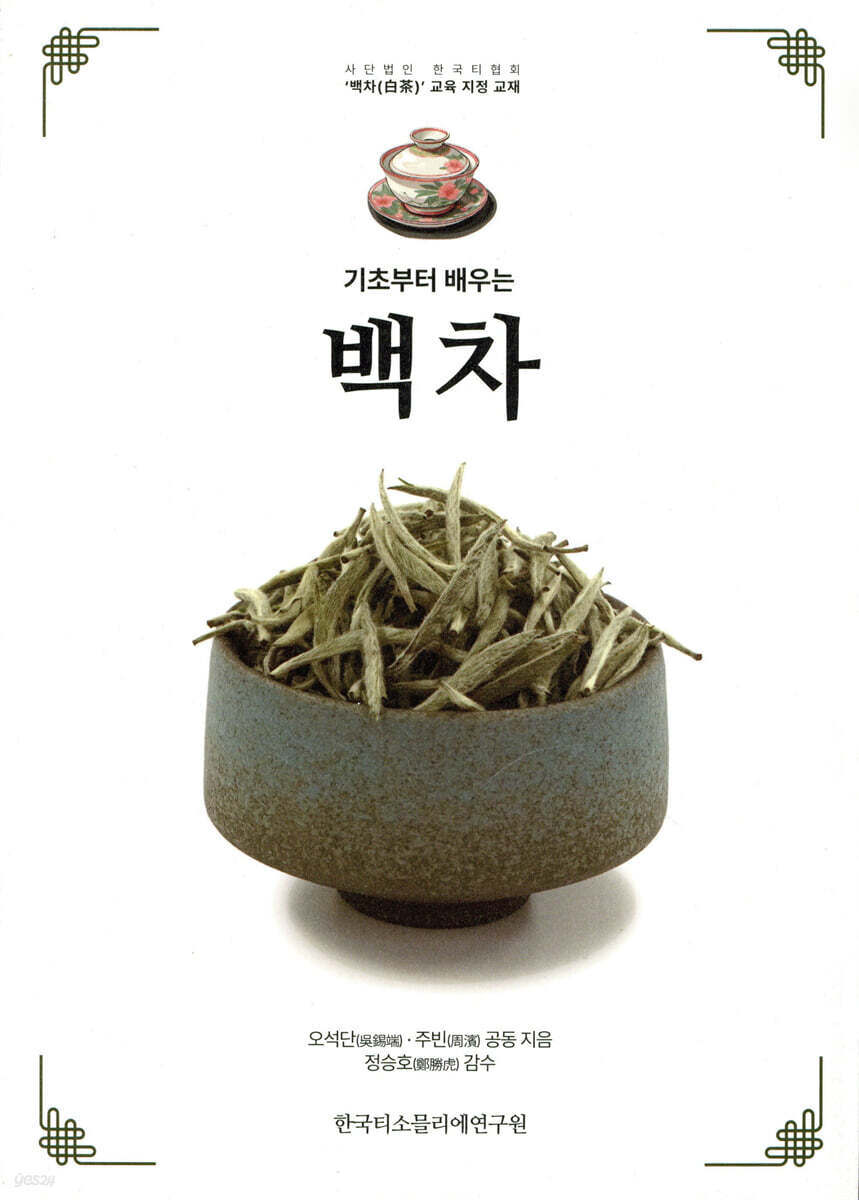
Baekcha, learning from the basics
 |
Description
Book Introduction
This book aims to resolve questions about white tea, which has been less well known compared to green tea, black tea, Pu-erh tea, and oolong tea. It researches historical documents on various white teas in China and vividly conveys stories heard from white tea experts while visiting the birthplace of each white tea, Fujian Province, China.
- You can preview some of the book's contents.
Preview
index
Prologue 1
The charm of white tea, rich in health benefits
Prologue 2 Jeong Seung-ho
Author's Note
The Story of Chinese White Tea
Chapter 1: Discovery - Tea in the Forest
1.
The appearance of white tea as seen from the Bokjeong (福鼎)
2.
The White Tiger Silver Needle, the first legend!
3.
From Baekryuchon to Jeomdujin, from the shrine to the market
4.
Jeonghwa's agricultural aesthetics and pastoral pastoral
5.
From the first discovery of Zhenghe Da Bai Cha to the present day
6.
In search of the origins of the thousand-year-old Tang and Song tea
7.
The debate over the origin of Baekmodan and Gongmicha
8.
The meaning of the existence of Suseonbaek (水仙白)
9.
About the standards for excellent white tea
1) Classification method of white tea
2) Color, fragrance, taste, and shape of white tea
· Appearance - generous and generous
· Comparison of the appearance of tea leaves by variety
· Comparison of tea leaf appearance according to leaf picking period
· Search - Cheongcheolturyang
· Fragrance - Honey Rhyme
· Comparison of the tea colors of Baekho Silver Needle, Baekmodan, and Sumie
· Jami (滋味) - Fresh and sweet?
· Leaf base - post-trophic margin
3) Quality assessment of white tea
· White hair silver needle
· White peony
· Tribute eyebrows
· Sumie (壽眉)
10.
Factors Affecting the Quality of White Tea
1) Mountain area
· Altitude above sea level
· Ecology
· Cultivation management
2) Varieties
· Bokjeongdaeho (Large Hair of a Lucky Ding Drum)
· Bokjeongdaebaek (Fukujeongdaebaek)
· Double eyelid
· Jeonghwa Daebaek (Government and Peace Great White)
· Fujian Water Immortal
· Vegetable tea
3) Leaf collection
4) Forgery
· Forgery by sunlight
· Indoor natural erosion
· Heating forgery
· Jeonghwa Daebaek (Government and Peace Great White)
· Forgery of clothing
5) Drying
11.
The mystery hidden in the white tea bottle
· High mountains and long eyebrows
· Old Tree White Tea
· White gold (?white gold) 1341
· Nanji (蘭芷) - Later years (? years)
· Suseonbaekcha (水仙白茶)
· Small white tea
· Hwangyabaek (荒野白)
§ Bokjeong (福鼎) Travel Guide!
Chapter 2: Exploration - The Past in Tea
1.
The history of the Oh family and white tea in the old house of Chwigyochon
2.
The rise and fall of Bokju Port, which began with Zuo Zongtang
3.
The Taste of China in Zhenghe White Tea
4.
Looking back at Jeonchon, I hear the white tea song of the Song clan shrine again.
5.
Seoksu (石?) - Yesterday and Today in a Baekcha Village
6.
Dongpyeong Village, where every house dries tea leaves
7.
People of Geumbyeongchon Village looking at the old tea house
8.
From the ancient city of Jianyang to the Jianchā (建茶), Jianshū (建水), and Jianzān (建盞)
9.
Jang Don-jin's 'Mandanchahyang' and white tea Namgaengbaek
10.
The Birth of Baekrim Tea Factory and New Craft White Tea
Chapter 3: Field Trip - A New Era of White Tea, Led by the New Generation
1.
Hasan Manor: A Man and His 'White Gold Dream'
2.
Green Snow Sprouts that have spent their time on Taemosan Mountain
3.
A love of white tea spanning three generations and 50 years
4.
A tea kiln, a barren garden, 20 years of wind and rain, and a boy's challenge
5.
A tea field born from the stubbornness of the foolish old man who moved the mountains, to be passed down to future generations!
6.
Jingyuan Village, 1,200 meters above sea level, a paradise where people wander in search of a good cup of tea.
7.
The 1970s, when new and old generations intersected
8.
Only one-tenth of the 2,000 m2 ecologically cultivated land that has been cultivated for a quarter of a century has been harvested!
Chapter 4: White Tea: Yesterday and Today
1.
60 Years of Export History of China Tea Fujian Corporation
2.
The scent of longevity that never leaves a Hong Kong teahouse
3.
People who left for the South Seas, tea, and their longing for their hometown
4.
From the old white tea enjoyed by the people to the tea fragrance of today
5.
The Standards of Old Age and the Right Beginning
1) Why is white tea “1 year tea, 3 years medicine, 7 years treasure”?
· Comparison of dried white tea leaves from different ages
· Comparison of the color of white tea from different eras
· Comparison of the quality of white tea at different aging stages
2) The efficacy of white tea in numbers
· Analysis of flavonoid content in white tea by aging period
Analysis of tea polyphenol content in white tea by aging period
Analysis of amino acid content in white tea by aging period
· Analysis of caffeine content in white tea by aging period
Analysis of soluble sugar content in white tea by aging period
· Changes in the aroma of white tea depending on the aging period
3) The right way to store good white tea
4) Standards for Chennian White Tea
· Our method of white tea
6.
Looking at the 'World Production Map of White Tea'
1) White tea production map
· Types of Yunnan white tea
· Types of white tea produced overseas
2) White tea consumption map
7.
White tea is our art of technology and life.
1) We choose white tea as our tea ceremony
· Gaewan (蓋碗)
· Glass
· Jasaho (紫沙壺)
· Pyo-il-bae (?逸杯)/button teapot
· Teapot/teapot
2) Our method according to the type of white tea
· White hair silver needle
· White peony
· Gongmi (貢眉) and Sumi (壽眉)
· New craft white tea
· Old White Tea
3) The order in which we serve white tea (based on white tea and bottled tea)
Special Interview
The history of white tea and the master of white tea, Mr. Jang Cheon-bok
The charm of white tea, rich in health benefits
Prologue 2 Jeong Seung-ho
Author's Note
The Story of Chinese White Tea
Chapter 1: Discovery - Tea in the Forest
1.
The appearance of white tea as seen from the Bokjeong (福鼎)
2.
The White Tiger Silver Needle, the first legend!
3.
From Baekryuchon to Jeomdujin, from the shrine to the market
4.
Jeonghwa's agricultural aesthetics and pastoral pastoral
5.
From the first discovery of Zhenghe Da Bai Cha to the present day
6.
In search of the origins of the thousand-year-old Tang and Song tea
7.
The debate over the origin of Baekmodan and Gongmicha
8.
The meaning of the existence of Suseonbaek (水仙白)
9.
About the standards for excellent white tea
1) Classification method of white tea
2) Color, fragrance, taste, and shape of white tea
· Appearance - generous and generous
· Comparison of the appearance of tea leaves by variety
· Comparison of tea leaf appearance according to leaf picking period
· Search - Cheongcheolturyang
· Fragrance - Honey Rhyme
· Comparison of the tea colors of Baekho Silver Needle, Baekmodan, and Sumie
· Jami (滋味) - Fresh and sweet?
· Leaf base - post-trophic margin
3) Quality assessment of white tea
· White hair silver needle
· White peony
· Tribute eyebrows
· Sumie (壽眉)
10.
Factors Affecting the Quality of White Tea
1) Mountain area
· Altitude above sea level
· Ecology
· Cultivation management
2) Varieties
· Bokjeongdaeho (Large Hair of a Lucky Ding Drum)
· Bokjeongdaebaek (Fukujeongdaebaek)
· Double eyelid
· Jeonghwa Daebaek (Government and Peace Great White)
· Fujian Water Immortal
· Vegetable tea
3) Leaf collection
4) Forgery
· Forgery by sunlight
· Indoor natural erosion
· Heating forgery
· Jeonghwa Daebaek (Government and Peace Great White)
· Forgery of clothing
5) Drying
11.
The mystery hidden in the white tea bottle
· High mountains and long eyebrows
· Old Tree White Tea
· White gold (?white gold) 1341
· Nanji (蘭芷) - Later years (? years)
· Suseonbaekcha (水仙白茶)
· Small white tea
· Hwangyabaek (荒野白)
§ Bokjeong (福鼎) Travel Guide!
Chapter 2: Exploration - The Past in Tea
1.
The history of the Oh family and white tea in the old house of Chwigyochon
2.
The rise and fall of Bokju Port, which began with Zuo Zongtang
3.
The Taste of China in Zhenghe White Tea
4.
Looking back at Jeonchon, I hear the white tea song of the Song clan shrine again.
5.
Seoksu (石?) - Yesterday and Today in a Baekcha Village
6.
Dongpyeong Village, where every house dries tea leaves
7.
People of Geumbyeongchon Village looking at the old tea house
8.
From the ancient city of Jianyang to the Jianchā (建茶), Jianshū (建水), and Jianzān (建盞)
9.
Jang Don-jin's 'Mandanchahyang' and white tea Namgaengbaek
10.
The Birth of Baekrim Tea Factory and New Craft White Tea
Chapter 3: Field Trip - A New Era of White Tea, Led by the New Generation
1.
Hasan Manor: A Man and His 'White Gold Dream'
2.
Green Snow Sprouts that have spent their time on Taemosan Mountain
3.
A love of white tea spanning three generations and 50 years
4.
A tea kiln, a barren garden, 20 years of wind and rain, and a boy's challenge
5.
A tea field born from the stubbornness of the foolish old man who moved the mountains, to be passed down to future generations!
6.
Jingyuan Village, 1,200 meters above sea level, a paradise where people wander in search of a good cup of tea.
7.
The 1970s, when new and old generations intersected
8.
Only one-tenth of the 2,000 m2 ecologically cultivated land that has been cultivated for a quarter of a century has been harvested!
Chapter 4: White Tea: Yesterday and Today
1.
60 Years of Export History of China Tea Fujian Corporation
2.
The scent of longevity that never leaves a Hong Kong teahouse
3.
People who left for the South Seas, tea, and their longing for their hometown
4.
From the old white tea enjoyed by the people to the tea fragrance of today
5.
The Standards of Old Age and the Right Beginning
1) Why is white tea “1 year tea, 3 years medicine, 7 years treasure”?
· Comparison of dried white tea leaves from different ages
· Comparison of the color of white tea from different eras
· Comparison of the quality of white tea at different aging stages
2) The efficacy of white tea in numbers
· Analysis of flavonoid content in white tea by aging period
Analysis of tea polyphenol content in white tea by aging period
Analysis of amino acid content in white tea by aging period
· Analysis of caffeine content in white tea by aging period
Analysis of soluble sugar content in white tea by aging period
· Changes in the aroma of white tea depending on the aging period
3) The right way to store good white tea
4) Standards for Chennian White Tea
· Our method of white tea
6.
Looking at the 'World Production Map of White Tea'
1) White tea production map
· Types of Yunnan white tea
· Types of white tea produced overseas
2) White tea consumption map
7.
White tea is our art of technology and life.
1) We choose white tea as our tea ceremony
· Gaewan (蓋碗)
· Glass
· Jasaho (紫沙壺)
· Pyo-il-bae (?逸杯)/button teapot
· Teapot/teapot
2) Our method according to the type of white tea
· White hair silver needle
· White peony
· Gongmi (貢眉) and Sumi (壽眉)
· New craft white tea
· Old White Tea
3) The order in which we serve white tea (based on white tea and bottled tea)
Special Interview
The history of white tea and the master of white tea, Mr. Jang Cheon-bok
Publisher's Review
Following the rise of 'Pu'cha (普?茶)', a health drink that has swept the world today and emerged as a health trend, 'white tea' is emerging as a new dark horse, and the white tea beverage market is also opening up significantly.
Global Insight Services (GIS), a global market research firm, released the results of its analysis of the white tea market in April of this year, predicting that the global white tea market will grow rapidly over the next 10 years until 2033, reaching a market size of $3.6 billion across North America, Asia Pacific, and Europe.
The presentation cited the fact that the key factors driving the growth of the white tea market are that white tea is made from young buds or young tea leaves that have undergone minimal processing, resulting in a delicate and elegant natural flavor, low caffeine content, and rich in antioxidants, which have various health benefits, including boosting immunity, lowering cholesterol, promoting heart health, and helping with weight loss.
Furthermore, the demand for organic white tea has increased due to the rapid growth of the organic beverage market in the overall beverage market starting in 2023, and its high expandability in processing into iced tea, flavored tea, and RTD beverages is also expected to drive the growth of the global white tea production market, including Fujian Province, the birthplace of white tea.
Meanwhile, the Korea Tea Sommelier Research Institute is publishing 『Learning White Tea from the Basics』, which can be called a 'chronology of Chinese white tea' and an 'encyclopedia of white tea', by introducing the history of white tea from the Tang and Song Dynasties, the origin of white tea, to the present day, along with the process of how white teas such as Baihao Yinzhen (White Hair Silver Needle), Baimu Dan (White Mo Dan), Shui Mei (Shou Mi), Gong Mi (Treasure Eyes), and Xingongye White Tea (New Craft White Tea) acquire various flavors through the production process in the producing area, the brewing method, and the health benefits of aged Chennian Baicha Bing (陳年白茶餠).
This book aims to resolve questions about white tea, which has been less well known compared to green tea, black tea, Pu-erh tea, and oolong tea. It researches historical documents on various white teas in China and vividly conveys stories heard from white tea experts while visiting the birthplace of each white tea, Fujian Province, China.
In addition, it provides detailed information on white tea varieties, manufacturing methods, classification methods, quality assurance, and white tea cakes, as well as the story of Jinnian White Tea Cakes (陳年白茶餠), which were exported to Nanyang in the modern and contemporary era and are now increasing in collection value as well as for their health benefits.
In particular, it introduces practical knowledge for collecting white tea, methods for determining the authenticity of Jinnyeon Baekcha at each maturation stage, storage methods, and the various health benefits of Jinnyeon Baekcha at each maturation stage through analysis of the content of effective ingredients, and adds interest by including a special interview with Mr. Jang Cheon-bok, a living witness of the modern white tea world.
This book covers the basics of selecting excellent white tea, as well as the correct order and method of drinking white tea. It is expected to be an excellent guide for those who are new to white tea, those who want to collect aged Jinnyeon white tea bottles that are currently in the spotlight for their health benefits, and those who want to conveniently enjoy white tea as a wellness drink.
Global Insight Services (GIS), a global market research firm, released the results of its analysis of the white tea market in April of this year, predicting that the global white tea market will grow rapidly over the next 10 years until 2033, reaching a market size of $3.6 billion across North America, Asia Pacific, and Europe.
The presentation cited the fact that the key factors driving the growth of the white tea market are that white tea is made from young buds or young tea leaves that have undergone minimal processing, resulting in a delicate and elegant natural flavor, low caffeine content, and rich in antioxidants, which have various health benefits, including boosting immunity, lowering cholesterol, promoting heart health, and helping with weight loss.
Furthermore, the demand for organic white tea has increased due to the rapid growth of the organic beverage market in the overall beverage market starting in 2023, and its high expandability in processing into iced tea, flavored tea, and RTD beverages is also expected to drive the growth of the global white tea production market, including Fujian Province, the birthplace of white tea.
Meanwhile, the Korea Tea Sommelier Research Institute is publishing 『Learning White Tea from the Basics』, which can be called a 'chronology of Chinese white tea' and an 'encyclopedia of white tea', by introducing the history of white tea from the Tang and Song Dynasties, the origin of white tea, to the present day, along with the process of how white teas such as Baihao Yinzhen (White Hair Silver Needle), Baimu Dan (White Mo Dan), Shui Mei (Shou Mi), Gong Mi (Treasure Eyes), and Xingongye White Tea (New Craft White Tea) acquire various flavors through the production process in the producing area, the brewing method, and the health benefits of aged Chennian Baicha Bing (陳年白茶餠).
This book aims to resolve questions about white tea, which has been less well known compared to green tea, black tea, Pu-erh tea, and oolong tea. It researches historical documents on various white teas in China and vividly conveys stories heard from white tea experts while visiting the birthplace of each white tea, Fujian Province, China.
In addition, it provides detailed information on white tea varieties, manufacturing methods, classification methods, quality assurance, and white tea cakes, as well as the story of Jinnian White Tea Cakes (陳年白茶餠), which were exported to Nanyang in the modern and contemporary era and are now increasing in collection value as well as for their health benefits.
In particular, it introduces practical knowledge for collecting white tea, methods for determining the authenticity of Jinnyeon Baekcha at each maturation stage, storage methods, and the various health benefits of Jinnyeon Baekcha at each maturation stage through analysis of the content of effective ingredients, and adds interest by including a special interview with Mr. Jang Cheon-bok, a living witness of the modern white tea world.
This book covers the basics of selecting excellent white tea, as well as the correct order and method of drinking white tea. It is expected to be an excellent guide for those who are new to white tea, those who want to collect aged Jinnyeon white tea bottles that are currently in the spotlight for their health benefits, and those who want to conveniently enjoy white tea as a wellness drink.
GOODS SPECIFICS
- Date of issue: August 19, 2024
- Page count, weight, size: 356 pages | 798g | 170*240*30mm
- ISBN13: 9791185926872
- ISBN10: 1185926879
You may also like
카테고리
korean


korean

![ELLE 엘르 스페셜 에디션 A형 : 12월 [2025]](http://librairie.coreenne.fr/cdn/shop/files/b8e27a3de6c9538896439686c6b0e8fb.jpg?v=1766436872&width=3840)


