

The power of non-cognitive abilities
 |
Description
Book Introduction
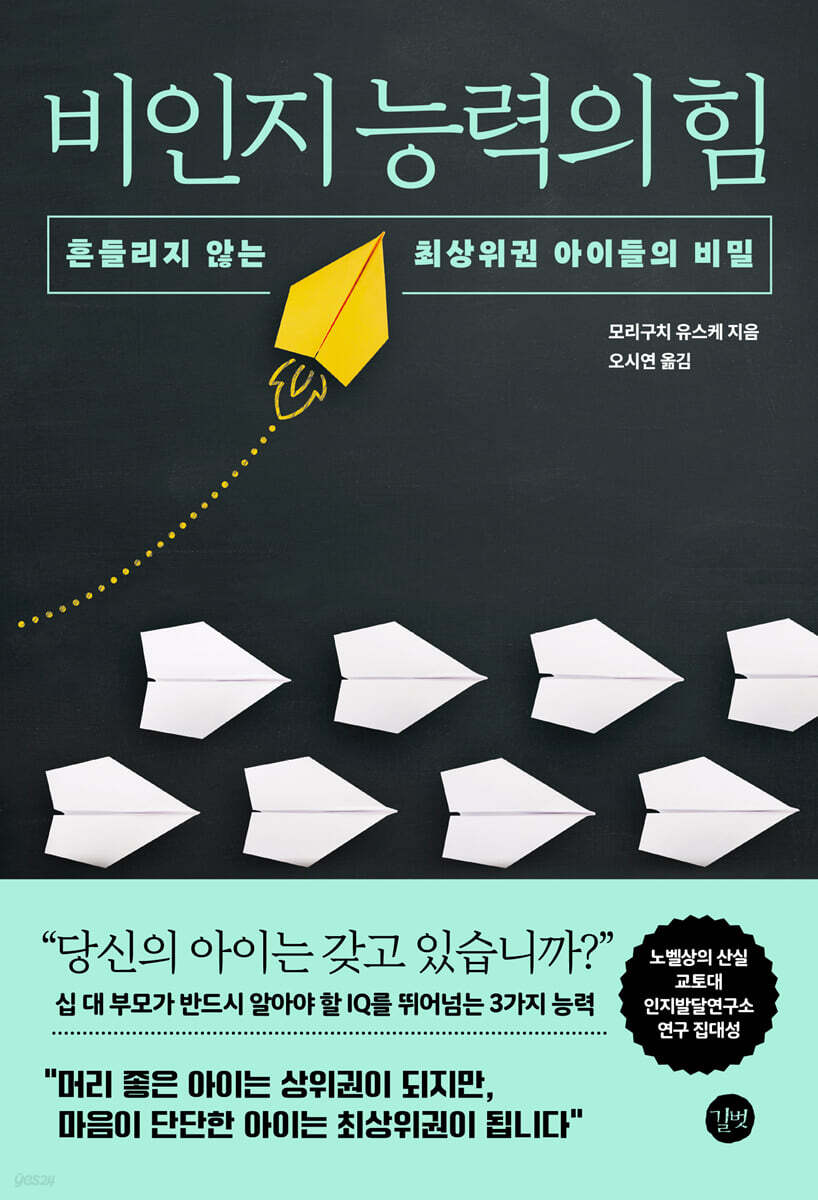
Inside Kyoto University, the birthplace of the Nobel Prize Conditions for Success Focused on by the Cognitive Development Research Institute “Does your child have it?” 3 Skills That Transcend IQ Every Parent Should Know About Teens “I want my child to live happily doing what he or she likes.” If you ask parents what kind of adult they want their child to grow up to be, nine out of ten parents will answer like this. Dr. Yusuke Moriguchi, who studies child cognitive development at Kyoto University, a world-renowned university with a research-oriented academic culture that has produced 11 Nobel Prize winners and 2 Fields Medalists, is focusing on finding the factors that help children grow into happy adults by doing what parents want. What he focused on were non-cognitive abilities, that is, abilities other than cognitive abilities (IQ), commonly referred to as intelligence. Non-cognitive ability is a concept that has recently emerged. It is a concept that some psychology researchers discovered while studying 'what determines human happiness' after realizing that IQ alone cannot predict a happy or successful life as an adult. Various studies conducted around the world have shown that human happiness is closely linked to healthy interpersonal relationships, stable employment, economic well-being, and good health, all of which are closely linked to non-cognitive abilities. The OECD identified three key non-cognitive abilities: "the ability to achieve goals," "the ability to face oneself," and "the ability to communicate with others." People who possess these abilities are more likely to lead happy lives, including economic well-being. Smart kids will be at the top Children with strong minds become top-tier. In this book, “The Power of Non-Cognitive Abilities,” the author states that the teenage years are a crucial period for acquiring non-cognitive abilities that will determine a successful future life. The teenage years, represented by puberty, are a period of rapid secondary growth. Not only do they experience physical changes, but the brain areas that handle complex emotions also develop, making them prone to impulsive and dangerous temptations. They are also prone to experiencing emotional difficulties, such as the onset of conflicts in peer relationships. Additionally, it is argued that it is important to appropriately manage children's non-cognitive abilities during this period. Research by Professor James Heckman of the University of Chicago, winner of the 2000 Nobel Prize in Economics, supports this claim, showing that children who received education that developed non-cognitive abilities were significantly superior in academic achievement, income, and social success decades later, while non-cognitive abilities did not develop significantly in adulthood. "The Power of Noncognitive Abilities" is a book filled with important information for parents raising teenagers. In particular, it contains specific advice on how a child's academic and emotional development are interconnected, and what parents can do and how to do it during this period. It provides strategies and practical methods for parents to support and assist their children, helping them grow up happy and successful. Through this book, parents will be able to gain a deeper understanding of how their child's brain develops and respond appropriately without missing any important periods in their child's brain development. |
- You can preview some of the book's contents.
Preview
index
If you want your child to grow up to be a well-off adult,
Chapter 1.
A child's infinite potential and non-cognitive abilities
01.
The greatest transformation in life
_ Other names for teenagers - impulsive, unstable, sensitive
02.
Why We Should Focus on Non-Cognitive Abilities
_ Cognitive ability = intelligence
_ A powerful force that cannot be measured by IQ
03.
3 Non-Cognitive Abilities That Determine Success
_ Ability to achieve goals
_ The ability to face oneself
_ Ability to communicate with others
04.
Why non-cognitive abilities now?
_ It is directly connected to the happiness of life.
_ can be changed through education and experience
Chapter 2.
Executive function, the ability to control desires and act accordingly
01.
Why can't I concentrate on my studies?
_ There is no child who deliberately fails to study.
_ What happens when you lack executive function
02.
Mathematical ability depends on the executive function of thinking.
03.
Human relationships and the executive function of emotions are key.
04.
Observe emotions, not thoughts
_Why do we have money-related accidents?
05.
The brain's brakes are broken
06.
Impulsivity changes the future
07.
Are risky behaviors always bad?
08.
The battle against sleep begins
_Why children sleep at school
09.
Holding back isn't always a good thing
_ No one can continue to endure
_ How to improve executive function
_ Set up an environment to exercise the execution function.
Chapter 3.
The ability to work hard with stamina and passion
01.
Talent that doesn't give up
_ How to measure endurance
_ What is the difference between executive function and endurance?
02.
If you don't want to give up easily
_ The goal is direction
03.
The link between endurance and performance
_ Endurance that affects memorization skills
04.
The correlation between exercise and endurance
_ If your child has been exercising regularly
05.
A child whose endurance is concentrated in one area
_ I couldn't find an area where I could demonstrate my endurance.
06.
Parents' attitudes determine their children's endurance.
Adults who build endurance vs. adults who hinder endurance
_ Parents' words on building endurance
Guide_Parental Praise for Building Endurance
07.
How to build your own endurance
_ Belief that you can grow on your own
_ Growth Mindset Training for Teens
Guide_Parents' Attitudes to Strengthen a Growth Mindset
Chapter 4.
Self-efficacy, the ability to face oneself and lead oneself to success
01.
A child suffering from a loss of confidence
_ Discovery of Self and Other
02.
Self-efficacy: A Key to Success
_ Two types of self-efficacy
03.
The profound influence of self-efficacy on academic performance
_Why children who are good at math are good at other subjects too
04.
Self-esteem and self-efficacy are different.
05.
How does self-efficacy develop?
_ Scientific basis for Mencius's teachings
06.
4 Ways to Build Self-Efficacy
Guide_The Role of Parents in Increasing Self-Efficacy
07.
Are there gender differences in self-efficacy?
_ There is a difference, though it is small
08.
Children who are good at studying also have high self-efficacy.
_ Raising self-efficacy through sexuality
09.
The power of strong exercise
_ If your self-efficacy is low, have them do team sports.
Chapter 5.
Emotional intelligence, the ability to communicate and relate to others
01.
The way you treat others changes
_ The social brain begins to change
_ The hardest problem of all, getting along with friends
02.
Understanding emotions
_ As we grow, our emotions become more diverse.
_ The ability to read other people's emotions also grows.
_ The time when advanced emotional recognition begins
03.
The most important interpersonal skill, emotional intelligence
_ What is emotional intelligence?
04.
The Four Domains of Emotional Intelligence
Guide_The Role of Parents in Improving Emotional Intelligence
05.
High emotional intelligence leads to better grades
_ The power of the mind that leads to success in school life
Chapter 6.
Prosocial behavior, the ability to empathize and be kind
01.
Empathy, sympathy, and prosocial behavior
_ Children who are tired of knowing other people's feelings too well
_ The relationship between empathy, sympathy, and prosocial behavior
02.
The economic utility of kindness
_ Reasons to be kind to your friends
_ Kindness also improves grades.
03.
How to Respond to Unreturned Kindness
_ You don't have to be kind to everyone
04.
Kind acts also have priorities.
05.
Kindness begets kindness again and again.
06.
Why it's okay to be temporarily unfriendly
_ The reason why I snap at my family
07.
Accumulated attachment creates a kind child.
_ How to raise a kind child
Chapter 7.
Another non-cognitive skill for teens
01.
Non-cognitive abilities ultimately come together
_ All non-cognitive abilities are connected
_ Another non-cognitive ability, personality
02.
3 Forces That Make Your Child More Excellent
In conclusion, we support the children's bright future.
References
Chapter 1.
A child's infinite potential and non-cognitive abilities
01.
The greatest transformation in life
_ Other names for teenagers - impulsive, unstable, sensitive
02.
Why We Should Focus on Non-Cognitive Abilities
_ Cognitive ability = intelligence
_ A powerful force that cannot be measured by IQ
03.
3 Non-Cognitive Abilities That Determine Success
_ Ability to achieve goals
_ The ability to face oneself
_ Ability to communicate with others
04.
Why non-cognitive abilities now?
_ It is directly connected to the happiness of life.
_ can be changed through education and experience
Chapter 2.
Executive function, the ability to control desires and act accordingly
01.
Why can't I concentrate on my studies?
_ There is no child who deliberately fails to study.
_ What happens when you lack executive function
02.
Mathematical ability depends on the executive function of thinking.
03.
Human relationships and the executive function of emotions are key.
04.
Observe emotions, not thoughts
_Why do we have money-related accidents?
05.
The brain's brakes are broken
06.
Impulsivity changes the future
07.
Are risky behaviors always bad?
08.
The battle against sleep begins
_Why children sleep at school
09.
Holding back isn't always a good thing
_ No one can continue to endure
_ How to improve executive function
_ Set up an environment to exercise the execution function.
Chapter 3.
The ability to work hard with stamina and passion
01.
Talent that doesn't give up
_ How to measure endurance
_ What is the difference between executive function and endurance?
02.
If you don't want to give up easily
_ The goal is direction
03.
The link between endurance and performance
_ Endurance that affects memorization skills
04.
The correlation between exercise and endurance
_ If your child has been exercising regularly
05.
A child whose endurance is concentrated in one area
_ I couldn't find an area where I could demonstrate my endurance.
06.
Parents' attitudes determine their children's endurance.
Adults who build endurance vs. adults who hinder endurance
_ Parents' words on building endurance
Guide_Parental Praise for Building Endurance
07.
How to build your own endurance
_ Belief that you can grow on your own
_ Growth Mindset Training for Teens
Guide_Parents' Attitudes to Strengthen a Growth Mindset
Chapter 4.
Self-efficacy, the ability to face oneself and lead oneself to success
01.
A child suffering from a loss of confidence
_ Discovery of Self and Other
02.
Self-efficacy: A Key to Success
_ Two types of self-efficacy
03.
The profound influence of self-efficacy on academic performance
_Why children who are good at math are good at other subjects too
04.
Self-esteem and self-efficacy are different.
05.
How does self-efficacy develop?
_ Scientific basis for Mencius's teachings
06.
4 Ways to Build Self-Efficacy
Guide_The Role of Parents in Increasing Self-Efficacy
07.
Are there gender differences in self-efficacy?
_ There is a difference, though it is small
08.
Children who are good at studying also have high self-efficacy.
_ Raising self-efficacy through sexuality
09.
The power of strong exercise
_ If your self-efficacy is low, have them do team sports.
Chapter 5.
Emotional intelligence, the ability to communicate and relate to others
01.
The way you treat others changes
_ The social brain begins to change
_ The hardest problem of all, getting along with friends
02.
Understanding emotions
_ As we grow, our emotions become more diverse.
_ The ability to read other people's emotions also grows.
_ The time when advanced emotional recognition begins
03.
The most important interpersonal skill, emotional intelligence
_ What is emotional intelligence?
04.
The Four Domains of Emotional Intelligence
Guide_The Role of Parents in Improving Emotional Intelligence
05.
High emotional intelligence leads to better grades
_ The power of the mind that leads to success in school life
Chapter 6.
Prosocial behavior, the ability to empathize and be kind
01.
Empathy, sympathy, and prosocial behavior
_ Children who are tired of knowing other people's feelings too well
_ The relationship between empathy, sympathy, and prosocial behavior
02.
The economic utility of kindness
_ Reasons to be kind to your friends
_ Kindness also improves grades.
03.
How to Respond to Unreturned Kindness
_ You don't have to be kind to everyone
04.
Kind acts also have priorities.
05.
Kindness begets kindness again and again.
06.
Why it's okay to be temporarily unfriendly
_ The reason why I snap at my family
07.
Accumulated attachment creates a kind child.
_ How to raise a kind child
Chapter 7.
Another non-cognitive skill for teens
01.
Non-cognitive abilities ultimately come together
_ All non-cognitive abilities are connected
_ Another non-cognitive ability, personality
02.
3 Forces That Make Your Child More Excellent
In conclusion, we support the children's bright future.
References
Detailed image

Into the book
When we go out into society, we know very well that people who did well in school do not necessarily lead successful lives.
It is often observed that people who graduated from prestigious universities are unable to solve even minor problems at work and avoid them.
We also see cases where students may be good at studying, but are unable to build good relationships with others, and are therefore not entrusted with important projects.
Intelligence and health are not related.
This means that intelligence is not the only thing that is important for living a happy life.
---From "If you want your child to grow up to be a well-off adult"
Should we just ignore teenagers who display dangerous behaviors because it's a natural phenomenon? No.
To address children's emotional characteristics and lead them to a happy and successful life, parents must manage and develop their non-cognitive abilities, which change more rapidly than their cognitive abilities, during this period.
Because the brain is being reorganized.
---From "The Greatest Transformation in Life"
The Organisation for Economic Co-operation and Development (OECD), an international organization, suggests three types of non-cognitive abilities.
‘The ability to achieve goals’, ‘the ability to face oneself’, and ‘the ability to communicate with others’.
These three abilities are related to the characteristics of teenagers mentioned earlier.
The ability to achieve goals and face oneself is closely related to the characteristics of adolescents who are impulsive and struggle with their own identity.
The characteristic of being sensitive to signals from others is related to the ability to communicate with others.
---From "Why We Should Pay Attention to Non-Cognitive Abilities"
According to research by Professor James Heckman of the University of Chicago, winner of the 2000 Nobel Prize in Economics, children who received education that developed non-cognitive abilities showed significantly superior results in academic achievement, income, and social success decades later.
Many other studies have also found that non-cognitive abilities influence a child's growth and well-being more than their learning abilities.
---From "3 Non-cognitive Abilities That Determine Success"
In fact, teenagers face many challenges in achieving their goals.
Among them, the characteristic of acting impulsively plays a part.
When moving towards a goal, we tend to give up easily if we experience even the slightest difficulty.
At this time, you need several abilities to overcome difficulties and run towards your goal again.
These include executive function (self-control), endurance, and motivation.
---From "3 Non-cognitive Abilities That Determine Success"
Another reason researchers are interested is that non-cognitive abilities are abilities that can be significantly changed through education or support.
Cognitive ability, or intelligence, has a rather rigid range of variation.
People who are highly intelligent as children are more likely to be highly intelligent as adults.
Various projects have been conducted around the world to develop children's intelligence, but the prevailing conclusion is that it is extremely difficult to change innate intelligence.
Non-cognitive abilities, on the other hand, can be changed through training, development support, and numerous experiences.
---From "Why is it non-cognitive ability now"
Among academic abilities, it is particularly related to math grades.
To solve a math problem, you need to quickly recall in your head formulas related to concepts you already know and modify them to fit the problem.
When solving geometry problems, you should ignore unnecessary information and focus on only the necessary information.
When moving from a geometry problem to a function problem, a shift in thinking is necessary.
It is often observed that people who graduated from prestigious universities are unable to solve even minor problems at work and avoid them.
We also see cases where students may be good at studying, but are unable to build good relationships with others, and are therefore not entrusted with important projects.
Intelligence and health are not related.
This means that intelligence is not the only thing that is important for living a happy life.
---From "If you want your child to grow up to be a well-off adult"
Should we just ignore teenagers who display dangerous behaviors because it's a natural phenomenon? No.
To address children's emotional characteristics and lead them to a happy and successful life, parents must manage and develop their non-cognitive abilities, which change more rapidly than their cognitive abilities, during this period.
Because the brain is being reorganized.
---From "The Greatest Transformation in Life"
The Organisation for Economic Co-operation and Development (OECD), an international organization, suggests three types of non-cognitive abilities.
‘The ability to achieve goals’, ‘the ability to face oneself’, and ‘the ability to communicate with others’.
These three abilities are related to the characteristics of teenagers mentioned earlier.
The ability to achieve goals and face oneself is closely related to the characteristics of adolescents who are impulsive and struggle with their own identity.
The characteristic of being sensitive to signals from others is related to the ability to communicate with others.
---From "Why We Should Pay Attention to Non-Cognitive Abilities"
According to research by Professor James Heckman of the University of Chicago, winner of the 2000 Nobel Prize in Economics, children who received education that developed non-cognitive abilities showed significantly superior results in academic achievement, income, and social success decades later.
Many other studies have also found that non-cognitive abilities influence a child's growth and well-being more than their learning abilities.
---From "3 Non-cognitive Abilities That Determine Success"
In fact, teenagers face many challenges in achieving their goals.
Among them, the characteristic of acting impulsively plays a part.
When moving towards a goal, we tend to give up easily if we experience even the slightest difficulty.
At this time, you need several abilities to overcome difficulties and run towards your goal again.
These include executive function (self-control), endurance, and motivation.
---From "3 Non-cognitive Abilities That Determine Success"
Another reason researchers are interested is that non-cognitive abilities are abilities that can be significantly changed through education or support.
Cognitive ability, or intelligence, has a rather rigid range of variation.
People who are highly intelligent as children are more likely to be highly intelligent as adults.
Various projects have been conducted around the world to develop children's intelligence, but the prevailing conclusion is that it is extremely difficult to change innate intelligence.
Non-cognitive abilities, on the other hand, can be changed through training, development support, and numerous experiences.
---From "Why is it non-cognitive ability now"
Among academic abilities, it is particularly related to math grades.
To solve a math problem, you need to quickly recall in your head formulas related to concepts you already know and modify them to fit the problem.
When solving geometry problems, you should ignore unnecessary information and focus on only the necessary information.
When moving from a geometry problem to a function problem, a shift in thinking is necessary.
---From "Mathematical ability depends on the execution function of thinking"
Publisher's Review
“Teenage is the most important time in life for academic ability.
Unfortunately, this is also the time when the brain is most anxious.”
'That's how it is with all adolescence.
If you just think, ‘I hope it passes safely…’
Remember, even when parents are not around, their child's brain is changing explosively!
The teenage years are a very important second growth spurt in human development, a time when the brain develops rapidly in addition to physical changes.
The Power of Noncognitive Skills describes the emotional and cognitive changes that teenagers experience, and explores the noncognitive skills that play a crucial role in learning important life skills beyond school performance.
Parents, especially teenagers, play a crucial role in helping them cope with change, and the book offers advice and guidance on how parents can foster their children's non-cognitive abilities.
The author emphasizes that school life and peer relationships have a significant impact on a child's development, and explains the process through which they learn social skills and develop self-expression methods.
This book provides information and advice on the emotional development of teenagers, helping parents and teachers better understand and support children during this period.
Unfortunately, this is also the time when the brain is most anxious.”
'That's how it is with all adolescence.
If you just think, ‘I hope it passes safely…’
Remember, even when parents are not around, their child's brain is changing explosively!
The teenage years are a very important second growth spurt in human development, a time when the brain develops rapidly in addition to physical changes.
The Power of Noncognitive Skills describes the emotional and cognitive changes that teenagers experience, and explores the noncognitive skills that play a crucial role in learning important life skills beyond school performance.
Parents, especially teenagers, play a crucial role in helping them cope with change, and the book offers advice and guidance on how parents can foster their children's non-cognitive abilities.
The author emphasizes that school life and peer relationships have a significant impact on a child's development, and explains the process through which they learn social skills and develop self-expression methods.
This book provides information and advice on the emotional development of teenagers, helping parents and teachers better understand and support children during this period.
GOODS SPECIFICS
- Date of issue: July 5, 2024
- Page count, weight, size: 256 pages | 408g | 140*205*15mm
- ISBN13: 9791140709687
You may also like
카테고리
korean


korean

![ELLE 엘르 스페셜 에디션 A형 : 12월 [2025]](http://librairie.coreenne.fr/cdn/shop/files/b8e27a3de6c9538896439686c6b0e8fb.jpg?v=1766436872&width=3840)


