

The Complete MAUS Collection
 |
Description
Book Introduction
"Rat" was the only comic book to win the Pulitzer Prize in 1992.
This work, which Art Spiegelman drew and completed over a period of 14 years, had a tremendous impact on countless people around the world, enough to change the entire perception of comics.
This work, which has been loved for many years, returned to us in a compilation edition in 2014 to celebrate the 20th anniversary of its publication in Korea.
The protagonist, Vladek Spiegelman, was a young man who sold textiles in Czestochowa, a small town in Czechoslovakia near the German border, when World War II broke out.
Around that time, Vladek married the daughter of Polish millionaire Zilberberg and moved to his wife's family in Sosnowicec.
"Rat" follows the journey of Vladek and his wife Anya Zilberberga from Sosnowiez to Auschwitz.
This cartoon is composed in a novelistic style that organically weaves together two stories.
One is the heartbreaking story of Vladek Spiegelman, a father who narrowly escaped the clutches of death, and the other is a daily story about the clash of values and lifestyles between a writer son and a father who experienced extreme situations.
By closely interweaving the two plots, the author creates the effect of making the horrific memory of the Holocaust concrete and present.
Therefore, this work is not limited to the past events of the Nazi Holocaust or the personal stories of the survivors who suffered serious aftereffects, but rather encompasses universality that applies to all instances of human discrimination, disregard, and attempts to obliterate the existence of others—even today, all over the world.
This work, which Art Spiegelman drew and completed over a period of 14 years, had a tremendous impact on countless people around the world, enough to change the entire perception of comics.
This work, which has been loved for many years, returned to us in a compilation edition in 2014 to celebrate the 20th anniversary of its publication in Korea.
The protagonist, Vladek Spiegelman, was a young man who sold textiles in Czestochowa, a small town in Czechoslovakia near the German border, when World War II broke out.
Around that time, Vladek married the daughter of Polish millionaire Zilberberg and moved to his wife's family in Sosnowicec.
"Rat" follows the journey of Vladek and his wife Anya Zilberberga from Sosnowiez to Auschwitz.
This cartoon is composed in a novelistic style that organically weaves together two stories.
One is the heartbreaking story of Vladek Spiegelman, a father who narrowly escaped the clutches of death, and the other is a daily story about the clash of values and lifestyles between a writer son and a father who experienced extreme situations.
By closely interweaving the two plots, the author creates the effect of making the horrific memory of the Holocaust concrete and present.
Therefore, this work is not limited to the past events of the Nazi Holocaust or the personal stories of the survivors who suffered serious aftereffects, but rather encompasses universality that applies to all instances of human discrimination, disregard, and attempts to obliterate the existence of others—even today, all over the world.
- You can preview some of the book's contents.
Preview
index
Part 1
A history of blood tied to my father
(from the mid-1930s to the winter of 1944)
15 One / Honamja
31 Two / Newlyweds
47 Set / Prisoners of War
77 Net / Tightening Noose
101 Five / Rat Hole
135 Six / Mousetrap
Part 2
This is where my suffering began
(From Mauschwitz to the Catskills and Beyond)
173 One / Mauschwitz
203 Two / Auschwitz (As Time Passes)
239 Set / … This is where my suffering began…
265 Net / Be saved
283 Five / To Anya Again
301 Work Commentary
A history of blood tied to my father
(from the mid-1930s to the winter of 1944)
15 One / Honamja
31 Two / Newlyweds
47 Set / Prisoners of War
77 Net / Tightening Noose
101 Five / Rat Hole
135 Six / Mousetrap
Part 2
This is where my suffering began
(From Mauschwitz to the Catskills and Beyond)
173 One / Mauschwitz
203 Two / Auschwitz (As Time Passes)
239 Set / … This is where my suffering began…
265 Net / Be saved
283 Five / To Anya Again
301 Work Commentary
Publisher's Review
Winner of the Pulitzer Prize, Guggenheim Prize, and National Book Critics Circle Award!
Hanuri Reading Culture Movement Headquarters, Central Reading Education Center Must-read Books,
A steady seller for 20 consecutive years in major bookstores nationwide!!
The eternal classic graphic novel, "Rat," has finally been published in a compilation edition!!
『Rat』, the only comic book to win the Pulitzer Prize in 1992, was first published in Korea in two volumes, Volumes 1 and 2, in 1994, and this year marks its 20th anniversary.
"Rat 1," which was serialized in the American magazine RAW, was published as a book in 1986 after eight years of work, and "Rat 2" was published six years later in 1991.
And then again in 2010, to commemorate the 20th anniversary of its publication, volumes 1 and 2 were published together as 『THE COMPLETE MOUS』 in the United States.
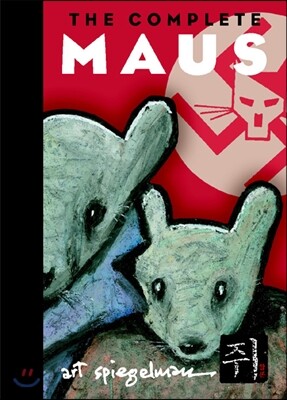
It also has a luxurious hardcover binding, which is rare for a comic book, and an artistic cover design that is not typical of comic books!
In fact, this type of change clearly shows the enormous impact that a single cartoon, "Rat," had on the American comics industry and global comics culture.
In Korea as well as in the United States, when Volumes 1 and 2 of "Rat" were published, the prevailing perception was that comics, although easily accessible to the general public and with a great influence on them, were ultimately a form of low-class, low-quality popular culture that stimulated the public's peripheral emotions through absurd stories, jokes, or satire.
However, when a young cartoonist named Art Spiegelman published a cartoon called "Rat," which he had worked on for 14 years, people's perception of cartoons began to change.
Because, although it was clearly a cartoon, it was more realistic than any documentary or true story, and it gave a more delicate and profound impression than any novel, film, or work of art.
Cartoonists gave the name "graphic novel" to the new possibilities and new territory of comics pioneered by "Maus," and when "Maus" won the Pulitzer Prize in 1992, an unprecedented feat in comic book history, this new trend became established as an irreversible and clear trend in comics culture.
So when the 20th anniversary of the publication of "Rat" in the United States was celebrated with a luxurious appearance befitting its artistic quality, no one found it awkward anymore.
The situation in Korea after the Korean version of 『Rat』 was published also unfolded similarly, although it was a few years behind that in the United States.
Publishers other than those specializing in comic books are publishing high-quality comics by foreign and domestic authors, and the graphic novel genre has begun to take shape in the Korean comics industry, with several works and authors already making their names known to the public.
And now, 『Rat』 is celebrating its 20th anniversary since its publication in Korean.
The publisher believes that revising the book into a new combined edition that can be kept for a long time and that can fully embody the artistic value of 『Mouse』 is the way to respond to the gratitude of our Korean readers who have loved and cherished 『Mouse』 so far, and so has published the newly revised edition 『Mouse: THE COMPLETE MOUS』.
The publisher, Armdri Media, has made every effort to preserve the original text as much as possible through this combined edition, and we hope that it will maximize the artistic value and creativity of "The Mouse" and provide readers with a deeper understanding of the text.
1.
The only Pulitzer Prize-winning comic book, "Rat: A Survivor's Story"
A work that breaks the conventional stereotypes about comics!
A comic considered one of the best works of art dealing with the Holocaust!
Spiegelman, a writer who is Jewish but at the same time vehemently rejects his own Jewish identity, tells the strange story of his father who survived the horrific massacre at Auschwitz in this work that won the Guggenheim Prize in Germany, the Pulitzer Prize in the U.S., and the National Book Critics Circle Award. However, in his story, Jews are not simply victims of the Holocaust, and the Nazis are not the perpetrators.
In fact, this cartoon is composed of two stories that are organically intertwined in a novelistic structure.
One is the heartbreaking story of Vladek Spiegelman, a father who narrowly escaped the clutches of death, and the other is a daily story about the clash of values and lifestyles between a writer son and a father who experienced extreme situations.
By closely interweaving the two plots, the author creates the effect of making the horrific memory of the Holocaust concrete and present.
The son, who rejected his father's demands for financial success and chose painting, cannot stand his father so much that he thinks he will not survive if he lives with him.
After his mother's sudden suicide, the son, wandering in guilt, tried to express his father's Auschwitz experience in a cartoon as an attempt to understand him.
It took Art Spiegelman 14 long years to design this new form of expression and finish the manuscript of "Maus" using experimental techniques.
And in this way, Spiegelman became the founder of the 'graphic novel', which elevated the popular culture of comics to a form of artistic expression.
Another thing to note about the style of expression in this book is that Jews are depicted as rats and Germans as cats.
As you know, there aren't many cultures in human history that have been tolerant of animals like rats.
In other words, for the majority of people around the world, rats are pests that should be eradicated and made extinct, and their very existence is considered taboo as 'evil'.
So, the Nazis' attempt to deny the Jews the human image and cover them with the image of rats was an effective psychological warfare tactic by racists that could easily erase the existence of a race.
In this cartoon, the author silently demonstrates how helpless people are to the psychological tactics of racists by depicting Jews as rats and Germans as cats.
This is why the message conveyed by "The Rat" is not limited to the past events of the Nazi Holocaust or the personal stories of the survivors who suffered serious aftereffects, but has a universality that applies to all cases in which humans discriminate against, ignore, and attempt to obliterate the existence of others—cases that are still being committed around the world today.
2.
Contents of this book
The protagonist, Vladek Spiegelman, was a young man who sold textiles in Czestochowa, a small town in Czechoslovakia near the German border, when World War II broke out.
Around that time, Vladek married the daughter of Polish millionaire Zilberberg and moved to his wife's family in Sosnowicec.
"Rat" follows the journey of Vladek and his wife Anya Zilberberga from Sosnowiez to Auschwitz.
This book follows the downfall of a wealthy Polish family and reveals just how vile and cruel humans can become when they are on the brink of hell.
Compared to other Holocaust reports, the main achievement of "Rat" lies in its exceptional truthfulness and objectivity.
"The Rat" presents numerous examples of despair and death along the route from Sosnowiez to Auschwitz.
The Nazis were not the only ones who carried out the atrocities.
Not only did people of various ethnicities in Eastern Europe, including Poles and Hungarians, compete to be the main agents of the hunt for Jews, but Jews themselves reported and killed their own compatriots to save their lives.
It is not uncommon for people to commit human trafficking for the purpose of making money.
Art Spiegelman maintains a thoroughly objective stance while depicting this bloody history.
The author does not embellish the bloody scenes to emphasize the extent of the atrocities or damage, but depicts the madness of the Nazis and the meanness of other human beings as he hears them.
He is careful to avoid any intentional message being contained in "The Rat."
As a result, the author achieves the additional benefit of incorporating a dazzling reflection on humanity into the book.
When humans step outside the boundaries of humanity, both the perpetrator and the victim are likely to be reduced to less than human.
The truth of life lies in the heart that never gives up on love for humanity even in the midst of chaos.
After much hardship, Vladek and his wife survive Auschwitz.
But what was the meaning of survival?
Vladek struggles to justify his survival, but dies without ever finding an answer.
Vladek's survival from hell was due to his quick wit.
He also taught English to the camp officials to ensure his own safety, and he quickly paired up with a strong Jew to survive on behalf of others.
Even when I did a few acts of kindness, I always did it with the expectation of repayment in mind.
After the war, the Vladeks stayed temporarily in Sweden and then moved to the United States.
The 'sorrow' of those who survived regardless of means and methods sprouts in an era of peace.
The life of this family was a constant nightmare.
Eventually, his son Art is admitted to a mental hospital and his wife Anya commits suicide.
The seeds of tragedy were within Vladek.
In America, Vladek still wanted to live with the same mindset and behavior he had during his Auschwitz days.
He collects wire and screws (things that were once useful for survival) from the streets every day, and lives a life of poverty, trusting no one and not interacting with anyone.
He also constantly nags his family and forces them to follow his (successful) lifestyle.
In fact, the father, who is from Eastern Europe and experienced the Holocaust, and the son, who was a free-spirited hippie from New York, stand on an endless parallel line, unable to compromise on any present-day issues, except when the father talks about the past.
However, the current state of his father, which his son cannot accept, is also a state created by his experience in Auschwitz.
So, although my father survived the hell of Auschwitz, this ‘actualization’ of the past, that he “did not survive,” is not only present to my father, but also constantly influences my son, the author, as an ‘unsolvable homework’.
In this respect, this book vividly shows how the past, which is human historical experience, survives as present for oneself and future generations.
A son who grew up feeling constantly compared to his older brother, whose photo hung in his parents' bedroom after their deaths during the war; a son who was neurotic because of his father's accusations that he was incompetent in the 'art of survival'; a son who chose art, where his father had no room for interference, so as not to compete with him; and a son who tried to escape from his Jewish relatives who subtly emphasized that they were a 'group of the same kind'.
Although these aspects of the son, who is a writer, are completely opposite to those of his father, they are another present created by the past as an ‘appearance of denial’ and ‘appearance of rejection.’
Art Spiegelman also suffered from the aftereffects of Auschwitz along with his parents.
The author's testimony, "Until I entered my college dorm, I thought all parents in the world woke their children up screaming in the middle of the night from nightmares," lingers until the very end.
In terms of content, this is all that is depicted in “Rat.”
Ultimately, the message is that neither the father nor the son, nor the present of humanity, has been able to properly liquidate the past.
So, as we close this book, we find ourselves in a situation where we cannot help but reflect on our current state, rather than simply understanding the past.
Praise from around the world for this book
“The Mouse” is a book you can’t put down until you fall asleep.
When two rats talk about love, you are touched, and when they suffer, you cry.
Filled with pain, humor, and the everyday trials of life, this book will have you captivated by the language of an Eastern European family and drawn into its gentle, hypnotic rhythm.
“After reading ‘The Rat,’ you will quietly sigh with regret at leaving that magical world.”
-Umberto Eco
“A remarkable achievement, combining the descriptive detail of a documentary with the vividness of a novel… a literary event that unfolds mysteriously.” “An epic expressed in small, square pictures.”
-The New York Times
“The most moving and successful memoir ever told about the Holocaust.”
-The Wall Street Journal
“It is very rare for a book to come out that is worthy of praise.
(This is) that kind of book.” - Esquire
“It is not the cruelty that horrifies us, but the guilt that creeps in.”
-New York
“A moving, elegant, and quiet victory that could not be accurately depicted or achieved in any other medium than comics.”
- Washington Post
“It is a remarkable work that thrills from the very conception and execution stages, being simultaneously a novel and a documentary, an autobiography and a comic book.
It's dazzling.
“It’s just dazzling.”
-Jules Pfeiffer
“The Rat” allows us to be witnesses in another way.
“The very nature of the surface allows us to imagine the reality beneath it.”
-Newsweek
“A work of art as moving as it is horrifying… In Volume 2 of “Maus,” Art Spiegelman concludes his masterpiece.
You will not be able to help but witness (and even feel) the transformation of your personal suffering into a lasting truth.”
-The Boston Globe
“With Maus, Spiegelman reinvented the comic book.”
-Lawrence Wesley
Domestic reviews of this book
“The truth about history and humanity, consistent with pain and sincerity!
We cannot hide the fact that we generally have certain preconceived notions about what content can be contained in the form of a comic book.
However, the work that directly rejects this conventional perception is Art Spiegelman's "Maus."
When I first opened the translated manuscript of this book, the first thing that struck me was my reflection on the comics format.
It was a very refreshing shock.
Soon after, from the first to the last chapter of this book, the truth about history and humanity, consistent with pain and seriousness, came to me with a heartbreaking thrill as it was replaced with ours, with my own.
In short, this book forces us to deeply reflect on our conventionalized cognitive systems, both in content and form.
-Shin Young-bok
“This cartoon may feel a bit unfamiliar to Korean readers who are accustomed to ‘Korean-style’ cartoons.
However, as you read on, I have no doubt that you will discover a new side of comics and once again feel the immense power of comics.
“The love for humanity, understanding and coexistence between peoples that the author desperately cries out for in ‘The Rat’ are no longer just stories of others.”
-Lee Won-bok
This is a comic book that depicts the suffering of Jews under Nazi rule in a flashback format.
It records how humans change in a situation where death is always looming, and what kind of pain is imprinted on those who survive.
In 1992, he received the Pulitzer Prize (book category) and the National Book Critics Circle Award.
-Chosun Ilbo
“My mother committed suicide 26 years after being released from the death camps, and my father still wakes up screaming every night.
“The reason ‘Rat’ transcends the limitations of the comics genre and captivates readers is because it consistently depicts the countless deaths that failed to achieve miracles, without highlighting the miraculous survivals, and without raising its voice.”
-Korea Daily
“The Mouse,” which depicts Jews as rats and Nazis as cats, is not just a mere memoir.
The appropriate addition of the conflicts that the father, who remarries midway through the story, experiences with his current step-wife, and the situation in which the post-war son cannot help but expose a certain gap despite his efforts to understand the previous generation, elevates the tragedy of Auschwitz to the present, and readers are bound to have a powerful intellectual experience.
Especially for domestic readers who have lived through complex modern history, it may be read as our own story.
Meanwhile, "Rat" is known to have taken the author 14 years to create, and in addition to the Pulitzer Prize, it also received awards from the National Book Critics Circle.
-Culture Daily
The author, who has said of comics that they are 'more flexible than plays and far more profound than films,' succeeded in objectifying both the reader and the author's assets from this terrible human disaster by simplifying Nazi Germans into cats and Jews into rats.
It has the effect of generalizing all experiences by moving away from primary emotions such as hatred, sympathy, and hostility.
Those who picked up this book out of curiosity about the comics aspect will be shocked by the novel format and poignant content, while those drawn to the heartbreaking subject matter will be awed by the fact that such serious content can be contained within the comics format.
-Hankyoreh
“Mouse” is a genre of comics that originated in the 1970s and 1980s in the United States, called alternative comics or graphic novels.
It may sound a bit difficult to say, but it is literally an alternative comic that appears against the mainstream, and it is also a novel expressed through pictures.
Based on a true story of his father, he created this work through 13 years of field research, sketches, and highly precise aesthetic calculations, in other words, under the guise of a two-volume book.
When readers turn the pages, they will be able to vividly experience how the seemingly crude drawing style and presentation, after some time has passed, come across as intellectual and aesthetically rich.
I would say it's similar to the feeling foreigners get when they see Go Woo-young's Romance of the Three Kingdoms.
It seems strange and awkward, but the more I look at it, the more I find it attractive…
While reading this author's book, "The Rat," I truly felt that this is how we should convey the truth of history and the suffering of previous generations to the next generation.
Just showing, never forcing.
In that life that appears indifferent, even in extreme pain, humans laugh, love, and ultimately, live on.
Therefore, until we understand the suffering of others not with fear but with warmth, there is no way for others to embrace their own misfortune.
Agitators explain ideas with slogans, but art simply shows them through life.
From now on, it is up to each person to decide whether or not to have such thoughts.
-Ttangji Ilbo Book Recommendation Committee
“I can’t believe that comics, which were considered a soft genre, can convey such real pain and emotions.
When you struggle with the meaninglessness of life, which seems like a waste of time, open this book.
We are confronted with the terrifying raw seriousness of life.
The sharp edges of modern Korean history that blatantly resemble Auschwitz, Palestine, Bosnia, Afghanistan, lands of pain that are still difficult to look at with open eyes…
Auschwitz is not the only tragic past.
What do we learn from this 'bloody history'?
On this planet, where war and violence still rage, is harmony and coexistence among humanity the only hope?
-Kim Hye-hyung, author of "Mothers Learn from Their Children"
Hanuri Reading Culture Movement Headquarters, Central Reading Education Center Must-read Books,
A steady seller for 20 consecutive years in major bookstores nationwide!!
The eternal classic graphic novel, "Rat," has finally been published in a compilation edition!!
『Rat』, the only comic book to win the Pulitzer Prize in 1992, was first published in Korea in two volumes, Volumes 1 and 2, in 1994, and this year marks its 20th anniversary.
"Rat 1," which was serialized in the American magazine RAW, was published as a book in 1986 after eight years of work, and "Rat 2" was published six years later in 1991.
And then again in 2010, to commemorate the 20th anniversary of its publication, volumes 1 and 2 were published together as 『THE COMPLETE MOUS』 in the United States.
It also has a luxurious hardcover binding, which is rare for a comic book, and an artistic cover design that is not typical of comic books!
In fact, this type of change clearly shows the enormous impact that a single cartoon, "Rat," had on the American comics industry and global comics culture.
In Korea as well as in the United States, when Volumes 1 and 2 of "Rat" were published, the prevailing perception was that comics, although easily accessible to the general public and with a great influence on them, were ultimately a form of low-class, low-quality popular culture that stimulated the public's peripheral emotions through absurd stories, jokes, or satire.
However, when a young cartoonist named Art Spiegelman published a cartoon called "Rat," which he had worked on for 14 years, people's perception of cartoons began to change.
Because, although it was clearly a cartoon, it was more realistic than any documentary or true story, and it gave a more delicate and profound impression than any novel, film, or work of art.
Cartoonists gave the name "graphic novel" to the new possibilities and new territory of comics pioneered by "Maus," and when "Maus" won the Pulitzer Prize in 1992, an unprecedented feat in comic book history, this new trend became established as an irreversible and clear trend in comics culture.
So when the 20th anniversary of the publication of "Rat" in the United States was celebrated with a luxurious appearance befitting its artistic quality, no one found it awkward anymore.
The situation in Korea after the Korean version of 『Rat』 was published also unfolded similarly, although it was a few years behind that in the United States.
Publishers other than those specializing in comic books are publishing high-quality comics by foreign and domestic authors, and the graphic novel genre has begun to take shape in the Korean comics industry, with several works and authors already making their names known to the public.
And now, 『Rat』 is celebrating its 20th anniversary since its publication in Korean.
The publisher believes that revising the book into a new combined edition that can be kept for a long time and that can fully embody the artistic value of 『Mouse』 is the way to respond to the gratitude of our Korean readers who have loved and cherished 『Mouse』 so far, and so has published the newly revised edition 『Mouse: THE COMPLETE MOUS』.
The publisher, Armdri Media, has made every effort to preserve the original text as much as possible through this combined edition, and we hope that it will maximize the artistic value and creativity of "The Mouse" and provide readers with a deeper understanding of the text.
1.
The only Pulitzer Prize-winning comic book, "Rat: A Survivor's Story"
A work that breaks the conventional stereotypes about comics!
A comic considered one of the best works of art dealing with the Holocaust!
Spiegelman, a writer who is Jewish but at the same time vehemently rejects his own Jewish identity, tells the strange story of his father who survived the horrific massacre at Auschwitz in this work that won the Guggenheim Prize in Germany, the Pulitzer Prize in the U.S., and the National Book Critics Circle Award. However, in his story, Jews are not simply victims of the Holocaust, and the Nazis are not the perpetrators.
In fact, this cartoon is composed of two stories that are organically intertwined in a novelistic structure.
One is the heartbreaking story of Vladek Spiegelman, a father who narrowly escaped the clutches of death, and the other is a daily story about the clash of values and lifestyles between a writer son and a father who experienced extreme situations.
By closely interweaving the two plots, the author creates the effect of making the horrific memory of the Holocaust concrete and present.
The son, who rejected his father's demands for financial success and chose painting, cannot stand his father so much that he thinks he will not survive if he lives with him.
After his mother's sudden suicide, the son, wandering in guilt, tried to express his father's Auschwitz experience in a cartoon as an attempt to understand him.
It took Art Spiegelman 14 long years to design this new form of expression and finish the manuscript of "Maus" using experimental techniques.
And in this way, Spiegelman became the founder of the 'graphic novel', which elevated the popular culture of comics to a form of artistic expression.
Another thing to note about the style of expression in this book is that Jews are depicted as rats and Germans as cats.
As you know, there aren't many cultures in human history that have been tolerant of animals like rats.
In other words, for the majority of people around the world, rats are pests that should be eradicated and made extinct, and their very existence is considered taboo as 'evil'.
So, the Nazis' attempt to deny the Jews the human image and cover them with the image of rats was an effective psychological warfare tactic by racists that could easily erase the existence of a race.
In this cartoon, the author silently demonstrates how helpless people are to the psychological tactics of racists by depicting Jews as rats and Germans as cats.
This is why the message conveyed by "The Rat" is not limited to the past events of the Nazi Holocaust or the personal stories of the survivors who suffered serious aftereffects, but has a universality that applies to all cases in which humans discriminate against, ignore, and attempt to obliterate the existence of others—cases that are still being committed around the world today.
2.
Contents of this book
The protagonist, Vladek Spiegelman, was a young man who sold textiles in Czestochowa, a small town in Czechoslovakia near the German border, when World War II broke out.
Around that time, Vladek married the daughter of Polish millionaire Zilberberg and moved to his wife's family in Sosnowicec.
"Rat" follows the journey of Vladek and his wife Anya Zilberberga from Sosnowiez to Auschwitz.
This book follows the downfall of a wealthy Polish family and reveals just how vile and cruel humans can become when they are on the brink of hell.
Compared to other Holocaust reports, the main achievement of "Rat" lies in its exceptional truthfulness and objectivity.
"The Rat" presents numerous examples of despair and death along the route from Sosnowiez to Auschwitz.
The Nazis were not the only ones who carried out the atrocities.
Not only did people of various ethnicities in Eastern Europe, including Poles and Hungarians, compete to be the main agents of the hunt for Jews, but Jews themselves reported and killed their own compatriots to save their lives.
It is not uncommon for people to commit human trafficking for the purpose of making money.
Art Spiegelman maintains a thoroughly objective stance while depicting this bloody history.
The author does not embellish the bloody scenes to emphasize the extent of the atrocities or damage, but depicts the madness of the Nazis and the meanness of other human beings as he hears them.
He is careful to avoid any intentional message being contained in "The Rat."
As a result, the author achieves the additional benefit of incorporating a dazzling reflection on humanity into the book.
When humans step outside the boundaries of humanity, both the perpetrator and the victim are likely to be reduced to less than human.
The truth of life lies in the heart that never gives up on love for humanity even in the midst of chaos.
After much hardship, Vladek and his wife survive Auschwitz.
But what was the meaning of survival?
Vladek struggles to justify his survival, but dies without ever finding an answer.
Vladek's survival from hell was due to his quick wit.
He also taught English to the camp officials to ensure his own safety, and he quickly paired up with a strong Jew to survive on behalf of others.
Even when I did a few acts of kindness, I always did it with the expectation of repayment in mind.
After the war, the Vladeks stayed temporarily in Sweden and then moved to the United States.
The 'sorrow' of those who survived regardless of means and methods sprouts in an era of peace.
The life of this family was a constant nightmare.
Eventually, his son Art is admitted to a mental hospital and his wife Anya commits suicide.
The seeds of tragedy were within Vladek.
In America, Vladek still wanted to live with the same mindset and behavior he had during his Auschwitz days.
He collects wire and screws (things that were once useful for survival) from the streets every day, and lives a life of poverty, trusting no one and not interacting with anyone.
He also constantly nags his family and forces them to follow his (successful) lifestyle.
In fact, the father, who is from Eastern Europe and experienced the Holocaust, and the son, who was a free-spirited hippie from New York, stand on an endless parallel line, unable to compromise on any present-day issues, except when the father talks about the past.
However, the current state of his father, which his son cannot accept, is also a state created by his experience in Auschwitz.
So, although my father survived the hell of Auschwitz, this ‘actualization’ of the past, that he “did not survive,” is not only present to my father, but also constantly influences my son, the author, as an ‘unsolvable homework’.
In this respect, this book vividly shows how the past, which is human historical experience, survives as present for oneself and future generations.
A son who grew up feeling constantly compared to his older brother, whose photo hung in his parents' bedroom after their deaths during the war; a son who was neurotic because of his father's accusations that he was incompetent in the 'art of survival'; a son who chose art, where his father had no room for interference, so as not to compete with him; and a son who tried to escape from his Jewish relatives who subtly emphasized that they were a 'group of the same kind'.
Although these aspects of the son, who is a writer, are completely opposite to those of his father, they are another present created by the past as an ‘appearance of denial’ and ‘appearance of rejection.’
Art Spiegelman also suffered from the aftereffects of Auschwitz along with his parents.
The author's testimony, "Until I entered my college dorm, I thought all parents in the world woke their children up screaming in the middle of the night from nightmares," lingers until the very end.
In terms of content, this is all that is depicted in “Rat.”
Ultimately, the message is that neither the father nor the son, nor the present of humanity, has been able to properly liquidate the past.
So, as we close this book, we find ourselves in a situation where we cannot help but reflect on our current state, rather than simply understanding the past.
Praise from around the world for this book
“The Mouse” is a book you can’t put down until you fall asleep.
When two rats talk about love, you are touched, and when they suffer, you cry.
Filled with pain, humor, and the everyday trials of life, this book will have you captivated by the language of an Eastern European family and drawn into its gentle, hypnotic rhythm.
“After reading ‘The Rat,’ you will quietly sigh with regret at leaving that magical world.”
-Umberto Eco
“A remarkable achievement, combining the descriptive detail of a documentary with the vividness of a novel… a literary event that unfolds mysteriously.” “An epic expressed in small, square pictures.”
-The New York Times
“The most moving and successful memoir ever told about the Holocaust.”
-The Wall Street Journal
“It is very rare for a book to come out that is worthy of praise.
(This is) that kind of book.” - Esquire
“It is not the cruelty that horrifies us, but the guilt that creeps in.”
-New York
“A moving, elegant, and quiet victory that could not be accurately depicted or achieved in any other medium than comics.”
- Washington Post
“It is a remarkable work that thrills from the very conception and execution stages, being simultaneously a novel and a documentary, an autobiography and a comic book.
It's dazzling.
“It’s just dazzling.”
-Jules Pfeiffer
“The Rat” allows us to be witnesses in another way.
“The very nature of the surface allows us to imagine the reality beneath it.”
-Newsweek
“A work of art as moving as it is horrifying… In Volume 2 of “Maus,” Art Spiegelman concludes his masterpiece.
You will not be able to help but witness (and even feel) the transformation of your personal suffering into a lasting truth.”
-The Boston Globe
“With Maus, Spiegelman reinvented the comic book.”
-Lawrence Wesley
Domestic reviews of this book
“The truth about history and humanity, consistent with pain and sincerity!
We cannot hide the fact that we generally have certain preconceived notions about what content can be contained in the form of a comic book.
However, the work that directly rejects this conventional perception is Art Spiegelman's "Maus."
When I first opened the translated manuscript of this book, the first thing that struck me was my reflection on the comics format.
It was a very refreshing shock.
Soon after, from the first to the last chapter of this book, the truth about history and humanity, consistent with pain and seriousness, came to me with a heartbreaking thrill as it was replaced with ours, with my own.
In short, this book forces us to deeply reflect on our conventionalized cognitive systems, both in content and form.
-Shin Young-bok
“This cartoon may feel a bit unfamiliar to Korean readers who are accustomed to ‘Korean-style’ cartoons.
However, as you read on, I have no doubt that you will discover a new side of comics and once again feel the immense power of comics.
“The love for humanity, understanding and coexistence between peoples that the author desperately cries out for in ‘The Rat’ are no longer just stories of others.”
-Lee Won-bok
This is a comic book that depicts the suffering of Jews under Nazi rule in a flashback format.
It records how humans change in a situation where death is always looming, and what kind of pain is imprinted on those who survive.
In 1992, he received the Pulitzer Prize (book category) and the National Book Critics Circle Award.
-Chosun Ilbo
“My mother committed suicide 26 years after being released from the death camps, and my father still wakes up screaming every night.
“The reason ‘Rat’ transcends the limitations of the comics genre and captivates readers is because it consistently depicts the countless deaths that failed to achieve miracles, without highlighting the miraculous survivals, and without raising its voice.”
-Korea Daily
“The Mouse,” which depicts Jews as rats and Nazis as cats, is not just a mere memoir.
The appropriate addition of the conflicts that the father, who remarries midway through the story, experiences with his current step-wife, and the situation in which the post-war son cannot help but expose a certain gap despite his efforts to understand the previous generation, elevates the tragedy of Auschwitz to the present, and readers are bound to have a powerful intellectual experience.
Especially for domestic readers who have lived through complex modern history, it may be read as our own story.
Meanwhile, "Rat" is known to have taken the author 14 years to create, and in addition to the Pulitzer Prize, it also received awards from the National Book Critics Circle.
-Culture Daily
The author, who has said of comics that they are 'more flexible than plays and far more profound than films,' succeeded in objectifying both the reader and the author's assets from this terrible human disaster by simplifying Nazi Germans into cats and Jews into rats.
It has the effect of generalizing all experiences by moving away from primary emotions such as hatred, sympathy, and hostility.
Those who picked up this book out of curiosity about the comics aspect will be shocked by the novel format and poignant content, while those drawn to the heartbreaking subject matter will be awed by the fact that such serious content can be contained within the comics format.
-Hankyoreh
“Mouse” is a genre of comics that originated in the 1970s and 1980s in the United States, called alternative comics or graphic novels.
It may sound a bit difficult to say, but it is literally an alternative comic that appears against the mainstream, and it is also a novel expressed through pictures.
Based on a true story of his father, he created this work through 13 years of field research, sketches, and highly precise aesthetic calculations, in other words, under the guise of a two-volume book.
When readers turn the pages, they will be able to vividly experience how the seemingly crude drawing style and presentation, after some time has passed, come across as intellectual and aesthetically rich.
I would say it's similar to the feeling foreigners get when they see Go Woo-young's Romance of the Three Kingdoms.
It seems strange and awkward, but the more I look at it, the more I find it attractive…
While reading this author's book, "The Rat," I truly felt that this is how we should convey the truth of history and the suffering of previous generations to the next generation.
Just showing, never forcing.
In that life that appears indifferent, even in extreme pain, humans laugh, love, and ultimately, live on.
Therefore, until we understand the suffering of others not with fear but with warmth, there is no way for others to embrace their own misfortune.
Agitators explain ideas with slogans, but art simply shows them through life.
From now on, it is up to each person to decide whether or not to have such thoughts.
-Ttangji Ilbo Book Recommendation Committee
“I can’t believe that comics, which were considered a soft genre, can convey such real pain and emotions.
When you struggle with the meaninglessness of life, which seems like a waste of time, open this book.
We are confronted with the terrifying raw seriousness of life.
The sharp edges of modern Korean history that blatantly resemble Auschwitz, Palestine, Bosnia, Afghanistan, lands of pain that are still difficult to look at with open eyes…
Auschwitz is not the only tragic past.
What do we learn from this 'bloody history'?
On this planet, where war and violence still rage, is harmony and coexistence among humanity the only hope?
-Kim Hye-hyung, author of "Mothers Learn from Their Children"
GOODS SPECIFICS
- Date of publication: June 15, 2014
- Page count, weight, size: 320 pages | 890g | 170*235*24mm
- ISBN13: 9788955824933
- ISBN10: 8955824939
You may also like
카테고리
korean


korean

![ELLE 엘르 스페셜 에디션 A형 : 12월 [2025]](http://librairie.coreenne.fr/cdn/shop/files/b8e27a3de6c9538896439686c6b0e8fb.jpg?v=1766436872&width=3840)


