

When I lay dead
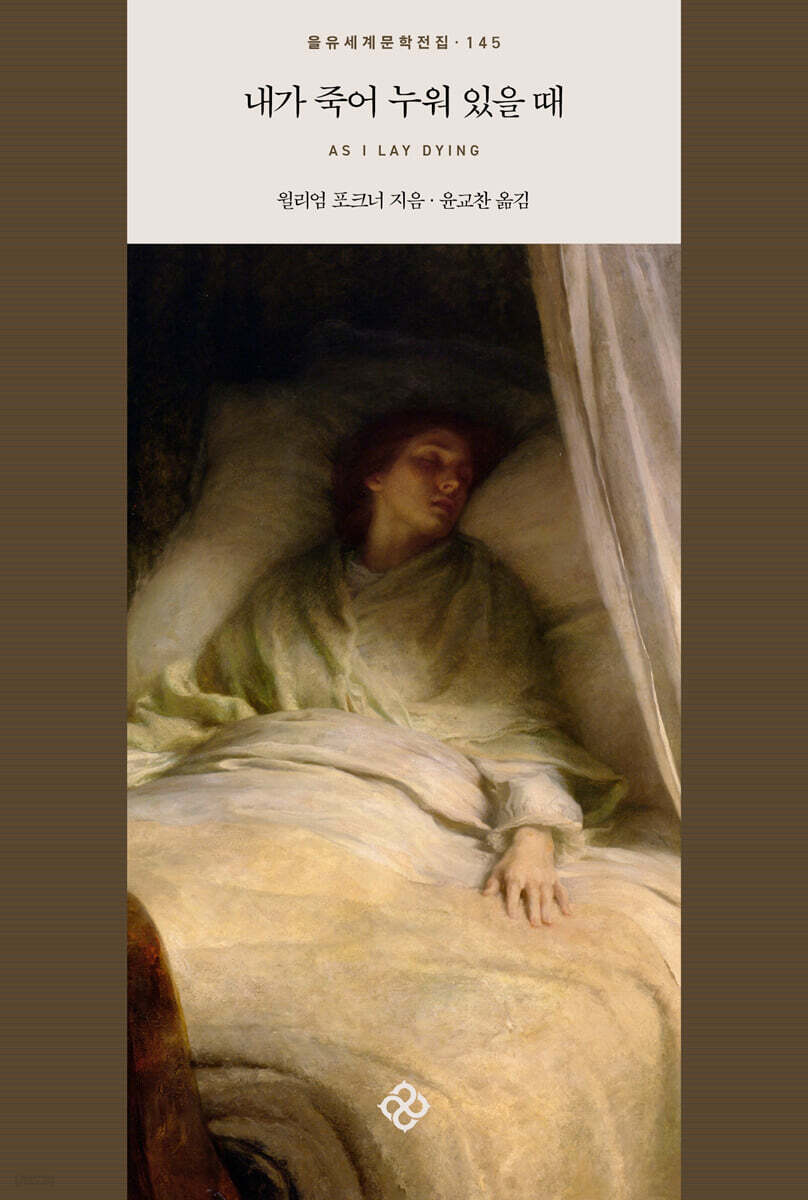 |
Description
Book Introduction
A master of 20th-century American modern literature
A masterpiece by Nobel Prize-winning author William Faulkner
“Faulkner is the greatest writer America has ever produced, and he holds a unique position.”
― Albert Camus
As I Lay Dying, the 145th work in the Eulyoo World Literature Collection, is the representative work of William Faulkner, who won the 1949 Nobel Prize in Literature in recognition of his contributions to modern American literature and his unparalleled artistic achievements, while establishing a unique and innovative literary world.
This novel, which fully displays his colors, tells the story of a family that sets out on a funeral journey to fulfill their mother's dying wish to be buried in her hometown. Through the nine-day journey, they reveal the dark side of human nature, which is not honest even with family and is self-centered.
This work unfolds the story from the perspectives of fifteen speakers, including family members and neighbors. The unconventional sentences, employing philosophical monologues and stream-of-consciousness techniques, draw readers deep into the inner world of the speakers.
The slightly different stories told by various characters naturally reveal conflicts and prejudices, and at the intersection of multiple voices filled with selfishness, love, and pain, the reader is confronted with the truth.
A masterpiece by Nobel Prize-winning author William Faulkner
“Faulkner is the greatest writer America has ever produced, and he holds a unique position.”
― Albert Camus
As I Lay Dying, the 145th work in the Eulyoo World Literature Collection, is the representative work of William Faulkner, who won the 1949 Nobel Prize in Literature in recognition of his contributions to modern American literature and his unparalleled artistic achievements, while establishing a unique and innovative literary world.
This novel, which fully displays his colors, tells the story of a family that sets out on a funeral journey to fulfill their mother's dying wish to be buried in her hometown. Through the nine-day journey, they reveal the dark side of human nature, which is not honest even with family and is self-centered.
This work unfolds the story from the perspectives of fifteen speakers, including family members and neighbors. The unconventional sentences, employing philosophical monologues and stream-of-consciousness techniques, draw readers deep into the inner world of the speakers.
The slightly different stories told by various characters naturally reveal conflicts and prejudices, and at the intersection of multiple voices filled with selfishness, love, and pain, the reader is confronted with the truth.
- You can preview some of the book's contents.
Preview
index
When I lay dead
main
Faulkner's unique storytelling, capturing the sorrow of the American South and offering solace.
Introduction to the edition
William Faulkner Chronology
main
Faulkner's unique storytelling, capturing the sorrow of the American South and offering solace.
Introduction to the edition
William Faulkner Chronology
Into the book
As far as I remember, when I was young, I believed that death was something that happened to the body.
Now I know it's just a function of the mind.
It means the emotional reactions of people who have lost someone and survived.
Nihilists say death is the end of everything, fundamentalists say death is the beginning.
In reality, death simply means that families or people who have been renting a place for a while are moving from their residence or village.
--- p.49 From "Peabody"
The day fades to a dull gray, and overhead the sun sets as if struck by a swarm of gray arrows shot straight at us.
In the rain, mules snort and kick up smoky mud.
The outer mule slides down the roadside next to the ditch and falls over.
The yellow timbers, heavy as lead and soaked with water, tilted past the broken wheels and slid toward the ditch.
Around the broken spokes of the wheel and near Jewel's ankles, a yellowish liquid that was neither water nor dirt splashed up, and it flowed down the hill along a yellow path that was neither dirt nor water, and disappeared into a dark green mass that was neither sky nor ground.
--- pp.54-55 from "The Moon"
I vividly remember my father's words that the reason we live is to prepare for the time when we will be dead forever.
Every day, I would think secretive and selfish thoughts, deal with children who were different from me and whose blood was different from mine, and when I felt that this was the only way I could prepare for death, I would hate my father for making me think like this.
--- p.182 From "Addie"
The moon and I go across the moonlight to my mother under the apple tree.
The cat jumps down and runs away.
We hear our mother's voice coming from the wooden coffin.
“Can you hear me?” says the moon.
“Put your ear close.”
When I put my ear close, I can hear my mother's voice.
I just don't know what it means.
“What did you say, bro?” I say.
“Who are you talking to?”
“You are talking to God,” says the moon.
“You are asking God for help.”
“What do you want from God?” I say.
“He asked me to hide it so people wouldn’t see it,” says the moon.
“Why on earth are you trying to hide?”
“Only then can you let go of life,” says the moon.
“Why are you trying to give up on life?”
“Now, listen,” says the moon.
We hear our mother's voice.
I hear my mother rolling over onto her side.
“I can’t hear you,” says the moon.
“You’re lying down,” I say.
“And he’s looking at me through the coffin.”
--- pp.231-232 from "Baderman"
Sometimes I have doubts.
Who is crazy and who is not?
Sometimes I feel like I can't really tell who's truly crazy and who's completely sane, unless I can speak with a truly balanced sense.
I think it's not so much about what someone does, but rather how the majority views what someone does.
(…) But after crossing the river, I thought about it several times, and I thought that if God had taken my mother’s body from our hands and disposed of it cleanly, that would have been a blessing from God, and that Jewel’s efforts to rescue my mother from the river might have been a violation of God’s will.
So if the moon thought that one of us should do it, I believe the moon did the right thing.
Now I know it's just a function of the mind.
It means the emotional reactions of people who have lost someone and survived.
Nihilists say death is the end of everything, fundamentalists say death is the beginning.
In reality, death simply means that families or people who have been renting a place for a while are moving from their residence or village.
--- p.49 From "Peabody"
The day fades to a dull gray, and overhead the sun sets as if struck by a swarm of gray arrows shot straight at us.
In the rain, mules snort and kick up smoky mud.
The outer mule slides down the roadside next to the ditch and falls over.
The yellow timbers, heavy as lead and soaked with water, tilted past the broken wheels and slid toward the ditch.
Around the broken spokes of the wheel and near Jewel's ankles, a yellowish liquid that was neither water nor dirt splashed up, and it flowed down the hill along a yellow path that was neither dirt nor water, and disappeared into a dark green mass that was neither sky nor ground.
--- pp.54-55 from "The Moon"
I vividly remember my father's words that the reason we live is to prepare for the time when we will be dead forever.
Every day, I would think secretive and selfish thoughts, deal with children who were different from me and whose blood was different from mine, and when I felt that this was the only way I could prepare for death, I would hate my father for making me think like this.
--- p.182 From "Addie"
The moon and I go across the moonlight to my mother under the apple tree.
The cat jumps down and runs away.
We hear our mother's voice coming from the wooden coffin.
“Can you hear me?” says the moon.
“Put your ear close.”
When I put my ear close, I can hear my mother's voice.
I just don't know what it means.
“What did you say, bro?” I say.
“Who are you talking to?”
“You are talking to God,” says the moon.
“You are asking God for help.”
“What do you want from God?” I say.
“He asked me to hide it so people wouldn’t see it,” says the moon.
“Why on earth are you trying to hide?”
“Only then can you let go of life,” says the moon.
“Why are you trying to give up on life?”
“Now, listen,” says the moon.
We hear our mother's voice.
I hear my mother rolling over onto her side.
“I can’t hear you,” says the moon.
“You’re lying down,” I say.
“And he’s looking at me through the coffin.”
--- pp.231-232 from "Baderman"
Sometimes I have doubts.
Who is crazy and who is not?
Sometimes I feel like I can't really tell who's truly crazy and who's completely sane, unless I can speak with a truly balanced sense.
I think it's not so much about what someone does, but rather how the majority views what someone does.
(…) But after crossing the river, I thought about it several times, and I thought that if God had taken my mother’s body from our hands and disposed of it cleanly, that would have been a blessing from God, and that Jewel’s efforts to rescue my mother from the river might have been a violation of God’s will.
So if the moon thought that one of us should do it, I believe the moon did the right thing.
--- pp.252-253 from "Cache"
Publisher's Review
A master of 20th-century American modern literature
A masterpiece by Nobel Prize-winning author William Faulkner
As I Lay Dying is the masterpiece of William Faulkner, who won the 1949 Nobel Prize in Literature in recognition of his unique and innovative literary world and his “contribution to modern American literature and his unparalleled artistic achievement.”
Faulkner created the fictional town of Yoknapatawpha County, based on the small Mississippi town where he grew up, and wrote several works based there, including this one.
This novel, which clearly shows Faulkner's colors, deals with the journey of a family that sets out on a funeral journey to fulfill the mother's dying wish to be buried in her hometown of Jefferson. The Bundrun family [father Anns, mother Addie, eldest son Cathy, second son Darl, third son Jewel, fourth (daughter) Dewey Dell, and youngest son Baderman] are a poor southern white family despised even by the white middle class.
Encyclopædia Britannica called this work "Faulkner's most systematically multi-voiced novel and the culmination of his early post-Joycean experimentalism," and praised Faulkner as one of the greatest writers of the 20th century, continuing to exert a profound influence on novelists in the United States, South America, and around the world.
In addition to the aforementioned Nobel Prize in Literature, Faulkner won the National Book Award twice, the Pulitzer Prize the year after his death, and is considered a unique writer who changed the landscape of 20th-century American literature.
That's how extraordinary his work is.
There are many literary and philosophical sentences, and many sentences with unclear subjects and objects, so they may not be immediately understood.
Therefore, this translation clarifies some subjects and objects and refines the meaning of sentences to make them easier to understand, without harming the color of Faulkner's work.
Several people standing before the death of one human being
Human nature revealed through cross-voice
This novel unfolds its story over 59 chapters, each told from the perspective of fifteen different narrators. Just as we in real life remember and perceive the same events in slightly different ways, the stories told by the characters in this work also differ slightly.
So, at first, it feels strange to hear the next character speak differently from the character we just talked about, but soon you realize that it is the author's intention to reveal their conflicts and the prejudices they each have.
In addition to this multi-narrative technique, Faulkner also employs the unconventional form of stream-of-consciousness and difficult sentence structures to reveal things that are not visible on the surface and lead readers to depths that cannot be reached in story-driven novels.
In this process, readers get to see the innermost thoughts of the characters and face the truth at the point where their voices intersect.
Among the many speakers, the moon, who speaks nineteen times, and Baderman, who speaks ten times, can be considered the main speakers. These characters have the purest hearts and their unique and philosophical perspectives add a special color to this work.
But these two characters (especially Dal) are not normal in this world where “it just depends on how the majority sees what someone did.”
He is a person who is “on everyone’s lips.”
Even though the family's unresolved and unhealed wounds deepen on the way to Andy's hometown, they continue on their journey.
Despite the smell of the increasingly decomposing body, the delayed funeral procession that was followed by buzzards, and the unexpected hardships, the Bundren family insisted on burying the body in Jefferson until the very end.
And in the process, their inner selves are revealed one by one, giving off a foul smell like the stench of the corpses they are carrying.
1949 Nobel Prize in Literature winner
National Book Award-winning author
Pulitzer Prize-winning author
SAT Recommended Books Selected by the College Board
Newsweek's 100 Greatest Books
A masterpiece by Nobel Prize-winning author William Faulkner
As I Lay Dying is the masterpiece of William Faulkner, who won the 1949 Nobel Prize in Literature in recognition of his unique and innovative literary world and his “contribution to modern American literature and his unparalleled artistic achievement.”
Faulkner created the fictional town of Yoknapatawpha County, based on the small Mississippi town where he grew up, and wrote several works based there, including this one.
This novel, which clearly shows Faulkner's colors, deals with the journey of a family that sets out on a funeral journey to fulfill the mother's dying wish to be buried in her hometown of Jefferson. The Bundrun family [father Anns, mother Addie, eldest son Cathy, second son Darl, third son Jewel, fourth (daughter) Dewey Dell, and youngest son Baderman] are a poor southern white family despised even by the white middle class.
Encyclopædia Britannica called this work "Faulkner's most systematically multi-voiced novel and the culmination of his early post-Joycean experimentalism," and praised Faulkner as one of the greatest writers of the 20th century, continuing to exert a profound influence on novelists in the United States, South America, and around the world.
In addition to the aforementioned Nobel Prize in Literature, Faulkner won the National Book Award twice, the Pulitzer Prize the year after his death, and is considered a unique writer who changed the landscape of 20th-century American literature.
That's how extraordinary his work is.
There are many literary and philosophical sentences, and many sentences with unclear subjects and objects, so they may not be immediately understood.
Therefore, this translation clarifies some subjects and objects and refines the meaning of sentences to make them easier to understand, without harming the color of Faulkner's work.
Several people standing before the death of one human being
Human nature revealed through cross-voice
This novel unfolds its story over 59 chapters, each told from the perspective of fifteen different narrators. Just as we in real life remember and perceive the same events in slightly different ways, the stories told by the characters in this work also differ slightly.
So, at first, it feels strange to hear the next character speak differently from the character we just talked about, but soon you realize that it is the author's intention to reveal their conflicts and the prejudices they each have.
In addition to this multi-narrative technique, Faulkner also employs the unconventional form of stream-of-consciousness and difficult sentence structures to reveal things that are not visible on the surface and lead readers to depths that cannot be reached in story-driven novels.
In this process, readers get to see the innermost thoughts of the characters and face the truth at the point where their voices intersect.
Among the many speakers, the moon, who speaks nineteen times, and Baderman, who speaks ten times, can be considered the main speakers. These characters have the purest hearts and their unique and philosophical perspectives add a special color to this work.
But these two characters (especially Dal) are not normal in this world where “it just depends on how the majority sees what someone did.”
He is a person who is “on everyone’s lips.”
Even though the family's unresolved and unhealed wounds deepen on the way to Andy's hometown, they continue on their journey.
Despite the smell of the increasingly decomposing body, the delayed funeral procession that was followed by buzzards, and the unexpected hardships, the Bundren family insisted on burying the body in Jefferson until the very end.
And in the process, their inner selves are revealed one by one, giving off a foul smell like the stench of the corpses they are carrying.
1949 Nobel Prize in Literature winner
National Book Award-winning author
Pulitzer Prize-winning author
SAT Recommended Books Selected by the College Board
Newsweek's 100 Greatest Books
GOODS SPECIFICS
- Date of issue: November 30, 2025
- Format: Hardcover book binding method guide
- Page count, weight, size: 316 pages | 414g | 128*188*20mm
- ISBN13: 9788932475844
- ISBN10: 8932475849
You may also like
카테고리
korean


korean

![GQ KOREA Mark (Monthly): December [2025]](http://librairie.coreenne.fr/cdn/shop/files/8ef265dbbfbf186523ed75ba7319009d.jpg?v=1765340328&width=3840)


