

Community of Feelings
 |
Description
Book Introduction
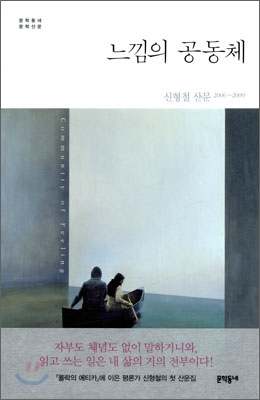
To write is to row towards some community!
This is literary critic Shin Hyeong-cheol's first collection of essays, published three years after "Ethics of Downfall."
『Community of Feeling』 originated from the good works of the world that he saw, heard, read, and encountered from the spring of 2006 to the winter of 2009.
The good works he speaks of are those who “came to me and took away what I could never get back or left behind what I could never give back,” thus creating a beautiful flame that caused a faint situation.
He knows very well that “feelings are vague but fundamental, and because they are fundamental, they are difficult to share,” and he has divided the archetypes of those feelings that made him cry with sadness or emotion into six parts.
As the so-called poet, poetry collection, world, novel, film, and face of poetry.
And in between these, with the buoys of the prelude, interlude, and postlude, it provides an opportunity to look again at the 'beginning,' the 'beginning,' the 'bare face' of all the texts contained here, namely poetry, novels, and criticism.
The benefit we can gain from books is the confidence they give us, the courage to decide and pursue.
This is the book of jealousy that calls forth the first and last desire of literature that makes you want to read and write.
This is literary critic Shin Hyeong-cheol's first collection of essays, published three years after "Ethics of Downfall."
『Community of Feeling』 originated from the good works of the world that he saw, heard, read, and encountered from the spring of 2006 to the winter of 2009.
The good works he speaks of are those who “came to me and took away what I could never get back or left behind what I could never give back,” thus creating a beautiful flame that caused a faint situation.
He knows very well that “feelings are vague but fundamental, and because they are fundamental, they are difficult to share,” and he has divided the archetypes of those feelings that made him cry with sadness or emotion into six parts.
As the so-called poet, poetry collection, world, novel, film, and face of poetry.
And in between these, with the buoys of the prelude, interlude, and postlude, it provides an opportunity to look again at the 'beginning,' the 'beginning,' the 'bare face' of all the texts contained here, namely poetry, novels, and criticism.
The benefit we can gain from books is the confidence they give us, the courage to decide and pursue.
This is the book of jealousy that calls forth the first and last desire of literature that makes you want to read and write.
- You can preview some of the book's contents.
Preview
index
At the beginning of the book
■Where is Jeonju City Heading? - Inscribed on the 300th issue of Changbi Poetry Series
Part 1 〉〉〉Without resentment or melodrama
Kang Jeong, Kim Kyung-joo, Kim Min-jeong, Kim Seon-woo, Moon Tae-jun, Son Taek-soo, Lee Byeong-ryul, Lee Jang-wook, Jin Eun-young, Hwang Byeong-seung
Part 2 〉〉〉The Tears Shed by the Mother Tongue
Romantic Revolutionism - Park Jeong-dae's "The Chemical Origins of Love and Fever"
Housewife Realism - Seong Mi-jeong's "A Box of Imagination"
Antigone's Song, Born in 1980 - Park Yeon-jun's "The Scream of Eyelashes"
Sex with Light - Park Yong-ha's "The Jianzi"
Simonides of Our Time - Lee Si-young's "For Our Dead"
108 Troubles Concert - Kim Kyung-in's "Troubled Girls - Rehearsal"
Love Poems Rated R-19 - Kim So-yeon's "Never Return 2" and Ham Seong-ho's "Falling Flowers and Flowing Water"
"You Don't Know Anything" ― Lee Young-kwang's "East Sea"
The Expiration Date of Grief - Choi Jeong-rye's "The Sword and the Canna" and Kim Haeng-sook's "The Power of Parting"
Tears Shed by the Mother Tongue - Heo Su-gyeong's "My Cities" and "This is a Foreign Capital"
Living with Sorrow - Jo Yong-mi's "The Cherry Tree in My Villa"
Come to the Inn - Choi Gap-su's "Mill Inn 3" and Ansia's "Wave Inn"
Without Women, I Can't Cry - Lee Hyun-seung's "Married Women" and Hwang Byeong-seung's "Four-Star General Concerto"
My Second Aunt's Peace - Hwang In-sook's "Night Train to Lisbon"
Teacher, Please Fight God - Shin Kyeong-rim's "The Camel"
I wish I were dead… … ― Moon In-su's "These Are Wings"
Beautiful jokes, existential mayhem - Sim Bo-seon's "Fifteen Seconds Without Sorrow"
A Poem That Embraces Silence - Yoon Je-rim's "He Comes on Foot"
The Real Sound of Love - Sung Ki-wan's "Your Text"
A Poet's Occupation: Visiting the Sick - Moon Tae-jun's "Flounder" and "Visiting the Sick"
Today's Gun-Wielding Zen Monk - Ko Un's "Empty Space"
So, seniors, stay strong - Heo Yeon's "The Bad Boy Stands"
Seeing is believing - from "A Certain Day" to "Sister's Barbershop"
A Poet's Occupation is Excavation - Kim Kyung-ju's "Strange Tales"
This Terrible Christmas - Yeo Tae-cheon's "Christmas" and Jeong Gyeot-byeol's "Christmas Has Come Again"
Deadly Poem, Yongsan - Anchor Shin Kyung-min's Closing Comments and Police Communications
A mentor who safely passed through Incheon Airport - Wisława Szymborska's poetry collection, "The End and the Beginning"
Everyone has their own deformity - Dedicated to the 20th anniversary of the deformity
You who suck blood, you who shine - for the vampire
A must-read: Tanaka and Shuntaro's "Twenty Billion Light-Years of Solitude" and Kim Ki-taek's "Gum." For the school you don't want to graduate from: "Stars Shine Everywhere You Walk."
In memory of the late former President Roh Moo-hyun - Kim Kyung-joo's "Remember the Night He Cried in Secret" Art is the work of the left heart - Hwang Ji-woo's "Even Birds Leave This World"
Can I talk about the salt warehouse? ― Lee Moon-jae's "Salt Warehouse" and Song Chan-ho's "Salt Warehouse." In memory of the late former President Kim Dae-jung. ― Park Sang-soon's "The Soul Spoke to the Fisherman."
When a boy and a girl hold hands - Lee Su-myeong's "It rains on the left, it doesn't rain on the right."
The Power of Electricity - Ahn Hyun-mi's "Rooftop"
Literature must also fight the law ― W.
H. Auden's The Shield of Achilles
The Painful Roots of Fairy Tales - Kang Seong-eun's "I Fell Asleep with My Shoes on"
The Postman Who Delivered Kindness - In Memory of the Late Poet Shin Hyeon-jeong
The Mathematics of Love Through Poetry
Part 3 〉〉〉The Society of Lost Poets
faces
Humiliation, Ichiro
No overs this time
May is an embarrassing month
medieval times
The shell is gone
Dead Poets Society
My father was a gangster
Again, 20 years ago in June
There was no slip of the tongue
Music does not progress - Dedicated to the anniversary of the death of the late Yoo Jae-ha
Love story
Meditations on Punctuation
Absolutely, absolutely
The Dark Knight
Their sorrow is for them - for the death of the late Choi Jin-sil
Something more important than magic sticks and crystals
The square is now a battlefield
A bulldozer is a bulldozer
The unfortunate commonality between these three people
Just leave it alone, it's Korea too
Young People - Dedicated to the 563rd Hangeul Day
The Power of Agony
■How does a novel walk? - Reading Shin Kyung-sook's "Shoes at the End of the World"
Part 4 〉〉〉 Breaking the Frozen Sea
And then he adds, read Carver - Raymond Carver's Cathedral
The Axe That Shattered the Frozen Sea - Gustav Janouch's "Conversations with Kafka"
Reference books for studying the mind and body: Kim So-yeon's "Dictionary of the Mind" and Kwon Hyuk-woong's "Heart-pounding"
The Devil Awakens the Devil Within Me - Ian McEwan's First Love, Last Rites
I don't want to read a single one again - Jeong Ji-ah's "Spring Light"
Novels of the 19th Century - Kim Jung-hyuk's "The Library of Musical Instruments"
For the atheist, hope is God ― Cormac McCarthy's "The Book of the Dead"
Reading Criticism That Became Literature - Jeong Hong-su's "The Solitude of the Novel"
In Memory of the Late Professor Lee Cheong-jun - Lee Cheong-jun's "I Had to Forget That Place Again"
Tear the Curtain of Pre-Interpretation - Milan Kundera's "Curtain"
Tears, sorrow, and crippling ― Pascal Resnais's The Lacemaker
Nothing beats the one who enjoys it - Kim Hyung-joong's "Just One Book"
The Postmodern City and Its Discontents: Urban Novels by Jeong I-hyeon, Pyeon Hye-yeong, Kim Kyung-wook, and Kim Jung-hyuk
Part 5 〉〉〉A Great Crazy Story
Time, however you may flow - Scott Fitzgerald's "The Curious Case of Benjamin Button" and David Fincher's "The Curious Case of Benjamin Button"
Mixing eyes, mixing bodies, even mixing blood—Émile Zola's "Thérèse Raquin" and Park Chan-wook's "Thirst"
Haruki Murakami Samples a Scene from "The Great Gatsby" - "The Great Gatsby" and "Tony Takitani"
"The only person who wrote poetry is Yang Mi-ja." ― Lee Chang-dong's "Poetry"
Part 6 〉〉〉We must not meet
Reflection, Dreaming, and Practice: The Current State of Lee Moon-jae's Poetry
Allusion, Translation, and Commentary - The Methodology of Kwon Hyuk-woong's Poetry Collection, "Mazinger Genealogy"
Even if you miss someone, you shouldn't meet them - Na Hee-deok's recent poem
Even if you don't know, don't ask, and even if you know, don't pretend to know - after reading Lee Su-jeong's new poem
■What does posthumous criticism see? - Three values of literary works
■Where is Jeonju City Heading? - Inscribed on the 300th issue of Changbi Poetry Series
Part 1 〉〉〉Without resentment or melodrama
Kang Jeong, Kim Kyung-joo, Kim Min-jeong, Kim Seon-woo, Moon Tae-jun, Son Taek-soo, Lee Byeong-ryul, Lee Jang-wook, Jin Eun-young, Hwang Byeong-seung
Part 2 〉〉〉The Tears Shed by the Mother Tongue
Romantic Revolutionism - Park Jeong-dae's "The Chemical Origins of Love and Fever"
Housewife Realism - Seong Mi-jeong's "A Box of Imagination"
Antigone's Song, Born in 1980 - Park Yeon-jun's "The Scream of Eyelashes"
Sex with Light - Park Yong-ha's "The Jianzi"
Simonides of Our Time - Lee Si-young's "For Our Dead"
108 Troubles Concert - Kim Kyung-in's "Troubled Girls - Rehearsal"
Love Poems Rated R-19 - Kim So-yeon's "Never Return 2" and Ham Seong-ho's "Falling Flowers and Flowing Water"
"You Don't Know Anything" ― Lee Young-kwang's "East Sea"
The Expiration Date of Grief - Choi Jeong-rye's "The Sword and the Canna" and Kim Haeng-sook's "The Power of Parting"
Tears Shed by the Mother Tongue - Heo Su-gyeong's "My Cities" and "This is a Foreign Capital"
Living with Sorrow - Jo Yong-mi's "The Cherry Tree in My Villa"
Come to the Inn - Choi Gap-su's "Mill Inn 3" and Ansia's "Wave Inn"
Without Women, I Can't Cry - Lee Hyun-seung's "Married Women" and Hwang Byeong-seung's "Four-Star General Concerto"
My Second Aunt's Peace - Hwang In-sook's "Night Train to Lisbon"
Teacher, Please Fight God - Shin Kyeong-rim's "The Camel"
I wish I were dead… … ― Moon In-su's "These Are Wings"
Beautiful jokes, existential mayhem - Sim Bo-seon's "Fifteen Seconds Without Sorrow"
A Poem That Embraces Silence - Yoon Je-rim's "He Comes on Foot"
The Real Sound of Love - Sung Ki-wan's "Your Text"
A Poet's Occupation: Visiting the Sick - Moon Tae-jun's "Flounder" and "Visiting the Sick"
Today's Gun-Wielding Zen Monk - Ko Un's "Empty Space"
So, seniors, stay strong - Heo Yeon's "The Bad Boy Stands"
Seeing is believing - from "A Certain Day" to "Sister's Barbershop"
A Poet's Occupation is Excavation - Kim Kyung-ju's "Strange Tales"
This Terrible Christmas - Yeo Tae-cheon's "Christmas" and Jeong Gyeot-byeol's "Christmas Has Come Again"
Deadly Poem, Yongsan - Anchor Shin Kyung-min's Closing Comments and Police Communications
A mentor who safely passed through Incheon Airport - Wisława Szymborska's poetry collection, "The End and the Beginning"
Everyone has their own deformity - Dedicated to the 20th anniversary of the deformity
You who suck blood, you who shine - for the vampire
A must-read: Tanaka and Shuntaro's "Twenty Billion Light-Years of Solitude" and Kim Ki-taek's "Gum." For the school you don't want to graduate from: "Stars Shine Everywhere You Walk."
In memory of the late former President Roh Moo-hyun - Kim Kyung-joo's "Remember the Night He Cried in Secret" Art is the work of the left heart - Hwang Ji-woo's "Even Birds Leave This World"
Can I talk about the salt warehouse? ― Lee Moon-jae's "Salt Warehouse" and Song Chan-ho's "Salt Warehouse." In memory of the late former President Kim Dae-jung. ― Park Sang-soon's "The Soul Spoke to the Fisherman."
When a boy and a girl hold hands - Lee Su-myeong's "It rains on the left, it doesn't rain on the right."
The Power of Electricity - Ahn Hyun-mi's "Rooftop"
Literature must also fight the law ― W.
H. Auden's The Shield of Achilles
The Painful Roots of Fairy Tales - Kang Seong-eun's "I Fell Asleep with My Shoes on"
The Postman Who Delivered Kindness - In Memory of the Late Poet Shin Hyeon-jeong
The Mathematics of Love Through Poetry
Part 3 〉〉〉The Society of Lost Poets
faces
Humiliation, Ichiro
No overs this time
May is an embarrassing month
medieval times
The shell is gone
Dead Poets Society
My father was a gangster
Again, 20 years ago in June
There was no slip of the tongue
Music does not progress - Dedicated to the anniversary of the death of the late Yoo Jae-ha
Love story
Meditations on Punctuation
Absolutely, absolutely
The Dark Knight
Their sorrow is for them - for the death of the late Choi Jin-sil
Something more important than magic sticks and crystals
The square is now a battlefield
A bulldozer is a bulldozer
The unfortunate commonality between these three people
Just leave it alone, it's Korea too
Young People - Dedicated to the 563rd Hangeul Day
The Power of Agony
■How does a novel walk? - Reading Shin Kyung-sook's "Shoes at the End of the World"
Part 4 〉〉〉 Breaking the Frozen Sea
And then he adds, read Carver - Raymond Carver's Cathedral
The Axe That Shattered the Frozen Sea - Gustav Janouch's "Conversations with Kafka"
Reference books for studying the mind and body: Kim So-yeon's "Dictionary of the Mind" and Kwon Hyuk-woong's "Heart-pounding"
The Devil Awakens the Devil Within Me - Ian McEwan's First Love, Last Rites
I don't want to read a single one again - Jeong Ji-ah's "Spring Light"
Novels of the 19th Century - Kim Jung-hyuk's "The Library of Musical Instruments"
For the atheist, hope is God ― Cormac McCarthy's "The Book of the Dead"
Reading Criticism That Became Literature - Jeong Hong-su's "The Solitude of the Novel"
In Memory of the Late Professor Lee Cheong-jun - Lee Cheong-jun's "I Had to Forget That Place Again"
Tear the Curtain of Pre-Interpretation - Milan Kundera's "Curtain"
Tears, sorrow, and crippling ― Pascal Resnais's The Lacemaker
Nothing beats the one who enjoys it - Kim Hyung-joong's "Just One Book"
The Postmodern City and Its Discontents: Urban Novels by Jeong I-hyeon, Pyeon Hye-yeong, Kim Kyung-wook, and Kim Jung-hyuk
Part 5 〉〉〉A Great Crazy Story
Time, however you may flow - Scott Fitzgerald's "The Curious Case of Benjamin Button" and David Fincher's "The Curious Case of Benjamin Button"
Mixing eyes, mixing bodies, even mixing blood—Émile Zola's "Thérèse Raquin" and Park Chan-wook's "Thirst"
Haruki Murakami Samples a Scene from "The Great Gatsby" - "The Great Gatsby" and "Tony Takitani"
"The only person who wrote poetry is Yang Mi-ja." ― Lee Chang-dong's "Poetry"
Part 6 〉〉〉We must not meet
Reflection, Dreaming, and Practice: The Current State of Lee Moon-jae's Poetry
Allusion, Translation, and Commentary - The Methodology of Kwon Hyuk-woong's Poetry Collection, "Mazinger Genealogy"
Even if you miss someone, you shouldn't meet them - Na Hee-deok's recent poem
Even if you don't know, don't ask, and even if you know, don't pretend to know - after reading Lee Su-jeong's new poem
■What does posthumous criticism see? - Three values of literary works
Into the book
The feeling is vague, but it is fundamental, and as fundamental as it is, it is difficult to share.
I may have danced in front of poets and novelists who were trying to sleep, and readers may have fallen asleep while I danced.
Sometimes we get on a boat, but most of the time we don't know whether the boat will fly high or fall off a cliff.
Writing is like rowing towards some community, even though you know it.
I hope that the title of this book, which at first glance seems grandiose, will be understood in its simplest and most earnest sense.
The title was 'Community of Feelings'.
According to one book, the three powers of human beings are thinking, wanting, and feeling.
The verb 'feel' means 'to cry out of sadness or emotion.'
I think perhaps reason and will are just a rationalization or systematization of that feeling.
What I wrote down in many of the articles in this book must have been my feelings.
Good works have come to me and taken away things I can never get back or left behind things I can never give back.
I tried to put that vague situation into sentences and share it with my readers.
---From "Introduction"
Rather than stating the truth carelessly, the poet must build a sophisticated linguistic structure in which the truth resides.
Poetry is not a place where truth is expressed (and thus destroyed), but rather a place where it is hidden (and thus preserved).
---From Jeonju's "Where is Poetry Headed?"
When people meet and the corners of the support are worn away, that would be love.
It is a miracle that a square becomes a circle.
This may also be the way lyric poetry relates to the world.
---Part 1: Without resentment or melodrama, from "Son Taek-su"
When good poetry speaks beautifully about beautiful things, it does not mean that the world is beautiful enough now, but that beautiful things should be the masters of this world.
---Part 2: Tears shed by the mother tongue, from "Can I talk about the salt warehouse?"
I have always believed that literature should grapple with the inevitable rather than assert the right.
I believe that literature should move at the pace of the most skeptical, while sighing with the most cowardly.
---From "How a Novel Walks"
Don't try to write beautifully, write accurately.
The desire to write beautifully leads to repetition.
The truth of the repetition is one.
Not being able to control what you want to write.
---Part 4 Breaking the Frozen Sea, from "And then, read the cover"
Film criticism cannot become film, music criticism cannot become music, but literary criticism can become literature.
It is the only writing that clings to ‘something’ and becomes that ‘something’.
I may have danced in front of poets and novelists who were trying to sleep, and readers may have fallen asleep while I danced.
Sometimes we get on a boat, but most of the time we don't know whether the boat will fly high or fall off a cliff.
Writing is like rowing towards some community, even though you know it.
I hope that the title of this book, which at first glance seems grandiose, will be understood in its simplest and most earnest sense.
The title was 'Community of Feelings'.
According to one book, the three powers of human beings are thinking, wanting, and feeling.
The verb 'feel' means 'to cry out of sadness or emotion.'
I think perhaps reason and will are just a rationalization or systematization of that feeling.
What I wrote down in many of the articles in this book must have been my feelings.
Good works have come to me and taken away things I can never get back or left behind things I can never give back.
I tried to put that vague situation into sentences and share it with my readers.
---From "Introduction"
Rather than stating the truth carelessly, the poet must build a sophisticated linguistic structure in which the truth resides.
Poetry is not a place where truth is expressed (and thus destroyed), but rather a place where it is hidden (and thus preserved).
---From Jeonju's "Where is Poetry Headed?"
When people meet and the corners of the support are worn away, that would be love.
It is a miracle that a square becomes a circle.
This may also be the way lyric poetry relates to the world.
---Part 1: Without resentment or melodrama, from "Son Taek-su"
When good poetry speaks beautifully about beautiful things, it does not mean that the world is beautiful enough now, but that beautiful things should be the masters of this world.
---Part 2: Tears shed by the mother tongue, from "Can I talk about the salt warehouse?"
I have always believed that literature should grapple with the inevitable rather than assert the right.
I believe that literature should move at the pace of the most skeptical, while sighing with the most cowardly.
---From "How a Novel Walks"
Don't try to write beautifully, write accurately.
The desire to write beautifully leads to repetition.
The truth of the repetition is one.
Not being able to control what you want to write.
---Part 4 Breaking the Frozen Sea, from "And then, read the cover"
Film criticism cannot become film, music criticism cannot become music, but literary criticism can become literature.
It is the only writing that clings to ‘something’ and becomes that ‘something’.
---Part 4: Breaking the Frozen Sea, from "Reading Criticism That Became Literature"
Publisher's Review
I say this without pride or resignation,
Reading and writing are almost my whole life!
Literary critic Shin Hyeong-cheol's first collection of essays, "The Ethics of Downfall."
To write is to row towards some community!
Literary critic Shin Hyeong-cheol publishes his first collection of prose.
This is his second book, published in three years, since his first collection of essays, The Ethics of Decline, was published in December 2008.
The resonance of the title, ‘Community of Feeling’.
In his previously published work, he has already shaken our resonance with the point of 'feeling' with sentences more beautiful than poetry and a structure more dramatic than a novel.
“Because I love you, I can feel the feeling that is gripping you right now and enter into the world of that feeling.
In this world of feeling, we meet.
Only those who love each other can form a community of feelings.
“Love is a power.” (From “Ethics of the Fall”) That’s how he grasped that feeling and embraced love.
A ‘community of feeling’ that heads towards that love… … It is a word that reflects the eyes in a deep well.
It is a word that has a nuance of being round rather than sharp and circle rather than triangle.
Nuance… …maybe that’s the word that best sums up this book in one word.
How does the feeling come? Because that's how the feeling comes.
Feelings are something that can only be barely guessed by the nuances that remain in the open taste buds of the feeler.
"Community of Feeling" is a book that originated from the good works of the world that he saw, heard, read, and encountered from the spring of 2006 to the winter of 2009.
The good works he speaks of are those who “came to me and took away what I could never get back or left behind what I could never give back,” thus creating a beautiful flame that caused a faint situation.
He knows very well that “feelings are vague but fundamental, and because they are fundamental, they are difficult to share,” and he has divided the archetypes of those feelings that made him cry with sadness or emotion into six parts.
As the so-called poet, poetry collection, world, novel, film, and face of poetry.
And in between, with the buoys of the prelude, interlude, and postlude, it provides an opportunity to look again at the 'beginning,' the 'beginning,' the 'bare face' of all the texts contained here, namely poetry, novels, and criticism.
Part 1 is a collection of stories that were serialized in the Kyunghyang Shinmun under the title, “Without Resentment or Melancholy.”
Starting with Kang Jeong, a total of 10 poets including Hwang Byeong-seung are arranged in alphabetical order. This is a kind of 'Poet's Dictionary', which provides a preview of the world of poetry of one poet and one poet in about 10 pages of manuscript paper. It was previously titled 'Korean Poet's Dictionary' and was expected to become an important supplement to Korean poetry.
It is a plan to have it.
As a poet said, the appendix is “more free and more daring because it is behind, and more interesting than the main text.”
Part 2 is a collection of articles serialized in 『Hankyoreh 21』 under the title ‘Tears shed by the mother tongue.’
At the time of publication, he collected the poetry collections that were hottest in his eyes and the poems he wanted to read together that fit the mood of the times, and he mixed literature and society together.
Part 3 is a collection of works that were serialized in the university newspaper under the title ‘Society of Lost Poets.’
He presented us with a novel example of a current affairs commentary that knows how to use his unique style of writing while maintaining the tension from his calm aim to the moment of hitting the target, showing where and how his current affairs gaze is directed.
Part 4 is a collection of stories that were serialized in 『Sisa IN』 under the title ‘Breaking the Frozen Sea.’
In this example, he clearly shows his affection for the classics of Korean and world literature that he has read, and for the texts that are destined to become classics in the future. It would be good to read the stories about the movies and the novels that were serialized in 『Foot』 under the title of Part 5, 'Great Crazy Stories', side by side.
And the last part, Part 6, is titled 'We Must Not Meet' and presents various methods of reading poetry through the poems of poets Lee Moon-jae, Kwon Hyuk-woong, Na Hee-deok, and Lee Su-jeong. This is a preview of the next collection of criticism and also a chapter in which he declares that he has returned to his main profession, criticism.
"Community of Feeling" is a relatively easy read.
Most of the volume is finished in about two pages.
That doesn't mean it was easy to write.
If there is someone who can make a heavy topic light, his or her skills must be considerable.
The benefit we can gain from this book is the confidence that gives us the courage to follow in his footsteps.
This is the book of jealousy that calls forth the first and last desire of literature that makes you want to read and write.
As a side note, if there's one tool you absolutely need to read this book, it's a pencil.
If I had just a pencil, this book would have no trouble becoming me. If this spring is a flower feast full of sentences I want to underline, then take them and engrave them in your heart.
That filth will stain me for a long time, a book is something that clothes us in that color for a lifetime, a feeling is precisely the nuance of that pouring and being poured, and we, a community that rows our whole lives in pursuit of it, that is why it is also a symbol of life.
Reading and writing are almost my whole life!
Literary critic Shin Hyeong-cheol's first collection of essays, "The Ethics of Downfall."
To write is to row towards some community!
Literary critic Shin Hyeong-cheol publishes his first collection of prose.
This is his second book, published in three years, since his first collection of essays, The Ethics of Decline, was published in December 2008.
The resonance of the title, ‘Community of Feeling’.
In his previously published work, he has already shaken our resonance with the point of 'feeling' with sentences more beautiful than poetry and a structure more dramatic than a novel.
“Because I love you, I can feel the feeling that is gripping you right now and enter into the world of that feeling.
In this world of feeling, we meet.
Only those who love each other can form a community of feelings.
“Love is a power.” (From “Ethics of the Fall”) That’s how he grasped that feeling and embraced love.
A ‘community of feeling’ that heads towards that love… … It is a word that reflects the eyes in a deep well.
It is a word that has a nuance of being round rather than sharp and circle rather than triangle.
Nuance… …maybe that’s the word that best sums up this book in one word.
How does the feeling come? Because that's how the feeling comes.
Feelings are something that can only be barely guessed by the nuances that remain in the open taste buds of the feeler.
"Community of Feeling" is a book that originated from the good works of the world that he saw, heard, read, and encountered from the spring of 2006 to the winter of 2009.
The good works he speaks of are those who “came to me and took away what I could never get back or left behind what I could never give back,” thus creating a beautiful flame that caused a faint situation.
He knows very well that “feelings are vague but fundamental, and because they are fundamental, they are difficult to share,” and he has divided the archetypes of those feelings that made him cry with sadness or emotion into six parts.
As the so-called poet, poetry collection, world, novel, film, and face of poetry.
And in between, with the buoys of the prelude, interlude, and postlude, it provides an opportunity to look again at the 'beginning,' the 'beginning,' the 'bare face' of all the texts contained here, namely poetry, novels, and criticism.
Part 1 is a collection of stories that were serialized in the Kyunghyang Shinmun under the title, “Without Resentment or Melancholy.”
Starting with Kang Jeong, a total of 10 poets including Hwang Byeong-seung are arranged in alphabetical order. This is a kind of 'Poet's Dictionary', which provides a preview of the world of poetry of one poet and one poet in about 10 pages of manuscript paper. It was previously titled 'Korean Poet's Dictionary' and was expected to become an important supplement to Korean poetry.
It is a plan to have it.
As a poet said, the appendix is “more free and more daring because it is behind, and more interesting than the main text.”
Part 2 is a collection of articles serialized in 『Hankyoreh 21』 under the title ‘Tears shed by the mother tongue.’
At the time of publication, he collected the poetry collections that were hottest in his eyes and the poems he wanted to read together that fit the mood of the times, and he mixed literature and society together.
Part 3 is a collection of works that were serialized in the university newspaper under the title ‘Society of Lost Poets.’
He presented us with a novel example of a current affairs commentary that knows how to use his unique style of writing while maintaining the tension from his calm aim to the moment of hitting the target, showing where and how his current affairs gaze is directed.
Part 4 is a collection of stories that were serialized in 『Sisa IN』 under the title ‘Breaking the Frozen Sea.’
In this example, he clearly shows his affection for the classics of Korean and world literature that he has read, and for the texts that are destined to become classics in the future. It would be good to read the stories about the movies and the novels that were serialized in 『Foot』 under the title of Part 5, 'Great Crazy Stories', side by side.
And the last part, Part 6, is titled 'We Must Not Meet' and presents various methods of reading poetry through the poems of poets Lee Moon-jae, Kwon Hyuk-woong, Na Hee-deok, and Lee Su-jeong. This is a preview of the next collection of criticism and also a chapter in which he declares that he has returned to his main profession, criticism.
"Community of Feeling" is a relatively easy read.
Most of the volume is finished in about two pages.
That doesn't mean it was easy to write.
If there is someone who can make a heavy topic light, his or her skills must be considerable.
The benefit we can gain from this book is the confidence that gives us the courage to follow in his footsteps.
This is the book of jealousy that calls forth the first and last desire of literature that makes you want to read and write.
As a side note, if there's one tool you absolutely need to read this book, it's a pencil.
If I had just a pencil, this book would have no trouble becoming me. If this spring is a flower feast full of sentences I want to underline, then take them and engrave them in your heart.
That filth will stain me for a long time, a book is something that clothes us in that color for a lifetime, a feeling is precisely the nuance of that pouring and being poured, and we, a community that rows our whole lives in pursuit of it, that is why it is also a symbol of life.
GOODS SPECIFICS
- Date of issue: May 10, 2011
- Page count, weight, size: 406 pages | 576g | 153*224*30mm
- ISBN13: 9788954614511
- ISBN10: 8954614515
You may also like
카테고리
korean


korean

![GQ KOREA Mark (Monthly): December [2025]](http://librairie.coreenne.fr/cdn/shop/files/8ef265dbbfbf186523ed75ba7319009d.jpg?v=1765340328&width=3840)


