

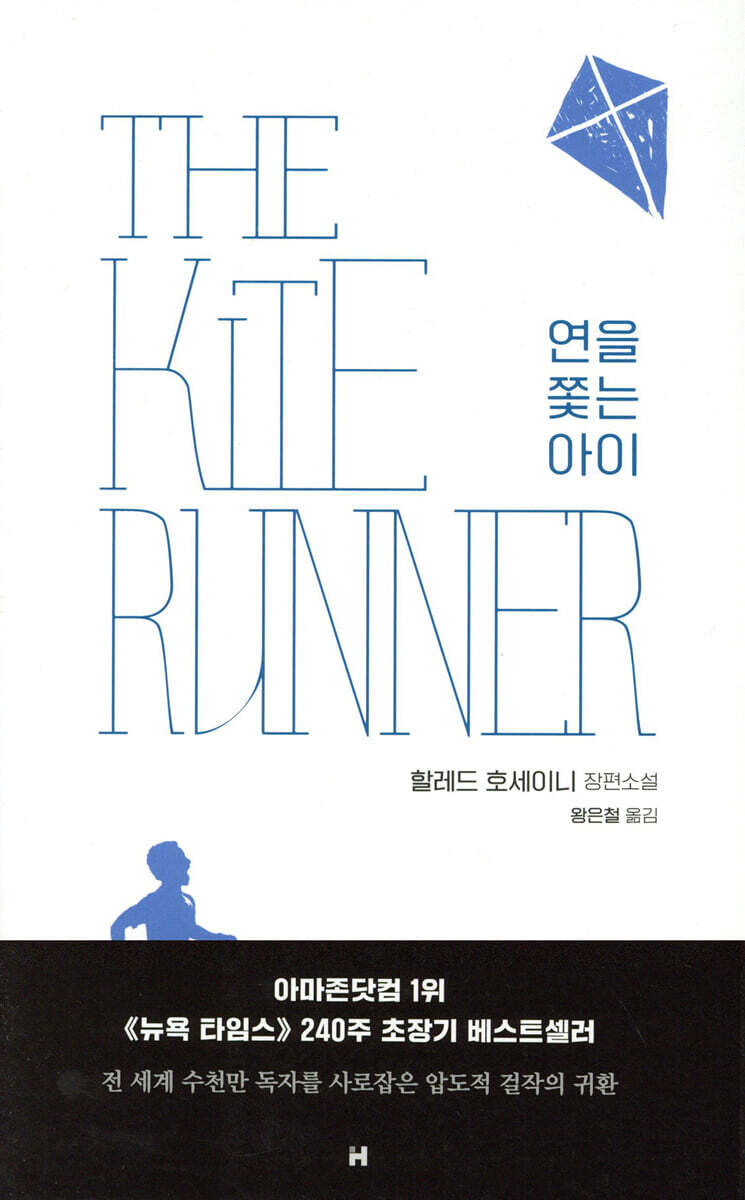
The Kite Runner
 |
Description
Book Introduction
#1 on Amazon.com and a New York Times bestseller for 240 weeks
The return of an overwhelming masterpiece that captivated tens of millions of readers worldwide.
* Original novel for the film and Broadway musical [The Kite Runner]
* Selected as a 'Notable Book' by the American Library Association
* 2003 San Francisco Chronicle 'Book of the Year'
* 2003 Entertainment Weekly 'Best Book'
The Kite Runner, a masterpiece by Afghan-born American author Khaled Hosseini, who movingly portrayed Afghanistan's turbulent modern history and the lives of the people living within it, has returned to the world in a revised edition after 12 years.
"The Kite Runner" is a coming-of-age novel that tells the story of Amir, the son of a wealthy merchant, and his servant Hassan, who has a tragic fate. It movingly depicts the protagonist Amir's journey of facing and atonement for the mistakes of his childhood, and finding healing and salvation.
In this work, Khaled Hosseini skillfully weaves together the subtle and awkward themes of war, ethnic conflict, genocide, and religious issues into the story of a boy's coming of age through a complex and turbulent history, creating a beautiful human drama that anyone can read and relate to.
This novel, which captivated the world with its compelling, solid structure and outstanding narrative that intertwines poignant sadness and emotion, rose to the number one spot on Amazon.com's bestseller list in the US and remained on the New York Times bestseller list for over 240 weeks, enjoying absolute love for nearly 20 years.
It was also introduced in over 50 countries around the world, including Korea, Germany, Spain, the Netherlands, Norway, Brazil, and Sweden, and topped the bestseller lists in each country. It was later made into a film of the same name directed by Marc Forster and a Broadway musical, and had a great influence on the popular culture world as a whole.
The return of an overwhelming masterpiece that captivated tens of millions of readers worldwide.
* Original novel for the film and Broadway musical [The Kite Runner]
* Selected as a 'Notable Book' by the American Library Association
* 2003 San Francisco Chronicle 'Book of the Year'
* 2003 Entertainment Weekly 'Best Book'
The Kite Runner, a masterpiece by Afghan-born American author Khaled Hosseini, who movingly portrayed Afghanistan's turbulent modern history and the lives of the people living within it, has returned to the world in a revised edition after 12 years.
"The Kite Runner" is a coming-of-age novel that tells the story of Amir, the son of a wealthy merchant, and his servant Hassan, who has a tragic fate. It movingly depicts the protagonist Amir's journey of facing and atonement for the mistakes of his childhood, and finding healing and salvation.
In this work, Khaled Hosseini skillfully weaves together the subtle and awkward themes of war, ethnic conflict, genocide, and religious issues into the story of a boy's coming of age through a complex and turbulent history, creating a beautiful human drama that anyone can read and relate to.
This novel, which captivated the world with its compelling, solid structure and outstanding narrative that intertwines poignant sadness and emotion, rose to the number one spot on Amazon.com's bestseller list in the US and remained on the New York Times bestseller list for over 240 weeks, enjoying absolute love for nearly 20 years.
It was also introduced in over 50 countries around the world, including Korea, Germany, Spain, the Netherlands, Norway, Brazil, and Sweden, and topped the bestseller lists in each country. It was later made into a film of the same name directed by Marc Forster and a Broadway musical, and had a great influence on the popular culture world as a whole.
- You can preview some of the book's contents.
Preview
Into the book
I became who I am today on a cold, cloudy winter day in 1975.
I was twelve years old at that time.
That day, I was crouching behind a crumbling wall, looking down an alleyway near the frozen city center.
It was a long time ago.
People say you can bury the past, but I've come to realize that's wrong.
Because no matter how much you bury the past, it keeps coming out.
Looking back, I feel like I've been staring down that deserted alley for the past 26 years.
One day last summer, Rahim Han called from Pakistan.
He asked me to come there.
As I stood in the kitchen with the receiver to my ear and answered the phone, I realized it wasn't just Rahim Hanman on the phone.
My past was full of unatoned sins.
--- p.7
I couldn't bear to look at them and turned away.
Something warm was running down my wrist.
I blinked my eyes.
I was still biting my fist.
He was biting his knuckles so hard that blood was flowing out.
Another thing I realized was that I was crying.
As I turned the corner, I heard Asef's rapid, rhythmic murmur.
It was my last chance to make up my mind.
It was my last chance to decide what kind of person I would become.
I could either go into the alley, take Hassan's side, fight, and accept the consequences, as Hassan had done for me in the past, or I could run away.
In the end, I ran away
--- p.120
“Did you steal the money? Hassan, did you steal Amir’s watch?”
Hassan answered in a thin, hoarse voice.
"yes."
That was all there was to it.
I flinched as if I had been slapped in the face.
I almost told the truth.
At that moment, I knew that it was Hassan's final sacrifice for me.
If he had said no, Baba would have believed him.
We all knew that Hassan never lied.
If Baba believed him, he would question me.
I would have to explain myself and eventually my lies would be exposed.
Baba would never forgive me.
Hassan knew the truth.
He knew I saw everything in the alley.
I knew I was standing there and doing nothing.
He knew I had betrayed him.
And yet he was saving me once again, perhaps for the last time.
--- p.162
I took out the Polaroid photo again.
A round face in a photo in the sun.
My brother's face.
Hassan loved me.
He loved me so much that no one could do that to me.
He was now dead.
But a part of him lived on.
Some of them were in Kabul.
While waiting for me.
When I entered the apartment, Rahim Han was praying in the corner of the room.
A black silhouette bowing to the east, its back turned to the blood-red sky.
I waited for him to finish praying.
I said I would go to Kabul.
He said he would go see the American couple in the morning.
He said.
“Amir, I will pray for you.”
--- pp.345~346
I took Sorab's hand.
It was a small hand.
There were calluses.
His fingers moved and intertwined with mine.
I thought back to the Polaroid photos.
In the photo, Sorab was leaning his head on his father's butt and hugging his father's leg.
Both of them were smiling in the photo.
As we crossed the room, the paper hanging from Sorab's ankle jingled.
When we reached the door.
Assef asked from behind us.
“I didn’t say I could take that kid for free, did I?”
I turned around.
“What do you want?”
“There is something unfinished between you and me.
Don't you remember?
--- p.437
I cannot express how sad and devastated I was when I heard that your father had passed away.
I loved him because he was my friend.
At the same time, I loved him because he was a good person.
No, maybe I loved him because he was a great person.
There's something I want you to understand.
It is the fact that good, true good, came from your father's guilt.
Sometimes I think about what he did.
Your father fed the poor on the streets, set up an orphanage, and gave money to his friends in need.
All of it was his way of trying to atone.
I think that's the real salvation.
Guilt leads to good.
I know that God will forgive me in the end.
God will forgive your father, me, and you.
I wish you could do the same.
If possible, forgive your father.
If you want to do that, then forgive me too.
But the most important thing is to forgive yourself.
--- p.461
“Sorab, look carefully.
Let me show you one of the techniques your father used to love.
“It’s a hit-and-run technique.” Sorab’s breathing was getting faster.
The reel in his hand turned.
The tendons of his wrists, scarred with scars, resembled rhubarb strings.
I blinked.
For a moment, the hand holding the rag looked like the hand of a boy with puckered lips.
It looked like a boy's hand with calluses and the corners of his nails falling off.
I was back in the past.
A crow was heard croaking somewhere.
I looked up at the sky.
The park was covered in white snow that had just fallen.
It was a dizzying white light.
My eyes were starting to hurt.
I could smell turnip kurma from somewhere.
It also smelled of dried berries, sour oranges, sawdust, and walnuts.
silence.
Silence in the snow.
The silence was making my ears numb.
Then, from afar, a voice was heard, cutting through the silence, calling us home.
The voice of a person with a limp right leg… … .
I was back in the past.
I was twelve years old at that time.
That day, I was crouching behind a crumbling wall, looking down an alleyway near the frozen city center.
It was a long time ago.
People say you can bury the past, but I've come to realize that's wrong.
Because no matter how much you bury the past, it keeps coming out.
Looking back, I feel like I've been staring down that deserted alley for the past 26 years.
One day last summer, Rahim Han called from Pakistan.
He asked me to come there.
As I stood in the kitchen with the receiver to my ear and answered the phone, I realized it wasn't just Rahim Hanman on the phone.
My past was full of unatoned sins.
--- p.7
I couldn't bear to look at them and turned away.
Something warm was running down my wrist.
I blinked my eyes.
I was still biting my fist.
He was biting his knuckles so hard that blood was flowing out.
Another thing I realized was that I was crying.
As I turned the corner, I heard Asef's rapid, rhythmic murmur.
It was my last chance to make up my mind.
It was my last chance to decide what kind of person I would become.
I could either go into the alley, take Hassan's side, fight, and accept the consequences, as Hassan had done for me in the past, or I could run away.
In the end, I ran away
--- p.120
“Did you steal the money? Hassan, did you steal Amir’s watch?”
Hassan answered in a thin, hoarse voice.
"yes."
That was all there was to it.
I flinched as if I had been slapped in the face.
I almost told the truth.
At that moment, I knew that it was Hassan's final sacrifice for me.
If he had said no, Baba would have believed him.
We all knew that Hassan never lied.
If Baba believed him, he would question me.
I would have to explain myself and eventually my lies would be exposed.
Baba would never forgive me.
Hassan knew the truth.
He knew I saw everything in the alley.
I knew I was standing there and doing nothing.
He knew I had betrayed him.
And yet he was saving me once again, perhaps for the last time.
--- p.162
I took out the Polaroid photo again.
A round face in a photo in the sun.
My brother's face.
Hassan loved me.
He loved me so much that no one could do that to me.
He was now dead.
But a part of him lived on.
Some of them were in Kabul.
While waiting for me.
When I entered the apartment, Rahim Han was praying in the corner of the room.
A black silhouette bowing to the east, its back turned to the blood-red sky.
I waited for him to finish praying.
I said I would go to Kabul.
He said he would go see the American couple in the morning.
He said.
“Amir, I will pray for you.”
--- pp.345~346
I took Sorab's hand.
It was a small hand.
There were calluses.
His fingers moved and intertwined with mine.
I thought back to the Polaroid photos.
In the photo, Sorab was leaning his head on his father's butt and hugging his father's leg.
Both of them were smiling in the photo.
As we crossed the room, the paper hanging from Sorab's ankle jingled.
When we reached the door.
Assef asked from behind us.
“I didn’t say I could take that kid for free, did I?”
I turned around.
“What do you want?”
“There is something unfinished between you and me.
Don't you remember?
--- p.437
I cannot express how sad and devastated I was when I heard that your father had passed away.
I loved him because he was my friend.
At the same time, I loved him because he was a good person.
No, maybe I loved him because he was a great person.
There's something I want you to understand.
It is the fact that good, true good, came from your father's guilt.
Sometimes I think about what he did.
Your father fed the poor on the streets, set up an orphanage, and gave money to his friends in need.
All of it was his way of trying to atone.
I think that's the real salvation.
Guilt leads to good.
I know that God will forgive me in the end.
God will forgive your father, me, and you.
I wish you could do the same.
If possible, forgive your father.
If you want to do that, then forgive me too.
But the most important thing is to forgive yourself.
--- p.461
“Sorab, look carefully.
Let me show you one of the techniques your father used to love.
“It’s a hit-and-run technique.” Sorab’s breathing was getting faster.
The reel in his hand turned.
The tendons of his wrists, scarred with scars, resembled rhubarb strings.
I blinked.
For a moment, the hand holding the rag looked like the hand of a boy with puckered lips.
It looked like a boy's hand with calluses and the corners of his nails falling off.
I was back in the past.
A crow was heard croaking somewhere.
I looked up at the sky.
The park was covered in white snow that had just fallen.
It was a dizzying white light.
My eyes were starting to hurt.
I could smell turnip kurma from somewhere.
It also smelled of dried berries, sour oranges, sawdust, and walnuts.
silence.
Silence in the snow.
The silence was making my ears numb.
Then, from afar, a voice was heard, cutting through the silence, calling us home.
The voice of a person with a limp right leg… … .
I was back in the past.
--- pp.568~569
Publisher's Review
“For you, even a thousand times!”
A magnificent and beautiful human drama about friendship, betrayal, atonement, and redemption.
On a day when colorful kites danced across the Afghan sky, guilt settled in the heart of twelve-year-old Amir.
He turned his back on his servant Hassan, who was sexually assaulted while chasing a kite for him.
This incident causes Amir indelible pain and an irreversible sense of guilt, leading to a turning point in his life.
Even though many years have passed since he left Afghanistan, where war and conflict are intensifying day by day, Amir, who has not been able to free himself from those memories, finally faces the past he wanted to erase through a phone call one day.
The novel begins with a phone call from Pakistan, which sets Amir, now an adult, on a "journey of atonement."
And the story leaves readers deeply moved as Amir recalls an old friendship that seemed like it could never be rekindled, like a broken kite, and rekindles his relationship with Hassan.
At first glance, this novel reads like a story of personal salvation, but it also reflects Afghanistan's turbulent history and the suffering endured by those who survived it.
The intertwined lives and destinies of Amir and Hassan ultimately reflect the tragedy of the world surrounding them, and the guilt that Amir carries with him is not a personal problem, but rather stems from issues of nationality, race, and religion.
Khaled Hosseini portrays the reality of Afghanistan, devastated by foreign invasion and ongoing civil war, while conveying a message of hope by showing the moving story of love, atonement, and even salvation through the human relationships between fathers and sons, and through faith and devotion.
Khaled Hosseini's masterpiece, now available in a revised edition in 2022
The Kite Runner, A Thousand Splendid Suns
Khaled Hosseini, through his representative works The Kite Runner and A Thousand Splendid Suns, unflinchingly portrays the tragic fate and miserable reality of the Afghan people.
If his first novel, The Kite Runner, was a story about Afghanistan told from the perspective of an Afghan immigrant who left behind the tragedy of Afghanistan and came to the United States, then A Thousand Splendid Suns is a story that shows the reality of Afghanistan from the perspective of a local who had to stay behind and endure the tragedy with his whole body.
While the former is about the love between a father and a son, brothers, the latter is a story about a mother and a daughter, and the love of women who must unite to endure and fight against violence at home or on the streets.
The tragic lives of the Afghan people depicted in the novel are so miserable that it is sometimes difficult to read.
This is especially true now, with the withdrawal of US troops in 2021 and the return of the Taliban to power, which has turned the clock back in Afghanistan.
But Khaled Hosseini sublimates pain and tragedy to create a story of love and redemption.
Hosseini is a remarkable storyteller who has transformed a story of betrayal and violence into a human drama of love and redemption, elevating the story of Afghanistan, a country relentlessly plagued by war and terror, into a universal story that resonates with the world.
Author's Note
Perhaps the reason "The Kite Runner" has had such a huge impact is because it is a deeply human story that deals with universal themes that can resonate with many people, transcending differences in culture, race, religion, and gender.
_Khaled Hosseini
A magnificent and beautiful human drama about friendship, betrayal, atonement, and redemption.
On a day when colorful kites danced across the Afghan sky, guilt settled in the heart of twelve-year-old Amir.
He turned his back on his servant Hassan, who was sexually assaulted while chasing a kite for him.
This incident causes Amir indelible pain and an irreversible sense of guilt, leading to a turning point in his life.
Even though many years have passed since he left Afghanistan, where war and conflict are intensifying day by day, Amir, who has not been able to free himself from those memories, finally faces the past he wanted to erase through a phone call one day.
The novel begins with a phone call from Pakistan, which sets Amir, now an adult, on a "journey of atonement."
And the story leaves readers deeply moved as Amir recalls an old friendship that seemed like it could never be rekindled, like a broken kite, and rekindles his relationship with Hassan.
At first glance, this novel reads like a story of personal salvation, but it also reflects Afghanistan's turbulent history and the suffering endured by those who survived it.
The intertwined lives and destinies of Amir and Hassan ultimately reflect the tragedy of the world surrounding them, and the guilt that Amir carries with him is not a personal problem, but rather stems from issues of nationality, race, and religion.
Khaled Hosseini portrays the reality of Afghanistan, devastated by foreign invasion and ongoing civil war, while conveying a message of hope by showing the moving story of love, atonement, and even salvation through the human relationships between fathers and sons, and through faith and devotion.
Khaled Hosseini's masterpiece, now available in a revised edition in 2022
The Kite Runner, A Thousand Splendid Suns
Khaled Hosseini, through his representative works The Kite Runner and A Thousand Splendid Suns, unflinchingly portrays the tragic fate and miserable reality of the Afghan people.
If his first novel, The Kite Runner, was a story about Afghanistan told from the perspective of an Afghan immigrant who left behind the tragedy of Afghanistan and came to the United States, then A Thousand Splendid Suns is a story that shows the reality of Afghanistan from the perspective of a local who had to stay behind and endure the tragedy with his whole body.
While the former is about the love between a father and a son, brothers, the latter is a story about a mother and a daughter, and the love of women who must unite to endure and fight against violence at home or on the streets.
The tragic lives of the Afghan people depicted in the novel are so miserable that it is sometimes difficult to read.
This is especially true now, with the withdrawal of US troops in 2021 and the return of the Taliban to power, which has turned the clock back in Afghanistan.
But Khaled Hosseini sublimates pain and tragedy to create a story of love and redemption.
Hosseini is a remarkable storyteller who has transformed a story of betrayal and violence into a human drama of love and redemption, elevating the story of Afghanistan, a country relentlessly plagued by war and terror, into a universal story that resonates with the world.
Author's Note
Perhaps the reason "The Kite Runner" has had such a huge impact is because it is a deeply human story that deals with universal themes that can resonate with many people, transcending differences in culture, race, religion, and gender.
_Khaled Hosseini
GOODS SPECIFICS
- Publication date: August 20, 2022
- Format: Paperback book binding method guide
- Page count, weight, size: 584 pages | 600g | 130*207*35mm
- ISBN13: 9791167901187
- ISBN10: 1167901185
You may also like
카테고리
korean


korean

![GQ KOREA Mark (Monthly): December [2025]](http://librairie.coreenne.fr/cdn/shop/files/8ef265dbbfbf186523ed75ba7319009d.jpg?v=1765340328&width=3840)


