

manhole
 |
Description
Book Introduction
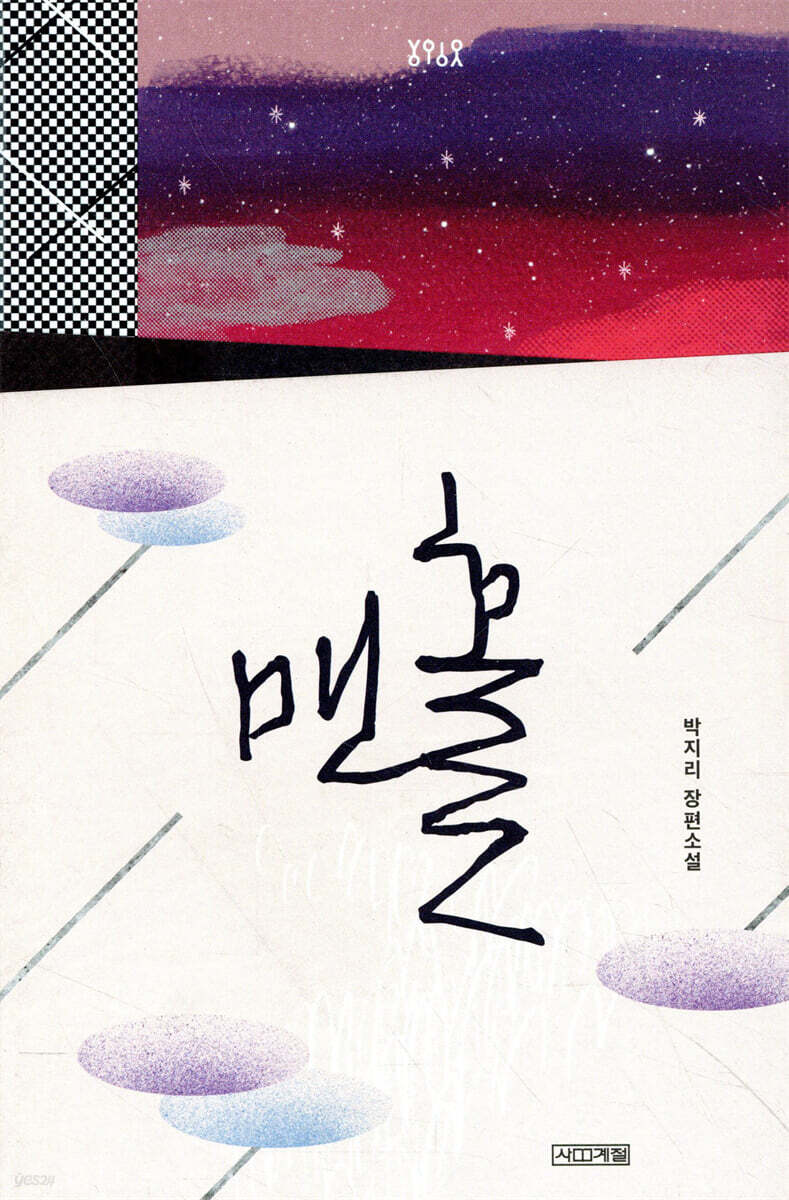
A novel by the late Park Ji-ri, who left a unique mark on the Korean literary world with "The Origin of Evil" There was a boy who had to face death twice in the springs of eighteen and nineteen. In the spring of eighteen, the father whom she had so desperately wanted to kill, that is, “the villain who plunged the house into flames and terror, became a firefighter hero who risked his life to save sixteen lives” and passed away. I thought I could start over with my mom and older sister if only my father were gone, but I wander around, consumed by an inexplicable anger. In the spring of my nineteenth year, I committed murder and found myself in a juvenile probation center. "Manhole" weaves together the life here and my dark past, revealing the vast "hole" in life that lies hidden within us all. The dark memories of the 'manhole' that the boy, who fell into a hole that lurked like a monster inside him, kept secretly for a very long time while deceiving himself, make readers feel sympathy, pity, and regret. 'Yolo Yolo' is a new literary brand presented by Sageseul Publishing for 'today's readers' to commemorate its 35th anniversary. YOLOYOLO is a literary brand that will provide encouragement and comfort to all readers who are navigating these difficult times, sometimes joyfully and sometimes tearfully, by shouting, "YOLO, you only live once." YOLOYOLO was designed and illustrated by artists from PaTI (Paju Typography Institute), a design school founded by designer Sangsoo Ahn, and Jin-kyung Oh, the director of Party Publishing Design Research Institute, was in charge of the overall art direction. From sensational illustrations to covers that hide the title and even unfold into a poster, the book design, which takes into account the tastes and preferences of the new generation, is enough to arouse readers' desire to own it. |
- You can preview some of the book's contents.
Preview
Detailed image

Publisher's Review
A Little Story About Murder
"Manhole" is a story about murder.
It is the story of a boy who became a murderer at the age of nineteen, a third year high school student.
While murder is undoubtedly an unforgivable sin, no one can blame the problematic protagonist of "Manhole." Through this confession, "Manhole" is a novel about existential questions that symbolically depicts the absurdity of life and the incomprehensibility of human existence through the large hole of a manhole.
Five high school students have been charged with the murder of an illegal Nepali immigrant.
One of them, 'I', is the son of a righteous firefighter who saved sixteen lives during the fire at the Bongjae factory a year ago and died at the scene of the fire.
'I' will be sentenced to about a year of probation thanks to my father, and this sentence will be decided after I spend 16 weeks in a rehabilitation center.
I live a life at the Hanmaeum Youth Center, a juvenile probation office, with a schedule of vocational training, soccer, and interviews. "Manhole" records my current life as I receive rehabilitation treatment at the facility, and my dark past—the time leading up to the murder—is reconstructed according to my unconscious memories.
In the name of the father
With the help of his father's fellow firefighters and survivors, 'I' is defended by a competent lawyer, not a public defender like other children.
These people also sent a petition to the judge asking for leniency for me, and my second-grade homeroom teacher wrote me a letter saying that I was originally a good child, but that I changed after losing my father and hanging out with new friends.
The lawyer defended me, saying that I was not talking about the murder I had committed, but about my father's death, and that it was an incident that arose from the grief of losing my father overnight.
The defendant also explained that he put his father's medals and plaques of appreciation in the manhole because he loved his father so much that he hid them like treasures.
But in reality, that's not the case.
'I' always dreamed of killing my father, and only after my father died was I able to break free from the fantasy of becoming a murderer.
My father was a firefighter.
He had been a lifelong violent and hypochondriactic man who had driven his entire family into a state of fear and despair, but one day he died saving sixteen lives and became a hero overnight.
The mother hid the violence she was experiencing, and the day after the beating, she helped her father get ready for work without fail and slept in the same room with him as if nothing had happened.
My older sister said that she was given a role where she had to never cry despite her mother's screams for help and her father's dirty curses, so she put on a play at home and actually became an actress and left home.
I was so afraid that my family's true identity would be revealed that I withdrew myself from the "normal world" of my teachers and friends and became an outcast.
Now, I was filled with hope that I could start everything anew with 'Dad's death', but I think my sister and mother are trying to glorify 'Dad's' existence with plaques and medals, and cover up the events that happened in the past.
I am overcome with a rage that I find difficult to explain.
He realizes that he is constantly suspecting his mother and older sister, verbally abusing them, and being violent towards them without even realizing it.
Just like my father did.
Manhole, a repository of dark memories
The manhole, a refuge where I ran away with my older sister to escape my father's violence, and a sanctuary filled with memories of my older sister, my only comrade in the world.
My older sister discovered a 'manhole' in a construction site that had been abandoned for a long time, and I grew up with my older sister here and made memories of my childhood.
But one day, my older sister suddenly grows up.
My older sister suddenly became an adult.
We had shared our secret pains, we were each other's only comrades in this world, but my sister developed her own interests, started reading difficult books, and things like playing ghost in the manhole became trivial.
With my sister's farewell, the manhole was left to me alone.
I wandered around the manhole alone on long afternoons when my sister was away.
And when I got to my sister's age, I had to make a choice too.
Should I leave the manhole or stay here?
But maybe, unlike my sister, I never had a choice in the first place.
I was still opening manhole covers long after my sister was old enough to do so.
(Page 99)
I now experience small happiness by going in and out of the manhole, which has become my own home, with my girlfriend Hee-joo and the dog Dali I found in the manhole.
But the moment I threw away my father's medals and plaques here, the manhole was no longer a place of peace and rest.
The manhole is now a dark, gaping hole, like a monster's mouth, from which I desperately try to escape, but which ultimately devours my soul.
And in the end, I throw the dead body into this manhole.
An outsider, a stranger in the normal world
'I' am a person who does not belong anywhere and has decided to become an outsider.
When playing soccer at the facility, he always plays goalkeeper and is “the only player left on this side of the halfway line,” and even when hanging out with his friends, Kijin, he acts like he’s deliberately trying to stay away.
Even if I think about it myself, I am a complicated and sinister person, so I act like the son of a firefighter hero even when Kijin brings up his dark past and complicated family history.
I couldn't even tell my story to Hee-ju, who proudly took me to her house in a poor residential area of "Pakis" (students at my school called all foreigners who looked like they were from Southeast Asia "Pakis," a term referring to people from Pakistan), where others would be too embarrassed to take me.
'I' am not understood by anyone, and at the same time, no one tries to understand me.
I try not to reveal my emotions to myself, and “even if I get a little excited, I quickly become depressed and sad,” and I sometimes feel both pity and anger towards others at the same time.
Looking at the dead dog found in a black bag abandoned in the river, I try to understand the dog owner's perspective, but eventually I explode in anger and cry.
I get into an argument with the Pakis who are occupying the purple sofa in the river, our hideout, and I get beaten up by the Pakis.
But inwardly, he defends the Pakis and thinks that their counterattack was an act of self-defense.
Even when the Kijins encourage me to find the Paki who hit me and take revenge, I am indifferent.
When the Gijins called me to the purple sofa in the river, saying they had found that Paki, I never even thought of 'murder'.
A hole you can't come back from once you fall in
For me, life is absurd, and human existence is also incomprehensible.
The father I so desperately wanted to kill died a hero, and ironically, I was only able to save my life by borrowing the name of the father I so hated.
After returning from the facility, I became a complete uninvited guest even at home.
People have blocked the manhole, but the hole inside me seems unblockable.
As the author revealed in the “Author’s Note,” perhaps this story is just one of the countless manholes in the places where we live.
Like this, we all have invisible holes.
Everyone has their own pain and darkness, and like the 'I' in 'Manhole', there are probably many people who have a large hole between their true self and their disguised self.
What I, who was living as an outsider, alienated from reality and society, faced was an existential experience.
This is symbolized by strong images such as manholes, black holes, and dark holes.
Also, this hole is something that cannot be blocked by one's own strength.
The protagonist of 'Manhole', 'I', has no name.
This is because anyone can fall into such a hole and end up like 'me' in 'Manhole'.
Because anyone, like 'me', has the potential to commit a crime by chance.
Because we all have a love for life like 'I', but at the same time, we live with the painful awareness of how hopeless and absurd that life is.
The question of how such an incomprehensible human being should live is also one of the great questions the author poses to us through his work.
Celebrating the 35th anniversary of Sajejeol Publishing Company and the 20th anniversary of Sajejeol 1318 Library, Yolo Yolo
'YOLO YOLO' started from the idea that what readers who long to make their one and only life their own need more than anything else is 'literature'.
The comfort that comes from not being alone in the seemingly endless frustration and helplessness, the courage to escape the harsh reality, the love and humor that still exist even in a bitter life…
YOLO YOLO contains a firm belief that the healing and empathy that only literature can provide, whether through laughter or tears, will truly make readers' lives YOLO YOLO.
That is why Sageseul Publishing, founded in 1982 and with the motto of publishing that considers the 'spirit of the times' and the 'meaning of growth' for 35 years, is now launching a literary brand for adults.
That is why YOLO YOLO begins with ten works that have received love from readers and recognition from critics among the 109 books in the Four Seasons 1318 Library.
These works are also a source of comfort and encouragement to the young readers of the time who have now become full-fledged members of society.
Ten ambitious works, including 『Manhole』 by Park Ji-ri, who left a distinct mark on the Korean literary world with her unparalleled writing style, are now meeting more readers in a new form.
Going forward, we will introduce novels with unique perspectives and artistic quality, such as 『About the Man Who Fails in the Third Interview』 (tentative title) by the late author Park Ji-ri, who passed away before she could reveal her outstanding genius through 『The Origin of Evil』.
PaTI, Bold and Beautiful Designs from the Most YOLO-YOLO Artists
PaTI (Paju Typography School), a design school founded by designer Sangsoo Ahn, where Korean designers learn through a unique curriculum.
'YOLOYOLO' is the first industry-academic collaboration project with Sageseoul Publishing, in which 18 young artists who are active as teachers or actors at parties took on the role of illustrations and designs, and book designer Jin-Kyung Oh, the director of the Party Publishing Design Lab, took on the role of general art direction.
A designer trying commercial design for the first time, an illustrator who has never shown his drawings to anyone…
These artists, who have chosen a different path while waiting for the day when they can communicate with the world through their work, are young people who are themselves the main readers of YOLO YOLO, and are the most YOLO YOLO artists who understand the tastes and sensibilities of contemporary readers better than anyone else.
From illustrations that capture the individuality of each volume, unique patterns that connect all ten volumes, covers that subtly conceal the title, covers that unfold into a single poster, and lightweight, comfortable formats that fit in one hand, you will be able to experience a world of high-quality, sensory book design, from visual beauty to meticulous attention to detail that takes readers into consideration.
The six-month challenge of Master Oh Jin-kyung and 18 artists is enough to receive love from readers.
"Manhole" is a story about murder.
It is the story of a boy who became a murderer at the age of nineteen, a third year high school student.
While murder is undoubtedly an unforgivable sin, no one can blame the problematic protagonist of "Manhole." Through this confession, "Manhole" is a novel about existential questions that symbolically depicts the absurdity of life and the incomprehensibility of human existence through the large hole of a manhole.
Five high school students have been charged with the murder of an illegal Nepali immigrant.
One of them, 'I', is the son of a righteous firefighter who saved sixteen lives during the fire at the Bongjae factory a year ago and died at the scene of the fire.
'I' will be sentenced to about a year of probation thanks to my father, and this sentence will be decided after I spend 16 weeks in a rehabilitation center.
I live a life at the Hanmaeum Youth Center, a juvenile probation office, with a schedule of vocational training, soccer, and interviews. "Manhole" records my current life as I receive rehabilitation treatment at the facility, and my dark past—the time leading up to the murder—is reconstructed according to my unconscious memories.
In the name of the father
With the help of his father's fellow firefighters and survivors, 'I' is defended by a competent lawyer, not a public defender like other children.
These people also sent a petition to the judge asking for leniency for me, and my second-grade homeroom teacher wrote me a letter saying that I was originally a good child, but that I changed after losing my father and hanging out with new friends.
The lawyer defended me, saying that I was not talking about the murder I had committed, but about my father's death, and that it was an incident that arose from the grief of losing my father overnight.
The defendant also explained that he put his father's medals and plaques of appreciation in the manhole because he loved his father so much that he hid them like treasures.
But in reality, that's not the case.
'I' always dreamed of killing my father, and only after my father died was I able to break free from the fantasy of becoming a murderer.
My father was a firefighter.
He had been a lifelong violent and hypochondriactic man who had driven his entire family into a state of fear and despair, but one day he died saving sixteen lives and became a hero overnight.
The mother hid the violence she was experiencing, and the day after the beating, she helped her father get ready for work without fail and slept in the same room with him as if nothing had happened.
My older sister said that she was given a role where she had to never cry despite her mother's screams for help and her father's dirty curses, so she put on a play at home and actually became an actress and left home.
I was so afraid that my family's true identity would be revealed that I withdrew myself from the "normal world" of my teachers and friends and became an outcast.
Now, I was filled with hope that I could start everything anew with 'Dad's death', but I think my sister and mother are trying to glorify 'Dad's' existence with plaques and medals, and cover up the events that happened in the past.
I am overcome with a rage that I find difficult to explain.
He realizes that he is constantly suspecting his mother and older sister, verbally abusing them, and being violent towards them without even realizing it.
Just like my father did.
Manhole, a repository of dark memories
The manhole, a refuge where I ran away with my older sister to escape my father's violence, and a sanctuary filled with memories of my older sister, my only comrade in the world.
My older sister discovered a 'manhole' in a construction site that had been abandoned for a long time, and I grew up with my older sister here and made memories of my childhood.
But one day, my older sister suddenly grows up.
My older sister suddenly became an adult.
We had shared our secret pains, we were each other's only comrades in this world, but my sister developed her own interests, started reading difficult books, and things like playing ghost in the manhole became trivial.
With my sister's farewell, the manhole was left to me alone.
I wandered around the manhole alone on long afternoons when my sister was away.
And when I got to my sister's age, I had to make a choice too.
Should I leave the manhole or stay here?
But maybe, unlike my sister, I never had a choice in the first place.
I was still opening manhole covers long after my sister was old enough to do so.
(Page 99)
I now experience small happiness by going in and out of the manhole, which has become my own home, with my girlfriend Hee-joo and the dog Dali I found in the manhole.
But the moment I threw away my father's medals and plaques here, the manhole was no longer a place of peace and rest.
The manhole is now a dark, gaping hole, like a monster's mouth, from which I desperately try to escape, but which ultimately devours my soul.
And in the end, I throw the dead body into this manhole.
An outsider, a stranger in the normal world
'I' am a person who does not belong anywhere and has decided to become an outsider.
When playing soccer at the facility, he always plays goalkeeper and is “the only player left on this side of the halfway line,” and even when hanging out with his friends, Kijin, he acts like he’s deliberately trying to stay away.
Even if I think about it myself, I am a complicated and sinister person, so I act like the son of a firefighter hero even when Kijin brings up his dark past and complicated family history.
I couldn't even tell my story to Hee-ju, who proudly took me to her house in a poor residential area of "Pakis" (students at my school called all foreigners who looked like they were from Southeast Asia "Pakis," a term referring to people from Pakistan), where others would be too embarrassed to take me.
'I' am not understood by anyone, and at the same time, no one tries to understand me.
I try not to reveal my emotions to myself, and “even if I get a little excited, I quickly become depressed and sad,” and I sometimes feel both pity and anger towards others at the same time.
Looking at the dead dog found in a black bag abandoned in the river, I try to understand the dog owner's perspective, but eventually I explode in anger and cry.
I get into an argument with the Pakis who are occupying the purple sofa in the river, our hideout, and I get beaten up by the Pakis.
But inwardly, he defends the Pakis and thinks that their counterattack was an act of self-defense.
Even when the Kijins encourage me to find the Paki who hit me and take revenge, I am indifferent.
When the Gijins called me to the purple sofa in the river, saying they had found that Paki, I never even thought of 'murder'.
A hole you can't come back from once you fall in
For me, life is absurd, and human existence is also incomprehensible.
The father I so desperately wanted to kill died a hero, and ironically, I was only able to save my life by borrowing the name of the father I so hated.
After returning from the facility, I became a complete uninvited guest even at home.
People have blocked the manhole, but the hole inside me seems unblockable.
As the author revealed in the “Author’s Note,” perhaps this story is just one of the countless manholes in the places where we live.
Like this, we all have invisible holes.
Everyone has their own pain and darkness, and like the 'I' in 'Manhole', there are probably many people who have a large hole between their true self and their disguised self.
What I, who was living as an outsider, alienated from reality and society, faced was an existential experience.
This is symbolized by strong images such as manholes, black holes, and dark holes.
Also, this hole is something that cannot be blocked by one's own strength.
The protagonist of 'Manhole', 'I', has no name.
This is because anyone can fall into such a hole and end up like 'me' in 'Manhole'.
Because anyone, like 'me', has the potential to commit a crime by chance.
Because we all have a love for life like 'I', but at the same time, we live with the painful awareness of how hopeless and absurd that life is.
The question of how such an incomprehensible human being should live is also one of the great questions the author poses to us through his work.
Celebrating the 35th anniversary of Sajejeol Publishing Company and the 20th anniversary of Sajejeol 1318 Library, Yolo Yolo
'YOLO YOLO' started from the idea that what readers who long to make their one and only life their own need more than anything else is 'literature'.
The comfort that comes from not being alone in the seemingly endless frustration and helplessness, the courage to escape the harsh reality, the love and humor that still exist even in a bitter life…
YOLO YOLO contains a firm belief that the healing and empathy that only literature can provide, whether through laughter or tears, will truly make readers' lives YOLO YOLO.
That is why Sageseul Publishing, founded in 1982 and with the motto of publishing that considers the 'spirit of the times' and the 'meaning of growth' for 35 years, is now launching a literary brand for adults.
That is why YOLO YOLO begins with ten works that have received love from readers and recognition from critics among the 109 books in the Four Seasons 1318 Library.
These works are also a source of comfort and encouragement to the young readers of the time who have now become full-fledged members of society.
Ten ambitious works, including 『Manhole』 by Park Ji-ri, who left a distinct mark on the Korean literary world with her unparalleled writing style, are now meeting more readers in a new form.
Going forward, we will introduce novels with unique perspectives and artistic quality, such as 『About the Man Who Fails in the Third Interview』 (tentative title) by the late author Park Ji-ri, who passed away before she could reveal her outstanding genius through 『The Origin of Evil』.
PaTI, Bold and Beautiful Designs from the Most YOLO-YOLO Artists
PaTI (Paju Typography School), a design school founded by designer Sangsoo Ahn, where Korean designers learn through a unique curriculum.
'YOLOYOLO' is the first industry-academic collaboration project with Sageseoul Publishing, in which 18 young artists who are active as teachers or actors at parties took on the role of illustrations and designs, and book designer Jin-Kyung Oh, the director of the Party Publishing Design Lab, took on the role of general art direction.
A designer trying commercial design for the first time, an illustrator who has never shown his drawings to anyone…
These artists, who have chosen a different path while waiting for the day when they can communicate with the world through their work, are young people who are themselves the main readers of YOLO YOLO, and are the most YOLO YOLO artists who understand the tastes and sensibilities of contemporary readers better than anyone else.
From illustrations that capture the individuality of each volume, unique patterns that connect all ten volumes, covers that subtly conceal the title, covers that unfold into a single poster, and lightweight, comfortable formats that fit in one hand, you will be able to experience a world of high-quality, sensory book design, from visual beauty to meticulous attention to detail that takes readers into consideration.
The six-month challenge of Master Oh Jin-kyung and 18 artists is enough to receive love from readers.
GOODS SPECIFICS
- Date of publication: July 3, 2017
- Page count, weight, size: 280 pages | 266g | 123*188*20mm
- ISBN13: 9791160940596
- ISBN10: 1160940592
You may also like
카테고리
korean


korean

![GQ KOREA Mark (Monthly): December [2025]](http://librairie.coreenne.fr/cdn/shop/files/8ef265dbbfbf186523ed75ba7319009d.jpg?v=1765340328&width=3840)


