

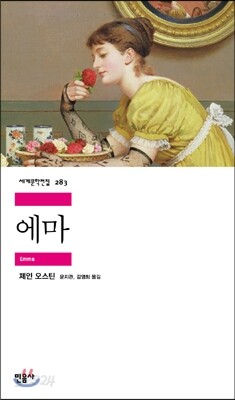
Emma
 |
Description
Book Introduction
Among Jane Austen's works, "Emma" is the most sophisticated work that deals with human psychology and thought processes. It humorously and adorably depicts the process by which the selfish heroine Emma overcomes her personality flaws and simultaneously finds her true self and love. This work, which fully displays Austen's characteristically lively writing style, delicate observation of human relationships and everyday life, and refined intellect, was also made into a much-loved film in 1996 (starring Gwyneth Paltrow and Ewan McGregor). |
- You can preview some of the book's contents.
Preview
index
Part 1
Part 2
Part 3
Commentary on the work
Author's chronology
Part 2
Part 3
Commentary on the work
Author's chronology
Publisher's Review
The Observer's pick for the greatest book in human history
A work from the peak of Jane Austen's short career as a writer.
The story of a cheerful single person reaching true self-awareness through love.
A classic romance novel, beautifully illustrated
▶ I wrote about a heroine that no one but me would like.
- Jane Austen
▶ The great tradition of British novels begins with Jane Austen.
- FR Revis
▶ Of all the people I've met, Jane Austen had the greatest talent for portraying relationships, emotions, and characters between men and women in everyday life.
- Walter Scott
▶ She is the Shakespeare of prose.
- Thomas Macaulay
Emma, by Jane Austen, a representative female writer of 19th-century England, has been published in Minumsa's World Literature Collection.
Austen, a representative female British author who passionately explored love and marriage between men and women and created masterpieces of romance novels such as Pride and Prejudice and Sense and Sensibility, is evaluated as a writer who “possesses an outstanding skill in making ordinary everyday events and characters interesting through truth in description and emotion.”
Among her works, "Emma" is the most sophisticated in its treatment of human psychology and thought processes. It humorously and adorably depicts the process by which the selfish heroine, Emma, overcomes her personality flaws and simultaneously finds her true self and love.
This work, which fully displays Austen's characteristically lively writing style, delicate observation of human relationships and everyday life, and refined intellect, was also made into a film in 1996 (starring Gwyneth Paltrow and Ewan McGregor) and was greatly loved. It was also selected as 'The Observer's Best Book in History' and 'BBC's 100 Most Read Books'.
■ A sweet romance novel that unravels the tangled threads of love.
Emma Woodhouse, a pretty and intelligent young lady from a wealthy family.
For Emma, whose greatest concern is how to pass the time, the most interesting thing is arranging other people's marriages.
Emma tries to force her young friend Harriet, who follows her, into relationships with desirable men.
But Emma's attempts to hook her up with Harriet often lead to unexpected results, with the man she was trying to hook her up with proposing to her or having a fiancée.
Emma's attempt to pair people off according to her own ideas without being able to read others' minds properly leaves deep wounds not only to those around her but also to herself.
After going through many twists and turns and realizing her own vanity and hypocrisy, Emma decides to stop using her vain imagination to match people.
Meanwhile, a dream-like love comes to her, who had been a staunch single.
Austin's writing talent allows her to weave the strange and confusing material of emotion into the plot of her novels.
The author meticulously depicts the subtle intertwining and unraveling of the love relationships of six men and women—Emma, Knightley, Harriet, Robert Martin, Frank Churchill, and Jane Fairfax—as they search for their match throughout the novel. One of the great pleasures of this book is guessing who will end up with whom.
The author's smooth skill in leaving the main characters and readers wandering through a fog of twists and turns, conjectures, guesses, and misunderstandings, while moving swiftly behind the scenes to reveal the full story on its own, ultimately perfectly pairing the three couples, leads readers to become immersed in this long story, enough to read it in one sitting.
■ Jane Austen, the author who meticulously depicted the details of life like a patchwork.
Still, Emma felt there was no doubt that she was in love.
The only thing that changed was the question of how much I loved.
At first, I thought she loved him quite a bit.
And later I thought it was just a little bit.
(Omitted) On the other hand, she could not say that she was unhappy, that she had been less able to get things done than usual since the first morning he left.
She was still busy and cheerful.
And I could picture him as a pleasant person, but also as someone with flaws.
Besides, she thought a lot about Frank, sitting and drawing or knitting, drawing all sorts of interesting blueprints of how their love would develop and end, imagining interesting conversations in her mind and writing elegant letters, but even when she finally confessed, the ending of her imagination always ended with her rejecting him.
Their affection would always turn into a calm friendship, beautifully embroidered with all kinds of soft and charming words, but their farewell was a foregone conclusion.
? In the work
Jane Austen was a writer who wrote like a painter of precise detail, describing her creations as “little pieces of ivory, two inches wide, worked on with a very delicate brush.”
In "Emma," Austin's delicate expressions make each scene vividly appear in the mind, like an elaborately painted landscape painting.
The story realistically and unfilteredly depicts the contradictory inner lives of human beings, such as Reverend Elton being indignant at being involved with a woman of low status like Harriet, and Emma being furious at Harriet's marriage to Farmer Martin, saying that marrying a farmer is low class, but later thinking that a man of high class like Mr. Knightley could not marry Harriet when Harriet confesses that she is in love with him.
As a writer who pioneered British realism, Austen meticulously interprets the characters' actions, psychology, economic and social conditions, and the meaning of class interests in Emma with delicate insight and keen observation.
By depicting the universal human figure through a patchwork of detailed aspects of life, the author demonstrates firsthand that everyday experiences can become the source of great art.
■ A woman's bold love and marriage story that resonates deeply with modern women.
Austen's works, written in the 18th century, are still being made into television miniseries and films to great acclaim today.
His first full-length novel, "Sense and Sensibility" (World Literature Collection No. 132), became more widely known as the original work of the 1995 film "Sense and Sensibility" (winner of the Golden Bear Award at the 46th Berlin International Film Festival), and "Pride and Prejudice" (World Literature Collection No. 88) also gained popularity when it was made into a film of the same name in 2005 (starring Keira Knightley).
"Emma" was also remade into a 2009 British BBC drama and the films "Clueless" (1995) and "Emma" (1996), and was greatly loved.
What is the secret behind the romance novels written by an old maid in an English country village over two hundred years ago being read as classics to this day and being made into films numerous times?
It is a love story set in the upper class of 19th century England, but Emma's appearance, despite being vulgar, is not mean, despite being swayed by emotions, and despite having arrogance and prejudice, remains cute, overlaps with the way we live in the modern era, and thus acquires universality.
Even though women's status has improved compared to the past, this story of love and marriage by a woman with a burning passion for life and an independent sense of self resonates deeply with modern women who are still unable to be free from love and marriage.
Emma, a courageous heroine who, through self-reflection and her own efforts and will, not only achieves love and happiness, but ultimately achieves self-realization, will bring deep empathy and inspiration to those of us who carry on with the burden of the lifelong, important topics of love and marriage.
A work from the peak of Jane Austen's short career as a writer.
The story of a cheerful single person reaching true self-awareness through love.
A classic romance novel, beautifully illustrated
▶ I wrote about a heroine that no one but me would like.
- Jane Austen
▶ The great tradition of British novels begins with Jane Austen.
- FR Revis
▶ Of all the people I've met, Jane Austen had the greatest talent for portraying relationships, emotions, and characters between men and women in everyday life.
- Walter Scott
▶ She is the Shakespeare of prose.
- Thomas Macaulay
Emma, by Jane Austen, a representative female writer of 19th-century England, has been published in Minumsa's World Literature Collection.
Austen, a representative female British author who passionately explored love and marriage between men and women and created masterpieces of romance novels such as Pride and Prejudice and Sense and Sensibility, is evaluated as a writer who “possesses an outstanding skill in making ordinary everyday events and characters interesting through truth in description and emotion.”
Among her works, "Emma" is the most sophisticated in its treatment of human psychology and thought processes. It humorously and adorably depicts the process by which the selfish heroine, Emma, overcomes her personality flaws and simultaneously finds her true self and love.
This work, which fully displays Austen's characteristically lively writing style, delicate observation of human relationships and everyday life, and refined intellect, was also made into a film in 1996 (starring Gwyneth Paltrow and Ewan McGregor) and was greatly loved. It was also selected as 'The Observer's Best Book in History' and 'BBC's 100 Most Read Books'.
■ A sweet romance novel that unravels the tangled threads of love.
Emma Woodhouse, a pretty and intelligent young lady from a wealthy family.
For Emma, whose greatest concern is how to pass the time, the most interesting thing is arranging other people's marriages.
Emma tries to force her young friend Harriet, who follows her, into relationships with desirable men.
But Emma's attempts to hook her up with Harriet often lead to unexpected results, with the man she was trying to hook her up with proposing to her or having a fiancée.
Emma's attempt to pair people off according to her own ideas without being able to read others' minds properly leaves deep wounds not only to those around her but also to herself.
After going through many twists and turns and realizing her own vanity and hypocrisy, Emma decides to stop using her vain imagination to match people.
Meanwhile, a dream-like love comes to her, who had been a staunch single.
Austin's writing talent allows her to weave the strange and confusing material of emotion into the plot of her novels.
The author meticulously depicts the subtle intertwining and unraveling of the love relationships of six men and women—Emma, Knightley, Harriet, Robert Martin, Frank Churchill, and Jane Fairfax—as they search for their match throughout the novel. One of the great pleasures of this book is guessing who will end up with whom.
The author's smooth skill in leaving the main characters and readers wandering through a fog of twists and turns, conjectures, guesses, and misunderstandings, while moving swiftly behind the scenes to reveal the full story on its own, ultimately perfectly pairing the three couples, leads readers to become immersed in this long story, enough to read it in one sitting.
■ Jane Austen, the author who meticulously depicted the details of life like a patchwork.
Still, Emma felt there was no doubt that she was in love.
The only thing that changed was the question of how much I loved.
At first, I thought she loved him quite a bit.
And later I thought it was just a little bit.
(Omitted) On the other hand, she could not say that she was unhappy, that she had been less able to get things done than usual since the first morning he left.
She was still busy and cheerful.
And I could picture him as a pleasant person, but also as someone with flaws.
Besides, she thought a lot about Frank, sitting and drawing or knitting, drawing all sorts of interesting blueprints of how their love would develop and end, imagining interesting conversations in her mind and writing elegant letters, but even when she finally confessed, the ending of her imagination always ended with her rejecting him.
Their affection would always turn into a calm friendship, beautifully embroidered with all kinds of soft and charming words, but their farewell was a foregone conclusion.
? In the work
Jane Austen was a writer who wrote like a painter of precise detail, describing her creations as “little pieces of ivory, two inches wide, worked on with a very delicate brush.”
In "Emma," Austin's delicate expressions make each scene vividly appear in the mind, like an elaborately painted landscape painting.
The story realistically and unfilteredly depicts the contradictory inner lives of human beings, such as Reverend Elton being indignant at being involved with a woman of low status like Harriet, and Emma being furious at Harriet's marriage to Farmer Martin, saying that marrying a farmer is low class, but later thinking that a man of high class like Mr. Knightley could not marry Harriet when Harriet confesses that she is in love with him.
As a writer who pioneered British realism, Austen meticulously interprets the characters' actions, psychology, economic and social conditions, and the meaning of class interests in Emma with delicate insight and keen observation.
By depicting the universal human figure through a patchwork of detailed aspects of life, the author demonstrates firsthand that everyday experiences can become the source of great art.
■ A woman's bold love and marriage story that resonates deeply with modern women.
Austen's works, written in the 18th century, are still being made into television miniseries and films to great acclaim today.
His first full-length novel, "Sense and Sensibility" (World Literature Collection No. 132), became more widely known as the original work of the 1995 film "Sense and Sensibility" (winner of the Golden Bear Award at the 46th Berlin International Film Festival), and "Pride and Prejudice" (World Literature Collection No. 88) also gained popularity when it was made into a film of the same name in 2005 (starring Keira Knightley).
"Emma" was also remade into a 2009 British BBC drama and the films "Clueless" (1995) and "Emma" (1996), and was greatly loved.
What is the secret behind the romance novels written by an old maid in an English country village over two hundred years ago being read as classics to this day and being made into films numerous times?
It is a love story set in the upper class of 19th century England, but Emma's appearance, despite being vulgar, is not mean, despite being swayed by emotions, and despite having arrogance and prejudice, remains cute, overlaps with the way we live in the modern era, and thus acquires universality.
Even though women's status has improved compared to the past, this story of love and marriage by a woman with a burning passion for life and an independent sense of self resonates deeply with modern women who are still unable to be free from love and marriage.
Emma, a courageous heroine who, through self-reflection and her own efforts and will, not only achieves love and happiness, but ultimately achieves self-realization, will bring deep empathy and inspiration to those of us who carry on with the burden of the lifelong, important topics of love and marriage.
GOODS SPECIFICS
- Date of publication: March 23, 2012
- Page count, weight, size: 728 pages | 804g | 153*224*40mm
- ISBN13: 9788937462832
- ISBN10: 8937462834
You may also like
카테고리
korean


korean

![GQ KOREA Mark (Monthly): December [2025]](http://librairie.coreenne.fr/cdn/shop/files/8ef265dbbfbf186523ed75ba7319009d.jpg?v=1765340328&width=3840)


