

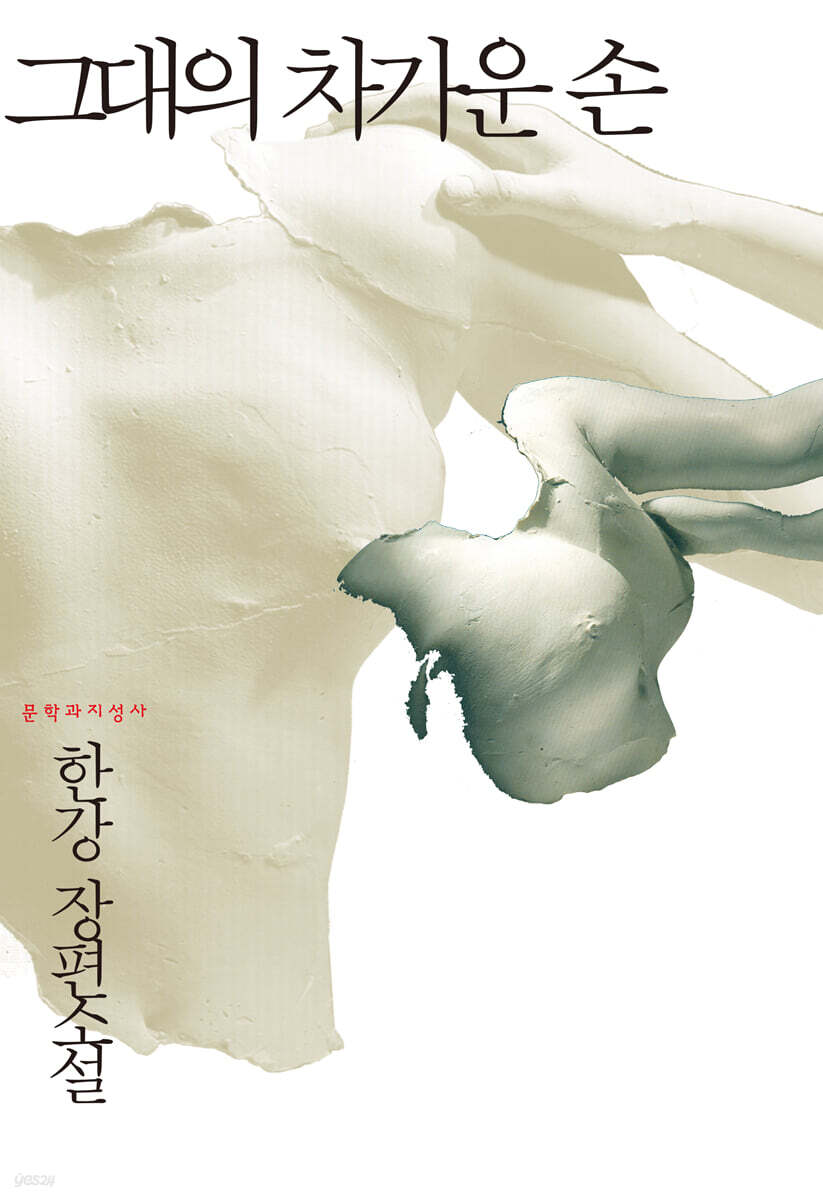
Your cold hands
 |
Description
Book Introduction
“There was something hidden.
“Something terrible.”
2024 Nobel Prize in Literature winner Han Kang
The primal fear lurking behind the white mask
The pain and wounds of existence are carved into the ultimate art.
Han Kang's second full-length novel
A burning gaze that delves into the emptiness of life
About the sad truth hidden behind the facade
This is the second full-length novel published by Han Kang, four years after “Black Deer” (1998), who began her literary career by publishing the poem “Winter of Seoul” and four other pieces in the winter issue of the quarterly “Literature and Society” in 1993 and winning the short story “Red Anchor” in the “Seoul Shinmun” New Year’s literary contest the following year.
In this book, the author fiercely explores the pain and wounds of existence through a device called 'lifecasting' (a method of making a realistic replica of the human body using materials such as plaster), a type of sculptural technique.
The author, who has keenly captured the contradictions of life with rich allegories and a lyrical yet powerful writing style, has received strong support from the public and critics since his debut, and has won numerous awards including the Korea Novel Literature Award (1999), Today's Young Artist Award (2000), Yi Sang Literature Award (2005), Dongni Literature Award (2010), Manhae Literature Award (2014), Hwang Sun-won Literature Award (2015), International Booker Prize (2016), Malaparte Literature Award (2017), Kim Yu-jeong Literature Award (2018), San Clemente Literature Award (2019), Daesan Literature Award (2022), Médicis Prize for Foreign Literature (2023), Émile Guimet Prize for Asian Literature (2024), and the Nobel Prize in Literature (2024).
“Your Cold Hands” “draws out the dark inner side of humanity hidden beneath the social mask through the confession-style diary left behind by a missing sculptor.
“It is a beautiful novel that delves into the dual nature of human beings and the essence and form of existence as a kind of artist’s novel” (Literature and Society, Spring 2002, p.
35).
The novel delves into the depths of the human psyche by exploring the mysterious disappearance of a sculptor and the secret history surrounding his eerie and inhuman sculptures.
“In order not to miss that terrifying moment when a single spark of truth flashes and disappears” (p.
20) The gaze of the speaker H, who is gazing at the sculptor Jang Woon-hyung, is “that the truth of a fleeting moment, the beauty of a fleeting moment, so useless and fragile, so easily broken, is sometimes all we have.
“It even becomes a power of healing” (Letter from the Author - Han River, Literature and Society, Summer 2002, p.
It also aligns with the author's own literary insight, which he mentioned in 718.
Han Kang's interest in art is clearly evident.
This book revisits the manuscript left behind by a sculptor obsessed with creating plaster casts of the female body.
A preoccupation with human anatomy and a play between persona and experience are glimpsed, and in the sculptor's work a conflict arises between what the body reveals and what it conceals.
The sentence at the end of the book, “On the shell of life, on the shell of the abyss, we live wearing masks like acrobats,” illustrates this well.
- Excerpt from the full text of the introduction to the works of Han Kang, the 2024 Nobel Prize in Literature winner (Source: Swedish Academy website)
“Something terrible.”
2024 Nobel Prize in Literature winner Han Kang
The primal fear lurking behind the white mask
The pain and wounds of existence are carved into the ultimate art.
Han Kang's second full-length novel
A burning gaze that delves into the emptiness of life
About the sad truth hidden behind the facade
This is the second full-length novel published by Han Kang, four years after “Black Deer” (1998), who began her literary career by publishing the poem “Winter of Seoul” and four other pieces in the winter issue of the quarterly “Literature and Society” in 1993 and winning the short story “Red Anchor” in the “Seoul Shinmun” New Year’s literary contest the following year.
In this book, the author fiercely explores the pain and wounds of existence through a device called 'lifecasting' (a method of making a realistic replica of the human body using materials such as plaster), a type of sculptural technique.
The author, who has keenly captured the contradictions of life with rich allegories and a lyrical yet powerful writing style, has received strong support from the public and critics since his debut, and has won numerous awards including the Korea Novel Literature Award (1999), Today's Young Artist Award (2000), Yi Sang Literature Award (2005), Dongni Literature Award (2010), Manhae Literature Award (2014), Hwang Sun-won Literature Award (2015), International Booker Prize (2016), Malaparte Literature Award (2017), Kim Yu-jeong Literature Award (2018), San Clemente Literature Award (2019), Daesan Literature Award (2022), Médicis Prize for Foreign Literature (2023), Émile Guimet Prize for Asian Literature (2024), and the Nobel Prize in Literature (2024).
“Your Cold Hands” “draws out the dark inner side of humanity hidden beneath the social mask through the confession-style diary left behind by a missing sculptor.
“It is a beautiful novel that delves into the dual nature of human beings and the essence and form of existence as a kind of artist’s novel” (Literature and Society, Spring 2002, p.
35).
The novel delves into the depths of the human psyche by exploring the mysterious disappearance of a sculptor and the secret history surrounding his eerie and inhuman sculptures.
“In order not to miss that terrifying moment when a single spark of truth flashes and disappears” (p.
20) The gaze of the speaker H, who is gazing at the sculptor Jang Woon-hyung, is “that the truth of a fleeting moment, the beauty of a fleeting moment, so useless and fragile, so easily broken, is sometimes all we have.
“It even becomes a power of healing” (Letter from the Author - Han River, Literature and Society, Summer 2002, p.
It also aligns with the author's own literary insight, which he mentioned in 718.
Han Kang's interest in art is clearly evident.
This book revisits the manuscript left behind by a sculptor obsessed with creating plaster casts of the female body.
A preoccupation with human anatomy and a play between persona and experience are glimpsed, and in the sculptor's work a conflict arises between what the body reveals and what it conceals.
The sentence at the end of the book, “On the shell of life, on the shell of the abyss, we live wearing masks like acrobats,” illustrates this well.
- Excerpt from the full text of the introduction to the works of Han Kang, the 2024 Nobel Prize in Literature winner (Source: Swedish Academy website)
- You can preview some of the book's contents.
Preview
index
prolog
Her Cold Hands - Preface
Part 1 Finger
Uncle | Smile | Silence | Truth | Courage | My Laughter | His Fingers
Part 2: The Holy Hand
Sad face | Beauty | Revelation | Alien | Monster | Cold lips | Coffin | Her eyes | Time | Scar | Secret | Evidence | Rabbit's eyes | Debris | Treadmill | Happiness | Love | Laughter | Silence | Play | Crushed face
Part 3: The Most Beautiful Ball
Lips | Woman in the Mirror | Nightmare | Model House | Voice | Real and Fake | Dirt | Heaven | Not-So-Distant Eyes | Death Mask | Reunion | Warm Hands | Membrane | Sugar-Coated Tablets | Fatigue | Shell and Peel | Peeling | What You Want | Face Behind the Mask | My Fingers
Epilogue
Author's Note
Her Cold Hands - Preface
Part 1 Finger
Uncle | Smile | Silence | Truth | Courage | My Laughter | His Fingers
Part 2: The Holy Hand
Sad face | Beauty | Revelation | Alien | Monster | Cold lips | Coffin | Her eyes | Time | Scar | Secret | Evidence | Rabbit's eyes | Debris | Treadmill | Happiness | Love | Laughter | Silence | Play | Crushed face
Part 3: The Most Beautiful Ball
Lips | Woman in the Mirror | Nightmare | Model House | Voice | Real and Fake | Dirt | Heaven | Not-So-Distant Eyes | Death Mask | Reunion | Warm Hands | Membrane | Sugar-Coated Tablets | Fatigue | Shell and Peel | Peeling | What You Want | Face Behind the Mask | My Fingers
Epilogue
Author's Note
Into the book
Inside, it was pitch black and empty.
As if he were putting together a stripped-off family, the artist put together the pieces of plaster that had been cut into pieces.
Rather than deliberately and delicately finishing the seams, they had instead applied plaster in a thick layer.
Like clothes sewn upside down with the seams showing.
Like a distorted monster created by Frankenstein.
As if the body of a person who died in an explosion had been collected and sewn up.
--- p.11
Her eyes seemed to want to pierce my skin, penetrate my internal organs and blood vessels, and see into a soul I didn't even know existed.
I never liked those eyes.
I don't hate it.
It's just pitiful.
The kind of people who throw their whole body into believing and showing the truth, the kind of people who can't keep a poker face even if they die and come back to life.
People like that don't attract my attention.
--- p.29
What I've come to realize is that truth is something I can control.
It didn't really matter what happened to me or how I felt.
I have to do what works best for the situation, and then deal with the emotional dregs that are left behind.
To be patient, to forget, to forgive.
In any case, I could digest it - I had to digest it - and in the end, the truth within me made no difference whether it existed or not.
--- p.62
… … The truth requires courage.
My father's soft words were engraved into the empty air.
I twisted my lips and smiled.
… … You can fool others, but you can’t fool yourself.
That still sounded ridiculous.
The verb 'to deceive' and the object 'oneself' did not go together at all.
So, I would have said that he 'could not' have deceived me, but the fact that he dared to connect those two words made me suspicious of him.
--- p.67
Something that can no longer be hindered or concealed.
That was the death I knew then.
As the businesslike-faced undertaker worked on his body, I stared down at the place where his finger had been severed.
The truth was pitiful.
It was that shabby.
--- pp.73~74
She was crying in the pain I had caused her.
There was nothing I could do for her.
The best they could do was prolong the pain until the plaster had hardened.
Above her body, encased in plaster, her tiny face rose as if it had been placed incorrectly on that great white pile.
Her sagging cheeks trembled every time she licked her lips.
--- p.106
The clod was perfectly ovoid.
For the past month I've been trying to sculpt a woman's face with it.
Sometimes it was L, sometimes it was E.
But the result was always a blank face.
There used to be a blank face there, devoid of any ridges or curves.
--- p.226
The most difficult thing to understand was that at the end of that intense ambivalence there was something bitterly similar to pity.
I felt that feeling of being secretly cut into my chest, along with a sense of bewilderment.
It was a lonely attraction, more persistent than desire, like a quiet longing, and difficult to resist.
It was a strange thing.
--- p.280
On the shell of life, on the shell of the abyss, we live, wearing masks like acrobats.
Sometimes I hate and get angry, sometimes I love and cry.
All this is a stunt, and we forget that we are just getting sick and dying.
As if he were putting together a stripped-off family, the artist put together the pieces of plaster that had been cut into pieces.
Rather than deliberately and delicately finishing the seams, they had instead applied plaster in a thick layer.
Like clothes sewn upside down with the seams showing.
Like a distorted monster created by Frankenstein.
As if the body of a person who died in an explosion had been collected and sewn up.
--- p.11
Her eyes seemed to want to pierce my skin, penetrate my internal organs and blood vessels, and see into a soul I didn't even know existed.
I never liked those eyes.
I don't hate it.
It's just pitiful.
The kind of people who throw their whole body into believing and showing the truth, the kind of people who can't keep a poker face even if they die and come back to life.
People like that don't attract my attention.
--- p.29
What I've come to realize is that truth is something I can control.
It didn't really matter what happened to me or how I felt.
I have to do what works best for the situation, and then deal with the emotional dregs that are left behind.
To be patient, to forget, to forgive.
In any case, I could digest it - I had to digest it - and in the end, the truth within me made no difference whether it existed or not.
--- p.62
… … The truth requires courage.
My father's soft words were engraved into the empty air.
I twisted my lips and smiled.
… … You can fool others, but you can’t fool yourself.
That still sounded ridiculous.
The verb 'to deceive' and the object 'oneself' did not go together at all.
So, I would have said that he 'could not' have deceived me, but the fact that he dared to connect those two words made me suspicious of him.
--- p.67
Something that can no longer be hindered or concealed.
That was the death I knew then.
As the businesslike-faced undertaker worked on his body, I stared down at the place where his finger had been severed.
The truth was pitiful.
It was that shabby.
--- pp.73~74
She was crying in the pain I had caused her.
There was nothing I could do for her.
The best they could do was prolong the pain until the plaster had hardened.
Above her body, encased in plaster, her tiny face rose as if it had been placed incorrectly on that great white pile.
Her sagging cheeks trembled every time she licked her lips.
--- p.106
The clod was perfectly ovoid.
For the past month I've been trying to sculpt a woman's face with it.
Sometimes it was L, sometimes it was E.
But the result was always a blank face.
There used to be a blank face there, devoid of any ridges or curves.
--- p.226
The most difficult thing to understand was that at the end of that intense ambivalence there was something bitterly similar to pity.
I felt that feeling of being secretly cut into my chest, along with a sense of bewilderment.
It was a lonely attraction, more persistent than desire, like a quiet longing, and difficult to resist.
It was a strange thing.
--- p.280
On the shell of life, on the shell of the abyss, we live, wearing masks like acrobats.
Sometimes I hate and get angry, sometimes I love and cry.
All this is a stunt, and we forget that we are just getting sick and dying.
--- p.313
Publisher's Review
A shell of life stained with sadism and cynicism
Inner memories written on the body at the boundary of metonymy and metaphor
The novel begins with a scene where novelist H accidentally encounters the work of sculptor Jang Woon-hyung.
His work, which I saw in K City while visiting my aunt who was hospitalized with hemiplegia, was of a man and a woman leaning against each other and holding hands. Unlike the man's body, which was relatively intact, the woman's body had both shoulders and forearms torn off, and the space between her tattered wrists was filled with pitch-black darkness.
H recalls the distorted half of his aunt's face in front of the strange sculpture, saying, "What the artist wanted to show was not the tattered shell, but the dark void within" (p.
12) I think it might be.
Later, I saw the same writer's work, 'Giant Black Hand', in Insa-dong, and my eyes were once again drawn to a plaster statue that seemed to have been created in the same way at the premiere of a play written by a junior.
H, who discovered that a handful of trucks that looked like living bodies had come out of the after-party were also the work of sculptor Jang Woon-hyung, asks Jang Woon-hyung why he creates works modeled after the human body.
Jang Woon-hyung asks H, who shows interest in his work, to be his model, but H immediately refuses.
Afterwards, H receives a call from Jang Woon-hyung's younger sister informing him that he had gone missing in April.
She has met all the people mentioned in her brother's writings so far, and even if she cannot find him, she wants to understand her brother just once in her life. She asks H, who writes, to read the writings written by Jang Woon-hyung. Despite H's dissuasion, Jang Woon-hyung's writings arrive at her house.
Part 1, which focuses on Jang Woon-hyung's childhood, begins with a recollection of his maternal uncle, who has an ugly face.
Having lost his thumb and the upper knuckle of his index finger to a misloaded rifle in the military, he was described as “a man with a harsh tongue, eyes trained on hatred, and so vicious that he would swing a knife at his brother-in-law” (p.
34) Even though he has become a man, he thoroughly hides his hands from the gaze of others.
Unlike her hostile uncle, her mother always won people's hearts with her well-made smile and kindness, as if she were wearing a white mask.
That face, which he rarely shows to himself and his sisters, instills in young Jang Woon-hyung the anxiety that he is not a part of this family and that he could be kicked out at any time.
Even his father, who always made decisions and acted according to his own thoughts without any hesitation, was a person that the young boy found difficult to trust.
Even in the face of the deaths of his brother-in-law, whom he had never treated as a human being, and his wife, whom he had never loved, he shed tears of affection, but behind that affection, there was a deep cynicism.
Under parents who are adept at covering themselves with such a thick shell, Jang Woon-hyung becomes a child who receives even more praise from adults after the uncomfortable truth is revealed.
So, the boy makes himself a sturdy shell and puts it on to avoid being abandoned.
His childhood, which gradually faded as he entered puberty, ended with the death of his maternal uncle, who had been rejected by his family his entire life.
He looks down at his uncle, who is only able to show his hand to others when he is on the verge of death, and thinks.
“Truth is such an ugly thing” (p.
60).
In Part 2, Jang Woon-hyung meets L, a man in his early twenties who is visiting his first solo exhibition.
L, who was 167 centimeters tall and weighed nearly 100 kilograms, had no curves whatsoever on his body, but his small, round face and delicate, white hands contrasted with his heavy body, creating an asymmetrical effect.
Jang Woon-hyung is captivated by L's pure and warm hands.
After that, L becomes a hand model in Jang Woon-hyung's studio every Saturday and works on making plaster casts. L gradually opens up to the sculptor. L tells him about her friend O, who, unlike her, always gets the spotlight. Now, Jang Woon-hyung works on making plaster casts of L's entire body, and soon thinks that it would be nice if the lump that looks like a mold with her body completely removed would become his own coffin in the future.
L also confesses the wounds of his childhood that no one believed in, and feels as if he has been liberated from his own body, if only for a moment.
However, she loses weight rigorously to win the heart of a returning student she has a crush on, and becomes ill, unable to forgive herself for the merciless binge eating and sadistic vomiting that follows on the empty streets.
Because I put my finger in to force out the contents, this mark remains clearly between my thumb and index finger.
If Part 1 was the story of a boy looking into the bodies of his closest family members and the dark inner world behind them, Part 2 features a young sculptor who shapes his work through relationships with others and tries to bring out the other side of them.
Part 3, which follows the story of Jang Woon-hyung in his late thirties to early forties, focuses on the inner self of humans, which he sought to delve into, namely, himself.
Jang Woon-hyung gets to know E, an interior designer with a strangely refined and clean impression, through an introduction from his senior, P.
P is fascinated by her transparent, spotless appearance, but Jang Woon-hyung discovers in her a dark side of the mirror that reflects nothing.
Jang Woon-hyung first thinks of making a plaster cast of her face and begins working on it, but she senses something strange about her face.
In this way, the author says, “On the shell of life, on the shell of the abyss, we live wearing masks like acrobats” (p.
313) hands us a ‘cold hand’ with a message.
Touching the surface of life that has been completely washed away
Your hands are finally becoming warm
“I try to say it, but I can’t say it” and “I try to cover it up, but I still can’t cover it all up” (p.
89) To the characters in this novel, the truth seems to be something that can be disguised or hidden at any time if they want to.
The characters in "Your Cold Hands," who live their lives performing acrobatics on the boundaries between truth and lies, excess and deficiency, dissolution and suture, concealment and confession, may seem strange and unusual at first glance, but upon closer reflection, they are not unfamiliar attitudes to us living in this era.
“Ultimately, this novel raises questions such as what is visible, that is, what is the ‘shell’ and what is the ‘inner self,’ what is the self, does ‘truth’ exist, and if it does, what is truth, what is authenticity in our lives and in artistic activities, what is real and what is fake, etc.” (Lee Seong-won, “Memories Written on the Body - Han Kang’s ‘Your Cold Hands,’” Literature and Society, Summer 2002, p.
721) because.
We, and the characters in the novel, who have become accustomed to seeing through the eyes of others and through the fake shell, are able to look at themselves from a distance only by isolating themselves through 'life casting', one of the imitation methods of imitating the human body.
In this novel, which shows without filter that the body that lives wearing a mask is not much different from cold plaster, the most honest thing in the end is 'temperature'.
Facial expressions can be made, hands can be made silent, but temperature is “a zone of control” (p.
62) No.
It is a dimension that must be felt with the soft skin rather than being analyzed and delved into with the eyes, that is, it is a dimension that is in close contact with ‘being alive.’
In this way, L, E, and finally Jang Woon-hyung, through the unbearable burning sensation caused by the plaster solution, “for the first time, I realized how much I loved my hands” (p.
310) I get to know.
Rubbing her lips like that, caressing the curves of her face, feeling her heartbeat, “confusing warmth with love” (p.
168) With your hands getting warmer, you will be able to create something new, not just a mask.
Author's Note
A dream I had at dawn, a word thrown by a stranger.
There are times when even a phrase found in a newspaper that I opened without thinking, or a fragment of a distant memory that suddenly pops up, all feel like revelations.
Those are the moments I love the most when I write novels.
It's the same old routine, but I feel a kind of freedom amidst the countless questions that come with a completely new feeling, the brief but intense awakening, and the deep stabbing sensation.
I started writing this novel three years ago and put it away in a drawer, but I took it out and started writing it in February of last year.
During the twelve months I spent traveling with the novel, time passed at a different pace for me.
As always, the novel that stayed in my body was the first to change my existence.
It changes my eyes and ears, it changes the way I love you, it silently transports my soul to places I have never walked before.
I would like to express my gratitude to those who have provided me with so much inspiration and help, rather than revealing their names directly.
I would also like to thank everyone at Munhak-kwa-Jiseongsa for their hard work in producing this book.
I am grateful that I can write like this and that I am alive.
January 2002
Korea River
Inner memories written on the body at the boundary of metonymy and metaphor
The novel begins with a scene where novelist H accidentally encounters the work of sculptor Jang Woon-hyung.
His work, which I saw in K City while visiting my aunt who was hospitalized with hemiplegia, was of a man and a woman leaning against each other and holding hands. Unlike the man's body, which was relatively intact, the woman's body had both shoulders and forearms torn off, and the space between her tattered wrists was filled with pitch-black darkness.
H recalls the distorted half of his aunt's face in front of the strange sculpture, saying, "What the artist wanted to show was not the tattered shell, but the dark void within" (p.
12) I think it might be.
Later, I saw the same writer's work, 'Giant Black Hand', in Insa-dong, and my eyes were once again drawn to a plaster statue that seemed to have been created in the same way at the premiere of a play written by a junior.
H, who discovered that a handful of trucks that looked like living bodies had come out of the after-party were also the work of sculptor Jang Woon-hyung, asks Jang Woon-hyung why he creates works modeled after the human body.
Jang Woon-hyung asks H, who shows interest in his work, to be his model, but H immediately refuses.
Afterwards, H receives a call from Jang Woon-hyung's younger sister informing him that he had gone missing in April.
She has met all the people mentioned in her brother's writings so far, and even if she cannot find him, she wants to understand her brother just once in her life. She asks H, who writes, to read the writings written by Jang Woon-hyung. Despite H's dissuasion, Jang Woon-hyung's writings arrive at her house.
Part 1, which focuses on Jang Woon-hyung's childhood, begins with a recollection of his maternal uncle, who has an ugly face.
Having lost his thumb and the upper knuckle of his index finger to a misloaded rifle in the military, he was described as “a man with a harsh tongue, eyes trained on hatred, and so vicious that he would swing a knife at his brother-in-law” (p.
34) Even though he has become a man, he thoroughly hides his hands from the gaze of others.
Unlike her hostile uncle, her mother always won people's hearts with her well-made smile and kindness, as if she were wearing a white mask.
That face, which he rarely shows to himself and his sisters, instills in young Jang Woon-hyung the anxiety that he is not a part of this family and that he could be kicked out at any time.
Even his father, who always made decisions and acted according to his own thoughts without any hesitation, was a person that the young boy found difficult to trust.
Even in the face of the deaths of his brother-in-law, whom he had never treated as a human being, and his wife, whom he had never loved, he shed tears of affection, but behind that affection, there was a deep cynicism.
Under parents who are adept at covering themselves with such a thick shell, Jang Woon-hyung becomes a child who receives even more praise from adults after the uncomfortable truth is revealed.
So, the boy makes himself a sturdy shell and puts it on to avoid being abandoned.
His childhood, which gradually faded as he entered puberty, ended with the death of his maternal uncle, who had been rejected by his family his entire life.
He looks down at his uncle, who is only able to show his hand to others when he is on the verge of death, and thinks.
“Truth is such an ugly thing” (p.
60).
In Part 2, Jang Woon-hyung meets L, a man in his early twenties who is visiting his first solo exhibition.
L, who was 167 centimeters tall and weighed nearly 100 kilograms, had no curves whatsoever on his body, but his small, round face and delicate, white hands contrasted with his heavy body, creating an asymmetrical effect.
Jang Woon-hyung is captivated by L's pure and warm hands.
After that, L becomes a hand model in Jang Woon-hyung's studio every Saturday and works on making plaster casts. L gradually opens up to the sculptor. L tells him about her friend O, who, unlike her, always gets the spotlight. Now, Jang Woon-hyung works on making plaster casts of L's entire body, and soon thinks that it would be nice if the lump that looks like a mold with her body completely removed would become his own coffin in the future.
L also confesses the wounds of his childhood that no one believed in, and feels as if he has been liberated from his own body, if only for a moment.
However, she loses weight rigorously to win the heart of a returning student she has a crush on, and becomes ill, unable to forgive herself for the merciless binge eating and sadistic vomiting that follows on the empty streets.
Because I put my finger in to force out the contents, this mark remains clearly between my thumb and index finger.
If Part 1 was the story of a boy looking into the bodies of his closest family members and the dark inner world behind them, Part 2 features a young sculptor who shapes his work through relationships with others and tries to bring out the other side of them.
Part 3, which follows the story of Jang Woon-hyung in his late thirties to early forties, focuses on the inner self of humans, which he sought to delve into, namely, himself.
Jang Woon-hyung gets to know E, an interior designer with a strangely refined and clean impression, through an introduction from his senior, P.
P is fascinated by her transparent, spotless appearance, but Jang Woon-hyung discovers in her a dark side of the mirror that reflects nothing.
Jang Woon-hyung first thinks of making a plaster cast of her face and begins working on it, but she senses something strange about her face.
In this way, the author says, “On the shell of life, on the shell of the abyss, we live wearing masks like acrobats” (p.
313) hands us a ‘cold hand’ with a message.
Touching the surface of life that has been completely washed away
Your hands are finally becoming warm
“I try to say it, but I can’t say it” and “I try to cover it up, but I still can’t cover it all up” (p.
89) To the characters in this novel, the truth seems to be something that can be disguised or hidden at any time if they want to.
The characters in "Your Cold Hands," who live their lives performing acrobatics on the boundaries between truth and lies, excess and deficiency, dissolution and suture, concealment and confession, may seem strange and unusual at first glance, but upon closer reflection, they are not unfamiliar attitudes to us living in this era.
“Ultimately, this novel raises questions such as what is visible, that is, what is the ‘shell’ and what is the ‘inner self,’ what is the self, does ‘truth’ exist, and if it does, what is truth, what is authenticity in our lives and in artistic activities, what is real and what is fake, etc.” (Lee Seong-won, “Memories Written on the Body - Han Kang’s ‘Your Cold Hands,’” Literature and Society, Summer 2002, p.
721) because.
We, and the characters in the novel, who have become accustomed to seeing through the eyes of others and through the fake shell, are able to look at themselves from a distance only by isolating themselves through 'life casting', one of the imitation methods of imitating the human body.
In this novel, which shows without filter that the body that lives wearing a mask is not much different from cold plaster, the most honest thing in the end is 'temperature'.
Facial expressions can be made, hands can be made silent, but temperature is “a zone of control” (p.
62) No.
It is a dimension that must be felt with the soft skin rather than being analyzed and delved into with the eyes, that is, it is a dimension that is in close contact with ‘being alive.’
In this way, L, E, and finally Jang Woon-hyung, through the unbearable burning sensation caused by the plaster solution, “for the first time, I realized how much I loved my hands” (p.
310) I get to know.
Rubbing her lips like that, caressing the curves of her face, feeling her heartbeat, “confusing warmth with love” (p.
168) With your hands getting warmer, you will be able to create something new, not just a mask.
Author's Note
A dream I had at dawn, a word thrown by a stranger.
There are times when even a phrase found in a newspaper that I opened without thinking, or a fragment of a distant memory that suddenly pops up, all feel like revelations.
Those are the moments I love the most when I write novels.
It's the same old routine, but I feel a kind of freedom amidst the countless questions that come with a completely new feeling, the brief but intense awakening, and the deep stabbing sensation.
I started writing this novel three years ago and put it away in a drawer, but I took it out and started writing it in February of last year.
During the twelve months I spent traveling with the novel, time passed at a different pace for me.
As always, the novel that stayed in my body was the first to change my existence.
It changes my eyes and ears, it changes the way I love you, it silently transports my soul to places I have never walked before.
I would like to express my gratitude to those who have provided me with so much inspiration and help, rather than revealing their names directly.
I would also like to thank everyone at Munhak-kwa-Jiseongsa for their hard work in producing this book.
I am grateful that I can write like this and that I am alive.
January 2002
Korea River
GOODS SPECIFICS
- Date of issue: January 31, 2002
- Page count, weight, size: 330 pages | 500g | 153*224*30mm
- ISBN13: 9788932013046
- ISBN10: 8932013047
You may also like
카테고리
korean


korean

![GQ KOREA Mark (Monthly): December [2025]](http://librairie.coreenne.fr/cdn/shop/files/8ef265dbbfbf186523ed75ba7319009d.jpg?v=1765340328&width=3840)


