

The coming Western Pacific War
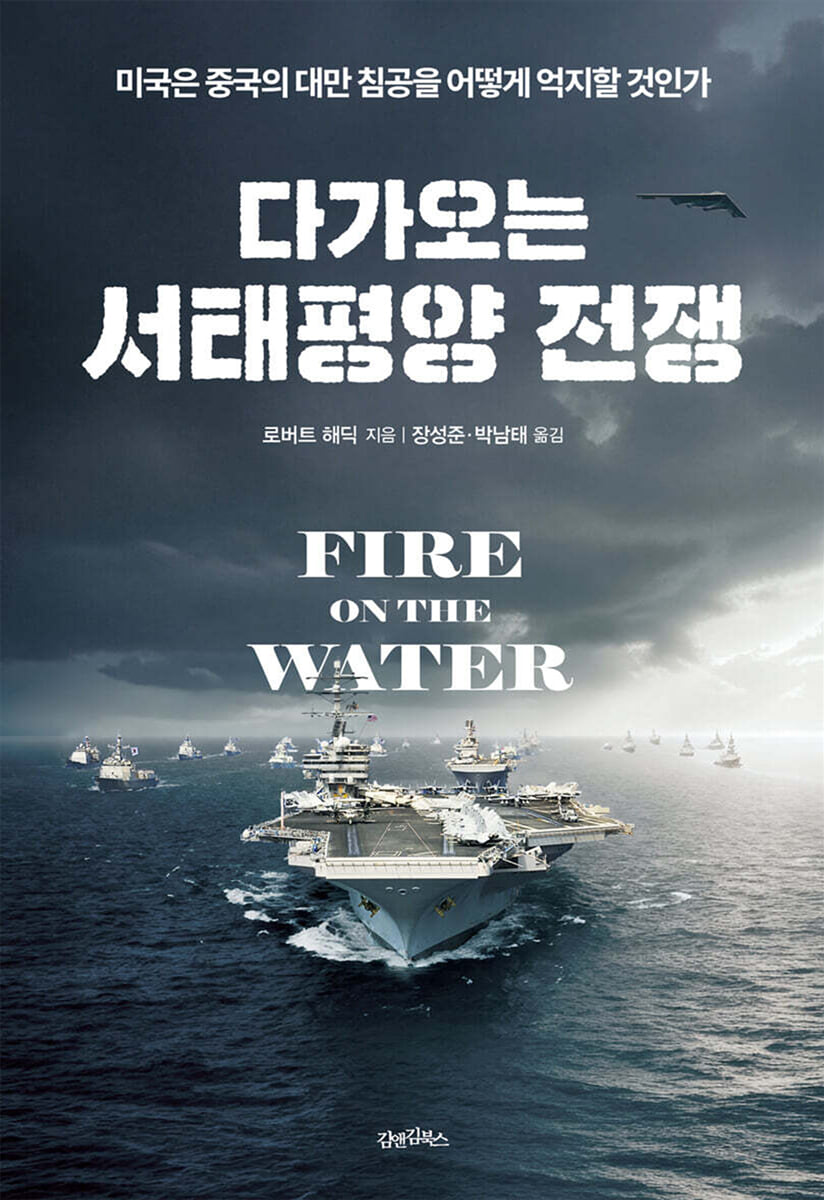 |
Description
Book Introduction
The Western Pacific War is coming!
The question is not whether China will invade Taiwan.
The question is when to invade.
Today, U.S. military commanders are debating not whether war over Taiwan will occur, but when.
In 2022, Chinese President Xi Jinping stated that China “never commits to renounce the use of force” to unify Taiwan.
The Chinese People's Liberation Army has been conducting joint amphibious landing drills for several years, simulating an invasion of Taiwan.
U.S. congressional advisory bodies and others are reporting that President Xi Jinping has ordered the People's Liberation Army to be ready to attack Taiwan by 2027.
Whether China will invade Taiwan is now beyond the level of intention.
The question is simply whether China has the capability to invade Taiwan, or more precisely, whether it believes it has the capability to do so.
Robert Haddick, a senior fellow at the Mitchell Institute for Aeronautics and Space Studies, a division of the Air Force Association, and a military and security expert, has long warned about the impact of China's military modernization on the U.S.-China military balance in the Western Pacific.
The missile and sensor revolution has completely changed the battlefield landscape.
The US force, centered on carrier battle groups and tactical aircraft, is no longer effective in the face of China's missile-based anti-access/area denial strategy.
Even US military bases along the Second Island Chain are within the range of Chinese missiles.
Meanwhile, the United States does not yet have a decisive countermeasure against China's A2/AD.
As America's military advantage in China's waters waned, the Chinese leadership grew more confident in its ability to control Taiwan.
The deterrence against China is shaking.
In Fire on the Water, Robert Haddick proposes measures to deter China's presumed attack on Taiwan and secure deterrence, based on the premise that the Western Pacific is no longer a naval theater but a theater dominated by air and space power.
The essence of coercion is to reduce the possibility of a successful invasion of Taiwan and to maximize its costs and risks.
All options, except nuclear ones, are being considered, including distributed operations, expanding submarines and long-range strikes, building a missile fleet, and even striking mainland China and a maritime blockade.
Haddick says the period until the late 2020s, before the People's Liberation Army's Taiwan invasion capability is fully developed and the B-21 Raider bomber is operational, will be a "window of opportunity" for China and a very dangerous time for the United States and its allies.
If the United States and its allies fail to deter a Chinese invasion of Taiwan, the war will not be confined to the Taiwan Strait.
The question is not whether China will invade Taiwan.
The question is when to invade.
Today, U.S. military commanders are debating not whether war over Taiwan will occur, but when.
In 2022, Chinese President Xi Jinping stated that China “never commits to renounce the use of force” to unify Taiwan.
The Chinese People's Liberation Army has been conducting joint amphibious landing drills for several years, simulating an invasion of Taiwan.
U.S. congressional advisory bodies and others are reporting that President Xi Jinping has ordered the People's Liberation Army to be ready to attack Taiwan by 2027.
Whether China will invade Taiwan is now beyond the level of intention.
The question is simply whether China has the capability to invade Taiwan, or more precisely, whether it believes it has the capability to do so.
Robert Haddick, a senior fellow at the Mitchell Institute for Aeronautics and Space Studies, a division of the Air Force Association, and a military and security expert, has long warned about the impact of China's military modernization on the U.S.-China military balance in the Western Pacific.
The missile and sensor revolution has completely changed the battlefield landscape.
The US force, centered on carrier battle groups and tactical aircraft, is no longer effective in the face of China's missile-based anti-access/area denial strategy.
Even US military bases along the Second Island Chain are within the range of Chinese missiles.
Meanwhile, the United States does not yet have a decisive countermeasure against China's A2/AD.
As America's military advantage in China's waters waned, the Chinese leadership grew more confident in its ability to control Taiwan.
The deterrence against China is shaking.
In Fire on the Water, Robert Haddick proposes measures to deter China's presumed attack on Taiwan and secure deterrence, based on the premise that the Western Pacific is no longer a naval theater but a theater dominated by air and space power.
The essence of coercion is to reduce the possibility of a successful invasion of Taiwan and to maximize its costs and risks.
All options, except nuclear ones, are being considered, including distributed operations, expanding submarines and long-range strikes, building a missile fleet, and even striking mainland China and a maritime blockade.
Haddick says the period until the late 2020s, before the People's Liberation Army's Taiwan invasion capability is fully developed and the B-21 Raider bomber is operational, will be a "window of opportunity" for China and a very dangerous time for the United States and its allies.
If the United States and its allies fail to deter a Chinese invasion of Taiwan, the war will not be confined to the Taiwan Strait.
- You can preview some of the book's contents.
Preview
index
Recommendation
introduction
Preface to the Korean edition
introduction
01 A 40-Year Race to Collision
China's Resurgence Becomes a Global Powerhouse
China's strategic goals
China's interests in the East and South China Seas
American interests in East and South Asia
China's strategic shifts under Hu Jintao and Xi Jinping
Why the US-China Security Competition Is Inevitable
02 It matters who rules the Pacific.
Four Future Paths for Asia
Which route will this area take?
Nuclear-Armed Asia: It Could Be Much Worse
Offshore balancing is not the answer.
Can the US and China reach a lasting compromise?
Taiwan's powder keg
Forward deployment of US troops is the best option, even if it costs money.
03 The Origins of America's Military Deployment in the Pacific
The Origins of U.S. Military Strategy in the Western Pacific
Forward deployments anchored around Korea
Military culture created by the Cold War stalemate
Why has the Air Force's operational scope been so reduced?
The Navy's operational scope has also been reduced.
The Army's long-range strike capability disappeared under the treaty with the Soviet Union.
Why the Pentagon Neglected the Chinese Threat
04 China's Strategy: Missile Revolution and Political Warfare
The Origins and Goals of China's Military Modernization
China's vision of dominating the seas from a land-based perspective
The mission of China's missile power
China becomes a dominant missile power
China's reconnaissance and targeting network
China's growing air superiority in the Western Pacific
China built the world's largest navy
What has China achieved?
The Chinese Communist Party's political campaign is facing a serious blow from a global backlash.
The Chinese Communist Party's increasingly militarized strategy
05 America's Return to Asia and the Trials and Errors That Followed
Concerns about the “reconnaissance-strike complex”
A joint operations approach concept that describes the problem but does not provide a solution.
How the concept of air-sea combat has fallen behind reality.
Why lockdowns aren't an easy solution
Faced with the Chinese threat, changes remain minimal.
Frustrated with the next-generation bomber program
A Navy that wants an arms race it can't win
A radical new concept for the US Marine Corps
A competitive strategy is needed in the Indo-Pacific region.
06 Designing a Strategy for Competing with China in the Indo-Pacific Region
Why should you care about strategy?
Strategy begins with diagnosis
Designing a Competitive Strategy
The Strategic Process Applied in China: Starting with Some Difficult Assumptions
Find your enemy's vulnerabilities and protect your own.
Pursuit of sustainable deterrence
Charge costs, conserve resources, and play the long game.
07 Stopping China's Fait accompli strategy: Aerospace's top priority
Taiwan: China's Military Priority, America's Conundrum
Aircraft are the natural enemy of surface ships.
Why Bombers Rule the Pacific
Bombers need support forces.
Attacking Mainland China: Too Risky or Inevitable?
08 The Role of Naval Power in the Age of Sensors and Missiles
What Naval Power Can Do Anymore: The Navy's Traditional Missions in a Future Threat Environment
New Naval Designs, Past and Future
The Navy's Role in Conventional Deterrence
Waiting for the Endgame: The Role of the Navy and Marine Corps in the End of the War
New fleet design that imposes costs on the enemy
Moving towards the Navy of the Future
09 How to Win the Long Marathon of the Indo-Pacific
Americans Concerned About China
Can the US sustain its coercion of China for the long term?
Prescription: Use America's strengths to exploit China's weaknesses.
How it will end: Gradually ending the missile war
It takes confidence and leadership to overcome resistance to innovation.
Acknowledgements
Translator's Note
NOTES
References
introduction
Preface to the Korean edition
introduction
01 A 40-Year Race to Collision
China's Resurgence Becomes a Global Powerhouse
China's strategic goals
China's interests in the East and South China Seas
American interests in East and South Asia
China's strategic shifts under Hu Jintao and Xi Jinping
Why the US-China Security Competition Is Inevitable
02 It matters who rules the Pacific.
Four Future Paths for Asia
Which route will this area take?
Nuclear-Armed Asia: It Could Be Much Worse
Offshore balancing is not the answer.
Can the US and China reach a lasting compromise?
Taiwan's powder keg
Forward deployment of US troops is the best option, even if it costs money.
03 The Origins of America's Military Deployment in the Pacific
The Origins of U.S. Military Strategy in the Western Pacific
Forward deployments anchored around Korea
Military culture created by the Cold War stalemate
Why has the Air Force's operational scope been so reduced?
The Navy's operational scope has also been reduced.
The Army's long-range strike capability disappeared under the treaty with the Soviet Union.
Why the Pentagon Neglected the Chinese Threat
04 China's Strategy: Missile Revolution and Political Warfare
The Origins and Goals of China's Military Modernization
China's vision of dominating the seas from a land-based perspective
The mission of China's missile power
China becomes a dominant missile power
China's reconnaissance and targeting network
China's growing air superiority in the Western Pacific
China built the world's largest navy
What has China achieved?
The Chinese Communist Party's political campaign is facing a serious blow from a global backlash.
The Chinese Communist Party's increasingly militarized strategy
05 America's Return to Asia and the Trials and Errors That Followed
Concerns about the “reconnaissance-strike complex”
A joint operations approach concept that describes the problem but does not provide a solution.
How the concept of air-sea combat has fallen behind reality.
Why lockdowns aren't an easy solution
Faced with the Chinese threat, changes remain minimal.
Frustrated with the next-generation bomber program
A Navy that wants an arms race it can't win
A radical new concept for the US Marine Corps
A competitive strategy is needed in the Indo-Pacific region.
06 Designing a Strategy for Competing with China in the Indo-Pacific Region
Why should you care about strategy?
Strategy begins with diagnosis
Designing a Competitive Strategy
The Strategic Process Applied in China: Starting with Some Difficult Assumptions
Find your enemy's vulnerabilities and protect your own.
Pursuit of sustainable deterrence
Charge costs, conserve resources, and play the long game.
07 Stopping China's Fait accompli strategy: Aerospace's top priority
Taiwan: China's Military Priority, America's Conundrum
Aircraft are the natural enemy of surface ships.
Why Bombers Rule the Pacific
Bombers need support forces.
Attacking Mainland China: Too Risky or Inevitable?
08 The Role of Naval Power in the Age of Sensors and Missiles
What Naval Power Can Do Anymore: The Navy's Traditional Missions in a Future Threat Environment
New Naval Designs, Past and Future
The Navy's Role in Conventional Deterrence
Waiting for the Endgame: The Role of the Navy and Marine Corps in the End of the War
New fleet design that imposes costs on the enemy
Moving towards the Navy of the Future
09 How to Win the Long Marathon of the Indo-Pacific
Americans Concerned About China
Can the US sustain its coercion of China for the long term?
Prescription: Use America's strengths to exploit China's weaknesses.
How it will end: Gradually ending the missile war
It takes confidence and leadership to overcome resistance to innovation.
Acknowledgements
Translator's Note
NOTES
References
Publisher's Review
Taiwan's powder keg
Will the history of hegemony wars repeat itself in East Asia?
In 2013, former Australian Prime Minister Kevin Rudd described East Asia as “a 21st-century maritime version of the Balkans of a century ago, a powder keg on the water,” referring to the hotbed of nationalism that sparked World War I.
He said that if a war broke out between the United States and China over Taiwan, the impact would be comparable to that of World War II.
In a 2021 report for the Council on Foreign Relations, Blackwill and Jellicoe likened Taiwan to Czechoslovakia in 1938, asking whether the United States and its allies would confront a Chinese invasion of Taiwan, or abandon it to appease China in the hope of avoiding war.
Some compare today's Taiwan to West Berlin during the Cold War.
The West responded to the Soviet Union's blockade of Berlin with airborne operations, and the United States and the Soviet Union came to the brink of war.
Taiwan, because of its geopolitical and industrial importance, is a larger and more dangerous powder keg than the Balkans, the Czech Republic, or West Berlin.
It is too important a region for either the United States or China to give up.
The Taiwan issue is linked to China's national narrative of "a hundred years of national humiliation."
‘Taiwan unification’ supports the legitimacy of the Chinese Communist Party’s rule.
More fundamentally, Taiwan is seen as a strategic stepping stone for China to advance as a hegemon in the Pacific region.
Conversely, for the United States, Taiwan is the most important strategic point along the first island chain that extends to Japan, Okinawa, and the Philippines.
If China takes control of Taiwan, this first island chain will collapse, opening the way for the Chinese navy to advance into the Pacific.
If China expands its military influence in the Pacific, US allies such as Japan, South Korea, and the Philippines will be exposed to direct security threats and the credibility of the entire alliance system will be undermined.
Ultimately, neither the US nor China is in a position to back down on Taiwan.
As World War I shows, the history of war has always unfolded in unexpected directions.
Germany misjudged British intervention and believed it would defeat France within six weeks.
Thus began the war, and Europe was plunged into the unprecedented devastation of war.
China will not suppress its desire to occupy the Western Pacific beyond Taiwan, and the United States will not be willing to cede the strategic stronghold of Taiwan and its control of the Western Pacific to China.
With strategic competition between the US and China unfolding across all fronts, war over Taiwan could become a reality at any time.
The Coming Western Pacific War examines how the military balance between the United States and China has shifted in the new strategic environment of the Western Pacific, how this has weakened deterrence, and how it can be rebuilt to prevent a Chinese invasion of Taiwan.
As the military balance surrounding Taiwan shifts, deterrence is eroding.
How are US naval supremacy and air superiority threatened?
The United States was late to recognize the changes in China's military power and the threat it posed over the past two decades, and even after recognizing them, it failed to respond appropriately.
China has been asserting its sovereignty and expanding its control in the South China Sea by employing salami tactics, fait accompli strategies, and gray zone tactics.
Although the United States belatedly launched a "freedom of navigation operation," it was unable to physically return China's already built artificial island bases.
And now, we are surprised by China's regional dominance in naval power, air power, space, and cyber power.
The US military no longer has sea power and air superiority in the Taiwan Strait, as well as in the waters near China, such as the South China Sea and the East China Sea, and is facing the reality that traditional methods of projecting power and waging war no longer work against China.
China's military power has not only grown quantitatively, but has also been structurally strengthened.
These changes are the result of China's military modernization, leveraging revolutions in sensor and missile technology.
The revolution in precision-guided weapons that began in the Gulf War completely changed the terrain of the battlefield.
China's anti-access/area denial strategy, based on extensive sensor networks and precision-guided missiles, threatens the US military on two fronts.
As China's long-range ballistic missiles reach the Second Island Chain and beyond, more than 3,000 kilometers from China's coast, America's core force, the aircraft carrier strike group, is no longer as powerful as it once was.
Likewise, major U.S. forward bases in Okinawa, mainland Japan, the Philippines, South Korea, and even Guam are now within range of Chinese missiles.
The strategic assets in which the United States has invested heavily are at risk of being rendered powerless by China's cheap weapons systems.
As the United States invests resources in defense systems to protect its carriers and forward bases, China's competitive advantage based on asymmetric weapons systems will only strengthen.
A naval arms race with China, which possesses formidable shipbuilding capabilities, is meaningless, and the geographic location of the Chinese military, which operates its forces on the continent, gives it a tremendous advantage in the power projection and supply competition with the US military, which is effectively an expeditionary force.
The Air Force's power structure is also a problem.
The U.S. military mainly relies on short-range aircraft with a maximum combat radius of about 1,000 km, such as the F-35 series fighter jets, but their power is bound to be limited in a vast theater like the Western Pacific.
Even the closest air base to Taiwan, Okinawa, is 600km away, while the base in Kyushu, Japan, is 1,200km away and Gunsan, South Korea, is over 1,400km away.
The United States is in a situation where it is difficult to deter or stop the Chinese military with its existing force structure, at least in the waters near China, including the Taiwan Strait.
The sensor and missile revolution has completely transformed the battlefield.
China's A2/AD and reconnaissance and strike combat network
The Chinese military's strategy for invading Taiwan is to seize the island as quickly as possible and then make it a fait accompli, that is, to give the US military as little time as possible to deploy its forces or for its allies to respond.
To achieve this, intervention by US and allied forces must be deterred, and if deterrence fails, it must be able to be stopped.
This is the Chinese military's A2/AD, or anti-access/area denial, strategy.
China's recent military displays are also part of this deterrence strategy.
The goal is to induce the United States to abandon its decision to intervene by demonstrating that China's A2/AD capabilities are so powerful that US military intervention would incur enormous losses that could not be tolerated.
The core of the Chinese military's A2/AD is an extensive sensor network including reconnaissance satellites, reconnaissance aircraft, and unmanned aerial vehicles, a command, control, and communications (C4ISR) system that processes the information obtained through these sensors, and a precision-guided missile system with various ranges.
Anti-access relies on anti-ship ballistic missiles such as the DF-21D and DF-26, which can strike maritime targets such as aircraft carriers from long range, while area denial relies primarily on surface-to-air and anti-ship missiles.
In A2/AD, not only missiles but also submarines, electronic warfare, and cyber power are all integrated and operated.
Revolutions in surveillance and reconnaissance sensors and long-range precision-strike missile technology have transformed the Western Pacific battlefield from one dominated by naval forces to one dominated by missiles and aerospace power, enabling China to deter and deny access to U.S. naval forces in its coastal waters.
How to maintain deterrence in response to China's A2/AD
America needs to change its game.
If the US military were to send an aircraft carrier strike group into the waters near China to prevent a Chinese invasion of Taiwan, it would be difficult for the strike group's Aegis system, no matter how powerful, to withstand a barrage of Chinese missile attacks.
Short-range tactical aircraft would have difficulty even entering their operational areas if their main forward bases were destroyed.
In a battlefield dominated by aerospace power, the United States is playing a game it cannot win against China by pouring resources into building up its naval force to match China's fleet size and by strengthening its defenses to protect high-value assets like aircraft carriers.
Haddick says the US needs to change its game to avoid being at a disadvantage in which it is being imposed by China.
The idea is that we must use America's strengths to exploit China's vulnerabilities, thereby shifting to a competitive structure that imposes costs on China.
Haddick proposes a distributed operations concept, long-range strikes, and strengthening submarine capabilities as ways to maintain US deterrence against Chinese A2/AD.
Distributed operations are a shift to small, highly mobile, distributed platforms.
It is a deterrence concept that disperses forces to prevent the Chinese military from concentrating attacks on a small number of key targets, thereby maintaining the ability to counterattack even after a Chinese missile attack.
The U.S. military has actually been pursuing the task of dispersing its major missile and air power to multiple bases along the Second Island Chain.
Haddick emphasizes the importance of long-range strike capabilities, particularly long-range stealth bombers, as the most effective deterrent.
The strategic bomber can fly over 11,000 km without aerial refueling and can carry up to 16 long-range anti-ship missiles (LRASM).
It can strike key facilities or surface ships on the Chinese mainland from outside or through China's air defense network.
The B-2 Spirit, the only long-range stealth bomber currently in the US military's possession, has an operational capacity of less than 10, and the B-21 Raider bomber, which is under development, is not scheduled to enter service until 2026, creating a serious deterrence gap.
Medium-range hypersonic missiles capable of neutralizing China's air defenses are emerging as a key deterrent, and US Dark Eagles were recently deployed to Australia as a deterrent against China.
Haddick also highlights submarine forces capable of covertly detecting and striking Chinese surface ships in the Taiwan Strait, evading Chinese A2/AD, as a key deterrent.
Space power, such as reconnaissance satellites, and unmanned power, such as drones and unmanned submarines, could also serve as a cost-sharing tool to force China to invest resources in its defense system.
The very same sensors and missile capabilities that enabled China's A2/AD are what make it difficult for the Chinese amphibious fleet to attack Taiwan.
Robert Haddick says that if 100 B-21 Raiders were deployed, they could be a real game changer, as they would be able to strike 1,000 Chinese surface ships simultaneously in a single strike.
Ultimately, strengthening America's strengths in long-range bombers, missiles, submarines, and space reconnaissance assets could be the most cost-effective way to exert deterrence while exploiting China's vulnerability to large-scale amphibious assaults using surface ships.
Preface to the Korean edition by Robert Haddick
South Korea's defense planning in response to China's growing military power
In the preface to the Korean edition, Haddick states that the dynamics of East Asia are rapidly changing due to the growth of China's military power, and that Korea is at the center of this change, and offers two pieces of advice to Korea.
One is the importance of a US-led security network in responding to these complex security challenges, and the other is the defense reform South Korea requires to meet the security challenges in the Indo-Pacific region.
While the military assets and capabilities the United States provides through its alliances are crucial to South Korea's ability to deter war on the Korean Peninsula and counter threats from China, even more crucial to South Korea's security is its participation in a comprehensive, formal and informal U.S.-led security system in the Indo-Pacific region.
It is important to recognize that the value of Korea being part of such a security system is invisible but very powerful.
The importance of these networks is also related to the fact that modern warfare is becoming an information war, and the more sources of information one has, the greater the information advantage.
Haddick suggests several necessary reform directions for South Korea's defense planning, particularly maritime defense.
The South Korean Navy says it needs to continue modernizing its fleet of small surface combatants, coastal patrol boats, and anti-submarine aircraft to counter North Korea's midget submarines, which can attack South Korean merchant ships and warships with torpedoes and missiles.
The emerging “all-round” maritime threat requires a naval force capable of long-term operations in blue waters far from South Korea’s coast, capable of engaging a variety of adversaries ranging from irregular maritime militias to advanced naval forces.
Furthermore, the rapid proliferation of unmanned aerial vehicles, unmanned surface vessels, and unmanned underwater vessels is expected over the next decade, and in the case of South Korea, given its limited budget and human resources, it is suggested that unmanned aerial and naval combat systems should be at the center of maritime security reform.
Fortunately, many of these reforms will put Korea at an advantage because they will leverage technologies where Korea already has a competitive advantage.
What Should Korea Do to Prevent the Coming Disaster?
Strategic Action for Military Balance in the Western Pacific
If Taiwan were the Czech Republic on the eve of World War II, and the United States and Japan, fearing armed conflict with China, ceded Taiwan as Britain and France did to Hitler's Germany, China's next target for a fait accompli would be the islands in the South China Sea, as well as Japan's Senkaku Islands and Okinawa, and Korea's West Sea economic zone and Ieodo.
China will further seek to bring the Western Pacific and Indian Ocean under its sphere of influence.
Not only the Taiwan Strait, which is Korea's main shipping route, but also the South China Sea and the Strait of Malacca will come under Chinese control.
Now is the time for deterrence versus deterrence.
China is advancing its A2/AD capabilities to deny the United States and its allies any room to intervene in the Taiwan situation.
Conversely, the United States and its allies are focusing their capabilities on neutralizing A2/AD and thereby deterring a Chinese invasion of Taiwan.
This book examines all the deterrent options the United States could employ, from sanctions against the Chinese economy to strikes on the mainland and a naval blockade, and analyzes the possible conditions.
But the most powerful deterrent, says Haddick, is America's network of alliances, something China lacks.
China cannot invade Taiwan without first striking US military bases within US allies, and doing so would risk escalating the war.
When World War I began, no one could have imagined that it would be so brutal and last so long.
Even if it weren't nuclear, if another war for hegemony were to break out in East Asia, combining artificial intelligence, unmanned weapon systems, and space power, the disaster would far exceed our imagination.
The important thing is that China has sufficient capabilities and motivation to invade Taiwan and start a war in the Western Pacific.
The United States, as well as its allies, including South Korea, must clearly recognize that a Chinese invasion of Taiwan and war in the Western Pacific could become a reality at any time, and must act strategically.
The message that "The Coming Western Pacific War" truly seeks to convey is that such preparedness will be the most effective deterrent to prevent the outbreak of a Western Pacific war.
Will the history of hegemony wars repeat itself in East Asia?
In 2013, former Australian Prime Minister Kevin Rudd described East Asia as “a 21st-century maritime version of the Balkans of a century ago, a powder keg on the water,” referring to the hotbed of nationalism that sparked World War I.
He said that if a war broke out between the United States and China over Taiwan, the impact would be comparable to that of World War II.
In a 2021 report for the Council on Foreign Relations, Blackwill and Jellicoe likened Taiwan to Czechoslovakia in 1938, asking whether the United States and its allies would confront a Chinese invasion of Taiwan, or abandon it to appease China in the hope of avoiding war.
Some compare today's Taiwan to West Berlin during the Cold War.
The West responded to the Soviet Union's blockade of Berlin with airborne operations, and the United States and the Soviet Union came to the brink of war.
Taiwan, because of its geopolitical and industrial importance, is a larger and more dangerous powder keg than the Balkans, the Czech Republic, or West Berlin.
It is too important a region for either the United States or China to give up.
The Taiwan issue is linked to China's national narrative of "a hundred years of national humiliation."
‘Taiwan unification’ supports the legitimacy of the Chinese Communist Party’s rule.
More fundamentally, Taiwan is seen as a strategic stepping stone for China to advance as a hegemon in the Pacific region.
Conversely, for the United States, Taiwan is the most important strategic point along the first island chain that extends to Japan, Okinawa, and the Philippines.
If China takes control of Taiwan, this first island chain will collapse, opening the way for the Chinese navy to advance into the Pacific.
If China expands its military influence in the Pacific, US allies such as Japan, South Korea, and the Philippines will be exposed to direct security threats and the credibility of the entire alliance system will be undermined.
Ultimately, neither the US nor China is in a position to back down on Taiwan.
As World War I shows, the history of war has always unfolded in unexpected directions.
Germany misjudged British intervention and believed it would defeat France within six weeks.
Thus began the war, and Europe was plunged into the unprecedented devastation of war.
China will not suppress its desire to occupy the Western Pacific beyond Taiwan, and the United States will not be willing to cede the strategic stronghold of Taiwan and its control of the Western Pacific to China.
With strategic competition between the US and China unfolding across all fronts, war over Taiwan could become a reality at any time.
The Coming Western Pacific War examines how the military balance between the United States and China has shifted in the new strategic environment of the Western Pacific, how this has weakened deterrence, and how it can be rebuilt to prevent a Chinese invasion of Taiwan.
As the military balance surrounding Taiwan shifts, deterrence is eroding.
How are US naval supremacy and air superiority threatened?
The United States was late to recognize the changes in China's military power and the threat it posed over the past two decades, and even after recognizing them, it failed to respond appropriately.
China has been asserting its sovereignty and expanding its control in the South China Sea by employing salami tactics, fait accompli strategies, and gray zone tactics.
Although the United States belatedly launched a "freedom of navigation operation," it was unable to physically return China's already built artificial island bases.
And now, we are surprised by China's regional dominance in naval power, air power, space, and cyber power.
The US military no longer has sea power and air superiority in the Taiwan Strait, as well as in the waters near China, such as the South China Sea and the East China Sea, and is facing the reality that traditional methods of projecting power and waging war no longer work against China.
China's military power has not only grown quantitatively, but has also been structurally strengthened.
These changes are the result of China's military modernization, leveraging revolutions in sensor and missile technology.
The revolution in precision-guided weapons that began in the Gulf War completely changed the terrain of the battlefield.
China's anti-access/area denial strategy, based on extensive sensor networks and precision-guided missiles, threatens the US military on two fronts.
As China's long-range ballistic missiles reach the Second Island Chain and beyond, more than 3,000 kilometers from China's coast, America's core force, the aircraft carrier strike group, is no longer as powerful as it once was.
Likewise, major U.S. forward bases in Okinawa, mainland Japan, the Philippines, South Korea, and even Guam are now within range of Chinese missiles.
The strategic assets in which the United States has invested heavily are at risk of being rendered powerless by China's cheap weapons systems.
As the United States invests resources in defense systems to protect its carriers and forward bases, China's competitive advantage based on asymmetric weapons systems will only strengthen.
A naval arms race with China, which possesses formidable shipbuilding capabilities, is meaningless, and the geographic location of the Chinese military, which operates its forces on the continent, gives it a tremendous advantage in the power projection and supply competition with the US military, which is effectively an expeditionary force.
The Air Force's power structure is also a problem.
The U.S. military mainly relies on short-range aircraft with a maximum combat radius of about 1,000 km, such as the F-35 series fighter jets, but their power is bound to be limited in a vast theater like the Western Pacific.
Even the closest air base to Taiwan, Okinawa, is 600km away, while the base in Kyushu, Japan, is 1,200km away and Gunsan, South Korea, is over 1,400km away.
The United States is in a situation where it is difficult to deter or stop the Chinese military with its existing force structure, at least in the waters near China, including the Taiwan Strait.
The sensor and missile revolution has completely transformed the battlefield.
China's A2/AD and reconnaissance and strike combat network
The Chinese military's strategy for invading Taiwan is to seize the island as quickly as possible and then make it a fait accompli, that is, to give the US military as little time as possible to deploy its forces or for its allies to respond.
To achieve this, intervention by US and allied forces must be deterred, and if deterrence fails, it must be able to be stopped.
This is the Chinese military's A2/AD, or anti-access/area denial, strategy.
China's recent military displays are also part of this deterrence strategy.
The goal is to induce the United States to abandon its decision to intervene by demonstrating that China's A2/AD capabilities are so powerful that US military intervention would incur enormous losses that could not be tolerated.
The core of the Chinese military's A2/AD is an extensive sensor network including reconnaissance satellites, reconnaissance aircraft, and unmanned aerial vehicles, a command, control, and communications (C4ISR) system that processes the information obtained through these sensors, and a precision-guided missile system with various ranges.
Anti-access relies on anti-ship ballistic missiles such as the DF-21D and DF-26, which can strike maritime targets such as aircraft carriers from long range, while area denial relies primarily on surface-to-air and anti-ship missiles.
In A2/AD, not only missiles but also submarines, electronic warfare, and cyber power are all integrated and operated.
Revolutions in surveillance and reconnaissance sensors and long-range precision-strike missile technology have transformed the Western Pacific battlefield from one dominated by naval forces to one dominated by missiles and aerospace power, enabling China to deter and deny access to U.S. naval forces in its coastal waters.
How to maintain deterrence in response to China's A2/AD
America needs to change its game.
If the US military were to send an aircraft carrier strike group into the waters near China to prevent a Chinese invasion of Taiwan, it would be difficult for the strike group's Aegis system, no matter how powerful, to withstand a barrage of Chinese missile attacks.
Short-range tactical aircraft would have difficulty even entering their operational areas if their main forward bases were destroyed.
In a battlefield dominated by aerospace power, the United States is playing a game it cannot win against China by pouring resources into building up its naval force to match China's fleet size and by strengthening its defenses to protect high-value assets like aircraft carriers.
Haddick says the US needs to change its game to avoid being at a disadvantage in which it is being imposed by China.
The idea is that we must use America's strengths to exploit China's vulnerabilities, thereby shifting to a competitive structure that imposes costs on China.
Haddick proposes a distributed operations concept, long-range strikes, and strengthening submarine capabilities as ways to maintain US deterrence against Chinese A2/AD.
Distributed operations are a shift to small, highly mobile, distributed platforms.
It is a deterrence concept that disperses forces to prevent the Chinese military from concentrating attacks on a small number of key targets, thereby maintaining the ability to counterattack even after a Chinese missile attack.
The U.S. military has actually been pursuing the task of dispersing its major missile and air power to multiple bases along the Second Island Chain.
Haddick emphasizes the importance of long-range strike capabilities, particularly long-range stealth bombers, as the most effective deterrent.
The strategic bomber can fly over 11,000 km without aerial refueling and can carry up to 16 long-range anti-ship missiles (LRASM).
It can strike key facilities or surface ships on the Chinese mainland from outside or through China's air defense network.
The B-2 Spirit, the only long-range stealth bomber currently in the US military's possession, has an operational capacity of less than 10, and the B-21 Raider bomber, which is under development, is not scheduled to enter service until 2026, creating a serious deterrence gap.
Medium-range hypersonic missiles capable of neutralizing China's air defenses are emerging as a key deterrent, and US Dark Eagles were recently deployed to Australia as a deterrent against China.
Haddick also highlights submarine forces capable of covertly detecting and striking Chinese surface ships in the Taiwan Strait, evading Chinese A2/AD, as a key deterrent.
Space power, such as reconnaissance satellites, and unmanned power, such as drones and unmanned submarines, could also serve as a cost-sharing tool to force China to invest resources in its defense system.
The very same sensors and missile capabilities that enabled China's A2/AD are what make it difficult for the Chinese amphibious fleet to attack Taiwan.
Robert Haddick says that if 100 B-21 Raiders were deployed, they could be a real game changer, as they would be able to strike 1,000 Chinese surface ships simultaneously in a single strike.
Ultimately, strengthening America's strengths in long-range bombers, missiles, submarines, and space reconnaissance assets could be the most cost-effective way to exert deterrence while exploiting China's vulnerability to large-scale amphibious assaults using surface ships.
Preface to the Korean edition by Robert Haddick
South Korea's defense planning in response to China's growing military power
In the preface to the Korean edition, Haddick states that the dynamics of East Asia are rapidly changing due to the growth of China's military power, and that Korea is at the center of this change, and offers two pieces of advice to Korea.
One is the importance of a US-led security network in responding to these complex security challenges, and the other is the defense reform South Korea requires to meet the security challenges in the Indo-Pacific region.
While the military assets and capabilities the United States provides through its alliances are crucial to South Korea's ability to deter war on the Korean Peninsula and counter threats from China, even more crucial to South Korea's security is its participation in a comprehensive, formal and informal U.S.-led security system in the Indo-Pacific region.
It is important to recognize that the value of Korea being part of such a security system is invisible but very powerful.
The importance of these networks is also related to the fact that modern warfare is becoming an information war, and the more sources of information one has, the greater the information advantage.
Haddick suggests several necessary reform directions for South Korea's defense planning, particularly maritime defense.
The South Korean Navy says it needs to continue modernizing its fleet of small surface combatants, coastal patrol boats, and anti-submarine aircraft to counter North Korea's midget submarines, which can attack South Korean merchant ships and warships with torpedoes and missiles.
The emerging “all-round” maritime threat requires a naval force capable of long-term operations in blue waters far from South Korea’s coast, capable of engaging a variety of adversaries ranging from irregular maritime militias to advanced naval forces.
Furthermore, the rapid proliferation of unmanned aerial vehicles, unmanned surface vessels, and unmanned underwater vessels is expected over the next decade, and in the case of South Korea, given its limited budget and human resources, it is suggested that unmanned aerial and naval combat systems should be at the center of maritime security reform.
Fortunately, many of these reforms will put Korea at an advantage because they will leverage technologies where Korea already has a competitive advantage.
What Should Korea Do to Prevent the Coming Disaster?
Strategic Action for Military Balance in the Western Pacific
If Taiwan were the Czech Republic on the eve of World War II, and the United States and Japan, fearing armed conflict with China, ceded Taiwan as Britain and France did to Hitler's Germany, China's next target for a fait accompli would be the islands in the South China Sea, as well as Japan's Senkaku Islands and Okinawa, and Korea's West Sea economic zone and Ieodo.
China will further seek to bring the Western Pacific and Indian Ocean under its sphere of influence.
Not only the Taiwan Strait, which is Korea's main shipping route, but also the South China Sea and the Strait of Malacca will come under Chinese control.
Now is the time for deterrence versus deterrence.
China is advancing its A2/AD capabilities to deny the United States and its allies any room to intervene in the Taiwan situation.
Conversely, the United States and its allies are focusing their capabilities on neutralizing A2/AD and thereby deterring a Chinese invasion of Taiwan.
This book examines all the deterrent options the United States could employ, from sanctions against the Chinese economy to strikes on the mainland and a naval blockade, and analyzes the possible conditions.
But the most powerful deterrent, says Haddick, is America's network of alliances, something China lacks.
China cannot invade Taiwan without first striking US military bases within US allies, and doing so would risk escalating the war.
When World War I began, no one could have imagined that it would be so brutal and last so long.
Even if it weren't nuclear, if another war for hegemony were to break out in East Asia, combining artificial intelligence, unmanned weapon systems, and space power, the disaster would far exceed our imagination.
The important thing is that China has sufficient capabilities and motivation to invade Taiwan and start a war in the Western Pacific.
The United States, as well as its allies, including South Korea, must clearly recognize that a Chinese invasion of Taiwan and war in the Western Pacific could become a reality at any time, and must act strategically.
The message that "The Coming Western Pacific War" truly seeks to convey is that such preparedness will be the most effective deterrent to prevent the outbreak of a Western Pacific war.
GOODS SPECIFICS
- Date of issue: November 27, 2025
- Page count, weight, size: 368 pages | 554g | 152*225*18mm
- ISBN13: 9788989566922
- ISBN10: 8989566924
You may also like
카테고리
korean


korean

![GQ KOREA Mark (Monthly): December [2025]](http://librairie.coreenne.fr/cdn/shop/files/8ef265dbbfbf186523ed75ba7319009d.jpg?v=1765340328&width=3840)


