

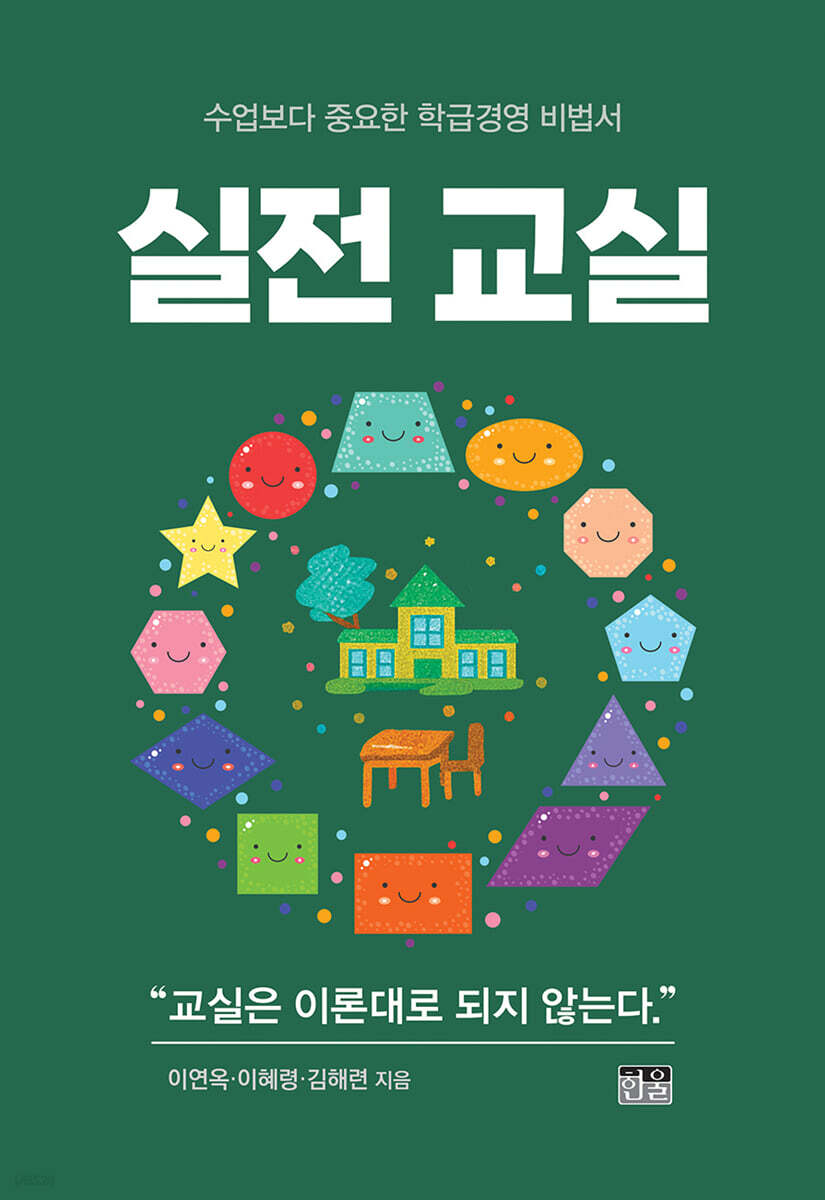
Practical classroom
 |
Description
Book Introduction
In an era where teaching requires courage, presenting the essence and methods of education!
Classroom Management Practical Manual for Elementary School Teachers
Elementary school teachers stand at the podium with passion, but the task of safely caring for and teaching over twenty children on their own presents significant challenges and unsettling moments.
Moreover, the educational field in South Korea is not easy.
Teachers' rights are not protected, and morale is very low due to vague reporting standards and no sanctions for malicious complaints.
In the face of an isolated structure that even experienced teachers find burdensome, new teachers are greatly bewildered by the gap between theory and reality.
With the constant stream of unfortunate news about teachers, it's time for teachers to band together and share their expertise to create a better educational environment.
Accordingly, three elementary school teachers have compiled their combined experience of struggling in the teaching profession for nearly 70 years and their classroom management know-how into a book.
Teachers communicate with children, meet with parents, deal with malicious complaints and bullying, care for the "golden child," and overcome problematic situations in the classroom.
Even in difficult times, classrooms nurtured with children become rich and happy.
The authors say a classroom management manual is absolutely necessary for the development of young children.
"Practical Classroom" is a practical manual that accurately reflects the reality of elementary education.
As the author hopes this book will be a source of strength for both prospective and current teachers, this book will serve as a strong support for elementary school teachers.
Classroom Management Practical Manual for Elementary School Teachers
Elementary school teachers stand at the podium with passion, but the task of safely caring for and teaching over twenty children on their own presents significant challenges and unsettling moments.
Moreover, the educational field in South Korea is not easy.
Teachers' rights are not protected, and morale is very low due to vague reporting standards and no sanctions for malicious complaints.
In the face of an isolated structure that even experienced teachers find burdensome, new teachers are greatly bewildered by the gap between theory and reality.
With the constant stream of unfortunate news about teachers, it's time for teachers to band together and share their expertise to create a better educational environment.
Accordingly, three elementary school teachers have compiled their combined experience of struggling in the teaching profession for nearly 70 years and their classroom management know-how into a book.
Teachers communicate with children, meet with parents, deal with malicious complaints and bullying, care for the "golden child," and overcome problematic situations in the classroom.
Even in difficult times, classrooms nurtured with children become rich and happy.
The authors say a classroom management manual is absolutely necessary for the development of young children.
"Practical Classroom" is a practical manual that accurately reflects the reality of elementary education.
As the author hopes this book will be a source of strength for both prospective and current teachers, this book will serve as a strong support for elementary school teachers.
index
Recommendation
Entering
Part 1.
A relationship that overcomes obstacles through communication and trust
Chapter 1 | A Strategic Approach to Parent Counseling
Chapter 2: Giving Courage and Hope with the Language of Positive Thinking
Chapter 3: Communicating with 'What Kids Like'
Part 2.
Peace, Prevention of School Violence
Chapter 4 | How can we prevent school violence?
Chapter 5: The Magic Spell to Find Peace
Chapter 6: Living with 'Golden Child in the Classroom'
Part 3.
System, a self-running classroom
Chapter 7 | A Classroom That Doesn't Struggle with 'Rules We Made Together'
Chapter 8: Creating a Sparkling Classroom with the "Cleaning Squad"
Chapter 9 | Safety Education to Prevent the Collapse of a Tower Built with Effort
Part 4.
Habits, the flower of elementary education
Chapter 10 | Habit Education Using Notifications
Chapter 11 | Humanities Reading Education: Encouraging Self-Reading
Part 5.
The beginning and end of study and learning
Chapter 12 | Studying on Your Own with a "Learning Notebook"
Chapter 13 | Expressing Thoughts and Feelings through 'Morning Writing'
Appendix I
10 Classroom Management Mindsets for Less Hurt and More Love
Appendix II
How to handle parent complaints
Author's Note
Entering
Part 1.
A relationship that overcomes obstacles through communication and trust
Chapter 1 | A Strategic Approach to Parent Counseling
Chapter 2: Giving Courage and Hope with the Language of Positive Thinking
Chapter 3: Communicating with 'What Kids Like'
Part 2.
Peace, Prevention of School Violence
Chapter 4 | How can we prevent school violence?
Chapter 5: The Magic Spell to Find Peace
Chapter 6: Living with 'Golden Child in the Classroom'
Part 3.
System, a self-running classroom
Chapter 7 | A Classroom That Doesn't Struggle with 'Rules We Made Together'
Chapter 8: Creating a Sparkling Classroom with the "Cleaning Squad"
Chapter 9 | Safety Education to Prevent the Collapse of a Tower Built with Effort
Part 4.
Habits, the flower of elementary education
Chapter 10 | Habit Education Using Notifications
Chapter 11 | Humanities Reading Education: Encouraging Self-Reading
Part 5.
The beginning and end of study and learning
Chapter 12 | Studying on Your Own with a "Learning Notebook"
Chapter 13 | Expressing Thoughts and Feelings through 'Morning Writing'
Appendix I
10 Classroom Management Mindsets for Less Hurt and More Love
Appendix II
How to handle parent complaints
Author's Note
Detailed image

Into the book
New teachers enter the classroom with a solid foundation of theory and a love for children, honed in teacher training, but are bewildered by the vast gap between theory and reality.
The shift curriculum may have served as a fundamental intellectual foundation for developing teachers' qualities and capabilities, but it must also seek new directions by establishing an organic relationship with the needs of the classroom.
It is an urgent time to supplement the curriculum of the university to keep up with the times.
Even making a cup of coffee requires a manual.
How meticulous and systematic must a manual be for the holistic development of children? Schools demand even more practical classroom management manuals.
We need a secret book containing classroom management know-how that can be applied and utilized immediately upon entering the field, bridging the gap between theory and practice.
--- From "Entering"
Character education is very difficult because it cannot be achieved in a short period of time through technology or techniques alone, but it is very hopeful that children are beings with great potential for change and growth.
So, teachers should not give up on character education.
We must have the mindset to provide character education whenever we have the chance, through the life stories and examples covered in the school curriculum and children's school life.
Children understand and accept character education that occurs frequently in their lives better than mechanical and random contexts such as '2 hours of character education' or '2 hours of school violence prevention education.'
Character education, when integrated with children's current lives, leads to significant change and growth, and the depth of internalization deepens.
Therefore, the role of the homeroom teacher, who spends the whole day with the students, is important.
--- From "Chapter 4 | How to Prevent School Violence"
As a way of rewarding, I mainly use a group praise board.
Children develop a sense of responsibility, solidarity, and cooperation because they want their group to be praised.
When all group members have done so, one group praise coupon will be awarded.
There are some children who don't come sometimes.
In that case, a penalty determined together is applied (e.g., 1 point deducted from the group praise coupon, etc.).
Penalties are applied mechanically.
Let's teach children in advance not to criticize children who don't do their homework.
If the child does not come twice in a row, contact the parents and ask for guidance, and the behavior will usually be corrected.
It is recommended that homeroom teachers check the notices daily in March.
Teacher feedback, such as checking that students completed yesterday's assignment and received parental approval, is a powerful fuel for habit formation.
--- From “Chapter 10 | Habit Education Using Notice Boards”
Teachers' hearts race just from receiving a single text message of complaint from a parent.
When the classroom phone rings or a new message pops up on HiTalk, I get nervous and automatically reflexively review my words and actions.
A small number of parents send text messages expressing their feelings unilaterally.
Those long texts deeply wound teachers' souls, destroy their self-esteem, and jeopardize their teaching careers.
In order to be less hurt by parents and to remain strong in the teaching profession, you must make at least the minimum preparations.
Let's deal with malicious complaints from parents, which can be encountered like traffic accidents at any point in a teacher's career, in the following order.
① Analyze the content of the complaint, ② Prepare a response plan, ③ Respond quickly, ④ Organize the issue and preserve the basis for educational activities, ⑤ Know the attitude to respond to complaints, ⑥ Do not respond directly to unusual or malicious complaints, ⑦ Be familiar with related laws and guidelines, ⑧ Establish a follow-up action plan, ⑨ Activities to restore the teacher's mind, ⑩ Respond to unusual complaints.
The shift curriculum may have served as a fundamental intellectual foundation for developing teachers' qualities and capabilities, but it must also seek new directions by establishing an organic relationship with the needs of the classroom.
It is an urgent time to supplement the curriculum of the university to keep up with the times.
Even making a cup of coffee requires a manual.
How meticulous and systematic must a manual be for the holistic development of children? Schools demand even more practical classroom management manuals.
We need a secret book containing classroom management know-how that can be applied and utilized immediately upon entering the field, bridging the gap between theory and practice.
--- From "Entering"
Character education is very difficult because it cannot be achieved in a short period of time through technology or techniques alone, but it is very hopeful that children are beings with great potential for change and growth.
So, teachers should not give up on character education.
We must have the mindset to provide character education whenever we have the chance, through the life stories and examples covered in the school curriculum and children's school life.
Children understand and accept character education that occurs frequently in their lives better than mechanical and random contexts such as '2 hours of character education' or '2 hours of school violence prevention education.'
Character education, when integrated with children's current lives, leads to significant change and growth, and the depth of internalization deepens.
Therefore, the role of the homeroom teacher, who spends the whole day with the students, is important.
--- From "Chapter 4 | How to Prevent School Violence"
As a way of rewarding, I mainly use a group praise board.
Children develop a sense of responsibility, solidarity, and cooperation because they want their group to be praised.
When all group members have done so, one group praise coupon will be awarded.
There are some children who don't come sometimes.
In that case, a penalty determined together is applied (e.g., 1 point deducted from the group praise coupon, etc.).
Penalties are applied mechanically.
Let's teach children in advance not to criticize children who don't do their homework.
If the child does not come twice in a row, contact the parents and ask for guidance, and the behavior will usually be corrected.
It is recommended that homeroom teachers check the notices daily in March.
Teacher feedback, such as checking that students completed yesterday's assignment and received parental approval, is a powerful fuel for habit formation.
--- From “Chapter 10 | Habit Education Using Notice Boards”
Teachers' hearts race just from receiving a single text message of complaint from a parent.
When the classroom phone rings or a new message pops up on HiTalk, I get nervous and automatically reflexively review my words and actions.
A small number of parents send text messages expressing their feelings unilaterally.
Those long texts deeply wound teachers' souls, destroy their self-esteem, and jeopardize their teaching careers.
In order to be less hurt by parents and to remain strong in the teaching profession, you must make at least the minimum preparations.
Let's deal with malicious complaints from parents, which can be encountered like traffic accidents at any point in a teacher's career, in the following order.
① Analyze the content of the complaint, ② Prepare a response plan, ③ Respond quickly, ④ Organize the issue and preserve the basis for educational activities, ⑤ Know the attitude to respond to complaints, ⑥ Do not respond directly to unusual or malicious complaints, ⑦ Be familiar with related laws and guidelines, ⑧ Establish a follow-up action plan, ⑨ Activities to restore the teacher's mind, ⑩ Respond to unusual complaints.
--- From “Appendix II | 10 Tips for Responding to Parents’ Complaints”
Publisher's Review
A book of classroom management secrets built on experience,
Smart coping strategies for teachers and children!
The current school violence prevention system has strayed from its basic purpose and remains a mere procedure and formality.
When school violence is reported, it has become commonplace for parents to hire lawyers and focus solely on mitigating the punishment their children receive.
Likewise, the other parent also appoints a lawyer and files a 'mutual violence report'.
The system that was meant to protect children has been transformed into one that encourages fighting among adults.
Safety is an issue that requires as much attention as school violence.
When a safety accident occurs, even the most competent teachers find it difficult to manage the class, and all educational activities are hindered.
The classroom is small and there are many children.
Running between desks, chairs, and bags is very dangerous.
During break time, tensions are released and safety accidents can occur not only in the classroom but also in various places such as hallways and bathrooms, so great care must be taken.
This book presents guidelines for elementary school teachers to address the problems of such school violence systems, and provides detailed and multifaceted information on the safety education teachers must provide in classrooms with many risk factors.
Besides that, there are many things to pay special attention to in classroom life.
Because coping with these difficult situations can be overwhelming, the authors offer a detailed strategy for dealing with these challenging situations, drawing on their extensive teaching experience.
The 10 classroom management mindsets and 10 tips for dealing with parental complaints, summarized in the appendix, will also provide practical help to teachers in crisis.
A classroom built together with students,
Capturing scenes filled with joy and wisdom
“Guys, stop it.
“Should I go home now?”
“I want to do more.
“Will you clean the entire hallway on our floor?”
“Teacher, why is cleaning so fun?”
“The balloon flower seeds have come up!”
“Teacher, there are heart balloons in the sky.”
“Teacher, my dead cabbage came back to life! I think it’s because you gave it the nutrients.
“It’s so amazing.”
Children who enjoy cleaning, tending plants, and communicating.
A classroom where children organize and participate on their own is full of energy.
As reading is a great help in growth, the author read ten pages of books on appropriate topics during morning reading time.
The immersed children enjoyed the time together, sighing, feeling nervous, or rejoicing.
The appearance of characters in picture books that resemble themselves conveys to students what the teacher wants to say.
How should we encourage reading? Which plants are good for children? How should we guide cleaning? The authors vividly describe how they run their classes and how children participate.
Hearing the children's voices in the text will make you smile and at the same time give you tips for classroom management.
Book structure
This book consists of 13 chapters in 5 parts and two appendices.
Part 1, “Communication and Trust: A Relationship That Moves Through Together,” covers know-how in parent counseling, how to lead children with “positive language,” and the importance of communicating with “things children like.”
Part 2, “Peace, School Violence Prevention,” covers how to prevent school violence and how to respond when it occurs, and teaches how to manage yourself when things get tough and how to live with the “golden child” in the classroom.
Part 3, “Systems: Running a Classroom That Runs on Itself,” contains tips for children to enjoy cleaning on their own, along with experiences of running a classroom with rules created together with children.
Additionally, it covers the most important safety education.
Part 4, “Habits, the Flower of Elementary Education,” explains how to use notice boards to promote habit education, and introduces reading education know-how to encourage independent reading, as well as information on which books are good.
Part 5, “Study, the Beginning and End of Learning,” covers how children can learn to study through study notebooks, note-taking techniques, student feedback shared with parents, the importance of writing, and how to utilize ‘morning writing.’
The two appendices, “10 Classroom Management Mindsets for Less Hurt and More Love” and “10 Tips for Dealing with Parents’ Complaints,” comprehensively introduce tips and mindsets for overcoming difficulties during teaching careers, as well as how to deal with parent complaints.
"Practical Classroom" not only helps teachers develop their skills, but also explores the case studies and experiences of other classes to help them find ways to create a happy classroom.
Parents will also find useful information through the book about what school life is like these days and how to collaborate with teachers in their children's education.
Smart coping strategies for teachers and children!
The current school violence prevention system has strayed from its basic purpose and remains a mere procedure and formality.
When school violence is reported, it has become commonplace for parents to hire lawyers and focus solely on mitigating the punishment their children receive.
Likewise, the other parent also appoints a lawyer and files a 'mutual violence report'.
The system that was meant to protect children has been transformed into one that encourages fighting among adults.
Safety is an issue that requires as much attention as school violence.
When a safety accident occurs, even the most competent teachers find it difficult to manage the class, and all educational activities are hindered.
The classroom is small and there are many children.
Running between desks, chairs, and bags is very dangerous.
During break time, tensions are released and safety accidents can occur not only in the classroom but also in various places such as hallways and bathrooms, so great care must be taken.
This book presents guidelines for elementary school teachers to address the problems of such school violence systems, and provides detailed and multifaceted information on the safety education teachers must provide in classrooms with many risk factors.
Besides that, there are many things to pay special attention to in classroom life.
Because coping with these difficult situations can be overwhelming, the authors offer a detailed strategy for dealing with these challenging situations, drawing on their extensive teaching experience.
The 10 classroom management mindsets and 10 tips for dealing with parental complaints, summarized in the appendix, will also provide practical help to teachers in crisis.
A classroom built together with students,
Capturing scenes filled with joy and wisdom
“Guys, stop it.
“Should I go home now?”
“I want to do more.
“Will you clean the entire hallway on our floor?”
“Teacher, why is cleaning so fun?”
“The balloon flower seeds have come up!”
“Teacher, there are heart balloons in the sky.”
“Teacher, my dead cabbage came back to life! I think it’s because you gave it the nutrients.
“It’s so amazing.”
Children who enjoy cleaning, tending plants, and communicating.
A classroom where children organize and participate on their own is full of energy.
As reading is a great help in growth, the author read ten pages of books on appropriate topics during morning reading time.
The immersed children enjoyed the time together, sighing, feeling nervous, or rejoicing.
The appearance of characters in picture books that resemble themselves conveys to students what the teacher wants to say.
How should we encourage reading? Which plants are good for children? How should we guide cleaning? The authors vividly describe how they run their classes and how children participate.
Hearing the children's voices in the text will make you smile and at the same time give you tips for classroom management.
Book structure
This book consists of 13 chapters in 5 parts and two appendices.
Part 1, “Communication and Trust: A Relationship That Moves Through Together,” covers know-how in parent counseling, how to lead children with “positive language,” and the importance of communicating with “things children like.”
Part 2, “Peace, School Violence Prevention,” covers how to prevent school violence and how to respond when it occurs, and teaches how to manage yourself when things get tough and how to live with the “golden child” in the classroom.
Part 3, “Systems: Running a Classroom That Runs on Itself,” contains tips for children to enjoy cleaning on their own, along with experiences of running a classroom with rules created together with children.
Additionally, it covers the most important safety education.
Part 4, “Habits, the Flower of Elementary Education,” explains how to use notice boards to promote habit education, and introduces reading education know-how to encourage independent reading, as well as information on which books are good.
Part 5, “Study, the Beginning and End of Learning,” covers how children can learn to study through study notebooks, note-taking techniques, student feedback shared with parents, the importance of writing, and how to utilize ‘morning writing.’
The two appendices, “10 Classroom Management Mindsets for Less Hurt and More Love” and “10 Tips for Dealing with Parents’ Complaints,” comprehensively introduce tips and mindsets for overcoming difficulties during teaching careers, as well as how to deal with parent complaints.
"Practical Classroom" not only helps teachers develop their skills, but also explores the case studies and experiences of other classes to help them find ways to create a happy classroom.
Parents will also find useful information through the book about what school life is like these days and how to collaborate with teachers in their children's education.
GOODS SPECIFICS
- Date of issue: November 28, 2025
- Page count, weight, size: 208 pages | 153*224*20mm
- ISBN13: 9788946084117
- ISBN10: 8946084111
You may also like
카테고리
korean


korean

![GQ KOREA Mark (Monthly): December [2025]](http://librairie.coreenne.fr/cdn/shop/files/8ef265dbbfbf186523ed75ba7319009d.jpg?v=1765340328&width=3840)


