

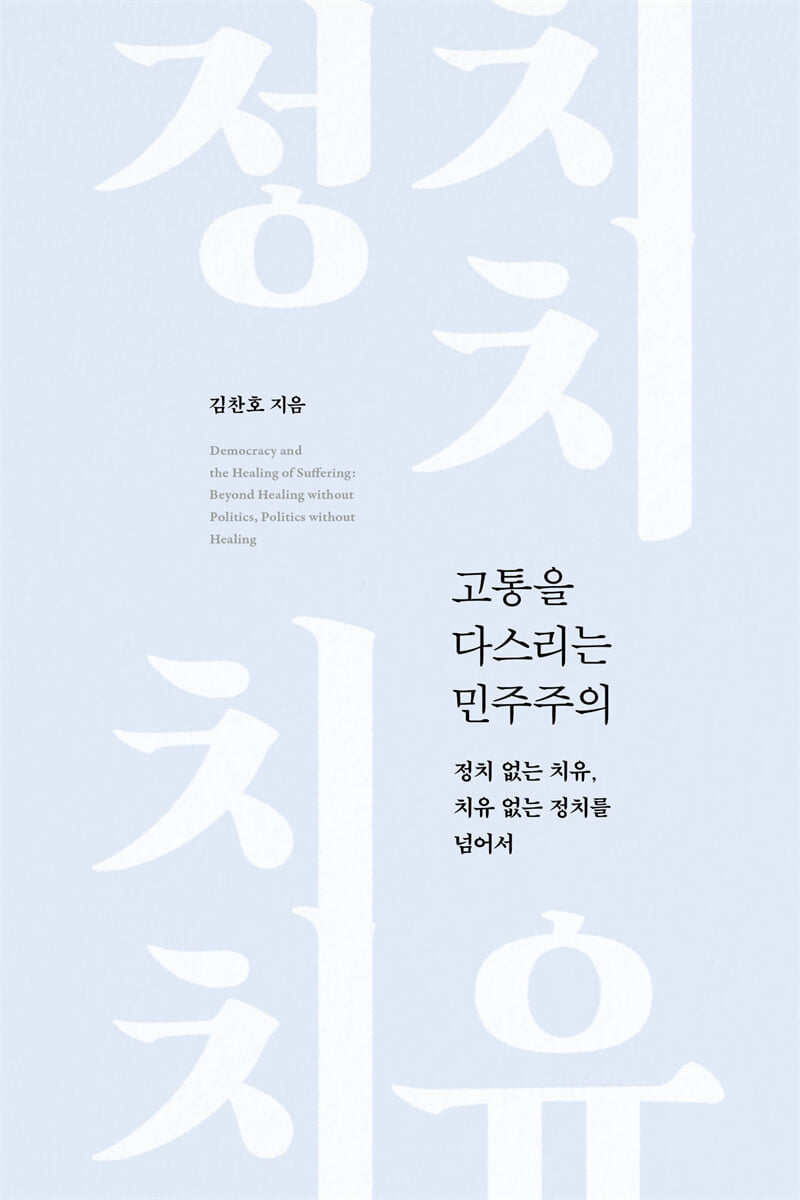
Democracy that governs suffering
 |
Description
Book Introduction
Professor Kim Chan-ho, a sociologist and author of "Contempt," presents his first political essay.
Reflection in a language of empathy and thought, different from fast-paced journalism or heated political commentary.
The true nature of politics and the value of democracy
The essence of politics is not confrontation and hatred, but healing!
Democracy cares for the suffering heart
A heart gathered for the common good cares for a wounded democracy.
In an age of complex crises, can politics be reborn? How can democracy connect isolated lives and create a community of hearts? This book is a warm and friendly user manual for democracy, written by Professor Kim Chan-ho based on 40 years of sociology research and 60 years of life experience.
In the midst of the political turmoil following the declaration of martial law on December 3, 2024, the author explored the essence of politics and the principles of democracy, traveling between the plaza and the laboratory.
Through scholarly intellect and civic practice accumulated over a long period of time, he reveals that the reason for the existence of politics is not conflict and hatred, but healing and coexistence, and that democracy itself can be a source of healing.
The author meticulously examines the mental habits necessary for sustainable K-democracy, empathizing with and reflecting on the issues that cannot be captured in journalism that quickly reports individual events or in political commentary that relies on fandom.
In a time of widespread anxiety and conflict, this book will serve as a valuable first step toward building a foundation of political literacy to protect yourself and your community.
A report of hope on 'post-traumatic growth' written with the insight of a humanist and the heart of a citizen with a three-year-old granddaughter.
Reflection in a language of empathy and thought, different from fast-paced journalism or heated political commentary.
The true nature of politics and the value of democracy
The essence of politics is not confrontation and hatred, but healing!
Democracy cares for the suffering heart
A heart gathered for the common good cares for a wounded democracy.
In an age of complex crises, can politics be reborn? How can democracy connect isolated lives and create a community of hearts? This book is a warm and friendly user manual for democracy, written by Professor Kim Chan-ho based on 40 years of sociology research and 60 years of life experience.
In the midst of the political turmoil following the declaration of martial law on December 3, 2024, the author explored the essence of politics and the principles of democracy, traveling between the plaza and the laboratory.
Through scholarly intellect and civic practice accumulated over a long period of time, he reveals that the reason for the existence of politics is not conflict and hatred, but healing and coexistence, and that democracy itself can be a source of healing.
The author meticulously examines the mental habits necessary for sustainable K-democracy, empathizing with and reflecting on the issues that cannot be captured in journalism that quickly reports individual events or in political commentary that relies on fandom.
In a time of widespread anxiety and conflict, this book will serve as a valuable first step toward building a foundation of political literacy to protect yourself and your community.
A report of hope on 'post-traumatic growth' written with the insight of a humanist and the heart of a citizen with a three-year-old granddaughter.
- You can preview some of the book's contents.
Preview
index
Introduction
Prologue: The Heart That Democracy Heals, The Heart That Democracy Heals
1.
calamity
Complex crises and political responsibility
A self-portrait of a 'defective society'
What Political Disasters Bring
Citizens, Demon Hunters
2.
far right
Mechanisms of collective delusion
The Mass Psychology of Fascism
How Hate Spreads
What is the Taegeukgi?
3.
square
A display of power, the birth of the citizen
From the People's Assembly to the cheering stick rally
Political friendship and public well-being
Two squares, what's the difference?
4.
politician
Jobs that AI cannot replace
The struggle for power, its meanness and cruelty
Why You Need a Sense of Humor
On the character of politicians
5.
education
The school that suppressed democracy
To create a world we want to live in
Who is the boy
Let's cultivate a spirit of hospitality
6.
conversation
Be firm with 'mistakes', be lenient with 'differences'
Let's expand the boundaries of 'us'
Peace-making speech
From a fear system to an exploration system
7.
recovery
In search of the 'right to be unhappy'
When your heart breaks from pain
Social Bonding and Healing
A festival where we cry and dance together
8.
growth
For a place where citizens grow
The Path to a Civil Society that Cares for Each Other
So that the present can help the future
Honest despair rather than false hope
Appendix: A Conversation with Parker Palmer: The Heart that Sustains Democracy
main
Prologue: The Heart That Democracy Heals, The Heart That Democracy Heals
1.
calamity
Complex crises and political responsibility
A self-portrait of a 'defective society'
What Political Disasters Bring
Citizens, Demon Hunters
2.
far right
Mechanisms of collective delusion
The Mass Psychology of Fascism
How Hate Spreads
What is the Taegeukgi?
3.
square
A display of power, the birth of the citizen
From the People's Assembly to the cheering stick rally
Political friendship and public well-being
Two squares, what's the difference?
4.
politician
Jobs that AI cannot replace
The struggle for power, its meanness and cruelty
Why You Need a Sense of Humor
On the character of politicians
5.
education
The school that suppressed democracy
To create a world we want to live in
Who is the boy
Let's cultivate a spirit of hospitality
6.
conversation
Be firm with 'mistakes', be lenient with 'differences'
Let's expand the boundaries of 'us'
Peace-making speech
From a fear system to an exploration system
7.
recovery
In search of the 'right to be unhappy'
When your heart breaks from pain
Social Bonding and Healing
A festival where we cry and dance together
8.
growth
For a place where citizens grow
The Path to a Civil Society that Cares for Each Other
So that the present can help the future
Honest despair rather than false hope
Appendix: A Conversation with Parker Palmer: The Heart that Sustains Democracy
main
Detailed image
.jpg)
Into the book
We have overcome a critical juncture, but another crisis could strike at any time.
We must not be overly excited or depressed by the events unfolding before our eyes, but must respond to reality with a long-term perspective.
Cynicism and fear are the enemies of democracy.
Hands joined together in trust in humanity foster democracy.
--- 「2.
Among the "far right"
In particular, the impeachment rally held at Yeouido Plaza attracted worldwide attention. On the day the impeachment motion was passed in the National Assembly, more than a million people participated in a festival, denouncing the president with cheering sticks and K-pop.
As I sang along to those songs, I was overcome with a special emotion.
That's because it was the place where the choir was mobilized to sing at the Armed Forces Day event half a century ago.
In the same square where they sang “My Country,” which was composed and written by President Park Chung-hee, they began singing a popular song with the refrain “Impeach Yoon Seok-yeol, impeach Yoon Seok-yeol.”
--- 「3.
From "Plaza"
Politics is essentially realized through human intelligence, not artificial intelligence.
It can be said to be the area where the highest level of mental activity takes place.
(…) can never be realized as an arithmetic sum of data about individual citizens.
It is formed through constant discussion and interaction among citizens, and a social contract is formed on the basis of this.
Politics is a collaborative effort that guides such processes.
--- 「4.
Among the politicians
It's clear why students should be interested in politics.
No matter how excellent an individual is or how hard they try, if society is weak, it is difficult to lead the life they want.
Private happiness is greatly influenced by public conditions.
In that sense, politics should be understood not simply as party activities or power struggles, but as a process of solving community problems and determining how to live together.
It is not the exclusive domain of politicians, but 'our business'.
Now we need to ask our children new questions.
What kind of world would it take for your dreams to come true? What needs to change now to make that happen? Who should do it? What can we do?
--- 「5.
From "Education"
As fear grows, we focus our energy solely on protecting ourselves.
Fear has antisocial properties because it makes us look at others and the world as objects of caution.
So it often creates a vicious cycle of revenge.
(…) In contrast, as the motivation to explore grows, the tentacles of interest in the outside world extend wider and deeper.
As the circuit of empathy opens, understanding of others becomes more refined.
--- 「6.
From "Dialogue"
In a society that values only happiness, people are eager to avoid pain and ignore its meaning.
Through suffering, the pathways to growth and deeper connection with others are narrowed.
Pain is the source of awakening, creation, and resistance.
Art, philosophy, revolution, and solidarity often begin with suffering.
In a world where negative experiences are eliminated, questions about reality are not raised, and no new worlds are explored.
In that sense, we can say that the 'right to be unhappy' is the right to live as a complete human being, and through it we can acquire freedom of existence.
Politics tends to go astray when it ignores pain and misery.
--- 「7.
From "Recovery"
There were many times in those days when the world became more hopeless rather than better, but as time passed, many things changed little by little.
The footsteps of democracy prove this, and in that respect, history gives us great comfort and courage.
We can fully believe that the seeds we sow today will never be in vain, and that becomes a solid foundation for hope.
We must not be overly excited or depressed by the events unfolding before our eyes, but must respond to reality with a long-term perspective.
Cynicism and fear are the enemies of democracy.
Hands joined together in trust in humanity foster democracy.
--- 「2.
Among the "far right"
In particular, the impeachment rally held at Yeouido Plaza attracted worldwide attention. On the day the impeachment motion was passed in the National Assembly, more than a million people participated in a festival, denouncing the president with cheering sticks and K-pop.
As I sang along to those songs, I was overcome with a special emotion.
That's because it was the place where the choir was mobilized to sing at the Armed Forces Day event half a century ago.
In the same square where they sang “My Country,” which was composed and written by President Park Chung-hee, they began singing a popular song with the refrain “Impeach Yoon Seok-yeol, impeach Yoon Seok-yeol.”
--- 「3.
From "Plaza"
Politics is essentially realized through human intelligence, not artificial intelligence.
It can be said to be the area where the highest level of mental activity takes place.
(…) can never be realized as an arithmetic sum of data about individual citizens.
It is formed through constant discussion and interaction among citizens, and a social contract is formed on the basis of this.
Politics is a collaborative effort that guides such processes.
--- 「4.
Among the politicians
It's clear why students should be interested in politics.
No matter how excellent an individual is or how hard they try, if society is weak, it is difficult to lead the life they want.
Private happiness is greatly influenced by public conditions.
In that sense, politics should be understood not simply as party activities or power struggles, but as a process of solving community problems and determining how to live together.
It is not the exclusive domain of politicians, but 'our business'.
Now we need to ask our children new questions.
What kind of world would it take for your dreams to come true? What needs to change now to make that happen? Who should do it? What can we do?
--- 「5.
From "Education"
As fear grows, we focus our energy solely on protecting ourselves.
Fear has antisocial properties because it makes us look at others and the world as objects of caution.
So it often creates a vicious cycle of revenge.
(…) In contrast, as the motivation to explore grows, the tentacles of interest in the outside world extend wider and deeper.
As the circuit of empathy opens, understanding of others becomes more refined.
--- 「6.
From "Dialogue"
In a society that values only happiness, people are eager to avoid pain and ignore its meaning.
Through suffering, the pathways to growth and deeper connection with others are narrowed.
Pain is the source of awakening, creation, and resistance.
Art, philosophy, revolution, and solidarity often begin with suffering.
In a world where negative experiences are eliminated, questions about reality are not raised, and no new worlds are explored.
In that sense, we can say that the 'right to be unhappy' is the right to live as a complete human being, and through it we can acquire freedom of existence.
Politics tends to go astray when it ignores pain and misery.
--- 「7.
From "Recovery"
There were many times in those days when the world became more hopeless rather than better, but as time passed, many things changed little by little.
The footsteps of democracy prove this, and in that respect, history gives us great comfort and courage.
We can fully believe that the seeds we sow today will never be in vain, and that becomes a solid foundation for hope.
--- 「8.
From "Growth"
From "Growth"
Publisher's Review
Professor Kim Chan-ho, a sociologist of “Contempt,” is different from journalism or political commentary.
The true nature of politics and the value of democracy, reflected in the language of empathy and reason.
Professor Kim Chan-ho, a sociologist who has explored the relationship between emotions and society and sought ways to live a civic life, has published his first political essay.
The background to the decision of a sociologist who has studied cultural sociology and education for a long time to deal with politics and democracy was the December 3rd Incident that shook our society last winter.
There is a state of emergency martial law.
As revealed in the 'Introduction', the author busily traveled between the plaza and the laboratory to understand the political situation and grasp the hidden side of it amidst psychological bewilderment and intellectual frustration.
I learned by thinking and talking with fellow citizens, and I consulted various references to get the gist.
This book is a record of reflection on the essence of politics and the value of democracy, with empathy and reasoning that cannot be captured in fast-paced journalism or fandom-conscious political commentary.
Based on 40 years of sociological research and 60 years of life experience, I seek the true meaning and purpose of politics, with all its negative implications.
In these times of widespread anxiety and conflict, this book contains useful content that lays the foundation for "political literacy" to protect oneself and one's community.
In a situation where internal suffering remains undiminished despite external affluence, what clues can politics and democracy offer?
The essence of politics is not confrontation and hatred, but healing and coexistence.
Democracy cares for the suffering heart
A heart gathered for the common good cares for a wounded democracy.
As a sociologist who has meticulously observed the concentric circles within the members of society, the starting point of reflection is the relationship between politics and the mind.
Noting that politics and healing both contain the character ‘治’ (to rule), the author rediscovers ‘politics as healing’ (p. 16).
The reason for politics' existence is to heal the mind.
Since the advent of the modern social contract, politics has established the principle that it must guarantee the safety and rights of citizens and alleviate their suffering.
Among various political systems, democracy itself can be a source of healing, as it connects isolated minds by creating new spaces for dialogue.
As we saw last winter, a wounded democracy is cared for by hearts and minds gathered for the common good.
Democracy and the mind are in a relationship of mutual care.
That's why the title of the book is 'Democracy that Controls Pain'.
In an age of complex crises, the journey to find the hope hidden in Pandora's box of politics is largely divided into two parts.
Chapters 1-4 ('Disaster', 'The Far Right', 'The Square', 'Politicians') are about 'the heart that democracy heals'.
In a 'deficient society' where care is disappearing due to lack of communication and each person living for themselves, when we are in pain, we go to the hospital, but we also gather in the square.
There, you can escape from the power struggles and the struggle for recognition, become yourself, and feel a sense of 'otherness'.
This is the moment when public space functions as a place for emotional healing.
The author traces the repeated evolution of K-rallies, from the Manmin Community Assembly to the Cheerleading Stick Rally, and shows that the core of democracy is the formation of a civic community.
Just as anonymous citizens became "Demon Hunters" to prevent a coup against the imperial guard, it is time to create a new ecosystem of minds that can forge social bonds against unprecedented disasters and forces that promote hatred.
Chapters 5-8 (‘Education’, ‘Dialogue’, ‘Recovery’, ‘Growth’) examine ‘the heart that heals democracy.’
Democracy is a remarkable invention of humankind, but it is also a very vulnerable system when it comes to tolerating conflict and clashes.
It might collapse again in an instant.
So, we need to practice democracy starting from school.
It is self-evident that students who feel empowered by solving community problems and deciding how to live together in the classroom will later grow into active participants in the public sphere.
However, the author emphasizes that it is important to let go of the 'desire for closure' that seeks to eliminate confusion and ambiguity with a definitive answer or conclusion and to gradually solve the given task.
Social trust is already built in the very conversation itself, where one lets go of fear and caution and acknowledges the other person's existence.
This civic intelligence is the very heart that supports democracy.
K-Democracy with outstanding crisis management capabilities and resilience
Habits of the Mind for Maturity into a Sustainable Democracy
Politics and democracy are possible only for humans, social animals with highly developed cognitive abilities.
However, AI technology, which is growing rapidly, is already replacing humans in many areas.
Is it even possible to have an AI politician? The author asserts that politics cannot be realized through the arithmetic aggregation of data on individual citizens. AI algorithms cannot replace democracy.
The processes of dialogue, compromise, judgment, and decision-making can only be realized by human intelligence, not artificial intelligence.
But democracy is also a project that can never be completed.
The mental habits that K-democracy must maintain to overcome numerous adversities and mature into a sustainable democracy shine throughout the text.
In particular, the analysis that links the meaningful concept of the "right to be unhappy," borrowed from Brave New World, to the full realization of humanity and freedom, and further, the qualitative growth of society, is truly astounding.
Would humanity be happy if suffering disappeared? Without negative experiences, there would be no more questioning of reality or exploration of new worlds.
In that sense, the 'right to be unhappy' can be said to be the right to live as a human being.
The author concludes that politics tends to go astray when it ignores pain and misfortune (p. 208).
In addition, the message that we can become "better people" simply by participating in the public forum where discussion and agreement are made (page 224), and the passage that shares the comfort and courage gained from history proving that change does occur in the end, despite the frequent despair and pessimism that come when we are blocked by a reality that is unmoving or even regressing (page 260), will also remain in the readers' memories for a long time.
Honest despair rather than false hope
For a democracy that nurtures the seeds of intellect and practice within each person's life.
Although it is a book about politics, it examines society as a whole.
It provides a framework and language of thought that expands the narrow view of reality.
Comparing the differences between 'Cheering Stick Plaza' and 'Taegeukgi Plaza' makes us think about how individuals should meet to form a healthy public sphere (page 105).
The results and meaning of 'Korean Dialogue', a project in which two people with opposing views come to understand each other by sitting down and talking (p. 190), and the educational field where learning that changes reality unfolds, such as the joint class on 'Citizen Participation Budget Proposal' at a school in Seoul (p. 152), are presented as specific scenes from daily life that demonstrate the practices necessary for the recovery and growth of a community.
"Honest despair is better than false hope." This is the final theme of this book.
Rather than falling into anxiety and depression when faced with a reality that seems to be heading towards catastrophe, it is important to face life head-on and maintain a positive attitude.
When these minds come together, daily life will change and society will be renewed.
The author, who has accumulated a wealth of scholarly intellect and civic practice through a long period of reading about humanity and society, finds that the true evidence of hope lies in politics.
We are not just beings who have hope, we are beings who create hope (p. 271).
This book will be of great help as a first step toward creating a community of hope within each person's life.
The true nature of politics and the value of democracy, reflected in the language of empathy and reason.
Professor Kim Chan-ho, a sociologist who has explored the relationship between emotions and society and sought ways to live a civic life, has published his first political essay.
The background to the decision of a sociologist who has studied cultural sociology and education for a long time to deal with politics and democracy was the December 3rd Incident that shook our society last winter.
There is a state of emergency martial law.
As revealed in the 'Introduction', the author busily traveled between the plaza and the laboratory to understand the political situation and grasp the hidden side of it amidst psychological bewilderment and intellectual frustration.
I learned by thinking and talking with fellow citizens, and I consulted various references to get the gist.
This book is a record of reflection on the essence of politics and the value of democracy, with empathy and reasoning that cannot be captured in fast-paced journalism or fandom-conscious political commentary.
Based on 40 years of sociological research and 60 years of life experience, I seek the true meaning and purpose of politics, with all its negative implications.
In these times of widespread anxiety and conflict, this book contains useful content that lays the foundation for "political literacy" to protect oneself and one's community.
In a situation where internal suffering remains undiminished despite external affluence, what clues can politics and democracy offer?
The essence of politics is not confrontation and hatred, but healing and coexistence.
Democracy cares for the suffering heart
A heart gathered for the common good cares for a wounded democracy.
As a sociologist who has meticulously observed the concentric circles within the members of society, the starting point of reflection is the relationship between politics and the mind.
Noting that politics and healing both contain the character ‘治’ (to rule), the author rediscovers ‘politics as healing’ (p. 16).
The reason for politics' existence is to heal the mind.
Since the advent of the modern social contract, politics has established the principle that it must guarantee the safety and rights of citizens and alleviate their suffering.
Among various political systems, democracy itself can be a source of healing, as it connects isolated minds by creating new spaces for dialogue.
As we saw last winter, a wounded democracy is cared for by hearts and minds gathered for the common good.
Democracy and the mind are in a relationship of mutual care.
That's why the title of the book is 'Democracy that Controls Pain'.
In an age of complex crises, the journey to find the hope hidden in Pandora's box of politics is largely divided into two parts.
Chapters 1-4 ('Disaster', 'The Far Right', 'The Square', 'Politicians') are about 'the heart that democracy heals'.
In a 'deficient society' where care is disappearing due to lack of communication and each person living for themselves, when we are in pain, we go to the hospital, but we also gather in the square.
There, you can escape from the power struggles and the struggle for recognition, become yourself, and feel a sense of 'otherness'.
This is the moment when public space functions as a place for emotional healing.
The author traces the repeated evolution of K-rallies, from the Manmin Community Assembly to the Cheerleading Stick Rally, and shows that the core of democracy is the formation of a civic community.
Just as anonymous citizens became "Demon Hunters" to prevent a coup against the imperial guard, it is time to create a new ecosystem of minds that can forge social bonds against unprecedented disasters and forces that promote hatred.
Chapters 5-8 (‘Education’, ‘Dialogue’, ‘Recovery’, ‘Growth’) examine ‘the heart that heals democracy.’
Democracy is a remarkable invention of humankind, but it is also a very vulnerable system when it comes to tolerating conflict and clashes.
It might collapse again in an instant.
So, we need to practice democracy starting from school.
It is self-evident that students who feel empowered by solving community problems and deciding how to live together in the classroom will later grow into active participants in the public sphere.
However, the author emphasizes that it is important to let go of the 'desire for closure' that seeks to eliminate confusion and ambiguity with a definitive answer or conclusion and to gradually solve the given task.
Social trust is already built in the very conversation itself, where one lets go of fear and caution and acknowledges the other person's existence.
This civic intelligence is the very heart that supports democracy.
K-Democracy with outstanding crisis management capabilities and resilience
Habits of the Mind for Maturity into a Sustainable Democracy
Politics and democracy are possible only for humans, social animals with highly developed cognitive abilities.
However, AI technology, which is growing rapidly, is already replacing humans in many areas.
Is it even possible to have an AI politician? The author asserts that politics cannot be realized through the arithmetic aggregation of data on individual citizens. AI algorithms cannot replace democracy.
The processes of dialogue, compromise, judgment, and decision-making can only be realized by human intelligence, not artificial intelligence.
But democracy is also a project that can never be completed.
The mental habits that K-democracy must maintain to overcome numerous adversities and mature into a sustainable democracy shine throughout the text.
In particular, the analysis that links the meaningful concept of the "right to be unhappy," borrowed from Brave New World, to the full realization of humanity and freedom, and further, the qualitative growth of society, is truly astounding.
Would humanity be happy if suffering disappeared? Without negative experiences, there would be no more questioning of reality or exploration of new worlds.
In that sense, the 'right to be unhappy' can be said to be the right to live as a human being.
The author concludes that politics tends to go astray when it ignores pain and misfortune (p. 208).
In addition, the message that we can become "better people" simply by participating in the public forum where discussion and agreement are made (page 224), and the passage that shares the comfort and courage gained from history proving that change does occur in the end, despite the frequent despair and pessimism that come when we are blocked by a reality that is unmoving or even regressing (page 260), will also remain in the readers' memories for a long time.
Honest despair rather than false hope
For a democracy that nurtures the seeds of intellect and practice within each person's life.
Although it is a book about politics, it examines society as a whole.
It provides a framework and language of thought that expands the narrow view of reality.
Comparing the differences between 'Cheering Stick Plaza' and 'Taegeukgi Plaza' makes us think about how individuals should meet to form a healthy public sphere (page 105).
The results and meaning of 'Korean Dialogue', a project in which two people with opposing views come to understand each other by sitting down and talking (p. 190), and the educational field where learning that changes reality unfolds, such as the joint class on 'Citizen Participation Budget Proposal' at a school in Seoul (p. 152), are presented as specific scenes from daily life that demonstrate the practices necessary for the recovery and growth of a community.
"Honest despair is better than false hope." This is the final theme of this book.
Rather than falling into anxiety and depression when faced with a reality that seems to be heading towards catastrophe, it is important to face life head-on and maintain a positive attitude.
When these minds come together, daily life will change and society will be renewed.
The author, who has accumulated a wealth of scholarly intellect and civic practice through a long period of reading about humanity and society, finds that the true evidence of hope lies in politics.
We are not just beings who have hope, we are beings who create hope (p. 271).
This book will be of great help as a first step toward creating a community of hope within each person's life.
GOODS SPECIFICS
- Date of issue: December 2, 2025
- Page count, weight, size: 280 pages | 140*210*20mm
- ISBN13: 9791173324314
You may also like
카테고리
korean


korean

![GQ KOREA Mark (Monthly): December [2025]](http://librairie.coreenne.fr/cdn/shop/files/8ef265dbbfbf186523ed75ba7319009d.jpg?v=1765340328&width=3840)


