

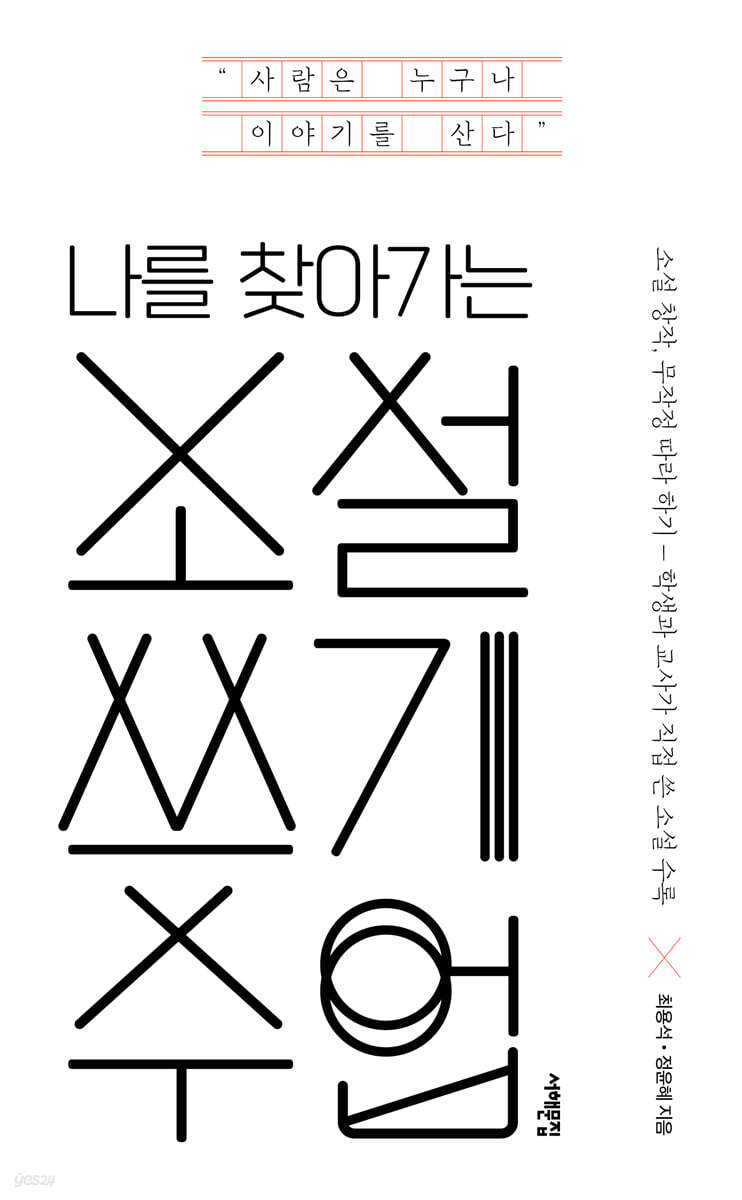
A novel writing class that comes to me
 |
Description
Book Introduction
“Everyone has a story to tell.”
From finding materials to plotting,
The nine magical steps that will complete your novel if you just follow them!
Perhaps one of the most challenging classes for Korean language teachers is the "creative" class, such as poetry or novel writing.
How can we possibly teach the highly sophisticated mental process of "creation" in a classroom? This becomes even more daunting when the class involves a novel creation class, requiring lengthy writing and complex plots involving characters, events, and settings.
This book is a guide to 'novel writing classes' written by two current teachers who were the authors of the first 'creative writing' unit in the Korean language textbook, and which compiles the teaching know-how accumulated over the past 30 years into one volume.
The authors, who believe that everyone has a "storytelling instinct," have attempted to present a practical method in this book that allows you to complete a novel simply by following it.
To this end, we explored specific methods for expanding the breadth and depth of the story, starting with finding a story that could become a seed and then germinating that seed with various questions and devices.
Let's give students the experience of completing their own one-of-a-kind novel by going through the nine magical steps of finding material, creating plausibility, finding a theme, and developing a plot.
Then, you will realize that what you will encounter at the end is the process of ‘finding myself.’
Furthermore, this book includes six novels that were actually written by students and teachers through this process, allowing readers to vividly experience the entire process of 'writing' and what kind of 'results' it yields.
And as an appendix, we have included a collection of activity sheets that teachers can easily use to serve as a complete guide to the entire novel creation process.
From finding materials to plotting,
The nine magical steps that will complete your novel if you just follow them!
Perhaps one of the most challenging classes for Korean language teachers is the "creative" class, such as poetry or novel writing.
How can we possibly teach the highly sophisticated mental process of "creation" in a classroom? This becomes even more daunting when the class involves a novel creation class, requiring lengthy writing and complex plots involving characters, events, and settings.
This book is a guide to 'novel writing classes' written by two current teachers who were the authors of the first 'creative writing' unit in the Korean language textbook, and which compiles the teaching know-how accumulated over the past 30 years into one volume.
The authors, who believe that everyone has a "storytelling instinct," have attempted to present a practical method in this book that allows you to complete a novel simply by following it.
To this end, we explored specific methods for expanding the breadth and depth of the story, starting with finding a story that could become a seed and then germinating that seed with various questions and devices.
Let's give students the experience of completing their own one-of-a-kind novel by going through the nine magical steps of finding material, creating plausibility, finding a theme, and developing a plot.
Then, you will realize that what you will encounter at the end is the process of ‘finding myself.’
Furthermore, this book includes six novels that were actually written by students and teachers through this process, allowing readers to vividly experience the entire process of 'writing' and what kind of 'results' it yields.
And as an appendix, we have included a collection of activity sheets that teachers can easily use to serve as a complete guide to the entire novel creation process.
- You can preview some of the book's contents.
Preview
index
preface
Part 1: Novel Writing Class
01.
Why a novel writing class?
One, the storytelling instinct - "Everyone lives a story."
Two: Gaze and Discovery - A Novel is a Journey to Find Answers to the Question "Why"
Third, a different perspective on things - think differently.
Fourth, the desire for expression, the joy of creation - enjoying the hardships
Five: Self-Discovery Education - Viewing Your Life as a Subject
02.
How to Start a Novel Writing Class [Mental Preparation]
The seed of the story, a 'something' that is still unknown
To lower the threshold for writing a novel
To make you want to try it
03.
A Fateful Encounter with a Story [Finding Materials]
A preparatory measure to find materials
'Overview Selection' - Empathize with Others' Experiences
'Imitation Material Presentation' - Imagine an event hidden in a picture or photograph.
04.
Likely, plausible [creating probability]
Probable Events - Causal Relationships of Successive Events
Believable Characters - Breathing Life into Their Characters with Description, Description, Dialogue, and Action
A plausible setting - a device that effectively reveals characters and events.
05.
Hidden Stories, Exploring the Behind the Scenes [Finding the Topic]
Observation and insight: the power that creates the 'value' of a novel.
stare
Exploring the Other Side
A question that keeps on going
From Desire to Reflection: The Irony of Life
06.
The Writer's Compass [Plotting]
Where the story is headed, the logical chain of events
Preliminary questions for plotting
The question is the answer!
Raise the barrier!
07.
My First Story [Novel Writing]
Writing a Novel with Plot in Mind - From Plot to Plot
Self-Inspection Checklist
Teacher feedback and rewriting
Another feedback while reading a friend's novel
08.
After finishing writing the novel
Creating Novels - From Book Art to Class Anthologies
Making a Film from a Novel - An Experience of Media Transition
09.
Teachers, let's write a novel too!
Teacher's Novel Writing Experience
After finishing writing the novel
Part 2: My One-Of-A-Kind Story (A Collection of Novels Written by Students and Teachers)
01.
Soap Doll - Kim Du-pil
[This is how the novel "Soap Doll" was created - Author Interview]
02.
Red Circle - Jeong Pil-gyu
03.
Pod Meat - Kim Seong-woo
04.
Noise - Lee Ki-chan
05.
Magnifying Glass Youngho - Choi Yongseok
06.
Norinjae - Jeong Yun-hye
[Appendix] Collection of Novel Writing Student Activity Sheets
01.
Finding a Story Activity Sheet - Overview Multiple Choice
02.
Finding a Story Activity Sheet - Presenting Imitation Materials
03.
Making Likelihood Activity Sheet - Events, Characters, and Setting
04.
Topic Finding Activity Sheet
05.
Pre-question activity sheet for plot planning
06.
Novel Writing Activity Sheet with Plot in Mind
07.
Activity sheet for reading a friend's novel
References
main
Part 1: Novel Writing Class
01.
Why a novel writing class?
One, the storytelling instinct - "Everyone lives a story."
Two: Gaze and Discovery - A Novel is a Journey to Find Answers to the Question "Why"
Third, a different perspective on things - think differently.
Fourth, the desire for expression, the joy of creation - enjoying the hardships
Five: Self-Discovery Education - Viewing Your Life as a Subject
02.
How to Start a Novel Writing Class [Mental Preparation]
The seed of the story, a 'something' that is still unknown
To lower the threshold for writing a novel
To make you want to try it
03.
A Fateful Encounter with a Story [Finding Materials]
A preparatory measure to find materials
'Overview Selection' - Empathize with Others' Experiences
'Imitation Material Presentation' - Imagine an event hidden in a picture or photograph.
04.
Likely, plausible [creating probability]
Probable Events - Causal Relationships of Successive Events
Believable Characters - Breathing Life into Their Characters with Description, Description, Dialogue, and Action
A plausible setting - a device that effectively reveals characters and events.
05.
Hidden Stories, Exploring the Behind the Scenes [Finding the Topic]
Observation and insight: the power that creates the 'value' of a novel.
stare
Exploring the Other Side
A question that keeps on going
From Desire to Reflection: The Irony of Life
06.
The Writer's Compass [Plotting]
Where the story is headed, the logical chain of events
Preliminary questions for plotting
The question is the answer!
Raise the barrier!
07.
My First Story [Novel Writing]
Writing a Novel with Plot in Mind - From Plot to Plot
Self-Inspection Checklist
Teacher feedback and rewriting
Another feedback while reading a friend's novel
08.
After finishing writing the novel
Creating Novels - From Book Art to Class Anthologies
Making a Film from a Novel - An Experience of Media Transition
09.
Teachers, let's write a novel too!
Teacher's Novel Writing Experience
After finishing writing the novel
Part 2: My One-Of-A-Kind Story (A Collection of Novels Written by Students and Teachers)
01.
Soap Doll - Kim Du-pil
[This is how the novel "Soap Doll" was created - Author Interview]
02.
Red Circle - Jeong Pil-gyu
03.
Pod Meat - Kim Seong-woo
04.
Noise - Lee Ki-chan
05.
Magnifying Glass Youngho - Choi Yongseok
06.
Norinjae - Jeong Yun-hye
[Appendix] Collection of Novel Writing Student Activity Sheets
01.
Finding a Story Activity Sheet - Overview Multiple Choice
02.
Finding a Story Activity Sheet - Presenting Imitation Materials
03.
Making Likelihood Activity Sheet - Events, Characters, and Setting
04.
Topic Finding Activity Sheet
05.
Pre-question activity sheet for plot planning
06.
Novel Writing Activity Sheet with Plot in Mind
07.
Activity sheet for reading a friend's novel
References
main
Detailed image
.jpg)
GOODS SPECIFICS
- Date of issue: December 16, 2024
- Page count, weight, size: 268 pages | 130*210*12mm
- ISBN13: 9791194413165
You may also like
카테고리
korean


korean

![GQ KOREA Mark (Monthly): December [2025]](http://librairie.coreenne.fr/cdn/shop/files/8ef265dbbfbf186523ed75ba7319009d.jpg?v=1765340328&width=3840)


