

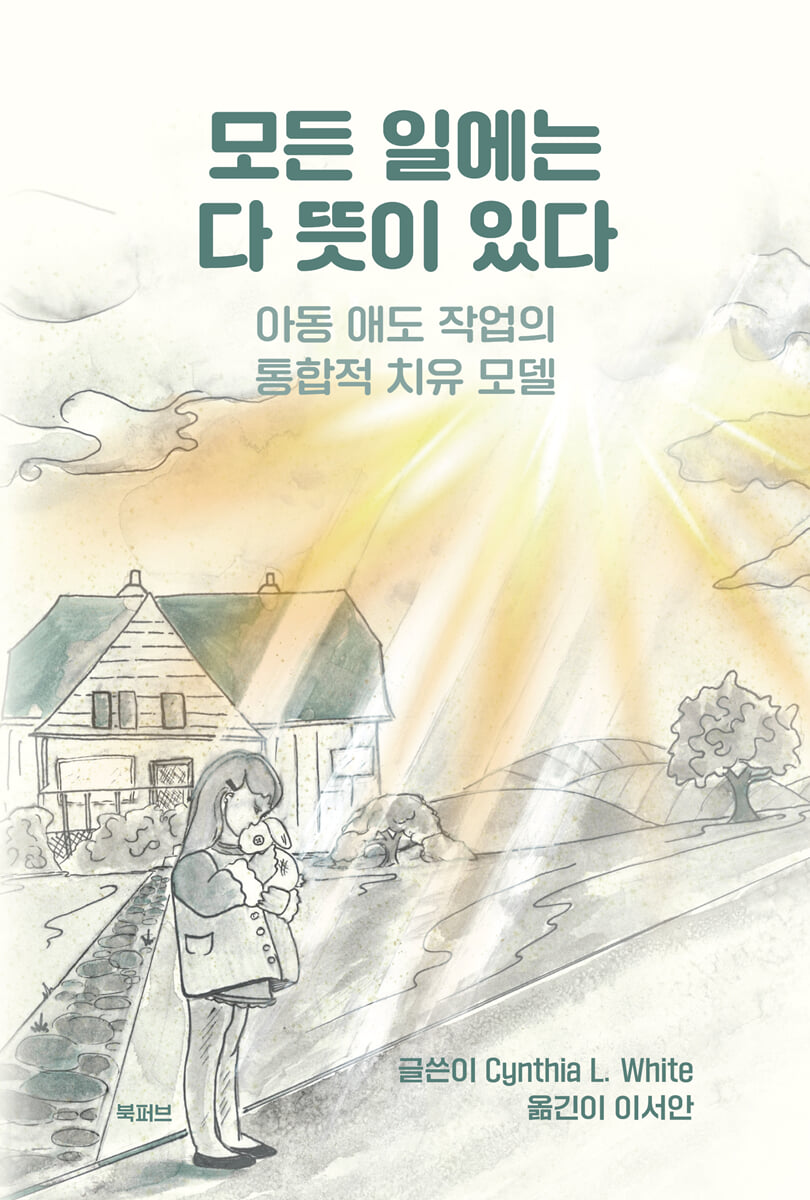
Everything has a meaning
 |
Description
Book Introduction
Cynthia L.
White's "Everything Has a Meaning" is a book based on the author's own experience of loss and healing, offering a path for children who have experienced trauma to recover through unconditional love and support.
It encompasses personal experience, research, and fieldwork to provide an integrated model for healing child grief and trauma.
White's "Everything Has a Meaning" is a book based on the author's own experience of loss and healing, offering a path for children who have experienced trauma to recover through unconditional love and support.
It encompasses personal experience, research, and fieldwork to provide an integrated model for healing child grief and trauma.
- You can preview some of the book's contents.
Preview
index
Contents
Introduction 2
Part 1 9
Preface: Everything Has a Meaning 10
Chapter 1: Trauma Comes First 26
Chapter 2: Grief Isn't What You Think 52
Chapter 3: An Integrative Healing Model for Child Grief Work Michael Beckwith:
“Energy flows where attention is directed.” 68
Chapter 4: The Work of Grieving: The Path to Wholeness 86
Chapter 5: The Reflective Nature of Being 96
Chapter 6: Energy Types of Grief 102
Part 2 113
Chapter 7: Goals and Techniques of Grief Work 114
Chapter 8 Building and Providing Active Safety 118
Chapter 9: Developing Grief Work Capabilities 134
Chapter 10: Awareness 137
Chapter 11: Accompaniment 153
Chapter 12: Interaction Technologies 175
Chapter 13: Faith, Hope, and Love 186
Introduction 2
Part 1 9
Preface: Everything Has a Meaning 10
Chapter 1: Trauma Comes First 26
Chapter 2: Grief Isn't What You Think 52
Chapter 3: An Integrative Healing Model for Child Grief Work Michael Beckwith:
“Energy flows where attention is directed.” 68
Chapter 4: The Work of Grieving: The Path to Wholeness 86
Chapter 5: The Reflective Nature of Being 96
Chapter 6: Energy Types of Grief 102
Part 2 113
Chapter 7: Goals and Techniques of Grief Work 114
Chapter 8 Building and Providing Active Safety 118
Chapter 9: Developing Grief Work Capabilities 134
Chapter 10: Awareness 137
Chapter 11: Accompaniment 153
Chapter 12: Interaction Technologies 175
Chapter 13: Faith, Hope, and Love 186
Publisher's Review
Beyond Loss: The Path to Healing Left Behind by Unconditional Love
A story that began with loss
This book is like a textbook and testimony of the author's life itself.
From childhood, he was abandoned, abused, and moved from one foster home to another, leaving him with a deep sense of loss and loneliness.
But this book goes beyond mere confession; it shows how those wounds became a resource for healing.
In particular, the confession that the unconditional love experienced for just three months remained as the strength that enabled her to endure her entire life reminds us that the essence of healing lies in genuine moments rather than the length of time.
The experience of loss is never erased, but the insight that it can become the strength to live again makes the reader pause.
Trauma must be addressed first.
The author emphasizes that trauma must be addressed before talking about children's grief.
Trauma experienced by children is not only remembered, but is imprinted on the nervous system, manifesting as hyperarousal, dissociation, apathy, and behavioral problems.
Therefore, the first thing that parents or experts should do is not to give any admonitions or advice, but to create an environment where the child can feel safe.
Even seemingly innocuous silence and unresponsiveness can be a defense mechanism, a strategy the child develops to survive.
Only when we understand that what appears to be a problem behavior may actually be a way a child copes does the door to true healing open.
Unconditional love beyond faith
The author's story is deeply imbued with religious experience.
However, the core message he is trying to convey is not the doctrine of a specific religion.
The saying, “Everything has a purpose” is ultimately read as the language of unconditional love.
What matters, for both those of faith and those of no faith, is not doctrinal explanations, but the experience of being unconditionally respected.
What a child needs is not the logic of the world, but the absolute acceptance that “you are precious.”
Just as the author's brief experience in the Ricks household led to lifelong resilience, even small moments of unconditional support from caregivers or professionals can become lifelong supports for a child.
Attitudes that guardians and experts should maintain
The book offers concrete suggestions for parents and professionals.
Above all, safety must be the top priority, and forms of expression such as play, art, and interaction must be respected in relationships with children.
It's okay if the child doesn't say anything directly.
Because the way of expression is the child's own unique language.
Also, rather than unconditionally cutting off contact with parents, it is important to maintain that relationship within a safe range.
Even if parents aren't perfect, their bond is a vital resource for a child's life, and that connection holds great significance in the process of recovery.
Ultimately, what matters is being there for your child and showing them unconditional love.
A message of hope and comfort
"Everything Has a Meaning" delivers the message, "You are not alone" to children whose lives have been shattered by loss and trauma.
At the same time, it offers encouragement to guardians and professionals, saying, “Healing begins simply by showing unconditional love and support, right here, right now, even if you don’t have any special qualifications.”
The author's confession encourages us to see suffering not simply as a tragedy, but as a path to recovery, growth, and rediscovery of love.
Ultimately, this book transcends faith and serves as a testament to the fact that the most fundamental power humans possess—unconditional love—can save children and transform adults.
A story that began with loss
This book is like a textbook and testimony of the author's life itself.
From childhood, he was abandoned, abused, and moved from one foster home to another, leaving him with a deep sense of loss and loneliness.
But this book goes beyond mere confession; it shows how those wounds became a resource for healing.
In particular, the confession that the unconditional love experienced for just three months remained as the strength that enabled her to endure her entire life reminds us that the essence of healing lies in genuine moments rather than the length of time.
The experience of loss is never erased, but the insight that it can become the strength to live again makes the reader pause.
Trauma must be addressed first.
The author emphasizes that trauma must be addressed before talking about children's grief.
Trauma experienced by children is not only remembered, but is imprinted on the nervous system, manifesting as hyperarousal, dissociation, apathy, and behavioral problems.
Therefore, the first thing that parents or experts should do is not to give any admonitions or advice, but to create an environment where the child can feel safe.
Even seemingly innocuous silence and unresponsiveness can be a defense mechanism, a strategy the child develops to survive.
Only when we understand that what appears to be a problem behavior may actually be a way a child copes does the door to true healing open.
Unconditional love beyond faith
The author's story is deeply imbued with religious experience.
However, the core message he is trying to convey is not the doctrine of a specific religion.
The saying, “Everything has a purpose” is ultimately read as the language of unconditional love.
What matters, for both those of faith and those of no faith, is not doctrinal explanations, but the experience of being unconditionally respected.
What a child needs is not the logic of the world, but the absolute acceptance that “you are precious.”
Just as the author's brief experience in the Ricks household led to lifelong resilience, even small moments of unconditional support from caregivers or professionals can become lifelong supports for a child.
Attitudes that guardians and experts should maintain
The book offers concrete suggestions for parents and professionals.
Above all, safety must be the top priority, and forms of expression such as play, art, and interaction must be respected in relationships with children.
It's okay if the child doesn't say anything directly.
Because the way of expression is the child's own unique language.
Also, rather than unconditionally cutting off contact with parents, it is important to maintain that relationship within a safe range.
Even if parents aren't perfect, their bond is a vital resource for a child's life, and that connection holds great significance in the process of recovery.
Ultimately, what matters is being there for your child and showing them unconditional love.
A message of hope and comfort
"Everything Has a Meaning" delivers the message, "You are not alone" to children whose lives have been shattered by loss and trauma.
At the same time, it offers encouragement to guardians and professionals, saying, “Healing begins simply by showing unconditional love and support, right here, right now, even if you don’t have any special qualifications.”
The author's confession encourages us to see suffering not simply as a tragedy, but as a path to recovery, growth, and rediscovery of love.
Ultimately, this book transcends faith and serves as a testament to the fact that the most fundamental power humans possess—unconditional love—can save children and transform adults.
GOODS SPECIFICS
- Date of issue: September 30, 2025
- Page count, weight, size: 198 pages | 152*225*20mm
- ISBN13: 9791174820402
- ISBN10: 1174820403
You may also like
카테고리
korean


korean

![GQ KOREA Mark (Monthly): December [2025]](http://librairie.coreenne.fr/cdn/shop/files/8ef265dbbfbf186523ed75ba7319009d.jpg?v=1765340328&width=3840)


