

You can't hurt me
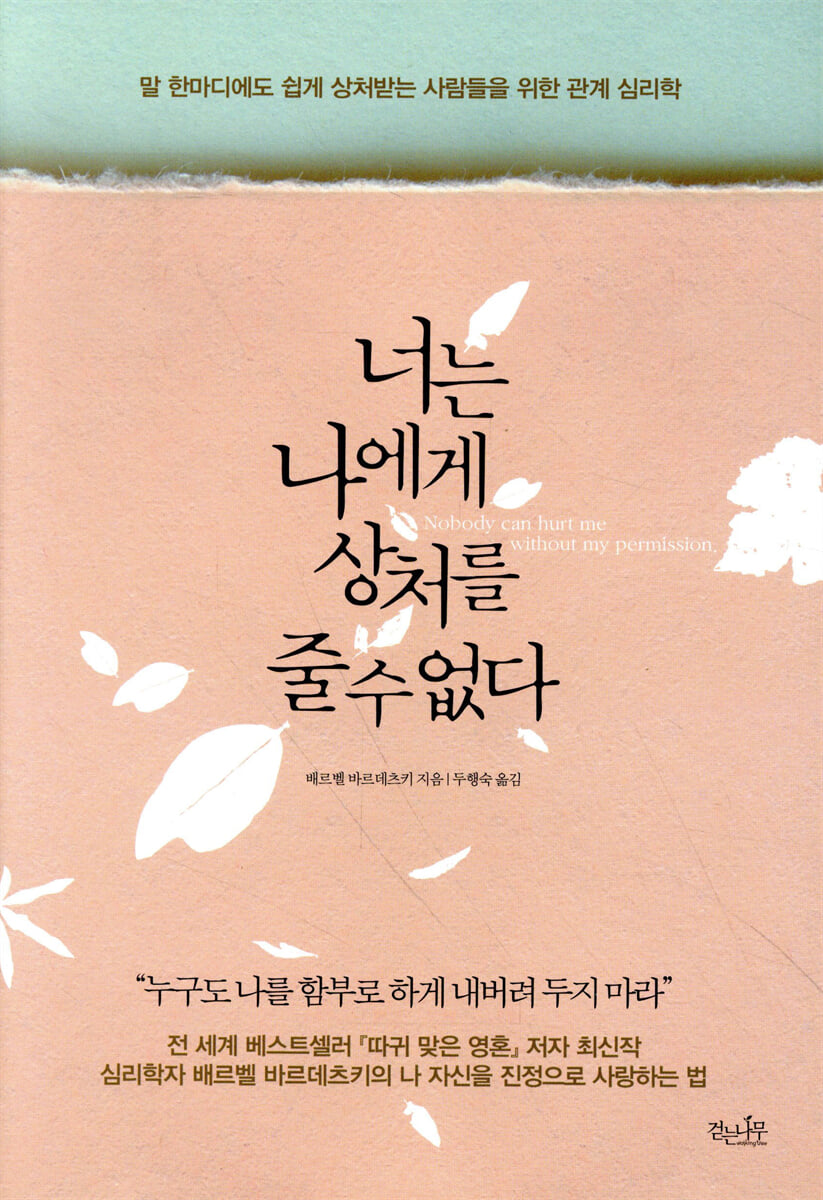 |
Description
Book Introduction
Relationship Psychology for People Who Get Hurt Easily by Even the Smallest Words
A psychological healing essay on how to live without being swayed by wounds and maintaining self-esteem.
The author, a renowned German psychotherapist who has healed people with emotional pain for 32 years, teaches us how to truly love ourselves without getting hurt.
Even when they are treated equally unfairly, some people get hurt and others don't.
The author says that the difference lies in 'self-esteem'.
Self-esteem is the only way to reject unfair hurt that is not your fault and to escape from endless feelings of inferiority.
In this way, this book reveals the causes of emotional wounds that we often experience in our daily lives.
And it also tells you how to get out of that hurt.
The author argues that in a society that constantly encourages competition, no one can avoid hurt, and the only thing we can do is cultivate the strength to overcome it.
Furthermore, I suggest that you first acknowledge that you have been hurt and then confidently build relationships with a self-esteem that supports your life.
No one can avoid getting hurt.
What's important is how you deal with the inevitable wounds that occur.
No matter how unpleasant something may be, it is our choice whether to accept it or not.
This book awakens those who, even at this very moment, are suffering from hatred and the thought of being hated by someone, and those who are easily hurt and hurt by unkind actions and trivial words, to the fundamental healing method of respecting and loving themselves.
Through this, I will be able to free myself from the bondage that makes me an unjust sinner.
A psychological healing essay on how to live without being swayed by wounds and maintaining self-esteem.
The author, a renowned German psychotherapist who has healed people with emotional pain for 32 years, teaches us how to truly love ourselves without getting hurt.
Even when they are treated equally unfairly, some people get hurt and others don't.
The author says that the difference lies in 'self-esteem'.
Self-esteem is the only way to reject unfair hurt that is not your fault and to escape from endless feelings of inferiority.
In this way, this book reveals the causes of emotional wounds that we often experience in our daily lives.
And it also tells you how to get out of that hurt.
The author argues that in a society that constantly encourages competition, no one can avoid hurt, and the only thing we can do is cultivate the strength to overcome it.
Furthermore, I suggest that you first acknowledge that you have been hurt and then confidently build relationships with a self-esteem that supports your life.
No one can avoid getting hurt.
What's important is how you deal with the inevitable wounds that occur.
No matter how unpleasant something may be, it is our choice whether to accept it or not.
This book awakens those who, even at this very moment, are suffering from hatred and the thought of being hated by someone, and those who are easily hurt and hurt by unkind actions and trivial words, to the fundamental healing method of respecting and loving themselves.
Through this, I will be able to free myself from the bondage that makes me an unjust sinner.
- You can preview some of the book's contents.
Preview
index
Prologue | Don't let the world mess with you.
Chapter 1 You Can't Hurt Me
ːːThe only person who can protect me from hurt is 'myself'
ːːYou can't hurt me
Love me, and life will love you.
ːːWhen an unacknowledged child becomes an adult
People who get angry because they are in so much pain
ːːThe body knows the pain of the heart first
Separate 'my fault' from 'your fault'
Chapter 2 Stop Blaming Yourself for Everything
ːːThe wound always starts in the same place
ːːStop blaming yourself
ːːNo one is free from prejudice, not a single one
ːːThe emotional distance needed between you and me
The more you cling to love, the further it goes away
ːːWhy couldn't that person and I be happy?
ːːNo one's life is perfect, that's what makes life interesting
Love is over, not life.
How to escape from endlessly recurring 'zombie wounds'
Chapter 3 I reject everything that hurts me
ːːThere is no revenge that hurts as much as I hurt
ːːFour Traps That Make You Hurt
ːːThere are some wounds that should be left untouched.
ːːThe golden scales that weigh words
ːːWhen wounds turn into power
People who habitually hurt others
ːːDon't cling to other people's approval and praise, live your own life.
ːːHow to Deal with Post-Traumatic Stress Disorder
Chapter 4: How to Truly Love Myself Without Fear
ːː25 Ways to Live with Self-Esteem in a Hurtful World
ːːPsychological Test_How do you react to hurt?
References
Chapter 1 You Can't Hurt Me
ːːThe only person who can protect me from hurt is 'myself'
ːːYou can't hurt me
Love me, and life will love you.
ːːWhen an unacknowledged child becomes an adult
People who get angry because they are in so much pain
ːːThe body knows the pain of the heart first
Separate 'my fault' from 'your fault'
Chapter 2 Stop Blaming Yourself for Everything
ːːThe wound always starts in the same place
ːːStop blaming yourself
ːːNo one is free from prejudice, not a single one
ːːThe emotional distance needed between you and me
The more you cling to love, the further it goes away
ːːWhy couldn't that person and I be happy?
ːːNo one's life is perfect, that's what makes life interesting
Love is over, not life.
How to escape from endlessly recurring 'zombie wounds'
Chapter 3 I reject everything that hurts me
ːːThere is no revenge that hurts as much as I hurt
ːːFour Traps That Make You Hurt
ːːThere are some wounds that should be left untouched.
ːːThe golden scales that weigh words
ːːWhen wounds turn into power
People who habitually hurt others
ːːDon't cling to other people's approval and praise, live your own life.
ːːHow to Deal with Post-Traumatic Stress Disorder
Chapter 4: How to Truly Love Myself Without Fear
ːː25 Ways to Live with Self-Esteem in a Hurtful World
ːːPsychological Test_How do you react to hurt?
References
Detailed image
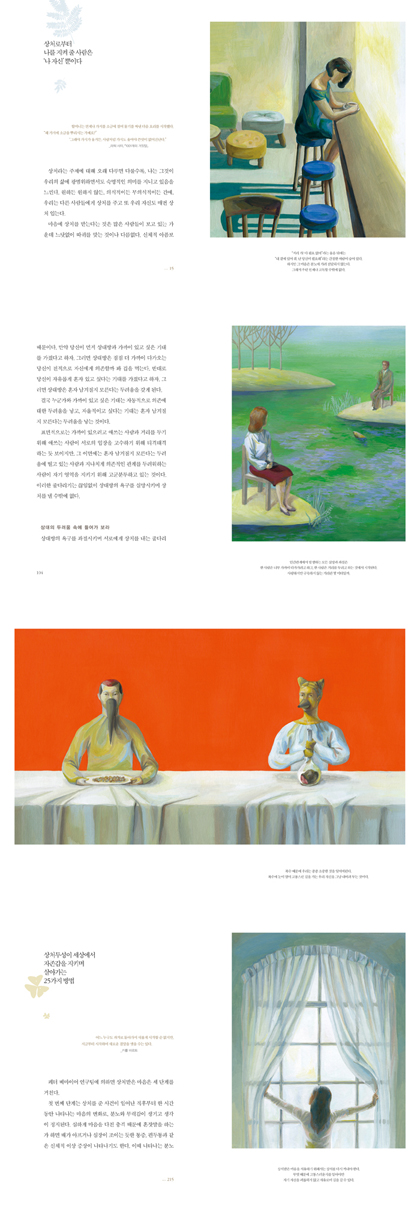
Into the book
Don't just ignore someone who hurts your feelings.
Just because I love someone, or because they are older or have a higher position, doesn't mean I should let them manipulate me as they please.
I have inferiority complexes and many shortcomings, but I am a good enough person who can meet good people and build good relationships.
So, I hope you go through life with the firm belief that 'you cannot hurt me without my permission.'
---"prolog"
No matter how hard we try, there is no way to completely block out traumatic events in our lives.
But one comforting thing is that we have a choice.
I have every right to choose whether to accept the hurtful event as something that concerns me and to be offended or to reject it.
---"You can't hurt me"
Behind the cries of “Go away! I don’t need anything else,” there is a voice saying, “Stay by my side.
There is a hidden desperate wish that says, “I need you.”
But that feeling is not conveyed because it is covered by anger.
So we are always destined to be lonely.
---"People who get angry because they are in so much pain"
The body reflects the state of the mind.
If you hate someone to death, suffer in silence because of unspeakable pain, and lose sleep every night because of uncontrollable anger, you will eventually become ill.
I went from hospital to hospital looking for medicine to relieve the pain I felt in my body.
Before you start thinking, look into your heart first.
Because everything is a result of the mind's creation.
---“The body knows the pain of the heart first.”
Wounds always start in the same place and leave their marks in the same place.
And when a similar situation arises, past wounds come flooding back and join the fight.
So our fights are always fierce.
---“Wounds always start in the same place.”
People who are easily hurt tend to take full responsibility when things go wrong.
Because they are full of self-doubt, distrust, and anxiety, they suck in negative things like a black hole.
And we constantly add negative interpretations to other people's gazes, facial expressions, speech patterns, and meaningless gestures.
But just as a person who cannot give love cannot receive love, a person who does not trust himself cannot receive the recognition of others.
---“Stop blaming yourself.”
All disappointment and frustration in human relationships begins with one person trying to be too close and another trying to keep their distance.
If we want to get along well with others without fighting, we need to find the ideal person who neither gets too close nor goes too far.
But such an ideal person cannot exist.
Because our expectations always trigger the other person's fears.
---"The emotional distance needed between you and me"
The more terrible the wound, the more dangerous it is to hide it.
Because repressed wounds can destroy your entire life.
To heal a wound, you must face it at least once, no matter how long it takes, even if it means experiencing the pain again.
The wounds of exile never heal on their own.
---"How to Escape the Endlessly Resurrecting 'Zombie Wounds'"
We often forget the most precious thing in our pursuit of revenge: ourselves.
I allow myself to be blinded by anger and walk a painful path.
But what I need to do to overcome the hurt is to reduce the pain of being hurt.
Revenge may give pleasure, but it does not lessen pain.
Even though my heart cries out for revenge now, what I want more desperately is to live my life properly again.
---“There is no revenge that hurts as much as I hurt.”
Manipulating someone by force can only happen when there is someone who is subjected to it.
If we stop being manipulated
The power of the person controlling it is bound to weaken.
Even if it is difficult and challenging to keep your distance, cut the strings that bind you.
And the heart
Keep your distance and protect yourself until you are strong enough to avoid being tossed around and hurt.
If meeting someone only causes me pain and hurt and doesn't help me grow, then it's not love.
---“When Wounds Turn into Power”
For victims to escape from their misery, they must regain the power to judge happiness.
Only by acknowledging and praising ourselves can we escape the cycle of victim and perpetrator.
Let us no longer depend on others for our joys and sorrows.
They too are just unstable beings who want to be recognized and praised.
When it comes to judging my abilities, I am the most reliable judge of my own abilities.
Just because I love someone, or because they are older or have a higher position, doesn't mean I should let them manipulate me as they please.
I have inferiority complexes and many shortcomings, but I am a good enough person who can meet good people and build good relationships.
So, I hope you go through life with the firm belief that 'you cannot hurt me without my permission.'
---"prolog"
No matter how hard we try, there is no way to completely block out traumatic events in our lives.
But one comforting thing is that we have a choice.
I have every right to choose whether to accept the hurtful event as something that concerns me and to be offended or to reject it.
---"You can't hurt me"
Behind the cries of “Go away! I don’t need anything else,” there is a voice saying, “Stay by my side.
There is a hidden desperate wish that says, “I need you.”
But that feeling is not conveyed because it is covered by anger.
So we are always destined to be lonely.
---"People who get angry because they are in so much pain"
The body reflects the state of the mind.
If you hate someone to death, suffer in silence because of unspeakable pain, and lose sleep every night because of uncontrollable anger, you will eventually become ill.
I went from hospital to hospital looking for medicine to relieve the pain I felt in my body.
Before you start thinking, look into your heart first.
Because everything is a result of the mind's creation.
---“The body knows the pain of the heart first.”
Wounds always start in the same place and leave their marks in the same place.
And when a similar situation arises, past wounds come flooding back and join the fight.
So our fights are always fierce.
---“Wounds always start in the same place.”
People who are easily hurt tend to take full responsibility when things go wrong.
Because they are full of self-doubt, distrust, and anxiety, they suck in negative things like a black hole.
And we constantly add negative interpretations to other people's gazes, facial expressions, speech patterns, and meaningless gestures.
But just as a person who cannot give love cannot receive love, a person who does not trust himself cannot receive the recognition of others.
---“Stop blaming yourself.”
All disappointment and frustration in human relationships begins with one person trying to be too close and another trying to keep their distance.
If we want to get along well with others without fighting, we need to find the ideal person who neither gets too close nor goes too far.
But such an ideal person cannot exist.
Because our expectations always trigger the other person's fears.
---"The emotional distance needed between you and me"
The more terrible the wound, the more dangerous it is to hide it.
Because repressed wounds can destroy your entire life.
To heal a wound, you must face it at least once, no matter how long it takes, even if it means experiencing the pain again.
The wounds of exile never heal on their own.
---"How to Escape the Endlessly Resurrecting 'Zombie Wounds'"
We often forget the most precious thing in our pursuit of revenge: ourselves.
I allow myself to be blinded by anger and walk a painful path.
But what I need to do to overcome the hurt is to reduce the pain of being hurt.
Revenge may give pleasure, but it does not lessen pain.
Even though my heart cries out for revenge now, what I want more desperately is to live my life properly again.
---“There is no revenge that hurts as much as I hurt.”
Manipulating someone by force can only happen when there is someone who is subjected to it.
If we stop being manipulated
The power of the person controlling it is bound to weaken.
Even if it is difficult and challenging to keep your distance, cut the strings that bind you.
And the heart
Keep your distance and protect yourself until you are strong enough to avoid being tossed around and hurt.
If meeting someone only causes me pain and hurt and doesn't help me grow, then it's not love.
---“When Wounds Turn into Power”
For victims to escape from their misery, they must regain the power to judge happiness.
Only by acknowledging and praising ourselves can we escape the cycle of victim and perpetrator.
Let us no longer depend on others for our joys and sorrows.
They too are just unstable beings who want to be recognized and praised.
When it comes to judging my abilities, I am the most reliable judge of my own abilities.
---From "Live your own life without clinging to the approval and praise of others"
Publisher's Review
The latest work from Barbel Bardetzky, author of the international bestseller "The Slapped Soul."
Relationship Psychology for People Who Don't Want to Be Hurt Anymore—At Work, in Love, or in Relationships
World-renowned psychologist Barbel Bardetzki, Germany's most influential psychotherapy authority and a healer of emotional pain for 32 years, shares his tips for truly loving yourself without getting hurt.
The giving and receiving of hurt continues throughout life, throughout all of our lives.
But even when they are treated equally unfairly, some people get hurt and others don't.
The difference lies in 'self-esteem', which is the ability to truly believe in and love oneself.
A person who loves himself will not let hurt ruin his life.
Although I have inferiority complexes and many shortcomings, I think I am a good enough person who can meet good people and build good relationships.
That kind of self-esteem is the only way to reject unfair hurt that is not your fault and to escape from endless feelings of inferiority.
This book awakens those who, even at this very moment, are suffering from hatred and the thought of being hated by someone, and those who are easily hurt and hurt by a single unkind word, to the fundamental healing method of respecting and loving themselves.
Don't let anyone mess with me!
Healing 250,000 heartbroken people over 32 years
How to be happy without blaming others, according to Germany's top psychologist.
This book is a psychological healing essay by Barbel Bardetzky, author of the international bestseller "The Slapped Soul," based on his 32 years of experience healing people with emotional wounds. It teaches how to live without being swayed by wounds and maintaining self-esteem.
Immediately after its publication, it rose to the top of the German Amazon comprehensive bestseller list, receiving enthusiastic responses from readers. It was also praised by various media outlets as the most accessible and popular book ever written, rich in realistic examples.
Even when they are treated equally unfairly, some people are deeply hurt to the point of losing their self-esteem, while others just shake it off and move on after a short while.
Bardetzky says the crucial difference lies in the heart that truly loves oneself, in 'self-esteem'.
People with self-esteem don't let hurt ruin their lives.
I think of myself as a good enough person who has inferiority complexes and many shortcomings, but who can meet good people and build good relationships.
To cultivate such self-esteem, you must learn to distance yourself from those who treat you poorly and to reject unfair insults for which you have no responsibility.
This book reveals the emotional wounds we often experience in our daily lives and tells us how to overcome them.
This will awaken those who are suffering right now, hating someone and thinking they are hated, and those who are easily hurt and hurt by unkind actions and trivial words, to the fundamental healing method of respecting and loving themselves.
Relationship Psychology for People Who Pretend to Be Confident on the Outside but Are Wounded on the Inside
In an interview with a German daily newspaper, American actor Morgan Freeman responded to a reporter's question: "What would you do if I called you 'Negro'?"
“Nothing.
Because you are the one who wrote the wrong word.
“I’m going to leave you to figure out your own problems.” He, a black man, expressed no self-deprecation or anger in that moment.
He looked at the word 'Negro' as just an ordinary word and returned the question to the reporter.
But not everyone can remain so detached in such an unpleasant and embarrassing situation.
There is a powerful saboteur living in people's minds that prevents them from responding calmly.
That is precisely 'inferiority complex'.
People who give in to their inferiority complex unconditionally accept others' criticism as their own fault and belittle themselves.
They also hide behind a cool and perfect false self, acting confident and constantly seeking approval and praise from others.
However, the only person who can change the feeling of inferiority in your heart into confidence is yourself.
No one can avoid getting hurt.
Who could have predicted that a word like 'negro' would pop up?
No one in the world can accurately predict what another person will say or do.
The problem comes next.
How do we cope after an inevitable injury? In this book, the author offers guidance on how to respond.
How should I respond immediately after something hurtful happens?
Should I throw a punch at the person who insulted me, or is it easier to run away, thinking that I am a worthless person who deserves such words?
The wisest answer, the author suggests, is to draw a line and shift blame from our own to the other person's.
No matter how unpleasant something may be, it is our choice whether to accept it or not.
When something unpleasant happens, the first thing we feel is not the 'hurt' but the 'feeling' of being hurt.
We can either leave that feeling as a wound, or we can blame it on the other person and erase it from our minds.
In order to build a relationship of genuine communication and respect, you must always return blame to the other person for any mistakes that you do not need to take responsibility for.
Only when we separate 'my fault' from 'your fault' and stop blaming either ourselves or others unconditionally, can we free ourselves from people who treat us rudely, from baseless contempt, and from endless feelings of inferiority.
I must never make myself into an innocent sinner.
Please don't blame everything on yourself.
In a society that constantly encourages competition, it may be perfectly natural to hate, be jealous of, and suffer from someone.
The digital world has expanded the scope of communication to the entire world, but it has also cut off direct and sincere encounters with the people right next to us.
As a result, the ability to empathize and understand each other's feelings has decreased significantly, and there are many cases where people hurt others without realizing the pain and suffering their words and actions cause.
Especially in the online world, anonymity is a weapon that allows people to vent their anger even to complete strangers.
Ultimately, people today have to deal with criticism and blame from those close to them, while also protecting themselves from being hurt by malicious comments from unknown sources.
If you don't like all of this, the only way is to step away from the world and become completely isolated.
But then we have to fight again against the self-deprecation of being a loser.
For this reason, Barbel Bardetzky says that no one can escape hurt while living in this world.
Hurtful events are widespread and inescapable in our daily lives, no matter how hard we try to avoid them.
From the small things like being ignored when you greet someone with kindness, to hearing blatantly degrading remarks, to hearing rumors that defame your reputation, to hearing that a loved one wants to break up with you, to feeling like you can't achieve what you want no matter how hard you try, disappointments and frustrations can strike without warning and leave a scar on your heart.
The only thing we can do then is to develop the strength to overcome the hurt.
To do that, you must first admit that you have been hurt.
Most people would rather hide their wounds and deal with them alone than expose and heal them.
But if you hide your wounds, you'll miss out on any chance of proper healing.
To end the vicious cycle of giving and receiving hurt, we must face the hurt head on, vividly feeling the pain, sadness, and anger.
And we must build relationships with confidence, with self-esteem that firmly supports our lives.
Live your own life without clinging to other people's approval and praise.
A clear psychological healing essay for those who are suffering from hatred toward someone even at this very moment.
For those who want to be recognized and praised, other people are a dual existence that is both painful to have and indispensable.
Those who are superior to you should be banished from the castle like 'Snow White', but those who acknowledge you should always be close by like a 'mirror'.
However, true friendship and love cannot blossom in a relationship where one must always win to feel satisfied.
The desire to be recognized by others clearly makes us grow.
We learn to surpass ourselves through fair competition.
However, if it starts from an inferiority complex of 'I am useless and I am not loved' and is used as a means to confirm the value of one's existence, we will never be satisfied with life.
True happiness can be found when you live in the world with confidence, respecting your strengths and acknowledging your limitations.
We have the right to be loved just as we are.
Even if you're not the best in school, or beautiful, or talented, or not recognized as successful by everyone, you still deserve to be loved.
Imperfection is not a problem to be solved, it is simply a natural part of existence.
When you accept that fact, you can build a relationship where you can truly trust and understand each other without being hurt by petty emotional arguments.
This book contains all the wounds, big and small, that eat away at life, from minor ones like unkind behavior or a blunt tone to the endlessly recurring "zombie wounds" like blatant belittling, social prejudice, bullying, and the breakup of a loved one.
And, to help you read this book and put it into practice yourself, I've compiled 25 specific tips to help you get out of a hurt situation as quickly as possible.
I will teach all those who have been easily hurt and had their pride hurt by even a single harsh word how to properly deal with hurt.
Relationship Psychology for People Who Don't Want to Be Hurt Anymore—At Work, in Love, or in Relationships
World-renowned psychologist Barbel Bardetzki, Germany's most influential psychotherapy authority and a healer of emotional pain for 32 years, shares his tips for truly loving yourself without getting hurt.
The giving and receiving of hurt continues throughout life, throughout all of our lives.
But even when they are treated equally unfairly, some people get hurt and others don't.
The difference lies in 'self-esteem', which is the ability to truly believe in and love oneself.
A person who loves himself will not let hurt ruin his life.
Although I have inferiority complexes and many shortcomings, I think I am a good enough person who can meet good people and build good relationships.
That kind of self-esteem is the only way to reject unfair hurt that is not your fault and to escape from endless feelings of inferiority.
This book awakens those who, even at this very moment, are suffering from hatred and the thought of being hated by someone, and those who are easily hurt and hurt by a single unkind word, to the fundamental healing method of respecting and loving themselves.
Don't let anyone mess with me!
Healing 250,000 heartbroken people over 32 years
How to be happy without blaming others, according to Germany's top psychologist.
This book is a psychological healing essay by Barbel Bardetzky, author of the international bestseller "The Slapped Soul," based on his 32 years of experience healing people with emotional wounds. It teaches how to live without being swayed by wounds and maintaining self-esteem.
Immediately after its publication, it rose to the top of the German Amazon comprehensive bestseller list, receiving enthusiastic responses from readers. It was also praised by various media outlets as the most accessible and popular book ever written, rich in realistic examples.
Even when they are treated equally unfairly, some people are deeply hurt to the point of losing their self-esteem, while others just shake it off and move on after a short while.
Bardetzky says the crucial difference lies in the heart that truly loves oneself, in 'self-esteem'.
People with self-esteem don't let hurt ruin their lives.
I think of myself as a good enough person who has inferiority complexes and many shortcomings, but who can meet good people and build good relationships.
To cultivate such self-esteem, you must learn to distance yourself from those who treat you poorly and to reject unfair insults for which you have no responsibility.
This book reveals the emotional wounds we often experience in our daily lives and tells us how to overcome them.
This will awaken those who are suffering right now, hating someone and thinking they are hated, and those who are easily hurt and hurt by unkind actions and trivial words, to the fundamental healing method of respecting and loving themselves.
Relationship Psychology for People Who Pretend to Be Confident on the Outside but Are Wounded on the Inside
In an interview with a German daily newspaper, American actor Morgan Freeman responded to a reporter's question: "What would you do if I called you 'Negro'?"
“Nothing.
Because you are the one who wrote the wrong word.
“I’m going to leave you to figure out your own problems.” He, a black man, expressed no self-deprecation or anger in that moment.
He looked at the word 'Negro' as just an ordinary word and returned the question to the reporter.
But not everyone can remain so detached in such an unpleasant and embarrassing situation.
There is a powerful saboteur living in people's minds that prevents them from responding calmly.
That is precisely 'inferiority complex'.
People who give in to their inferiority complex unconditionally accept others' criticism as their own fault and belittle themselves.
They also hide behind a cool and perfect false self, acting confident and constantly seeking approval and praise from others.
However, the only person who can change the feeling of inferiority in your heart into confidence is yourself.
No one can avoid getting hurt.
Who could have predicted that a word like 'negro' would pop up?
No one in the world can accurately predict what another person will say or do.
The problem comes next.
How do we cope after an inevitable injury? In this book, the author offers guidance on how to respond.
How should I respond immediately after something hurtful happens?
Should I throw a punch at the person who insulted me, or is it easier to run away, thinking that I am a worthless person who deserves such words?
The wisest answer, the author suggests, is to draw a line and shift blame from our own to the other person's.
No matter how unpleasant something may be, it is our choice whether to accept it or not.
When something unpleasant happens, the first thing we feel is not the 'hurt' but the 'feeling' of being hurt.
We can either leave that feeling as a wound, or we can blame it on the other person and erase it from our minds.
In order to build a relationship of genuine communication and respect, you must always return blame to the other person for any mistakes that you do not need to take responsibility for.
Only when we separate 'my fault' from 'your fault' and stop blaming either ourselves or others unconditionally, can we free ourselves from people who treat us rudely, from baseless contempt, and from endless feelings of inferiority.
I must never make myself into an innocent sinner.
Please don't blame everything on yourself.
In a society that constantly encourages competition, it may be perfectly natural to hate, be jealous of, and suffer from someone.
The digital world has expanded the scope of communication to the entire world, but it has also cut off direct and sincere encounters with the people right next to us.
As a result, the ability to empathize and understand each other's feelings has decreased significantly, and there are many cases where people hurt others without realizing the pain and suffering their words and actions cause.
Especially in the online world, anonymity is a weapon that allows people to vent their anger even to complete strangers.
Ultimately, people today have to deal with criticism and blame from those close to them, while also protecting themselves from being hurt by malicious comments from unknown sources.
If you don't like all of this, the only way is to step away from the world and become completely isolated.
But then we have to fight again against the self-deprecation of being a loser.
For this reason, Barbel Bardetzky says that no one can escape hurt while living in this world.
Hurtful events are widespread and inescapable in our daily lives, no matter how hard we try to avoid them.
From the small things like being ignored when you greet someone with kindness, to hearing blatantly degrading remarks, to hearing rumors that defame your reputation, to hearing that a loved one wants to break up with you, to feeling like you can't achieve what you want no matter how hard you try, disappointments and frustrations can strike without warning and leave a scar on your heart.
The only thing we can do then is to develop the strength to overcome the hurt.
To do that, you must first admit that you have been hurt.
Most people would rather hide their wounds and deal with them alone than expose and heal them.
But if you hide your wounds, you'll miss out on any chance of proper healing.
To end the vicious cycle of giving and receiving hurt, we must face the hurt head on, vividly feeling the pain, sadness, and anger.
And we must build relationships with confidence, with self-esteem that firmly supports our lives.
Live your own life without clinging to other people's approval and praise.
A clear psychological healing essay for those who are suffering from hatred toward someone even at this very moment.
For those who want to be recognized and praised, other people are a dual existence that is both painful to have and indispensable.
Those who are superior to you should be banished from the castle like 'Snow White', but those who acknowledge you should always be close by like a 'mirror'.
However, true friendship and love cannot blossom in a relationship where one must always win to feel satisfied.
The desire to be recognized by others clearly makes us grow.
We learn to surpass ourselves through fair competition.
However, if it starts from an inferiority complex of 'I am useless and I am not loved' and is used as a means to confirm the value of one's existence, we will never be satisfied with life.
True happiness can be found when you live in the world with confidence, respecting your strengths and acknowledging your limitations.
We have the right to be loved just as we are.
Even if you're not the best in school, or beautiful, or talented, or not recognized as successful by everyone, you still deserve to be loved.
Imperfection is not a problem to be solved, it is simply a natural part of existence.
When you accept that fact, you can build a relationship where you can truly trust and understand each other without being hurt by petty emotional arguments.
This book contains all the wounds, big and small, that eat away at life, from minor ones like unkind behavior or a blunt tone to the endlessly recurring "zombie wounds" like blatant belittling, social prejudice, bullying, and the breakup of a loved one.
And, to help you read this book and put it into practice yourself, I've compiled 25 specific tips to help you get out of a hurt situation as quickly as possible.
I will teach all those who have been easily hurt and had their pride hurt by even a single harsh word how to properly deal with hurt.
GOODS SPECIFICS
- Date of publication: November 20, 2013
- Page count, weight, size: 260 pages | 428g | 145*210*20mm
- ISBN13: 9788901161198
- ISBN10: 8901161192
You may also like
카테고리
korean


korean

![GQ KOREA Mark (Monthly): December [2025]](http://librairie.coreenne.fr/cdn/shop/files/8ef265dbbfbf186523ed75ba7319009d.jpg?v=1765340328&width=3840)


