

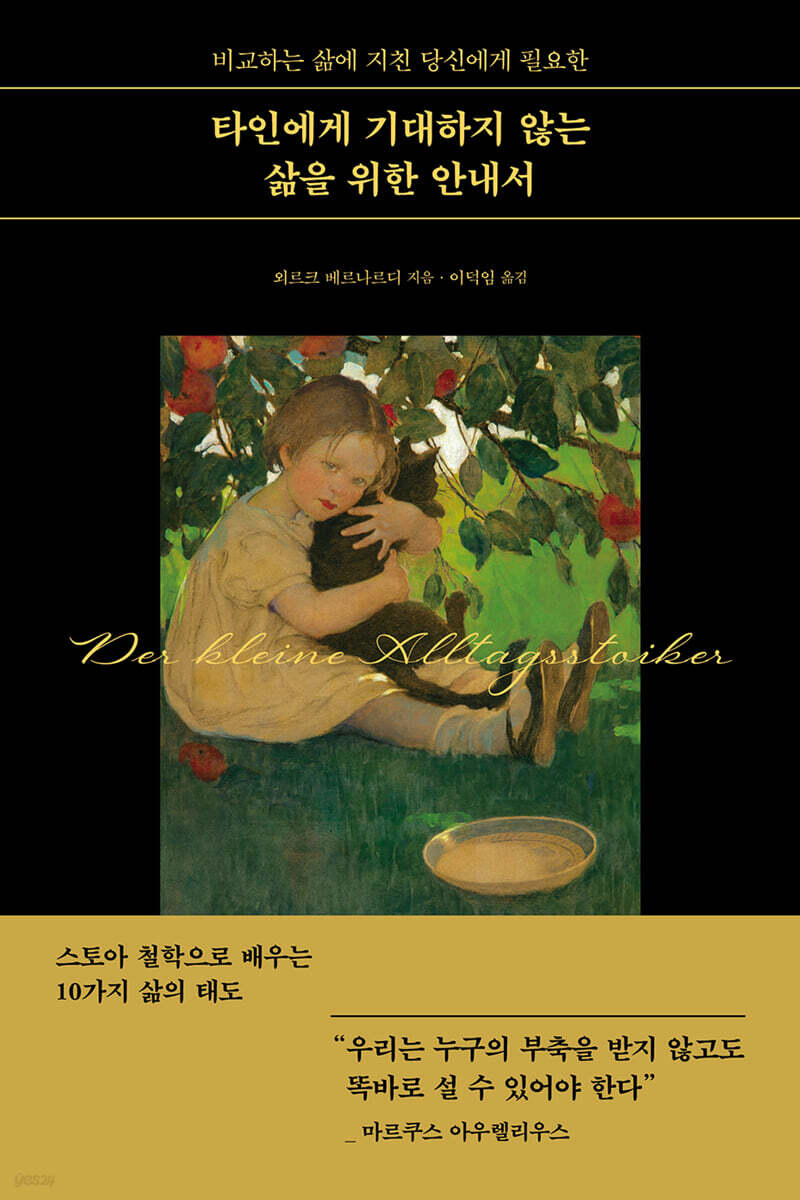
A Guide to Living Without Expecting Anything from Others
 |
Description
Book Introduction
“We must be able to stand upright without anyone’s support.”
- Marcus Aurelius -
In an age swayed by the gaze of others, Stoic philosophy is gaining renewed attention.
The one book that will strengthen your inner self, tired of a life of comparison.
The author, who has a doctorate in philosophy, a former journalist, and a writer who has communicated philosophical stories with the public, has explained the essential life skills for modern people through Stoic philosophy.
This is a comprehensive introduction to Stoic philosophy, covering virtually every aspect of life, from self-awareness to achieving inner peace, focusing on the present, maintaining motivation, and accepting death.
In particular, Stoic philosophy advised that we should follow our inner beliefs rather than trying to please others.
Of course, it is a perfectly normal desire to bring joy to others, but he cautioned that this should not be the primary reason for all actions.
I saw suppressing the desire to please others as inner confidence.
Even Epictetus said that we should give ourselves the praise we expect from others.
This book gives you the courage and ability to distance yourself from the judgments of others.
From Seneca, the philosophical advisor to Emperor Nero and the most widely read writer of his time, to Epictetus, a freed slave who founded a school and spread Stoic philosophy until his death, to Marcus Aurelius, who inspired many leaders from Frederick II to Helmut Schmidt to Bill Clinton, this book highlights the insights of three philosophers who maintained a Stoic perspective in the midst of life's crises and adversities, and their words help us wisely seek a path to a calm and proactive life in these uncertain and turbulent times.
- Marcus Aurelius -
In an age swayed by the gaze of others, Stoic philosophy is gaining renewed attention.
The one book that will strengthen your inner self, tired of a life of comparison.
The author, who has a doctorate in philosophy, a former journalist, and a writer who has communicated philosophical stories with the public, has explained the essential life skills for modern people through Stoic philosophy.
This is a comprehensive introduction to Stoic philosophy, covering virtually every aspect of life, from self-awareness to achieving inner peace, focusing on the present, maintaining motivation, and accepting death.
In particular, Stoic philosophy advised that we should follow our inner beliefs rather than trying to please others.
Of course, it is a perfectly normal desire to bring joy to others, but he cautioned that this should not be the primary reason for all actions.
I saw suppressing the desire to please others as inner confidence.
Even Epictetus said that we should give ourselves the praise we expect from others.
This book gives you the courage and ability to distance yourself from the judgments of others.
From Seneca, the philosophical advisor to Emperor Nero and the most widely read writer of his time, to Epictetus, a freed slave who founded a school and spread Stoic philosophy until his death, to Marcus Aurelius, who inspired many leaders from Frederick II to Helmut Schmidt to Bill Clinton, this book highlights the insights of three philosophers who maintained a Stoic perspective in the midst of life's crises and adversities, and their words help us wisely seek a path to a calm and proactive life in these uncertain and turbulent times.
- You can preview some of the book's contents.
Preview
index
Preface: Deeply Rooted in a Peaceful Life
To the Stoics of Today
“Read Seneca.”
The Golden Age of the School of Life Philosophy
The power of Stoic philosophy that has been with us for 1,800 years
The good fortune of good people
Chapter 1 The Nature of Self-Awareness: How Can I Know Myself?
We overestimate our ability to self-awareness
The world, us, everything changes
A world more complex and contradictory than you think
Realizing my failures
Chapter 2 The Secret of Inner Calm: How to Regulate Your Emotions
Inner calm and vitality are byproducts of a 'good life'.
What you can control and what you can't control
A challenge to inner calm
Chapter 3: The Magic of the Moment: How to Focus on Everyday Moments
Life in this moment
Champagne bursting in the world of consciousness
Practice is key
Chapter 4: The Art of Change: How to Change Habits and Attitudes
Strategy of not doing
Turn old habits into better ones
Perfectionism and fear are bad advisors.
Chapter 5: The Happiness That Means: How to Stay Motivated in Life
Why we do things
Meaning is something that money can't buy
Things inside us that no one can take away
Chapter 6 The Joy of Being Alone: How Do I Discover My Uniqueness?
The Positive Side of Loneliness
Be free from the judgment of others
Treat yourself with self-compassion
Open your eyes and face the world
Chapter 7: The Power of Friendship: How Can We Connect with Others?
Good relationships, happiness, and health
The house of the heart called friendship
Beyond the trap of the tit-for-tat
Chapter 8 The Power of Love: How to Maintain a Long-Lasting, Faithful Relationship
Learning to love is a lifelong task.
Building a loyal relationship
Love yourself
Chapter 9: Wise Pessimism: How to Live as a Happy Pessimist
Minimizing emotional damage
Stoic pessimism
pessimistic view of life
Chapter 10: The Lightness of Being: How to Live Well and Die Well
The world's most natural secret
Practice saying hello
A wonderful life before death
Major Stoic philosophers
References
To the Stoics of Today
“Read Seneca.”
The Golden Age of the School of Life Philosophy
The power of Stoic philosophy that has been with us for 1,800 years
The good fortune of good people
Chapter 1 The Nature of Self-Awareness: How Can I Know Myself?
We overestimate our ability to self-awareness
The world, us, everything changes
A world more complex and contradictory than you think
Realizing my failures
Chapter 2 The Secret of Inner Calm: How to Regulate Your Emotions
Inner calm and vitality are byproducts of a 'good life'.
What you can control and what you can't control
A challenge to inner calm
Chapter 3: The Magic of the Moment: How to Focus on Everyday Moments
Life in this moment
Champagne bursting in the world of consciousness
Practice is key
Chapter 4: The Art of Change: How to Change Habits and Attitudes
Strategy of not doing
Turn old habits into better ones
Perfectionism and fear are bad advisors.
Chapter 5: The Happiness That Means: How to Stay Motivated in Life
Why we do things
Meaning is something that money can't buy
Things inside us that no one can take away
Chapter 6 The Joy of Being Alone: How Do I Discover My Uniqueness?
The Positive Side of Loneliness
Be free from the judgment of others
Treat yourself with self-compassion
Open your eyes and face the world
Chapter 7: The Power of Friendship: How Can We Connect with Others?
Good relationships, happiness, and health
The house of the heart called friendship
Beyond the trap of the tit-for-tat
Chapter 8 The Power of Love: How to Maintain a Long-Lasting, Faithful Relationship
Learning to love is a lifelong task.
Building a loyal relationship
Love yourself
Chapter 9: Wise Pessimism: How to Live as a Happy Pessimist
Minimizing emotional damage
Stoic pessimism
pessimistic view of life
Chapter 10: The Lightness of Being: How to Live Well and Die Well
The world's most natural secret
Practice saying hello
A wonderful life before death
Major Stoic philosophers
References
Detailed image

Into the book
If you don't know who you are, you have no way of knowing what you want or what is good for you.
Therefore, the realization of one's own shortcomings can be said to be, as Seneca said, 'the beginning of discovery.'
Self-awareness of your shortcomings may initially be unsettling, but it can ultimately bring you greater peace.
Because there is no need to waste energy defending any part of yourself and avoiding the negative aspects.
This saves you the trouble of maintaining an unrealistic self-image.
--- p.56
Positive emotions help us regulate negative emotions and achieve more inner peace and tranquility.
So, visualize beautiful scenes from the past or the future and feel positive emotions like gratitude, joy, love, passion, or appreciation.
And let's make this a positive experience here and now.
Meet up with friends, cook something delicious, or do something that makes you happy.
It can help you find balance in difficult life situations that bring about anger or fear.
Then, even in times of stress, you can consciously recall positive emotions.
--- p.83
Don't forget that even small actions in everyday life can lead to immersion.
A good life isn't just about doing great things, it's also about doing small things like brushing your teeth, cleaning your house, taking out the trash, shopping, cooking, reading an inspiring or good book, sorting your laundry, and tending your garden.
Zeno of Citium, the founder of Stoicism, clearly pointed out the important correlation between small steps and goals.
--- p.107
One of the most important principles for Seneca is to cultivate the power to deal with oneself.
As Seneca said, only those who are content with themselves and look upon their situation with satisfaction can cope calmly in difficult situations.
The best prevention against painful experiences is to be kind to yourself and see the positive elements within yourself.
--- p.171
Now you know what makes you happy and what makes a good life for you.
So you can define for yourself what happiness and success are.
But that definition doesn't apply to all of life.
Rather, the experience of happiness and success can always vary, and you must define them yourself.
Whether it's serenity and inner peace, self-awareness, happiness and success, or your idea of a good life, all of these things change over the course of life.
This also applies to the impermanence of life.
How we deal with it and cope with it varies depending on our stage of life and health.
The sense of finitude in life at thirty has a different meaning than it does at sixty.
Likewise, the inner peace and happiness you feel at twenty-five cannot but be different from that you feel at sixty-five.
Therefore, the realization of one's own shortcomings can be said to be, as Seneca said, 'the beginning of discovery.'
Self-awareness of your shortcomings may initially be unsettling, but it can ultimately bring you greater peace.
Because there is no need to waste energy defending any part of yourself and avoiding the negative aspects.
This saves you the trouble of maintaining an unrealistic self-image.
--- p.56
Positive emotions help us regulate negative emotions and achieve more inner peace and tranquility.
So, visualize beautiful scenes from the past or the future and feel positive emotions like gratitude, joy, love, passion, or appreciation.
And let's make this a positive experience here and now.
Meet up with friends, cook something delicious, or do something that makes you happy.
It can help you find balance in difficult life situations that bring about anger or fear.
Then, even in times of stress, you can consciously recall positive emotions.
--- p.83
Don't forget that even small actions in everyday life can lead to immersion.
A good life isn't just about doing great things, it's also about doing small things like brushing your teeth, cleaning your house, taking out the trash, shopping, cooking, reading an inspiring or good book, sorting your laundry, and tending your garden.
Zeno of Citium, the founder of Stoicism, clearly pointed out the important correlation between small steps and goals.
--- p.107
One of the most important principles for Seneca is to cultivate the power to deal with oneself.
As Seneca said, only those who are content with themselves and look upon their situation with satisfaction can cope calmly in difficult situations.
The best prevention against painful experiences is to be kind to yourself and see the positive elements within yourself.
--- p.171
Now you know what makes you happy and what makes a good life for you.
So you can define for yourself what happiness and success are.
But that definition doesn't apply to all of life.
Rather, the experience of happiness and success can always vary, and you must define them yourself.
Whether it's serenity and inner peace, self-awareness, happiness and success, or your idea of a good life, all of these things change over the course of life.
This also applies to the impermanence of life.
How we deal with it and cope with it varies depending on our stage of life and health.
The sense of finitude in life at thirty has a different meaning than it does at sixty.
Likewise, the inner peace and happiness you feel at twenty-five cannot but be different from that you feel at sixty-five.
--- p.265
Publisher's Review
“Mental philosophy loved from ancient times to the present,
Now it's your turn to start living an unwavering life!”
10 Life Attitudes Learned from Stoic Philosophy
Everyone dreams of a proactive life.
I want to be the master of my own life, without being swayed by the gaze of those around me.
However, the development of social media has made life a place where we constantly show off, compete, and consume.
It creates a feeling of anxiety, as if you are the only one left behind in the world.
When will we finally stop comparing ourselves and walk our own paths? The Stoic philosopher Epictetus tells us, "In times of crisis, our true selves emerge."
The Stoic philosophers believed that we could overcome the crises of everyday life through virtue.
So I thought that I should live a balanced life by cultivating virtues on a daily basis.
For them, virtue is not a vague ideal but an acquirable skill.
This book explains the life skills needed for everyday life through Stoic philosophy and covers almost every aspect of life.
This is the result of the author, a former journalist, writer, and doctor of philosophy, communicating with the public in various ways.
How can I know myself? How can I achieve inner peace? How can I change my habits and attitudes? How can I maintain a long and faithful relationship? How can I live well and die well? These are ten questions for a peaceful and happy life, and each is divided into chapters.
If you answer these questions, find the principles of life that are right for you, and put them into practice, you will be able to get closer to a good life, a solid life.
To us who live with a lot of anxiety and worries
“We can do it without anyone’s support
“You must be able to stand up straight.”
In the West, Stoic philosophy has long been in the spotlight as a guide to a good life.
In the United States, people called the "New York Stoics" are said to hold regular meetings in high-rise buildings in New York.
In recent years, books on Stoic philosophy have been appearing frequently in our bookstores.
How can a two-thousand-year-old idea resonate so deeply with 21st-century people? The short answer is that the questions addressed in Stoic philosophy are not so different from the issues we face today.
Seneca, who lived in ancient Rome, complained about excessive noise, anxiety, and stress, and criticized the excessively fast pace of life at the time.
Marcus Aurelius, the Roman emperor, lived through a much longer and more difficult time than the COVID-19 era we are currently living in, and he had to constantly think about death.
As you read this book, you will realize that the wisdom that the Stoic philosophers gained through their daily practice and reflection directly connects with our lives today.
Seneca said, “Whatever happens, look at it positively and make it good.
“It’s not what you wear, it’s how you wear it that matters,” he said.
Cognitive behavioral therapy has also developed its own treatment method by adopting this Stoic approach.
Just as Stoic philosophy has inspired countless people throughout the centuries, this book is your chance to become a true Stoic.
This book is a perfect introduction to Stoic philosophy, concisely and easily solving various problems of life according to the modern perspective.
If you keep it by your side and read it whenever you need it, it will be a great source of strength for you at every moment of your life.
“When the wind blows hard
Only then does the tree become firmly rooted in the ground.
The sway of the wind squeezes the tree inward
“It makes its roots go deeper into the ground.”
How to not break down even in the worst of situations
In 165 AD, the Romans faced a plague they had never experienced before.
At the height of the plague, as many as 2,000 people were dying each day in Rome alone.
Administrative power and medicine were completely powerless, and even the emperor at the time, Marcus Aurelius, could not control it and had no choice but to accept it as fate or punishment.
The author says that in this situation, the Stoic philosophers seemed to be internally preparing for disaster.
Marcus Aurelius is said to have practiced contemplating his own mortality every morning, grappling with the possibility of infection, and most Stoic philosophers are said to have practiced contemplating negative possibilities, such as their own death or the loss of a loved one.
One of the most famous Stoic mental exercises is 'anticipating the worst'.
Seneca described this meditation as a mental anticipation of obstacles and adversity.
Epictetus said that if you imagine terrible things like death or exile every day, you will never have blasphemous thoughts or excessive desires.
This contemplative exercise, practiced by the Stoic philosophers, has the effect of making us grateful for the life we have and minimizing our fears.
It is about rediscovering the value of precious things that we have usually forgotten and becoming accustomed to the feeling of fear.
This will help you prepare emotionally and mentally for misfortune or crisis, and this is the Stoic equanimity training.
When you feel anxious about something bad happening or feel like you're drifting away from happiness, why not try to anticipate unhappiness like the Stoics did?
Now it's your turn to start living an unwavering life!”
10 Life Attitudes Learned from Stoic Philosophy
Everyone dreams of a proactive life.
I want to be the master of my own life, without being swayed by the gaze of those around me.
However, the development of social media has made life a place where we constantly show off, compete, and consume.
It creates a feeling of anxiety, as if you are the only one left behind in the world.
When will we finally stop comparing ourselves and walk our own paths? The Stoic philosopher Epictetus tells us, "In times of crisis, our true selves emerge."
The Stoic philosophers believed that we could overcome the crises of everyday life through virtue.
So I thought that I should live a balanced life by cultivating virtues on a daily basis.
For them, virtue is not a vague ideal but an acquirable skill.
This book explains the life skills needed for everyday life through Stoic philosophy and covers almost every aspect of life.
This is the result of the author, a former journalist, writer, and doctor of philosophy, communicating with the public in various ways.
How can I know myself? How can I achieve inner peace? How can I change my habits and attitudes? How can I maintain a long and faithful relationship? How can I live well and die well? These are ten questions for a peaceful and happy life, and each is divided into chapters.
If you answer these questions, find the principles of life that are right for you, and put them into practice, you will be able to get closer to a good life, a solid life.
To us who live with a lot of anxiety and worries
“We can do it without anyone’s support
“You must be able to stand up straight.”
In the West, Stoic philosophy has long been in the spotlight as a guide to a good life.
In the United States, people called the "New York Stoics" are said to hold regular meetings in high-rise buildings in New York.
In recent years, books on Stoic philosophy have been appearing frequently in our bookstores.
How can a two-thousand-year-old idea resonate so deeply with 21st-century people? The short answer is that the questions addressed in Stoic philosophy are not so different from the issues we face today.
Seneca, who lived in ancient Rome, complained about excessive noise, anxiety, and stress, and criticized the excessively fast pace of life at the time.
Marcus Aurelius, the Roman emperor, lived through a much longer and more difficult time than the COVID-19 era we are currently living in, and he had to constantly think about death.
As you read this book, you will realize that the wisdom that the Stoic philosophers gained through their daily practice and reflection directly connects with our lives today.
Seneca said, “Whatever happens, look at it positively and make it good.
“It’s not what you wear, it’s how you wear it that matters,” he said.
Cognitive behavioral therapy has also developed its own treatment method by adopting this Stoic approach.
Just as Stoic philosophy has inspired countless people throughout the centuries, this book is your chance to become a true Stoic.
This book is a perfect introduction to Stoic philosophy, concisely and easily solving various problems of life according to the modern perspective.
If you keep it by your side and read it whenever you need it, it will be a great source of strength for you at every moment of your life.
“When the wind blows hard
Only then does the tree become firmly rooted in the ground.
The sway of the wind squeezes the tree inward
“It makes its roots go deeper into the ground.”
How to not break down even in the worst of situations
In 165 AD, the Romans faced a plague they had never experienced before.
At the height of the plague, as many as 2,000 people were dying each day in Rome alone.
Administrative power and medicine were completely powerless, and even the emperor at the time, Marcus Aurelius, could not control it and had no choice but to accept it as fate or punishment.
The author says that in this situation, the Stoic philosophers seemed to be internally preparing for disaster.
Marcus Aurelius is said to have practiced contemplating his own mortality every morning, grappling with the possibility of infection, and most Stoic philosophers are said to have practiced contemplating negative possibilities, such as their own death or the loss of a loved one.
One of the most famous Stoic mental exercises is 'anticipating the worst'.
Seneca described this meditation as a mental anticipation of obstacles and adversity.
Epictetus said that if you imagine terrible things like death or exile every day, you will never have blasphemous thoughts or excessive desires.
This contemplative exercise, practiced by the Stoic philosophers, has the effect of making us grateful for the life we have and minimizing our fears.
It is about rediscovering the value of precious things that we have usually forgotten and becoming accustomed to the feeling of fear.
This will help you prepare emotionally and mentally for misfortune or crisis, and this is the Stoic equanimity training.
When you feel anxious about something bad happening or feel like you're drifting away from happiness, why not try to anticipate unhappiness like the Stoics did?
GOODS SPECIFICS
- Date of issue: April 9, 2025
- Page count, weight, size: 288 pages | 386g | 140*210*20mm
- ISBN13: 9791193262443
- ISBN10: 1193262445
You may also like
카테고리
korean


korean

![GQ KOREA Mark (Monthly): December [2025]](http://librairie.coreenne.fr/cdn/shop/files/8ef265dbbfbf186523ed75ba7319009d.jpg?v=1765340328&width=3840)


