

Kim Seong-gon's Travels through China's Han Dynasty: The Yangtze and Yellow Rivers
 |
Description
Book Introduction
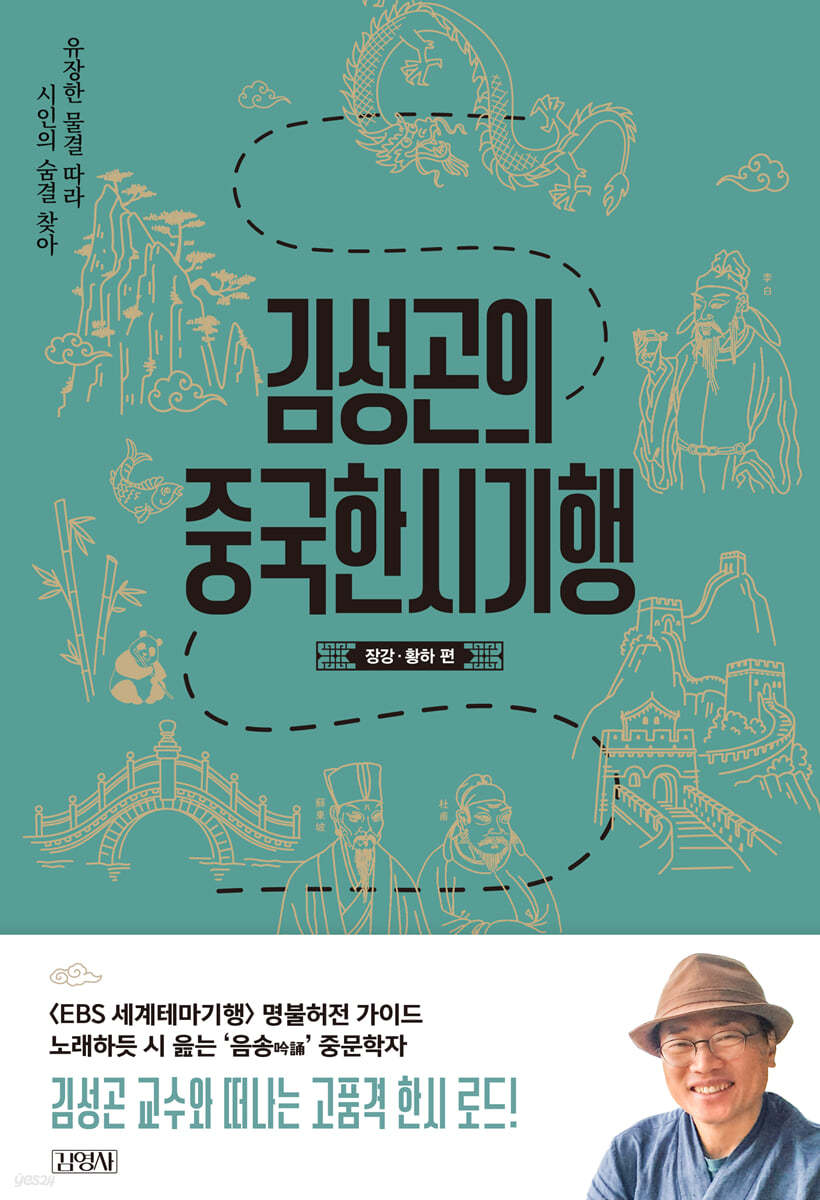
[EBS World Theme Travel] A Guide to the Unwavering Faith A Chinese literature scholar who recites poetry as if singing A high-quality poetry road trip with Professor Kim Seong-gon! Professor Kim Seong-gon, who has been praised for his in-depth commentary with humor during his nine-year appearance on [EBS World Theme Travel], presents the first story of his travels to China during the Han Dynasty, the Yangtze and Yellow River series. Professor Kim Seong-gon, who has contributed to the popularization of Chinese poetry with his extensive knowledge of Chinese history and culture, his gift for eloquence, and his singing-like recitation of poetry, combines Chinese poetry with travel in China to convey the majestic scenery along the Yangtze and Yellow Rivers, as well as the history, literature, anecdotes, and customs contained within. In addition to in-depth commentary on the representative works of China's greatest poets, such as Su Dongpo [Red Cliff], Du Fu [Wangyue], and Li Bai [Zhang Zhenzhu], the book is enriched with exciting stories of historical figures and heartwarming travel episodes full of human touch. |
index
preface
Part 1: The Yangtze River
Chapter 1: Sacheon Castle
1.
The Hometown of Gaze That Could Never Be Returned - Kang Yu Cheongryeonjin
2.
The Rainy Season of the Poet Du Fu - Du Fu Thatched Cottage in Chengdu
3.
Like father, like son, Su Dongpo's hometown - Misan
4.
The first port village on the Great Yangtze River - Yijanggojin
5.
The Poet's Whistle in the Bamboo Forest - Ui-bin Choknam Jukhae
Chapter 2: The Three Gorges of the Yangtze River
1.
The Castle of Sorrow, the Castle of Joy - Baekje Castle in Junggyeong
2.
Head in the clouds, body in the dungeon - Unyang Jangbimyo
3.
Evening rain falling on Shinnyeo Peak - Three Gorges of the Yangtze River
Chapter 3: Honam Province
1.
Playing in a Landscape Painting - Zhangjiajie
2.
A land beyond the world, following the waves of peach blossoms - Peach Blossom Land
3.
The Goddess' Tears, the Poet's Lament, and the Ancient Man's Misfortune - Dongjing Lake, Yueyang Tower
Chapter 4 Hubei Province
1.
The humiliating historical site of Li Bai's calligraphy - the Yellow Crane Tower in Wuhan
2.
The land where Su Dongpo wandered, following the cool breeze and bright moon - Huanggang, Dongpo, and Red Cliffs
Chapter 5: Gangseo Province
1.
Seorimsa Temple in Yeosan, a temple whose name was given to a wall graffiti by Dongpa
2.
A poet's village where chrysanthemums are picked and the sunset is admired - Yeosan Tao Yuanming Memorial Hall
3.
Biryujikhasamcheoncheok - Yeosan Falls
4.
A river village filled with the scent of learning - Sangyo Muwongojin
Chapter 6: Jiangsu Province 1 - The History of Chu and Han
1.
The Hero's Last Cry at Ogang Ferry - Ogangjin Paewangsa Temple
2.
Woohee, Woohee, what shall I do with you? - Yeongbyeok Umiin's Tomb
3.
Returning Home and Singing a Hymn of Victory - Yoo Bang [Daepungga]
4.
The Encounter of a Rude Old Man and a Polite Young Man - Gobi Igyo
5.
The hometown of the hero who paid a thousand gold coins for a single meal - Hoean Hanshin Gori
Chapter 7 Jiangsu Province 2 - Yangtze River
1.
Nanjing, the imperial city where dragons stand and tigers crouch
2.
Yangju, a moonlit city filled with the sound of chopsticks
3.
Sending the Yangtze River to the Sea - Sungmyeongdo Yangtze River Basin
Part 2: The Yellow River
Chapter 1: Hwang Ha-won
1.
The Milky Way flows down the meadow - Gukgok Hwangha Jeilman
2.
In Search of Baby Huang He's Clean Face - Maduo Huang Heyuan
Chapter 2: Cheonghae Castle
1.
Summer City and Freshly Fried Mountains - Seonyeong
2.
Lake Cheonghae, named after the blue sea
3.
A Path Paved with the Skirt of Peace - Ilwolsan Dangbeongodo
Chapter 3: Gansu Province
1.
In search of the Buddha's smile blooming on the deep-clouded Jeokseok Mountain - Byeongnyeongsa Temple
2.
The city where the Yellow River flows through its center - Nanzhou
3.
The first ancient village I encountered along the Yellow River - Cheongseong Ancient Town
4.
A vast turquoise landscape in a world beyond the world - the Yellow River Stone Forest
Chapter 4: Ningxia Hui Autonomous Region
1.
A river flowing through the desert - Sapadu
2.
Yinchuan, a beautiful and desolate city from the lost civilization of the Western Xia Dynasty
Chapter 5 Inner Mongolia Autonomous Region
1.
A lone blue tomb remains in the twilight - Wang Zhaojun's tomb in Hohhot
2.
Throwing a glass in an old street in the frontier - Saesangnoga
3.
An auspicious land where the Yellow River meets the Great Wall - Nouman
Chapter 6 Shanxi Province
1.
Jeokgujin, a port town where tigers roar and dragons cry
2.
The Aesthetics of Roundness - The Best in the World
3.
Apricot Blossom Village in the Rain - Bunyang Haenghwachon
4.
An old shrine dedicated to Jiang Taigong's daughter - Taewon Jinsa
5.
The cradle of the truth that shook the world - Pingyao Ancient City
6.
In Search of the Origins of Hansikjeol Customs - Myeonsan
7.
What does the power of the king have to do with me? - Imbun Yodo
8.
Song of the South Wind sung by Guan Yu at the salt lake overlooking it - Unseong
Chapter 7 Shaanxi Province 1 - Hanseong
1.
A passionate song sung with the Yellow River, [Jang Jinju] - Hogu Falls
2.
The carps of the Yellow River that became dragons beyond the Dragon Gate - Dragon Gate
3.
The story of Woo, a master of communication who spent 13 years searching for a way out of a deadlock - Daewoomyo
4.
The Village of Burning Letters - Dangga Village
Chapter 8 Shaanxi Province 2 - Volcano
1.
Noodles made with unknown characters - Bbaeng Bbaeng Men
2.
The cry of geese heard from the lotus-blooming peaks - Seobong and Nambong
3.
The most beautiful origin in the world - Dongbong Hagijeong
4.
Volcanoes Become a Sanctuary of Love - Oknyeo Peak of Sosa and Nongok
5.
Climbing the Blue Dragon's Spine - Changryongryeong
Chapter 9: Henan Province 1 - Luoyang
1.
The Gogoji Fortress that Awakens the Morning of the City Kingdom - Gong's Dubogo-ri
2.
The Great Buddha of Lushan, carved with the face of Empress Wu Zetian - Longmen Grottoes
3.
Will I Be a Monk at This Temple in My Next Life? - Baek Ju-i's Hyangsan Temple
Chapter 10: Hanamseong 2 - Sungsan
1.
The best auspicious place where Confucianism, Buddhism, and Taoism alternated - Sungyang Seowon
2.
Master Bodhidharma, who practiced asceticism for nine years, unites Zen and martial arts - Shaolin Temple
3.
My beloved younger brother has come, and my father, who lives in my hometown, has come too - Samsomyo
Chapter 11: Hanam Province 3 - Jeongju, Wangoksan, and Jewon
1.
Hundred-year-old jujube trees hang in clusters - Emperor's Gori
2.
Wangoksan Mountain - a mountain nearly lost to the relentless digging of the Yugong family
3.
Are there Three Gorges on the Yangtze River? There are Three Gorges on the Yellow River, too. - Henan Province, Jiyuan District, Yellow River, Three Gorges
4.
The Jin family's grandest mansion in the north, which produced the emperor's teacher - Hwangseongsangbu
Chapter 12: Hanamseong 4 - Opening
1.
Bring the Sword! - Judge Bao Qingtian's Opening Book
2.
The law does not flatter the rich and noble - Pogongsa
3.
Walking along the Kaifeng Street of the Song Dynasty - Qingming Shangxiayuan
Chapter 13: Hanam Province 5 - Weihui, Xuebi, and Taihang Mountain
1.
The hometown of Jiang Taigong, who fished the world with a straight needle - Wei Hui
2.
The city of a foolish monarch who lost his people because he loved cranes - Hakbyeok
3.
The rugged and steep Taehangsan Mountains, the path of life - Wangmang Ridge, Taehangsan Mountains
Chapter 14 Shandong Province 1 - Jining, Qufu
1.
A tavern where Li Bai, the famous poet, demonstrated a state of unity with nature through alcohol - Taebaekru, Jeonyeong
2.
Confucius's voice echoes in the old courtyard, "Son, study poetry" - Qufu
3.
Following Confucius to the Dongsan Mountain - Mongsan
Chapter 15 Shandong Province 2 - Taishan, Jinan
1.
Someday I will climb to the top of Mount Tai and look down on the small peaks - Mount Tai
2.
Cleanse Your Mind in the City of Springs - Jinan
3.
A love song sung in the old streets - Chibak
4.
A Farewell Poem to the Yellow River Going to the Sea - Yellow River
Travel itinerary
Photo source
Part 1: The Yangtze River
Chapter 1: Sacheon Castle
1.
The Hometown of Gaze That Could Never Be Returned - Kang Yu Cheongryeonjin
2.
The Rainy Season of the Poet Du Fu - Du Fu Thatched Cottage in Chengdu
3.
Like father, like son, Su Dongpo's hometown - Misan
4.
The first port village on the Great Yangtze River - Yijanggojin
5.
The Poet's Whistle in the Bamboo Forest - Ui-bin Choknam Jukhae
Chapter 2: The Three Gorges of the Yangtze River
1.
The Castle of Sorrow, the Castle of Joy - Baekje Castle in Junggyeong
2.
Head in the clouds, body in the dungeon - Unyang Jangbimyo
3.
Evening rain falling on Shinnyeo Peak - Three Gorges of the Yangtze River
Chapter 3: Honam Province
1.
Playing in a Landscape Painting - Zhangjiajie
2.
A land beyond the world, following the waves of peach blossoms - Peach Blossom Land
3.
The Goddess' Tears, the Poet's Lament, and the Ancient Man's Misfortune - Dongjing Lake, Yueyang Tower
Chapter 4 Hubei Province
1.
The humiliating historical site of Li Bai's calligraphy - the Yellow Crane Tower in Wuhan
2.
The land where Su Dongpo wandered, following the cool breeze and bright moon - Huanggang, Dongpo, and Red Cliffs
Chapter 5: Gangseo Province
1.
Seorimsa Temple in Yeosan, a temple whose name was given to a wall graffiti by Dongpa
2.
A poet's village where chrysanthemums are picked and the sunset is admired - Yeosan Tao Yuanming Memorial Hall
3.
Biryujikhasamcheoncheok - Yeosan Falls
4.
A river village filled with the scent of learning - Sangyo Muwongojin
Chapter 6: Jiangsu Province 1 - The History of Chu and Han
1.
The Hero's Last Cry at Ogang Ferry - Ogangjin Paewangsa Temple
2.
Woohee, Woohee, what shall I do with you? - Yeongbyeok Umiin's Tomb
3.
Returning Home and Singing a Hymn of Victory - Yoo Bang [Daepungga]
4.
The Encounter of a Rude Old Man and a Polite Young Man - Gobi Igyo
5.
The hometown of the hero who paid a thousand gold coins for a single meal - Hoean Hanshin Gori
Chapter 7 Jiangsu Province 2 - Yangtze River
1.
Nanjing, the imperial city where dragons stand and tigers crouch
2.
Yangju, a moonlit city filled with the sound of chopsticks
3.
Sending the Yangtze River to the Sea - Sungmyeongdo Yangtze River Basin
Part 2: The Yellow River
Chapter 1: Hwang Ha-won
1.
The Milky Way flows down the meadow - Gukgok Hwangha Jeilman
2.
In Search of Baby Huang He's Clean Face - Maduo Huang Heyuan
Chapter 2: Cheonghae Castle
1.
Summer City and Freshly Fried Mountains - Seonyeong
2.
Lake Cheonghae, named after the blue sea
3.
A Path Paved with the Skirt of Peace - Ilwolsan Dangbeongodo
Chapter 3: Gansu Province
1.
In search of the Buddha's smile blooming on the deep-clouded Jeokseok Mountain - Byeongnyeongsa Temple
2.
The city where the Yellow River flows through its center - Nanzhou
3.
The first ancient village I encountered along the Yellow River - Cheongseong Ancient Town
4.
A vast turquoise landscape in a world beyond the world - the Yellow River Stone Forest
Chapter 4: Ningxia Hui Autonomous Region
1.
A river flowing through the desert - Sapadu
2.
Yinchuan, a beautiful and desolate city from the lost civilization of the Western Xia Dynasty
Chapter 5 Inner Mongolia Autonomous Region
1.
A lone blue tomb remains in the twilight - Wang Zhaojun's tomb in Hohhot
2.
Throwing a glass in an old street in the frontier - Saesangnoga
3.
An auspicious land where the Yellow River meets the Great Wall - Nouman
Chapter 6 Shanxi Province
1.
Jeokgujin, a port town where tigers roar and dragons cry
2.
The Aesthetics of Roundness - The Best in the World
3.
Apricot Blossom Village in the Rain - Bunyang Haenghwachon
4.
An old shrine dedicated to Jiang Taigong's daughter - Taewon Jinsa
5.
The cradle of the truth that shook the world - Pingyao Ancient City
6.
In Search of the Origins of Hansikjeol Customs - Myeonsan
7.
What does the power of the king have to do with me? - Imbun Yodo
8.
Song of the South Wind sung by Guan Yu at the salt lake overlooking it - Unseong
Chapter 7 Shaanxi Province 1 - Hanseong
1.
A passionate song sung with the Yellow River, [Jang Jinju] - Hogu Falls
2.
The carps of the Yellow River that became dragons beyond the Dragon Gate - Dragon Gate
3.
The story of Woo, a master of communication who spent 13 years searching for a way out of a deadlock - Daewoomyo
4.
The Village of Burning Letters - Dangga Village
Chapter 8 Shaanxi Province 2 - Volcano
1.
Noodles made with unknown characters - Bbaeng Bbaeng Men
2.
The cry of geese heard from the lotus-blooming peaks - Seobong and Nambong
3.
The most beautiful origin in the world - Dongbong Hagijeong
4.
Volcanoes Become a Sanctuary of Love - Oknyeo Peak of Sosa and Nongok
5.
Climbing the Blue Dragon's Spine - Changryongryeong
Chapter 9: Henan Province 1 - Luoyang
1.
The Gogoji Fortress that Awakens the Morning of the City Kingdom - Gong's Dubogo-ri
2.
The Great Buddha of Lushan, carved with the face of Empress Wu Zetian - Longmen Grottoes
3.
Will I Be a Monk at This Temple in My Next Life? - Baek Ju-i's Hyangsan Temple
Chapter 10: Hanamseong 2 - Sungsan
1.
The best auspicious place where Confucianism, Buddhism, and Taoism alternated - Sungyang Seowon
2.
Master Bodhidharma, who practiced asceticism for nine years, unites Zen and martial arts - Shaolin Temple
3.
My beloved younger brother has come, and my father, who lives in my hometown, has come too - Samsomyo
Chapter 11: Hanam Province 3 - Jeongju, Wangoksan, and Jewon
1.
Hundred-year-old jujube trees hang in clusters - Emperor's Gori
2.
Wangoksan Mountain - a mountain nearly lost to the relentless digging of the Yugong family
3.
Are there Three Gorges on the Yangtze River? There are Three Gorges on the Yellow River, too. - Henan Province, Jiyuan District, Yellow River, Three Gorges
4.
The Jin family's grandest mansion in the north, which produced the emperor's teacher - Hwangseongsangbu
Chapter 12: Hanamseong 4 - Opening
1.
Bring the Sword! - Judge Bao Qingtian's Opening Book
2.
The law does not flatter the rich and noble - Pogongsa
3.
Walking along the Kaifeng Street of the Song Dynasty - Qingming Shangxiayuan
Chapter 13: Hanam Province 5 - Weihui, Xuebi, and Taihang Mountain
1.
The hometown of Jiang Taigong, who fished the world with a straight needle - Wei Hui
2.
The city of a foolish monarch who lost his people because he loved cranes - Hakbyeok
3.
The rugged and steep Taehangsan Mountains, the path of life - Wangmang Ridge, Taehangsan Mountains
Chapter 14 Shandong Province 1 - Jining, Qufu
1.
A tavern where Li Bai, the famous poet, demonstrated a state of unity with nature through alcohol - Taebaekru, Jeonyeong
2.
Confucius's voice echoes in the old courtyard, "Son, study poetry" - Qufu
3.
Following Confucius to the Dongsan Mountain - Mongsan
Chapter 15 Shandong Province 2 - Taishan, Jinan
1.
Someday I will climb to the top of Mount Tai and look down on the small peaks - Mount Tai
2.
Cleanse Your Mind in the City of Springs - Jinan
3.
A love song sung in the old streets - Chibak
4.
A Farewell Poem to the Yellow River Going to the Sea - Yellow River
Travel itinerary
Photo source
Detailed image

Into the book
As I read this poem, I find myself deeply sympathizing with the old poet's loneliness and longing that permeates the lines.
Countless intellectuals who lived unfortunate lives because they were unable to meet their time, and countless people who longed for their hometowns during the chaos and drank together, must have cried with the poet while reading this poem.
This poem has the power to comfort sorrow.
The answer lies in the 'tragic beauty' expressed in the style of this poem.
Numerous critics throughout history have praised this work as the poem that best embodies the beauty of tragedy.
It's sad yet majestic.
It is a duet of sorrow and grandeur.
Because of its grandeur, sorrow is imbued with a powerful force.
It is this powerful, majestic sadness that captures our hearts and comforts and heals the sadness within us.
As I recite Du Fu's "Denggu" while feeling the cold autumn wind blowing from the old Tang Dynasty, tears well up in my eyes, but a warmth wells up in my chest as if a noble spirit is building up.
--- p.43-44
A life that enjoys the boundless treasures of the Creator, the clear wind and bright moon, is neither shabby nor poor.
Unlike us, who live with a constant sense of lack and dissatisfaction despite enjoying all the benefits of a rich material civilization, Dongpo enjoyed abundance to the fullest in the impoverished environment of his impoverished and unfree place of exile, and happily wrote and painted.
The short piece titled “Giseungcheonsa Yayu” written on a bright moonlit night at a temple called Seungcheonsa in Hwangju shows the essence of Dongpa’s clear happiness.
--- p.90
Why did the river that flowed so violently through Li Bai's heart have to be the Yellow River? Perhaps it was because the Yellow River, with its turbid waters and rough currents, was a perfect fit for expressing the anger and resentment toward the times and the world that surged violently within the poet's heart.
Among the many works of Baek, the Yellow River frequently appears in those that express the intense emotions of the unfortunate.
In “Jang Jin-ju,” where he cries out that he will wash away all his worries by slaughtering cows and sheep and drinking three hundred cups of wine, and in “Haeng-ro-nan,” where he draws his sword and swears at the world that does not recognize him, the Yellow River inevitably flows through the middle of the work.
Perhaps the unstoppable force of Li Bai's "Haengunryusu" and "Wanmafendeung" might have been created by the waters of the Yellow River flowing through his heavy heart.
--- p.209-210
It had been a truly long and arduous journey, and I began to feel guilty that it was all because I had taken China too lightly.
When exploring the Silk Road or traveling through the upper reaches of the Yellow River, we always made careful decisions about our advance and retreat, taking into account the rough roads and unfavorable conditions.
I tried not to travel at night as much as possible and made sure to have enough fuel in advance.
But I was wrong to think that this trip exploring the middle reaches of the Yellow River would be different.
The cause of the trouble was the boast he had made to his group that the road conditions were good and they would be able to get anywhere quickly and easily.
I didn't realize that the northwestern part of Shanxi, where the Jinseom Grand Canyon continues, was still a frontier region.
The famous line from the Japanese drama Midnight Diner, “Aren’t you taking life too lightly?” came to mind and I apologized to the group.
“It’s because I took China too lightly.
--- p.249-250
The thrill of having to hang from the middle of a cliff and find a place to stand on tiptoe for a long time is more thrilling than that of a long-distance hike.
Again, wear the seat belt like a vest and go down while connecting the ropes with rings one by one.
Even though I was wearing a seat belt, my short legs were flailing about in the air, unable to find a place to stand, and a cold sweat broke out on my forehead.
I felt resentful of the group that had suggested we take this reckless path, and I also remembered the worried face of my older sister who had earnestly urged me to avoid dangerous places. I barely managed to escape the rough road and arrived at Bakdae Hagijeong.
The scenery of Hagijeong washed away the hardships of the rough road in an instant, and I wondered if there was such a scenery in the world.
The surrounding beautiful mountain peaks, including Dongbong Peak, with a deep valley between them, surround Bakdae as if they were treasures.
Sitting on the stone chair at the peak of Hagijeong, I look around and feel a surge of pride in my heart, as if I were the owner of this magnificent scenery.
--- p.319
The Yellow River has now completed its long journey and is returning to the bosom of the greater Mother Sea.
I poured a glass of wine into the river and wrote a farewell poem that I had prepared a few days ago on the sand by the river.
It was originally heavenly water.
It is only natural to return to the sky outside the sky
You, who were beautiful with nine curves in the high meadow
In the Grand Canyon, ten thousand dragons ran
The night we drank together at the old ferry terminal
The round setting sun that we watched while holding hands
Which village are you flowing through while lingering?
The sound of laughter continues far away in my dreams
- Kim Seong-gon, [Song Hwang-ha]
Countless intellectuals who lived unfortunate lives because they were unable to meet their time, and countless people who longed for their hometowns during the chaos and drank together, must have cried with the poet while reading this poem.
This poem has the power to comfort sorrow.
The answer lies in the 'tragic beauty' expressed in the style of this poem.
Numerous critics throughout history have praised this work as the poem that best embodies the beauty of tragedy.
It's sad yet majestic.
It is a duet of sorrow and grandeur.
Because of its grandeur, sorrow is imbued with a powerful force.
It is this powerful, majestic sadness that captures our hearts and comforts and heals the sadness within us.
As I recite Du Fu's "Denggu" while feeling the cold autumn wind blowing from the old Tang Dynasty, tears well up in my eyes, but a warmth wells up in my chest as if a noble spirit is building up.
--- p.43-44
A life that enjoys the boundless treasures of the Creator, the clear wind and bright moon, is neither shabby nor poor.
Unlike us, who live with a constant sense of lack and dissatisfaction despite enjoying all the benefits of a rich material civilization, Dongpo enjoyed abundance to the fullest in the impoverished environment of his impoverished and unfree place of exile, and happily wrote and painted.
The short piece titled “Giseungcheonsa Yayu” written on a bright moonlit night at a temple called Seungcheonsa in Hwangju shows the essence of Dongpa’s clear happiness.
--- p.90
Why did the river that flowed so violently through Li Bai's heart have to be the Yellow River? Perhaps it was because the Yellow River, with its turbid waters and rough currents, was a perfect fit for expressing the anger and resentment toward the times and the world that surged violently within the poet's heart.
Among the many works of Baek, the Yellow River frequently appears in those that express the intense emotions of the unfortunate.
In “Jang Jin-ju,” where he cries out that he will wash away all his worries by slaughtering cows and sheep and drinking three hundred cups of wine, and in “Haeng-ro-nan,” where he draws his sword and swears at the world that does not recognize him, the Yellow River inevitably flows through the middle of the work.
Perhaps the unstoppable force of Li Bai's "Haengunryusu" and "Wanmafendeung" might have been created by the waters of the Yellow River flowing through his heavy heart.
--- p.209-210
It had been a truly long and arduous journey, and I began to feel guilty that it was all because I had taken China too lightly.
When exploring the Silk Road or traveling through the upper reaches of the Yellow River, we always made careful decisions about our advance and retreat, taking into account the rough roads and unfavorable conditions.
I tried not to travel at night as much as possible and made sure to have enough fuel in advance.
But I was wrong to think that this trip exploring the middle reaches of the Yellow River would be different.
The cause of the trouble was the boast he had made to his group that the road conditions were good and they would be able to get anywhere quickly and easily.
I didn't realize that the northwestern part of Shanxi, where the Jinseom Grand Canyon continues, was still a frontier region.
The famous line from the Japanese drama Midnight Diner, “Aren’t you taking life too lightly?” came to mind and I apologized to the group.
“It’s because I took China too lightly.
--- p.249-250
The thrill of having to hang from the middle of a cliff and find a place to stand on tiptoe for a long time is more thrilling than that of a long-distance hike.
Again, wear the seat belt like a vest and go down while connecting the ropes with rings one by one.
Even though I was wearing a seat belt, my short legs were flailing about in the air, unable to find a place to stand, and a cold sweat broke out on my forehead.
I felt resentful of the group that had suggested we take this reckless path, and I also remembered the worried face of my older sister who had earnestly urged me to avoid dangerous places. I barely managed to escape the rough road and arrived at Bakdae Hagijeong.
The scenery of Hagijeong washed away the hardships of the rough road in an instant, and I wondered if there was such a scenery in the world.
The surrounding beautiful mountain peaks, including Dongbong Peak, with a deep valley between them, surround Bakdae as if they were treasures.
Sitting on the stone chair at the peak of Hagijeong, I look around and feel a surge of pride in my heart, as if I were the owner of this magnificent scenery.
--- p.319
The Yellow River has now completed its long journey and is returning to the bosom of the greater Mother Sea.
I poured a glass of wine into the river and wrote a farewell poem that I had prepared a few days ago on the sand by the river.
It was originally heavenly water.
It is only natural to return to the sky outside the sky
You, who were beautiful with nine curves in the high meadow
In the Grand Canyon, ten thousand dragons ran
The night we drank together at the old ferry terminal
The round setting sun that we watched while holding hands
Which village are you flowing through while lingering?
The sound of laughter continues far away in my dreams
- Kim Seong-gon, [Song Hwang-ha]
--- p.442
Publisher's Review
[EBS World Theme Travel] A Guide to the Unwavering Faith
A Chinese literature scholar who recites poetry as if singing
A high-quality poetry road trip with Professor Kim Seong-gon!
Let's go to the best scenery in the world with poetry as our friend.
A Special Journey, the First Story
Professor Kim Seong-gon, who has been praised for his in-depth commentary with humor during his nine-year appearance on [EBS World Theme Travel], has published the first installment of his travelogue on the Chinese Han Dynasty, the Yangtze and Yellow River series.
Professor Kim Seong-gon is renowned for his extensive knowledge of Chinese history and culture, including poetry, and his engaging and entertaining explanations.
In particular, he is contributing to the popularization of Chinese poetry by reciting poetry in a Chinese tone and melodic style, and by conveying Chinese poetry in an interesting way with his excellent speaking skills. In 2011, he received the Performer Award at the EBS Broadcasting Awards.
This book combines poetry with travel to convey to readers the majestic scenery along the Yangtze and Yellow Rivers, as well as the history, literature, anecdotes, and customs contained therein.
Among his ten trips to China from 2011 to 2019, the first part covers the Yangtze River basin, including Sichuan and Jiangxi provinces, and the second part covers the Yellow River basin, including Gansu, Shaanxi, and Henan provinces.
In addition to in-depth commentary on the representative works of China's greatest poets, such as Su Dongpo's [Red Cliff], Du Fu's [Wangyue], and Li Bai's [Zhang Jinzhou], the book is enriched with fascinating stories of historical figures and heartwarming travel episodes full of human touch.
The cradle and mother river of Chinese civilization,
Spread along the Yangtze and Yellow Rivers
Vast and beautiful scenery
Just as the poets of old relied on the beauty of nature to create their poems, now nature borrows the poets' poems to convey its old glory.
The first journey of the Hanshi Journey, which follows the gentle waves in search of the poet's breath, is the Yangtze River, the longest river in China, where the turbid waters of the Min River and the clear waters of the Jinsha River meet and flow thousands of miles eastward.
Su Dongpo created his best work, [Red Cliffs], while looking out over the vast Yangtze River.
“Only the clear wind blowing over the river/And the bright moon rising between the mountains/If you listen to it with your ears, it becomes beautiful music/If you look at it with your eyes, it becomes a beautiful picture (page 90).” Part 1, which follows the Yangtze River, covers various places such as ‘Zhangjiajie’, a tourist destination famous for its many Korean tourists and called a modern-day paradise; ‘Yushan’, which is called the mountain of poetry and famous for its waterfalls visited by numerous high priests and scholars; and ‘Yellow Crane Tower’, which exudes a majestic spirit as it towers atop the mountain with its tiered, sleek eaves.
What about the Yellow River?
It is the birthplace of Chinese civilization and a river that runs through China from east to west, and is considered the mother river by the Chinese people.
Following the Yellow River's waves, one encounters a series of yellow-green rivers, gushing canyons, and vast plains. The author says that when looking at these scenic spots along the Yellow River, Li Bai's "The Pearl of Zhang" comes to mind.
“Can’t you see/the waters of the Yellow River flowing down from the sky (page 294)?” Following the Yellow River, Part 2 visits the naturally beautiful scenery of the Yellow River Stone Forest, a gigantic and mysterious rock forest; the Longmen Grottoes, one of the four major grottoes in China and magnificently carved into a cliff; and Mount Tai, which boasts a vast landscape and serves as the backdrop for Du Fu’s masterpiece, [Wangyue].
Li Bai, Du Fu, Su Dongpo, Tao Yuanming…
Representative works of China's greatest poets
In-depth and engaging commentary
The greatest appeal of this book is Professor Kim Seong-gon's captivating commentary on poetry.
Professor Kim Seong-gon's characteristically witty way of speaking easily explains the works and aspects of life of ancient poets.
As you read the book, the prejudice that Chinese poetry is boring and difficult will disappear, and you will be immersed in the fascinating explanations, as if you were listening to an old story from your childhood.
The poems are mainly composed of works by Li Bai, Du Fu, Tao Yuanming, and Su Dongpo, who are well-known in Korea. The author's own poems written during his travels were also added to enhance the interest.
Over 90 poems and 20 prose pieces are introduced, including Li Bai's [Hangronan], in which he drew his sword and swears at a world that does not recognize him; Su Dongpo's [Red Cliffs], in which he finds joy in life even in the midst of a turbulent life journey; and Tao Yuanming's [Drinking], in which he depicts a life of truth and simplicity, leaving behind the wealth and fame of his life.
What is Taesan like?
The greenery is endless across Qi and Lu.
The Creator gathered sacred and beautiful peaks
The north and south sides of the mountain divided darkness and dawn.
Tall clouds rise on the washed chest
Birds are coming in with their eyes about to burst
Someday I will climb to the top of that mountain
I will look down at the small mountain peaks.
Du Fu, "Looking at the Mountains"
“Like white clouds rising between the peaks of Mount Tai, a new desire rises in my heart.
He looks up at the top of Mount Tai with determined eyes that feel like they might burst, and shouts to the world.
“Someday, I will climb to the top of Mount Tai and look down on the countless small peaks!” Even the tall and beautiful peaks that I had gazed upon endlessly while climbing the mountain path will bow down to me as I stand on the top of Mount Tai.
It was a declaration of a bold dream to stand tall as a supreme being in the world.
According to his proclamation, Du Fu became the Sage of Poetry, the supreme being in the land of poetry and the territory of poetry.
“As hikers climbing Mount Taishan recite this phrase, it seems that Du Fu’s voice, which he shouted with great enthusiasm while climbing Mount Taishan 1,300 years ago, still resonates through Mount Taishan (pp. 430-431).”
Anecdotes of heroes and figures from history and legend,
Unique local customs and diverse local cuisine
In addition to poets, the exciting journey continues with the appearance of fascinating stories of historical and legendary figures.
For example, in Chapter 6, Jiangsu Province, the anecdotes related to the figures of [Chu-Han Chronicles] are introduced while touring historical sites such as the Baewangsa Temple (page 120), a shrine to Xiang Yu built in Wujiangjin, and the Han Xin Gori, the remains of Han Xin and Biao Mo, who paid a thousand gold coins for a single meal.
It also broadens the understanding of Chinese culture and history by conveying the etymology of widely used words such as 'Haeeummunhwa' (page 361), a unique Chinese culture in which similar pronunciations are shared despite different characters; 'Jjanggae' (page 264), which is derived from 'Janggwi', a word we use to refer to Chinese people in a derogatory way but which actually refers to a person who manages money; and 'Dengyongmun' (page 296), which is derived from the anecdote that only 72 carp out of thousands a year turned into dragons in the valley below Yongmun.
It also adds to the fun of traveling by introducing various local foods from each region and humorous episodes with local residents.
Thinly sliced boiled pork 'Li Zhong Bai Rou' (page 29) that is lifted into the air and swirled several times before being eaten; 'Do Sak Myeon' (page 264) that is visually pleasing as it is made by quickly slicing large pieces of wheat flour dough with a cleaver; and 'Li Yu Pei Myeon' (page 382) that is fried carp topped with sweet and sour sauce and fried noodles.
“The Chinese person sitting next to me showed me how to eat bean sprout noodles by squatting on the floor with the plate in hand, like the people of Shaanxi Province do, to get the best taste.
This gentleman, who was thrilled to meet a student who was obedient, brought a clove of raw garlic and said that it would be delicious to eat it with garlic, so he peeled it himself and threw it into the noodle bowl.
I ate a whole clove of garlic like they did, and it was so spicy that I almost cried.
Everyone burst into laughter at my clumsy appearance, and the small restaurant was filled with energy (p. 309).”
These days, when even leaving the house, let alone traveling, is difficult, breathtaking scenery and the rich stories in books offer an escape from the stifling daily routine.
Among the readers who read the book in one sitting, savoring the ancient stories, the generous spirit, and the elegance of the people, many are probably waiting for the publication of a sequel.
A Chinese literature scholar who recites poetry as if singing
A high-quality poetry road trip with Professor Kim Seong-gon!
Let's go to the best scenery in the world with poetry as our friend.
A Special Journey, the First Story
Professor Kim Seong-gon, who has been praised for his in-depth commentary with humor during his nine-year appearance on [EBS World Theme Travel], has published the first installment of his travelogue on the Chinese Han Dynasty, the Yangtze and Yellow River series.
Professor Kim Seong-gon is renowned for his extensive knowledge of Chinese history and culture, including poetry, and his engaging and entertaining explanations.
In particular, he is contributing to the popularization of Chinese poetry by reciting poetry in a Chinese tone and melodic style, and by conveying Chinese poetry in an interesting way with his excellent speaking skills. In 2011, he received the Performer Award at the EBS Broadcasting Awards.
This book combines poetry with travel to convey to readers the majestic scenery along the Yangtze and Yellow Rivers, as well as the history, literature, anecdotes, and customs contained therein.
Among his ten trips to China from 2011 to 2019, the first part covers the Yangtze River basin, including Sichuan and Jiangxi provinces, and the second part covers the Yellow River basin, including Gansu, Shaanxi, and Henan provinces.
In addition to in-depth commentary on the representative works of China's greatest poets, such as Su Dongpo's [Red Cliff], Du Fu's [Wangyue], and Li Bai's [Zhang Jinzhou], the book is enriched with fascinating stories of historical figures and heartwarming travel episodes full of human touch.
The cradle and mother river of Chinese civilization,
Spread along the Yangtze and Yellow Rivers
Vast and beautiful scenery
Just as the poets of old relied on the beauty of nature to create their poems, now nature borrows the poets' poems to convey its old glory.
The first journey of the Hanshi Journey, which follows the gentle waves in search of the poet's breath, is the Yangtze River, the longest river in China, where the turbid waters of the Min River and the clear waters of the Jinsha River meet and flow thousands of miles eastward.
Su Dongpo created his best work, [Red Cliffs], while looking out over the vast Yangtze River.
“Only the clear wind blowing over the river/And the bright moon rising between the mountains/If you listen to it with your ears, it becomes beautiful music/If you look at it with your eyes, it becomes a beautiful picture (page 90).” Part 1, which follows the Yangtze River, covers various places such as ‘Zhangjiajie’, a tourist destination famous for its many Korean tourists and called a modern-day paradise; ‘Yushan’, which is called the mountain of poetry and famous for its waterfalls visited by numerous high priests and scholars; and ‘Yellow Crane Tower’, which exudes a majestic spirit as it towers atop the mountain with its tiered, sleek eaves.
What about the Yellow River?
It is the birthplace of Chinese civilization and a river that runs through China from east to west, and is considered the mother river by the Chinese people.
Following the Yellow River's waves, one encounters a series of yellow-green rivers, gushing canyons, and vast plains. The author says that when looking at these scenic spots along the Yellow River, Li Bai's "The Pearl of Zhang" comes to mind.
“Can’t you see/the waters of the Yellow River flowing down from the sky (page 294)?” Following the Yellow River, Part 2 visits the naturally beautiful scenery of the Yellow River Stone Forest, a gigantic and mysterious rock forest; the Longmen Grottoes, one of the four major grottoes in China and magnificently carved into a cliff; and Mount Tai, which boasts a vast landscape and serves as the backdrop for Du Fu’s masterpiece, [Wangyue].
Li Bai, Du Fu, Su Dongpo, Tao Yuanming…
Representative works of China's greatest poets
In-depth and engaging commentary
The greatest appeal of this book is Professor Kim Seong-gon's captivating commentary on poetry.
Professor Kim Seong-gon's characteristically witty way of speaking easily explains the works and aspects of life of ancient poets.
As you read the book, the prejudice that Chinese poetry is boring and difficult will disappear, and you will be immersed in the fascinating explanations, as if you were listening to an old story from your childhood.
The poems are mainly composed of works by Li Bai, Du Fu, Tao Yuanming, and Su Dongpo, who are well-known in Korea. The author's own poems written during his travels were also added to enhance the interest.
Over 90 poems and 20 prose pieces are introduced, including Li Bai's [Hangronan], in which he drew his sword and swears at a world that does not recognize him; Su Dongpo's [Red Cliffs], in which he finds joy in life even in the midst of a turbulent life journey; and Tao Yuanming's [Drinking], in which he depicts a life of truth and simplicity, leaving behind the wealth and fame of his life.
What is Taesan like?
The greenery is endless across Qi and Lu.
The Creator gathered sacred and beautiful peaks
The north and south sides of the mountain divided darkness and dawn.
Tall clouds rise on the washed chest
Birds are coming in with their eyes about to burst
Someday I will climb to the top of that mountain
I will look down at the small mountain peaks.
Du Fu, "Looking at the Mountains"
“Like white clouds rising between the peaks of Mount Tai, a new desire rises in my heart.
He looks up at the top of Mount Tai with determined eyes that feel like they might burst, and shouts to the world.
“Someday, I will climb to the top of Mount Tai and look down on the countless small peaks!” Even the tall and beautiful peaks that I had gazed upon endlessly while climbing the mountain path will bow down to me as I stand on the top of Mount Tai.
It was a declaration of a bold dream to stand tall as a supreme being in the world.
According to his proclamation, Du Fu became the Sage of Poetry, the supreme being in the land of poetry and the territory of poetry.
“As hikers climbing Mount Taishan recite this phrase, it seems that Du Fu’s voice, which he shouted with great enthusiasm while climbing Mount Taishan 1,300 years ago, still resonates through Mount Taishan (pp. 430-431).”
Anecdotes of heroes and figures from history and legend,
Unique local customs and diverse local cuisine
In addition to poets, the exciting journey continues with the appearance of fascinating stories of historical and legendary figures.
For example, in Chapter 6, Jiangsu Province, the anecdotes related to the figures of [Chu-Han Chronicles] are introduced while touring historical sites such as the Baewangsa Temple (page 120), a shrine to Xiang Yu built in Wujiangjin, and the Han Xin Gori, the remains of Han Xin and Biao Mo, who paid a thousand gold coins for a single meal.
It also broadens the understanding of Chinese culture and history by conveying the etymology of widely used words such as 'Haeeummunhwa' (page 361), a unique Chinese culture in which similar pronunciations are shared despite different characters; 'Jjanggae' (page 264), which is derived from 'Janggwi', a word we use to refer to Chinese people in a derogatory way but which actually refers to a person who manages money; and 'Dengyongmun' (page 296), which is derived from the anecdote that only 72 carp out of thousands a year turned into dragons in the valley below Yongmun.
It also adds to the fun of traveling by introducing various local foods from each region and humorous episodes with local residents.
Thinly sliced boiled pork 'Li Zhong Bai Rou' (page 29) that is lifted into the air and swirled several times before being eaten; 'Do Sak Myeon' (page 264) that is visually pleasing as it is made by quickly slicing large pieces of wheat flour dough with a cleaver; and 'Li Yu Pei Myeon' (page 382) that is fried carp topped with sweet and sour sauce and fried noodles.
“The Chinese person sitting next to me showed me how to eat bean sprout noodles by squatting on the floor with the plate in hand, like the people of Shaanxi Province do, to get the best taste.
This gentleman, who was thrilled to meet a student who was obedient, brought a clove of raw garlic and said that it would be delicious to eat it with garlic, so he peeled it himself and threw it into the noodle bowl.
I ate a whole clove of garlic like they did, and it was so spicy that I almost cried.
Everyone burst into laughter at my clumsy appearance, and the small restaurant was filled with energy (p. 309).”
These days, when even leaving the house, let alone traveling, is difficult, breathtaking scenery and the rich stories in books offer an escape from the stifling daily routine.
Among the readers who read the book in one sitting, savoring the ancient stories, the generous spirit, and the elegance of the people, many are probably waiting for the publication of a sequel.
GOODS SPECIFICS
- Publication date: March 9, 2021
- Page count, weight, size: 448 pages | 772g | 152*225*30mm
- ISBN13: 9788934990833
- ISBN10: 893499083X
You may also like
카테고리
korean


korean

![GQ KOREA Mark (Monthly): December [2025]](http://librairie.coreenne.fr/cdn/shop/files/8ef265dbbfbf186523ed75ba7319009d.jpg?v=1765340328&width=3840)


