

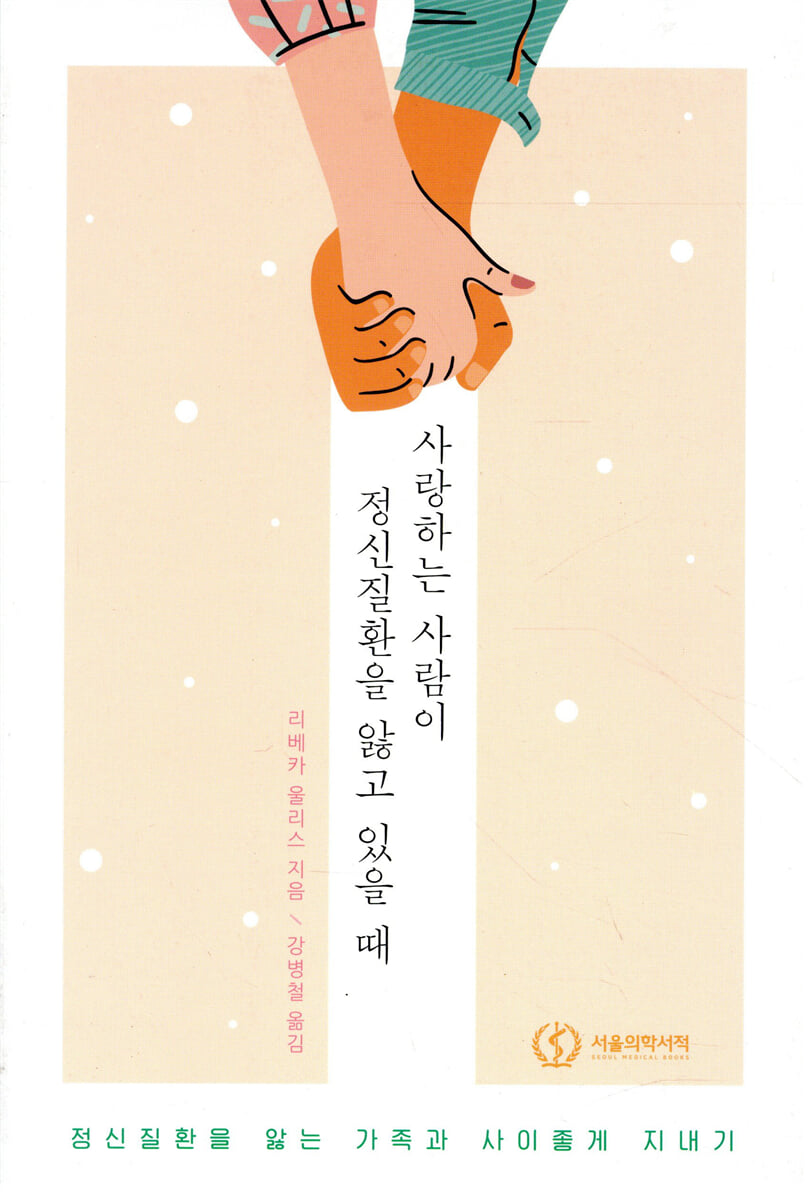
When a loved one suffers from a mental illness
 |
Description
Book Introduction
If your family or loved one suffers from a mental illness
This book will save him and you!
A guide for people with mental illnesses such as schizophrenia and major affective disorder, and their families.
This book, which compiles practical information gained through direct clinical treatment and counseling, covers basic symptoms as well as how to deal with more serious symptoms such as suicide and violence, how to get along with other family members, how to establish a cooperative relationship with doctors and medical institutions for treatment, and how to manage housing, work, and money, is considered the most sympathetic guide to patients.
A classic family guidebook brought back to print thanks to the support of parents who lost their son to mental illness!
This book, which was introduced to our country once before, is considered a hidden classic in the West.
It had been out of print for a long time, but was brought back into print after the parents of a son who had lost him to mental illness sponsored the full publication costs in the hope that such a tragedy would never happen again.
You need this book
In Korea, where the social stigma surrounding mental illness is particularly severe, patients and their families are often reluctant to receive the support they need, and instead try to hide their illness.
However, if you understand what mental illness is and know exactly what families and parents can and cannot do, you will see a small light along with a sense of relief.
Packed with information you can apply immediately in your daily life, this book will teach people with mental illness and their families how to live together, look forward to the future together, and find happiness together.
This book will save him and you!
A guide for people with mental illnesses such as schizophrenia and major affective disorder, and their families.
This book, which compiles practical information gained through direct clinical treatment and counseling, covers basic symptoms as well as how to deal with more serious symptoms such as suicide and violence, how to get along with other family members, how to establish a cooperative relationship with doctors and medical institutions for treatment, and how to manage housing, work, and money, is considered the most sympathetic guide to patients.
A classic family guidebook brought back to print thanks to the support of parents who lost their son to mental illness!
This book, which was introduced to our country once before, is considered a hidden classic in the West.
It had been out of print for a long time, but was brought back into print after the parents of a son who had lost him to mental illness sponsored the full publication costs in the hope that such a tragedy would never happen again.
You need this book
In Korea, where the social stigma surrounding mental illness is particularly severe, patients and their families are often reluctant to receive the support they need, and instead try to hide their illness.
However, if you understand what mental illness is and know exactly what families and parents can and cannot do, you will see a small light along with a sense of relief.
Packed with information you can apply immediately in your daily life, this book will teach people with mental illness and their families how to live together, look forward to the future together, and find happiness together.
- You can preview some of the book's contents.
Preview
index
Translator's Note
preface
Chapter 1.
The World of Mental Illness
schizophrenia
Major affective disorder
Other diagnoses
Subjective experience of mental illness
Causes of mental illness
Eight Myths and Truths About Mental Illness
Chapter 2.
Treatment and course of mental illness
First-line treatment - drug therapy
To take medicine and go to the hospital
How can I take my medication consistently?
Rehabilitation program
Other treatments
Determination of treatment effectiveness
Ineffective treatment
Choosing a doctor, therapist, or rehabilitation program
Prognosis of mental illness
Chapter 3.
Skills Needed to Live with Someone with Mental Illness
General guidelines for daily life
Respect
Take a quiet and direct attitude
Adjust the speed
Consider people and diseases separately
Maintain a positive attitude
Set realistic goals
Keep a loving distance
Make a systematic schedule
Set rules and limits
Choose what effort to make
Develop communication skills
Make a positive request
Expressing negative emotions
spouse
Chapter 4.
Coping with symptoms and minimizing relapses
Coping with delusions and hallucinations
Coping with Disintegrated Language
When I'm angry
To minimize recurrence
Stress management techniques
Guidance for family and friends
Chapter 5.
Serious symptoms and problems - bizarre behavior, violence, substance abuse, and suicide
bizarre behavior
violence
Substance abuse or dependence
suicide
Chapter 6.
Managing your emotions
The grieving process
Coping with stress
The importance of education
National Alliance for the Mentally Ill
Special Considerations for Siblings and Children
Guilt
anger and frustration
children
Chapter 7.
Getting along with people with mental illness
Are we going to live together?
Have fun and enjoy the holidays
Holidays
Resolving family issues and making decisions
Problem solving between parents and children
Maintaining family strength
Chapter 8.
Connecting with a Mental Health Professional and Choosing a Facility
A Brief History of the Mental Health System
Composition of the mental health team
Building relationships with mental health professionals
Confidentiality
Keeping treatment records
Working together
Chapter 9.
Practical issues - housing, jobs, money, social stigma
Tell people around you
Occupation and Housing
money problems
Chapter 10.
Understanding and Countermeasures for Mental Illness Recovery and Dual Diagnosis
Recovery from mental illness
cultural considerations
WRAP
Chapter 11.
Dual Diagnosis - Mental Illness and Substance Abuse
Definition of substance abuse
Signs of substance abuse
black hole
Why do people get addicted to drugs?
Reactions from family and guardians
Relapse prevention
Early warning symptoms
How to deal with it
The effects of medications and illegal drugs
Helping people who don't think they have a problem
intervention
Hit the floor
The stages of recovery from substance abuse for people who acknowledge their dual diagnosis issues.
Healthy lifestyle habits
What should families and guardians do?
Family Recovery
codependency
Quick Guide
1.
Why do people with mental illness deny their illness or refuse medication?
2.
How to help people with mental illness get treatment or take medication
3.
Realistic Goals and Expectations for Families with Mental Illness
4.
How far should I help you?
5.
Setting Rules with Someone with Mental Illness
6.
Wash and groom properly
7.
Communicating with People with Mental Illness
8.
Tips for making positive requests
9.
Expressing negative emotions directly
10.
Living with a Mentally Ill Person
11.
Coping with hallucinations
12.
Responding to Delusions
13.
When a person with mental illness gets angry
14.
To minimize recurrence
15.
Helping people with mental illness manage stress
16.
How to behave when around someone with a mental illness
17.
Dealing with bizarre behavior
18.
To prevent violence
19.
How to Deal with Substance Abuse
20.
To prevent suicide
21.
Worksheets for Coping with Stress
22.
How to maintain your own life
23.
Realistic goals and expectations for yourself
24.
Growing Up with a Family Member with Mental Illness
25.
How to Deal with Guilt
26.
Harmoniously allocating time between people with mental illness and their healthy family members.
27.
Should we live together?
28.
Rules to follow when living together or visiting
29.
Having fun with someone with a mental illness
30.
Coping with the holidays
31.
Solving family problems
32.
What should we do if we can't reach an agreement?
33.
What Parents Can and Can't Do for Siblings of Someone with Mental Illness
Nothing
34.
Distribution of responsibilities in the life and treatment of people with mental illness
35.
Treatment Planning Meeting
36.
Building relationships with mental health workers and facilities
37.
Treatment environment and services
38.
residential treatment program
39.
Keep your own treatment records
40.
Promoting inclusion by combating social stigma
41.
Complete job and housing applications
42.
How to pay for living expenses and medical expenses
43.
The main causes of mental illness relapse
44.
The effects of illicit drugs and their impact on psychiatric medications.
45.
Helping people who don't think they have a dual diagnosis problem
46.
What Families Can Do to Minimize Substance Abuse
47.
co-addiction
preface
Chapter 1.
The World of Mental Illness
schizophrenia
Major affective disorder
Other diagnoses
Subjective experience of mental illness
Causes of mental illness
Eight Myths and Truths About Mental Illness
Chapter 2.
Treatment and course of mental illness
First-line treatment - drug therapy
To take medicine and go to the hospital
How can I take my medication consistently?
Rehabilitation program
Other treatments
Determination of treatment effectiveness
Ineffective treatment
Choosing a doctor, therapist, or rehabilitation program
Prognosis of mental illness
Chapter 3.
Skills Needed to Live with Someone with Mental Illness
General guidelines for daily life
Respect
Take a quiet and direct attitude
Adjust the speed
Consider people and diseases separately
Maintain a positive attitude
Set realistic goals
Keep a loving distance
Make a systematic schedule
Set rules and limits
Choose what effort to make
Develop communication skills
Make a positive request
Expressing negative emotions
spouse
Chapter 4.
Coping with symptoms and minimizing relapses
Coping with delusions and hallucinations
Coping with Disintegrated Language
When I'm angry
To minimize recurrence
Stress management techniques
Guidance for family and friends
Chapter 5.
Serious symptoms and problems - bizarre behavior, violence, substance abuse, and suicide
bizarre behavior
violence
Substance abuse or dependence
suicide
Chapter 6.
Managing your emotions
The grieving process
Coping with stress
The importance of education
National Alliance for the Mentally Ill
Special Considerations for Siblings and Children
Guilt
anger and frustration
children
Chapter 7.
Getting along with people with mental illness
Are we going to live together?
Have fun and enjoy the holidays
Holidays
Resolving family issues and making decisions
Problem solving between parents and children
Maintaining family strength
Chapter 8.
Connecting with a Mental Health Professional and Choosing a Facility
A Brief History of the Mental Health System
Composition of the mental health team
Building relationships with mental health professionals
Confidentiality
Keeping treatment records
Working together
Chapter 9.
Practical issues - housing, jobs, money, social stigma
Tell people around you
Occupation and Housing
money problems
Chapter 10.
Understanding and Countermeasures for Mental Illness Recovery and Dual Diagnosis
Recovery from mental illness
cultural considerations
WRAP
Chapter 11.
Dual Diagnosis - Mental Illness and Substance Abuse
Definition of substance abuse
Signs of substance abuse
black hole
Why do people get addicted to drugs?
Reactions from family and guardians
Relapse prevention
Early warning symptoms
How to deal with it
The effects of medications and illegal drugs
Helping people who don't think they have a problem
intervention
Hit the floor
The stages of recovery from substance abuse for people who acknowledge their dual diagnosis issues.
Healthy lifestyle habits
What should families and guardians do?
Family Recovery
codependency
Quick Guide
1.
Why do people with mental illness deny their illness or refuse medication?
2.
How to help people with mental illness get treatment or take medication
3.
Realistic Goals and Expectations for Families with Mental Illness
4.
How far should I help you?
5.
Setting Rules with Someone with Mental Illness
6.
Wash and groom properly
7.
Communicating with People with Mental Illness
8.
Tips for making positive requests
9.
Expressing negative emotions directly
10.
Living with a Mentally Ill Person
11.
Coping with hallucinations
12.
Responding to Delusions
13.
When a person with mental illness gets angry
14.
To minimize recurrence
15.
Helping people with mental illness manage stress
16.
How to behave when around someone with a mental illness
17.
Dealing with bizarre behavior
18.
To prevent violence
19.
How to Deal with Substance Abuse
20.
To prevent suicide
21.
Worksheets for Coping with Stress
22.
How to maintain your own life
23.
Realistic goals and expectations for yourself
24.
Growing Up with a Family Member with Mental Illness
25.
How to Deal with Guilt
26.
Harmoniously allocating time between people with mental illness and their healthy family members.
27.
Should we live together?
28.
Rules to follow when living together or visiting
29.
Having fun with someone with a mental illness
30.
Coping with the holidays
31.
Solving family problems
32.
What should we do if we can't reach an agreement?
33.
What Parents Can and Can't Do for Siblings of Someone with Mental Illness
Nothing
34.
Distribution of responsibilities in the life and treatment of people with mental illness
35.
Treatment Planning Meeting
36.
Building relationships with mental health workers and facilities
37.
Treatment environment and services
38.
residential treatment program
39.
Keep your own treatment records
40.
Promoting inclusion by combating social stigma
41.
Complete job and housing applications
42.
How to pay for living expenses and medical expenses
43.
The main causes of mental illness relapse
44.
The effects of illicit drugs and their impact on psychiatric medications.
45.
Helping people who don't think they have a dual diagnosis problem
46.
What Families Can Do to Minimize Substance Abuse
47.
co-addiction
Into the book
A hallucination is any sensory experience that is not caused by an external entity.
Hallucinations can occur in any of the five senses: sight, hearing, smell, taste, or touch.
Hearing sounds that aren't there, seeing things that aren't there, smelling odors that aren't there, or feeling bugs crawling up and down your arms without anything touching your skin.
The most important fact is that those who experience hallucinations feel the sensations as vividly real as if you were reading the words in this book.
--- p.41
Most people with mental illness live in constant fear of when their next episode will worsen.
Many things that are illogical and unreasonable are also frightening.
If you understand how illogical and unpredictable their inner world is, you can naturally understand their fear.
Most people with schizophrenia say that life is like a dream.
This is not a metaphor, it is literal.
If we recall the nightmares we have experienced, we may be able to vaguely understand.
There is no logic in dreams.
You can be enjoying a peaceful swim in the lake, but before you know it, you're being chased by an elephant on the street.
Time, space, and even one's own identity change without warning.
Because of this inner confusion, people with mental illness are unable to pay attention to those around them.
Sometimes, I can't even answer simple questions like, "How are you doing these days?"
Some people experience this condition occasionally, while others experience it much more frequently, but in any case, it is a life experience quite different from that of the average person.
--- p.48
The most important thing to remember is that results are more important than justification.
Some people accept medication or treatment for reasons just as irrational as those who refuse it.
Even so, it is better not to argue.
Whether you believe it will help you become a world-class athlete or simply take it as a sleeping pill, don't ask any questions.
Anyway, it would be great if you could take the medicine yourself.
Some people go to hospitals and participate in treatment programs thinking that they are helping the poor or that they are studying medical professionals themselves.
Don't argue with logic.
It is much more important to praise, encourage, and wish good results for those who seek treatment.
--- p.74
The relapse rate of schizophrenia is known to be approximately 70 percent when no treatment is administered.
This means that without any treatment, 7 out of 10 people will return to the hospital within a year.
Even if you only take antipsychotic medication, the relapse rate drops to 30 percent.
All other treatments, when administered alone, do not significantly reduce the relapse rate.
However, if you take medication and receive counseling, the relapse rate can be reduced to about 20 percent.
If you take medication and participate in a social rehabilitation program, you will achieve the best results, with the relapse rate dropping to around 10 percent.
Living with family members who are educated on how to manage a person with mental illness while taking medication can also reduce relapse rates to a similar degree.
--- p.83
For patients to effectively cope with mental illness, the most important thing is to have people around them who believe in them and never give up hope and confidence that they can live a fulfilling life.
In this environment, many people could have jobs, meaningful relationships, and live more independently.
While we cannot know exactly what the future holds for people with severe mental illness, if we can eliminate the social stigma and empower people to acknowledge their illness and access services and treatment, we can expect much better outcomes than we have today.
No one knows how much their lives could be improved if they were provided with better medicines and services every day in a more friendly environment.
--- p.90
The most important thing is to constantly remind ourselves that the person suffering is not a “mentally ill person,” but a “person with a mental illness.”
People who suffer from illness are also people.
They are emotional, hurt, easily lose themselves and wander.
I need someone who understands and loves me.
We easily label people as “patients” without realizing how much they can do for themselves.
Friends and family should try to overcome this tendency by considering people and illnesses separately.
Symptoms are caused by the disease, not the person.
You shouldn't think of a mother with bipolar disorder as a despicable person who gets angry easily, uses tricks, and ruins her family's life.
My mother is a victim of mental illness and has lost the ability to think clearly and act normally.
--- p.101
By definition, schizophrenia, major depression, schizoaffective disorder, and bipolar disorder are periodic illnesses.
It often means that the condition improves and worsens repeatedly without any clear reason.
If you keep this in mind, you will be much less likely to worry or feel guilty about things getting worse.
Although it varies from person to person, if you observe a person closely over time, you can usually identify characteristic traits.
If you have experienced several relapses and are aware of this pattern, you should intervene as early as possible.
Although it cannot prevent recurrence, it can minimize the duration and severity.
--- p.151
If the family itself cannot enjoy a prosperous life, the life of the person with mental illness cannot improve either.
Taking care of yourself means forgetting about the person with mental illness and doing something interesting.
Be sure to take time off from your patients and have separate interests, activities, and friends.
You have to know how to allow a certain distance.
If you can't do that, you can never provide love and support.
For a person with a mental illness to live life to the fullest, their caregivers must first live life to the fullest.
People with mental illness often seem unaware of what's going on around them, but they can easily sense changes in their emotional mood.
Very sensitive to the mood and overall condition of the guardian.
And in many cases, they feel guilty about the drastic changes in their family's lives because of their illness.
Even if you can't express these feelings in words, it's a great relief to see your family members living their lives with dignity.
Hallucinations can occur in any of the five senses: sight, hearing, smell, taste, or touch.
Hearing sounds that aren't there, seeing things that aren't there, smelling odors that aren't there, or feeling bugs crawling up and down your arms without anything touching your skin.
The most important fact is that those who experience hallucinations feel the sensations as vividly real as if you were reading the words in this book.
--- p.41
Most people with mental illness live in constant fear of when their next episode will worsen.
Many things that are illogical and unreasonable are also frightening.
If you understand how illogical and unpredictable their inner world is, you can naturally understand their fear.
Most people with schizophrenia say that life is like a dream.
This is not a metaphor, it is literal.
If we recall the nightmares we have experienced, we may be able to vaguely understand.
There is no logic in dreams.
You can be enjoying a peaceful swim in the lake, but before you know it, you're being chased by an elephant on the street.
Time, space, and even one's own identity change without warning.
Because of this inner confusion, people with mental illness are unable to pay attention to those around them.
Sometimes, I can't even answer simple questions like, "How are you doing these days?"
Some people experience this condition occasionally, while others experience it much more frequently, but in any case, it is a life experience quite different from that of the average person.
--- p.48
The most important thing to remember is that results are more important than justification.
Some people accept medication or treatment for reasons just as irrational as those who refuse it.
Even so, it is better not to argue.
Whether you believe it will help you become a world-class athlete or simply take it as a sleeping pill, don't ask any questions.
Anyway, it would be great if you could take the medicine yourself.
Some people go to hospitals and participate in treatment programs thinking that they are helping the poor or that they are studying medical professionals themselves.
Don't argue with logic.
It is much more important to praise, encourage, and wish good results for those who seek treatment.
--- p.74
The relapse rate of schizophrenia is known to be approximately 70 percent when no treatment is administered.
This means that without any treatment, 7 out of 10 people will return to the hospital within a year.
Even if you only take antipsychotic medication, the relapse rate drops to 30 percent.
All other treatments, when administered alone, do not significantly reduce the relapse rate.
However, if you take medication and receive counseling, the relapse rate can be reduced to about 20 percent.
If you take medication and participate in a social rehabilitation program, you will achieve the best results, with the relapse rate dropping to around 10 percent.
Living with family members who are educated on how to manage a person with mental illness while taking medication can also reduce relapse rates to a similar degree.
--- p.83
For patients to effectively cope with mental illness, the most important thing is to have people around them who believe in them and never give up hope and confidence that they can live a fulfilling life.
In this environment, many people could have jobs, meaningful relationships, and live more independently.
While we cannot know exactly what the future holds for people with severe mental illness, if we can eliminate the social stigma and empower people to acknowledge their illness and access services and treatment, we can expect much better outcomes than we have today.
No one knows how much their lives could be improved if they were provided with better medicines and services every day in a more friendly environment.
--- p.90
The most important thing is to constantly remind ourselves that the person suffering is not a “mentally ill person,” but a “person with a mental illness.”
People who suffer from illness are also people.
They are emotional, hurt, easily lose themselves and wander.
I need someone who understands and loves me.
We easily label people as “patients” without realizing how much they can do for themselves.
Friends and family should try to overcome this tendency by considering people and illnesses separately.
Symptoms are caused by the disease, not the person.
You shouldn't think of a mother with bipolar disorder as a despicable person who gets angry easily, uses tricks, and ruins her family's life.
My mother is a victim of mental illness and has lost the ability to think clearly and act normally.
--- p.101
By definition, schizophrenia, major depression, schizoaffective disorder, and bipolar disorder are periodic illnesses.
It often means that the condition improves and worsens repeatedly without any clear reason.
If you keep this in mind, you will be much less likely to worry or feel guilty about things getting worse.
Although it varies from person to person, if you observe a person closely over time, you can usually identify characteristic traits.
If you have experienced several relapses and are aware of this pattern, you should intervene as early as possible.
Although it cannot prevent recurrence, it can minimize the duration and severity.
--- p.151
If the family itself cannot enjoy a prosperous life, the life of the person with mental illness cannot improve either.
Taking care of yourself means forgetting about the person with mental illness and doing something interesting.
Be sure to take time off from your patients and have separate interests, activities, and friends.
You have to know how to allow a certain distance.
If you can't do that, you can never provide love and support.
For a person with a mental illness to live life to the fullest, their caregivers must first live life to the fullest.
People with mental illness often seem unaware of what's going on around them, but they can easily sense changes in their emotional mood.
Very sensitive to the mood and overall condition of the guardian.
And in many cases, they feel guilty about the drastic changes in their family's lives because of their illness.
Even if you can't express these feelings in words, it's a great relief to see your family members living their lives with dignity.
--- p.195
Publisher's Review
If you are a family member of someone with a mental illness, can you answer the following questions?
- Why do people with mental illness deny their illness or refuse medication?
- How can I get treatment or medication?
- How should we respond when someone with a mental illness asks about their future?
- Should I tell my friends or family?
- What should I do if a person with a mental illness becomes angry or violent?
- Can you maintain your own life while caring for a family member with a mental illness?
- How can we promote inclusion in the face of social stigma?
- How can we minimize recurrence?
- How can people with mental illness manage stress?
- What can and cannot parents do?
A kind, warm, comforting, and empathetic family guide
People suffering from incurable diseases deserve the warm care and support of society.
But if you have schizophrenia, the situation is completely different.
Patients and their families experience social stigma together.
Patients are seen as dangerous, evil, and unpleasant beings, and their families find it difficult to avoid contempt and coldness as people with a mental illness gene.
Because of the lack of social understanding, support is also extremely poor.
But perhaps the most difficult thing is the difficulty in obtaining quality information.
This book is a guide written for families of patients with major mental illness.
Families will be in for a surprise starting with Chapter 1, which describes the symptoms of mental illness.
This is because it explains symptoms such as hallucinations and delusions, which are confusing, overwhelming, and sometimes even disgusting, from the patient's perspective.
When I know exactly what patients are going through and what they are feeling when they experience these symptoms, I feel deep sympathy and compassion.
Based on this understanding, if you read about the natural course and treatment of mental illness, basic symptoms such as hallucinations and delusions as well as how to deal with more serious symptoms such as suicide and violence, how to manage your own emotions and lead a fulfilling life as a caregiver, how to harmonize with other healthy family members, how to establish a cooperative relationship with doctors and medical institutions for treatment, and how to deal with social stigma, you will find new strength and courage as your mind, which was only frustrated and confused, finds its way.
47 quick guides you can easily find anytime, anywhere!
It takes a lot of time and effort to read a book from start to finish.
Even if you read everything, you often forget important things when you actually need them.
It goes without saying that it is difficult and tiring for families living with a mentally ill person.
The greatest virtue of this book is that it organizes the essential points to remember into short paragraphs called "Quick Guides" for easy reference in busy situations.
A quick guide with a separate table of contents for easy reference will be a great help not only when you're organizing what you've learned in the book, but also in those moments of confusion when you don't know what to do.
- Why do people with mental illness deny their illness or refuse medication?
- How can I get treatment or medication?
- How should we respond when someone with a mental illness asks about their future?
- Should I tell my friends or family?
- What should I do if a person with a mental illness becomes angry or violent?
- Can you maintain your own life while caring for a family member with a mental illness?
- How can we promote inclusion in the face of social stigma?
- How can we minimize recurrence?
- How can people with mental illness manage stress?
- What can and cannot parents do?
A kind, warm, comforting, and empathetic family guide
People suffering from incurable diseases deserve the warm care and support of society.
But if you have schizophrenia, the situation is completely different.
Patients and their families experience social stigma together.
Patients are seen as dangerous, evil, and unpleasant beings, and their families find it difficult to avoid contempt and coldness as people with a mental illness gene.
Because of the lack of social understanding, support is also extremely poor.
But perhaps the most difficult thing is the difficulty in obtaining quality information.
This book is a guide written for families of patients with major mental illness.
Families will be in for a surprise starting with Chapter 1, which describes the symptoms of mental illness.
This is because it explains symptoms such as hallucinations and delusions, which are confusing, overwhelming, and sometimes even disgusting, from the patient's perspective.
When I know exactly what patients are going through and what they are feeling when they experience these symptoms, I feel deep sympathy and compassion.
Based on this understanding, if you read about the natural course and treatment of mental illness, basic symptoms such as hallucinations and delusions as well as how to deal with more serious symptoms such as suicide and violence, how to manage your own emotions and lead a fulfilling life as a caregiver, how to harmonize with other healthy family members, how to establish a cooperative relationship with doctors and medical institutions for treatment, and how to deal with social stigma, you will find new strength and courage as your mind, which was only frustrated and confused, finds its way.
47 quick guides you can easily find anytime, anywhere!
It takes a lot of time and effort to read a book from start to finish.
Even if you read everything, you often forget important things when you actually need them.
It goes without saying that it is difficult and tiring for families living with a mentally ill person.
The greatest virtue of this book is that it organizes the essential points to remember into short paragraphs called "Quick Guides" for easy reference in busy situations.
A quick guide with a separate table of contents for easy reference will be a great help not only when you're organizing what you've learned in the book, but also in those moments of confusion when you don't know what to do.
GOODS SPECIFICS
- Publication date: September 28, 2020
- Page count, weight, size: 360 pages | 145*215*30mm
- ISBN13: 9791187313366
- ISBN10: 118731336X
You may also like
카테고리
korean


korean

![GQ KOREA Mark (Monthly): December [2025]](http://librairie.coreenne.fr/cdn/shop/files/8ef265dbbfbf186523ed75ba7319009d.jpg?v=1765340328&width=3840)


