

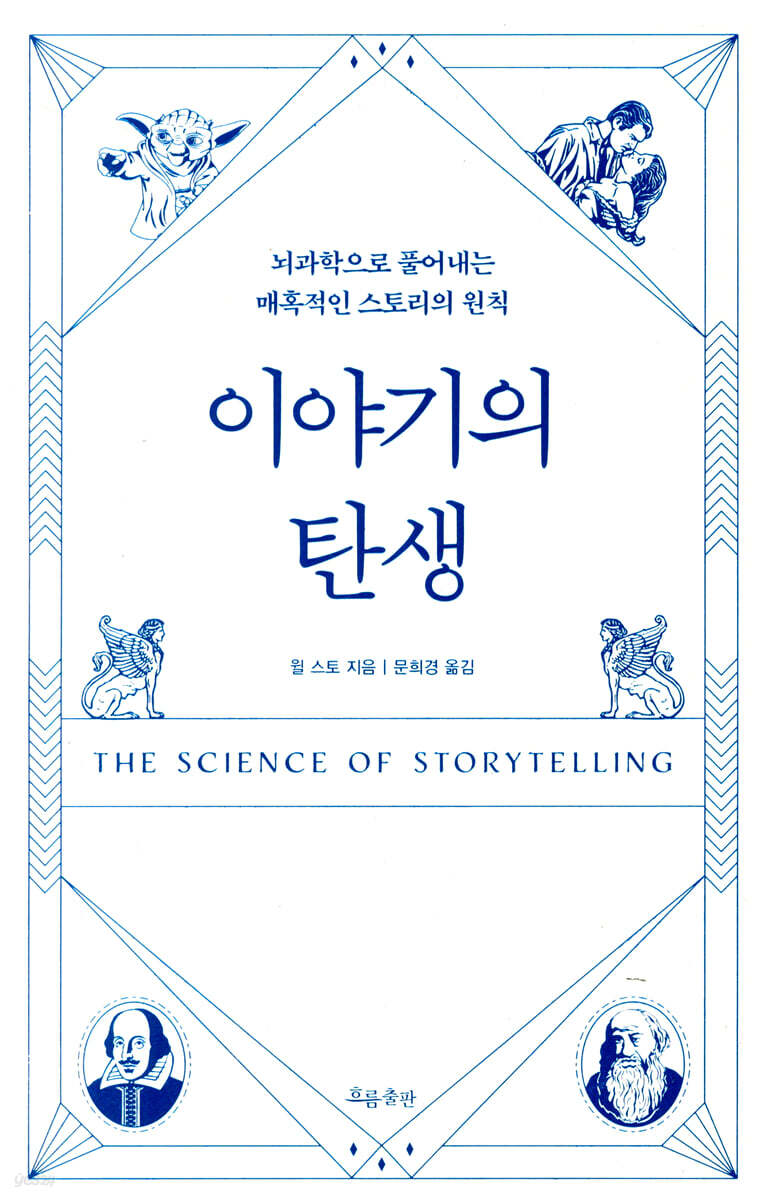
The Birth of a Story
 |
Description
Book Introduction
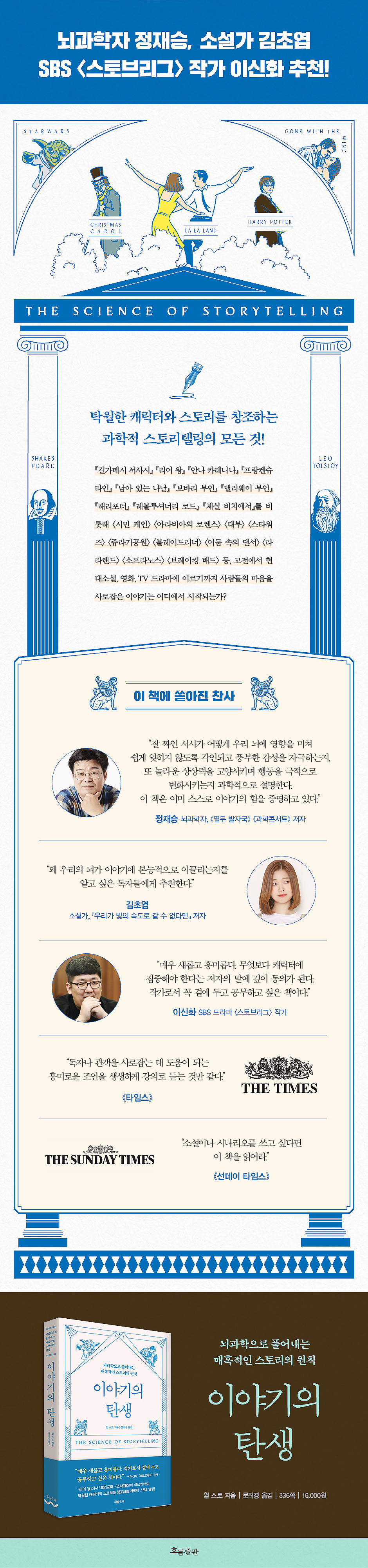
“It was a very helpful book for me too.
I hope this book will be widely read by discerning readers as well.” - Jaeseung Jeong
* Recommended by neuroscientist Jeong Jae-seung, novelist Kim Cho-yeop, and writer Lee Shin-hwa of the SBS drama [Stove League]!
* [Times] Recommended Books, [Sunday Times] Bestsellers
* Everything about scientific storytelling that creates exceptional characters and stories!
How do stories stimulate our emotions and imagination, and dramatically change our behavior?
Journalist and novelist Will Stowe has discovered that some of the concepts that storytelling theorists describe about narrative are strikingly similar to what psychologists and neuroscientists have been studying about our brains and minds.
Since then, I have been researching brain science-based writing through continuous research, and the book that resulted from this research is 『The Birth of a Story』.
According to the author, understanding the many ways our brains construct and distort our thoughts and reality creates more vivid characters and compelling stories.
In this book, Will Stowe delves into numerous classic masterpieces and critically acclaimed contemporary novels, films, and television dramas, using a neuroscience-based approach rather than the traditional plot-centric approach.
I hope this book will be widely read by discerning readers as well.” - Jaeseung Jeong
* Recommended by neuroscientist Jeong Jae-seung, novelist Kim Cho-yeop, and writer Lee Shin-hwa of the SBS drama [Stove League]!
* [Times] Recommended Books, [Sunday Times] Bestsellers
* Everything about scientific storytelling that creates exceptional characters and stories!
How do stories stimulate our emotions and imagination, and dramatically change our behavior?
Journalist and novelist Will Stowe has discovered that some of the concepts that storytelling theorists describe about narrative are strikingly similar to what psychologists and neuroscientists have been studying about our brains and minds.
Since then, I have been researching brain science-based writing through continuous research, and the book that resulted from this research is 『The Birth of a Story』.
According to the author, understanding the many ways our brains construct and distort our thoughts and reality creates more vivid characters and compelling stories.
In this book, Will Stowe delves into numerous classic masterpieces and critically acclaimed contemporary novels, films, and television dramas, using a neuroscience-based approach rather than the traditional plot-centric approach.
- You can preview some of the book's contents.
Preview
index
introduction
Chapter 1.
The created world
-Where does the story begin?
The brain's pursuit of control and the moment of change
-The mystery box of curiosity
-The brain that creates a model of the world
-World-building in fantasy and science fiction novels
How Mistakes in Theory of Mind Create Drama
- Features and details that create tension
-Neural models, poetry, and metaphors
-Causality in literary and popular storytelling
-Change is not enough
Chapter 2.
flawed ego
-The Defective Self: Control Theory
-Character personality and plot
-Settings that reveal the character's personality
-How to show a character's point of view, personality, and clues
- Another path through which culture and character are formed
-What is the ignition point?
-The Hero-Creating Narrative
-A world where David and Goliath confront each other
-All stories are ultimately about characters.
Chapter 3.
dramatic question
-The dramatic question, “Who is he?”
- Multiple selves, three-dimensional characters
-The conflict between the two levels of consciousness that form the plot
-Characteristics of a modern story
-What you want and what you really need
-Conversation skills
-Where do dramatic questions come from?
-Status game
-King Lear and Humiliation
-The story as tribal propaganda
-The Art of the Anti-Hero Story
-The fundamental wound, the key to the mystery
Chapter 4.
Plot and ending
-The power of compelling characters and stories
-Typical 5-act plot vs.
Plot of Change
-The final battle
-A divine moment of complete control
-A moment of empathy that brings about change
-The power of story
-The value of the story
-Moral of the story
-The comfort of stories
supplement
Note
Chapter 1.
The created world
-Where does the story begin?
The brain's pursuit of control and the moment of change
-The mystery box of curiosity
-The brain that creates a model of the world
-World-building in fantasy and science fiction novels
How Mistakes in Theory of Mind Create Drama
- Features and details that create tension
-Neural models, poetry, and metaphors
-Causality in literary and popular storytelling
-Change is not enough
Chapter 2.
flawed ego
-The Defective Self: Control Theory
-Character personality and plot
-Settings that reveal the character's personality
-How to show a character's point of view, personality, and clues
- Another path through which culture and character are formed
-What is the ignition point?
-The Hero-Creating Narrative
-A world where David and Goliath confront each other
-All stories are ultimately about characters.
Chapter 3.
dramatic question
-The dramatic question, “Who is he?”
- Multiple selves, three-dimensional characters
-The conflict between the two levels of consciousness that form the plot
-Characteristics of a modern story
-What you want and what you really need
-Conversation skills
-Where do dramatic questions come from?
-Status game
-King Lear and Humiliation
-The story as tribal propaganda
-The Art of the Anti-Hero Story
-The fundamental wound, the key to the mystery
Chapter 4.
Plot and ending
-The power of compelling characters and stories
-Typical 5-act plot vs.
Plot of Change
-The final battle
-A divine moment of complete control
-A moment of empathy that brings about change
-The power of story
-The value of the story
-Moral of the story
-The comfort of stories
supplement
Note
Detailed image
Into the book
I hope this book will appeal to anyone who is curious about the science of the human condition, even if they aren't interested in storytelling.
Of course, I especially want the attention of writers.
Everyone has a hard time capturing other people's attention and keeping them interested.
I believe that if we all understood even a little bit about how the human brain works, we could all be better at what we do.
--- p.17
A good story explores the human condition.
It focuses more on the characters than on the events that unfold on the surface of the play.
It is an exciting journey that you will embark on with an unfamiliar mind.
The characters that appear on the first page are never perfect.
The reason we're intrigued by this character and given dramatic fights isn't because he's successful and has a charming smile, but because of his flaws.
--- p.84
Joseph Campbell said, “The only way to truly convey a man is to describe his flaws.”
The humans we meet in stories and in reality are such imperfect beings.
But unlike real life, in stories you can get into the mind of the character and understand him.
--- p.96
A good story has a spark.
(…) The flashpoint is the first of a series of incidents that ultimately causes the protagonist to begin to question his own steadfast beliefs.
This incident sends a shiver through the heart of the protagonist's flawed theory of control.
The vibrations strike the core of the flaw, causing the protagonist to act in unexpected ways, possibly overreacting or acting strangely.
It's an unconscious signal that a fierce spark is flying between the characters and the plot.
The story has begun.
--- p.122
- If there is one secret to storytelling, it lies in this question.
Who is this person? Or, from the character's perspective, who am I? This defines the play.
It evokes intense emotions, makes the heart race and becomes a burning fire.
--- p.143
As much as we feel ourselves to be like the lovable Oliver Twist, we instinctively detest the cold, high-ranking 'Bumbles' who surround us.
Even if they are not actually objects of anger, we naturally dislike them, just as we feel toward Mr. Bumble, the arrogant caretaker of the poorhouse.
When participants read about other people's wealth, popularity, good looks, and outstanding abilities and then had their brains scanned, the areas that perceive pain became more active.
On the other hand, when someone read a story about misfortune, the brain's reward center was activated.
--- p.189~190
- The key lies in the neural network.
Stories engage multiple evolved systems in the brain, and a skilled writer, like an orchestra conductor, activates all of these neural networks.
Here it trembles with moral outrage, there it sounds the fanfare of a status game, the rattle of a tribal identification and the rumbling, menacing antagonist, the trumpet of wit, the horn of a ship revealing sexual allure, the crescendo of unjust trouble, the hum of warp and weft, all while asking and reasking dramatic questions in new and exciting ways.
In short, it is about mobilizing all the instruments that can capture and manipulate the reader's brain.
--- p.215
In Harper Lee's To Kill a Mockingbird, Atticus Finch advises that if you learn one simple trick, you can "get along with everyone much better."
“To truly understand someone, you have to put yourself in their shoes.
(…) You get into that person’s skin and walk around like that person.” This is possible through storytelling.
This is how the story creates empathy.
There could be no better remedy for the group hatred that is so natural and tempting to humans.
Of course, I especially want the attention of writers.
Everyone has a hard time capturing other people's attention and keeping them interested.
I believe that if we all understood even a little bit about how the human brain works, we could all be better at what we do.
--- p.17
A good story explores the human condition.
It focuses more on the characters than on the events that unfold on the surface of the play.
It is an exciting journey that you will embark on with an unfamiliar mind.
The characters that appear on the first page are never perfect.
The reason we're intrigued by this character and given dramatic fights isn't because he's successful and has a charming smile, but because of his flaws.
--- p.84
Joseph Campbell said, “The only way to truly convey a man is to describe his flaws.”
The humans we meet in stories and in reality are such imperfect beings.
But unlike real life, in stories you can get into the mind of the character and understand him.
--- p.96
A good story has a spark.
(…) The flashpoint is the first of a series of incidents that ultimately causes the protagonist to begin to question his own steadfast beliefs.
This incident sends a shiver through the heart of the protagonist's flawed theory of control.
The vibrations strike the core of the flaw, causing the protagonist to act in unexpected ways, possibly overreacting or acting strangely.
It's an unconscious signal that a fierce spark is flying between the characters and the plot.
The story has begun.
--- p.122
- If there is one secret to storytelling, it lies in this question.
Who is this person? Or, from the character's perspective, who am I? This defines the play.
It evokes intense emotions, makes the heart race and becomes a burning fire.
--- p.143
As much as we feel ourselves to be like the lovable Oliver Twist, we instinctively detest the cold, high-ranking 'Bumbles' who surround us.
Even if they are not actually objects of anger, we naturally dislike them, just as we feel toward Mr. Bumble, the arrogant caretaker of the poorhouse.
When participants read about other people's wealth, popularity, good looks, and outstanding abilities and then had their brains scanned, the areas that perceive pain became more active.
On the other hand, when someone read a story about misfortune, the brain's reward center was activated.
--- p.189~190
- The key lies in the neural network.
Stories engage multiple evolved systems in the brain, and a skilled writer, like an orchestra conductor, activates all of these neural networks.
Here it trembles with moral outrage, there it sounds the fanfare of a status game, the rattle of a tribal identification and the rumbling, menacing antagonist, the trumpet of wit, the horn of a ship revealing sexual allure, the crescendo of unjust trouble, the hum of warp and weft, all while asking and reasking dramatic questions in new and exciting ways.
In short, it is about mobilizing all the instruments that can capture and manipulate the reader's brain.
--- p.215
In Harper Lee's To Kill a Mockingbird, Atticus Finch advises that if you learn one simple trick, you can "get along with everyone much better."
“To truly understand someone, you have to put yourself in their shoes.
(…) You get into that person’s skin and walk around like that person.” This is possible through storytelling.
This is how the story creates empathy.
There could be no better remedy for the group hatred that is so natural and tempting to humans.
--- p.263
Publisher's Review
The World of Storytelling Illuminated by Neuroscience and Psychology
How are compelling characters and stories created?
Why did we root for Baek Seung-soo, the cool-headed general manager of "Stove League," to move forward and win with the Dreams? Why did we understand Park Sae-ro-yi's choice in "Itaewon Class" even as we sighed when he knelt before Jang Dae-hee? While all stories, including dramas, movies, and novels, have a narrative structure with a beginning, development, climax, and conclusion, we always talk about the "characters" within the story.
Will Stowe, a journalist and novelist, focuses on this very point in his book, The Birth of a Story.
Having studied storytelling based on brain science and psychology, he argues in this book that we should shift our focus away from plot and towards characters.
According to him, powerful, profound, and original plots come straight from character, and the best way to create great characters is to find out how they would live in real life.
This means that we need to know how our 'brain' works and how we perceive the world around us and other people.
Why we can understand the unrealistic world of "Lost"
How the brain creates the world
The American TV series "Lost" features a mysterious polar bear on an unnamed island, unidentified primitive beings, a mysterious "black smoke," a mysterious French woman, and a strange door in the ground.
Even without any explanation, viewers begin to accept incomprehensible situations, follow unknown clues, and become immersed in the fictional characters and story.
How does this happen naturally?
Will Stowe says it all starts in the brain.
The first chapter, "The Created World," explains, based on various works and research, how our brains form the world in our heads and what logic we use to perceive that world.
According to him, the brain uses the information humans capture through their senses to create a kind of model of the world, making us mistake it for reality.
It's the same story when we read a book and picture the situations the author describes, or when we feel like we're experiencing the same world as the characters in a movie.
Therefore, creators can enable readers and viewers to vividly experience the world they have created by specifically arranging elements that can stimulate the human senses in an order that the brain associates well.
The brain also reacts actively when faced with unexpected changes, becomes curious about information that only it does not know, and tries to close the information gap.
For example, the opening line of Anna Karenina, “Happy families are all alike; every unhappy family is unhappy in its own way,” contains signs of change, while the play Doubt cleverly plays with the audience’s desire to know the truth by dropping clues as to whether the rebellious Catholic priest, Father Flynn, is really a pedophile.
In fact, brain scans have shown that when we become curious, our brain's reward system is slightly stimulated.
In other words, the fact that humans are curious about the conclusion of a story or want to know what happens next is similar to the phenomenon of craving drugs, sex, or chocolate.
How did Truman in "The Truman Show" believe that a fake reality was real?
A flawed character who drives the story
The movie "The Truman Show" is the story of Truman Burbank, a thirty-two-year-old boy who discovers that his entire life, which he had believed to be "real," was staged and controlled.
How did Truman remain convinced for so long that the world he inhabits is truly real? The producer of "The Truman Show" answers this question in the film.
“People just accept the reality of the world as it is.
It's that simple.”
In the second chapter, "The Flawed Self," the author discusses how a person's personality is formed and how that personality can be expressed.
But more than anything, it points out that what makes the story compelling are the flaws of the characters.
Just like us in real life, characters in stories develop unique personalities based on their cultural, social, and economic environments, and they live based on those personalities, but what reveals that character at crucial moments are his flaws.
The human brain observes millions of cases and builds this model based on its own logic, believing the world it sees through its own biases to be real, and seeing others as it understands them.
But the reality is different.
Here, the story is created as the characters' misunderstandings and beliefs collide with reality.
In Kazuo Ishiguro's novel The Remains of the Day, Stevens believes that to be an excellent butler, one must have "dignity" and that "emotional control" is a crucial key.
His life is built on that belief, but as he meets his new master, Faraday, in the midst of changing times, he experiences an experience where the values and world he believed in are shaken up.
The novel's surface drama revolves around Stevens's journey to visit Kenton, a former housekeeper, and the reader's changing perception of their relationship, but a deeper look reveals the book's real story, a deeper look at how Stevens, in the words of author Salman Rushdie, "was brought down by the very beliefs on which he had built his life."
Is Charles Foster Kane from "Citizen Kane" really an altruistic person?
The dramatic question at the heart of the story is “Who is he?”
Will Stowe explains that the characters in the story struggle with the outside world, but ultimately face the fundamental question, “Who am I?” and the answer to that question becomes the core of the story.
Charles Foster Kane, from the movie "Citizen Kane," was the publisher of the New York Daily Inquirer, and fought tirelessly for the rights of ordinary people, running for governor of New York on their behalf.
He thinks he is an altruistic person.
However, his friend Jedniel Leland points out his hidden arrogance by pointing out that Gene Cain is a man who cares about no one but himself during the election.
What kind of person is Charles Foster Kane in the movie?
According to the author, if there is one secret to storytelling, it lies in this question:
Who is this person? Or, from the character's perspective, who am I? This defines the play.
When Charles Foster Kane calls himself a noble and altruistic person, it's because he hears a voice in his head telling him he's morally right.
But this voice is not true and instead only hinders us from reaching the truth about who we are.
We live in a world constructed by our brains, and our brains try to create stories that confirm that we are right and good people.
However, as we encounter various changes and people around us, we carefully revise our answers about the world and ourselves, and the answer to the dramatic question, “Who am I?” also constantly changes.
The same goes for the characters in the story.
If the series of events that a character experiences is the external plot, then the process by which the character seeks answers to dramatic questions becomes another story hidden behind it.
In this third chapter, “Dramatic Questions,” the author explores in detail where and how characters’ dramatic questions originate.
The value of plot and story for relatable characters
It is not until the last chapter, “Plot and Conclusion,” that the author discusses plot, which has been mainly discussed in existing writing books.
Using examples from Pixar animation, BBC's radio series "The Archers", and John Yorke's "Into the Woods," it introduces various theories about plot, and explains the general five-act plot and plots that show change, what a strong plot is, and how to end a story.
But ultimately, he says, once you understand that the plot exists to test and transform the protagonist, seemingly disparate theories become simpler and easier to understand.
Furthermore, Will Stowe examines what stories mean to us.
Before the 18th century, the idea of empathizing with members of different classes, countries, or genders was unusual, but popular novels like Pamela, Clarissa Harlow, and Julie enabled empathy across class, gender, and national borders, and in the 19th century, books like Narrative of the Life of Frederick Douglass, an American Slave, sold tens of thousands of copies and became a powerful weapon for abolitionists, and Uncle Tom's Cabin even contributed to the outbreak of the Civil War, showing that stories have had a great influence on changing our perceptions.
Stories also tell us that for tens of thousands of years, they have taught us how to live, and have comforted us by reminding us that we are not alone in our struggles and confusion, or in our fears and dark thoughts.
At the end of the book, the author actually introduces writing methods that he has found successful while working with aspiring and current writers who want to write novels or screenplays in storytelling classes.
Through this method, the author presents more specific ways to create character flaws, arrange story events, and construct a compelling plot.
This book will provide a fresh perspective on story creation for current and aspiring novelists and screenwriters, and for readers interested in narratives such as dramas, films, and novels, it will offer a fresh understanding of existing works.
How are compelling characters and stories created?
Why did we root for Baek Seung-soo, the cool-headed general manager of "Stove League," to move forward and win with the Dreams? Why did we understand Park Sae-ro-yi's choice in "Itaewon Class" even as we sighed when he knelt before Jang Dae-hee? While all stories, including dramas, movies, and novels, have a narrative structure with a beginning, development, climax, and conclusion, we always talk about the "characters" within the story.
Will Stowe, a journalist and novelist, focuses on this very point in his book, The Birth of a Story.
Having studied storytelling based on brain science and psychology, he argues in this book that we should shift our focus away from plot and towards characters.
According to him, powerful, profound, and original plots come straight from character, and the best way to create great characters is to find out how they would live in real life.
This means that we need to know how our 'brain' works and how we perceive the world around us and other people.
Why we can understand the unrealistic world of "Lost"
How the brain creates the world
The American TV series "Lost" features a mysterious polar bear on an unnamed island, unidentified primitive beings, a mysterious "black smoke," a mysterious French woman, and a strange door in the ground.
Even without any explanation, viewers begin to accept incomprehensible situations, follow unknown clues, and become immersed in the fictional characters and story.
How does this happen naturally?
Will Stowe says it all starts in the brain.
The first chapter, "The Created World," explains, based on various works and research, how our brains form the world in our heads and what logic we use to perceive that world.
According to him, the brain uses the information humans capture through their senses to create a kind of model of the world, making us mistake it for reality.
It's the same story when we read a book and picture the situations the author describes, or when we feel like we're experiencing the same world as the characters in a movie.
Therefore, creators can enable readers and viewers to vividly experience the world they have created by specifically arranging elements that can stimulate the human senses in an order that the brain associates well.
The brain also reacts actively when faced with unexpected changes, becomes curious about information that only it does not know, and tries to close the information gap.
For example, the opening line of Anna Karenina, “Happy families are all alike; every unhappy family is unhappy in its own way,” contains signs of change, while the play Doubt cleverly plays with the audience’s desire to know the truth by dropping clues as to whether the rebellious Catholic priest, Father Flynn, is really a pedophile.
In fact, brain scans have shown that when we become curious, our brain's reward system is slightly stimulated.
In other words, the fact that humans are curious about the conclusion of a story or want to know what happens next is similar to the phenomenon of craving drugs, sex, or chocolate.
How did Truman in "The Truman Show" believe that a fake reality was real?
A flawed character who drives the story
The movie "The Truman Show" is the story of Truman Burbank, a thirty-two-year-old boy who discovers that his entire life, which he had believed to be "real," was staged and controlled.
How did Truman remain convinced for so long that the world he inhabits is truly real? The producer of "The Truman Show" answers this question in the film.
“People just accept the reality of the world as it is.
It's that simple.”
In the second chapter, "The Flawed Self," the author discusses how a person's personality is formed and how that personality can be expressed.
But more than anything, it points out that what makes the story compelling are the flaws of the characters.
Just like us in real life, characters in stories develop unique personalities based on their cultural, social, and economic environments, and they live based on those personalities, but what reveals that character at crucial moments are his flaws.
The human brain observes millions of cases and builds this model based on its own logic, believing the world it sees through its own biases to be real, and seeing others as it understands them.
But the reality is different.
Here, the story is created as the characters' misunderstandings and beliefs collide with reality.
In Kazuo Ishiguro's novel The Remains of the Day, Stevens believes that to be an excellent butler, one must have "dignity" and that "emotional control" is a crucial key.
His life is built on that belief, but as he meets his new master, Faraday, in the midst of changing times, he experiences an experience where the values and world he believed in are shaken up.
The novel's surface drama revolves around Stevens's journey to visit Kenton, a former housekeeper, and the reader's changing perception of their relationship, but a deeper look reveals the book's real story, a deeper look at how Stevens, in the words of author Salman Rushdie, "was brought down by the very beliefs on which he had built his life."
Is Charles Foster Kane from "Citizen Kane" really an altruistic person?
The dramatic question at the heart of the story is “Who is he?”
Will Stowe explains that the characters in the story struggle with the outside world, but ultimately face the fundamental question, “Who am I?” and the answer to that question becomes the core of the story.
Charles Foster Kane, from the movie "Citizen Kane," was the publisher of the New York Daily Inquirer, and fought tirelessly for the rights of ordinary people, running for governor of New York on their behalf.
He thinks he is an altruistic person.
However, his friend Jedniel Leland points out his hidden arrogance by pointing out that Gene Cain is a man who cares about no one but himself during the election.
What kind of person is Charles Foster Kane in the movie?
According to the author, if there is one secret to storytelling, it lies in this question:
Who is this person? Or, from the character's perspective, who am I? This defines the play.
When Charles Foster Kane calls himself a noble and altruistic person, it's because he hears a voice in his head telling him he's morally right.
But this voice is not true and instead only hinders us from reaching the truth about who we are.
We live in a world constructed by our brains, and our brains try to create stories that confirm that we are right and good people.
However, as we encounter various changes and people around us, we carefully revise our answers about the world and ourselves, and the answer to the dramatic question, “Who am I?” also constantly changes.
The same goes for the characters in the story.
If the series of events that a character experiences is the external plot, then the process by which the character seeks answers to dramatic questions becomes another story hidden behind it.
In this third chapter, “Dramatic Questions,” the author explores in detail where and how characters’ dramatic questions originate.
The value of plot and story for relatable characters
It is not until the last chapter, “Plot and Conclusion,” that the author discusses plot, which has been mainly discussed in existing writing books.
Using examples from Pixar animation, BBC's radio series "The Archers", and John Yorke's "Into the Woods," it introduces various theories about plot, and explains the general five-act plot and plots that show change, what a strong plot is, and how to end a story.
But ultimately, he says, once you understand that the plot exists to test and transform the protagonist, seemingly disparate theories become simpler and easier to understand.
Furthermore, Will Stowe examines what stories mean to us.
Before the 18th century, the idea of empathizing with members of different classes, countries, or genders was unusual, but popular novels like Pamela, Clarissa Harlow, and Julie enabled empathy across class, gender, and national borders, and in the 19th century, books like Narrative of the Life of Frederick Douglass, an American Slave, sold tens of thousands of copies and became a powerful weapon for abolitionists, and Uncle Tom's Cabin even contributed to the outbreak of the Civil War, showing that stories have had a great influence on changing our perceptions.
Stories also tell us that for tens of thousands of years, they have taught us how to live, and have comforted us by reminding us that we are not alone in our struggles and confusion, or in our fears and dark thoughts.
At the end of the book, the author actually introduces writing methods that he has found successful while working with aspiring and current writers who want to write novels or screenplays in storytelling classes.
Through this method, the author presents more specific ways to create character flaws, arrange story events, and construct a compelling plot.
This book will provide a fresh perspective on story creation for current and aspiring novelists and screenwriters, and for readers interested in narratives such as dramas, films, and novels, it will offer a fresh understanding of existing works.
GOODS SPECIFICS
- Date of issue: May 15, 2020
- Page count, weight, size: 336 pages | 498g | 145*225*30mm
- ISBN13: 9788965963837
- ISBN10: 8965963834
You may also like
카테고리
korean


korean

![GQ KOREA Mark (Monthly): December [2025]](http://librairie.coreenne.fr/cdn/shop/files/8ef265dbbfbf186523ed75ba7319009d.jpg?v=1765340328&width=3840)


