

Reading the Book of Changes
 |
Description
Book Introduction
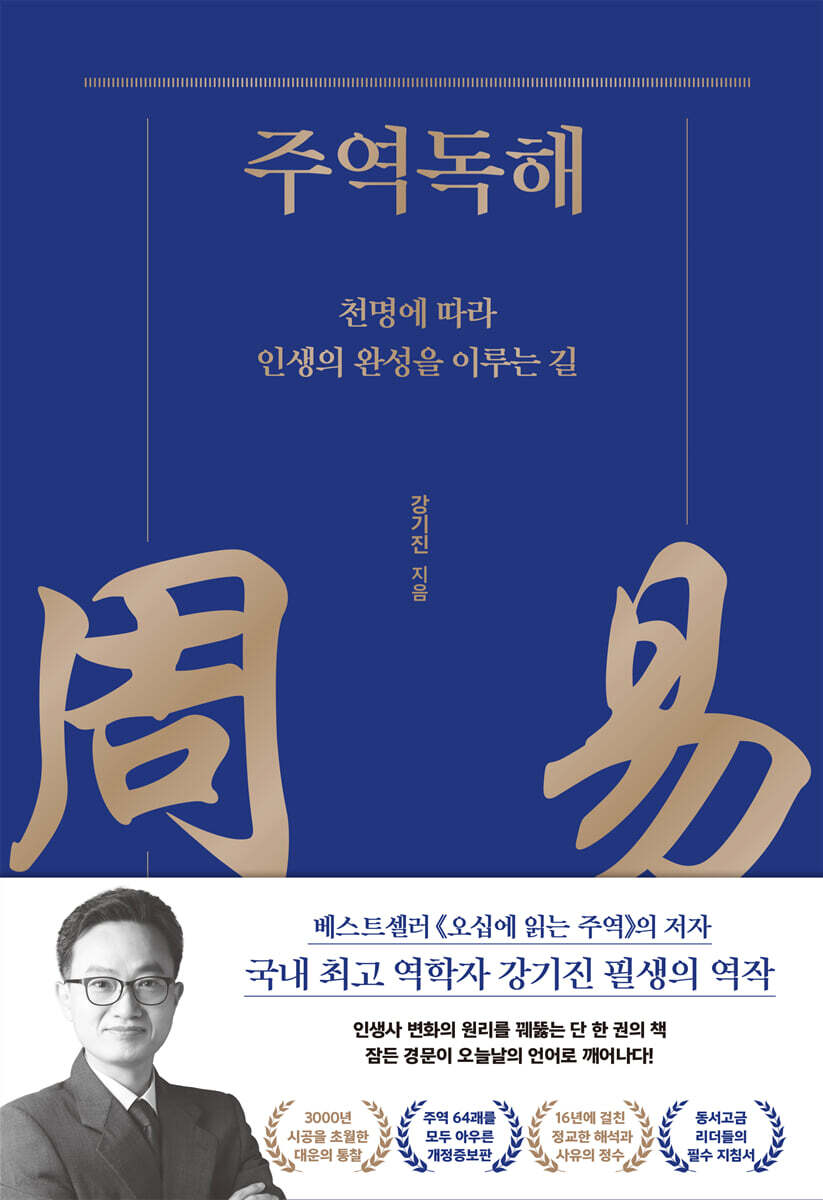
A masterpiece written over 16 years by Kang Ki-jin, author of the best-selling 『Reading the Book of Changes at Fifty』
Contains all 64 wisdoms of the protagonists to navigate the turbulent fate.
The one and only book that penetrates the principles of life's transformation!
In an era where society is rapidly changing every day, and where anxiety and worry about the unpredictable future are building up, 『Reading the Book of Changes』 has been published by Kim Young Publishing for everyone.
This book is a commentary on the oldest classic in the East, the Book of Changes, translated into modern language.
This book was completed after 16 years of hard work by Kang Ki-jin, Korea's top psychiatrist who popularized the Book of Changes through his best-selling book, "Reading the Book of Changes at 50."
As the Book of Changes is a classic that delves into the fundamental principles and processes of change itself, the author guides us through the vicissitudes of life with a friendly yet sophisticated interpretation.
It also provides detailed background information on the Book of Changes so that even first-time readers can easily understand it.
This book is a revised and expanded edition of the first edition published in 2017 and 2018, divided into ‘Upper Gyeong’ and ‘Lower Gyeong’.
The author's deepened knowledge gained through extensive research has been incorporated into this book, and it has been completely re-edited to reflect the current reality.
With keen insight into the message of the Book of Changes, it provides concrete wisdom for life's journey, allowing us to ride the waves of change without fear of the future.
In the 64 paths and 450 original texts contained in the Book of Changes, readers will discover the source of courage and strength to live their lives actively.
Contains all 64 wisdoms of the protagonists to navigate the turbulent fate.
The one and only book that penetrates the principles of life's transformation!
In an era where society is rapidly changing every day, and where anxiety and worry about the unpredictable future are building up, 『Reading the Book of Changes』 has been published by Kim Young Publishing for everyone.
This book is a commentary on the oldest classic in the East, the Book of Changes, translated into modern language.
This book was completed after 16 years of hard work by Kang Ki-jin, Korea's top psychiatrist who popularized the Book of Changes through his best-selling book, "Reading the Book of Changes at 50."
As the Book of Changes is a classic that delves into the fundamental principles and processes of change itself, the author guides us through the vicissitudes of life with a friendly yet sophisticated interpretation.
It also provides detailed background information on the Book of Changes so that even first-time readers can easily understand it.
This book is a revised and expanded edition of the first edition published in 2017 and 2018, divided into ‘Upper Gyeong’ and ‘Lower Gyeong’.
The author's deepened knowledge gained through extensive research has been incorporated into this book, and it has been completely re-edited to reflect the current reality.
With keen insight into the message of the Book of Changes, it provides concrete wisdom for life's journey, allowing us to ride the waves of change without fear of the future.
In the 64 paths and 450 original texts contained in the Book of Changes, readers will discover the source of courage and strength to live their lives actively.
- You can preview some of the book's contents.
Preview
index
Introduction - The Law of Existence of All Things in the World, Embracing Change and Constancy
Going to the Capital
1·2 건乾: 곤坤
1.
Gun - work hard to achieve great things
2.
Gon - Fulfilling the purpose of existence according to the mandate of heaven
Geon and Gon—the eternal cycle
3·4 Duntang: Mongmong
3.
Dull - to wait for the right time and build up strength
4.
Dream - Go forward by bumping into things first
5·6 Su-su: Song Litigation
5.
Su - Avoid conflict by seeking support from the opposition
6.
Song - fight through public procedures
7·8 Teacher: Bi
7.
Sa - Lead a large organization to achieve its goals
8.
Rain - Strengthening the Cohesion of a Large Organization
9·10 Small Livestock: Lee
9.
Sohyeon - to tame by putting a bridle on
10.
Lee - let go and let it be done
11·12 Tae: No
11.
Tae - Communication is good and peace is at hand
12.
Enduring a situation of non-communication
13·14 Dong-in: Dae-yu
13.
Dong-in - Gathering like-minded comrades
14.
Daeyu - to blend together as much as possible
15·16 Gyeom: Ye
15.
Humility - to win hearts by giving in
16.
Yes - to detect signs and act in advance
17·18 Su: Go
17.
Su - learn by following your superiors
18.
Correct the mistakes of your superiors
19·20 Rim: Observation
19.
Rim - Take up the position
20.
Guan - to step back and observe the situation
21·22 Seohap?? : Bi-hyeok
21.
Seohap - forced assimilation
22.
Rain - acknowledge diversity and let it be
23·24 Park: Restoration
23.
Park - Deprivation comes again and again
24.
Bok - Seeking the Restoration of Truth
25·26 No illusions: Daehwit
25.
Hopelessness—Moving Forward to True Hopelessness
26.
Daehwi - Broaden your horizons and make big plans
27·28 Lee?: A major oversight
27.
Lee - First, build up your inner strength
28.
Dakgwa - to take a risk and make a big mistake
29·30 Gamkan: Li
29.
Gam - Use trials as an opportunity for self-reflection
30.
Lee - Setting the Right Standards in the Face of Crisis
〈Ha Kyung〉
Entering the lower reaches
31·32 Ham: Hang
31.
Ham - together
32.
Hang - Consistently maintain your subjectivity
Ham·Hang - Unchangeable and adaptable to all changes
33·34 Dun-Lun: General
33.
Dull - know when to step back
34.
Captain - Breaking through bravely
35·36 Jin: Ming Yi
35.
Jin - Establishing norms after winning the hearts of the community
36.
Ming - First establish the community's norms and win its hearts
37·38 Gain Family: Gyu?
37.
Gain - Becoming a Family
38.
Gyu - Split up and find a new partner
39·40 건蹇: 해解
39.
Endure conflict and act wisely
40.
Resolve the conflict
The Path of Man Between Heaven and Earth - The Three Talents of Heaven, Earth, and Man
41·42 Loss: Profit
41.
Hand - cut off loss
42.
Ik - to reap profit
Profit and loss, that is the job of a king!
43·44 Kwai? : Ku?
43.
Quick - a showdown with the opposition
44.
Intermingle with the old opposition and become one
45·46 Chewi: Seung
45.
Pancreas - Establishing power based on empathy
46.
Seung - first take power, then gain sympathy
47·48 Gon: Jeong
47.
Gon - Resolving conflicts according to systems and norms
48.
Resolving conflicts by maintaining systems and norms
49·50 Revolution: Jeong Ding
49.
Hyuk - Moving towards innovation, reform, and revolution
50.
Jeong - Restoring Tradition
51·52 Jin: Gan
51.
Jin - Use shock therapy
52.
Liver - not holding out
53·54 points gradual: Returning to the sister
53.
Lead negotiations by gradually increasing the level
54.
Guimae - Accepting unfavorable conditions
55·56 Wind?: Travel
55.
Feng - further enriching and strengthening relationships
56.
Ryeo - To pretend to be a traveler in pursuit of a goal
57·58 Son: Tae
57.
Son - bending one's will to follow the trend
58.
Escape from Taenam's influence
59·60 Hwan: 節
59.
Proclaiming the Way of Hwan-do brilliantly
60.
To remain in moderation
61·62 Jungbu: Sogwa
61.
Central - Strengthening Faith
62.
Sogwa - practicing faith somewhat excessively
63·64 already solved: not yet solved
63.
Mechanism - Achieving Grand Goals
64.
US - Delayed achievement of goals
Appendix 1.
Overview of the main characters
Appendix 2.
Excavated artifacts related to the Book of Changes
Appendix 3.
Frequently used expressions
Appendix 4.
The properties of the Bagua
Appendix 5.
Riil Fountain
main
References
List of tables, figures, and explanatory notes
Search
Find a person's name
Going to the Capital
1·2 건乾: 곤坤
1.
Gun - work hard to achieve great things
2.
Gon - Fulfilling the purpose of existence according to the mandate of heaven
Geon and Gon—the eternal cycle
3·4 Duntang: Mongmong
3.
Dull - to wait for the right time and build up strength
4.
Dream - Go forward by bumping into things first
5·6 Su-su: Song Litigation
5.
Su - Avoid conflict by seeking support from the opposition
6.
Song - fight through public procedures
7·8 Teacher: Bi
7.
Sa - Lead a large organization to achieve its goals
8.
Rain - Strengthening the Cohesion of a Large Organization
9·10 Small Livestock: Lee
9.
Sohyeon - to tame by putting a bridle on
10.
Lee - let go and let it be done
11·12 Tae: No
11.
Tae - Communication is good and peace is at hand
12.
Enduring a situation of non-communication
13·14 Dong-in: Dae-yu
13.
Dong-in - Gathering like-minded comrades
14.
Daeyu - to blend together as much as possible
15·16 Gyeom: Ye
15.
Humility - to win hearts by giving in
16.
Yes - to detect signs and act in advance
17·18 Su: Go
17.
Su - learn by following your superiors
18.
Correct the mistakes of your superiors
19·20 Rim: Observation
19.
Rim - Take up the position
20.
Guan - to step back and observe the situation
21·22 Seohap?? : Bi-hyeok
21.
Seohap - forced assimilation
22.
Rain - acknowledge diversity and let it be
23·24 Park: Restoration
23.
Park - Deprivation comes again and again
24.
Bok - Seeking the Restoration of Truth
25·26 No illusions: Daehwit
25.
Hopelessness—Moving Forward to True Hopelessness
26.
Daehwi - Broaden your horizons and make big plans
27·28 Lee?: A major oversight
27.
Lee - First, build up your inner strength
28.
Dakgwa - to take a risk and make a big mistake
29·30 Gamkan: Li
29.
Gam - Use trials as an opportunity for self-reflection
30.
Lee - Setting the Right Standards in the Face of Crisis
〈Ha Kyung〉
Entering the lower reaches
31·32 Ham: Hang
31.
Ham - together
32.
Hang - Consistently maintain your subjectivity
Ham·Hang - Unchangeable and adaptable to all changes
33·34 Dun-Lun: General
33.
Dull - know when to step back
34.
Captain - Breaking through bravely
35·36 Jin: Ming Yi
35.
Jin - Establishing norms after winning the hearts of the community
36.
Ming - First establish the community's norms and win its hearts
37·38 Gain Family: Gyu?
37.
Gain - Becoming a Family
38.
Gyu - Split up and find a new partner
39·40 건蹇: 해解
39.
Endure conflict and act wisely
40.
Resolve the conflict
The Path of Man Between Heaven and Earth - The Three Talents of Heaven, Earth, and Man
41·42 Loss: Profit
41.
Hand - cut off loss
42.
Ik - to reap profit
Profit and loss, that is the job of a king!
43·44 Kwai? : Ku?
43.
Quick - a showdown with the opposition
44.
Intermingle with the old opposition and become one
45·46 Chewi: Seung
45.
Pancreas - Establishing power based on empathy
46.
Seung - first take power, then gain sympathy
47·48 Gon: Jeong
47.
Gon - Resolving conflicts according to systems and norms
48.
Resolving conflicts by maintaining systems and norms
49·50 Revolution: Jeong Ding
49.
Hyuk - Moving towards innovation, reform, and revolution
50.
Jeong - Restoring Tradition
51·52 Jin: Gan
51.
Jin - Use shock therapy
52.
Liver - not holding out
53·54 points gradual: Returning to the sister
53.
Lead negotiations by gradually increasing the level
54.
Guimae - Accepting unfavorable conditions
55·56 Wind?: Travel
55.
Feng - further enriching and strengthening relationships
56.
Ryeo - To pretend to be a traveler in pursuit of a goal
57·58 Son: Tae
57.
Son - bending one's will to follow the trend
58.
Escape from Taenam's influence
59·60 Hwan: 節
59.
Proclaiming the Way of Hwan-do brilliantly
60.
To remain in moderation
61·62 Jungbu: Sogwa
61.
Central - Strengthening Faith
62.
Sogwa - practicing faith somewhat excessively
63·64 already solved: not yet solved
63.
Mechanism - Achieving Grand Goals
64.
US - Delayed achievement of goals
Appendix 1.
Overview of the main characters
Appendix 2.
Excavated artifacts related to the Book of Changes
Appendix 3.
Frequently used expressions
Appendix 4.
The properties of the Bagua
Appendix 5.
Riil Fountain
main
References
List of tables, figures, and explanatory notes
Search
Find a person's name
Detailed image

Into the book
The laws of existence for all things in the world contain the laws of existence for how our human world should exist.
At the same time, it contains the laws of my existence revealed by heaven, telling me how I should live.
That is why Confucius studied the Book of Changes so diligently.
Because adversity contains the laws of existence in the human world, and it contains the laws of how I should live.
It is only natural that by following these laws of my existence, we will be able to overcome the worries and anxieties we feel in life.
--- From "Entering"
Everything in the world has its own end result, and through subtle movements, it first reveals whether the outcome will be good or bad.
A gentleman, seeing these signs, determines his actions and does not wait in vain for the day to end.
It is actually natural that the king appears in the process of explaining the way of Gon.
Because everyone is the king of their own life.
My kingdom, my universe, is made up of the people around me.
As we grow older, whether we like it or not, we all become elders.
The age of fifty is called middle age, meaning 'the age when one becomes an elder'.
Jang is the person who stands at the center of the universe, the seat of the ultimate power, and is someone who can be relied on by those around him.
What a weighty responsibility this position carries! It requires us to be the center of our surroundings, a source of support for those around us.
Just because it's called 'jang' doesn't mean it's necessarily grand.
Parents should be a source of support for their children.
I am the king of my own universe, no one else.
--- 「2.
From "Gon-kun"
Hating fullness and loving humility is a knot engraved in our universe.
I wonder if that is really true, but this phenomenon can be directly observed in our lives, and people are also aware of this principle unconsciously.
So when people fight, they all claim to be the weaker one.
“Oh my, I’m dying.
“The powerful are beating up the powerless,” he pleads.
Because then they know people will take their side.
Also, when you watch movies and dramas, the main characters are all set as weak.
A villain much stronger than the protagonist appears and torments the protagonist.
Directors like Fiona are the most sensitive to what people like.
They know that they have to set it up that way so that viewers will empathize with the weak protagonist.
The full side knows full well that it cannot receive help from the universe.
Therefore, we must realize that it is not the fullness of truth that is strong, but the humility that is strong.
So, a gentleman walks the path of humility.
--- 「15.
From "Humility"
The meaning of the five trials that befell the gentleman on his way to enlightenment lies here.
剝 (bak) means 'to strip' or 'to deprive', but so far, we have been focusing on 'deprivation'.
But deprivation is stripping away.
The way of the gentleman is to strip away all the outer packaging that is not the essence, the foam that is not the core, the fake that is not the real, and the momentary that is not the eternal. This is the way of the gentleman, and after going through this process, to leave behind a stone fruit that has become just as hard. This is also the way of the gentleman.
--- 「23.
From "Park"
The purpose of what one wants to do serves as a driving force that enables a gentleman to overcome a crisis even when he commits a great mistake [mae-gwa (28)], and it also serves as a driving force that turns the situation around even in a desperate moment [li-li (30)] when the torch of light goes out.
In this way, the purpose of what the gentleman wants to achieve becomes a clue to the solution at the critical moment in each hexagram.
The 'purpose' of such a gentleman does not change.
As a gentleman takes a new path at each crossroads, the 'goal' he seeks to achieve through that path changes each time.
However, the 'purpose' of a gentleman, which he ultimately seeks to reach through the intermediate 'goal', is an unchanging truth.
--- From "Ham·Hang-Heng-Byeon-Eung-Man-Byeon-Unchangeable-Responds to Ten Thousand Changes"
When a gentleman fulfills his duty, we can see that the reality on earth follows the will of heaven.
This is why it is said that humans, though they are beings standing between heaven and earth, are equal to heaven.
Because humans are the ones who help make heaven's will come true on earth.
Therefore, humans, along with heaven and earth, become the three foundations [three talents] that make up this world.
--- From "The Path of Man Between Heaven and Earth - The Three Talents of Heaven, Earth, and Man"
To clearly define what your calling is and to dedicate yourself to it is to set limits for yourself.
If you limit yourself to focusing on the destiny given to you and stay there, you can most comfortably remain in moderation.
This also allows you to focus your efforts and fulfill the calling you have been given.
At the same time, it contains the laws of my existence revealed by heaven, telling me how I should live.
That is why Confucius studied the Book of Changes so diligently.
Because adversity contains the laws of existence in the human world, and it contains the laws of how I should live.
It is only natural that by following these laws of my existence, we will be able to overcome the worries and anxieties we feel in life.
--- From "Entering"
Everything in the world has its own end result, and through subtle movements, it first reveals whether the outcome will be good or bad.
A gentleman, seeing these signs, determines his actions and does not wait in vain for the day to end.
It is actually natural that the king appears in the process of explaining the way of Gon.
Because everyone is the king of their own life.
My kingdom, my universe, is made up of the people around me.
As we grow older, whether we like it or not, we all become elders.
The age of fifty is called middle age, meaning 'the age when one becomes an elder'.
Jang is the person who stands at the center of the universe, the seat of the ultimate power, and is someone who can be relied on by those around him.
What a weighty responsibility this position carries! It requires us to be the center of our surroundings, a source of support for those around us.
Just because it's called 'jang' doesn't mean it's necessarily grand.
Parents should be a source of support for their children.
I am the king of my own universe, no one else.
--- 「2.
From "Gon-kun"
Hating fullness and loving humility is a knot engraved in our universe.
I wonder if that is really true, but this phenomenon can be directly observed in our lives, and people are also aware of this principle unconsciously.
So when people fight, they all claim to be the weaker one.
“Oh my, I’m dying.
“The powerful are beating up the powerless,” he pleads.
Because then they know people will take their side.
Also, when you watch movies and dramas, the main characters are all set as weak.
A villain much stronger than the protagonist appears and torments the protagonist.
Directors like Fiona are the most sensitive to what people like.
They know that they have to set it up that way so that viewers will empathize with the weak protagonist.
The full side knows full well that it cannot receive help from the universe.
Therefore, we must realize that it is not the fullness of truth that is strong, but the humility that is strong.
So, a gentleman walks the path of humility.
--- 「15.
From "Humility"
The meaning of the five trials that befell the gentleman on his way to enlightenment lies here.
剝 (bak) means 'to strip' or 'to deprive', but so far, we have been focusing on 'deprivation'.
But deprivation is stripping away.
The way of the gentleman is to strip away all the outer packaging that is not the essence, the foam that is not the core, the fake that is not the real, and the momentary that is not the eternal. This is the way of the gentleman, and after going through this process, to leave behind a stone fruit that has become just as hard. This is also the way of the gentleman.
--- 「23.
From "Park"
The purpose of what one wants to do serves as a driving force that enables a gentleman to overcome a crisis even when he commits a great mistake [mae-gwa (28)], and it also serves as a driving force that turns the situation around even in a desperate moment [li-li (30)] when the torch of light goes out.
In this way, the purpose of what the gentleman wants to achieve becomes a clue to the solution at the critical moment in each hexagram.
The 'purpose' of such a gentleman does not change.
As a gentleman takes a new path at each crossroads, the 'goal' he seeks to achieve through that path changes each time.
However, the 'purpose' of a gentleman, which he ultimately seeks to reach through the intermediate 'goal', is an unchanging truth.
--- From "Ham·Hang-Heng-Byeon-Eung-Man-Byeon-Unchangeable-Responds to Ten Thousand Changes"
When a gentleman fulfills his duty, we can see that the reality on earth follows the will of heaven.
This is why it is said that humans, though they are beings standing between heaven and earth, are equal to heaven.
Because humans are the ones who help make heaven's will come true on earth.
Therefore, humans, along with heaven and earth, become the three foundations [three talents] that make up this world.
--- From "The Path of Man Between Heaven and Earth - The Three Talents of Heaven, Earth, and Man"
To clearly define what your calling is and to dedicate yourself to it is to set limits for yourself.
If you limit yourself to focusing on the destiny given to you and stay there, you can most comfortably remain in moderation.
This also allows you to focus your efforts and fulfill the calling you have been given.
--- 「60.
From the "Section"
From the "Section"
Publisher's Review
A must-read for an age of growing uncertainty
The 3,000-year-old classic, 『The Book of Changes』
In the age of AI, where change is accelerating, society and individuals are constantly struggling to predict the future while facing increasing uncertainty.
Politicians, bureaucrats, businesspeople, and economists are working hard to improve their predictive power, and individuals are consuming a vast amount of information to foresee their own future.
However, although the amount of information available through the Internet, social media, etc. is large, additional efforts are needed to understand the 'fundamental principles' of change itself.
The Book of Changes is the oldest classic in the East, with a history spanning 3,000 years.
It can be said to be the root of Eastern culture, and is also famous for the Chinese idiom 'Wei Bian San Jie (韋編三?)', which refers to Confucius's enjoyment of reading the Book of Changes, which caused the book's leather strap to break three times.
The Book of Changes has had a great influence on humanity for a long time, as it was read by intellectuals from both the East and the West, including Confucius, Lao Tzu, Jeong Yak-yong, Goethe, Carl Jung, and Niels Bohr.
Above all, 『The Book of Changes』 is a book that deals with the principles and development of change itself.
Therefore, this is a classic that must be read now, when society and life are changing rapidly.
However, for modern people, the unfamiliar hexagram shapes and abstract original texts are difficult to read without background knowledge.
The best epidemiologist in the country
The definitive commentary on the Book of Changes, presented in modern language.
『Reading the Book of Changes』 is a commentary that fully conveys the original meaning of 『Book of Changes』 while explaining it in modern language.
Author Kang Ki-jin, a leading figure in popularizing the Book of Changes with his best-selling book, Reading the Book of Changes in Your Fifties, devoted 16 years to writing the Book of Changes.
This book was first published in 2017 and 2018, divided into "Upper and Lower Levels," and was well-received by readers for its scientific interpretation, keen insight, and friendly, detailed explanations.
Even eight years after its publication, readers' enthusiastic interest continues to the point that inquiries about republication are still being made.
The newly revised and expanded edition of 『Reading the Book of Changes』, presented by Kim Young-sa, has been further refined and supplemented since the first edition was published, adding the author's mature perspective, research, and experience.
Furthermore, it has been transformed into a book that helps anyone who is anxious about life to understand the principles of change by adapting it to the current reality.
This book provides a deeper understanding of the vast 『Book of Changes』 through examples and commentary that cross Eastern and Western classics, as well as a wealth of knowledge of Oriental studies.
It explains the 『Book of Changes』 in a way that even readers who are encountering it for the first time can easily understand, while also providing depth to the interpretation, making it a fun read for both beginners and experts.
『Reading the Book of Changes』, which provides wisdom for predicting the future
Unraveling the Patterns of Destiny with 64 Life Maps
The 'Book of Changes' means 'the Book of Changes of the Zhou Dynasty'. It was established by fortune tellers of the Yin Dynasty, and the Zhou Dynasty, which came to power after destroying the Yin Dynasty, gave it its own name.
The Yin Dynasty decided all major and minor affairs of the country by fortune telling. There was a group of fortune tellers who oversaw this, and the king was their leader.
Fortune tellers worked hard to improve the predictive power of fortune telling, systematically and strictly managing the results of fortune telling from generation to generation, discarding the wrong ones and keeping the correct ones.
This effort lasted for thousands of years, and in the process, fortune tellers discovered that the information they read tended to fall into a few categories.
These are called the '64 hexagrams', and in the Book of Changes, they are presented as 64 situations that we may encounter as we go through life.
That is, there are 64 different types of paths that a person can take as he walks through life.
In this way, the Book of Changes is the result of the collective intelligence of mankind that has continued for thousands of years, and it reveals the structure of the changes that unfold at each of the sixty-four stages of the path.
It is about unraveling the process and patterns of each of the six stages of life.
It can be called the so-called 'map of life'.
"Reading the Book of Changes" applies the classics' messages to today's lives, specifically pointing out what to do or not to do at each stage and what key points to keep in mind.
In particular, the author emphasizes the ‘way of the times’, that is, the ‘way that is right for the right time’, and draws wisdom from the Book of Changes to act differently in each situation.
Everything in the world has its own unique characteristics, and each reveals its own 'sign' through subtle movements, so it emphasizes the importance of observing these and deciding one's own course of action.
As in the passage in the commentary on the Book of Changes, “A gentleman sees the signs and does things accordingly, so he does not wait until the day is over,” readers can recognize the signs and deal with the situation appropriately.
By following the author and carefully walking the 64 paths of life, you will be able to grasp the patterns and meanings engraved in the world's history and gain the strength to face your coming destiny.
I recommend this book to all readers who wish to understand the laws of existence of all things in the world from a 3,000-year-old classic, to those who wish to grasp the principles of change and foresee the future, and to those who wish to lead life with confidence.
Surrounding my limits with a thousand names
How to achieve perfection in life
The expression “there must be faith [有孚]” appears frequently in the original text of the Book of Changes.
Author Kang Ki-jin explains this as “believing in one’s destiny.”
That is, “believing that the will of heaven is alive in this world” and “believing that heaven has a will for me.”
Heaven, Earth, and Man are called the ‘Three Talents’, and the six stages of the 64 hexagrams express the path of these Three Talents.
At the same time, it reflects the fact that the reality on earth cannot keep up with the mandate of heaven, and this is where the 'way of man [人道]' appears.
This suggests what a person should do in situations where the mandate and reality do not match.
In other words, humans take on the role of harmonizing the reality on earth with the will of heaven.
Unlike other beings on earth, humans are beings with the spirit of heaven within their bodies and suffer from the pain of division.
It is a conflict between the noble and the common, from the boundary between heaven and earth until the day of death.
However, the author says that the purpose of heaven in creating humans was to endure this suffering, and that this is the destiny given to humans.
Because of spirituality, we suffer, but only humans try to harmonize the contradictions between heaven and earth.
And when humans do their duty, reality on earth follows the will of heaven.
Humans are beings who contribute to the will of heaven being done on earth.
The author says that if you have your own standards and purpose, expressed as your "destiny," you can overcome even the worst hardships on any of the 64 paths of life.
Furthermore, it is said that if you have clearly established your destiny, you can complete your life by setting limits and focusing on your destiny.
『Reading the Book of Changes』 talks about the things we must hold onto in life through 『Reading the Book of Changes』.
It is full of insight into what attitude to maintain as one learns and grows, how to manage the latter half of one's life, how to judge and act when to step forward and when to step back, and how to lead a community.
By reading this book, readers will redefine their life's purpose and direction, and establish a solid foundation upon which they can strive to achieve fulfillment.
The 3,000-year-old classic, 『The Book of Changes』
In the age of AI, where change is accelerating, society and individuals are constantly struggling to predict the future while facing increasing uncertainty.
Politicians, bureaucrats, businesspeople, and economists are working hard to improve their predictive power, and individuals are consuming a vast amount of information to foresee their own future.
However, although the amount of information available through the Internet, social media, etc. is large, additional efforts are needed to understand the 'fundamental principles' of change itself.
The Book of Changes is the oldest classic in the East, with a history spanning 3,000 years.
It can be said to be the root of Eastern culture, and is also famous for the Chinese idiom 'Wei Bian San Jie (韋編三?)', which refers to Confucius's enjoyment of reading the Book of Changes, which caused the book's leather strap to break three times.
The Book of Changes has had a great influence on humanity for a long time, as it was read by intellectuals from both the East and the West, including Confucius, Lao Tzu, Jeong Yak-yong, Goethe, Carl Jung, and Niels Bohr.
Above all, 『The Book of Changes』 is a book that deals with the principles and development of change itself.
Therefore, this is a classic that must be read now, when society and life are changing rapidly.
However, for modern people, the unfamiliar hexagram shapes and abstract original texts are difficult to read without background knowledge.
The best epidemiologist in the country
The definitive commentary on the Book of Changes, presented in modern language.
『Reading the Book of Changes』 is a commentary that fully conveys the original meaning of 『Book of Changes』 while explaining it in modern language.
Author Kang Ki-jin, a leading figure in popularizing the Book of Changes with his best-selling book, Reading the Book of Changes in Your Fifties, devoted 16 years to writing the Book of Changes.
This book was first published in 2017 and 2018, divided into "Upper and Lower Levels," and was well-received by readers for its scientific interpretation, keen insight, and friendly, detailed explanations.
Even eight years after its publication, readers' enthusiastic interest continues to the point that inquiries about republication are still being made.
The newly revised and expanded edition of 『Reading the Book of Changes』, presented by Kim Young-sa, has been further refined and supplemented since the first edition was published, adding the author's mature perspective, research, and experience.
Furthermore, it has been transformed into a book that helps anyone who is anxious about life to understand the principles of change by adapting it to the current reality.
This book provides a deeper understanding of the vast 『Book of Changes』 through examples and commentary that cross Eastern and Western classics, as well as a wealth of knowledge of Oriental studies.
It explains the 『Book of Changes』 in a way that even readers who are encountering it for the first time can easily understand, while also providing depth to the interpretation, making it a fun read for both beginners and experts.
『Reading the Book of Changes』, which provides wisdom for predicting the future
Unraveling the Patterns of Destiny with 64 Life Maps
The 'Book of Changes' means 'the Book of Changes of the Zhou Dynasty'. It was established by fortune tellers of the Yin Dynasty, and the Zhou Dynasty, which came to power after destroying the Yin Dynasty, gave it its own name.
The Yin Dynasty decided all major and minor affairs of the country by fortune telling. There was a group of fortune tellers who oversaw this, and the king was their leader.
Fortune tellers worked hard to improve the predictive power of fortune telling, systematically and strictly managing the results of fortune telling from generation to generation, discarding the wrong ones and keeping the correct ones.
This effort lasted for thousands of years, and in the process, fortune tellers discovered that the information they read tended to fall into a few categories.
These are called the '64 hexagrams', and in the Book of Changes, they are presented as 64 situations that we may encounter as we go through life.
That is, there are 64 different types of paths that a person can take as he walks through life.
In this way, the Book of Changes is the result of the collective intelligence of mankind that has continued for thousands of years, and it reveals the structure of the changes that unfold at each of the sixty-four stages of the path.
It is about unraveling the process and patterns of each of the six stages of life.
It can be called the so-called 'map of life'.
"Reading the Book of Changes" applies the classics' messages to today's lives, specifically pointing out what to do or not to do at each stage and what key points to keep in mind.
In particular, the author emphasizes the ‘way of the times’, that is, the ‘way that is right for the right time’, and draws wisdom from the Book of Changes to act differently in each situation.
Everything in the world has its own unique characteristics, and each reveals its own 'sign' through subtle movements, so it emphasizes the importance of observing these and deciding one's own course of action.
As in the passage in the commentary on the Book of Changes, “A gentleman sees the signs and does things accordingly, so he does not wait until the day is over,” readers can recognize the signs and deal with the situation appropriately.
By following the author and carefully walking the 64 paths of life, you will be able to grasp the patterns and meanings engraved in the world's history and gain the strength to face your coming destiny.
I recommend this book to all readers who wish to understand the laws of existence of all things in the world from a 3,000-year-old classic, to those who wish to grasp the principles of change and foresee the future, and to those who wish to lead life with confidence.
Surrounding my limits with a thousand names
How to achieve perfection in life
The expression “there must be faith [有孚]” appears frequently in the original text of the Book of Changes.
Author Kang Ki-jin explains this as “believing in one’s destiny.”
That is, “believing that the will of heaven is alive in this world” and “believing that heaven has a will for me.”
Heaven, Earth, and Man are called the ‘Three Talents’, and the six stages of the 64 hexagrams express the path of these Three Talents.
At the same time, it reflects the fact that the reality on earth cannot keep up with the mandate of heaven, and this is where the 'way of man [人道]' appears.
This suggests what a person should do in situations where the mandate and reality do not match.
In other words, humans take on the role of harmonizing the reality on earth with the will of heaven.
Unlike other beings on earth, humans are beings with the spirit of heaven within their bodies and suffer from the pain of division.
It is a conflict between the noble and the common, from the boundary between heaven and earth until the day of death.
However, the author says that the purpose of heaven in creating humans was to endure this suffering, and that this is the destiny given to humans.
Because of spirituality, we suffer, but only humans try to harmonize the contradictions between heaven and earth.
And when humans do their duty, reality on earth follows the will of heaven.
Humans are beings who contribute to the will of heaven being done on earth.
The author says that if you have your own standards and purpose, expressed as your "destiny," you can overcome even the worst hardships on any of the 64 paths of life.
Furthermore, it is said that if you have clearly established your destiny, you can complete your life by setting limits and focusing on your destiny.
『Reading the Book of Changes』 talks about the things we must hold onto in life through 『Reading the Book of Changes』.
It is full of insight into what attitude to maintain as one learns and grows, how to manage the latter half of one's life, how to judge and act when to step forward and when to step back, and how to lead a community.
By reading this book, readers will redefine their life's purpose and direction, and establish a solid foundation upon which they can strive to achieve fulfillment.
GOODS SPECIFICS
- Date of issue: April 4, 2025
- Format: Hardcover book binding method guide
- Page count, weight, size: 948 pages | 500g | 152*225*50mm
- ISBN13: 9791173321382
You may also like
카테고리
korean


korean

![GQ KOREA Mark (Monthly): December [2025]](http://librairie.coreenne.fr/cdn/shop/files/8ef265dbbfbf186523ed75ba7319009d.jpg?v=1765340328&width=3840)


