

Seneca's Theory of Happiness
 |
Description
Book Introduction
Seneca, a Stoic philosopher and writer who was loved and respected by the people during the Roman Empire.
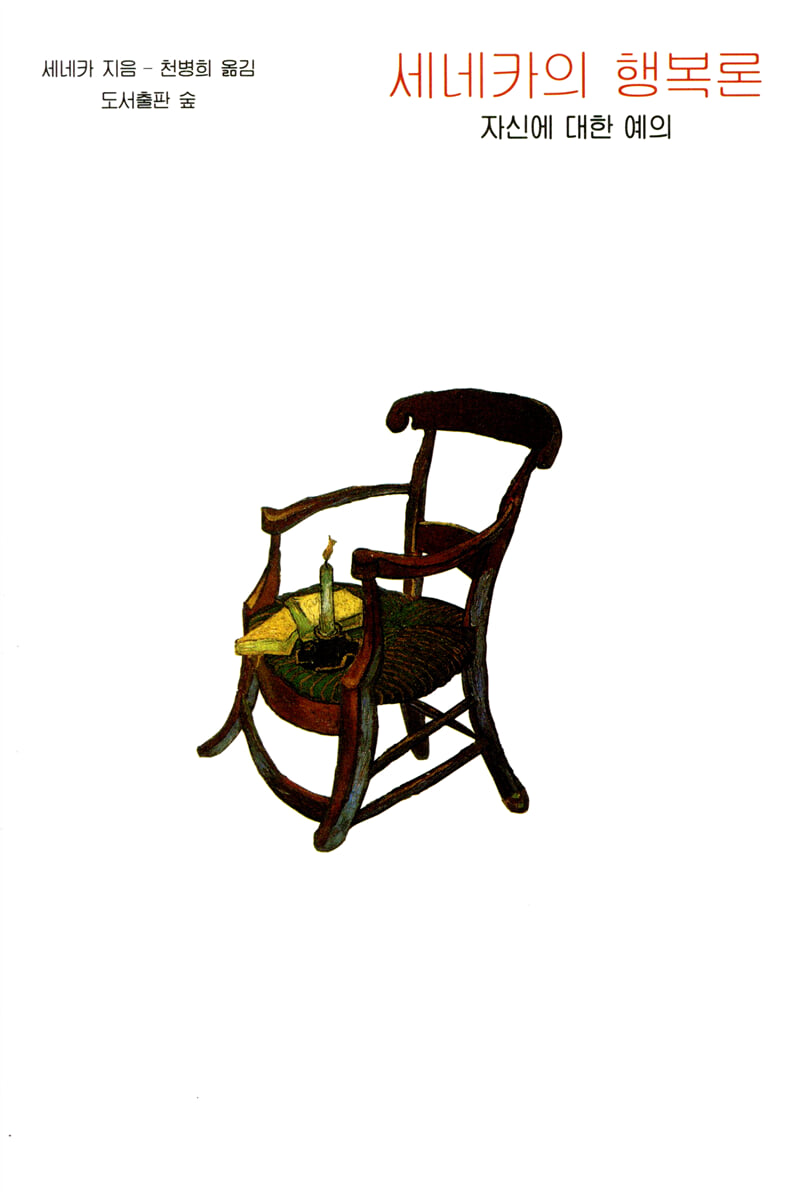
His philosophical essays, “On Peace of Mind,” “On Providence,” “On the Shortness of Life,” and “On the Happy Life,” were published in a single volume, “Seneca’s On Happiness” (published by Sup Publishing), a translation of the original Latin text.
His philosophical essays, “On Peace of Mind,” “On Providence,” “On the Shortness of Life,” and “On the Happy Life,” were published in a single volume, “Seneca’s On Happiness” (published by Sup Publishing), a translation of the original Latin text.
- You can preview some of the book's contents.
Preview
Publisher's Review
The author of this book, Seneca (c. 4 BC - 65 AD), was a politician, philosopher, and poet during the Roman Empire. He was a major advocate of Stoic philosophy and a leader in the intellectual culture of his time.
As a man well versed in philosophy, he always offered appropriate solutions to any problem or any suffering, and captivated the youth of Rome with his brilliant speeches on practical matters.
In modern times, the influence of Stoic philosophy, led by Seneca, is strong in the fields of psychology, self-development, and leadership.
Spiritual leaders and experts are developing their theories and practices by referencing the teachings of Stoic philosophy.
This book provides valuable insights into personal growth, happiness, and coping with life's challenges.
One of the core teachings of this book is self-control and acceptance.
We need to distinguish between what we can control and what we cannot, and focus on what we can control to regulate our attitudes and behaviors.
It also offers ways to prioritize inner peace and maintain emotional stability.
Rome in the first century, when Seneca was active, was at the peak of power and wealth.
It flourished in various fields such as art, philosophy, literature, and architecture, and socially, it had a free-spirited atmosphere.
Rome conquered many so-called civilized countries, expanded its power to the Rhine River basin, and ushered in a period of peace (Pax Romana) in which it dominated the world with its power.
The Romans were preoccupied with enjoying life at a leisurely pace, fulfilling the pleasures and duties of social life.
The upper class enjoyed luxury and abundance and exercised power, while the lower class suffered from poverty and hardship.
These social inequalities shaped the cultural and religious landscape of Rome.
Seeing the Romans who were immersed in luxury and pleasure amidst stability and prosperity and unable to break free, Seneca wanted to awaken the Romans with advice worthy of a Stoic philosopher.
I decided to draw moral inspiration from them by using literary techniques and personal experiences.
Through vivid metaphors, impressive vocabulary, precise arguments, fables and proverbs, he writes philosophical prose that denounces the times and recommends sound reason and goodness.
He sympathized with the fact that humans are weak and preached how difficult it is for humans to become good, in an attempt to reach a true understanding of humanity.
Let's discover why the treasure trove of philosophical reflections gleaned from Rome, where supreme culture and desperate pleasures coexist, still holds a fresh and relevant meaning for us today.
“On Peace of Mind” deals with how to maintain peace of mind.
It is written in the form of Seneca answering a friend who, despite his convictions in Stoic philosophy, is often swayed by worldly pleasures and charms and asks him how to cure his mental agitation.
Humans need peace of mind to be content with themselves, and Seneca tells us that our inner peace is determined by how we react to external events.
He presents grounds and methods for abandoning useless desires and maintaining inner peace through reflection and self-control.
"On Providence" has the subtitle, "If there is providence, why do misfortunes often befall the good?"
Providence, that is, God's intervention in the order of the universe and human life, is discussed.
Seneca said of him, 'As the world is best governed, so too will suffering serve a good purpose.
And above all, it persuasively presents the answer and the basis for it that 'humans become stronger through pain and trials.'
In "On the Shortness of Life," we discuss the finiteness of life and how we can live our lives meaningfully.
He argues that the length of a life is not determined by the number of years lived, but by how usefully one uses that time, as people waste time on useless things.
People live busy lives chasing after luxury and pleasure, but they do not look back on their own happiness.
It depicts in detail the human condition of being angry like fire over trivial matters, but being insensitive to the most important thing, wasting precious 'time'.
And he argues that philosophy makes short life longer because it allows us to associate with the great men of all times and share the experiences of the past.
In "On the Happy Life," we discuss what happiness consists of and how to obtain it.
When dealing with the conditions and methods of a happy life, one might wonder why human happiness remains in the same context today as it was two thousand years ago.
He says we must find inner peace and contentment without relying on external wealth or status.
This essay, dedicated by Seneca to Novatus, shows how important the inner state is to human happiness.
Even though we cannot change external things, if our inner state is healthy, external things can never harm us.
Seneca seeks answers from the Stoic philosophy that happiness lies in pursuing virtue and living in harmony with nature, while also giving weight to the unique values of things like health and wealth.
As a man well versed in philosophy, he always offered appropriate solutions to any problem or any suffering, and captivated the youth of Rome with his brilliant speeches on practical matters.
In modern times, the influence of Stoic philosophy, led by Seneca, is strong in the fields of psychology, self-development, and leadership.
Spiritual leaders and experts are developing their theories and practices by referencing the teachings of Stoic philosophy.
This book provides valuable insights into personal growth, happiness, and coping with life's challenges.
One of the core teachings of this book is self-control and acceptance.
We need to distinguish between what we can control and what we cannot, and focus on what we can control to regulate our attitudes and behaviors.
It also offers ways to prioritize inner peace and maintain emotional stability.
Rome in the first century, when Seneca was active, was at the peak of power and wealth.
It flourished in various fields such as art, philosophy, literature, and architecture, and socially, it had a free-spirited atmosphere.
Rome conquered many so-called civilized countries, expanded its power to the Rhine River basin, and ushered in a period of peace (Pax Romana) in which it dominated the world with its power.
The Romans were preoccupied with enjoying life at a leisurely pace, fulfilling the pleasures and duties of social life.
The upper class enjoyed luxury and abundance and exercised power, while the lower class suffered from poverty and hardship.
These social inequalities shaped the cultural and religious landscape of Rome.
Seeing the Romans who were immersed in luxury and pleasure amidst stability and prosperity and unable to break free, Seneca wanted to awaken the Romans with advice worthy of a Stoic philosopher.
I decided to draw moral inspiration from them by using literary techniques and personal experiences.
Through vivid metaphors, impressive vocabulary, precise arguments, fables and proverbs, he writes philosophical prose that denounces the times and recommends sound reason and goodness.
He sympathized with the fact that humans are weak and preached how difficult it is for humans to become good, in an attempt to reach a true understanding of humanity.
Let's discover why the treasure trove of philosophical reflections gleaned from Rome, where supreme culture and desperate pleasures coexist, still holds a fresh and relevant meaning for us today.
“On Peace of Mind” deals with how to maintain peace of mind.
It is written in the form of Seneca answering a friend who, despite his convictions in Stoic philosophy, is often swayed by worldly pleasures and charms and asks him how to cure his mental agitation.
Humans need peace of mind to be content with themselves, and Seneca tells us that our inner peace is determined by how we react to external events.
He presents grounds and methods for abandoning useless desires and maintaining inner peace through reflection and self-control.
"On Providence" has the subtitle, "If there is providence, why do misfortunes often befall the good?"
Providence, that is, God's intervention in the order of the universe and human life, is discussed.
Seneca said of him, 'As the world is best governed, so too will suffering serve a good purpose.
And above all, it persuasively presents the answer and the basis for it that 'humans become stronger through pain and trials.'
In "On the Shortness of Life," we discuss the finiteness of life and how we can live our lives meaningfully.
He argues that the length of a life is not determined by the number of years lived, but by how usefully one uses that time, as people waste time on useless things.
People live busy lives chasing after luxury and pleasure, but they do not look back on their own happiness.
It depicts in detail the human condition of being angry like fire over trivial matters, but being insensitive to the most important thing, wasting precious 'time'.
And he argues that philosophy makes short life longer because it allows us to associate with the great men of all times and share the experiences of the past.
In "On the Happy Life," we discuss what happiness consists of and how to obtain it.
When dealing with the conditions and methods of a happy life, one might wonder why human happiness remains in the same context today as it was two thousand years ago.
He says we must find inner peace and contentment without relying on external wealth or status.
This essay, dedicated by Seneca to Novatus, shows how important the inner state is to human happiness.
Even though we cannot change external things, if our inner state is healthy, external things can never harm us.
Seneca seeks answers from the Stoic philosophy that happiness lies in pursuing virtue and living in harmony with nature, while also giving weight to the unique values of things like health and wealth.
GOODS SPECIFICS
- Date of issue: July 25, 2024
- Page count, weight, size: 336 pages | 128*188*30mm
- ISBN13: 9791193792186
- ISBN10: 1193792185
You may also like
카테고리
korean


korean

![GQ KOREA Mark (Monthly): December [2025]](http://librairie.coreenne.fr/cdn/shop/files/8ef265dbbfbf186523ed75ba7319009d.jpg?v=1765340328&width=3840)


