

Sensitivity class
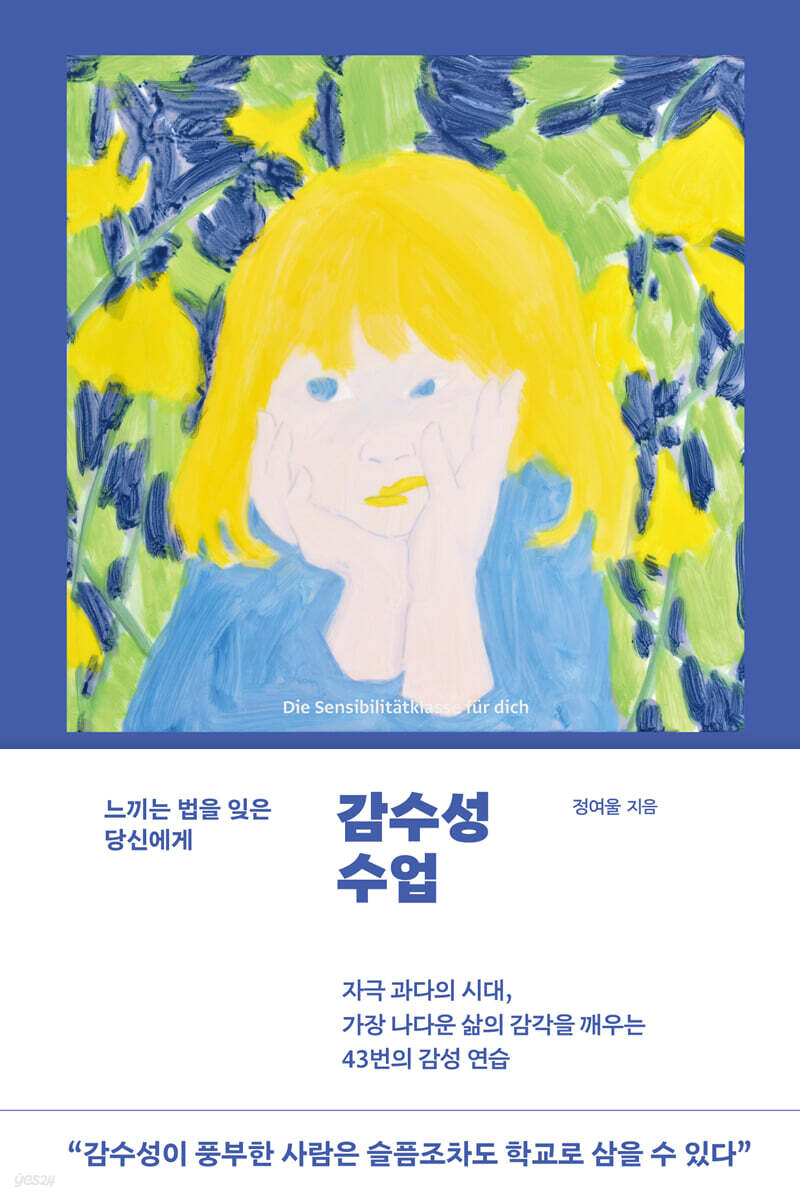 |
Description
Book Introduction
“Is there a beauty timetable in your life?”
The humanities of sensitivity cultivated over 20 years by national emotional mentor Jeong Yeo-ul
To awaken the sense of life that is most like me
There are people who pluck flowers from the world, but there are also writers who plant seeds of words where those flowers were plucked.
There are writers who train themselves to live by accepting the pieces of their wounds as part of themselves rather than trying to remove them with tweezers.
Author Jeong Yeo-ul, who has received the love and praise of 500,000 readers, reveals the sensitivity training method that has sustained her 20-year writing career.
We live in an age of overstimulation, with the media reporting shocking events every day and churning out all sorts of content, both online and offline.
In the midst of negative stimuli, we are losing our sense of self.
If you can't remember how you felt yesterday, if you're having trouble finding the words to express what you're feeling right now, you too need some sensitivity training.
In "Sensitivity Class," the author confesses that his true talent is "the sensitivity to feel what others cannot," and that a rich sensitivity extends not only to the ability to feel and realize, but also to the ability to act and live.
It is said that if you make a constant effort to develop your sensitivity every day, like firing pottery or painting, you can make good use of your body and mind.
It tells us that we can live a life without doubting our own feelings.
Part 1, "Concepts and Words," adds deeper thought and meaning to frequently used words like trauma, mindfulness, and ritual, which are rarely properly considered.
Part 2, “Places and Things,” offers a fresh perspective on familiar things, such as the spaces we visit and the objects we use every day.
Part 3, "People and Characters," introduces the muses who support us anytime, anywhere, across classics and fairy tales, reality and fiction.
A sensitive person can create a masterpiece from life using not only sadness but also various emotions.
When you are full of sensitivity, the palette of colors with which you can paint the world becomes infinitely larger.
The moment you open and close this book, the world around you begins to shine in vivid color through the filter of your unique sensibility, and you will be able to draw a colorful picture of your own life and the landscape of our world.
The humanities of sensitivity cultivated over 20 years by national emotional mentor Jeong Yeo-ul
To awaken the sense of life that is most like me
There are people who pluck flowers from the world, but there are also writers who plant seeds of words where those flowers were plucked.
There are writers who train themselves to live by accepting the pieces of their wounds as part of themselves rather than trying to remove them with tweezers.
Author Jeong Yeo-ul, who has received the love and praise of 500,000 readers, reveals the sensitivity training method that has sustained her 20-year writing career.
We live in an age of overstimulation, with the media reporting shocking events every day and churning out all sorts of content, both online and offline.
In the midst of negative stimuli, we are losing our sense of self.
If you can't remember how you felt yesterday, if you're having trouble finding the words to express what you're feeling right now, you too need some sensitivity training.
In "Sensitivity Class," the author confesses that his true talent is "the sensitivity to feel what others cannot," and that a rich sensitivity extends not only to the ability to feel and realize, but also to the ability to act and live.
It is said that if you make a constant effort to develop your sensitivity every day, like firing pottery or painting, you can make good use of your body and mind.
It tells us that we can live a life without doubting our own feelings.
Part 1, "Concepts and Words," adds deeper thought and meaning to frequently used words like trauma, mindfulness, and ritual, which are rarely properly considered.
Part 2, “Places and Things,” offers a fresh perspective on familiar things, such as the spaces we visit and the objects we use every day.
Part 3, "People and Characters," introduces the muses who support us anytime, anywhere, across classics and fairy tales, reality and fiction.
A sensitive person can create a masterpiece from life using not only sadness but also various emotions.
When you are full of sensitivity, the palette of colors with which you can paint the world becomes infinitely larger.
The moment you open and close this book, the world around you begins to shine in vivid color through the filter of your unique sensibility, and you will be able to draw a colorful picture of your own life and the landscape of our world.
- You can preview some of the book's contents.
Preview
index
Publishing a book / A refreshing collection that will cultivate the power of feeling
In the Age of Stimulation, Why We Need a Humanistic Sensibility
Part 1: Concepts and Vocabulary
[Lecture 1] Punctum and Studium: The Source of Common Sense and the Source of Emotion
[Lecture 2] Addiction, Alcohol, Anorexia, and Depression: The Names of the Many Obsessions That Shackle Modern Man
[Lecture 3] Trauma: What We Can Overcome Together
[Semi-final] Responsibility: Breaking Free from the Eternal Struggle Against Me
[Lecture 5] Social Death: The Words of the Dead, Worth Listening to
[Lecture 6] Love: The Ability to Remain Indifferent to Someone Precious
[Lecture 7] Curation: Beyond Taste, Discovering Your Passion
[8th Round] Ritual: Morning Page Writing, Taking One Step at a Time Every Day
[Lecture 9] Silence: Discovering Your True Self in Silence
[Lecture 10] Aging: Dreaming of Growing Older
[Lecture 11] Caring: A Healthy Attitude That Doesn't Destroy You
[Lecture 12] Mindfulness: Mindfulness for Those Who Can't Stop Thinking
[Lecture 13] Insults: What We Must Reject to Protect the Dignity of Life
[Lecture 14] Mourning: Suppressed Grief, Desperately Seeking Space to Breathe
[Lecture 15] Anniversary: A Day to Remember Those Who Are No Longer
[Round 16] Philoxenia: Let your guard down and be kind
[Lecture 17] Consideration: Caring for No One Left Behind
Part 2 Places and Things
[Lecture 18] Wine and Madeleines: Foods That Spark Your Memories
[Lecture 19] Greenwich Observatory: What is your standard time?
[Lecture 20] The Painter's House: If there was a space that unconditionally supported your dreams
[Lecture 21] The Author's Tomb: Experience Heaven, Purgatory, and Hell at Dante's Tomb
[Lecture 22] The Architect's House: A Beautiful House You'll Want to Visit Anytime
[Lecture 23] Guggenheim Bilbao: The Dazzling Power of Architecture to Transform a City's Fate
[Lecture 24] The National Gallery and Tate Modern: Storytelling in Space
[Lecture 25] Train: When you want to embark on a new phase of life
[Lecture 26] Picture Frames: Objects that hold memories that make me who I am.
[Lecture 27] Shoes: Wearing Desire and Identity
[Lecture 28] Clothes: If only fate could be completely changed
[Lecture 29] Musical Instruments: Hearing the Soul's Resonance Through Instruments
Part 3 People and Characters
[Lecture 30] Susan Sontag: The Muse of My Life
[Lecture 31] Ahn Jung-geun: The man who moves history, he is the youth.
[Lecture 32] Jalal ad-Din Muhammad Rumi: Healing Words Against Rudeness and Aggression
[Lecture 33] Stoner: Passion and Love Ununderstood by Anyone
[Lecture 34] Gatsby's friend Nick: A man who doesn't judge anyone.
[Lecture 35] Demian and Sinclair: The Mirror of My Soul
[Lecture 36] Rapunzel: The World's Saddest Fairy Tale Character
[Lecture 37] Psyche: Love Uncovers Infinite Possibilities
[Lecture 38] The Girl Left Behind: What Even Those Who Say They Don't Need Love Need
[Lecture 39] Good Neighbors and the Nancy: A Refuge for Those Who Never Give Up
[Lecture 40] The Stranger: Embracing the Other
[Lecture 41] Anne, Diana, and Hwang Gwang-su: A Friendship That Feared Nothing in the World
[Lecture 42] Our Three Sisters: Someone to Look at the Falling Stars Together
[Lecture 43] The Little Mermaid: The warmth of sunlight pouring through the cracks in the wounds
Even if I could cut down all the flowers in the world,
Helpful books
Artworks, music, movies, and dramas that received help
In the Age of Stimulation, Why We Need a Humanistic Sensibility
Part 1: Concepts and Vocabulary
[Lecture 1] Punctum and Studium: The Source of Common Sense and the Source of Emotion
[Lecture 2] Addiction, Alcohol, Anorexia, and Depression: The Names of the Many Obsessions That Shackle Modern Man
[Lecture 3] Trauma: What We Can Overcome Together
[Semi-final] Responsibility: Breaking Free from the Eternal Struggle Against Me
[Lecture 5] Social Death: The Words of the Dead, Worth Listening to
[Lecture 6] Love: The Ability to Remain Indifferent to Someone Precious
[Lecture 7] Curation: Beyond Taste, Discovering Your Passion
[8th Round] Ritual: Morning Page Writing, Taking One Step at a Time Every Day
[Lecture 9] Silence: Discovering Your True Self in Silence
[Lecture 10] Aging: Dreaming of Growing Older
[Lecture 11] Caring: A Healthy Attitude That Doesn't Destroy You
[Lecture 12] Mindfulness: Mindfulness for Those Who Can't Stop Thinking
[Lecture 13] Insults: What We Must Reject to Protect the Dignity of Life
[Lecture 14] Mourning: Suppressed Grief, Desperately Seeking Space to Breathe
[Lecture 15] Anniversary: A Day to Remember Those Who Are No Longer
[Round 16] Philoxenia: Let your guard down and be kind
[Lecture 17] Consideration: Caring for No One Left Behind
Part 2 Places and Things
[Lecture 18] Wine and Madeleines: Foods That Spark Your Memories
[Lecture 19] Greenwich Observatory: What is your standard time?
[Lecture 20] The Painter's House: If there was a space that unconditionally supported your dreams
[Lecture 21] The Author's Tomb: Experience Heaven, Purgatory, and Hell at Dante's Tomb
[Lecture 22] The Architect's House: A Beautiful House You'll Want to Visit Anytime
[Lecture 23] Guggenheim Bilbao: The Dazzling Power of Architecture to Transform a City's Fate
[Lecture 24] The National Gallery and Tate Modern: Storytelling in Space
[Lecture 25] Train: When you want to embark on a new phase of life
[Lecture 26] Picture Frames: Objects that hold memories that make me who I am.
[Lecture 27] Shoes: Wearing Desire and Identity
[Lecture 28] Clothes: If only fate could be completely changed
[Lecture 29] Musical Instruments: Hearing the Soul's Resonance Through Instruments
Part 3 People and Characters
[Lecture 30] Susan Sontag: The Muse of My Life
[Lecture 31] Ahn Jung-geun: The man who moves history, he is the youth.
[Lecture 32] Jalal ad-Din Muhammad Rumi: Healing Words Against Rudeness and Aggression
[Lecture 33] Stoner: Passion and Love Ununderstood by Anyone
[Lecture 34] Gatsby's friend Nick: A man who doesn't judge anyone.
[Lecture 35] Demian and Sinclair: The Mirror of My Soul
[Lecture 36] Rapunzel: The World's Saddest Fairy Tale Character
[Lecture 37] Psyche: Love Uncovers Infinite Possibilities
[Lecture 38] The Girl Left Behind: What Even Those Who Say They Don't Need Love Need
[Lecture 39] Good Neighbors and the Nancy: A Refuge for Those Who Never Give Up
[Lecture 40] The Stranger: Embracing the Other
[Lecture 41] Anne, Diana, and Hwang Gwang-su: A Friendship That Feared Nothing in the World
[Lecture 42] Our Three Sisters: Someone to Look at the Falling Stars Together
[Lecture 43] The Little Mermaid: The warmth of sunlight pouring through the cracks in the wounds
Even if I could cut down all the flowers in the world,
Helpful books
Artworks, music, movies, and dramas that received help
Detailed image

Into the book
To those of you who now think it's too late to change your innate sensitivity, I want to confess that sensitivity is also the result of thorough training.
I have been living as a happy writer not because of my innate sensitivity, but because of the sensitivity I have trained every day.
The training method is to feel, realize, read, write, listen, speak more and more often, and finally, to empathize with others.
If there's anything a little different, it's that I stay in that spot and focus fiercely until some new feeling speaks to me passionately.
Until the invisible motor of sensitivity in my heart finally ignites and I take a powerful step toward a new life.
--- From "Publishing a Book"
Literacy begins with a love of words.
It doesn't have to be an absolutely beautiful sentence.
Literacy is the love of the sentences that come to me.
Literacy identifies bad sentences.
It's a world where false sentences that seem harmless, sentences that are slickly decorated but contain no useful content, are rampant.
The ability to discern language that is biased, like fake news, or that subtly represents the interests of the powerful, like public service announcements, is the beginning of wise literacy.
--- From "Punctum and Studium"
The word 'Gungni' is really good.
To think, to express the gesture of thinking for a long time in such beautiful words.
Stretching out thoughts like a thread, rolling them like a ball, and exploding them like magma.
That's writing.
Finally, I bring out the most beautiful light that has been stirring within me and let it out into the world every day.
That's the beauty of writing one page every day.
--- From "Ritual"
What kind of madeleine, what kind of combray is breathing in your heart?
I hope that we, like Marcel in the novel, will never stop our soul's adventure to reclaim all the lost, cherished times and places.
My madeleine is the passionate joy of the moment when the flower of my own story blooms.
The wheel of passion that drives my life, whether I am happy or sad, is my earnest wish to become someone who writes my own story.
Just as the heart inside my body, there is a hearth in the center of my soul where the flame of story burns, and no matter how tired or weary I become, that hearth of story never goes out.
--- From "Wine and Madeleine"
The Prime Meridian at the Greenwich Observatory constantly poses questions to us.
'What is your standard time?'
The moment I realized that despite all that trauma, I had never been broken, it felt like the layers of fences surrounding my ego were happily crumbling down.
In a faraway foreign land, without a stable job, a secure future, or a clear purpose, I wandered for a long time and finally tasted the liberation of becoming my true self.
It felt like I was free from the gaze of all others.
--- From "Greenwich Observatory"
I want to live my life using all the sensitivity given to me and burning out all my energy.
I want to live a rich and fulfilling life, overflowing with love for art, love for people and the world, love for literature and writing, and unable to contain that love.
I will fight against a world that blocks my right to hear beautiful music, to unleash my hidden talents and express them to the world, and to write what truly springs from the depths of my heart.
--- From "Susan Sontag"
Psyche does not run away from fate.
Challenge, pursue, never give up, move forward, and even if you make mistakes, get back up again.
Isn't that kind of courage the true freedom of the soul that we, the descendants of Psyche, still need?
Where death awaits, a beautiful and mysterious love awaits.
Where you thought catastrophic suffering awaited you, unexpectedly, a precious opportunity for growth awaited you.
--- From "Psyche"
No matter how much I love, my love never diminishes.
The more I miss you and the more I cherish you, the more my love grows, becomes stronger, and becomes richer.
For some people, no matter how much unrequited love you pour on them, it doesn't feel like a waste.
It's okay if I get caught liking him more than he likes me.
I don't feel sorry at all about that love, that friendship, that slantedness that has become more and more lopsided.
Through that friend, I realized the beauty of 'slanted friendship'.
--- From "Anne, Diana, and Hwang Gwang-su"
Chatting endlessly with loved ones, reminiscing about old times that have passed away.
It's heart-pounding, like an archaeologist gently brushing away an ancient artifact covered in dirt with the world's softest brush.
A warm gaze that cares for the wounds of the inner child that cries every night in our hearts, and a loving heart that can hug and comfort each other's lost inner child, can be a desperate weapon to find the brilliant light of the inner child.
--- From "Our Three Sisters"
I hope you don't forget that our spring has not yet arrived, but it is definitely on its way.
Against the power that silences you, against all the oppression that tried to pluck your flower, dreaming of the day when your soul, more beautiful than a flower, will finally find its own dazzling language and burst into shy flower buds.
Even if we could pick all the flowers in the world, we would never be able to stop the spring that is already coming to us with its dazzling smile.
I have been living as a happy writer not because of my innate sensitivity, but because of the sensitivity I have trained every day.
The training method is to feel, realize, read, write, listen, speak more and more often, and finally, to empathize with others.
If there's anything a little different, it's that I stay in that spot and focus fiercely until some new feeling speaks to me passionately.
Until the invisible motor of sensitivity in my heart finally ignites and I take a powerful step toward a new life.
--- From "Publishing a Book"
Literacy begins with a love of words.
It doesn't have to be an absolutely beautiful sentence.
Literacy is the love of the sentences that come to me.
Literacy identifies bad sentences.
It's a world where false sentences that seem harmless, sentences that are slickly decorated but contain no useful content, are rampant.
The ability to discern language that is biased, like fake news, or that subtly represents the interests of the powerful, like public service announcements, is the beginning of wise literacy.
--- From "Punctum and Studium"
The word 'Gungni' is really good.
To think, to express the gesture of thinking for a long time in such beautiful words.
Stretching out thoughts like a thread, rolling them like a ball, and exploding them like magma.
That's writing.
Finally, I bring out the most beautiful light that has been stirring within me and let it out into the world every day.
That's the beauty of writing one page every day.
--- From "Ritual"
What kind of madeleine, what kind of combray is breathing in your heart?
I hope that we, like Marcel in the novel, will never stop our soul's adventure to reclaim all the lost, cherished times and places.
My madeleine is the passionate joy of the moment when the flower of my own story blooms.
The wheel of passion that drives my life, whether I am happy or sad, is my earnest wish to become someone who writes my own story.
Just as the heart inside my body, there is a hearth in the center of my soul where the flame of story burns, and no matter how tired or weary I become, that hearth of story never goes out.
--- From "Wine and Madeleine"
The Prime Meridian at the Greenwich Observatory constantly poses questions to us.
'What is your standard time?'
The moment I realized that despite all that trauma, I had never been broken, it felt like the layers of fences surrounding my ego were happily crumbling down.
In a faraway foreign land, without a stable job, a secure future, or a clear purpose, I wandered for a long time and finally tasted the liberation of becoming my true self.
It felt like I was free from the gaze of all others.
--- From "Greenwich Observatory"
I want to live my life using all the sensitivity given to me and burning out all my energy.
I want to live a rich and fulfilling life, overflowing with love for art, love for people and the world, love for literature and writing, and unable to contain that love.
I will fight against a world that blocks my right to hear beautiful music, to unleash my hidden talents and express them to the world, and to write what truly springs from the depths of my heart.
--- From "Susan Sontag"
Psyche does not run away from fate.
Challenge, pursue, never give up, move forward, and even if you make mistakes, get back up again.
Isn't that kind of courage the true freedom of the soul that we, the descendants of Psyche, still need?
Where death awaits, a beautiful and mysterious love awaits.
Where you thought catastrophic suffering awaited you, unexpectedly, a precious opportunity for growth awaited you.
--- From "Psyche"
No matter how much I love, my love never diminishes.
The more I miss you and the more I cherish you, the more my love grows, becomes stronger, and becomes richer.
For some people, no matter how much unrequited love you pour on them, it doesn't feel like a waste.
It's okay if I get caught liking him more than he likes me.
I don't feel sorry at all about that love, that friendship, that slantedness that has become more and more lopsided.
Through that friend, I realized the beauty of 'slanted friendship'.
--- From "Anne, Diana, and Hwang Gwang-su"
Chatting endlessly with loved ones, reminiscing about old times that have passed away.
It's heart-pounding, like an archaeologist gently brushing away an ancient artifact covered in dirt with the world's softest brush.
A warm gaze that cares for the wounds of the inner child that cries every night in our hearts, and a loving heart that can hug and comfort each other's lost inner child, can be a desperate weapon to find the brilliant light of the inner child.
--- From "Our Three Sisters"
I hope you don't forget that our spring has not yet arrived, but it is definitely on its way.
Against the power that silences you, against all the oppression that tried to pluck your flower, dreaming of the day when your soul, more beautiful than a flower, will finally find its own dazzling language and burst into shy flower buds.
Even if we could pick all the flowers in the world, we would never be able to stop the spring that is already coming to us with its dazzling smile.
--- From "The Later Zhou"
Publisher's Review
“A person with rich sensitivity
“Even sadness can be a school.”
In an age of overstimulation, a collection of refreshing insights that will cultivate your power to feel.
Artist Jeong Yeo-ul has a collection of masterpieces comparable to those of the Musee d'Orsay and the Louvre.
The author takes out moments he has cherished in his heart, one by one, when he feels miserable comparing himself to others, when he is tormented by the thought that he has failed to keep his promise to himself again today, and when he feels exhausted and weak for no reason.
His ability to recover ultimate joy and full happiness no matter what difficulties he faces comes from the 'power to feel.'
We are now increasingly losing the power to feel.
Shocking news that fuels anxiety and fear fills our minds every day, and a flood of content, including reels and shorts, competes to capture our attention.
If we continue to be exposed to excessive stimulation like this, we will unconsciously live according to the emotions of others rather than our own, and we will express our emotions by being mindful of others' reactions.
This is like taking away my right to live actively as the subject of my own life, that is, it is like cutting off the bud of ‘individualization’.
Hermann Hesse once suffered from depression, pessimistic about his own situation and his path to decline.
Dante Alighieri had achieved early success in politics, but was pushed out of the power struggle and became a lonely exile.
Before author Jeong Yeo-ul understood the existence of trauma, there was a time when she was extremely sensitive to wounds and would lose sleep over the slightest suffering from someone else.
However, just as Hesse and Dante completed their masterpieces, Demian and Divine Comedy, through difficult times, the author did not lose his way in sorrow, but became a "wounded healer" who comforted the hearts of those who had suffered similar pain.
In “Sensitivity Class,” the author says:
A sensitive person can “find similar examples among ‘the events I have read, learned, and experienced’ even in the most shocking of situations, and can wisely synthesize all the insights gained from those moments to respond in an intelligent manner.”
About the wounded healer, Carl Gustav Jung said, “Only the wounded physician can heal others.
“But the doctor said, ‘I can heal others as much as I healed myself.’”
The same goes for sensitivity.
Only those with rich sensitivity can expand this world.
However, he can expand the world as much as he feels.
“Not only the ability to feel and realize,
“It takes the ability to survive and overcome.”
43 Emotional Exercises to Awaken Your Sense of Life as True to Yourself
In this book, the author suggests trying a 'sensitivity ritual' that is free from efficiency and a sense of duty.
This book, consisting of three parts, is a guide to learning how to get along with myself and a topographical map to help me realize my beautiful potential.
“Inside me, the ‘schedule of beauty that no one has planned’ is being fulfilled every day.
In the morning, I write a manuscript while listening to a piano sonata, at lunch, I look closely at my favorite art pieces, and in the evening, I read a book while reflecting on the day and jot down my thoughts from the day.
“My struggle to somehow not let go of the ties between literature, art, and music saved me even during the pandemic, when I was most depressed, and when I was most lonely due to the disconnection of human relationships.” - From “Jeonju”
Part 1, "Concepts and Words," introduces words that excite the heart and expand the horizons of perception just by thinking about them.
It is filled with words that bloom anew through the author's unique perspective, from somewhat unfamiliar concepts like 'punctum', a shocking and unique image that divides the world into 'before' and 'after', to 'trauma', which is reinterpreted as a stepping stone for growth, and 'wounds', which are reborn as a condition for healing others.
By following the words chosen by the author, readers will also create their own mental dictionary.
Part 2, "Places and Things," discusses world-renowned landmarks like the Royal Observatory in Greenwich and the Guggenheim Museum in Bilbao, as well as familiar objects, from trains to picture frames.
Not everyone feels the same way when they are in the same space.
Some people read the descriptions written on the guide without much interest, while others feel it more deeply and make the place their own.
Even the objects we use every day can become mediums that convey special emotions depending on the meaning we give them.
For example, a picture frame goes beyond simply being a tool for holding photos; it becomes a medium that stores our most beautiful moments.
Part 3, "People and Characters," features a variety of emotional mentors you can lean on for warm comfort and cool-headed advice.
We can learn about life's attitudes not only from great figures like Susan Sontag and Ahn Jung-geun, but also from the characters in fairy tales we read as children and even from people we meet on the street.
The important thing is to keep the invisible motor of sensitivity in your heart running at every moment.
When the motor of sensitivity is fired up, you can discover in the Little Mermaid “the dazzling beauty of a being that transcends the countless boundaries that block it and dismantles all obstacles,” and you can learn the kindness and hospitality that lead a dark world to the light by helping a lost person in a subway station.
After completing the 43 sensitivity lessons in the book, readers will be able to face a world that has become clearer.
The greatest gift of sensitivity is the ability to see the world in higher resolution.
“Against the power that silences you,
“Find your own dazzling language”
To reclaim the right to love writing, art, people and life.
The dictionary definition of sensitivity is 'the quality of receiving and feeling stimuli from the external world', and it is often used in the same way as 'being sensitive'.
The word sensitivity is mainly used to express individual emotions, but there is also a collective sensitivity that surrounds our society.
"Sensitivity Class" dreams of a day when each individual will blossom into a bud of sensitivity, and society's sensitivity will finally blossom.
A society with developed sensitivity is one that grieves with others.
It is a society where each person is considerate of others, as they may become strangers at any time and place.
It is a society where we break away from a world where only we exist, take responsibility for the world, and become 'good neighbors' to one another.
But what is the reality?
Even sadness is subject to control and surveillance.
We tend to see strangers as dangerous and reject them, and spend our days starting and ending with ourselves.
In a reality where “self-righteous people in power who only push their own opinions ‘silence’ the majority of the public,” the author pledges to “fight against a world that blocks all of these things to protect the right to listen to beautiful music, the right to draw out one’s hidden talents and express them to the world, and the right to write what truly springs from the depths of one’s heart.”
I resolve to engage in a fierce struggle, driven by my love for art, my love for people and the world, and my overflowing love for literature and writing.
In this way, the author's beautiful determination gives us the courage to "stand against all powers that seek to destroy precious lives with a single word."
It encourages each person to sprout the seeds of individuality without hesitation.
Chilean poet Pablo Neruda said, “You can cut all the flowers in the world, but you can’t stop spring from coming.”
Yet, there are times when our society and my heart become desolate and bleak, and I lament and despair that spring will never come.
Whenever that happens, let's open up "Sensitivity Class" and read it.
Every time you turn the page, you will feel a refreshing breeze of thought as if you were sitting in the shade.
“Even sadness can be a school.”
In an age of overstimulation, a collection of refreshing insights that will cultivate your power to feel.
Artist Jeong Yeo-ul has a collection of masterpieces comparable to those of the Musee d'Orsay and the Louvre.
The author takes out moments he has cherished in his heart, one by one, when he feels miserable comparing himself to others, when he is tormented by the thought that he has failed to keep his promise to himself again today, and when he feels exhausted and weak for no reason.
His ability to recover ultimate joy and full happiness no matter what difficulties he faces comes from the 'power to feel.'
We are now increasingly losing the power to feel.
Shocking news that fuels anxiety and fear fills our minds every day, and a flood of content, including reels and shorts, competes to capture our attention.
If we continue to be exposed to excessive stimulation like this, we will unconsciously live according to the emotions of others rather than our own, and we will express our emotions by being mindful of others' reactions.
This is like taking away my right to live actively as the subject of my own life, that is, it is like cutting off the bud of ‘individualization’.
Hermann Hesse once suffered from depression, pessimistic about his own situation and his path to decline.
Dante Alighieri had achieved early success in politics, but was pushed out of the power struggle and became a lonely exile.
Before author Jeong Yeo-ul understood the existence of trauma, there was a time when she was extremely sensitive to wounds and would lose sleep over the slightest suffering from someone else.
However, just as Hesse and Dante completed their masterpieces, Demian and Divine Comedy, through difficult times, the author did not lose his way in sorrow, but became a "wounded healer" who comforted the hearts of those who had suffered similar pain.
In “Sensitivity Class,” the author says:
A sensitive person can “find similar examples among ‘the events I have read, learned, and experienced’ even in the most shocking of situations, and can wisely synthesize all the insights gained from those moments to respond in an intelligent manner.”
About the wounded healer, Carl Gustav Jung said, “Only the wounded physician can heal others.
“But the doctor said, ‘I can heal others as much as I healed myself.’”
The same goes for sensitivity.
Only those with rich sensitivity can expand this world.
However, he can expand the world as much as he feels.
“Not only the ability to feel and realize,
“It takes the ability to survive and overcome.”
43 Emotional Exercises to Awaken Your Sense of Life as True to Yourself
In this book, the author suggests trying a 'sensitivity ritual' that is free from efficiency and a sense of duty.
This book, consisting of three parts, is a guide to learning how to get along with myself and a topographical map to help me realize my beautiful potential.
“Inside me, the ‘schedule of beauty that no one has planned’ is being fulfilled every day.
In the morning, I write a manuscript while listening to a piano sonata, at lunch, I look closely at my favorite art pieces, and in the evening, I read a book while reflecting on the day and jot down my thoughts from the day.
“My struggle to somehow not let go of the ties between literature, art, and music saved me even during the pandemic, when I was most depressed, and when I was most lonely due to the disconnection of human relationships.” - From “Jeonju”
Part 1, "Concepts and Words," introduces words that excite the heart and expand the horizons of perception just by thinking about them.
It is filled with words that bloom anew through the author's unique perspective, from somewhat unfamiliar concepts like 'punctum', a shocking and unique image that divides the world into 'before' and 'after', to 'trauma', which is reinterpreted as a stepping stone for growth, and 'wounds', which are reborn as a condition for healing others.
By following the words chosen by the author, readers will also create their own mental dictionary.
Part 2, "Places and Things," discusses world-renowned landmarks like the Royal Observatory in Greenwich and the Guggenheim Museum in Bilbao, as well as familiar objects, from trains to picture frames.
Not everyone feels the same way when they are in the same space.
Some people read the descriptions written on the guide without much interest, while others feel it more deeply and make the place their own.
Even the objects we use every day can become mediums that convey special emotions depending on the meaning we give them.
For example, a picture frame goes beyond simply being a tool for holding photos; it becomes a medium that stores our most beautiful moments.
Part 3, "People and Characters," features a variety of emotional mentors you can lean on for warm comfort and cool-headed advice.
We can learn about life's attitudes not only from great figures like Susan Sontag and Ahn Jung-geun, but also from the characters in fairy tales we read as children and even from people we meet on the street.
The important thing is to keep the invisible motor of sensitivity in your heart running at every moment.
When the motor of sensitivity is fired up, you can discover in the Little Mermaid “the dazzling beauty of a being that transcends the countless boundaries that block it and dismantles all obstacles,” and you can learn the kindness and hospitality that lead a dark world to the light by helping a lost person in a subway station.
After completing the 43 sensitivity lessons in the book, readers will be able to face a world that has become clearer.
The greatest gift of sensitivity is the ability to see the world in higher resolution.
“Against the power that silences you,
“Find your own dazzling language”
To reclaim the right to love writing, art, people and life.
The dictionary definition of sensitivity is 'the quality of receiving and feeling stimuli from the external world', and it is often used in the same way as 'being sensitive'.
The word sensitivity is mainly used to express individual emotions, but there is also a collective sensitivity that surrounds our society.
"Sensitivity Class" dreams of a day when each individual will blossom into a bud of sensitivity, and society's sensitivity will finally blossom.
A society with developed sensitivity is one that grieves with others.
It is a society where each person is considerate of others, as they may become strangers at any time and place.
It is a society where we break away from a world where only we exist, take responsibility for the world, and become 'good neighbors' to one another.
But what is the reality?
Even sadness is subject to control and surveillance.
We tend to see strangers as dangerous and reject them, and spend our days starting and ending with ourselves.
In a reality where “self-righteous people in power who only push their own opinions ‘silence’ the majority of the public,” the author pledges to “fight against a world that blocks all of these things to protect the right to listen to beautiful music, the right to draw out one’s hidden talents and express them to the world, and the right to write what truly springs from the depths of one’s heart.”
I resolve to engage in a fierce struggle, driven by my love for art, my love for people and the world, and my overflowing love for literature and writing.
In this way, the author's beautiful determination gives us the courage to "stand against all powers that seek to destroy precious lives with a single word."
It encourages each person to sprout the seeds of individuality without hesitation.
Chilean poet Pablo Neruda said, “You can cut all the flowers in the world, but you can’t stop spring from coming.”
Yet, there are times when our society and my heart become desolate and bleak, and I lament and despair that spring will never come.
Whenever that happens, let's open up "Sensitivity Class" and read it.
Every time you turn the page, you will feel a refreshing breeze of thought as if you were sitting in the shade.
GOODS SPECIFICS
- Date of issue: June 26, 2024
- Page count, weight, size: 308 pages | 410g | 140*210*20mm
- ISBN13: 9788934920885
- ISBN10: 8934920882
You may also like
카테고리
korean


korean

![GQ KOREA Mark (Monthly): December [2025]](http://librairie.coreenne.fr/cdn/shop/files/8ef265dbbfbf186523ed75ba7319009d.jpg?v=1765340328&width=3840)


