

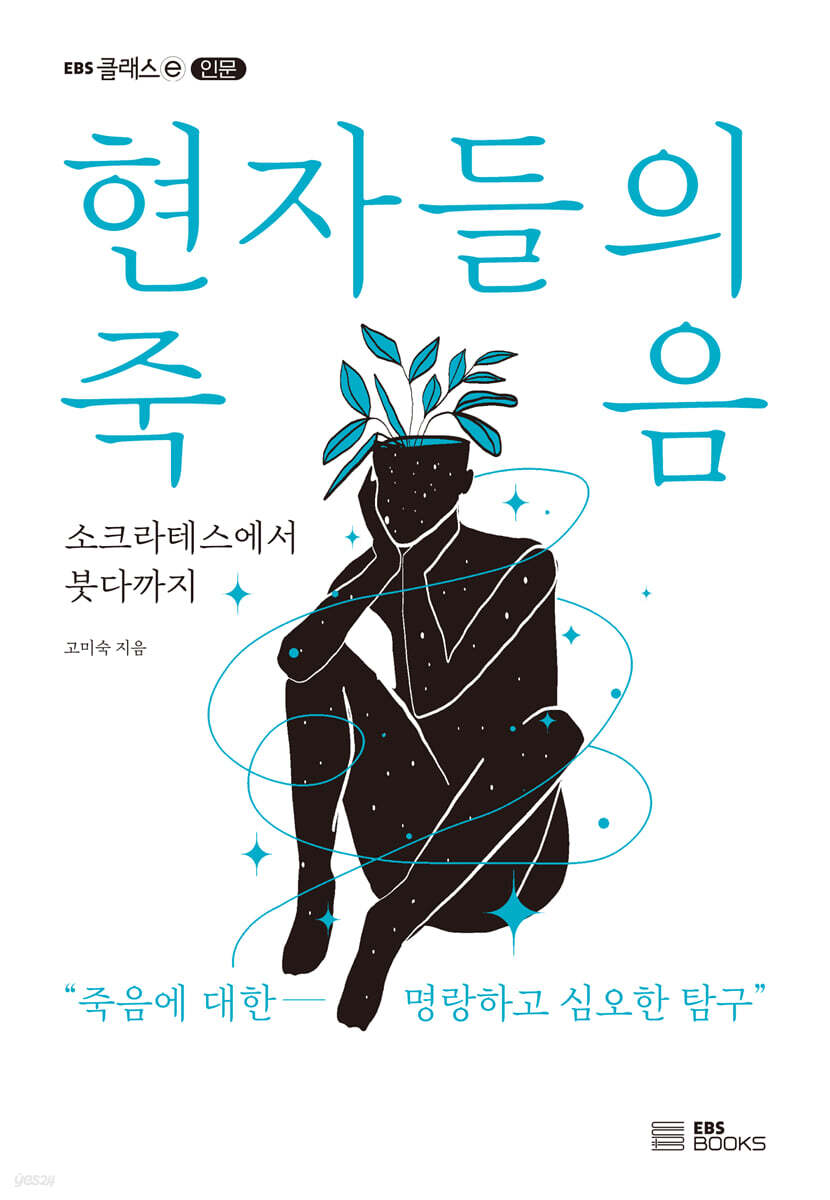
Death of the Wise Men
 |
Description
Book Introduction
“A cheerful and profound exploration of death.”
Now, your 60s are not the rest of your life, but the third act of your life.
You have to live through a time that is no less than that of youth or middle age.
In Act 1 and Act 2, there were goals or missions that had to be achieved regardless of lifespan.
Economic independence, marriage and childcare, social achievement, or values and causes, etc.
Even if I died in the middle of it, I didn't consider it the end.
But the 60s are different.
No matter how long the rest of life may be, we must now move towards extinction and disintegration without any countermeasures.
But there is one problem.
It's clear that the theme of this journey is extinction and disintegration, but there's little wisdom about it.
In other words, it is impossible to predict how we will age, how we will become ill, or how we will die.
What is even more surprising is that our time, our civilization, has no assets for this.
That's understandable, since we've thrown away all the intellectual and cultural assets we've accumulated about death over the past century.
A civilization that knows nothing but capital and labor (and consumption) is therefore fatal! It's like walking down a street at dawn blindfolded.
There is only one exit.
You just have to explore old soldiers, especially death.
If there's no mission to be accomplished, but the path ahead is clearly one of annihilation and disintegration, isn't this the perfect time to explore death? As is well known, all areas of human intellectual history—religion, philosophy, science, art—have stemmed from a yearning to understand death.
That is also the driving force that has driven civilization.
Well, isn't that obvious?
If you don't know death, you can't know life.
"How should we live?" is inseparable from "How should we die?" Therefore, life and death are one! This is a truth passed down through the classics of the East and the West for thousands of years.
It is time to actively utilize that wisdom and means.
The eight wise men featured in this book will be its greatest messengers.
Now, your 60s are not the rest of your life, but the third act of your life.
You have to live through a time that is no less than that of youth or middle age.
In Act 1 and Act 2, there were goals or missions that had to be achieved regardless of lifespan.
Economic independence, marriage and childcare, social achievement, or values and causes, etc.
Even if I died in the middle of it, I didn't consider it the end.
But the 60s are different.
No matter how long the rest of life may be, we must now move towards extinction and disintegration without any countermeasures.
But there is one problem.
It's clear that the theme of this journey is extinction and disintegration, but there's little wisdom about it.
In other words, it is impossible to predict how we will age, how we will become ill, or how we will die.
What is even more surprising is that our time, our civilization, has no assets for this.
That's understandable, since we've thrown away all the intellectual and cultural assets we've accumulated about death over the past century.
A civilization that knows nothing but capital and labor (and consumption) is therefore fatal! It's like walking down a street at dawn blindfolded.
There is only one exit.
You just have to explore old soldiers, especially death.
If there's no mission to be accomplished, but the path ahead is clearly one of annihilation and disintegration, isn't this the perfect time to explore death? As is well known, all areas of human intellectual history—religion, philosophy, science, art—have stemmed from a yearning to understand death.
That is also the driving force that has driven civilization.
Well, isn't that obvious?
If you don't know death, you can't know life.
"How should we live?" is inseparable from "How should we die?" Therefore, life and death are one! This is a truth passed down through the classics of the East and the West for thousands of years.
It is time to actively utilize that wisdom and means.
The eight wise men featured in this book will be its greatest messengers.
- You can preview some of the book's contents.
Preview
index
Open the book and explore death - cheerfully and profoundly! 004
Intro: Learn to die, and you will know how to live! 016
Chapter 1 Socrates
Philosophy is the practice of death.
1.
The Poison of Socrates - Tragedy or Beatitude?
2.
The Defense of Death 1 - Extinction or Transmigration
3.
The Defense of Death 2 _ Life and Death are Circular
4.
The Defense of Death 3 - The Soul is Immortal
5.
Philosopher, a being who explores death _ The Feast of Logos
6.
Take good care of your soul, with goodness and wisdom! _ A Great Shift in the Ethical Axis
7.
The Last Words, the Greatest Gift _ "I owe you a rooster, so pay me back."
Chapter 2: The Book of Changes
Just resting comfortably in the big house called Cheonji!
1.
My Wife is Dead, Let's Beat the Pills! _ From Grief to Insight
2.
Birth, Aging, Illness, and Death: Spring, Summer, Fall, and Winter – The Trio of Physiology, Psychology, and Physics
3.
The Art of Life: Being in Between
4.
Only creation, only change! _ "All things in heaven and earth live as 'I'."
5.
Fool, the problem is dichotomies! _ The Pleasures and Freedom of the Skeleton
6.
Ethics of Health _ Simjae and Deokchung
1) Starve your ego [Simjae]
2) The irresistible allure of a being [Deokchung]
7.
Amor Fati _ Full Body, Full Earth
Chapter 3 Mahatma Gandhi
Oh, Rama! Death is a glorious liberation.
1.
January 30, 1948, 5:05 PM - Three bullets and a wreath of lotus flowers
2.
The assassin's final statement: "I have no regrets!"
3.
Just one step at a time! _ Satyagraha
4.
The Political Economy of Truth and Joy _ Brahmacharya
5.
“My life is my message” _ Walking, starving, writing
6.
The Mahatma's 'Great' Defeat _ "Gandhi Wasn't There That Day"
7.
Death is a glorious liberation! _ In the hands of God
Chapter 4: Albert Einstein
This one life is enough
1.
Life is like riding a bicycle - The Master of Post-Horse and Friendship
2.
Einstein and the War _ "The happiest thought of my life"
3.
“I will leave gracefully” _ The only salvation is a sense of humor!
4.
Deconstructing Newton's 'Universe' _ The Birth of 'Space-Time'
5.
Quantum Mechanics and the Roll of Dice: A Strange Twist of Fate
6.
From Intellect to Spirituality! _ Eddington, Spinoza, and Gandhi
7.
“This one life is enough” _ For everyone’s smiles and well-being
Albert Einstein Epilogue: What Did Einstein's Brain Look Like?
Chapter 5: Yeonam Park Ji-won
Death is everywhere
1.
Now I know the 'Tao'! _ Water becomes my clothes, my body, and my mind.
2.
Thoughts on Death 1 _ Death is everywhere
3.
Thoughts on Death 2 - Life is a Luck
4.
Thoughts on Death 3 - All relationships are bad.
5.
Requiem for Writing, Mourning, and Healing _ Master of Epitaphs
6.
Wisdom of old age, freedom of old age _ Sending a small jar of gochujang
7.
Hearing my friends talking _ “I survived!”
Chapter 6: Dasan Jeong Yak-yong
History will bear witness in the distant future!
1.
What a "blessed" death! _ Memories of "Five Red Skirts"
2.
Towards the High Places! _ An Endless Race to the 'Center'
3.
Dance of Death _ The Endless Procession of Martyrs
4.
Between God and Monarch _ The Rise and Fall of Icarus
5.
A splendid homecoming, a lonely old age - Finally, 『The Shepherd's Heart』!
6.
What is the meaning of the “self-written epitaph”? _ “I testify!”
7.
I will wait until I am a hundred years old! _ The birth of the name 'Dasan'
Chapter 7 Sariputta
I will never come or go again!
1.
The final journey has begun! _ The fate of the 'Sangsu disciple'
2.
Farewell to the Master - "We will never meet again, nor touch each other again."
3.
Sariputta, who is he? _ From pleasure to salvation!
4.
Wisdom First, General of the Law - "If you know the origin of dependent origination, you will see the Tathagata."
5.
Mother's Path to Enlightenment! _ Immortal Wisdom
6.
The Buddha's Praise: 'Solid as the Earth, Gentle as a Child'
7.
The wheel of reincarnation has finally stopped _ Blessing or Light
Chapter 8 Buddha
Be brave and advance!
1.
The Long Journey to Nirvana _ The Best Form for Death
2.
'Farewell, Vaishali!' _ As the elephant turns around
3.
Ananda's Lament _ There is no 'Master's Fist'!
4.
The Last Offering of the Sunda - The most lethal, yet the most noble!
5.
Flowers bloom on the Sarassangsu _ “The best worship is practice”
6.
As a friend asks a friend - Go forward without stopping!
7.
Nirvana, tranquility and peace - complete annihilation, complete freedom
Epilogue All life comes from death! I will be back!
Intro: Learn to die, and you will know how to live! 016
Chapter 1 Socrates
Philosophy is the practice of death.
1.
The Poison of Socrates - Tragedy or Beatitude?
2.
The Defense of Death 1 - Extinction or Transmigration
3.
The Defense of Death 2 _ Life and Death are Circular
4.
The Defense of Death 3 - The Soul is Immortal
5.
Philosopher, a being who explores death _ The Feast of Logos
6.
Take good care of your soul, with goodness and wisdom! _ A Great Shift in the Ethical Axis
7.
The Last Words, the Greatest Gift _ "I owe you a rooster, so pay me back."
Chapter 2: The Book of Changes
Just resting comfortably in the big house called Cheonji!
1.
My Wife is Dead, Let's Beat the Pills! _ From Grief to Insight
2.
Birth, Aging, Illness, and Death: Spring, Summer, Fall, and Winter – The Trio of Physiology, Psychology, and Physics
3.
The Art of Life: Being in Between
4.
Only creation, only change! _ "All things in heaven and earth live as 'I'."
5.
Fool, the problem is dichotomies! _ The Pleasures and Freedom of the Skeleton
6.
Ethics of Health _ Simjae and Deokchung
1) Starve your ego [Simjae]
2) The irresistible allure of a being [Deokchung]
7.
Amor Fati _ Full Body, Full Earth
Chapter 3 Mahatma Gandhi
Oh, Rama! Death is a glorious liberation.
1.
January 30, 1948, 5:05 PM - Three bullets and a wreath of lotus flowers
2.
The assassin's final statement: "I have no regrets!"
3.
Just one step at a time! _ Satyagraha
4.
The Political Economy of Truth and Joy _ Brahmacharya
5.
“My life is my message” _ Walking, starving, writing
6.
The Mahatma's 'Great' Defeat _ "Gandhi Wasn't There That Day"
7.
Death is a glorious liberation! _ In the hands of God
Chapter 4: Albert Einstein
This one life is enough
1.
Life is like riding a bicycle - The Master of Post-Horse and Friendship
2.
Einstein and the War _ "The happiest thought of my life"
3.
“I will leave gracefully” _ The only salvation is a sense of humor!
4.
Deconstructing Newton's 'Universe' _ The Birth of 'Space-Time'
5.
Quantum Mechanics and the Roll of Dice: A Strange Twist of Fate
6.
From Intellect to Spirituality! _ Eddington, Spinoza, and Gandhi
7.
“This one life is enough” _ For everyone’s smiles and well-being
Albert Einstein Epilogue: What Did Einstein's Brain Look Like?
Chapter 5: Yeonam Park Ji-won
Death is everywhere
1.
Now I know the 'Tao'! _ Water becomes my clothes, my body, and my mind.
2.
Thoughts on Death 1 _ Death is everywhere
3.
Thoughts on Death 2 - Life is a Luck
4.
Thoughts on Death 3 - All relationships are bad.
5.
Requiem for Writing, Mourning, and Healing _ Master of Epitaphs
6.
Wisdom of old age, freedom of old age _ Sending a small jar of gochujang
7.
Hearing my friends talking _ “I survived!”
Chapter 6: Dasan Jeong Yak-yong
History will bear witness in the distant future!
1.
What a "blessed" death! _ Memories of "Five Red Skirts"
2.
Towards the High Places! _ An Endless Race to the 'Center'
3.
Dance of Death _ The Endless Procession of Martyrs
4.
Between God and Monarch _ The Rise and Fall of Icarus
5.
A splendid homecoming, a lonely old age - Finally, 『The Shepherd's Heart』!
6.
What is the meaning of the “self-written epitaph”? _ “I testify!”
7.
I will wait until I am a hundred years old! _ The birth of the name 'Dasan'
Chapter 7 Sariputta
I will never come or go again!
1.
The final journey has begun! _ The fate of the 'Sangsu disciple'
2.
Farewell to the Master - "We will never meet again, nor touch each other again."
3.
Sariputta, who is he? _ From pleasure to salvation!
4.
Wisdom First, General of the Law - "If you know the origin of dependent origination, you will see the Tathagata."
5.
Mother's Path to Enlightenment! _ Immortal Wisdom
6.
The Buddha's Praise: 'Solid as the Earth, Gentle as a Child'
7.
The wheel of reincarnation has finally stopped _ Blessing or Light
Chapter 8 Buddha
Be brave and advance!
1.
The Long Journey to Nirvana _ The Best Form for Death
2.
'Farewell, Vaishali!' _ As the elephant turns around
3.
Ananda's Lament _ There is no 'Master's Fist'!
4.
The Last Offering of the Sunda - The most lethal, yet the most noble!
5.
Flowers bloom on the Sarassangsu _ “The best worship is practice”
6.
As a friend asks a friend - Go forward without stopping!
7.
Nirvana, tranquility and peace - complete annihilation, complete freedom
Epilogue All life comes from death! I will be back!
Detailed image
Into the book
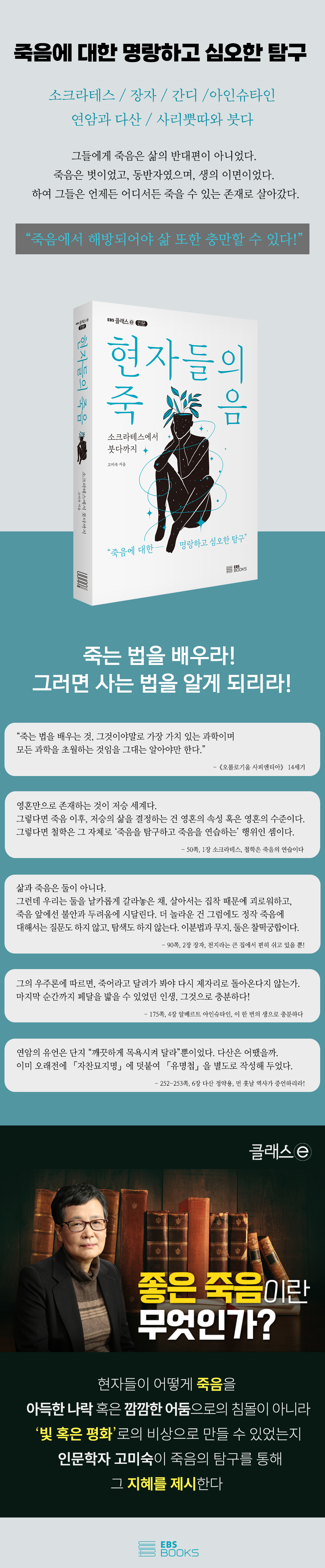
'Living as a being that can die' - what a wonderful paradox.
For this paradox to become possible, one must first and foremost have profound insight into life.
The more profound life becomes, the more infinitely lighter death becomes.
Is that why?
The attitude of those who face death is incredibly cheerful! Thanks to you, I learned this.
You have to be profound to be cheerful, and cheerfulness is the source of profoundness!
---From "Opening the Book"
“You must know that to learn how to die is the most valuable science, and that it surpasses all other sciences.” 《Horologium Sapientia》 14th century
---From "Intro"
He is sure.
The afterlife is a world where only souls exist.
So, after death, what determines life in the afterlife is the nature or level of the soul.
A philosopher is a being who moves towards philosophia (love of wisdom).
In other words, aren't they people who distance themselves from the physical body and only practice thoughts related to the soul?
If so, philosophy itself is an act of ‘exploring death and practicing death.’
---From "Chapter 1 Socrates, Philosophy is the Practice of Death"
Youth - Spring (Thursday), middle age - Summer (Tuesday), menopause (Saturday - Seasonal Change), middle age - Autumn (Friday), and old age - Winter (Wednesday).
This is the natural order of the universe.
Therefore, if birth is a blessing, so too is death.
If the dynamism of youth and the vitality of middle age are the climax of life, the fruits of middle age and the tranquility of old age are also the greatest gifts the four seasons can offer.
Death is the process by which the fruit returns to the seed.
The seeds will naturally sprout when spring comes.
The principle is that all life comes from death.
That's all.
---From "Chapter 2: Zhuangzi, Resting Comfortably in the Great House of Heaven and Earth!"
What Zhang Zi and Lu Xun are trying to say is simple.
Life and death are not two different things.
But we live with a sharp division between the two, suffering from obsession while alive and suffering from anxiety and fear when facing death.
What's even more surprising is that we don't even ask questions about or explore death.
Dichotomy and ignorance are a perfect match.
---「Chapter 2: Jangja, just resting comfortably in the big house called Heaven and Earth!)
For Gandhi, death was a daily occurrence and his closest friend.
Political turmoil always put him on the brink of life and death.
There have been many times when I was on the verge of losing my breath.
But I never surrendered to the fear of death.
Becoming a being that can die at any time was the core of spiritual practice.
So, as he said, death was liberation.
A glorious liberation from all the burdens of life or the dharmas imposed by fate, and into the presence of God.
In that sense, his death can be said to be the final version of the 'experiment with truth'.
No, Gandhi might have said something different.
There is no end to Satyagraha.
Death is just a step.
Just one step from this world to the next!
---From "Mahatma Gandhi, Death is Glorious Liberation"
'It is a shameful thing to artificially extend life.
'I have done all that was given to me, and now it is time to say goodbye.' And he says this.
“I will leave gracefully.”
---From "Chapter 4 Albert Einstein, This One Life Is Enough"
Someone asked him.
“Do you believe in immortality?” “No.
“One life is enough for me.” The time of that one life was 1:00 AM on April 18, 1955.
Complex formulas of densely written equations stayed by his side.
Until the very last moment, he never stopped pedaling to unify the theory of relativity and quantum mechanics.
Unfortunately, the pedal kept getting misaligned.
That's okay though.
In any case, there is no such thing as perfection in life or science.
According to his cosmology, even if you run like crazy, you will end up back where you started.
A life where I could pedal until the very last moment, that's enough!
---From "Chapter 4 Albert Einstein, This One Life Is Enough"
Although Yeonam was a master of epitaphs, there is no epitaph for Yeonam.
He spent his entire life mourning the dead and comforting the living through epitaphs, yet he himself has no epitaph.
But he probably wouldn't have been very sad.
Because his death needs no mourning.
He experienced numerous deaths from an early age and never stopped exploring death and separation while writing epitaphs.
In other words, it also means that he was always preparing for death.
In other words, it also means that you always do your best in life 'today'.
Wasn't he the one who had already awakened to the way of death through 'Mindfulness' on his way to Jehol a long time ago?
---From "Chapter 5 Yeonam Park Ji-won, Death is Everywhere"
It is said that old age is more blessed than wealth and honor in terms of knowledge and enlightenment, health of spouses, and excellence of descendants.
right.
Since he died at the peak of such a blessed old age, it cannot be said that death was anything other than blessed.
Yeonam's last words were simply, "Please give me a clean bath."
What would Dasan have been like?
A long time ago, in addition to the “Self-praised Epitaph,” a separate “Yumyeongcheop” was created.
---From "Chapter 6 Dasan Jeong Yak-yong, History Will Testify in the Far Future!"
Isn't that really unique?
It's a final farewell, but there's no mention of death.
Replace with 'to be released from life', 'to lie down', 'to let go of the will to live', etc.
So, for Buddha and Sariputta, death is a release from the hardships of life, a rest for the body, and a letting go of the will to live.
In other words, it is liberation, rest, and freedom.
The most striking phrase in this farewell speech is the phrase, “There will be no more coming or going.”
In short, there is no more reincarnation.
It is not a romantic farewell speech like “See you again in the next life!” or “I hope you are happy in the next life!” that modern people use as a cliché.
The relationship between my teacher and I ends here.
This means that since there is no need to return to the human world, we will never meet again in this body.
This is the meaning of Nirvana; it is not death or extinction.
It is a leap to escape from the cycle of reincarnation where life and death are repeated.
It is a realm that is difficult to imagine for us who are spinning the wheel of reincarnation, but it seems clear that it is the highest form of death that humans can achieve.
A death that transcends the dichotomy of life and death, and nullifies the very concept of death.
Is this what it means to be immortal?
---From "Chapter 7 Sariputta, I will never come or go again!"
Therefore, there is no more rebirth.
Since there is no birth, there is no death.
Since there is no birth or death, there is no sorrow or suffering.
At the end of the journey, I was free from all worries and all causes of sorrow.
Complete extinction, complete freedom! Forty-five years ago, I opened the path to nirvana, and now, through physical extinction, I have fully realized that nirvana.
Nirvana, it was “the highest goal for both man and god, an incomprehensible tranquility, a refuge of utter safety.”
For this paradox to become possible, one must first and foremost have profound insight into life.
The more profound life becomes, the more infinitely lighter death becomes.
Is that why?
The attitude of those who face death is incredibly cheerful! Thanks to you, I learned this.
You have to be profound to be cheerful, and cheerfulness is the source of profoundness!
---From "Opening the Book"
“You must know that to learn how to die is the most valuable science, and that it surpasses all other sciences.” 《Horologium Sapientia》 14th century
---From "Intro"
He is sure.
The afterlife is a world where only souls exist.
So, after death, what determines life in the afterlife is the nature or level of the soul.
A philosopher is a being who moves towards philosophia (love of wisdom).
In other words, aren't they people who distance themselves from the physical body and only practice thoughts related to the soul?
If so, philosophy itself is an act of ‘exploring death and practicing death.’
---From "Chapter 1 Socrates, Philosophy is the Practice of Death"
Youth - Spring (Thursday), middle age - Summer (Tuesday), menopause (Saturday - Seasonal Change), middle age - Autumn (Friday), and old age - Winter (Wednesday).
This is the natural order of the universe.
Therefore, if birth is a blessing, so too is death.
If the dynamism of youth and the vitality of middle age are the climax of life, the fruits of middle age and the tranquility of old age are also the greatest gifts the four seasons can offer.
Death is the process by which the fruit returns to the seed.
The seeds will naturally sprout when spring comes.
The principle is that all life comes from death.
That's all.
---From "Chapter 2: Zhuangzi, Resting Comfortably in the Great House of Heaven and Earth!"
What Zhang Zi and Lu Xun are trying to say is simple.
Life and death are not two different things.
But we live with a sharp division between the two, suffering from obsession while alive and suffering from anxiety and fear when facing death.
What's even more surprising is that we don't even ask questions about or explore death.
Dichotomy and ignorance are a perfect match.
---「Chapter 2: Jangja, just resting comfortably in the big house called Heaven and Earth!)
For Gandhi, death was a daily occurrence and his closest friend.
Political turmoil always put him on the brink of life and death.
There have been many times when I was on the verge of losing my breath.
But I never surrendered to the fear of death.
Becoming a being that can die at any time was the core of spiritual practice.
So, as he said, death was liberation.
A glorious liberation from all the burdens of life or the dharmas imposed by fate, and into the presence of God.
In that sense, his death can be said to be the final version of the 'experiment with truth'.
No, Gandhi might have said something different.
There is no end to Satyagraha.
Death is just a step.
Just one step from this world to the next!
---From "Mahatma Gandhi, Death is Glorious Liberation"
'It is a shameful thing to artificially extend life.
'I have done all that was given to me, and now it is time to say goodbye.' And he says this.
“I will leave gracefully.”
---From "Chapter 4 Albert Einstein, This One Life Is Enough"
Someone asked him.
“Do you believe in immortality?” “No.
“One life is enough for me.” The time of that one life was 1:00 AM on April 18, 1955.
Complex formulas of densely written equations stayed by his side.
Until the very last moment, he never stopped pedaling to unify the theory of relativity and quantum mechanics.
Unfortunately, the pedal kept getting misaligned.
That's okay though.
In any case, there is no such thing as perfection in life or science.
According to his cosmology, even if you run like crazy, you will end up back where you started.
A life where I could pedal until the very last moment, that's enough!
---From "Chapter 4 Albert Einstein, This One Life Is Enough"
Although Yeonam was a master of epitaphs, there is no epitaph for Yeonam.
He spent his entire life mourning the dead and comforting the living through epitaphs, yet he himself has no epitaph.
But he probably wouldn't have been very sad.
Because his death needs no mourning.
He experienced numerous deaths from an early age and never stopped exploring death and separation while writing epitaphs.
In other words, it also means that he was always preparing for death.
In other words, it also means that you always do your best in life 'today'.
Wasn't he the one who had already awakened to the way of death through 'Mindfulness' on his way to Jehol a long time ago?
---From "Chapter 5 Yeonam Park Ji-won, Death is Everywhere"
It is said that old age is more blessed than wealth and honor in terms of knowledge and enlightenment, health of spouses, and excellence of descendants.
right.
Since he died at the peak of such a blessed old age, it cannot be said that death was anything other than blessed.
Yeonam's last words were simply, "Please give me a clean bath."
What would Dasan have been like?
A long time ago, in addition to the “Self-praised Epitaph,” a separate “Yumyeongcheop” was created.
---From "Chapter 6 Dasan Jeong Yak-yong, History Will Testify in the Far Future!"
Isn't that really unique?
It's a final farewell, but there's no mention of death.
Replace with 'to be released from life', 'to lie down', 'to let go of the will to live', etc.
So, for Buddha and Sariputta, death is a release from the hardships of life, a rest for the body, and a letting go of the will to live.
In other words, it is liberation, rest, and freedom.
The most striking phrase in this farewell speech is the phrase, “There will be no more coming or going.”
In short, there is no more reincarnation.
It is not a romantic farewell speech like “See you again in the next life!” or “I hope you are happy in the next life!” that modern people use as a cliché.
The relationship between my teacher and I ends here.
This means that since there is no need to return to the human world, we will never meet again in this body.
This is the meaning of Nirvana; it is not death or extinction.
It is a leap to escape from the cycle of reincarnation where life and death are repeated.
It is a realm that is difficult to imagine for us who are spinning the wheel of reincarnation, but it seems clear that it is the highest form of death that humans can achieve.
A death that transcends the dichotomy of life and death, and nullifies the very concept of death.
Is this what it means to be immortal?
---From "Chapter 7 Sariputta, I will never come or go again!"
Therefore, there is no more rebirth.
Since there is no birth, there is no death.
Since there is no birth or death, there is no sorrow or suffering.
At the end of the journey, I was free from all worries and all causes of sorrow.
Complete extinction, complete freedom! Forty-five years ago, I opened the path to nirvana, and now, through physical extinction, I have fully realized that nirvana.
Nirvana, it was “the highest goal for both man and god, an incomprehensible tranquility, a refuge of utter safety.”
---From "Chapter 8: Buddha, Be Brave and Proceed!"
Publisher's Review
Socrates, Zhuangzi, Gandhi, Einstein, Yeonam and Dasan, Sariputta and Buddha.
What do these have in common?
Passing through the gates of life and death with utmost ease!
Usually, when we encounter the word 'death', we cannot avoid a dark and heavy feeling.
It is also an incident that has nothing to do with you and something you never want to get close to.
How did those who are called wise men and have been respected by people to this day accept such a death that they wish to ignore?
If we borrow their wisdom on this, perhaps we too can look at death from a slightly different perspective and prepare ourselves to move toward it.
From the moment they open this book to the moment they close it, readers will be amazed by the lighthearted approach to death.
It draws readers into the book with direct but situation-appropriate language.
I can't help but sympathize with the author's seemingly questioning and concise answers.
On the surface, they may seem to come from different eras, civilizations, and life paths, but we already know them all too well.
Because they are great teachers who embody the wisdom and vision of life with their whole body.
But these deaths have something in common.
Passing through the gates of life and death with utmost ease.
For them, death was a great rest, peace and bliss.
It's so different from what we think of as death.
How is this reversal possible? Above all, for them, death was not the opposite of life.
Death was a friend, a companion, the other side of life.
So they lived as beings who could die anytime, anywhere.
'Living as a being that can die' - what a wonderful paradox.
For this paradox to become possible, one must first and foremost have profound insight into life.
The more profound life becomes, the more infinitely lighter death becomes.
Is that why?
The attitude of those who face death is incredibly cheerful! Thanks to you, I learned this.
You have to be profound to be cheerful, and cheerfulness is the source of profoundness!
We all die.
And death must be overcome only by one's own strength.
No one can replace you.
In that respect, is there any event more fair and just than death?
The 20th century did not have the luxury of understanding these principles.
But now it's different.
Everyone can now fully savor the journey to death.
Above all, we must free death from the image of being tragic, heavy, and dark.
Cheerfully and profoundly! For only when death is liberated can life be fulfilled!
Learn how to die, and you will know how to live!
As long as we avoid death, we cannot learn how to die, and that fear makes us cling to life even more.
That in itself is already a constraint and oppression.
In an attempt to escape the bonds of death, life itself becomes a prison.
We must pass through that death alone.
There is only one way to get through.
You just have to explore how to die.
The wise men are the teachers of mankind.
They taught me many things, but more than anything, they taught me 'how to die well.'
There is such a form of death.
This is how you face death.
Then, you can enjoy freedom and liberation through death.
In this book, readers will discover the wisdom of how they were able to make death not a sinking into a deep abyss or pitch-black darkness, but a flight into 'light or peace.'
What do these have in common?
Passing through the gates of life and death with utmost ease!
Usually, when we encounter the word 'death', we cannot avoid a dark and heavy feeling.
It is also an incident that has nothing to do with you and something you never want to get close to.
How did those who are called wise men and have been respected by people to this day accept such a death that they wish to ignore?
If we borrow their wisdom on this, perhaps we too can look at death from a slightly different perspective and prepare ourselves to move toward it.
From the moment they open this book to the moment they close it, readers will be amazed by the lighthearted approach to death.
It draws readers into the book with direct but situation-appropriate language.
I can't help but sympathize with the author's seemingly questioning and concise answers.
On the surface, they may seem to come from different eras, civilizations, and life paths, but we already know them all too well.
Because they are great teachers who embody the wisdom and vision of life with their whole body.
But these deaths have something in common.
Passing through the gates of life and death with utmost ease.
For them, death was a great rest, peace and bliss.
It's so different from what we think of as death.
How is this reversal possible? Above all, for them, death was not the opposite of life.
Death was a friend, a companion, the other side of life.
So they lived as beings who could die anytime, anywhere.
'Living as a being that can die' - what a wonderful paradox.
For this paradox to become possible, one must first and foremost have profound insight into life.
The more profound life becomes, the more infinitely lighter death becomes.
Is that why?
The attitude of those who face death is incredibly cheerful! Thanks to you, I learned this.
You have to be profound to be cheerful, and cheerfulness is the source of profoundness!
We all die.
And death must be overcome only by one's own strength.
No one can replace you.
In that respect, is there any event more fair and just than death?
The 20th century did not have the luxury of understanding these principles.
But now it's different.
Everyone can now fully savor the journey to death.
Above all, we must free death from the image of being tragic, heavy, and dark.
Cheerfully and profoundly! For only when death is liberated can life be fulfilled!
Learn how to die, and you will know how to live!
As long as we avoid death, we cannot learn how to die, and that fear makes us cling to life even more.
That in itself is already a constraint and oppression.
In an attempt to escape the bonds of death, life itself becomes a prison.
We must pass through that death alone.
There is only one way to get through.
You just have to explore how to die.
The wise men are the teachers of mankind.
They taught me many things, but more than anything, they taught me 'how to die well.'
There is such a form of death.
This is how you face death.
Then, you can enjoy freedom and liberation through death.
In this book, readers will discover the wisdom of how they were able to make death not a sinking into a deep abyss or pitch-black darkness, but a flight into 'light or peace.'
GOODS SPECIFICS
- Date of issue: December 31, 2023
- Page count, weight, size: 360 pages | 558g | 145*210*20mm
- ISBN13: 9788954781510
- ISBN10: 8954781519
You may also like
카테고리
korean


korean

![GQ KOREA Mark (Monthly): December [2025]](http://librairie.coreenne.fr/cdn/shop/files/8ef265dbbfbf186523ed75ba7319009d.jpg?v=1765340328&width=3840)


