

Midday blues
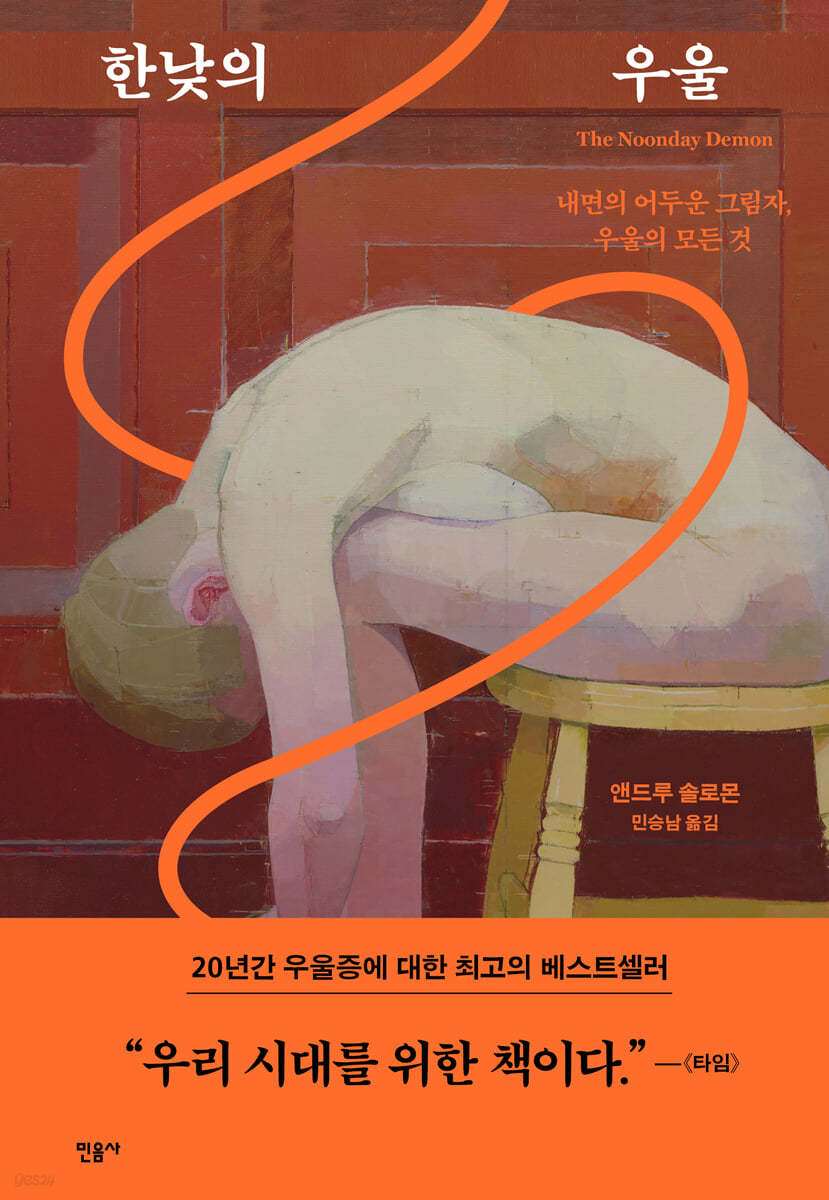 |
Description
Book Introduction
To celebrate the 20th anniversary of "Midday Melancholy," a revised edition with an additional 100-page chapter has been published!
“Freud said that depressed patients ‘see the truth more sharply,’ and Andrew Solomon is just such a case.” - [The New Yorker]
『Midday Melancholy』, the title that received the most reprint inquiries from publishers, has been republished.
A chapter of about 100 pages has been added, marking the 20th anniversary of the author's original publication in 2001.
"The Midday Blues" is a voluminous work that explores both the social implications of depression and the depths of human nature, using elegant prose to encapsulate everything about depression.
Since its publication in Korea in 2004, it has been evaluated as the best book on depression, and has become a classic in the non-fiction field, providing various insights not only on pathological symptoms but also in all areas of psychology, philosophy, history, and literature.
“Everyone will find a piece of themselves in ‘The Noonday Blues’” (Slate).
“I became a professional depressive while writing ‘The Noonday Blues,’ and that’s a strange thing.
When this book was selected as a textbook for a class at my alma mater, I was invited as a lecturer.
“During my undergraduate years, I dreamed of becoming a writer whose books would be considered textbooks at my university, but I had no idea that the book that would make that dream come true would be a memoir used in an ‘abnormal psychology’ class.”
―Andrew Solomon, from The Noonday Blues
Novelist and journalist Andrew Solomon became interested in the topic of depression after realizing its prevalence and severity in modern society.
"Midday Blues" is a journey to understand one's own experiences, but it is also deeply moving not only for those suffering from depression but also for anyone seeking to understand the mechanisms of loneliness and depression.
That's why clinical psychologist Martha Manning recommends the book, "not just for those who have experienced depression, but for everyone."
The author shares their moving stories, particularly those of those who have shown strong will even in the face of the pain of depression. Readers will discover messages of hope and healing in their small but powerful life force.
“Freud said that depressed patients ‘see the truth more sharply,’ and Andrew Solomon is just such a case.” - [The New Yorker]
『Midday Melancholy』, the title that received the most reprint inquiries from publishers, has been republished.
A chapter of about 100 pages has been added, marking the 20th anniversary of the author's original publication in 2001.
"The Midday Blues" is a voluminous work that explores both the social implications of depression and the depths of human nature, using elegant prose to encapsulate everything about depression.
Since its publication in Korea in 2004, it has been evaluated as the best book on depression, and has become a classic in the non-fiction field, providing various insights not only on pathological symptoms but also in all areas of psychology, philosophy, history, and literature.
“Everyone will find a piece of themselves in ‘The Noonday Blues’” (Slate).
“I became a professional depressive while writing ‘The Noonday Blues,’ and that’s a strange thing.
When this book was selected as a textbook for a class at my alma mater, I was invited as a lecturer.
“During my undergraduate years, I dreamed of becoming a writer whose books would be considered textbooks at my university, but I had no idea that the book that would make that dream come true would be a memoir used in an ‘abnormal psychology’ class.”
―Andrew Solomon, from The Noonday Blues
Novelist and journalist Andrew Solomon became interested in the topic of depression after realizing its prevalence and severity in modern society.
"Midday Blues" is a journey to understand one's own experiences, but it is also deeply moving not only for those suffering from depression but also for anyone seeking to understand the mechanisms of loneliness and depression.
That's why clinical psychologist Martha Manning recommends the book, "not just for those who have experienced depression, but for everyone."
The author shares their moving stories, particularly those of those who have shown strong will even in the face of the pain of depression. Readers will discover messages of hope and healing in their small but powerful life force.
- You can preview some of the book's contents.
Preview
index
About the subject and scope of this book
1 Sadness and Depression
2 The Fall of the Spirit
3 Treatments
4 Another approach
5 patients
6 Addiction
7 suicide
8 History
9 Poverty
10 Politics
11 Evolution
12 Hope
13 After that
1 Sadness and Depression
2 The Fall of the Spirit
3 Treatments
4 Another approach
5 patients
6 Addiction
7 suicide
8 History
9 Poverty
10 Politics
11 Evolution
12 Hope
13 After that
Publisher's Review
“Above all, bold self-confession and deep affection for humanity are in harmony with intelligent judgment.” —The New York Times
“The most authoritative book on depression!” —William Styron, author of Sophie's Choice
The pace of modern life is getting faster, the sense of alienation is growing, and the amount of sleep is getting shorter.
The increasing stress of modern people is deeply related to depression.
In the United States, depression is the second leading cause of death for young women and the third leading cause of death for young men.
Depression is virtually the number one cause of death, as it contributes to a number of conditions ranging from alcoholism to heart disease.
In our country, depression has the highest rate of mental disorders.
Above all, the social seriousness is that the incidence of depression is rapidly increasing, especially among children.
This is why modern people should read 『Midday Melancholy』.
“Everything about depression.
“It is remarkable for its unique way of weaving intellectual curiosity into a deeply personal story without being biased towards one side or the other.” —Harold Bloom (literary critic)
On the other hand, just as the emergence of supermodels reinforced unrealistic expectations and negative self-image, modern people, accustomed to immediate images and reactions, tend to constantly check and manage their minds like mental supermodels in order to survive in a complex competitive society, and as a result, they cannot tolerate mild depression or intense sadness and easily use Prozac.
Depression is an inseparable part of humanity from self-consciousness, but the rise in the number of people with depression is clearly a consequence of modernity.
It is the result of the catastrophe brought about by the pace of life, the chaos brought about by technological innovation, alienation and loneliness, the breakdown of traditional family structures, and the disintegration of belief systems.
So, “there are so many people in the world who live their lives in invisible wheelchairs, keeping their pain a secret.”
“Salvation in sorrow!” ―Louis Aldrich (novelist)
“‘The Daytime Blues’ is a treasure trove of valuable material, and it will become a lifeline.” —Naomi Wolf, author of ‘What Compels Beauty?’
The author's ability to present this vast and complex work to the reader as a beautiful song stems from his love for humanity and his belief in human potential.
Writing about depression is painful, but the book's other value lies in the fact that this work has been especially helpful to the author himself.
"Midday Blues" begins with the author's own depression, then moves on to similar depressions in others, then to different depressions in others, and then to depressions in completely different environments.
For the author, who lacked nothing materially or mentally, depression defied all logic.
The panic of not being able to do anything, followed by the calm despair that comes when you can think logically.
Born in the midst of such suffering, 『Midday Melancholy』 conveys “the conviction that life is worth living.”
Life is precious, no matter the pain.
“Eternal sadness (though it is within me) does not lessen the happiness.”
“A profoundly honest and moving self-confession about suffering shines a light on the truth.” —John Berger (author of “Seeing”)
“There is no such thing as a common false comfort.
“The sheer intelligence and understanding that permeates the writing itself is a great comfort.” ―Edmund White (novelist)
“An important book about suffering, and an even more important book about hope!” —Kay Redfield Jamison, Professor of Medicine, Johns Hopkins University
When you fall into depression, “the first thing that disappears is hope.”
However, it was only through writing this book that the author came to understand how an individual's genetic vulnerabilities interact with personality and environment.
Depression is a disease that destroys one's personality, but those who use depression as an excuse for self-indulgence also have uncontrolled violence inherent within themselves.
Solomon says that depression makes good people better and bad people worse.
So, “Depression can take away your sense of balance, lead to delusions, and create a false sense of helplessness, but it can also be a window to truth.”
Although there are many more people who have been ruined by depression, the author introduces people in this book who have overcome depression and risen again.
The reason is that when we see “how many kinds of resilience, strength, and imagination exist,” we can experience the catharsis that comes from deeply understanding humanity even through the tragedy of depression.
“I believe these stories will help others, just as they helped me.” Some people become completely incapacitated by mild depression, while others achieve something in life despite suffering from severe depression.
“There are people who do their part even in hardship.
Their ability to do so is not due to less suffering. (…) There is no barometer of suicide, pain, or sadness. (…) Illness and personality interact, so some patients tolerate severe symptoms well, while others can barely tolerate anything. (…)
―Andrew Solomon, from The Noonday Blues
On the other hand, he advises that painful times are precious moments that cannot be brought back, so we should endure them with patience and make the most of them.
“Hold on tight to the time.
Don't try to avoid life.
“Moments that seem like they could explode at any moment are part of your life, and those moments will never come back.”
“‘The Melancholy of the Midday Sun’ is a testimony to the unspoken suffering of countless people, and also contains the great courage the author had to demonstrate to face that suffering.” ―W.
G. Sebald (author of Austerlitz)
About psychotherapy, psychoanalysis, and drug therapy
Depression, also called 'depression' or 'melancholy', is "a deep suffering of a paralyzed mind" and "a suffering far more miserable than madness because one is fully aware of one's own misery."
Depression is closely related to serotonin and cortisol.
If excessive stress causes cortisol levels to remain high, the cortisol system may be disrupted, causing cortisol levels to not drop even when the stress is gone, or to spike even with minor stress.
The same thing happens to the mind.
Although serious 'life events' (usually loss of a significant other, loss of a role, loss of self-concept or humiliation) are the main triggers of the initial onset of depression (exogenous depression), it becomes chronic over time, with the third and fourth episodes occurring "on their own" without any apparent cause (endogenous depression).
A tired mind just throws up its hands at small things.
In this way, depression is the result of psychological stress causing biological changes.
Depression is accompanied by anxiety symptoms.
Anxiety and depression are “Iranian twins.”
Because “depression is a reaction to past loss, and anxiety is a reaction to future loss.”
Solitude is the ontological essence of human beings.
However, “sadness is a sadness appropriate to the situation, but depression is a sadness that does not fit the situation.”
Depression distorts the self and ultimately destroys the ability to give and receive affection.
Depression is a revelation of our inner loneliness, and it destroys our ability to maintain peace not only with others but also with ourselves.
―Andrew Solomon, from The Noonday Blues
This is the end of meaning, and especially leads to the destruction of human relationships.
People with depression are miserable not because they can't bear the painful moments, but because they know they will come again. Depression makes relationships with family and friends difficult.
Solomon says he lost six friends during his first depressive episode.
But “stories of overcoming the most terrifying obstacles are what show the power of humanity” (Erika Wagner, literature editor, The Times), and that is hope.
Humans always feel the fleeting nature of happiness, but when they are depressed, they tend to feel as if the state will last forever.
But Solomon says, “Just as a ship needs to be loaded with cargo to keep it going straight, so we always need some worry, sadness, or lack” (Schopenhauer).
Every day, the author looks at the white, pink, red, and turquoise pills placed in the palm of his hand.
Twice a day, it feels like “swallowing my own funeral,” but I never abandon my duty to watch over myself with hope.
“Andrew Solomon says there is a positive force even in our inner demons.” —Richard Avedon (photographer)
In this book, Solomon emphasizes that humans can love and be loved even in the midst of extreme suffering.
The author's goal is to eradicate the living dead caused by depression.
For this reason, drug treatment is actively recommended.
Psychoanalysis is useful for explaining problems, but it is not effective in solving them.
The author says that when he sees someone undergoing psychoanalysis for depression, he is reminded of someone firing a machine gun into an oncoming wave.
Of course, you need to know the root cause of the disease.
Although medication is essential for overcoming depression, psychotherapy has a protective effect in preventing relapse.
Psychotherapy also helps patients understand the new self they have acquired through medication and accept the loss of self that occurred during a depressive episode.
The author explains how psychotherapy, including cognitive behavioral therapy and interpersonal therapy, works, and divides antidepressants into SSRIs, tricyclics, and MAOIs, explaining their side effects, addiction potential, and pros and cons. He also introduces electrotherapy.
When asked whether drugs make life hazy, the author responds, “They allow us to suffer for more plausible reasons at more crucial moments.”
Nevertheless, we must do our best!
People with depression are often overwhelmed by the fear of life and often think about suicide.
“The moment the fear of life surpasses the fear of death, a person puts an end to his own life.” However, the author says that he overcomes the temptation to commit suicide by believing that the present fear will be temporary.
Suicide is often a permanent solution to a temporary problem and tends to be impulsive.
Suicide is more of an anxiety response than a solution to depression.
“Suicide is a self-rebellion of the mind, a double disillusionment of a complexity that cannot be understood by a mind in the depths of depression.
It is a deliberate act to liberate oneself.
Because one must have a sharp self-awareness to be able to destroy the object of that awareness, it is difficult to even imagine suicide in a state of mild depression.
“Suicide is not an act of extreme weakness or cowardice, but rather an act of misplaced courage and unfortunate strength.”
―Andrew Solomon, from The Noonday Blues
Low serotonin levels are associated with a higher risk of suicide, which can be genetic or stem from childhood abuse. The World Health Organization (WHO) estimated that suicide accounted for nearly 2 percent of global deaths in 1998, exceeding the death toll from war.
Half of people with mania attempt suicide, and one in five people with severe depression attempt suicide.
Some people in poor neighborhoods have lost all their children, become disabled, or have never received love in their lives, yet they cling to life with all their might, while others, seemingly optimistic, absurdly give up on life.
Suicide is not the culmination of a difficult life, but rather comes from an “unknown place beyond our minds and consciousness.”
Although the causal relationship between suicide and depression is not clear, they often coexist and are separate entities that influence each other.
Suicide is an attempt to “drive out” suffering.
Solomon says that we should not take chances until we know what lies beyond death, but rather make the best of the world we inhabit.
“A provocative and moving story, with an original and vivid narrative.
“It offers a rich reading experience, with voices from a wide range of fields, from pathology to philosophy.” —Joyce Carol Oates (novelist)
“The most authoritative book on depression!” —William Styron, author of Sophie's Choice
The pace of modern life is getting faster, the sense of alienation is growing, and the amount of sleep is getting shorter.
The increasing stress of modern people is deeply related to depression.
In the United States, depression is the second leading cause of death for young women and the third leading cause of death for young men.
Depression is virtually the number one cause of death, as it contributes to a number of conditions ranging from alcoholism to heart disease.
In our country, depression has the highest rate of mental disorders.
Above all, the social seriousness is that the incidence of depression is rapidly increasing, especially among children.
This is why modern people should read 『Midday Melancholy』.
“Everything about depression.
“It is remarkable for its unique way of weaving intellectual curiosity into a deeply personal story without being biased towards one side or the other.” —Harold Bloom (literary critic)
On the other hand, just as the emergence of supermodels reinforced unrealistic expectations and negative self-image, modern people, accustomed to immediate images and reactions, tend to constantly check and manage their minds like mental supermodels in order to survive in a complex competitive society, and as a result, they cannot tolerate mild depression or intense sadness and easily use Prozac.
Depression is an inseparable part of humanity from self-consciousness, but the rise in the number of people with depression is clearly a consequence of modernity.
It is the result of the catastrophe brought about by the pace of life, the chaos brought about by technological innovation, alienation and loneliness, the breakdown of traditional family structures, and the disintegration of belief systems.
So, “there are so many people in the world who live their lives in invisible wheelchairs, keeping their pain a secret.”
“Salvation in sorrow!” ―Louis Aldrich (novelist)
“‘The Daytime Blues’ is a treasure trove of valuable material, and it will become a lifeline.” —Naomi Wolf, author of ‘What Compels Beauty?’
The author's ability to present this vast and complex work to the reader as a beautiful song stems from his love for humanity and his belief in human potential.
Writing about depression is painful, but the book's other value lies in the fact that this work has been especially helpful to the author himself.
"Midday Blues" begins with the author's own depression, then moves on to similar depressions in others, then to different depressions in others, and then to depressions in completely different environments.
For the author, who lacked nothing materially or mentally, depression defied all logic.
The panic of not being able to do anything, followed by the calm despair that comes when you can think logically.
Born in the midst of such suffering, 『Midday Melancholy』 conveys “the conviction that life is worth living.”
Life is precious, no matter the pain.
“Eternal sadness (though it is within me) does not lessen the happiness.”
“A profoundly honest and moving self-confession about suffering shines a light on the truth.” —John Berger (author of “Seeing”)
“There is no such thing as a common false comfort.
“The sheer intelligence and understanding that permeates the writing itself is a great comfort.” ―Edmund White (novelist)
“An important book about suffering, and an even more important book about hope!” —Kay Redfield Jamison, Professor of Medicine, Johns Hopkins University
When you fall into depression, “the first thing that disappears is hope.”
However, it was only through writing this book that the author came to understand how an individual's genetic vulnerabilities interact with personality and environment.
Depression is a disease that destroys one's personality, but those who use depression as an excuse for self-indulgence also have uncontrolled violence inherent within themselves.
Solomon says that depression makes good people better and bad people worse.
So, “Depression can take away your sense of balance, lead to delusions, and create a false sense of helplessness, but it can also be a window to truth.”
Although there are many more people who have been ruined by depression, the author introduces people in this book who have overcome depression and risen again.
The reason is that when we see “how many kinds of resilience, strength, and imagination exist,” we can experience the catharsis that comes from deeply understanding humanity even through the tragedy of depression.
“I believe these stories will help others, just as they helped me.” Some people become completely incapacitated by mild depression, while others achieve something in life despite suffering from severe depression.
“There are people who do their part even in hardship.
Their ability to do so is not due to less suffering. (…) There is no barometer of suicide, pain, or sadness. (…) Illness and personality interact, so some patients tolerate severe symptoms well, while others can barely tolerate anything. (…)
―Andrew Solomon, from The Noonday Blues
On the other hand, he advises that painful times are precious moments that cannot be brought back, so we should endure them with patience and make the most of them.
“Hold on tight to the time.
Don't try to avoid life.
“Moments that seem like they could explode at any moment are part of your life, and those moments will never come back.”
“‘The Melancholy of the Midday Sun’ is a testimony to the unspoken suffering of countless people, and also contains the great courage the author had to demonstrate to face that suffering.” ―W.
G. Sebald (author of Austerlitz)
About psychotherapy, psychoanalysis, and drug therapy
Depression, also called 'depression' or 'melancholy', is "a deep suffering of a paralyzed mind" and "a suffering far more miserable than madness because one is fully aware of one's own misery."
Depression is closely related to serotonin and cortisol.
If excessive stress causes cortisol levels to remain high, the cortisol system may be disrupted, causing cortisol levels to not drop even when the stress is gone, or to spike even with minor stress.
The same thing happens to the mind.
Although serious 'life events' (usually loss of a significant other, loss of a role, loss of self-concept or humiliation) are the main triggers of the initial onset of depression (exogenous depression), it becomes chronic over time, with the third and fourth episodes occurring "on their own" without any apparent cause (endogenous depression).
A tired mind just throws up its hands at small things.
In this way, depression is the result of psychological stress causing biological changes.
Depression is accompanied by anxiety symptoms.
Anxiety and depression are “Iranian twins.”
Because “depression is a reaction to past loss, and anxiety is a reaction to future loss.”
Solitude is the ontological essence of human beings.
However, “sadness is a sadness appropriate to the situation, but depression is a sadness that does not fit the situation.”
Depression distorts the self and ultimately destroys the ability to give and receive affection.
Depression is a revelation of our inner loneliness, and it destroys our ability to maintain peace not only with others but also with ourselves.
―Andrew Solomon, from The Noonday Blues
This is the end of meaning, and especially leads to the destruction of human relationships.
People with depression are miserable not because they can't bear the painful moments, but because they know they will come again. Depression makes relationships with family and friends difficult.
Solomon says he lost six friends during his first depressive episode.
But “stories of overcoming the most terrifying obstacles are what show the power of humanity” (Erika Wagner, literature editor, The Times), and that is hope.
Humans always feel the fleeting nature of happiness, but when they are depressed, they tend to feel as if the state will last forever.
But Solomon says, “Just as a ship needs to be loaded with cargo to keep it going straight, so we always need some worry, sadness, or lack” (Schopenhauer).
Every day, the author looks at the white, pink, red, and turquoise pills placed in the palm of his hand.
Twice a day, it feels like “swallowing my own funeral,” but I never abandon my duty to watch over myself with hope.
“Andrew Solomon says there is a positive force even in our inner demons.” —Richard Avedon (photographer)
In this book, Solomon emphasizes that humans can love and be loved even in the midst of extreme suffering.
The author's goal is to eradicate the living dead caused by depression.
For this reason, drug treatment is actively recommended.
Psychoanalysis is useful for explaining problems, but it is not effective in solving them.
The author says that when he sees someone undergoing psychoanalysis for depression, he is reminded of someone firing a machine gun into an oncoming wave.
Of course, you need to know the root cause of the disease.
Although medication is essential for overcoming depression, psychotherapy has a protective effect in preventing relapse.
Psychotherapy also helps patients understand the new self they have acquired through medication and accept the loss of self that occurred during a depressive episode.
The author explains how psychotherapy, including cognitive behavioral therapy and interpersonal therapy, works, and divides antidepressants into SSRIs, tricyclics, and MAOIs, explaining their side effects, addiction potential, and pros and cons. He also introduces electrotherapy.
When asked whether drugs make life hazy, the author responds, “They allow us to suffer for more plausible reasons at more crucial moments.”
Nevertheless, we must do our best!
People with depression are often overwhelmed by the fear of life and often think about suicide.
“The moment the fear of life surpasses the fear of death, a person puts an end to his own life.” However, the author says that he overcomes the temptation to commit suicide by believing that the present fear will be temporary.
Suicide is often a permanent solution to a temporary problem and tends to be impulsive.
Suicide is more of an anxiety response than a solution to depression.
“Suicide is a self-rebellion of the mind, a double disillusionment of a complexity that cannot be understood by a mind in the depths of depression.
It is a deliberate act to liberate oneself.
Because one must have a sharp self-awareness to be able to destroy the object of that awareness, it is difficult to even imagine suicide in a state of mild depression.
“Suicide is not an act of extreme weakness or cowardice, but rather an act of misplaced courage and unfortunate strength.”
―Andrew Solomon, from The Noonday Blues
Low serotonin levels are associated with a higher risk of suicide, which can be genetic or stem from childhood abuse. The World Health Organization (WHO) estimated that suicide accounted for nearly 2 percent of global deaths in 1998, exceeding the death toll from war.
Half of people with mania attempt suicide, and one in five people with severe depression attempt suicide.
Some people in poor neighborhoods have lost all their children, become disabled, or have never received love in their lives, yet they cling to life with all their might, while others, seemingly optimistic, absurdly give up on life.
Suicide is not the culmination of a difficult life, but rather comes from an “unknown place beyond our minds and consciousness.”
Although the causal relationship between suicide and depression is not clear, they often coexist and are separate entities that influence each other.
Suicide is an attempt to “drive out” suffering.
Solomon says that we should not take chances until we know what lies beyond death, but rather make the best of the world we inhabit.
“A provocative and moving story, with an original and vivid narrative.
“It offers a rich reading experience, with voices from a wide range of fields, from pathology to philosophy.” —Joyce Carol Oates (novelist)
GOODS SPECIFICS
- Publication date: May 19, 2021
- Format: Hardcover book binding method guide
- Page count, weight, size: 1,028 pages | 1,400g | 135*215*60mm
- ISBN13: 9788937417573
- ISBN10: 893741757X
You may also like
카테고리
korean


korean

![GQ KOREA Mark (Monthly): December [2025]](http://librairie.coreenne.fr/cdn/shop/files/8ef265dbbfbf186523ed75ba7319009d.jpg?v=1765340328&width=3840)


