

Main lecture
 |
Description
Book Introduction
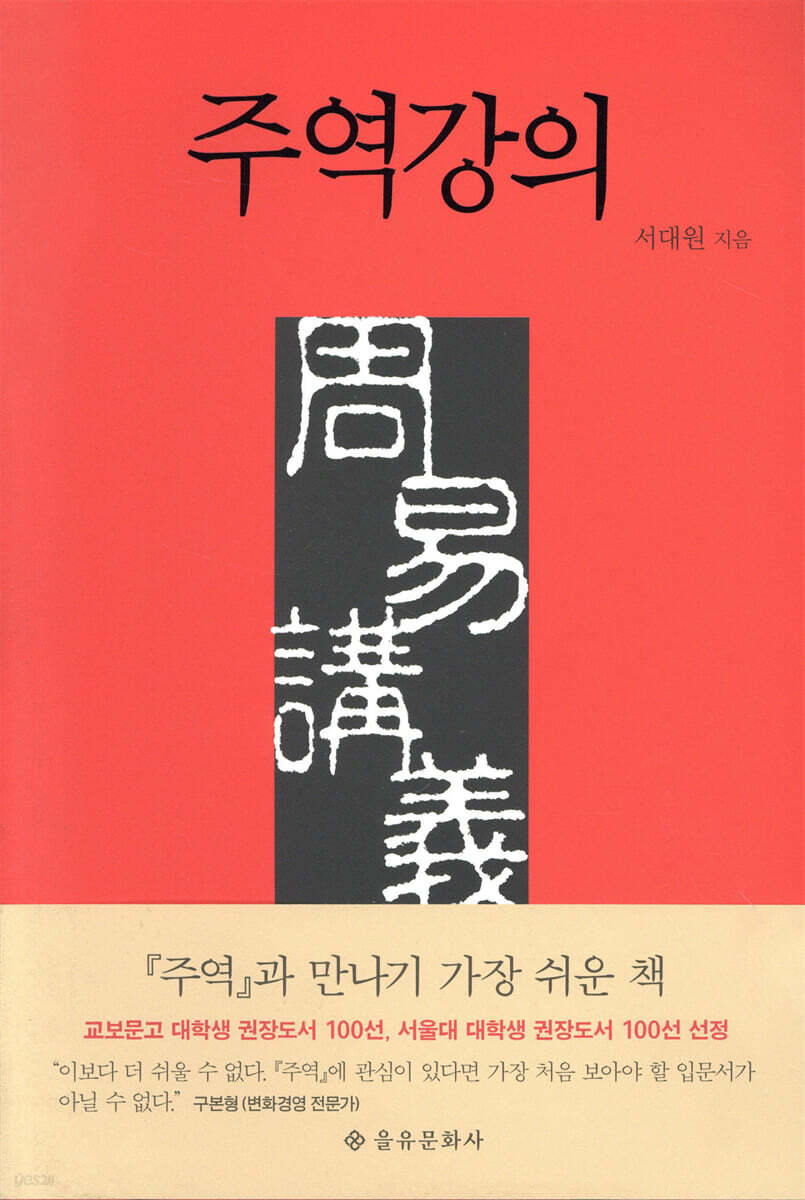
『The Book of Changes Lecture』 is a book in which the author, who has been working as a fortune teller in the Busan area for over 30 years, explains the core contents of 『The Book of Changes』 in the most concise and easy-to-understand way.
The Book of Changes, a treasure trove of Eastern wisdom that forms one of the Three Classics along with the Four Books of the Great Learning, the Doctrine of the Mean, the Analects of Confucius, and the Mencius, along with the Book of Songs and the Book of Documents, has suffered from misunderstandings and prejudice despite its fame.
This book, 『Lectures on the Book of Changes』, contains a counterargument to the misconception that it is difficult and the prejudice that it is often dismissed as fortune telling.
The Book of Changes consists of the 8 hexagrams (卦), 64 hexagrams, commentaries on the hexagrams (卦辭), hexagram comments (爻辭), and the Ten Wings (十翼) that Confucius added later. The 64 hexagrams in this book can be a sharp awakening to life, or a mirror to reflect on oneself and others.
Based on his long experience and insight, the author resolves numerous misunderstandings, prejudices, and questions surrounding the Book of Changes.
The Book of Changes, a treasure trove of Eastern wisdom that forms one of the Three Classics along with the Four Books of the Great Learning, the Doctrine of the Mean, the Analects of Confucius, and the Mencius, along with the Book of Songs and the Book of Documents, has suffered from misunderstandings and prejudice despite its fame.
This book, 『Lectures on the Book of Changes』, contains a counterargument to the misconception that it is difficult and the prejudice that it is often dismissed as fortune telling.
The Book of Changes consists of the 8 hexagrams (卦), 64 hexagrams, commentaries on the hexagrams (卦辭), hexagram comments (爻辭), and the Ten Wings (十翼) that Confucius added later. The 64 hexagrams in this book can be a sharp awakening to life, or a mirror to reflect on oneself and others.
Based on his long experience and insight, the author resolves numerous misunderstandings, prejudices, and questions surrounding the Book of Changes.
index
Recommended Reading: The Easiest Way to Encounter the Book of Changes / Koo Bon-hyung (Change Management Expert)
Introduction: A New Reading of the Book of Changes for Life
How to Read the Book of Changes
1. There is a time for everything - To those who ask about the providence of nature
2 Kun-Gon, the only principle for peace and prosperity, coexistence - to those who ask the way of humanity
3. When to Love and When to Wait - To a Young Man in Love
4 The Way of True Education - To Students, Teachers, and Parents
5. How to Wait for the Right Time - For Those Who Seek Opportunity
6. The physiology of the political world that politicians and litigators should know - For those who want to enter politics
7 The Way of the Teacher, War, and Soldiers - To Soldiers
8 The Alpha and Omega of True Sportsmanship - For Those Who Live in Competition
9 Wisdom of creating small happiness through small livestock and family - For those who dream of small success
10 Things to think about before making a bold statement - to the second-in-command
11 Tae-Tae: Prepare for difficult times and work hard - For those who dream of peace
12 Two Ways to Break Through the Blockage of Luck - For Those Who Feel Dark
13 Anyone can do politics - to politicians
14 Resume of the Rich and Wealthy - For those who dream of becoming a conglomerate
15 Only the strong can be humble - To those who want to learn humility
16. How to make and keep a plan for the future - For those who plan big things
17 The art of living for the people who are navigating difficult times - For those who like to stand out
18 The back alley of wealth and honor enjoyed alone - to the wealthy who are not respected
19 What is the essence of leadership? - To those who govern
20 Wisdom to Obtain Contemplation and Contemplation - For Those Who Seek Themselves
21 How to Fight Corruption and Injustice - To the Officials of the Judiciary
22. Beauty on the outside and inner charm - For young people who dream of beauty
23 Wisdom to endure the difficult times - For those who have fallen into the abyss of despair
24 Return to the people - To the politicians who ask about democracy
25 The truth and reality of the world of non-delusion and non-action - For those who dream of a world of non-action and non-naturalness
26 The Great Livestock Festival and the Conditions for Great Success - For Those Who Foster Ambition
27. Sharpen your mind in the secular world - To those who seek the Way
28 Wisdom to overcome great transgression and excess - For those who seek the same amount
29 Kangam - How to get out of the pit - For those who are in trouble
30 Finding Your Way in the Distance, Heat, and Confusion - For Youth Obsessed with Excessive Passion
31 The Reality of the Emotions of Love and Anxiety - To Those Who Only Obsess Over Reason
32 The Dialectic of Constant Change and Constancy - For Adults Who Are Afraid of Change
33 The Wisdom of Withdrawal and Resignation - To those who must resign
34 Great General - Where and how is strength used? - To those who are strong
35 Jin: Where does power come from? - To those who hold power
36 Ming Yi Ming, the art of living when things are not going well - for the wise men who have not had time
37 The Way of the Housewife - The Way of the Housewife, Responsible for Education and Household Finances - To the Women Who Lead the Household
38 Between Betrayal and Self-Reflection - To a Young Man Stuck in the Swamp
39 Wisdom of coexistence that overcomes hardships and difficulties - For those with broken legs
40. The art of living when luck begins to unravel - For those who are starting to do well
41 The Way of Investment that Always Profits - For Those Who Want to Invest
42 Conditions for Profit and Sustainable Profit - For Businessmen Pursuing Profit
43 History of Voting and Resistance - To the Oppressed People
44. Conditions for a wise encounter and marriage - For those seeking a partner
45 Wisdom of Leading the Crowd - For those who deal with the masses
46 The Seeds of Growth and Development - For the Young People Who Want to Prosper
47 Wisdom to escape from trouble and suffering - To neighbors in trouble
48 Well - Conditions for a Good Well - For Those Who Want to Win the Hearts of the People
49 The Right Path to Revolution and Change - For Those Who Dream of Reform
50 The Principle of Distribution Learned from Ding Ding and Cauldrons - For Those Who Ask About Fair Distribution
51 How to overcome the fear of earthquakes and nature - For those who are afraid of lightning
52 The Way of Intermission and Stopping - To those who have boarded the Chariot of Desire
53 Graduation, Marriage and a Woman's Life - For Women About to Get Married
54 The Truth and Lies of Marriage for Political Purposes - For Those Considering Marriage
55 The Road to Abundance and Prosperity - To the Farmers Praying for a Good Harvest
56 Travel and Travel Skills - For those who are planning to travel
57 Re-examining humility and humility - for those who lack humility
58 The Root of Joy and Joy - For Those Who Seek Pleasure
59 Wisdom to overcome the period of division and disintegration - To those who are scattered
60 Verses: Wisdom for Closing an Era - For Those Who Can't Tie a Knot
61 The Identity of Faith - To Those Who Seek Faith
62 The beauty of small excesses - for those who exaggerate too much
63 The leisure of those who have already crossed the river - to those who already have it
64 An adventure crossing the great river of the unsolved - for those who do not yet have it
The protagonist and the world sceneryㆍ1 Eumdosa!
The Protagonist and the World Scenes 2: The Chicken Thief Who Failed to Steal Love
The Book of Changes and the Worldly Scenes 3 The Clumsy Taoist
The Book of Changes and the World: 4 A Mechanist's Love for the Book of Changes (1)
The Book of Changes and the World: 5 A Mechanist's Love for the Book of Changes (2)
The Book of Changes and the World: 6 A Greengrocer's Mandate
The Book of Changes and the World Landscapeㆍ7 Are you interested in the Tao?
The Book of Changes and the World: 8 Realistic Teachings of the Book of Changes
The Book of Changes and the World Landscapesㆍ9 Sacrificial Stories
Introduction: A New Reading of the Book of Changes for Life
How to Read the Book of Changes
1. There is a time for everything - To those who ask about the providence of nature
2 Kun-Gon, the only principle for peace and prosperity, coexistence - to those who ask the way of humanity
3. When to Love and When to Wait - To a Young Man in Love
4 The Way of True Education - To Students, Teachers, and Parents
5. How to Wait for the Right Time - For Those Who Seek Opportunity
6. The physiology of the political world that politicians and litigators should know - For those who want to enter politics
7 The Way of the Teacher, War, and Soldiers - To Soldiers
8 The Alpha and Omega of True Sportsmanship - For Those Who Live in Competition
9 Wisdom of creating small happiness through small livestock and family - For those who dream of small success
10 Things to think about before making a bold statement - to the second-in-command
11 Tae-Tae: Prepare for difficult times and work hard - For those who dream of peace
12 Two Ways to Break Through the Blockage of Luck - For Those Who Feel Dark
13 Anyone can do politics - to politicians
14 Resume of the Rich and Wealthy - For those who dream of becoming a conglomerate
15 Only the strong can be humble - To those who want to learn humility
16. How to make and keep a plan for the future - For those who plan big things
17 The art of living for the people who are navigating difficult times - For those who like to stand out
18 The back alley of wealth and honor enjoyed alone - to the wealthy who are not respected
19 What is the essence of leadership? - To those who govern
20 Wisdom to Obtain Contemplation and Contemplation - For Those Who Seek Themselves
21 How to Fight Corruption and Injustice - To the Officials of the Judiciary
22. Beauty on the outside and inner charm - For young people who dream of beauty
23 Wisdom to endure the difficult times - For those who have fallen into the abyss of despair
24 Return to the people - To the politicians who ask about democracy
25 The truth and reality of the world of non-delusion and non-action - For those who dream of a world of non-action and non-naturalness
26 The Great Livestock Festival and the Conditions for Great Success - For Those Who Foster Ambition
27. Sharpen your mind in the secular world - To those who seek the Way
28 Wisdom to overcome great transgression and excess - For those who seek the same amount
29 Kangam - How to get out of the pit - For those who are in trouble
30 Finding Your Way in the Distance, Heat, and Confusion - For Youth Obsessed with Excessive Passion
31 The Reality of the Emotions of Love and Anxiety - To Those Who Only Obsess Over Reason
32 The Dialectic of Constant Change and Constancy - For Adults Who Are Afraid of Change
33 The Wisdom of Withdrawal and Resignation - To those who must resign
34 Great General - Where and how is strength used? - To those who are strong
35 Jin: Where does power come from? - To those who hold power
36 Ming Yi Ming, the art of living when things are not going well - for the wise men who have not had time
37 The Way of the Housewife - The Way of the Housewife, Responsible for Education and Household Finances - To the Women Who Lead the Household
38 Between Betrayal and Self-Reflection - To a Young Man Stuck in the Swamp
39 Wisdom of coexistence that overcomes hardships and difficulties - For those with broken legs
40. The art of living when luck begins to unravel - For those who are starting to do well
41 The Way of Investment that Always Profits - For Those Who Want to Invest
42 Conditions for Profit and Sustainable Profit - For Businessmen Pursuing Profit
43 History of Voting and Resistance - To the Oppressed People
44. Conditions for a wise encounter and marriage - For those seeking a partner
45 Wisdom of Leading the Crowd - For those who deal with the masses
46 The Seeds of Growth and Development - For the Young People Who Want to Prosper
47 Wisdom to escape from trouble and suffering - To neighbors in trouble
48 Well - Conditions for a Good Well - For Those Who Want to Win the Hearts of the People
49 The Right Path to Revolution and Change - For Those Who Dream of Reform
50 The Principle of Distribution Learned from Ding Ding and Cauldrons - For Those Who Ask About Fair Distribution
51 How to overcome the fear of earthquakes and nature - For those who are afraid of lightning
52 The Way of Intermission and Stopping - To those who have boarded the Chariot of Desire
53 Graduation, Marriage and a Woman's Life - For Women About to Get Married
54 The Truth and Lies of Marriage for Political Purposes - For Those Considering Marriage
55 The Road to Abundance and Prosperity - To the Farmers Praying for a Good Harvest
56 Travel and Travel Skills - For those who are planning to travel
57 Re-examining humility and humility - for those who lack humility
58 The Root of Joy and Joy - For Those Who Seek Pleasure
59 Wisdom to overcome the period of division and disintegration - To those who are scattered
60 Verses: Wisdom for Closing an Era - For Those Who Can't Tie a Knot
61 The Identity of Faith - To Those Who Seek Faith
62 The beauty of small excesses - for those who exaggerate too much
63 The leisure of those who have already crossed the river - to those who already have it
64 An adventure crossing the great river of the unsolved - for those who do not yet have it
The protagonist and the world sceneryㆍ1 Eumdosa!
The Protagonist and the World Scenes 2: The Chicken Thief Who Failed to Steal Love
The Book of Changes and the Worldly Scenes 3 The Clumsy Taoist
The Book of Changes and the World: 4 A Mechanist's Love for the Book of Changes (1)
The Book of Changes and the World: 5 A Mechanist's Love for the Book of Changes (2)
The Book of Changes and the World: 6 A Greengrocer's Mandate
The Book of Changes and the World Landscapeㆍ7 Are you interested in the Tao?
The Book of Changes and the World: 8 Realistic Teachings of the Book of Changes
The Book of Changes and the World Landscapesㆍ9 Sacrificial Stories
Publisher's Review
The Book of Changes: Misunderstandings and Truths
The Book of Changes has been praised as the greatest classic for over 5,000 years, and has been studied by countless scholars. It is also famous for the story of Confucius reading it so engrossedly that its leather strap broke three times.
The Book of Changes reflects the diverse lifestyles of the Zhou Dynasty since the reign of King Wen, and has changed along with the flow of history. There are various theories about its author.
The Book of Changes consists of the 8 hexagrams (卦), 64 hexagrams, commentaries on the hexagrams (卦辭), hexagram comments (爻辭), and the Ten Wings (十翼) that Confucius is said to have added later.
The brick-like hexagrams and the few-letter hexagrams in the Book of Changes are as difficult to decipher as symbols, and the diverse interpretations of the Book of Changes are also due to this high degree of symbolism.
The easiest and most fun guide to the 『Book of Changes』
As the author says, “My goal with this book is… I hope that everyone can read the difficult 『Book of Changes』 that even most psychics give up on reading, and easily obtain practical and useful wisdom that will help them in difficult moments.” This book is aimed at the Hangul generation, faithfully interpreting the Chinese characters in the original text and repeatedly explaining the original text in detail to make it easy to understand.
The interpretation, which focuses solely on the text, excluding the hexagrams, is an original and rich interpretation that broadens the scope of contact with reality, enabling easy and clear understanding.
Seo Dae-won's interpretation of the Book of Changes is groundbreaking and differs from that of existing scholars.
This book covers only the titles and main text of each chapter, excluding the hexagrams and ten wings for the 8 hexagrams and 64 hexagrams.
The author consistently maintains in this book the position that “the essence of the Book of Changes is not divination, and the Book of Changes is not a book of divination,” which is truly ironic considering that it is a conclusion he has reached after working as a fortune teller for over 30 years.
This is because I believe that the true nature of the Book of Changes is revealed when the hexagrams are excluded.
When we are not confined by the hexagrams, that is, when we read the Book of Changes as “a book of philosophy, a book of culture, and a book of practical wisdom on life,” without approaching each hexagram individually or seeking a method of obtaining hexagrams from them, we can encounter the concrete and rich world of the Book of Changes.
However, this does not mean that the author denies or devalues the 'Gwae'.
What he proposes is a methodology for ordinary people to easily approach the Book of Changes and realize its rich world in reality, and it is a proposal to dismantle the existing method and read it backwards.
In this way, 『The Book of Changes Lectures』 overcomes the limitations and errors of existing commentaries and opens a path for easy access to 『The Book of Changes』.
A book on life that emphasizes practical wisdom
In 『Lectures on the Book of Changes』, the author demonstrates a true example of classic reading with clear, simple, yet profound insights that lead from ‘reading’ to ‘practice.’
As an example, the author's interpretation of 'Hyeok (革)', which deals with 'change' among the 64 hexagrams of the Book of Changes, a book of change (p.
Let's look at 513).
“A revolution is one in which there are no regrets [悔亡] and faith [有孚] when people who are past the time for revolution, when they liquidate outdated systems and practices, and wrong customs and habits, can complete any revolution without fortune telling [未占].”
By analyzing the signs and processes of change to determine who should lead the reform and how to achieve it, we impart the wisdom to complete healthy and meaningful reform.
This has significant implications for our society, which is facing new political and social changes in 2008.
The author also points out the core of the Book of Changes that no one has clearly explained, saying, “Although the Book of Changes clearly affirms and highly values the hopeless life, it pays more attention to and applauds the sweat, effort, and courage of ordinary people,” and “This is the biggest difference from the thoughts of Taoism, Confucius, and Mencius, and Buddhism.”
While the Book of Changes is based on the universal moral principles and profound philosophical background of Eastern philosophy, it goes beyond this and has taken root as a guidebook that advises on the specific lives of humans and helps ordinary people solve real-world problems.
Interpretations of texts vary from person to person and from era to era, but the author's bold interpretation, which seeks to convey the essence of the Book of Changes to many readers today, is worthy of praise.
The author says that one should build one's life with the wisdom one has learned from the classics rather than relying on the secrets of immediate gain.
This is the intention of this book, which seeks to reinvent the Book of Changes as a book of philosophy, wisdom, and a guide to everyday life.
Through Seo Dae-won's "Lectures on the Book of Changes," we can understand why, among many classics, we should read the "Book of Changes" in particular, and why its value shines even brighter in complex modern society.
The Book of Changes has been praised as the greatest classic for over 5,000 years, and has been studied by countless scholars. It is also famous for the story of Confucius reading it so engrossedly that its leather strap broke three times.
The Book of Changes reflects the diverse lifestyles of the Zhou Dynasty since the reign of King Wen, and has changed along with the flow of history. There are various theories about its author.
The Book of Changes consists of the 8 hexagrams (卦), 64 hexagrams, commentaries on the hexagrams (卦辭), hexagram comments (爻辭), and the Ten Wings (十翼) that Confucius is said to have added later.
The brick-like hexagrams and the few-letter hexagrams in the Book of Changes are as difficult to decipher as symbols, and the diverse interpretations of the Book of Changes are also due to this high degree of symbolism.
The easiest and most fun guide to the 『Book of Changes』
As the author says, “My goal with this book is… I hope that everyone can read the difficult 『Book of Changes』 that even most psychics give up on reading, and easily obtain practical and useful wisdom that will help them in difficult moments.” This book is aimed at the Hangul generation, faithfully interpreting the Chinese characters in the original text and repeatedly explaining the original text in detail to make it easy to understand.
The interpretation, which focuses solely on the text, excluding the hexagrams, is an original and rich interpretation that broadens the scope of contact with reality, enabling easy and clear understanding.
Seo Dae-won's interpretation of the Book of Changes is groundbreaking and differs from that of existing scholars.
This book covers only the titles and main text of each chapter, excluding the hexagrams and ten wings for the 8 hexagrams and 64 hexagrams.
The author consistently maintains in this book the position that “the essence of the Book of Changes is not divination, and the Book of Changes is not a book of divination,” which is truly ironic considering that it is a conclusion he has reached after working as a fortune teller for over 30 years.
This is because I believe that the true nature of the Book of Changes is revealed when the hexagrams are excluded.
When we are not confined by the hexagrams, that is, when we read the Book of Changes as “a book of philosophy, a book of culture, and a book of practical wisdom on life,” without approaching each hexagram individually or seeking a method of obtaining hexagrams from them, we can encounter the concrete and rich world of the Book of Changes.
However, this does not mean that the author denies or devalues the 'Gwae'.
What he proposes is a methodology for ordinary people to easily approach the Book of Changes and realize its rich world in reality, and it is a proposal to dismantle the existing method and read it backwards.
In this way, 『The Book of Changes Lectures』 overcomes the limitations and errors of existing commentaries and opens a path for easy access to 『The Book of Changes』.
A book on life that emphasizes practical wisdom
In 『Lectures on the Book of Changes』, the author demonstrates a true example of classic reading with clear, simple, yet profound insights that lead from ‘reading’ to ‘practice.’
As an example, the author's interpretation of 'Hyeok (革)', which deals with 'change' among the 64 hexagrams of the Book of Changes, a book of change (p.
Let's look at 513).
“A revolution is one in which there are no regrets [悔亡] and faith [有孚] when people who are past the time for revolution, when they liquidate outdated systems and practices, and wrong customs and habits, can complete any revolution without fortune telling [未占].”
By analyzing the signs and processes of change to determine who should lead the reform and how to achieve it, we impart the wisdom to complete healthy and meaningful reform.
This has significant implications for our society, which is facing new political and social changes in 2008.
The author also points out the core of the Book of Changes that no one has clearly explained, saying, “Although the Book of Changes clearly affirms and highly values the hopeless life, it pays more attention to and applauds the sweat, effort, and courage of ordinary people,” and “This is the biggest difference from the thoughts of Taoism, Confucius, and Mencius, and Buddhism.”
While the Book of Changes is based on the universal moral principles and profound philosophical background of Eastern philosophy, it goes beyond this and has taken root as a guidebook that advises on the specific lives of humans and helps ordinary people solve real-world problems.
Interpretations of texts vary from person to person and from era to era, but the author's bold interpretation, which seeks to convey the essence of the Book of Changes to many readers today, is worthy of praise.
The author says that one should build one's life with the wisdom one has learned from the classics rather than relying on the secrets of immediate gain.
This is the intention of this book, which seeks to reinvent the Book of Changes as a book of philosophy, wisdom, and a guide to everyday life.
Through Seo Dae-won's "Lectures on the Book of Changes," we can understand why, among many classics, we should read the "Book of Changes" in particular, and why its value shines even brighter in complex modern society.
GOODS SPECIFICS
- Date of issue: January 25, 2008
- Page count, weight, size: 656 pages | 624g | 153*224*35mm
- ISBN13: 9788932471334
- ISBN10: 8932471339
You may also like
카테고리
korean


korean

![GQ KOREA Mark (Monthly): December [2025]](http://librairie.coreenne.fr/cdn/shop/files/8ef265dbbfbf186523ed75ba7319009d.jpg?v=1765340328&width=3840)


