

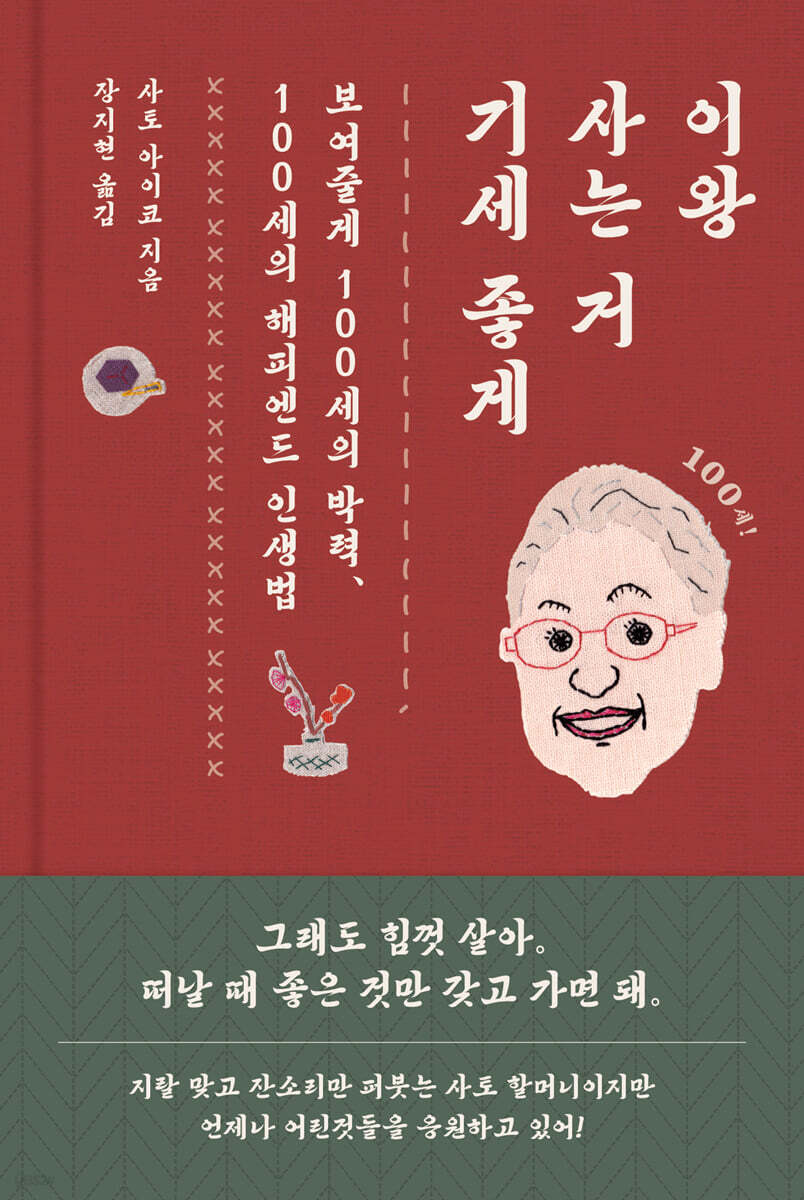
Since I'm already living, I'll live it up
 |
Description
Book Introduction
“Still, live with all your might.
“When you leave, take only the good things with you.”
This is an essay by Aiko Sato, a Japanese novelist and centenarian who debuted in her forties and won the Naoki Prize.
These are articles from various eras that were published in the monthly magazine [PHP] from the 1970s to 2016, and they evoke a wide range of insights and empathy that are still relevant today.
Her unconventional and humorous perspective on life and humanity, and her bold and sharp writing style, provide timeless reading pleasure and food for thought.
He lightly shares his own turbulent experiences and tells the story of how to live your life to the fullest, feeling all the sadness, pain, happiness, and joy, and that you should take only the good things with you.
“When you leave, take only the good things with you.”
This is an essay by Aiko Sato, a Japanese novelist and centenarian who debuted in her forties and won the Naoki Prize.
These are articles from various eras that were published in the monthly magazine [PHP] from the 1970s to 2016, and they evoke a wide range of insights and empathy that are still relevant today.
Her unconventional and humorous perspective on life and humanity, and her bold and sharp writing style, provide timeless reading pleasure and food for thought.
He lightly shares his own turbulent experiences and tells the story of how to live your life to the fullest, feeling all the sadness, pain, happiness, and joy, and that you should take only the good things with you.
- You can preview some of the book's contents.
Preview
index
1 To build up the toughness of life
Imagination is important
A matter of temperament
Sketch of Happiness
In my case
Face hardship
2 How to Become an Attractive Adult
Without telling you to do this or that
A man can cry
The person I like is
Be strong
Youth is immaturity
3. Just remember the beautiful things in life.
Live optimistically
Mom's habit of speaking
Life is just a beautiful thing to remember
Even objects have feelings
I hope that my life will be one where I can say, 'Ah, that was fun.'
4. Happiness Today, Happiness in the Past | A Conversation with Shusaku Endo
What is unhappiness and what is happiness?
The secret to always being happy when you lose
An era in which we need lessons for death
Imagination is important
A matter of temperament
Sketch of Happiness
In my case
Face hardship
2 How to Become an Attractive Adult
Without telling you to do this or that
A man can cry
The person I like is
Be strong
Youth is immaturity
3. Just remember the beautiful things in life.
Live optimistically
Mom's habit of speaking
Life is just a beautiful thing to remember
Even objects have feelings
I hope that my life will be one where I can say, 'Ah, that was fun.'
4. Happiness Today, Happiness in the Past | A Conversation with Shusaku Endo
What is unhappiness and what is happiness?
The secret to always being happy when you lose
An era in which we need lessons for death
Detailed image
.jpg)
Into the book
I am a person with many flaws. I am not only uncooperative, but also annoying, quick to anger, indiscriminate in my speech, blunt, disregarding common sense, and impulsive.
Our editorial department asked me to write about what it means to have a personality that allows you to get along well with people.
Perhaps the editorial department intentionally asked me to do this because I'm not good at interacting with people, so they might be giving me a chance to reflect.
--- From "Imagination is Important"
Sketches that imitate others often end up not going according to plan and are completed incorrectly.
In such a case, wouldn't it be impossible to take out your anger on your child, become disillusioned with your husband, cheat on him, or try to get a divorce?
In the first place, I must create the blueprint for happiness.
That way, at least we can prevent an unhappy life.
--- From "The Sketch of Happiness"
Born in 1893, my mother was inspired by the women's liberation movement of the women's literary group Seitosha and dreamed of becoming an actress, dreaming of women's independence. However, her dream was frustrated by her love affair with my father, and she ended up getting married.
Ever since I was little, my mother would always tell me how meaningless and useless marriage is for women.
“Something like marriage.”
My mother often said this as if she was vomiting.
The word 'same thing' seemed to hold decades of resentment.
--- From "My Case"
“Mr. Sato, if you try to run away when things are tough, it will only get tougher.
“It is easier to accept hardship rather than avoid it.”
Now that I think about it, I think those words shaped my life from then on.
I did as the teacher told me and 'accepted it without running away'.
I paid off my husband's debts to the best of my ability.
I decided to live actively and courageously.
Then, I received the Naoki Prize as if it were a reward, and was able to live as a full-time writer.
--- From "Facing Hardship"
Nowadays, if a man is strong and respectable, he doesn't care about his salary or appearance.
It's been a long time since we used to despise men who depended on their wives for support and called them "shuttermen."
'Shutterman who does housework, great! A man among men.
I want a husband like that too!'
Our editorial department asked me to write about what it means to have a personality that allows you to get along well with people.
Perhaps the editorial department intentionally asked me to do this because I'm not good at interacting with people, so they might be giving me a chance to reflect.
--- From "Imagination is Important"
Sketches that imitate others often end up not going according to plan and are completed incorrectly.
In such a case, wouldn't it be impossible to take out your anger on your child, become disillusioned with your husband, cheat on him, or try to get a divorce?
In the first place, I must create the blueprint for happiness.
That way, at least we can prevent an unhappy life.
--- From "The Sketch of Happiness"
Born in 1893, my mother was inspired by the women's liberation movement of the women's literary group Seitosha and dreamed of becoming an actress, dreaming of women's independence. However, her dream was frustrated by her love affair with my father, and she ended up getting married.
Ever since I was little, my mother would always tell me how meaningless and useless marriage is for women.
“Something like marriage.”
My mother often said this as if she was vomiting.
The word 'same thing' seemed to hold decades of resentment.
--- From "My Case"
“Mr. Sato, if you try to run away when things are tough, it will only get tougher.
“It is easier to accept hardship rather than avoid it.”
Now that I think about it, I think those words shaped my life from then on.
I did as the teacher told me and 'accepted it without running away'.
I paid off my husband's debts to the best of my ability.
I decided to live actively and courageously.
Then, I received the Naoki Prize as if it were a reward, and was able to live as a full-time writer.
--- From "Facing Hardship"
Nowadays, if a man is strong and respectable, he doesn't care about his salary or appearance.
It's been a long time since we used to despise men who depended on their wives for support and called them "shuttermen."
'Shutterman who does housework, great! A man among men.
I want a husband like that too!'
--- From "Without Saying This or That"
Publisher's Review
A powerful message of encouragement from 100-year-old Grandma Sato to the "young ones" who are needlessly anxious.
“A little anxiety, a little pain
And there is a pretty decent amount of happiness in our lives.”
Sato Aiko is a grandmother writer who is truly over 100 years old.
He is a very stubborn and energetic old man who talks about himself as someone who gets angry and gets excited when he gets angry, and he speaks quite directly.
In fact, the reason I became a novelist was thanks to my mother's advice, which said, "If you go into a company with that kind of personality, you'll be a nuisance to others, so it would be better to become a novelist who can work alone."
Influenced by his father, who was a writer, he showed considerable talent for writing, debuted after he turned forty, won the Naoki Prize, and is now a representative novelist in the Japanese literary world.
The essay "90, What's So Special About It?" (九十?。何がめでたい, not published in Korea), published after the age of 90, became a bestseller, beating out Haruki Murakami's novel "Killing Commendatore," published in the same year, and sold over 1 million copies in Japan.
"Since I'm already living, I'll live it up" is a collection of essays serialized in the Japanese monthly magazine [PHP] from the 1970s to 2016. It is an essay that contains the wisdom of a vibrant life along with the motto that has supported his life, "You just have to remember the beautiful things in life."
At the end of the book, there is a conversation with the author's longtime literary colleague, Japanese novelist Shusaku Endo, which provides a glimpse into the two elderly authors' shared perspectives on life.
I feel sad, sad, happy and joyful things
I hope to live a life where I can say, “Ah, that was fun.”
As a human being who has lived for a century, Aiko Sato shows in this book how she has embraced the joys and sorrows of life.
The author has lived a life full of ups and downs, including two marriages, a time when she had to shoulder her ex-husband's debt alone, a youth in turmoil amid war and disaster, and the death of a family member, encouraging herself that "everything is a practice."
Her often fiery temper and tendency to charge forward rather than run away also played a part, but it was her humor and positivity that kept her going.
This book is also filled with Sato Aiko's unique sensibility, wit, and cheerful way of speaking, making it a very enjoyable read.
And he conveys his honest feelings about growing older, how to deal with conflicts with family, the futility of life, the strength to endure sadness, and stories of old age living alone, through his own episodes and reflections on them.
The author's upright character is also revealed in the fact that he does not necessarily romanticize those times.
The words, "There were times when I wanted to die because the sadness was so great, but I persevered until the very end and was finally able to smile," go beyond simple consolation and are words of trust that only someone who has lived a long life can convey.
The 'tsundere' nagging of Grandma Sato, the protagonist of timeless thoughts, actions, and unconventional ideas, will become a 'life guide' that offers a warm hand on loss, courage, recovery, and living.
“A little anxiety, a little pain
And there is a pretty decent amount of happiness in our lives.”
Sato Aiko is a grandmother writer who is truly over 100 years old.
He is a very stubborn and energetic old man who talks about himself as someone who gets angry and gets excited when he gets angry, and he speaks quite directly.
In fact, the reason I became a novelist was thanks to my mother's advice, which said, "If you go into a company with that kind of personality, you'll be a nuisance to others, so it would be better to become a novelist who can work alone."
Influenced by his father, who was a writer, he showed considerable talent for writing, debuted after he turned forty, won the Naoki Prize, and is now a representative novelist in the Japanese literary world.
The essay "90, What's So Special About It?" (九十?。何がめでたい, not published in Korea), published after the age of 90, became a bestseller, beating out Haruki Murakami's novel "Killing Commendatore," published in the same year, and sold over 1 million copies in Japan.
"Since I'm already living, I'll live it up" is a collection of essays serialized in the Japanese monthly magazine [PHP] from the 1970s to 2016. It is an essay that contains the wisdom of a vibrant life along with the motto that has supported his life, "You just have to remember the beautiful things in life."
At the end of the book, there is a conversation with the author's longtime literary colleague, Japanese novelist Shusaku Endo, which provides a glimpse into the two elderly authors' shared perspectives on life.
I feel sad, sad, happy and joyful things
I hope to live a life where I can say, “Ah, that was fun.”
As a human being who has lived for a century, Aiko Sato shows in this book how she has embraced the joys and sorrows of life.
The author has lived a life full of ups and downs, including two marriages, a time when she had to shoulder her ex-husband's debt alone, a youth in turmoil amid war and disaster, and the death of a family member, encouraging herself that "everything is a practice."
Her often fiery temper and tendency to charge forward rather than run away also played a part, but it was her humor and positivity that kept her going.
This book is also filled with Sato Aiko's unique sensibility, wit, and cheerful way of speaking, making it a very enjoyable read.
And he conveys his honest feelings about growing older, how to deal with conflicts with family, the futility of life, the strength to endure sadness, and stories of old age living alone, through his own episodes and reflections on them.
The author's upright character is also revealed in the fact that he does not necessarily romanticize those times.
The words, "There were times when I wanted to die because the sadness was so great, but I persevered until the very end and was finally able to smile," go beyond simple consolation and are words of trust that only someone who has lived a long life can convey.
The 'tsundere' nagging of Grandma Sato, the protagonist of timeless thoughts, actions, and unconventional ideas, will become a 'life guide' that offers a warm hand on loss, courage, recovery, and living.
GOODS SPECIFICS
- Date of issue: April 2, 2025
- Format: Hardcover book binding method guide
- Page count, weight, size: 176 pages | 238g | 115*172*15mm
- ISBN13: 9791171713790
- ISBN10: 1171713797
You may also like
카테고리
korean


korean

![GQ KOREA Mark (Monthly): December [2025]](http://librairie.coreenne.fr/cdn/shop/files/8ef265dbbfbf186523ed75ba7319009d.jpg?v=1765340328&width=3840)


