

Homie
 |
Description
Book Introduction
In early summer, when the zinnia, novelist Park Wan-seo's favorite flower, is in bloom, the zinnia edition commemorating the 15th anniversary of the publication of Park Wan-seo's prose collection, "Homie," has been published.
Since its first publication in 2007, it has been consistently loved, and after the teacher passed away in 2011, a revised edition was published in 2014 with drawings by the eldest daughter, author Ho Won-sook, who remembered her mother in Park Wan-seo's garden, once again conveying the longing to readers.
The third edition, published this year as a Baekilhong edition, once again contains only the writings of novelist Park Wan-seo, recapturing the feel of the first edition.
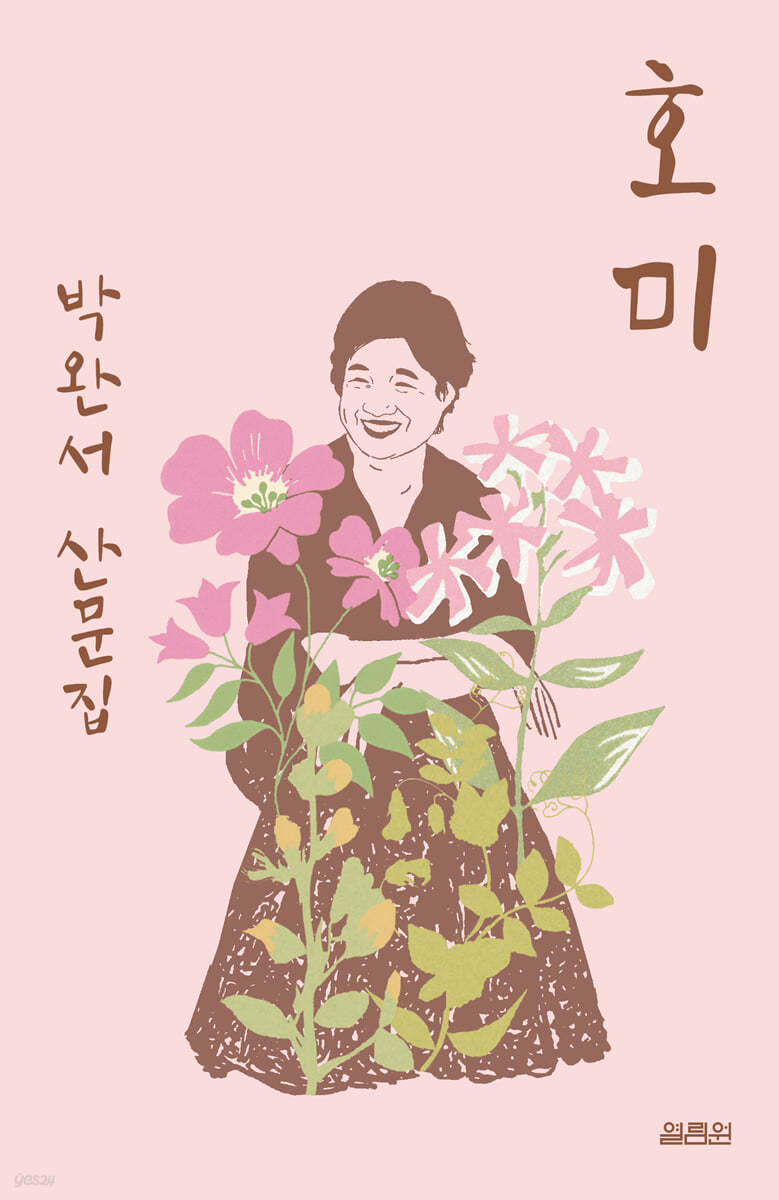
The cover is decorated like a bright flower, and the text is decorated like fresh grass, just like the author's simple and warm 'Archiul Yellow House' garden.
As the early summer night approaches, it is time to meet Park Wan-seo's gift-like sentences again.
Part 1, 'Talking to Flowers and Trees', tells the story of the small happinesses that brighten up everyday life that the author discovered while cultivating his own small and special garden after moving to Archiul away from the hustle and bustle of Seoul. Part 2, 'Longing Silence', tells the story of the author's unfading humanism and warm hope for the next day amidst the great and small hardships he experienced throughout his life. Part 3, 'He Looked at Me', tells the story of his religious enlightenment and gratitude for the precious moments that sustain life. Part 4, 'A Letter to My Daughter', tells the story of the trust and affection he had for the author Ho Won-sook, and the lives of the adults who lived as extremely generous friends.
Since its first publication in 2007, it has been consistently loved, and after the teacher passed away in 2011, a revised edition was published in 2014 with drawings by the eldest daughter, author Ho Won-sook, who remembered her mother in Park Wan-seo's garden, once again conveying the longing to readers.
The third edition, published this year as a Baekilhong edition, once again contains only the writings of novelist Park Wan-seo, recapturing the feel of the first edition.
The cover is decorated like a bright flower, and the text is decorated like fresh grass, just like the author's simple and warm 'Archiul Yellow House' garden.
As the early summer night approaches, it is time to meet Park Wan-seo's gift-like sentences again.
Part 1, 'Talking to Flowers and Trees', tells the story of the small happinesses that brighten up everyday life that the author discovered while cultivating his own small and special garden after moving to Archiul away from the hustle and bustle of Seoul. Part 2, 'Longing Silence', tells the story of the author's unfading humanism and warm hope for the next day amidst the great and small hardships he experienced throughout his life. Part 3, 'He Looked at Me', tells the story of his religious enlightenment and gratitude for the precious moments that sustain life. Part 4, 'A Letter to My Daughter', tells the story of the trust and affection he had for the author Ho Won-sook, and the lives of the adults who lived as extremely generous friends.
- You can preview some of the book's contents.
Preview
index
Talking to flowers and trees
Talking to Flowers and Trees | Looking back, everything nature did was right | Everything passes | Late Autumn | Flower Attendance Book 1 | Flower Attendance Book 2 | Beginning and End | In Praise of the Hoe | In Praise of the Dirt Road | Mountains and Trees | Hollyhock You | College Entrance Exams | Two Friends | If We Were Each Other's Helpers
Longing silence
The longest August of my life | The longing silence | What kind of person am I | The difficulty of doing good things | A wild dream | An unlucky day | Frozen sweet potatoes | Listen, thinking it's senility | The power of words | The 38th parallel I crossed | A pathetic way to spend my vacation | Progress with a topknot | A road floating in the air | Early summer's foolish writing | A daughter's father, a son's mother | I can't stop | Deeply moved
He looked back at me
Who is he? | Food story | Colonial era in my novel | He looked back at me
A letter to my daughter
I'll Open the Door | A Portrait of My Mother | My Mother's Last Humor | An Ordinary Oddity | A High-Ranking Father | A Blessed Person | In Memory of Mr. Kim Sang-ok | Farewell to Mr. Lee Mun-gu | A Letter to My Daughter
Author's Note
Talking to Flowers and Trees | Looking back, everything nature did was right | Everything passes | Late Autumn | Flower Attendance Book 1 | Flower Attendance Book 2 | Beginning and End | In Praise of the Hoe | In Praise of the Dirt Road | Mountains and Trees | Hollyhock You | College Entrance Exams | Two Friends | If We Were Each Other's Helpers
Longing silence
The longest August of my life | The longing silence | What kind of person am I | The difficulty of doing good things | A wild dream | An unlucky day | Frozen sweet potatoes | Listen, thinking it's senility | The power of words | The 38th parallel I crossed | A pathetic way to spend my vacation | Progress with a topknot | A road floating in the air | Early summer's foolish writing | A daughter's father, a son's mother | I can't stop | Deeply moved
He looked back at me
Who is he? | Food story | Colonial era in my novel | He looked back at me
A letter to my daughter
I'll Open the Door | A Portrait of My Mother | My Mother's Last Humor | An Ordinary Oddity | A High-Ranking Father | A Blessed Person | In Memory of Mr. Kim Sang-ok | Farewell to Mr. Lee Mun-gu | A Letter to My Daughter
Author's Note
Into the book
He kept telling me to please bloom next year, saying that he was sorry for trying to kill me and for hating my flowers.
The following year, although not very pleasant, a few flowers bloomed, and last spring, more flowers bloomed.
It looks like it will bloom more abundantly next spring.
I see countless fluffy flower buds proudly preparing to bloom, as if they were already there.
So these days I talk to my magnolia tree too.
Thank you for forgiving me, and thank you for making me dream of a bright spring in this bitter cold.
--- p.14
Just because the flowers in my yard listen to me, I don't make unreasonable demands, such as asking yellow flowers to bloom red, or asking flowers that only bloom in the evening, like daylilies, to bloom all day.
Perhaps not making unreasonable demands is the secret to taming flowers into listening to me.
No, if they knew that I thought I had tamed the flowers and trees, they would probably laugh and get angry.
I should correct myself by saying that they tamed me.
--- p.15
There is no such anxiety in the happiness of affirming the order of nature and conforming to it.
No matter how much snowstorms there are in April, there is no need to worry that spring will not come.
Even whims are part of the natural order and do not break the rules.
What we must never give up learning until the day we die is how to preserve the natural order of things and human affairs.
I want to die naturally, like a ripe fruit falling or being picked by someone.
--- p.22
I thought that even if I didn't buy it for myself, there would be many people who would buy it for me.
But that wasn't it.
They closed down due to financial difficulties.
If I really loved Jongro Bookstore, shouldn't I have bought it even though it was a bit inconvenient?
The thought that someone else would do it if not me made me lose what I loved.
Is it only bookstores that have been lost due to lack of attention?
Could it be that we miss out on places, buildings, and even loved ones that hold memories because of our indifference, believing they will always be there?
--- p.75
The seasonal disease that comes back every June is, of course, the Korean War.
Because at that time, I was sadly twenty years old.
Alas, the tender age of 20, the age most prone to being branded with both blessings and curses... ... Recently, I went to a concert by a young musician in his early 20s and applauded his outstanding performance, experiencing a joy bordering on pain.
Perhaps the surprise and happiness that genius could blossom so beautifully at the age of twenty was painful because it was compared to my miserable twenty-year-old self.
--- p.139~140
The reason why it is important for friends, lovers, or parents and children to pause and pretend to dust off their collars or backs before parting is not because the dust is actually removed, but because it can convey warmth, softness, and a kind heart that wishes for the back of the loved one to be beautiful, even in a seemingly casual gesture.
The following year, although not very pleasant, a few flowers bloomed, and last spring, more flowers bloomed.
It looks like it will bloom more abundantly next spring.
I see countless fluffy flower buds proudly preparing to bloom, as if they were already there.
So these days I talk to my magnolia tree too.
Thank you for forgiving me, and thank you for making me dream of a bright spring in this bitter cold.
--- p.14
Just because the flowers in my yard listen to me, I don't make unreasonable demands, such as asking yellow flowers to bloom red, or asking flowers that only bloom in the evening, like daylilies, to bloom all day.
Perhaps not making unreasonable demands is the secret to taming flowers into listening to me.
No, if they knew that I thought I had tamed the flowers and trees, they would probably laugh and get angry.
I should correct myself by saying that they tamed me.
--- p.15
There is no such anxiety in the happiness of affirming the order of nature and conforming to it.
No matter how much snowstorms there are in April, there is no need to worry that spring will not come.
Even whims are part of the natural order and do not break the rules.
What we must never give up learning until the day we die is how to preserve the natural order of things and human affairs.
I want to die naturally, like a ripe fruit falling or being picked by someone.
--- p.22
I thought that even if I didn't buy it for myself, there would be many people who would buy it for me.
But that wasn't it.
They closed down due to financial difficulties.
If I really loved Jongro Bookstore, shouldn't I have bought it even though it was a bit inconvenient?
The thought that someone else would do it if not me made me lose what I loved.
Is it only bookstores that have been lost due to lack of attention?
Could it be that we miss out on places, buildings, and even loved ones that hold memories because of our indifference, believing they will always be there?
--- p.75
The seasonal disease that comes back every June is, of course, the Korean War.
Because at that time, I was sadly twenty years old.
Alas, the tender age of 20, the age most prone to being branded with both blessings and curses... ... Recently, I went to a concert by a young musician in his early 20s and applauded his outstanding performance, experiencing a joy bordering on pain.
Perhaps the surprise and happiness that genius could blossom so beautifully at the age of twenty was painful because it was compared to my miserable twenty-year-old self.
--- p.139~140
The reason why it is important for friends, lovers, or parents and children to pause and pretend to dust off their collars or backs before parting is not because the dust is actually removed, but because it can convey warmth, softness, and a kind heart that wishes for the back of the loved one to be beautiful, even in a seemingly casual gesture.
--- p.253~254
Publisher's Review
The Special Garden of the Beloved Author, Park Wan-seo
Caring for life with constant affection like flowers and trees
I would be delighted to share with my readers my love and appreciation for the natural order and the little things within it, which fill me with awe and joy every day.
- From the author's note
"Home" is a collection of essays that captures the simple and affectionate life of Park Wan-seo in the "Achiul Yellow House," where she spent the last 13 years of her life until her death in 2011 at the age of 80.
He lived in that house until his late 60s or early 70s.
What kind of enlightenment did Park Wan-seo sow and reap in that very time and space?
The capricious but unwavering order of nature, the small and insignificant yet wondrous lives… … .
As the author says, “As I grew older, I began to yearn for kind, warm, and comforting writing without even realizing it,” the book is filled with the gentle warmth that soothes a weary life.
“The sound of trees drawing water, the sound of countless seeds in the soil trembling, trying to get out first.”
Even when pessimism about life wells up as I look at the chaotic world, I feel “new strength rising” when I see “the vigorous green sprouting from below, creating cracks in the ground.”
Although it was a life that had been steadily cultivated like a hoe, “there were times when I wanted to throw down the hoe.”
Still, the author says, “No matter how insignificant the results may be, I consider it a great blessing that I have always had a place to work, both inside and outside of me.”
Just as “the yard I have to harvest” provides “the inconvenience that suits me,” isn’t the “irreplaceable happiness and peace” of a dull and simple daily life the true gift that “Archiul Yellow House” has given him?
Part 1, 'Talking to Flowers and Trees', tells the story of the small happinesses that brighten up everyday life that the author discovered while cultivating his own small and special garden after moving to Archiul away from the hustle and bustle of Seoul. Part 2, 'Longing Silence', tells the story of the author's unfading humanism and warm hope for the next day amidst the great and small hardships he experienced throughout his life. Part 3, 'He Looked at Me', tells the story of his religious enlightenment and gratitude for the precious moments that sustain life. Part 4, 'A Letter to My Daughter', tells the story of the trust and affection he had for the author Ho Won-sook, and the lives of the adults who lived as extremely generous friends.
An unwavering attitude toward life
Park Wan-seo: Sentences that Breathe with the Times
“When I was in my second year of middle school, the war ended and our country was liberated from Japan.
So, even though I was born during the Japanese colonial period, I vividly remember the sense of alienation, as if that era had suddenly fallen upon me.” The war that the author experienced during her childhood and the suffering of our people allow her to feel the specific history of Korea as an individual, especially as a woman.
He escaped Kaesong, where Soviet troops were stationed, with his mother in shabby clothes right after liberation, when the 38th parallel was being drawn, and had to drop out of college during the Korean War at the young age of twenty, when he was “the easiest to brand with both blessings and curses.”
To him, “The seasonal disease that comes back every June is, of course, the Korean War.” The pain of national division and the endless longing for his hometown are deeply imbued in his writing.
Despite living such a difficult life, Park Wan-seo never loses her faith in humanity and hope for the future.
The teachings of true adults he has encountered since childhood support him so that he can stand firm even in the turbulent times of life.
My mother-in-law, who “was exceptionally caring for people” and “welcomed new life with such joy and devotion” regardless of whether it was her son or daughter, personally demonstrated the courtesy that all life should have. My grandfather, who celebrated the Lunar New Year for his grandchildren and “encouraged women to participate in ancestral rites and ancestral rites,” instilled in me “the strength to live as a woman confidently, without being intimidated or boastful.”
Moreover, the episode where historian Lee I-hwa shed tears while looking at the Yalu River with a historical consciousness that experienced the suffering of the nation with his whole body, the story of Park Su-geun who presented a gallery that was in harmony with nature with his outstanding insight, and the realization that the author gives through his respect and longing for novelist Lee Mun-gu, whose name alone warms the heart, are valuable.
Park Wan-seo's warm sentences, which span generations, are like the garden she cultivated, "natural and untouched," yet "a comfort to the heart."
As the early summer night approaches, it is time to meet Park Wan-seo's gift-like sentences again.
Caring for life with constant affection like flowers and trees
I would be delighted to share with my readers my love and appreciation for the natural order and the little things within it, which fill me with awe and joy every day.
- From the author's note
"Home" is a collection of essays that captures the simple and affectionate life of Park Wan-seo in the "Achiul Yellow House," where she spent the last 13 years of her life until her death in 2011 at the age of 80.
He lived in that house until his late 60s or early 70s.
What kind of enlightenment did Park Wan-seo sow and reap in that very time and space?
The capricious but unwavering order of nature, the small and insignificant yet wondrous lives… … .
As the author says, “As I grew older, I began to yearn for kind, warm, and comforting writing without even realizing it,” the book is filled with the gentle warmth that soothes a weary life.
“The sound of trees drawing water, the sound of countless seeds in the soil trembling, trying to get out first.”
Even when pessimism about life wells up as I look at the chaotic world, I feel “new strength rising” when I see “the vigorous green sprouting from below, creating cracks in the ground.”
Although it was a life that had been steadily cultivated like a hoe, “there were times when I wanted to throw down the hoe.”
Still, the author says, “No matter how insignificant the results may be, I consider it a great blessing that I have always had a place to work, both inside and outside of me.”
Just as “the yard I have to harvest” provides “the inconvenience that suits me,” isn’t the “irreplaceable happiness and peace” of a dull and simple daily life the true gift that “Archiul Yellow House” has given him?
Part 1, 'Talking to Flowers and Trees', tells the story of the small happinesses that brighten up everyday life that the author discovered while cultivating his own small and special garden after moving to Archiul away from the hustle and bustle of Seoul. Part 2, 'Longing Silence', tells the story of the author's unfading humanism and warm hope for the next day amidst the great and small hardships he experienced throughout his life. Part 3, 'He Looked at Me', tells the story of his religious enlightenment and gratitude for the precious moments that sustain life. Part 4, 'A Letter to My Daughter', tells the story of the trust and affection he had for the author Ho Won-sook, and the lives of the adults who lived as extremely generous friends.
An unwavering attitude toward life
Park Wan-seo: Sentences that Breathe with the Times
“When I was in my second year of middle school, the war ended and our country was liberated from Japan.
So, even though I was born during the Japanese colonial period, I vividly remember the sense of alienation, as if that era had suddenly fallen upon me.” The war that the author experienced during her childhood and the suffering of our people allow her to feel the specific history of Korea as an individual, especially as a woman.
He escaped Kaesong, where Soviet troops were stationed, with his mother in shabby clothes right after liberation, when the 38th parallel was being drawn, and had to drop out of college during the Korean War at the young age of twenty, when he was “the easiest to brand with both blessings and curses.”
To him, “The seasonal disease that comes back every June is, of course, the Korean War.” The pain of national division and the endless longing for his hometown are deeply imbued in his writing.
Despite living such a difficult life, Park Wan-seo never loses her faith in humanity and hope for the future.
The teachings of true adults he has encountered since childhood support him so that he can stand firm even in the turbulent times of life.
My mother-in-law, who “was exceptionally caring for people” and “welcomed new life with such joy and devotion” regardless of whether it was her son or daughter, personally demonstrated the courtesy that all life should have. My grandfather, who celebrated the Lunar New Year for his grandchildren and “encouraged women to participate in ancestral rites and ancestral rites,” instilled in me “the strength to live as a woman confidently, without being intimidated or boastful.”
Moreover, the episode where historian Lee I-hwa shed tears while looking at the Yalu River with a historical consciousness that experienced the suffering of the nation with his whole body, the story of Park Su-geun who presented a gallery that was in harmony with nature with his outstanding insight, and the realization that the author gives through his respect and longing for novelist Lee Mun-gu, whose name alone warms the heart, are valuable.
Park Wan-seo's warm sentences, which span generations, are like the garden she cultivated, "natural and untouched," yet "a comfort to the heart."
As the early summer night approaches, it is time to meet Park Wan-seo's gift-like sentences again.
GOODS SPECIFICS
- Date of issue: May 13, 2022
- Page count, weight, size: 264 pages | 396g | 135*203*16mm
- ISBN13: 9791170400929
- ISBN10: 1170400922
You may also like
카테고리
korean


korean

![GQ KOREA Mark (Monthly): December [2025]](http://librairie.coreenne.fr/cdn/shop/files/8ef265dbbfbf186523ed75ba7319009d.jpg?v=1765340328&width=3840)


