

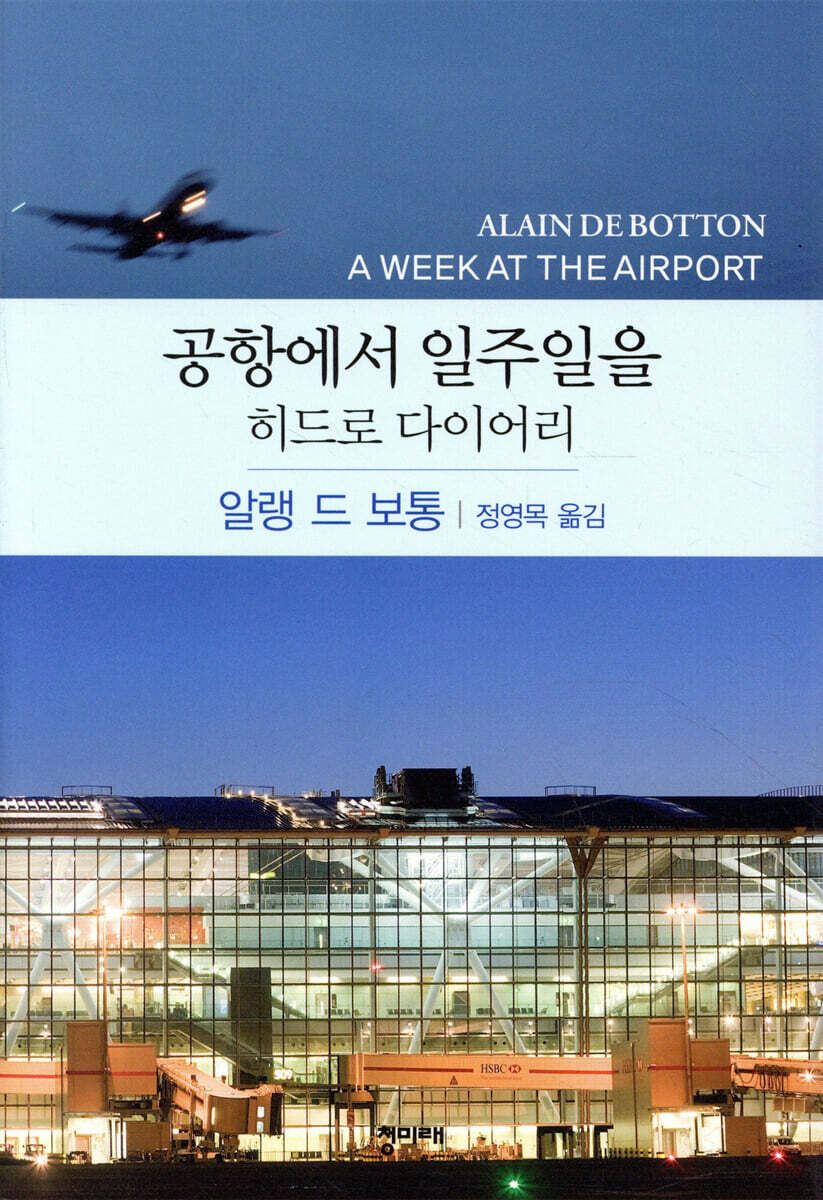
A week at the airport
 |
Description
Book Introduction
Alain de Botton, the inventor of the everyday
Airport stories told by someone living at London Heathrow Airport
Airports are exciting and busy spaces, as they are gateways for people from all over the world to other countries.
Here, countless travelers take their first steps with their hearts full of anticipation, and precious encounters begin.
Alain de Botton, author of "Why I Love You," spent a week at London Heathrow Airport, talking to travelers from all over the world, baggage handlers, pilots, and even the pastor of an airport church. He wrote a very deep, wide, and beautiful essay about the airport, a place that captures every moment of our civilization, from the functionality of cutting-edge technology to our romantic attitude toward travel.
Airport scenes such as the beautiful couples parting ways in the departure lounge and the strange sense of incongruity between the nouveau riche seen in the Concorde Room and the Filipino cleaners cleaning the room.
Alain de Botton brings to life the fascinating and diverse facets of airports we've never seen before, using his characteristically surprising wit and insight.
The airport, the scene of departure and return.
It is a window through which countless people, with a spirit of adventure, step out of their own fences and enter a new world, and it is also a space where they leave that land again and return to their fences and daily lives, and reflect on themselves anew.
Alain de Botton's "A Week at the Airport," which contains diverse stories from diverse people, will allow you to discover new meanings of meeting and parting, departure and return.
Airport stories told by someone living at London Heathrow Airport
Airports are exciting and busy spaces, as they are gateways for people from all over the world to other countries.
Here, countless travelers take their first steps with their hearts full of anticipation, and precious encounters begin.
Alain de Botton, author of "Why I Love You," spent a week at London Heathrow Airport, talking to travelers from all over the world, baggage handlers, pilots, and even the pastor of an airport church. He wrote a very deep, wide, and beautiful essay about the airport, a place that captures every moment of our civilization, from the functionality of cutting-edge technology to our romantic attitude toward travel.
Airport scenes such as the beautiful couples parting ways in the departure lounge and the strange sense of incongruity between the nouveau riche seen in the Concorde Room and the Filipino cleaners cleaning the room.
Alain de Botton brings to life the fascinating and diverse facets of airports we've never seen before, using his characteristically surprising wit and insight.
The airport, the scene of departure and return.
It is a window through which countless people, with a spirit of adventure, step out of their own fences and enter a new world, and it is also a space where they leave that land again and return to their fences and daily lives, and reflect on themselves anew.
Alain de Botton's "A Week at the Airport," which contains diverse stories from diverse people, will allow you to discover new meanings of meeting and parting, departure and return.
- You can preview some of the book's contents.
Preview
index
Ⅰ.
access
Ⅱ.
depart
Ⅲ.
Beyond the gate
Ⅳ.
arrive
Acknowledgements
After moving
access
Ⅱ.
depart
Ⅲ.
Beyond the gate
Ⅳ.
arrive
Acknowledgements
After moving
Publisher's Review
Meetings and Partings as Seen by Alain de Botton, the Airport's First "Resident Writer"
And the story of Heathrow Airport, where imagination and contemplation intersect.
Another remarkable new essay, revealing the wit and insight of Alain de Botton, “the inventor of the everyday.”
Typically, I spent a week at the airport in 2009 at the invitation of the airport owner, talking to travelers from all over the world and everyone from baggage handlers to airline pilots and even the pastor of the airport church.
Through his encounters with them, he wrote a profound, wide-ranging, and beautiful essay about airports, places that capture every moment of our civilization, from the functionality of cutting-edge technology to our romantic attitude toward travel.
Main contents
In 2009, Alain de Botton was invited by the owners of Heathrow Terminal 5 to become the airport's first "writer-in-residence", spending a week there.
The idea was to freely roam the world's busiest airport and create a work of art that captures the overall impression of the airport.
The airport has always been a special place for him.
Wasn't the airport also the meeting place of the two protagonists in "Why Do I Love You?"? For him, who had always talked about travel, this offer was irresistible and alluring.
Eventually, he accepts the offer and heads to the airport.
At the airport, he meets travelers of all races and classes from all over the world, people returning home with their hands full of gift bags, the wealthy enjoying their own world in luxury lounges, security guards working under the pressure of having to treat everyone as a potential terrorist, people shining shoes at the airport, pilots, and other airport employees in various occupations.
Through such encounters, his notebooks became “filled with anecdotes of loss, desire, and anticipation, snapshots of the souls of travelers soaring through the sky.”
He says that looking at the various currencies of different countries at the currency exchange booth makes him realize that “we live in a very big and diverse world.”
He shows us the diverse and fascinating aspects of airports that we have never seen before, such as the beautiful couples parting ways in the departure lounge, the strange incongruity between the nouveau riche glimpsed in the Concorde Room and the Filipino cleaners who clean it, the factory that makes the artificial and natural in-flight meals we taste on airplanes, the giant world map showing the path of planes departing from the airport in the airline office, and the hangar where planes with problems shyly visit, with his characteristically surprising wit and insight.
This suggests that spending time at the airport can have a deeper meaning than we typically think.
It also tells us what kind of expression we can make for the welcome guests we meet as we disembark from the plane in the arrivals lounge and exit the gate.
How realistic we must be not to envy those surrounded by so many welcome guests, and the sight of a father or mother embracing a child they haven't seen in a long time tells us how "terribly fragile and precarious creatures" we are.
We forget what happened at the airport.
And then you'll forget the sights you saw, the stories you heard, and the resolutions you made while traveling, and go back to your daily life.
But readers of this essay by Alain de Botton will remember:
This means that the airport is a space that exists throughout all of these processes.
And that “we will soon have to go back and learn the important lessons of the airport all over again.”
And the story of Heathrow Airport, where imagination and contemplation intersect.
Another remarkable new essay, revealing the wit and insight of Alain de Botton, “the inventor of the everyday.”
Typically, I spent a week at the airport in 2009 at the invitation of the airport owner, talking to travelers from all over the world and everyone from baggage handlers to airline pilots and even the pastor of the airport church.
Through his encounters with them, he wrote a profound, wide-ranging, and beautiful essay about airports, places that capture every moment of our civilization, from the functionality of cutting-edge technology to our romantic attitude toward travel.
Main contents
In 2009, Alain de Botton was invited by the owners of Heathrow Terminal 5 to become the airport's first "writer-in-residence", spending a week there.
The idea was to freely roam the world's busiest airport and create a work of art that captures the overall impression of the airport.
The airport has always been a special place for him.
Wasn't the airport also the meeting place of the two protagonists in "Why Do I Love You?"? For him, who had always talked about travel, this offer was irresistible and alluring.
Eventually, he accepts the offer and heads to the airport.
At the airport, he meets travelers of all races and classes from all over the world, people returning home with their hands full of gift bags, the wealthy enjoying their own world in luxury lounges, security guards working under the pressure of having to treat everyone as a potential terrorist, people shining shoes at the airport, pilots, and other airport employees in various occupations.
Through such encounters, his notebooks became “filled with anecdotes of loss, desire, and anticipation, snapshots of the souls of travelers soaring through the sky.”
He says that looking at the various currencies of different countries at the currency exchange booth makes him realize that “we live in a very big and diverse world.”
He shows us the diverse and fascinating aspects of airports that we have never seen before, such as the beautiful couples parting ways in the departure lounge, the strange incongruity between the nouveau riche glimpsed in the Concorde Room and the Filipino cleaners who clean it, the factory that makes the artificial and natural in-flight meals we taste on airplanes, the giant world map showing the path of planes departing from the airport in the airline office, and the hangar where planes with problems shyly visit, with his characteristically surprising wit and insight.
This suggests that spending time at the airport can have a deeper meaning than we typically think.
It also tells us what kind of expression we can make for the welcome guests we meet as we disembark from the plane in the arrivals lounge and exit the gate.
How realistic we must be not to envy those surrounded by so many welcome guests, and the sight of a father or mother embracing a child they haven't seen in a long time tells us how "terribly fragile and precarious creatures" we are.
We forget what happened at the airport.
And then you'll forget the sights you saw, the stories you heard, and the resolutions you made while traveling, and go back to your daily life.
But readers of this essay by Alain de Botton will remember:
This means that the airport is a space that exists throughout all of these processes.
And that “we will soon have to go back and learn the important lessons of the airport all over again.”
GOODS SPECIFICS
- Date of issue: December 28, 2009
- Format: Hardcover book binding method guide
- Page count, weight, size: 214 pages | 376g | 128*188*20mm
- ISBN13: 9788986836394
- ISBN10: 8986836394
You may also like
카테고리
korean


korean

![GQ KOREA Mark (Monthly): December [2025]](http://librairie.coreenne.fr/cdn/shop/files/8ef265dbbfbf186523ed75ba7319009d.jpg?v=1765340328&width=3840)


