

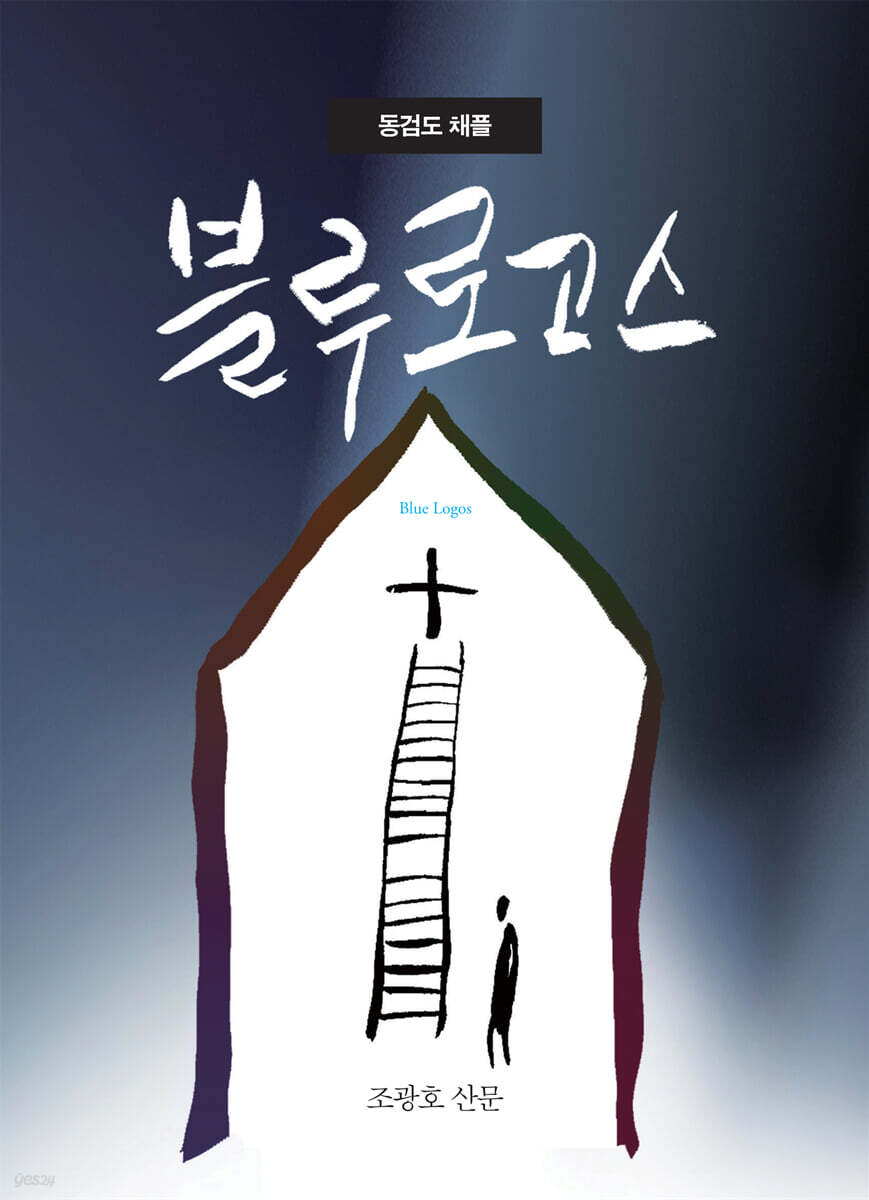
Donggeomdo Chapel Blue Logos
 |
Description
Book Introduction
Recommended by Sister Lee Hae-in and Poet Jeong Ho-seung!
A deep blue ray of light coming from a small, seven-pyeong 'soul shelter',
A dazzling insight into the times, art, and spirituality that color our souls!
A sharp and warm humanities essay that soothes a life of chaos and confusion!
In an age where the speed of AI technology outpaces reasoning and reflection, people feel a deep sense of loneliness even while being connected to networks.
The prose collection, Donggeomdo Chapel Blue Logos, is a book that calmly raises the question we must ask ourselves again in the midst of this jungle of speed and competition: "Where are we going now, and to whom are we heading?"
The author, Father Jo Gwang-ho, is a priest, painter, and poet.
Recognized as a master of stained glass art, he has experience in publishing, education, and art both inside and outside the church, and currently welcomes pilgrims at the Donggeomdo Chapel on a small island off the coast of Ganghwa.
Donggeomdo Chapel is known as a small, 7-pyeong (approximately 23 square meters) "healing place" where anyone, regardless of religious affiliation, can come and rest. This book is a collection of essays that gather thoughts, prayers, and stories from everyday life gathered there.
Father Cho Kwang-ho calls his artistic journey “Blue Logos.”
To receive and write down the invisible word logos in the language of light, color, and form, to hear the words of eternity in the blue of the sky and sea.
The artist understands art as “another way of expressing faith,” and through the color blue he looks at God’s order and the structure of creation.
This book is a long confession and invitation that expresses such 'blue words' in the language of words.
Chapter 1, "Asking for Directions in the Jungle of Civilization," traces the evolution of scientific civilization, from Copernicus' heliocentric theory to artificial intelligence, genetic engineering, and the climate crisis, and argues that we must let go of human-centered thinking and move toward a new humility.
Chapter 2, "The Ethics of Recovery for Living Together," examines the collapse of human dignity amid violence, hatred, inequality, and indifference, and explores ways to live together again through the language of justice, solidarity, and responsibility.
Chapter 3, “How Beauty Saves Us,” examines the role of art through music and art, particularly modern art and abstract painting, “The Blank Canvas” and “The River of Silence.”
The author says that beauty does not allow us to escape from reality, but rather has the power to see reality and the suffering of others more deeply.
Chapter 4, “When Starlight Speaks in the Darkness,” and Chapter 5, “The Cross and the Compass,” ask about the meaning of wounds and loss, forgiveness and reconciliation, the cross and hope through trivial objects such as old shorts, a mop, cotton candy, and reeds, as well as the pastoral scenes of cathedrals and chapels.
Although 『Donggeomdo Chapel Blue Logos』 is a book written in the language of faith, it is not a book only for certain believers.
Science, philosophy, art, and theology quietly rub shoulders, and the wind, the grass, the winter sea, and the stars enter each sentence.
A deep blue ray of light coming from a small, seven-pyeong 'soul shelter',
A dazzling insight into the times, art, and spirituality that color our souls!
A sharp and warm humanities essay that soothes a life of chaos and confusion!
In an age where the speed of AI technology outpaces reasoning and reflection, people feel a deep sense of loneliness even while being connected to networks.
The prose collection, Donggeomdo Chapel Blue Logos, is a book that calmly raises the question we must ask ourselves again in the midst of this jungle of speed and competition: "Where are we going now, and to whom are we heading?"
The author, Father Jo Gwang-ho, is a priest, painter, and poet.
Recognized as a master of stained glass art, he has experience in publishing, education, and art both inside and outside the church, and currently welcomes pilgrims at the Donggeomdo Chapel on a small island off the coast of Ganghwa.
Donggeomdo Chapel is known as a small, 7-pyeong (approximately 23 square meters) "healing place" where anyone, regardless of religious affiliation, can come and rest. This book is a collection of essays that gather thoughts, prayers, and stories from everyday life gathered there.
Father Cho Kwang-ho calls his artistic journey “Blue Logos.”
To receive and write down the invisible word logos in the language of light, color, and form, to hear the words of eternity in the blue of the sky and sea.
The artist understands art as “another way of expressing faith,” and through the color blue he looks at God’s order and the structure of creation.
This book is a long confession and invitation that expresses such 'blue words' in the language of words.
Chapter 1, "Asking for Directions in the Jungle of Civilization," traces the evolution of scientific civilization, from Copernicus' heliocentric theory to artificial intelligence, genetic engineering, and the climate crisis, and argues that we must let go of human-centered thinking and move toward a new humility.
Chapter 2, "The Ethics of Recovery for Living Together," examines the collapse of human dignity amid violence, hatred, inequality, and indifference, and explores ways to live together again through the language of justice, solidarity, and responsibility.
Chapter 3, “How Beauty Saves Us,” examines the role of art through music and art, particularly modern art and abstract painting, “The Blank Canvas” and “The River of Silence.”
The author says that beauty does not allow us to escape from reality, but rather has the power to see reality and the suffering of others more deeply.
Chapter 4, “When Starlight Speaks in the Darkness,” and Chapter 5, “The Cross and the Compass,” ask about the meaning of wounds and loss, forgiveness and reconciliation, the cross and hope through trivial objects such as old shorts, a mop, cotton candy, and reeds, as well as the pastoral scenes of cathedrals and chapels.
Although 『Donggeomdo Chapel Blue Logos』 is a book written in the language of faith, it is not a book only for certain believers.
Science, philosophy, art, and theology quietly rub shoulders, and the wind, the grass, the winter sea, and the stars enter each sentence.
index
Recommendation
To the priest who resembles the wind, grass, and sunset of Donggeomdo 005
Author's Note
Blue Logos 011 On the Flow, With the Flow
Chapter 1: Asking for Directions in the Jungle of Civilization
Light begins where the center disappears 021
Slowness Will Save Us 027
Cowboys, Rambo, Green Berets, and 2025 037
Machines Calculate, Humans Love 041
Encountering Mystery at the Edge of Science 047
The Paradox of a Painless Life 053
Learning Silence in an Age of Noise 058
Awolli's Winter Sea 063
068 In front of Pandora's box that has been opened
Awakening Universe, Awakening Humanity 073
Chapter 2: Ethics of Recovery for Living Together
Are humans wolves to humans? 083
The stables still lie in ruins 089
In the River of Tragedy, Blue Sky, Milky Way 095
101 Between Starlight and Candlelight
From Mukbang to Bookstore 107
Rabbit Hunt and the Crazy Rabbit 113
Not a regular, but a pilgrim 118
It's Time to Teach Hope Again 123
Even when the fire goes out, the light remains 129
Chapter 3: How Beauty Saves Us
Melody Resonating in the Ruins 137
The Flame Still Lives Within Man 143
Breaking Up with the Familiar 150
Bizarre and Wicked Contemporary Art 157
This is not this 164
How Music Sings Eternity 170
Misconceptions and Prejudices About Abstraction 175
181 Questions Left on a Blank Canvas
Listening to the River of Silence 192
If your life were a painting 199
Chapter 4: When the Stars Speak in the Darkness
What Old Shorts Taught Me 207
The sound of white water cutting through the darkness 213
The End of the World Seen from the Island 218
Meditation on the Mop 224
Between the Cross and Cotton Candy 230
When your hands are empty, your heart is full 235
Flowers Bloom on Wounds 241
My Will or Yours 247
Swaying Reed, Seeping Grace 252
When Life Becomes Poetry 258
Free beer tomorrow 263
Chapter 5: The Cross and the Compass
The Cathedral, With Its Walls Broken, Becomes an Oasis 271
Martha and Mary, Two Beautiful Faces of Love 276
Put Down the Rusty Sword 281
Miracles Begin from an Empty Net 287
As it is in heaven, so it is on earth 292
Seeing Light in a Strange Face 298
Is Jesus an Arsonist? 304
Justice and Mercy, the Two Wings of God 310
A Seed Planted in the Heart of Darkness 315
The Wind Changes, But the Path Remains 320
From the Mystery of Faith to the Mystery of Suffering 326
Occam's Razor and Questioning Faith 331
To the priest who resembles the wind, grass, and sunset of Donggeomdo 005
Author's Note
Blue Logos 011 On the Flow, With the Flow
Chapter 1: Asking for Directions in the Jungle of Civilization
Light begins where the center disappears 021
Slowness Will Save Us 027
Cowboys, Rambo, Green Berets, and 2025 037
Machines Calculate, Humans Love 041
Encountering Mystery at the Edge of Science 047
The Paradox of a Painless Life 053
Learning Silence in an Age of Noise 058
Awolli's Winter Sea 063
068 In front of Pandora's box that has been opened
Awakening Universe, Awakening Humanity 073
Chapter 2: Ethics of Recovery for Living Together
Are humans wolves to humans? 083
The stables still lie in ruins 089
In the River of Tragedy, Blue Sky, Milky Way 095
101 Between Starlight and Candlelight
From Mukbang to Bookstore 107
Rabbit Hunt and the Crazy Rabbit 113
Not a regular, but a pilgrim 118
It's Time to Teach Hope Again 123
Even when the fire goes out, the light remains 129
Chapter 3: How Beauty Saves Us
Melody Resonating in the Ruins 137
The Flame Still Lives Within Man 143
Breaking Up with the Familiar 150
Bizarre and Wicked Contemporary Art 157
This is not this 164
How Music Sings Eternity 170
Misconceptions and Prejudices About Abstraction 175
181 Questions Left on a Blank Canvas
Listening to the River of Silence 192
If your life were a painting 199
Chapter 4: When the Stars Speak in the Darkness
What Old Shorts Taught Me 207
The sound of white water cutting through the darkness 213
The End of the World Seen from the Island 218
Meditation on the Mop 224
Between the Cross and Cotton Candy 230
When your hands are empty, your heart is full 235
Flowers Bloom on Wounds 241
My Will or Yours 247
Swaying Reed, Seeping Grace 252
When Life Becomes Poetry 258
Free beer tomorrow 263
Chapter 5: The Cross and the Compass
The Cathedral, With Its Walls Broken, Becomes an Oasis 271
Martha and Mary, Two Beautiful Faces of Love 276
Put Down the Rusty Sword 281
Miracles Begin from an Empty Net 287
As it is in heaven, so it is on earth 292
Seeing Light in a Strange Face 298
Is Jesus an Arsonist? 304
Justice and Mercy, the Two Wings of God 310
A Seed Planted in the Heart of Darkness 315
The Wind Changes, But the Path Remains 320
From the Mystery of Faith to the Mystery of Suffering 326
Occam's Razor and Questioning Faith 331
Into the book
He looked up at the night sky and discovered that the Earth revolves around the Sun.
If we too raise our heads and look at nature, the vast universe, and our suffering neighbors, at that moment, a heliocentric theory will begin within us.
A new shift away from the arrogance of humans being central, to one where all of life is central.
That is the challenge of the 21st century, and it is the way for humanity to save itself.
--- p.26 From “Light Begins Where the Center Has Disappeared”
So let's not try to eliminate pain unconditionally.
Let us not curse the pain.
Rather than avoiding pain, learn to move through it.
True courage is not the absence of pain, but the ability to move forward despite the pain.
We can love because we are imperfect, and we can embrace each other deeply because we can be hurt.
Because we might fail, we can challenge, and because we might die, life is brighter.
--- p.57 From “The Paradox of a Painless Life”
This is the question the church must truly ask today.
“What do today’s young people fear, and what do they cling to as hope?”
Anxiety that AI might take our jobs away, fear that our children will be able to survive the climate crisis, and the fear that another pandemic might strike at any moment.
But at the same time, they still dream of love, long for true community, and hope that one day they will be able to live meaningful lives.
The church must enter into that language, that sensibility.
--- p.71 From “In Front of Pandora’s Open Box”
The Bible is essentially a story of imagination.
God who divides the sea, God who speaks from the flames of a burning bush, God who gives flesh to dry bones—these are all stories that cannot be understood without imagination.
The Bible is not simply a collection of teachings.
It is a story that awakens human imagination and opens our eyes to the mystery of God.
We can internalize the mystery through the Bible and then unfold it into stories for our lives.
--- p.143 From “The Flame Still Remains Within Humans”
The world was strange from the beginning.
We just mistakenly thought we were familiar with it.
Defaizmang shows the familiar world again as if it were the first time, and the ball reveals freedom by breaking down hardened attachments.
The two started from different paths, but eventually met at the same pass.
Look at it strangely, and you will live anew.
The moment you change your perspective, the world reveals a new face.
And then we realize.
“This is not this.” In that very realization, we learn freedom without attachment.
--- p.169 From "This is not this"
This dilemma appears equally in religion.
The moment you realize that you must pray sincerely, prayer becomes awkward.
True prayer is a cry or a whisper of gratitude that bursts forth before we are conscious of it.
Likewise, true art does not come from the intention to show sincerity, but from an inner impulse that cannot be resisted without expression.
--- p.187 From "Questions Remaining on a Blank Canvas"
For me, who spent my childhood on the east coast, the idea that people lived beyond that horizon was always a mystery.
The waves always broke capriciously, but the horizon remained unwavering, and the islands beyond it were another name for the longing in my young heart.
So, when I visited Ulleungdo with my friends around the time of my first year of college break, it was the moment when my first longing in life became real.
When I arrived at Ulleung Port that night, the outline of the island dimly appearing through the fog gave me the feeling that a door to another dimension was opening.
--- p.219 From "The End of the World Seen from the Island"
219_The End of the World Seen from the Island
As we pass through the age of alienation, we discover the phenomenological structure of love.
The ethical demands of the face of the other, the solidarity of suffering, the eschatological significance of small practices, and the integration of mystical unity and ethical practice all open up the theological horizon of the love inherent in all things.
But most importantly, it all starts within us.
If we too raise our heads and look at nature, the vast universe, and our suffering neighbors, at that moment, a heliocentric theory will begin within us.
A new shift away from the arrogance of humans being central, to one where all of life is central.
That is the challenge of the 21st century, and it is the way for humanity to save itself.
--- p.26 From “Light Begins Where the Center Has Disappeared”
So let's not try to eliminate pain unconditionally.
Let us not curse the pain.
Rather than avoiding pain, learn to move through it.
True courage is not the absence of pain, but the ability to move forward despite the pain.
We can love because we are imperfect, and we can embrace each other deeply because we can be hurt.
Because we might fail, we can challenge, and because we might die, life is brighter.
--- p.57 From “The Paradox of a Painless Life”
This is the question the church must truly ask today.
“What do today’s young people fear, and what do they cling to as hope?”
Anxiety that AI might take our jobs away, fear that our children will be able to survive the climate crisis, and the fear that another pandemic might strike at any moment.
But at the same time, they still dream of love, long for true community, and hope that one day they will be able to live meaningful lives.
The church must enter into that language, that sensibility.
--- p.71 From “In Front of Pandora’s Open Box”
The Bible is essentially a story of imagination.
God who divides the sea, God who speaks from the flames of a burning bush, God who gives flesh to dry bones—these are all stories that cannot be understood without imagination.
The Bible is not simply a collection of teachings.
It is a story that awakens human imagination and opens our eyes to the mystery of God.
We can internalize the mystery through the Bible and then unfold it into stories for our lives.
--- p.143 From “The Flame Still Remains Within Humans”
The world was strange from the beginning.
We just mistakenly thought we were familiar with it.
Defaizmang shows the familiar world again as if it were the first time, and the ball reveals freedom by breaking down hardened attachments.
The two started from different paths, but eventually met at the same pass.
Look at it strangely, and you will live anew.
The moment you change your perspective, the world reveals a new face.
And then we realize.
“This is not this.” In that very realization, we learn freedom without attachment.
--- p.169 From "This is not this"
This dilemma appears equally in religion.
The moment you realize that you must pray sincerely, prayer becomes awkward.
True prayer is a cry or a whisper of gratitude that bursts forth before we are conscious of it.
Likewise, true art does not come from the intention to show sincerity, but from an inner impulse that cannot be resisted without expression.
--- p.187 From "Questions Remaining on a Blank Canvas"
For me, who spent my childhood on the east coast, the idea that people lived beyond that horizon was always a mystery.
The waves always broke capriciously, but the horizon remained unwavering, and the islands beyond it were another name for the longing in my young heart.
So, when I visited Ulleungdo with my friends around the time of my first year of college break, it was the moment when my first longing in life became real.
When I arrived at Ulleung Port that night, the outline of the island dimly appearing through the fog gave me the feeling that a door to another dimension was opening.
--- p.219 From "The End of the World Seen from the Island"
219_The End of the World Seen from the Island
As we pass through the age of alienation, we discover the phenomenological structure of love.
The ethical demands of the face of the other, the solidarity of suffering, the eschatological significance of small practices, and the integration of mystical unity and ethical practice all open up the theological horizon of the love inherent in all things.
But most importantly, it all starts within us.
--- p.302 From “Seeing Light in an Unfamiliar Face”
Publisher's Review
A Humanities and Spirituality Guide for Those Lost in the Speed of Civilization
As you read 『Donggeomdo Chapel Blue Logos』, you will soon realize that this book is not just a ‘religious essay written by a priest.’
From the very first chapter, the author brings up the story of Copernicus.
Just as the Earth was not the center of the universe, the realization that humans today are no longer the center of the world.
From artificial intelligence and genetic engineering to the climate crisis and space exploration, scientific advances are re-questioning the place of humanity.
He calls this “the Copernican shift of the 21st century,” and says that a new path will open only when humans come down from their egocentrism.
But what's interesting about this book is that it doesn't dismiss these stories as empty "criticisms of civilization."
While the author specifically addresses the issues of artificial intelligence, data centers, military technology, and surveillance systems, he ultimately returns the question to humanity itself.
The problem is not technology, but human desires and choices that determine how we use technology.
As the title of that famous article suggests, the message that “machines should calculate and humans should love” encapsulates the ethics of the technological age in a single sentence.
His understanding of religion is also impressive.
He does not portray religion as an 'institution that provides answers' or an 'authority that imposes norms'.
Borrowing the words of a futurist, he says, “In the new millennium, religion is like oxygen,” and that it is the role of religion to help humanity, which is running breathlessly, catch its breath again and live like human beings.
There is a warning that when religion is swept up in the culture of speed and follows the logic of competition and consumption, people may fall into even deeper fatigue and emptiness.
In Chapter 2, the topic of ‘ethics of recovery’ arises.
It poses the question, “Are humans wolves to humans?” and penetrates the realities of war and violence, hatred and discrimination, and structural injustice, but does not remain in anger.
He tries to talk about justice and peace at the same time.
Peace without justice is empty, but justice without forgiveness can also lead to more violence.
The author's unique theological language intersects with everyday examples, and the 'ethics of living together' come across as concrete rather than abstract.
In summary, 『Donggeomdo Chapel Blue Logos』 is a humanities and spiritual guide that sharply analyzes the age of speed and asks how humans can breathe and live in it.
Rather than showcasing the latest theories, it revisits old questions and provides a space for readers to sit alongside those questions.
This is a book I would like to recommend to readers who cannot completely escape from the exhaustingly fast-paced world, but still do not want to live completely cynically.
With the blue sentences retrieved from Donggeomdo
The moment when everyday life becomes a sanctuary
In her recommendation, Sister Lee Hae-in wrote about this book, saying that it is a mixture of poetry, short stories, Eastern and Western wisdom, and criticism of the times, and that after reading it, “you feel like your thoughts have deepened and your heart has broadened.”
In fact, when reading 『Donggeomdo Chapel Blue Logos』, the seriousness of a lecture hall, the honesty of a personal journal, and the prose depicting the scenery of Donggumdo naturally blend together.
What stands out above all else is the power of place.
Many of the essays in this book begin with the Donggeomdo Chapel and its surrounding landscape.
Windy island hills, tidal flats at low tide, the winter sea and starry nights, the wild grass in the cathedral yard and the sounds of children playing… .
Like a painter, the author sensitively captures the movement of light and color and translates it into sentences.
So, his writing feels like looking at a landscape painting.
In Chapter 3, “How Beauty Saves Us,” the artist’s side shines especially brightly.
A melody echoing through the middle of an old cathedral, modern art pieces that seem strange and unfamiliar at first glance, images that evoke the phrase, "This is not this."
He understands them not as an escape from reality, but rather as a 'deep mirror' that makes us see reality and the wounds of others more clearly.
On a blank canvas and a river of silence, we are faced with the question: If my life were a painting, what colors and lines would it be filled with?
Chapters 4 and 5 begin with the most trivial of everyday things and touch upon the core of faith and life.
Just by looking at titles like “Old Shorts,” “Meditation on a Mop,” “Cross and Cotton Candy,” “Swaying Reeds,” and “Free Beer Tomorrow,” you can guess how close their starting points are to life.
Rather than presenting heavy and abstract concepts, he honestly reveals the wavering hearts, clumsy choices, and the easily hurt and hurtful faces of humans.
Then, slowly follow the possibility of grace and hope that seeps into that face.
The uniqueness of this book comes from the natural overlap of personal confessions and universal insights.
The heart of someone who has lost a loved one, the bewilderment in the face of inexplicable pain, the moments when they discover small joys again after feeling empty and resigned.
The author does not describe these experiences solely in the language of theologians.
Instead, it unfolds a long story of suffering and resurrection, wounds and healing, making readers think about their own lives.
Ultimately, 『Donggumdo Chapel Blue Logos』 is a book that quietly delivers the message that “this place right now is a sanctuary.”
Even without any grand events, with just a pair of old shorts, a mop, the breeze on the island hill, and the light of the mudflats, our lives are already enough places to meet God and each other.
Open the book to any page, read a passage, and close your eyes for a moment.
The sentences, permeated with the wind and light of Donggeomdo, will open a small blue window in the midst of our busy and rough daily lives.
As you read 『Donggeomdo Chapel Blue Logos』, you will soon realize that this book is not just a ‘religious essay written by a priest.’
From the very first chapter, the author brings up the story of Copernicus.
Just as the Earth was not the center of the universe, the realization that humans today are no longer the center of the world.
From artificial intelligence and genetic engineering to the climate crisis and space exploration, scientific advances are re-questioning the place of humanity.
He calls this “the Copernican shift of the 21st century,” and says that a new path will open only when humans come down from their egocentrism.
But what's interesting about this book is that it doesn't dismiss these stories as empty "criticisms of civilization."
While the author specifically addresses the issues of artificial intelligence, data centers, military technology, and surveillance systems, he ultimately returns the question to humanity itself.
The problem is not technology, but human desires and choices that determine how we use technology.
As the title of that famous article suggests, the message that “machines should calculate and humans should love” encapsulates the ethics of the technological age in a single sentence.
His understanding of religion is also impressive.
He does not portray religion as an 'institution that provides answers' or an 'authority that imposes norms'.
Borrowing the words of a futurist, he says, “In the new millennium, religion is like oxygen,” and that it is the role of religion to help humanity, which is running breathlessly, catch its breath again and live like human beings.
There is a warning that when religion is swept up in the culture of speed and follows the logic of competition and consumption, people may fall into even deeper fatigue and emptiness.
In Chapter 2, the topic of ‘ethics of recovery’ arises.
It poses the question, “Are humans wolves to humans?” and penetrates the realities of war and violence, hatred and discrimination, and structural injustice, but does not remain in anger.
He tries to talk about justice and peace at the same time.
Peace without justice is empty, but justice without forgiveness can also lead to more violence.
The author's unique theological language intersects with everyday examples, and the 'ethics of living together' come across as concrete rather than abstract.
In summary, 『Donggeomdo Chapel Blue Logos』 is a humanities and spiritual guide that sharply analyzes the age of speed and asks how humans can breathe and live in it.
Rather than showcasing the latest theories, it revisits old questions and provides a space for readers to sit alongside those questions.
This is a book I would like to recommend to readers who cannot completely escape from the exhaustingly fast-paced world, but still do not want to live completely cynically.
With the blue sentences retrieved from Donggeomdo
The moment when everyday life becomes a sanctuary
In her recommendation, Sister Lee Hae-in wrote about this book, saying that it is a mixture of poetry, short stories, Eastern and Western wisdom, and criticism of the times, and that after reading it, “you feel like your thoughts have deepened and your heart has broadened.”
In fact, when reading 『Donggeomdo Chapel Blue Logos』, the seriousness of a lecture hall, the honesty of a personal journal, and the prose depicting the scenery of Donggumdo naturally blend together.
What stands out above all else is the power of place.
Many of the essays in this book begin with the Donggeomdo Chapel and its surrounding landscape.
Windy island hills, tidal flats at low tide, the winter sea and starry nights, the wild grass in the cathedral yard and the sounds of children playing… .
Like a painter, the author sensitively captures the movement of light and color and translates it into sentences.
So, his writing feels like looking at a landscape painting.
In Chapter 3, “How Beauty Saves Us,” the artist’s side shines especially brightly.
A melody echoing through the middle of an old cathedral, modern art pieces that seem strange and unfamiliar at first glance, images that evoke the phrase, "This is not this."
He understands them not as an escape from reality, but rather as a 'deep mirror' that makes us see reality and the wounds of others more clearly.
On a blank canvas and a river of silence, we are faced with the question: If my life were a painting, what colors and lines would it be filled with?
Chapters 4 and 5 begin with the most trivial of everyday things and touch upon the core of faith and life.
Just by looking at titles like “Old Shorts,” “Meditation on a Mop,” “Cross and Cotton Candy,” “Swaying Reeds,” and “Free Beer Tomorrow,” you can guess how close their starting points are to life.
Rather than presenting heavy and abstract concepts, he honestly reveals the wavering hearts, clumsy choices, and the easily hurt and hurtful faces of humans.
Then, slowly follow the possibility of grace and hope that seeps into that face.
The uniqueness of this book comes from the natural overlap of personal confessions and universal insights.
The heart of someone who has lost a loved one, the bewilderment in the face of inexplicable pain, the moments when they discover small joys again after feeling empty and resigned.
The author does not describe these experiences solely in the language of theologians.
Instead, it unfolds a long story of suffering and resurrection, wounds and healing, making readers think about their own lives.
Ultimately, 『Donggumdo Chapel Blue Logos』 is a book that quietly delivers the message that “this place right now is a sanctuary.”
Even without any grand events, with just a pair of old shorts, a mop, the breeze on the island hill, and the light of the mudflats, our lives are already enough places to meet God and each other.
Open the book to any page, read a passage, and close your eyes for a moment.
The sentences, permeated with the wind and light of Donggeomdo, will open a small blue window in the midst of our busy and rough daily lives.
GOODS SPECIFICS
- Date of issue: November 25, 2025
- Page count, weight, size: 336 pages | 145*200*16mm
- ISBN13: 9791172740689
You may also like
카테고리
korean


korean

![GQ KOREA Mark (Monthly): December [2025]](http://librairie.coreenne.fr/cdn/shop/files/8ef265dbbfbf186523ed75ba7319009d.jpg?v=1765340328&width=3840)


