

Poverty in abundance
 |
Description
Book Introduction
The essence of life is not in having more.
Rather, it is about taking away, emptying, and filling that empty space with your heart.
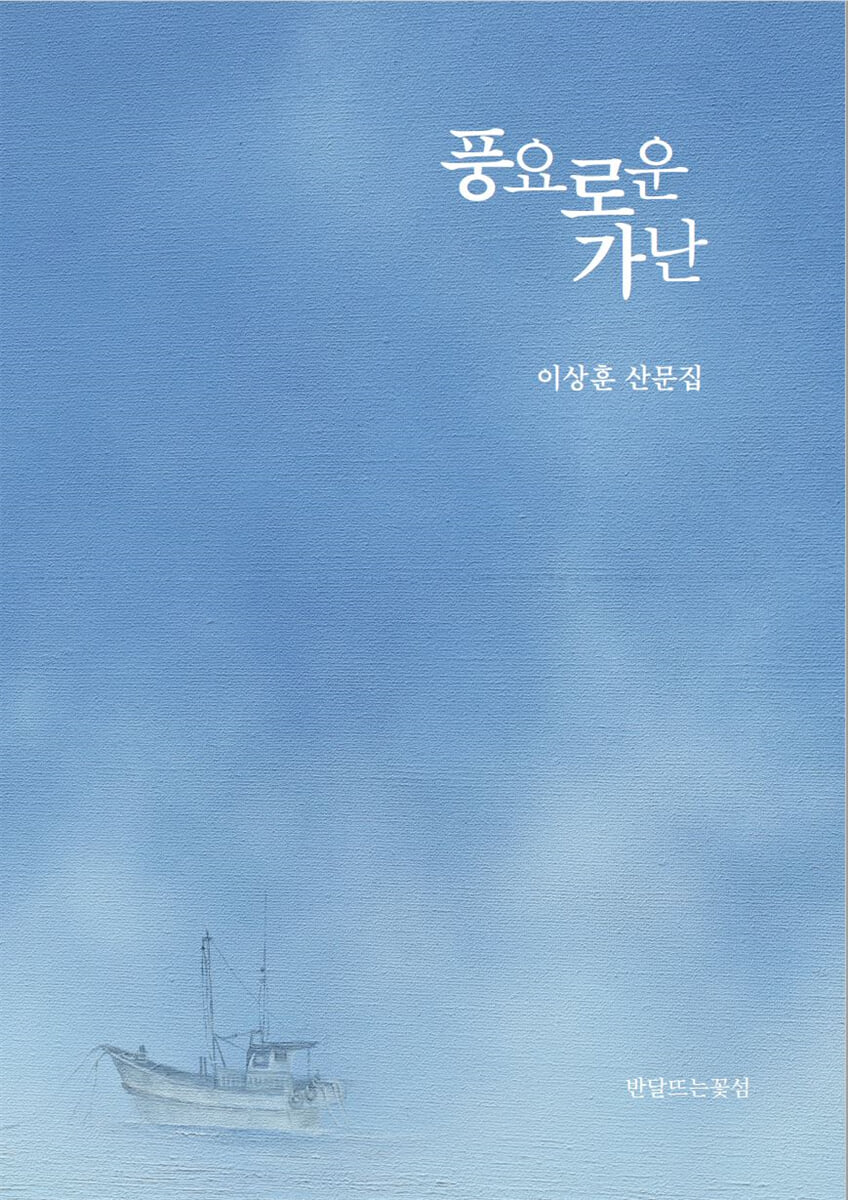
Lee Sang-hoon's prose collection, "Abundant Poverty," is a long record of a man's life that testifies to the "abundance of emptiness."
His writing speaks to the depths of human existence through the quiet warmth of everyday life, rather than through flashy philosophy or literary techniques.
He slowly traces the threads of people, objects, memories, and time with his fingertips, quietly telling us that “life is ultimately something to be endured with love and sincerity.”
The sentences are imbued with the earthy scent of early spring and are marked by the rings of old trees.
His prose does not praise or beautify any one subject.
Rather, it is closer to an attempt to find the ‘pattern of humanity’ that flows within all beings.
He does not try to avoid pain, does not hide his suffering, and instead of carrying the weight of sorrow, he draws fragrance from it.
He reads the dignity of life in the face of a person who smiles despite his illness, in the fingertips of an old mother, in the small wild flowers on the path along the rice paddy and in the worn-out shoes.
It is a kind of beauty that can never be captured in the language of splendid civilization or achievement.
The abundance that Lee Sang-hoon envisions is not visible possessions, but the invisible productivity of the heart.
He redefines the standard of health from the presence or absence of pain to the 'quality of being alive', and finds the meaning of being alive not in material things but in relationships and sincerity.
His writing style is concise yet profound.
Like poetry, it holds a long aftertaste in a short breath, and does not lose the light of the present even in reminiscence.
He refines sentences as if he were plowing a field with the hands of an old farmer, and connects paragraphs with the breath of a human being.
When a sentence ends, a lingering feeling lingers, and when the lingering feeling ends, thoughts grow.
He says.
“To live is to discover something new in the old repetition of each day, and to recognize the sacredness hidden in the familiar.” As readers read his writing, they find themselves recalling aspects of life they had forgotten.
Things like the backs of my parents, the names of my lost friends, and the smell of an alley in my hometown that I once visited, slowly come back to life through the sentences.
What makes Lee Sang-hoon's prose special is that it is not a simple record of recollection or impression, but rather a reflection on the 'ethics of existence.'
He believes that the lower a person becomes, the deeper he becomes, and the more he empties himself, the more fulfilled he becomes.
Like water flowing from a mountain to the sea, the law of existence that grows as it descends runs through his life.
So his sentences always flow smoothly and lowly.
The true meaning of abundance lies in the attitude of choosing maturity over success, depth over height, and silence over words.
He asks silently.
"Where do you stand now? Are you measuring yourself not by how much you have, but by how much you can love?"
Rather, it is about taking away, emptying, and filling that empty space with your heart.
Lee Sang-hoon's prose collection, "Abundant Poverty," is a long record of a man's life that testifies to the "abundance of emptiness."
His writing speaks to the depths of human existence through the quiet warmth of everyday life, rather than through flashy philosophy or literary techniques.
He slowly traces the threads of people, objects, memories, and time with his fingertips, quietly telling us that “life is ultimately something to be endured with love and sincerity.”
The sentences are imbued with the earthy scent of early spring and are marked by the rings of old trees.
His prose does not praise or beautify any one subject.
Rather, it is closer to an attempt to find the ‘pattern of humanity’ that flows within all beings.
He does not try to avoid pain, does not hide his suffering, and instead of carrying the weight of sorrow, he draws fragrance from it.
He reads the dignity of life in the face of a person who smiles despite his illness, in the fingertips of an old mother, in the small wild flowers on the path along the rice paddy and in the worn-out shoes.
It is a kind of beauty that can never be captured in the language of splendid civilization or achievement.
The abundance that Lee Sang-hoon envisions is not visible possessions, but the invisible productivity of the heart.
He redefines the standard of health from the presence or absence of pain to the 'quality of being alive', and finds the meaning of being alive not in material things but in relationships and sincerity.
His writing style is concise yet profound.
Like poetry, it holds a long aftertaste in a short breath, and does not lose the light of the present even in reminiscence.
He refines sentences as if he were plowing a field with the hands of an old farmer, and connects paragraphs with the breath of a human being.
When a sentence ends, a lingering feeling lingers, and when the lingering feeling ends, thoughts grow.
He says.
“To live is to discover something new in the old repetition of each day, and to recognize the sacredness hidden in the familiar.” As readers read his writing, they find themselves recalling aspects of life they had forgotten.
Things like the backs of my parents, the names of my lost friends, and the smell of an alley in my hometown that I once visited, slowly come back to life through the sentences.
What makes Lee Sang-hoon's prose special is that it is not a simple record of recollection or impression, but rather a reflection on the 'ethics of existence.'
He believes that the lower a person becomes, the deeper he becomes, and the more he empties himself, the more fulfilled he becomes.
Like water flowing from a mountain to the sea, the law of existence that grows as it descends runs through his life.
So his sentences always flow smoothly and lowly.
The true meaning of abundance lies in the attitude of choosing maturity over success, depth over height, and silence over words.
He asks silently.
"Where do you stand now? Are you measuring yourself not by how much you have, but by how much you can love?"
index
As you go in
Part 1.
The scenery inside me
I'm 15
Name 20
Productivity in Life 23
Flower 28
Eye angle 35
Renewal 39
The Meaning of Tears 43
Like a drop of water 47
Preview Mind 50
Rice 53
The Origins of Capitalism 57
Gestures of Nature 60
slender woman 64
67 Leisure Not to Do
Reconciliation 70
The Road Home 74
That night 79
When Silence Opens Its Mouth 83
Study Vacation 87
91. My son's last gift to me. 97.
Part 2.
Breath of the Seasons
Spring 103
The Return of the Diary 107
Kneel before health 110
Sweet Potato Scent 113
Money Farming 117
Monika Ajimae 121
The Tyranny of Everyday Life 126
Blooming and falling like a flower 131
Virus 135
KF94 140
Kimbap 142
Warm Hands 147
Weight of rice 150
Cactus 153
Choice 157
Standing on Your Own 164
Egg 167
If you know 170
Peak 173
Exhibition 177
181 per day
Part 3.
The light left behind by departure
Year 189
Vacant Room 192
Color 195
Two Trees 200
Jinbatgol Memories 204
Chocheong Nurungji 209
Scar 213
217 in the season of losing strength
Fragrance 220
Cow 223
Seol 230
Judge Cho 233
Smell 236
Part 4.
A life preserved by simple things
Sweet potato 241
Fried Egg 245
The Path of the Heart 248
Song 251
Abundant Deprivation 255
Distance between parents and teachers 259
Spring Picnic 262
Popularity vote 267
Indifferent Attention 270
Hand 273
In conclusion 276
Part 1.
The scenery inside me
I'm 15
Name 20
Productivity in Life 23
Flower 28
Eye angle 35
Renewal 39
The Meaning of Tears 43
Like a drop of water 47
Preview Mind 50
Rice 53
The Origins of Capitalism 57
Gestures of Nature 60
slender woman 64
67 Leisure Not to Do
Reconciliation 70
The Road Home 74
That night 79
When Silence Opens Its Mouth 83
Study Vacation 87
91. My son's last gift to me. 97.
Part 2.
Breath of the Seasons
Spring 103
The Return of the Diary 107
Kneel before health 110
Sweet Potato Scent 113
Money Farming 117
Monika Ajimae 121
The Tyranny of Everyday Life 126
Blooming and falling like a flower 131
Virus 135
KF94 140
Kimbap 142
Warm Hands 147
Weight of rice 150
Cactus 153
Choice 157
Standing on Your Own 164
Egg 167
If you know 170
Peak 173
Exhibition 177
181 per day
Part 3.
The light left behind by departure
Year 189
Vacant Room 192
Color 195
Two Trees 200
Jinbatgol Memories 204
Chocheong Nurungji 209
Scar 213
217 in the season of losing strength
Fragrance 220
Cow 223
Seol 230
Judge Cho 233
Smell 236
Part 4.
A life preserved by simple things
Sweet potato 241
Fried Egg 245
The Path of the Heart 248
Song 251
Abundant Deprivation 255
Distance between parents and teachers 259
Spring Picnic 262
Popularity vote 267
Indifferent Attention 270
Hand 273
In conclusion 276
Publisher's Review
"Affluent Poverty" is not simply a work of literature.
It is a record of the heart of a human being who has burned his entire life into sentences, a record that has transcended the ages.
We are now living in the poorest age amidst abundance.
In the midst of the overflow of information and material, fast speed and convenience, what has been lost is the direction of the mind.
Lee Sang-hoon's writing points back to that lost direction.
He revives the fading human body temperature with a language of the heart that can be understood without words.
His sentences are soft yet firm, warm yet sharp.
It is the gaze of someone who has never turned their back on the world, and the voice of someone who has not given up on their humanity even in the midst of suffering.
“Productivity comes from the mind,” he writes.
This one sentence is the most gentle yet fierce criticism of an era that judges the world solely on capital and efficiency.
Without being ashamed of his sick body, he interprets his old mother's hands as 'the productivity of life' and sees the cycle of life even in the death of a chicken.
His gaze does not cover the twists and turns of reality.
But even in the midst of these twists and turns, there is still the tenacious human faith to find light.
Reading this book is like encountering an old dining table.
Instead of fancy food, there is a bowl of soybean paste with an earthy scent and sincerity placed on top.
Each and every sentence warms the heart like warm rice.
The reader looks at the table and realizes.
Abundance is not a matter of money and material possessions, but of how transparent your heart is.
From a literary perspective, 『Affluent Poverty』 is a rare collection of prose that continues the tradition of Korean essays, but where confession, reflection, experience, and philosophy naturally intersect.
Sentences have rhythm, and paragraphs have endings.
Those knots come together to form one life.
He does not try to teach the reader a lesson.
He just quietly shows the path he has taken and says, “There was a path here too.”
That quiet confidence touches the reader, and that honest language lingers.
I would like to call this book 'The Slow Heartbeat of the Age'.
The only sentences that can endure in a fast-paced world are slow sentences.
Lee Sang-hoon's writing is unhurried, unexaggerated, and each sentence is carefully crafted.
It is a sincere record of one man's entire life, written as if he were sewing it together.
"Affluent Poverty" poses new questions to us.
“What are you losing now, and what are you living for?” Faced with that question, the reader soon finds himself feeling a deeper sense of deprivation in his heart than the abundance in his hands.
And the moment you cover the sentence, you start to think to yourself:
Poverty is not a misfortune, but the oldest way to regain humanity.
This is a book on the restoration of the mind that our time must read.
It is a record of the heart of a human being who has burned his entire life into sentences, a record that has transcended the ages.
We are now living in the poorest age amidst abundance.
In the midst of the overflow of information and material, fast speed and convenience, what has been lost is the direction of the mind.
Lee Sang-hoon's writing points back to that lost direction.
He revives the fading human body temperature with a language of the heart that can be understood without words.
His sentences are soft yet firm, warm yet sharp.
It is the gaze of someone who has never turned their back on the world, and the voice of someone who has not given up on their humanity even in the midst of suffering.
“Productivity comes from the mind,” he writes.
This one sentence is the most gentle yet fierce criticism of an era that judges the world solely on capital and efficiency.
Without being ashamed of his sick body, he interprets his old mother's hands as 'the productivity of life' and sees the cycle of life even in the death of a chicken.
His gaze does not cover the twists and turns of reality.
But even in the midst of these twists and turns, there is still the tenacious human faith to find light.
Reading this book is like encountering an old dining table.
Instead of fancy food, there is a bowl of soybean paste with an earthy scent and sincerity placed on top.
Each and every sentence warms the heart like warm rice.
The reader looks at the table and realizes.
Abundance is not a matter of money and material possessions, but of how transparent your heart is.
From a literary perspective, 『Affluent Poverty』 is a rare collection of prose that continues the tradition of Korean essays, but where confession, reflection, experience, and philosophy naturally intersect.
Sentences have rhythm, and paragraphs have endings.
Those knots come together to form one life.
He does not try to teach the reader a lesson.
He just quietly shows the path he has taken and says, “There was a path here too.”
That quiet confidence touches the reader, and that honest language lingers.
I would like to call this book 'The Slow Heartbeat of the Age'.
The only sentences that can endure in a fast-paced world are slow sentences.
Lee Sang-hoon's writing is unhurried, unexaggerated, and each sentence is carefully crafted.
It is a sincere record of one man's entire life, written as if he were sewing it together.
"Affluent Poverty" poses new questions to us.
“What are you losing now, and what are you living for?” Faced with that question, the reader soon finds himself feeling a deeper sense of deprivation in his heart than the abundance in his hands.
And the moment you cover the sentence, you start to think to yourself:
Poverty is not a misfortune, but the oldest way to regain humanity.
This is a book on the restoration of the mind that our time must read.
GOODS SPECIFICS
- Date of issue: November 21, 2025
- Page count, weight, size: 280 pages | 148*210*17mm
- ISBN13: 9791191604610
You may also like
카테고리
korean


korean

![GQ KOREA Mark (Monthly): December [2025]](http://librairie.coreenne.fr/cdn/shop/files/8ef265dbbfbf186523ed75ba7319009d.jpg?v=1765340328&width=3840)


