

Myeonggang Modern Novels
 |
Description
Book Introduction
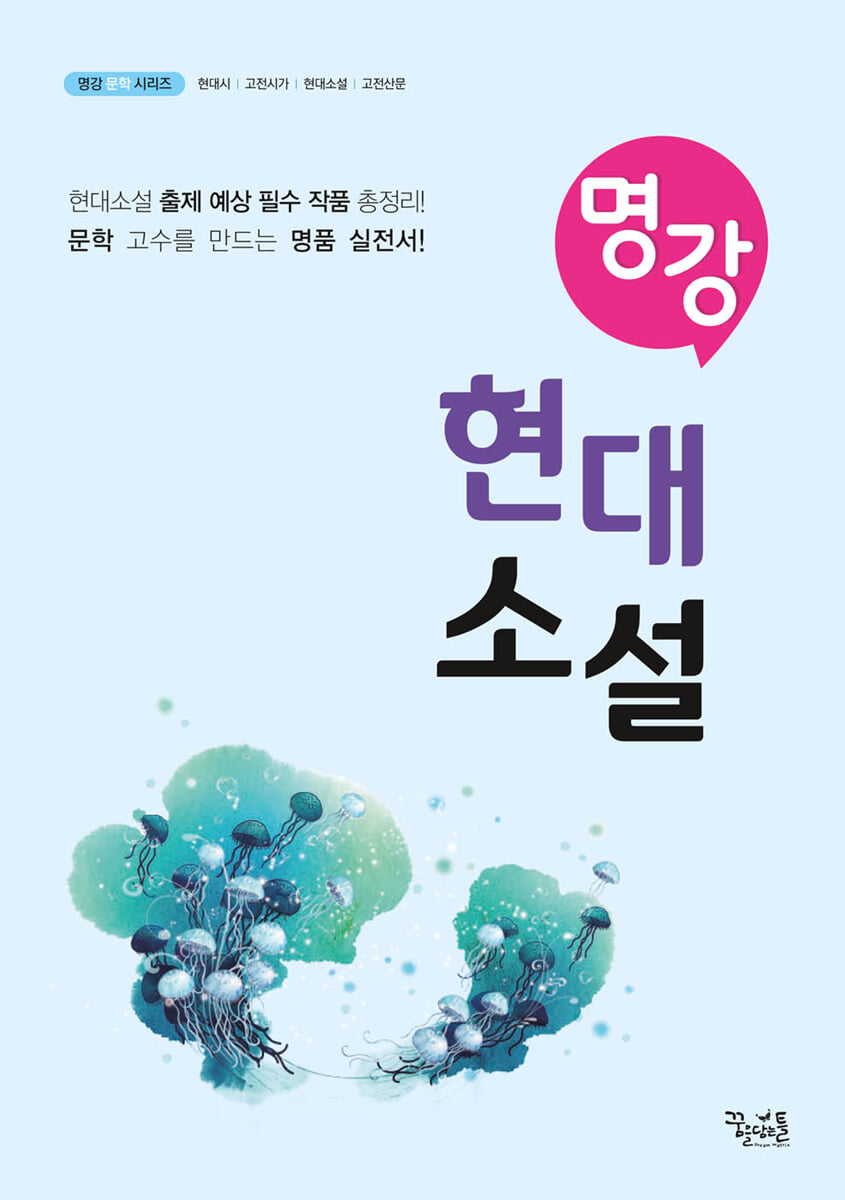
A comprehensive compilation of essential works expected to appear on the modern novel exam! A masterpiece practical guide for creating literary masters!
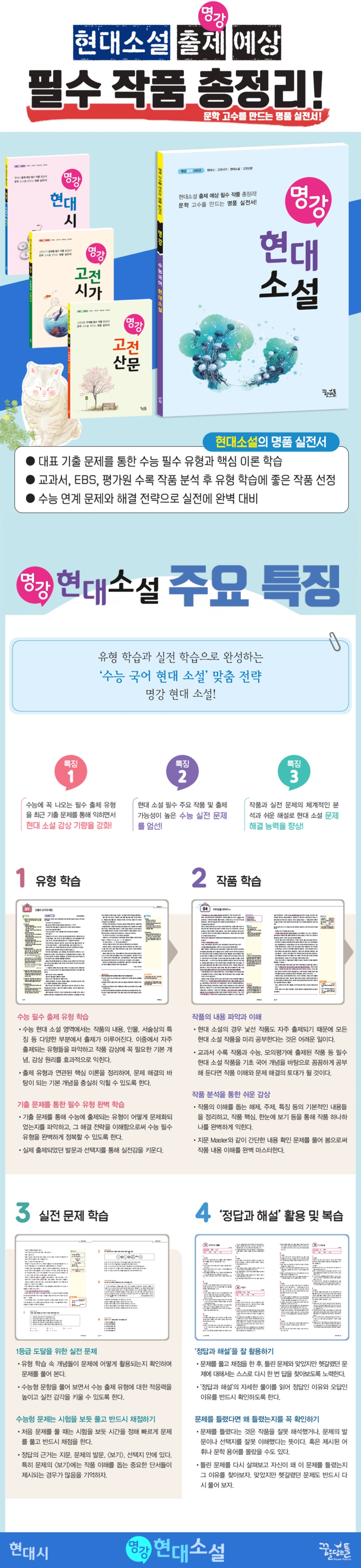
This is a study book on essential types of college entrance exam questions and key theories through representative past exam questions.
After analyzing the works included in textbooks, EBS, and the Evaluation Institute, we selected works that are good for learning the type of learning.
Let's fully prepare for the actual exam with problems and solution strategies related to the CSAT.
This is a study book on essential types of college entrance exam questions and key theories through representative past exam questions.
After analyzing the works included in textbooks, EBS, and the Evaluation Institute, we selected works that are good for learning the type of learning.
Let's fully prepare for the actual exam with problems and solution strategies related to the CSAT.
- You can preview some of the book's contents.
Preview
index
Part 1 Type Learning
01 Character Personality and Attitude - Mr. Bang (Chae Man-sik)
02 Point of View and Narrative Features - Warrior and Musician (Hong Seong-won)
03 Incidents and Conflicts - The Fisherman Doesn't Break the Reeds (Kim Joo-young)
04 Composition - Spring, Spring (Kim Yu-jeong)
05 Background and Material - Country bumpkin (Lee Tae-jun)
06 Appropriateness of Appreciation - A Person Without Character (Choi Myung-ik)
Part 2: Practical Learning
01 A Cheerful Night Road (Gong Seon-ok)
02 Hwang Man-geun said this (Seong Seok-je)
03 Silver Carp Fishing Communication (Yoon Dae-nyeong)
04 For Tea Time (Lee Seon)
05 Sapyeong Station (Im Cheol-woo)
06 Father's Land (Im Cheol-woo)
07 Noh Chan-seong and Evan (Kim Ae-ran)
08 Tears of an Idol (Jeon Sang-guk)
09 Soul of Darkness (Kim Won-il)
10 Trees (Park Wan-seo)
11. The Dissolution of the Sea (Park Wan-seo)
12 Land (Park Kyung-ni)
13 The Idiot and the Fool (Lee Cheong-jun)
14 Jang Seok-jo's People (Kim So-jin)
15 Rat Catcher (Kim So-jin)
16 Rainy Day (Son Chang-seop)
17 Namhansanseong (Kim Hoon)
18 Inorganic Youth (Kim Won-woo)
19 Takryu (Chae Man-sik)
20 Peaceful World (Chae Man-sik)
21 Stone Bridge (Lee Tae-jun)
22 Bokdeokbang (Lee Tae-jun)
23 wings (or more)
24 When Buckwheat Flowers Bloom (Lee Hyo-seok)
25 Mountain (Lee Hyo-seok)
26 Rainy Road (Choi Myung-ik)
27 Manmubang (Kim Yu-jeong)
28 Human Problems (Kang Kyung-ae)
29 A Day in the Life of Novelist Gubo (Park Tae-won)
30 Big Mountain (Lee Ho-cheol)
31st Station Horse (Kim Dong-ri)
32 Descendants of Hwarang (Kim Dong-ri)
33 Potato (Kim Dong-in)
34 Taehyung (Kim Dong-in)
35 Hometown (Hyun Jin-geon)
36 Grandmother's Death (Hyun Jin-geon)
01 Character Personality and Attitude - Mr. Bang (Chae Man-sik)
02 Point of View and Narrative Features - Warrior and Musician (Hong Seong-won)
03 Incidents and Conflicts - The Fisherman Doesn't Break the Reeds (Kim Joo-young)
04 Composition - Spring, Spring (Kim Yu-jeong)
05 Background and Material - Country bumpkin (Lee Tae-jun)
06 Appropriateness of Appreciation - A Person Without Character (Choi Myung-ik)
Part 2: Practical Learning
01 A Cheerful Night Road (Gong Seon-ok)
02 Hwang Man-geun said this (Seong Seok-je)
03 Silver Carp Fishing Communication (Yoon Dae-nyeong)
04 For Tea Time (Lee Seon)
05 Sapyeong Station (Im Cheol-woo)
06 Father's Land (Im Cheol-woo)
07 Noh Chan-seong and Evan (Kim Ae-ran)
08 Tears of an Idol (Jeon Sang-guk)
09 Soul of Darkness (Kim Won-il)
10 Trees (Park Wan-seo)
11. The Dissolution of the Sea (Park Wan-seo)
12 Land (Park Kyung-ni)
13 The Idiot and the Fool (Lee Cheong-jun)
14 Jang Seok-jo's People (Kim So-jin)
15 Rat Catcher (Kim So-jin)
16 Rainy Day (Son Chang-seop)
17 Namhansanseong (Kim Hoon)
18 Inorganic Youth (Kim Won-woo)
19 Takryu (Chae Man-sik)
20 Peaceful World (Chae Man-sik)
21 Stone Bridge (Lee Tae-jun)
22 Bokdeokbang (Lee Tae-jun)
23 wings (or more)
24 When Buckwheat Flowers Bloom (Lee Hyo-seok)
25 Mountain (Lee Hyo-seok)
26 Rainy Road (Choi Myung-ik)
27 Manmubang (Kim Yu-jeong)
28 Human Problems (Kang Kyung-ae)
29 A Day in the Life of Novelist Gubo (Park Tae-won)
30 Big Mountain (Lee Ho-cheol)
31st Station Horse (Kim Dong-ri)
32 Descendants of Hwarang (Kim Dong-ri)
33 Potato (Kim Dong-in)
34 Taehyung (Kim Dong-in)
35 Hometown (Hyun Jin-geon)
36 Grandmother's Death (Hyun Jin-geon)
Detailed image
Publisher's Review
1.
Type learning
① Study essential college entrance exam question types
· In the modern novel section of the CSAT, questions are asked from various aspects, such as the content, characters, and narrative characteristics of the work.
Understand the frequently asked types of questions and effectively learn the basic concepts and principles of appreciation essential for appreciating works of art.
· By organizing key theories related to the question type, you can thoroughly learn the basic concepts that form the basis for problem solving.
② Complete learning of essential types through past exam questions
· By understanding how the types of questions appearing on the CSAT are formulated through past exam questions and understanding the solution strategies, you can completely master the essential types of questions on the CSAT.
· Develop a sense of reality through actual questions and multiple-choice questions.
2.
Studying the work
① Understanding and comprehending the content of the work
· In the case of modern novels, it is difficult to study all modern novels in advance because unfamiliar works are often tested.
· If you study essential modern novels, such as those included in textbooks and those tested on the CSAT and mock exams, thoroughly based on basic Korean language concepts, it will serve as a foundation for understanding the works and solving problems.
② Easy appreciation through analysis of the work
· Organize basic information such as annotations, themes, and features to help you understand the work, and master each piece thoroughly through key points of the work, overviews, etc.
· Master the understanding of the content of the work by solving simple content verification problems such as Fingerprint Master.
3.
Learning from real-world problems
① Practical problems to reach level 1
· Solve problems by checking how the concepts in the type learning are applied to the problems.
· By solving CSAT-style questions, you can increase your adaptability to the types of questions on the CSAT and develop a sense of the actual exam.
② Solve the CSAT-type questions as if you were taking the exam and be sure to grade them.
· When solving a problem for the first time, solve it quickly within a set time limit as if taking a test, and be sure to grade it.
· The basis for the correct answer is in the text, the question's introduction, the "Options", and the multiple choice questions.
In particular, remember that the “view” in question often provides important clues that help in understanding the work.
4.
Use and review 'Answers and Explanations'
① Make good use of ‘Answers and Explanations’
· After solving the problems and grading them, try to find the answers again on your own for the problems you got wrong and the problems you got right but were confused about.
· Be sure to read the detailed explanation in ‘Answer and Explanation’ to check why the answer is correct and why it is incorrect.
② If you get a question wrong, be sure to check why you got it wrong.
· Getting the question wrong means you misinterpreted the work or misunderstood the question's prompt or options.
Or maybe you didn't know the vocabulary or literary terms presented.
· Let's look at the problem you got wrong again and figure out why you got it wrong.
Be sure to re-solve the problems you got right but were confused about.
Type learning
① Study essential college entrance exam question types
· In the modern novel section of the CSAT, questions are asked from various aspects, such as the content, characters, and narrative characteristics of the work.
Understand the frequently asked types of questions and effectively learn the basic concepts and principles of appreciation essential for appreciating works of art.
· By organizing key theories related to the question type, you can thoroughly learn the basic concepts that form the basis for problem solving.
② Complete learning of essential types through past exam questions
· By understanding how the types of questions appearing on the CSAT are formulated through past exam questions and understanding the solution strategies, you can completely master the essential types of questions on the CSAT.
· Develop a sense of reality through actual questions and multiple-choice questions.
2.
Studying the work
① Understanding and comprehending the content of the work
· In the case of modern novels, it is difficult to study all modern novels in advance because unfamiliar works are often tested.
· If you study essential modern novels, such as those included in textbooks and those tested on the CSAT and mock exams, thoroughly based on basic Korean language concepts, it will serve as a foundation for understanding the works and solving problems.
② Easy appreciation through analysis of the work
· Organize basic information such as annotations, themes, and features to help you understand the work, and master each piece thoroughly through key points of the work, overviews, etc.
· Master the understanding of the content of the work by solving simple content verification problems such as Fingerprint Master.
3.
Learning from real-world problems
① Practical problems to reach level 1
· Solve problems by checking how the concepts in the type learning are applied to the problems.
· By solving CSAT-style questions, you can increase your adaptability to the types of questions on the CSAT and develop a sense of the actual exam.
② Solve the CSAT-type questions as if you were taking the exam and be sure to grade them.
· When solving a problem for the first time, solve it quickly within a set time limit as if taking a test, and be sure to grade it.
· The basis for the correct answer is in the text, the question's introduction, the "Options", and the multiple choice questions.
In particular, remember that the “view” in question often provides important clues that help in understanding the work.
4.
Use and review 'Answers and Explanations'
① Make good use of ‘Answers and Explanations’
· After solving the problems and grading them, try to find the answers again on your own for the problems you got wrong and the problems you got right but were confused about.
· Be sure to read the detailed explanation in ‘Answer and Explanation’ to check why the answer is correct and why it is incorrect.
② If you get a question wrong, be sure to check why you got it wrong.
· Getting the question wrong means you misinterpreted the work or misunderstood the question's prompt or options.
Or maybe you didn't know the vocabulary or literary terms presented.
· Let's look at the problem you got wrong again and figure out why you got it wrong.
Be sure to re-solve the problems you got right but were confused about.
GOODS SPECIFICS
- Publication date: November 15, 2023
- Page count, weight, size: 160 pages | 210*297*20mm
- ISBN13: 9788963912691
- ISBN10: 8963912698
You may also like
카테고리
korean


korean

![GQ KOREA Mark (Monthly): December [2025]](http://librairie.coreenne.fr/cdn/shop/files/8ef265dbbfbf186523ed75ba7319009d.jpg?v=1765340328&width=3840)


