

Think, Plan, Work WorkFlowy
 |
Description
Book Introduction
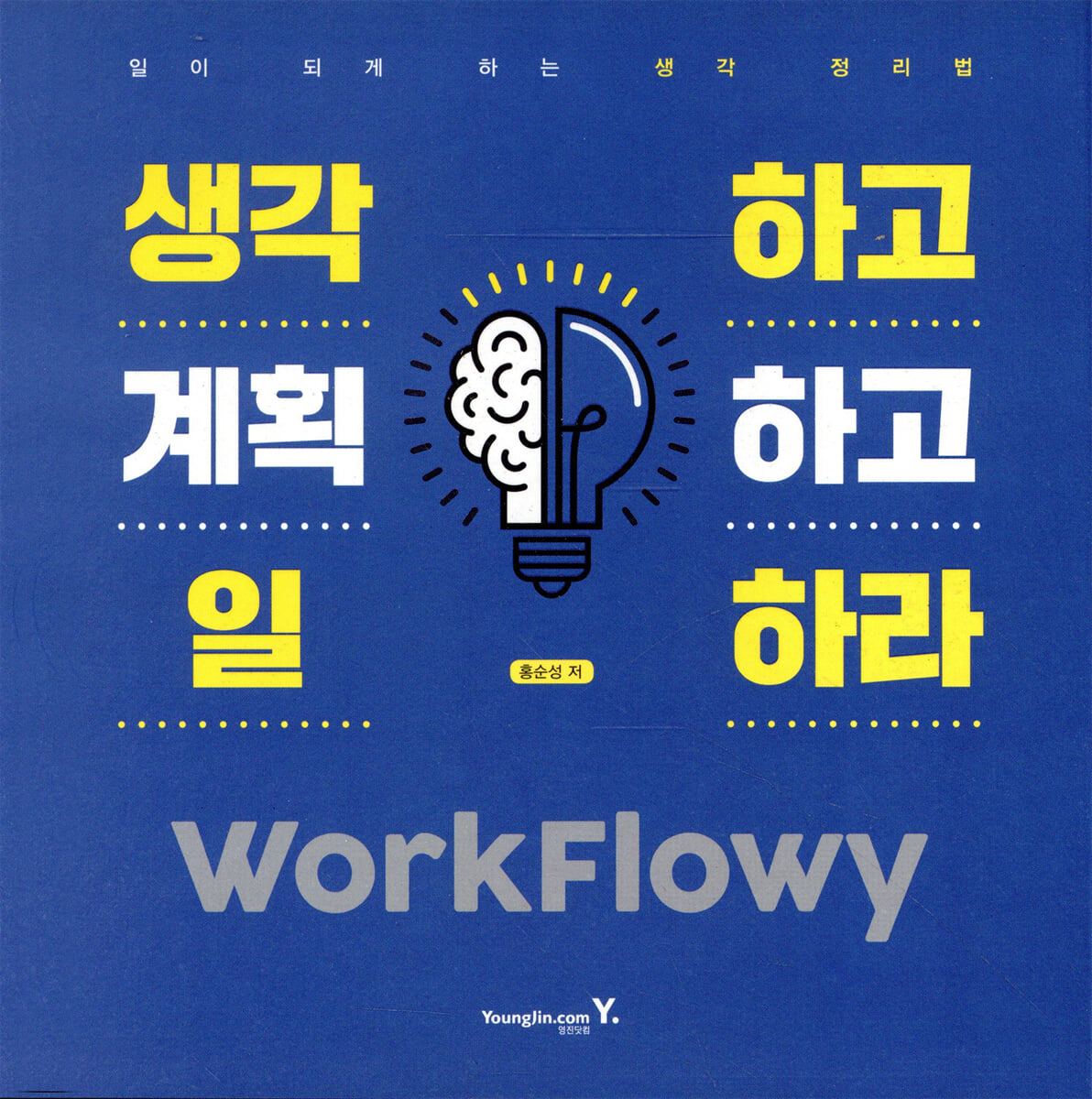
If you 'think' and 'plan', it will 'be done'. How do I organize my complicated thoughts? How can I finish all the tasks that pile up every day on time? How can I work efficiently? How should I plan my work so that I don't fail? Organizing your thoughts is the best way to simplify your complex mind. Identify the scattered ideas in your head, as well as the tasks to be done today, the tasks to be done in the future, and the tasks in progress, and systematically execute them to produce the desired results. Properly organized thoughts, accumulated in a well-organized manner, become a great driving force that changes the future. This book contains the best methods for people who want to lead their lives proactively and who always want to grow but are unable to organize their thoughts and thus are not efficient. Not only can you reduce the burden of work, you can also learn the rules for carrying out work effectively according to systematic procedures. Do you want to discover a different side of yourself from your repetitive daily routine and redefine the meaning of life? If so, try creating opportunities for change by "thinking," "planning," and "executing." |
- You can preview some of the book's contents.
Preview
index
Chapter 01 'Thoughts', 'Organization', 'Tools'
'Thoughts', 'Organization', and 'Tools' that cost time and money
What is the value of organizing your thoughts? / Organizing your thoughts changes your life.
· Organizing your thoughts properly improves how you work.
How to Organize Your Thoughts 'Properly' / Thought Organization Process
The changes that come from organizing your thoughts
3 Benefits of Organizing Your Thoughts / How to Overcome the Difficulties of Organizing Your Thoughts
Five Principles for Developing the Habit of Organizing Your Thoughts
Principles of action for developing the habit of organizing your thoughts
· What tools are there for organizing thoughts?
What's the best thought-organizing tool for me? / What's the difference between mind maps and workflows?
Chapter 02 Organizing Your Thoughts - Writing Ideas Effectively
· Write down useful ideas
The process of generating ideas efficiently / Record the moment an idea comes to mind.
· Discover a space where ideas grow
Ideas are written together in the daily planning space / Workflow, a space where ideas grow
· Expand your ideas by asking yourself questions
How to Ask Questions to Expand Your Ideas / Solve Problems with Questions / Create Long-Term Plans with Questions: Planning for Three Years Ahead
· Finding the Gem in an Accumulated Idea: How to Create a Project
Accumulated ideas become money / Accumulated ideas become books
· Organize your thoughts by keyword
Why it's hard to organize your thoughts / Clearing your mind with keywords
Chapter 03 Daily Planning - Creating a Systematic To-Do List
· Create a daily plan to achieve work-life balance
Choosing a repository for your daily plans / If you make plans every day, you'll end up with 700 plans in a year.
· A 5-step process for planning your day
To-do list / Limit / Prioritize / Work time / Complete tasks
· Create a systematic daily plan
When is the best time to make a to-do list? / How you write it determines the results. / Writing a diary to make your day more proactive.
· How to categorize tasks using tags
Using tags for efficient searches
· 5-week project to create and execute a daily plan
Week 1 - Start a daily record-keeping habit / Week 2 - Understand the previous week's history and create a work order / Week 3 - Work on tags that connect similar topics / Week 4 - Classify materials based on tags / Week 5 - Discover your own way of planning your day
Chapter 04 Execution - Working without Failure
· 5 Steps to Prevent Failure at Work
① Breaking down the work into small steps / ② Planning / ③ Raising the issue / ④ Verification / ⑤ Execution
Breaking down tasks into 'small steps'
Break down tasks into manageable chunks / Create new projects in small steps
· Analyze work through 'planning work'
433 Principles for Systematic Analysis / Planning and Execution with the Six Ws
· Finding answers by 'posing a problem (question)'
What You Gain from Posing a Problem / How to Posing a Problem Using 'Why' and 'How'
· Researching data for 'verification work'
Chapter 05 Practice - How to do things 'properly'
· New Course - How to Plan a Lecture That Satisfies Everyone
Planning / Organizing the table of contents and researching materials / Working on lecture slides
· Writing a Book - How to Write a Book on Any Topic
Planning work / Writing process / Verification work
· Meeting Management - Meeting Management and Writing Tips for Everyone
Meeting topic and attendees / Prepare a plan to explain the meeting topic / Organize after the meeting
Podcasts - Creating and Operating Popular Content
Broadcast Topic / Operation / Production
Chapter 06 How to Use Workflowy
· What is Workflowy, an essential tool for organizing thoughts?
Workflowy's features / Evernote collects, Workflowy organizes thoughts / Evernote vs. Workflowy
· Sign up and install
Sign up / Download the computer and mobile apps / Free vs. Paid
· Main features of computer and smartphone menus
Computer Key Features / Smartphone Key Features
· How to create lists and search for tags and keywords
Creating a list / Using tags that suit me / Creating index tags to maximize tag utilization / Finding hidden search features in the search bar / How to search effectively
· Features you need to know to use Workflow effectively
How to close the expanded list for easy viewing / How to move the desired list up and down / Find out the total number of lists you are using / Bookmark frequently used lists / How to share a workflow / How to receive workflow sharing / How to back up the free version / How to back up the paid version
'Thoughts', 'Organization', and 'Tools' that cost time and money
What is the value of organizing your thoughts? / Organizing your thoughts changes your life.
· Organizing your thoughts properly improves how you work.
How to Organize Your Thoughts 'Properly' / Thought Organization Process
The changes that come from organizing your thoughts
3 Benefits of Organizing Your Thoughts / How to Overcome the Difficulties of Organizing Your Thoughts
Five Principles for Developing the Habit of Organizing Your Thoughts
Principles of action for developing the habit of organizing your thoughts
· What tools are there for organizing thoughts?
What's the best thought-organizing tool for me? / What's the difference between mind maps and workflows?
Chapter 02 Organizing Your Thoughts - Writing Ideas Effectively
· Write down useful ideas
The process of generating ideas efficiently / Record the moment an idea comes to mind.
· Discover a space where ideas grow
Ideas are written together in the daily planning space / Workflow, a space where ideas grow
· Expand your ideas by asking yourself questions
How to Ask Questions to Expand Your Ideas / Solve Problems with Questions / Create Long-Term Plans with Questions: Planning for Three Years Ahead
· Finding the Gem in an Accumulated Idea: How to Create a Project
Accumulated ideas become money / Accumulated ideas become books
· Organize your thoughts by keyword
Why it's hard to organize your thoughts / Clearing your mind with keywords
Chapter 03 Daily Planning - Creating a Systematic To-Do List
· Create a daily plan to achieve work-life balance
Choosing a repository for your daily plans / If you make plans every day, you'll end up with 700 plans in a year.
· A 5-step process for planning your day
To-do list / Limit / Prioritize / Work time / Complete tasks
· Create a systematic daily plan
When is the best time to make a to-do list? / How you write it determines the results. / Writing a diary to make your day more proactive.
· How to categorize tasks using tags
Using tags for efficient searches
· 5-week project to create and execute a daily plan
Week 1 - Start a daily record-keeping habit / Week 2 - Understand the previous week's history and create a work order / Week 3 - Work on tags that connect similar topics / Week 4 - Classify materials based on tags / Week 5 - Discover your own way of planning your day
Chapter 04 Execution - Working without Failure
· 5 Steps to Prevent Failure at Work
① Breaking down the work into small steps / ② Planning / ③ Raising the issue / ④ Verification / ⑤ Execution
Breaking down tasks into 'small steps'
Break down tasks into manageable chunks / Create new projects in small steps
· Analyze work through 'planning work'
433 Principles for Systematic Analysis / Planning and Execution with the Six Ws
· Finding answers by 'posing a problem (question)'
What You Gain from Posing a Problem / How to Posing a Problem Using 'Why' and 'How'
· Researching data for 'verification work'
Chapter 05 Practice - How to do things 'properly'
· New Course - How to Plan a Lecture That Satisfies Everyone
Planning / Organizing the table of contents and researching materials / Working on lecture slides
· Writing a Book - How to Write a Book on Any Topic
Planning work / Writing process / Verification work
· Meeting Management - Meeting Management and Writing Tips for Everyone
Meeting topic and attendees / Prepare a plan to explain the meeting topic / Organize after the meeting
Podcasts - Creating and Operating Popular Content
Broadcast Topic / Operation / Production
Chapter 06 How to Use Workflowy
· What is Workflowy, an essential tool for organizing thoughts?
Workflowy's features / Evernote collects, Workflowy organizes thoughts / Evernote vs. Workflowy
· Sign up and install
Sign up / Download the computer and mobile apps / Free vs. Paid
· Main features of computer and smartphone menus
Computer Key Features / Smartphone Key Features
· How to create lists and search for tags and keywords
Creating a list / Using tags that suit me / Creating index tags to maximize tag utilization / Finding hidden search features in the search bar / How to search effectively
· Features you need to know to use Workflow effectively
How to close the expanded list for easy viewing / How to move the desired list up and down / Find out the total number of lists you are using / Bookmark frequently used lists / How to share a workflow / How to receive workflow sharing / How to back up the free version / How to back up the paid version
Detailed image

Publisher's Review
"Think, Plan, Work" is a book for those who want to take the lead in their work and life, especially those who always want to grow but find themselves unable to organize their thoughts and thus not being efficient at work.
You can systematically learn the work process to do things 'properly' through the process of 'thinking, planning, and executing.'
One, think about it
Don't just think about it in your head; write it down in a notebook or digital tool.
It is important to look at what you have written and update your thoughts.
This is a simple but easily overlooked point.
Ideas are like a spring that never runs dry.
The more you record, use, and practice, the more ideas will come to you.
At this time, we must not just pass it by, but take it as an opportunity for change.
Even if it doesn't come true right away, if you make it a habit to write down your current thoughts, you will achieve satisfactory results in the near future.
Two, planning
Just by making a plan, you can control your work and time, preventing time thieves from stealing your time and focus.
This keeps me on track for my departure from work.
An important thing when planning your day is your to-do list.
After making a to-do list, analyze the tasks, limit unimportant or unnecessary tasks, and prioritize them according to importance.
In all work, you need to figure out the working hours so that you can finish the work on time.
Three, work
It is efficient to apply planning to a process and execute it one by one.
No matter how big or complex a task is, if you break it down and execute it one by one, you will not fail.
You can systematically learn the work process to do things 'properly' through the process of 'thinking, planning, and executing.'
One, think about it
Don't just think about it in your head; write it down in a notebook or digital tool.
It is important to look at what you have written and update your thoughts.
This is a simple but easily overlooked point.
Ideas are like a spring that never runs dry.
The more you record, use, and practice, the more ideas will come to you.
At this time, we must not just pass it by, but take it as an opportunity for change.
Even if it doesn't come true right away, if you make it a habit to write down your current thoughts, you will achieve satisfactory results in the near future.
Two, planning
Just by making a plan, you can control your work and time, preventing time thieves from stealing your time and focus.
This keeps me on track for my departure from work.
An important thing when planning your day is your to-do list.
After making a to-do list, analyze the tasks, limit unimportant or unnecessary tasks, and prioritize them according to importance.
In all work, you need to figure out the working hours so that you can finish the work on time.
Three, work
It is efficient to apply planning to a process and execute it one by one.
No matter how big or complex a task is, if you break it down and execute it one by one, you will not fail.
GOODS SPECIFICS
- Publication date: November 20, 2018
- Page count, weight, size: 280 pages | 432g | 170*170*20mm
- ISBN13: 9788931459579
- ISBN10: 8931459572
You may also like
카테고리
korean


korean

![GQ KOREA Mark (Monthly): December [2025]](http://librairie.coreenne.fr/cdn/shop/files/8ef265dbbfbf186523ed75ba7319009d.jpg?v=1765340328&width=3840)


