

The Science of Running
 |
Description
Book Introduction
A compilation of the latest achievements in sports science
New Running Guide
Published in 12 countries worldwide
In this era of contactless interaction, a book titled "The Science of Running" has been released, providing step-by-step guidance on the fundamentals of running, which has become more important than ever for boosting immunity and maintaining physical strength.
Author Dr. Chris Napier has distilled his experience and research as a physical therapist working with a wide range of runners, from beginners to elite athletes, into this book.
He explains that his running experience only improved when he realized why he got injured and how to best recover.
Jerry Ziek, co-author of Part 4 of this book, "How to Train," is also an experienced coach who has developed training programs for a wide range of athletes.
"The Science of Running" will be your first step toward improving your performance and enjoying pain-free running for a lifetime.
This book contains the latest research on the biomechanics of running, along with advice on training techniques.
Understanding how our bodies adapt to the sport of running can help us optimize our speed, strength, and performance.
Part 1, “The Anatomy of Running,” covers the physiological phenomena that occur when running in detail.
Not only do we understand what's going on in our bodies, but we also learn what our bodies need to run at their optimal levels.
Part 2, "Injury Prevention," examines how injuries occur when running and provides steps you can take to reduce your risk of injury and, if you do get injured, to help you recover quickly.
Part 3: "Strength Training" can be incorporated into your running training to improve your running form and experience.
The goal is to strengthen the muscles most used when running to withstand the impact and training load of endurance running.
These exercises are also worth trying for athletes aiming to rehabilitate after an injury.
Part 4, "Training Methods," covers everything you need to know to train effectively and safely.
New Running Guide
Published in 12 countries worldwide
In this era of contactless interaction, a book titled "The Science of Running" has been released, providing step-by-step guidance on the fundamentals of running, which has become more important than ever for boosting immunity and maintaining physical strength.
Author Dr. Chris Napier has distilled his experience and research as a physical therapist working with a wide range of runners, from beginners to elite athletes, into this book.
He explains that his running experience only improved when he realized why he got injured and how to best recover.
Jerry Ziek, co-author of Part 4 of this book, "How to Train," is also an experienced coach who has developed training programs for a wide range of athletes.
"The Science of Running" will be your first step toward improving your performance and enjoying pain-free running for a lifetime.
This book contains the latest research on the biomechanics of running, along with advice on training techniques.
Understanding how our bodies adapt to the sport of running can help us optimize our speed, strength, and performance.
Part 1, “The Anatomy of Running,” covers the physiological phenomena that occur when running in detail.
Not only do we understand what's going on in our bodies, but we also learn what our bodies need to run at their optimal levels.
Part 2, "Injury Prevention," examines how injuries occur when running and provides steps you can take to reduce your risk of injury and, if you do get injured, to help you recover quickly.
Part 3: "Strength Training" can be incorporated into your running training to improve your running form and experience.
The goal is to strengthen the muscles most used when running to withstand the impact and training load of endurance running.
These exercises are also worth trying for athletes aiming to rehabilitate after an injury.
Part 4, "Training Methods," covers everything you need to know to train effectively and safely.
index
Preface 6 | Introduction 8 | Glossary 10
Anatomy of Running 12
How to Run 14 | The Mechanical Mechanism of Exercise 16 | Power Supply Required for Exercise 32 | Controlling Exercise 38 | External Factors 46
Injury Prevention 52
Risk of injury 54
Common Injuries 56 | Patellofemoral Pain Syndrome 57 | Achilles Tendinopathy 58 | Medial Tibial Fatigue Syndrome 59 | Plantar Heel Pain 60 | Iliotibial Band Pain 61 | Deep Gluteal Syndrome 62 | Gluteal Tendinopathy 62 | Stress Fractures 63 | Avoiding Injuries 64 | Running Cycles 66 | Personal Gait Styles 70 | Running Forms 74 | Running Routines 76
Dynamic Stretching || Forward Leg Swing 78 | Side Leg Swing 80 | Calf Stretch 82
Exercises || Running A 84 | Running B 85 | Running C 86 | Stride 87 | Bounding 88 | Carioca 89
Recovery Stretches || Modified Pigeon Pose 90 | Tensior Hamstring Ball Release 92 | Limb Release 94
Strength Training 96
Planning Your Training 98
Foot and Ankle || Foot Doming 100 | Resisted Toe 104 | Heel Drop 108 | Ankle Turnout 112 | Ankle Turnin 114
Hips and Knees || Hip Hike 118 | Step Down 120 | Step Up 122 | Standing Hip Rotation 126 | Hip Extension 130 | Traditional Deadlift 132 | Single Leg Ball Squat 136 | Hip String Ball Roll-In 140 | Lunge 142
Core Muscles || Front Plank Rotation 144 | Side Plank Rotation 148 | Box Jumps 150 | Single-Leg Hops 154
Training Method 156
Why Train? 158 | Training Goals 160 | Assessing Fitness 162 | Tracking Your Training 168 | Training Tips 170 | Choosing and Using a Training Plan 176 | Easy Continuous Running 180 | Fast Continuous Running 181 | Interval Training 184 | Hill Training 186 | Cross Training 187
Training Program 188 | Beginner 5-Kilometer Program 190 | Beginner 10-Kilometer Program 192 | Advanced 10-Kilometer Program 194 | Beginner Half-Marathon Program 198 | Advanced Half-Marathon Program 200 | Beginner Marathon Program 204 | Advanced Marathon Program 206 | Racing Tips 210
Glossary 214 | Index 216 | References 222 | Acknowledgments 224
Anatomy of Running 12
How to Run 14 | The Mechanical Mechanism of Exercise 16 | Power Supply Required for Exercise 32 | Controlling Exercise 38 | External Factors 46
Injury Prevention 52
Risk of injury 54
Common Injuries 56 | Patellofemoral Pain Syndrome 57 | Achilles Tendinopathy 58 | Medial Tibial Fatigue Syndrome 59 | Plantar Heel Pain 60 | Iliotibial Band Pain 61 | Deep Gluteal Syndrome 62 | Gluteal Tendinopathy 62 | Stress Fractures 63 | Avoiding Injuries 64 | Running Cycles 66 | Personal Gait Styles 70 | Running Forms 74 | Running Routines 76
Dynamic Stretching || Forward Leg Swing 78 | Side Leg Swing 80 | Calf Stretch 82
Exercises || Running A 84 | Running B 85 | Running C 86 | Stride 87 | Bounding 88 | Carioca 89
Recovery Stretches || Modified Pigeon Pose 90 | Tensior Hamstring Ball Release 92 | Limb Release 94
Strength Training 96
Planning Your Training 98
Foot and Ankle || Foot Doming 100 | Resisted Toe 104 | Heel Drop 108 | Ankle Turnout 112 | Ankle Turnin 114
Hips and Knees || Hip Hike 118 | Step Down 120 | Step Up 122 | Standing Hip Rotation 126 | Hip Extension 130 | Traditional Deadlift 132 | Single Leg Ball Squat 136 | Hip String Ball Roll-In 140 | Lunge 142
Core Muscles || Front Plank Rotation 144 | Side Plank Rotation 148 | Box Jumps 150 | Single-Leg Hops 154
Training Method 156
Why Train? 158 | Training Goals 160 | Assessing Fitness 162 | Tracking Your Training 168 | Training Tips 170 | Choosing and Using a Training Plan 176 | Easy Continuous Running 180 | Fast Continuous Running 181 | Interval Training 184 | Hill Training 186 | Cross Training 187
Training Program 188 | Beginner 5-Kilometer Program 190 | Beginner 10-Kilometer Program 192 | Advanced 10-Kilometer Program 194 | Beginner Half-Marathon Program 198 | Advanced Half-Marathon Program 200 | Beginner Marathon Program 204 | Advanced Marathon Program 206 | Racing Tips 210
Glossary 214 | Index 216 | References 222 | Acknowledgments 224
Detailed image

Publisher's Review
A compilation of the latest achievements in sports science
New Running Guide
Published in 12 countries worldwide
Starting from the premise that running is one of the most rewarding and rewarding activities, "The Science of Running" will guide readers into the world of running while uncovering the mysteries of the human body.
― Kim Nam-ik (Professor of Physical Education, Catholic Kwandong University)
This book is for professional trainers and sports medicine specialists, as well as countless marathon enthusiasts, including beginners like me, who want to run a little better.
― Lee Jae-dam (Professor Emeritus, Ulsan University College of Medicine)
The nuchal ligament, one of the anatomical evidences that the human body developed the ability to run long distances, is a structural change not seen in our ape ancestors.
Running, a bodyweight sport practiced by millions worldwide today, is a sport that requires physical exertion. What are the principles behind this biomechanical and physiological phenomenon? Why do people find pure joy in running? There are many reasons why people run, but above all, regular running makes us healthier and stronger, enhancing our quality of life.
As much as there is potential, there is also inherent risk.
There is a need for more scientific investigation into efforts to reduce such risks.
In this era of non-face-to-face interaction, the book "The Science of Running: The Principles of Anatomy and Physiology to Perfect Your Running", which guides you step-by-step through the basics of running, which has become more important than ever for boosting immunity and maintaining physical strength, has been recently published by Science Books.
Author Dr. Chris Napier has distilled his experience and research as a physical therapist working with a wide range of runners, from beginners to elite athletes, into this book.
He explains that his running experience only improved when he realized why he got injured and how to best recover.
Jerry Ziek, co-author of Part 4 of this book, "How to Train," is also an experienced coach who has developed training programs for a wide range of athletes.
"The Science of Running" will be your first step toward improving your performance and enjoying pain-free running for a lifetime.
This book contains the latest research on the biomechanics of running, along with advice on training techniques.
Understanding how our bodies adapt to the sport of running can help us optimize our speed, strength, and performance.
Part 1, “The Anatomy of Running,” covers the physiological phenomena that occur when running in detail.
Not only do we understand what's going on in our bodies, but we also learn what our bodies need to run at their optimal levels.
Part 2, "Injury Prevention," examines how injuries occur when running and provides steps you can take to reduce your risk of injury and, if you do get injured, to help you recover quickly.
Part 3: "Strength Training" can be incorporated into your running training to improve your running form and experience.
The goal is to strengthen the muscles most used when running to withstand the impact and training load of endurance running.
These exercises are also worth trying for athletes aiming to rehabilitate after an injury.
Part 4, "Training Methods," covers everything you need to know to train effectively and safely.
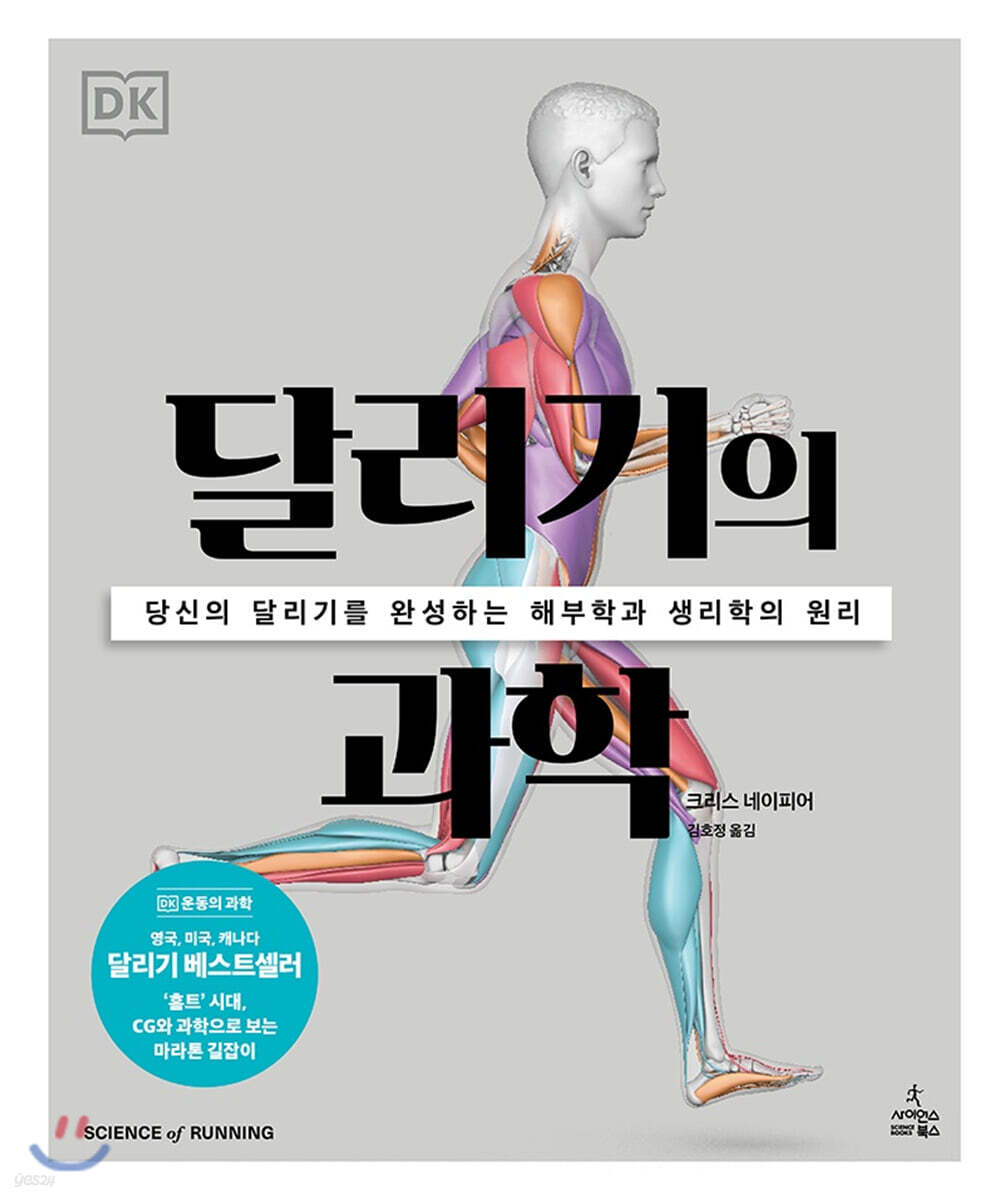
"The Science of Running" features images of the human body, detailed and powerful images created by the illustration and design team at renowned British publisher DK for their new "The Science of Exercise" series, graphs summarizing the latest research findings, and infographics that allow you to see your training plan at a glance.
Professor Ho-Jeong Kim (Department of Anatomy, Catholic Kwandong University College of Medicine), who participated in the translation of 『Principles of the Human Body: Infographic Human Fact Guide』, a best-selling book in the 'Principles of the World' series, translated 『The Science of Running』 into Korean.
Professor Emeritus Jaedam Lee of Ulsan University, author of the "Episode Medical History" series and a runner for 15 years, and Professor Namik Kim of the Department of Physical Education at Catholic Kwandong University, author of "Medicine and Exercise Prescription" and former director of the Korean Society of Sports Science, also strongly recommend this book as a running guide for both beginners and experts from anatomy and sports physiology perspectives.
Do you need chocolate abs when you run?
The Principles of Running from an Anatomic Perspective
For the dynamic activity of running, several functions in the human body must occur simultaneously.
Understanding the biomechanics and physiology of running can help you improve your athletic performance and enjoy running safely and injury-free.
Explore the systems that enable running and learn which systems specifically benefit from exercise adaptations to run faster and more efficiently.
You will gain a clear understanding of the body movements that occur when running and be able to apply this knowledge to understanding your own anatomy and running gait.
It also helps to follow the strength training methods introduced in the book.
Muscles produce movement through thousands of strong contractions, and their endurance and resilience increase with repeated use.
To enjoy running, you need not only strong legs, but also core and arm strength.
The ankles and feet are the fundamental structures that form the basis of every step we take.
More than 30 joints in the ankle and foot allow for complex and varied movements.
The main function of the hip joint is to support body weight while standing or moving, and to maintain stability during this time.
The pelvis supports the weight of the upper body when sitting and transfers this weight to the legs when standing, while also serving as an attachment point for many muscles in the torso and legs.
Having a properly functioning core while running not only allows you to control your torso, but also maximizes the generation and transmission of power and movement in your lower extremities.
The muscles of the abdomen move, control, and support the lower spine and pelvis.
These muscles work together to provide stability and mobility during highly coordinated movements such as running.
The body powers muscles by using energy sources through a complex interaction of the respiratory, cardiovascular, and digestive systems.
When running, most of your energy comes from carbohydrates, but you also use fat and protein.
The body uses cellular respiration to convert glucose into ATP molecules, which provides the energy needed for muscle contraction.
Through training, muscles become able to withstand higher training intensities before lactic acid begins to accumulate in the blood.
Knowing your lactate threshold can help you prevent rapid buildup of lactate in your blood and the resulting fatigue.
Training causes your body to adapt to improve the energy systems that power your workouts.
A high maximal oxygen uptake, which refers to the amount of oxygen our bodies consume when exerting maximum force, means that the amount of oxygen available to the muscles is relatively large when the cells perform aerobic respiration.
Factors that determine the body's ability to transport oxygen to the muscles, such as maximal heart rate, cardiac output, the amount of oxygen-carrying hemoglobin in the blood, and the speed of blood circulation to the working muscles, are largely genetically determined but can be improved by training.
Running is influenced by many external factors.
Each time the foot makes contact with the ground, the impact force transmitted is counteracted by muscle contractions and biomechanical changes in the body.
You also need to adapt to environmental changes such as weather, terrain, and altitude.
As your center of gravity shifts while running, your body adjusts its posture in conjunction with your brain, combining input from the sensory organs in your inner ear and visual information to maintain balance.
The movement information goes to the legs to adjust muscle tension to accommodate changes in terrain while walking.
This tuning process happens mostly without our awareness.
During running, the brain and nervous system work together with the endocrine system to enable and coordinate both conscious and unconscious movement.
It also plays an important role in maintaining balance within the body.
50 percent of running enthusiasts
Do you experience running injuries every year?
The basics of safe and balanced running
One of the amazing things about running as a sport is that almost anyone can do it.
At the same time, you should run while keeping in mind various factors such as age, gender, overweight, pregnancy or childbirth to reduce your risk of injury.
Because everyone's running form is different, each person is more susceptible to certain injuries, so it's important to evaluate and improve your running form.
Strengthening your muscles and joints through strength training can improve your body's ability to withstand training loads, which can improve your athletic performance, but it's important to seek professional help.
Most injuries are caused by overusing a specific area.
Running injuries are primarily due to biomechanical factors, anatomical factors, and poor training methods.
Recent research suggests that improving your running form can help prevent common injuries like patellofemoral pain syndrome, tibiofemoral band pain, and tibial stress fractures.
Certain anatomical factors, such as flat feet or bow legs, are also commonly thought to be related to injury.
Running repeatedly impacts the body, causing tissue destruction and requiring time to recover. However, overtraining can cause recovery to fail to keep pace with the rate at which impact is applied.
Most running injuries occur in the lower body, with the knees accounting for approximately one-third of all running injuries, followed by the ankles, feet, and shins.
Women are more at risk for knee and hip injuries, while men are more likely to develop problems with their shins, ankles, and feet.
It's important to distinguish between pain from strenuous exercise and pain from injury, as any change in your running gait due to pain is also a sign that you should stop practicing.
Due to differences in blood circulation and cell turnover rates, some tissues take longer to heal than others, so keep this in mind when returning to training.
It is very important to maintain good posture when running.
Because posture affects breathing, shock absorption, and power generation.
Overall, it is important to avoid leaning forward and looking at your feet.
It is helpful to imagine that your head is tied to a string and being pulled upwards, and your spine is straightened.
To engage your core muscles, imagine that a string is tied to your belly button, pulling your body forward, and that your upper and lower body are rotating in opposite directions without interfering with each other.
Imagine your feet as springs, absorbing energy when you land and recycling that energy when you lift off.
Make it a routine to do warm-up and cool-down exercises at the beginning and end of your run.
Warming up with dynamic stretches and exercise exercises specific to running before your workout will help you get the most out of your workout, and finishing with static stretches at the end will help kick-start the recovery process.
Running exercises increase blood flow to your muscles and increase your joint range of motion.
You can also improve your running form and exercise with a symmetrical posture through exercise drills.
Are lunges a universal exercise?
Efficient and systematic strength training method
Strength training not only reduces the risk of injury, but also improves athletic performance.
This book selects exercises that focus on the muscles used in running, allowing you to generate the power needed for running and to withstand the repetitive impact of running as well as the increased loads that come with a training program.
By understanding which muscles are working, which joints are being used, and how each exercise contributes to your training, you can train at your optimal level.
The working principles of exercises that can strengthen muscles in each area, from the ankles and feet to the hips, knees, and core muscles, can be more easily understood through detailed images comparable to CT scans.
You can use resistance bands or exercise balls to enhance your training, and stairs nearby can also provide good support.
Ankle turn in is an exercise that strengthens the stabilizing muscles on the inside of the calf, namely the adductor muscles of the ankle.
Hip hikes strengthen the abductor muscles of the hip joint, which play a crucial role in maintaining pelvic stability while running.
The traditional deadlift exercise strengthens the quadriceps, hamstrings, and gluteus medius muscles, which can help protect against running injuries.
Side plank rotation strengthens your core and teaches you to move your chest and hips independently through rotational movements.
How can a beginner challenge a marathon?
Runners are known to obsessively focus on metrics like distance, personal bests, perceived exertion (RPE), heart rate, and pace, but it's how you use this data that makes the real difference.
Likewise, knowing how your body structures movement allows you to best utilize its movements.
To become a better runner, you need to know what training will help you get faster, what exercises will help you get stronger, and what racing strategies will help you perform at your best.
From coaching to advanced marathon training, it's time to explore the tools and various programs available to help you design a personalized training plan focused on your individual strengths and needs.
Before starting a training program, you must first think about what you want to achieve through training.
If you're new to running or returning to it after a long break, start by setting a goal and setting a realistic timeframe for achieving it, taking into account your current fitness level.
To be effective, a training program must provide the right stimulus that matches the runner's current physical fitness and training level.
The training programs in this book, for both beginners and advanced users, are designed to demonstrate the structure of key exercises while allowing you to follow along and develop them yourself.
It outlines how to adjust your training regimen on a weekly basis and consider recovery periods for each session.
To increase your training, increase your running distance, increase your intensity, or both, while keeping track of your training and adjusting your goals to stay motivated.
It's easy to get sucked into training your strengths and avoid training that highlights your weaknesses, so it's better to focus on your weaknesses from the beginning to avoid rushing to address them a week before the race.
Whether you're training or competing, at some point you'll feel the urge to give up due to pain or fatigue, but overcoming this can often be an opportunity to become stronger.
Figuring out what motivates you to keep running and strengthening that motivation will help you continue on your journey to reach your goals.
One way to motivate yourself is to anticipate pain and fatigue before they come and embrace them when they do.
It's equally important to know when you've reached a point where you've fully immersed yourself and put forth your maximum effort.
This will allow you to get enough rest and avoid burnout.
Proper recovery is just as important as the training itself.
Anyone who runs alone will be able to experience a new way of running through 『The Science of Running』.
New Running Guide
Published in 12 countries worldwide
Starting from the premise that running is one of the most rewarding and rewarding activities, "The Science of Running" will guide readers into the world of running while uncovering the mysteries of the human body.
― Kim Nam-ik (Professor of Physical Education, Catholic Kwandong University)
This book is for professional trainers and sports medicine specialists, as well as countless marathon enthusiasts, including beginners like me, who want to run a little better.
― Lee Jae-dam (Professor Emeritus, Ulsan University College of Medicine)
The nuchal ligament, one of the anatomical evidences that the human body developed the ability to run long distances, is a structural change not seen in our ape ancestors.
Running, a bodyweight sport practiced by millions worldwide today, is a sport that requires physical exertion. What are the principles behind this biomechanical and physiological phenomenon? Why do people find pure joy in running? There are many reasons why people run, but above all, regular running makes us healthier and stronger, enhancing our quality of life.
As much as there is potential, there is also inherent risk.
There is a need for more scientific investigation into efforts to reduce such risks.
In this era of non-face-to-face interaction, the book "The Science of Running: The Principles of Anatomy and Physiology to Perfect Your Running", which guides you step-by-step through the basics of running, which has become more important than ever for boosting immunity and maintaining physical strength, has been recently published by Science Books.
Author Dr. Chris Napier has distilled his experience and research as a physical therapist working with a wide range of runners, from beginners to elite athletes, into this book.
He explains that his running experience only improved when he realized why he got injured and how to best recover.
Jerry Ziek, co-author of Part 4 of this book, "How to Train," is also an experienced coach who has developed training programs for a wide range of athletes.
"The Science of Running" will be your first step toward improving your performance and enjoying pain-free running for a lifetime.
This book contains the latest research on the biomechanics of running, along with advice on training techniques.
Understanding how our bodies adapt to the sport of running can help us optimize our speed, strength, and performance.
Part 1, “The Anatomy of Running,” covers the physiological phenomena that occur when running in detail.
Not only do we understand what's going on in our bodies, but we also learn what our bodies need to run at their optimal levels.
Part 2, "Injury Prevention," examines how injuries occur when running and provides steps you can take to reduce your risk of injury and, if you do get injured, to help you recover quickly.
Part 3: "Strength Training" can be incorporated into your running training to improve your running form and experience.
The goal is to strengthen the muscles most used when running to withstand the impact and training load of endurance running.
These exercises are also worth trying for athletes aiming to rehabilitate after an injury.
Part 4, "Training Methods," covers everything you need to know to train effectively and safely.
"The Science of Running" features images of the human body, detailed and powerful images created by the illustration and design team at renowned British publisher DK for their new "The Science of Exercise" series, graphs summarizing the latest research findings, and infographics that allow you to see your training plan at a glance.
Professor Ho-Jeong Kim (Department of Anatomy, Catholic Kwandong University College of Medicine), who participated in the translation of 『Principles of the Human Body: Infographic Human Fact Guide』, a best-selling book in the 'Principles of the World' series, translated 『The Science of Running』 into Korean.
Professor Emeritus Jaedam Lee of Ulsan University, author of the "Episode Medical History" series and a runner for 15 years, and Professor Namik Kim of the Department of Physical Education at Catholic Kwandong University, author of "Medicine and Exercise Prescription" and former director of the Korean Society of Sports Science, also strongly recommend this book as a running guide for both beginners and experts from anatomy and sports physiology perspectives.
Do you need chocolate abs when you run?
The Principles of Running from an Anatomic Perspective
For the dynamic activity of running, several functions in the human body must occur simultaneously.
Understanding the biomechanics and physiology of running can help you improve your athletic performance and enjoy running safely and injury-free.
Explore the systems that enable running and learn which systems specifically benefit from exercise adaptations to run faster and more efficiently.
You will gain a clear understanding of the body movements that occur when running and be able to apply this knowledge to understanding your own anatomy and running gait.
It also helps to follow the strength training methods introduced in the book.
Muscles produce movement through thousands of strong contractions, and their endurance and resilience increase with repeated use.
To enjoy running, you need not only strong legs, but also core and arm strength.
The ankles and feet are the fundamental structures that form the basis of every step we take.
More than 30 joints in the ankle and foot allow for complex and varied movements.
The main function of the hip joint is to support body weight while standing or moving, and to maintain stability during this time.
The pelvis supports the weight of the upper body when sitting and transfers this weight to the legs when standing, while also serving as an attachment point for many muscles in the torso and legs.
Having a properly functioning core while running not only allows you to control your torso, but also maximizes the generation and transmission of power and movement in your lower extremities.
The muscles of the abdomen move, control, and support the lower spine and pelvis.
These muscles work together to provide stability and mobility during highly coordinated movements such as running.
The body powers muscles by using energy sources through a complex interaction of the respiratory, cardiovascular, and digestive systems.
When running, most of your energy comes from carbohydrates, but you also use fat and protein.
The body uses cellular respiration to convert glucose into ATP molecules, which provides the energy needed for muscle contraction.
Through training, muscles become able to withstand higher training intensities before lactic acid begins to accumulate in the blood.
Knowing your lactate threshold can help you prevent rapid buildup of lactate in your blood and the resulting fatigue.
Training causes your body to adapt to improve the energy systems that power your workouts.
A high maximal oxygen uptake, which refers to the amount of oxygen our bodies consume when exerting maximum force, means that the amount of oxygen available to the muscles is relatively large when the cells perform aerobic respiration.
Factors that determine the body's ability to transport oxygen to the muscles, such as maximal heart rate, cardiac output, the amount of oxygen-carrying hemoglobin in the blood, and the speed of blood circulation to the working muscles, are largely genetically determined but can be improved by training.
Running is influenced by many external factors.
Each time the foot makes contact with the ground, the impact force transmitted is counteracted by muscle contractions and biomechanical changes in the body.
You also need to adapt to environmental changes such as weather, terrain, and altitude.
As your center of gravity shifts while running, your body adjusts its posture in conjunction with your brain, combining input from the sensory organs in your inner ear and visual information to maintain balance.
The movement information goes to the legs to adjust muscle tension to accommodate changes in terrain while walking.
This tuning process happens mostly without our awareness.
During running, the brain and nervous system work together with the endocrine system to enable and coordinate both conscious and unconscious movement.
It also plays an important role in maintaining balance within the body.
50 percent of running enthusiasts
Do you experience running injuries every year?
The basics of safe and balanced running
One of the amazing things about running as a sport is that almost anyone can do it.
At the same time, you should run while keeping in mind various factors such as age, gender, overweight, pregnancy or childbirth to reduce your risk of injury.
Because everyone's running form is different, each person is more susceptible to certain injuries, so it's important to evaluate and improve your running form.
Strengthening your muscles and joints through strength training can improve your body's ability to withstand training loads, which can improve your athletic performance, but it's important to seek professional help.
Most injuries are caused by overusing a specific area.
Running injuries are primarily due to biomechanical factors, anatomical factors, and poor training methods.
Recent research suggests that improving your running form can help prevent common injuries like patellofemoral pain syndrome, tibiofemoral band pain, and tibial stress fractures.
Certain anatomical factors, such as flat feet or bow legs, are also commonly thought to be related to injury.
Running repeatedly impacts the body, causing tissue destruction and requiring time to recover. However, overtraining can cause recovery to fail to keep pace with the rate at which impact is applied.
Most running injuries occur in the lower body, with the knees accounting for approximately one-third of all running injuries, followed by the ankles, feet, and shins.
Women are more at risk for knee and hip injuries, while men are more likely to develop problems with their shins, ankles, and feet.
It's important to distinguish between pain from strenuous exercise and pain from injury, as any change in your running gait due to pain is also a sign that you should stop practicing.
Due to differences in blood circulation and cell turnover rates, some tissues take longer to heal than others, so keep this in mind when returning to training.
It is very important to maintain good posture when running.
Because posture affects breathing, shock absorption, and power generation.
Overall, it is important to avoid leaning forward and looking at your feet.
It is helpful to imagine that your head is tied to a string and being pulled upwards, and your spine is straightened.
To engage your core muscles, imagine that a string is tied to your belly button, pulling your body forward, and that your upper and lower body are rotating in opposite directions without interfering with each other.
Imagine your feet as springs, absorbing energy when you land and recycling that energy when you lift off.
Make it a routine to do warm-up and cool-down exercises at the beginning and end of your run.
Warming up with dynamic stretches and exercise exercises specific to running before your workout will help you get the most out of your workout, and finishing with static stretches at the end will help kick-start the recovery process.
Running exercises increase blood flow to your muscles and increase your joint range of motion.
You can also improve your running form and exercise with a symmetrical posture through exercise drills.
Are lunges a universal exercise?
Efficient and systematic strength training method
Strength training not only reduces the risk of injury, but also improves athletic performance.
This book selects exercises that focus on the muscles used in running, allowing you to generate the power needed for running and to withstand the repetitive impact of running as well as the increased loads that come with a training program.
By understanding which muscles are working, which joints are being used, and how each exercise contributes to your training, you can train at your optimal level.
The working principles of exercises that can strengthen muscles in each area, from the ankles and feet to the hips, knees, and core muscles, can be more easily understood through detailed images comparable to CT scans.
You can use resistance bands or exercise balls to enhance your training, and stairs nearby can also provide good support.
Ankle turn in is an exercise that strengthens the stabilizing muscles on the inside of the calf, namely the adductor muscles of the ankle.
Hip hikes strengthen the abductor muscles of the hip joint, which play a crucial role in maintaining pelvic stability while running.
The traditional deadlift exercise strengthens the quadriceps, hamstrings, and gluteus medius muscles, which can help protect against running injuries.
Side plank rotation strengthens your core and teaches you to move your chest and hips independently through rotational movements.
How can a beginner challenge a marathon?
Runners are known to obsessively focus on metrics like distance, personal bests, perceived exertion (RPE), heart rate, and pace, but it's how you use this data that makes the real difference.
Likewise, knowing how your body structures movement allows you to best utilize its movements.
To become a better runner, you need to know what training will help you get faster, what exercises will help you get stronger, and what racing strategies will help you perform at your best.
From coaching to advanced marathon training, it's time to explore the tools and various programs available to help you design a personalized training plan focused on your individual strengths and needs.
Before starting a training program, you must first think about what you want to achieve through training.
If you're new to running or returning to it after a long break, start by setting a goal and setting a realistic timeframe for achieving it, taking into account your current fitness level.
To be effective, a training program must provide the right stimulus that matches the runner's current physical fitness and training level.
The training programs in this book, for both beginners and advanced users, are designed to demonstrate the structure of key exercises while allowing you to follow along and develop them yourself.
It outlines how to adjust your training regimen on a weekly basis and consider recovery periods for each session.
To increase your training, increase your running distance, increase your intensity, or both, while keeping track of your training and adjusting your goals to stay motivated.
It's easy to get sucked into training your strengths and avoid training that highlights your weaknesses, so it's better to focus on your weaknesses from the beginning to avoid rushing to address them a week before the race.
Whether you're training or competing, at some point you'll feel the urge to give up due to pain or fatigue, but overcoming this can often be an opportunity to become stronger.
Figuring out what motivates you to keep running and strengthening that motivation will help you continue on your journey to reach your goals.
One way to motivate yourself is to anticipate pain and fatigue before they come and embrace them when they do.
It's equally important to know when you've reached a point where you've fully immersed yourself and put forth your maximum effort.
This will allow you to get enough rest and avoid burnout.
Proper recovery is just as important as the training itself.
Anyone who runs alone will be able to experience a new way of running through 『The Science of Running』.
GOODS SPECIFICS
- Date of issue: January 1, 2021
- Format: Hardcover book binding method guide
- Page count, weight, size: 224 pages | 682g | 204*238*18mm
- ISBN13: 9791190403405
- ISBN10: 1190403404
You may also like
카테고리
korean


korean

![GQ KOREA Mark (Monthly): December [2025]](http://librairie.coreenne.fr/cdn/shop/files/8ef265dbbfbf186523ed75ba7319009d.jpg?v=1765340328&width=3840)


