

100 Daily Idioms
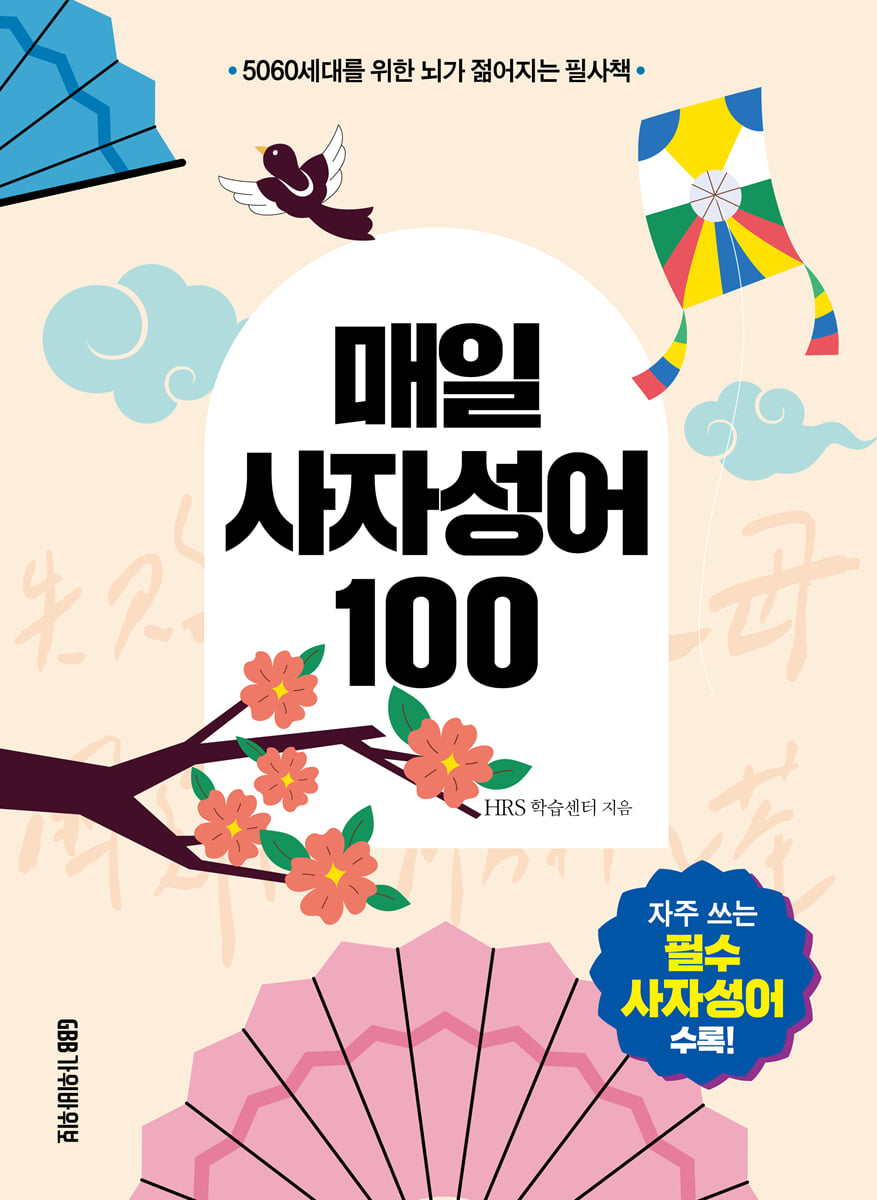 |
Description
Book Introduction
▼ Idioms containing wisdom about human relationships and life
Idioms are four-character Chinese character expressions that have been passed down through the ages, and contain rich metaphors and lessons in their simplicity.
However, this does not mean that the four-character idiom is simply an old story.
It is still a valid life wisdom today and an important key to understanding society.
Not only that, it enriches our language and helps us understand history and culture, deepening and broadening our way of thinking.
When writing or speaking, using idioms appropriately will greatly enrich your expressions.
For example, 'Hyeongseoljigong (螢雪之功)' is a saying that honors the efforts of ancient scholars who did not give up on their studies even in difficult circumstances, and 'Yugongisan (愚公移山)' emphasizes the importance of persistent effort.
In particular, since it contains a lot of content about human relationships, life, and wisdom, people in their 50s and 60s will be able to empathize with and understand its meaning more deeply.
This book, consisting of 100 basic idioms frequently used in daily life, is divided into 10 topics: 'Scholarship and Studying', 'Wisdom and Conduct', 'Words and Actions', 'Emotions and Human Relationships', 'Crisis and Conflict', 'Success and Failure', 'Life and Philosophy', 'Morality and Justice', 'Change and Nature', and 'People and Psychology', and helps each generation reflect on and empathize with the experiences and emotions they encounter in life.
Idioms are four-character Chinese character expressions that have been passed down through the ages, and contain rich metaphors and lessons in their simplicity.
However, this does not mean that the four-character idiom is simply an old story.
It is still a valid life wisdom today and an important key to understanding society.
Not only that, it enriches our language and helps us understand history and culture, deepening and broadening our way of thinking.
When writing or speaking, using idioms appropriately will greatly enrich your expressions.
For example, 'Hyeongseoljigong (螢雪之功)' is a saying that honors the efforts of ancient scholars who did not give up on their studies even in difficult circumstances, and 'Yugongisan (愚公移山)' emphasizes the importance of persistent effort.
In particular, since it contains a lot of content about human relationships, life, and wisdom, people in their 50s and 60s will be able to empathize with and understand its meaning more deeply.
This book, consisting of 100 basic idioms frequently used in daily life, is divided into 10 topics: 'Scholarship and Studying', 'Wisdom and Conduct', 'Words and Actions', 'Emotions and Human Relationships', 'Crisis and Conflict', 'Success and Failure', 'Life and Philosophy', 'Morality and Justice', 'Change and Nature', and 'People and Psychology', and helps each generation reflect on and empathize with the experiences and emotions they encounter in life.
- You can preview some of the book's contents.
Preview
index
Chapter 1: Learning is Fun - Academics and Studying
Brain-Rejuvenating Idiom Quiz 22
Chapter 2: A Wonderful Life: Wisdom and Worldly Conduct
Brain-Rejuvenating Idiom Quiz 36
Chapter 3: The Weight of Words, the Power of Actions - Words and Actions
50 Brain-Rejuvenating Idiom Quizzes
Chapter 4: No One Likes Me - Emotions and Human Relationships
Brain-Rejuvenating Idiom Quiz 64
Chapter 5: Things Can't Always Be Good - Crisis and Conflict
Brain-Rejuvenating Idiom Quiz 78
Chapter 6: Without Failure, There Can Be No Success - Success and Failure
Brain-Rejuvenating Idiom Quiz 92
Chapter 7: Everything Perishes - Life and Philosophy
Brain-Rejuvenating Idiom Quiz 106
Chapter 8: The Weight of Righteousness - Morality and Justice
Brain Rejuvenating Idiom Quiz 120
Chapter 9: The Tale of Saengongjima - Nature, Law, and Change
Brain-Rejuvenating Idiom Quiz 134
Chapter 10: Our Hearts Are Complex - Characters and Psychology
Brain-Rejuvenating Idiom Quiz 148
Correct answer 150
Search
Brain-Rejuvenating Idiom Quiz 22
Chapter 2: A Wonderful Life: Wisdom and Worldly Conduct
Brain-Rejuvenating Idiom Quiz 36
Chapter 3: The Weight of Words, the Power of Actions - Words and Actions
50 Brain-Rejuvenating Idiom Quizzes
Chapter 4: No One Likes Me - Emotions and Human Relationships
Brain-Rejuvenating Idiom Quiz 64
Chapter 5: Things Can't Always Be Good - Crisis and Conflict
Brain-Rejuvenating Idiom Quiz 78
Chapter 6: Without Failure, There Can Be No Success - Success and Failure
Brain-Rejuvenating Idiom Quiz 92
Chapter 7: Everything Perishes - Life and Philosophy
Brain-Rejuvenating Idiom Quiz 106
Chapter 8: The Weight of Righteousness - Morality and Justice
Brain Rejuvenating Idiom Quiz 120
Chapter 9: The Tale of Saengongjima - Nature, Law, and Change
Brain-Rejuvenating Idiom Quiz 134
Chapter 10: Our Hearts Are Complex - Characters and Psychology
Brain-Rejuvenating Idiom Quiz 148
Correct answer 150
Search
Detailed image

Publisher's Review
▼ 《100 Daily Idioms》 that can simultaneously improve cognitive ability and culture
《100 Daily Idioms》 is designed to help you obtain intellectual stimulation in your daily life by writing, learning, and memorizing four-character idioms, and to naturally improve your memory and concentration.
By following along and learning the meaning of each page every day, you can expect to improve your cognitive function and prevent dementia.
Moreover, it is not just a simple copy-and-paste activity, but also contains interesting conversations and examples of how to use the four-character idioms in everyday life, breaking the stereotype that “writing Chinese characters is boring” and allowing people to naturally learn four-character idioms through conversation and humor.
《100 Daily Idioms》 recommends the 'copywriting' method of memorizing by writing by hand.
This goes beyond simple memorization and is effective in helping you internalize the meaning of idioms with your fingertips.
Readers will be able to build their own knowledge by copying one page a day, and naturally incorporate the four-character idioms they have learned in conversations with family and friends, enabling them to communicate confidently and wisely.
Idioms are no longer the exclusive domain of students.
The 5060 generation, who have endured the weight of life, is the generation that can most deeply understand and embody its meaning.
"100 Daily Idioms" is a book that will give the joy of learning to the 5060 generation while helping them reflect on the wisdom of life.
▼ How to Use 《100 Daily Idioms》
1.
Write one page a day, regularly
Pick a specific time of day, such as right after waking up in the morning or before going to bed, and write down one page of four-character idioms.
Moving your hands stimulates your brain, which helps improve memory and concentration.
2.
Learn with a focus on understanding by reading the meaning and examples.
Rather than simply memorizing the example sentences in the four-character idioms, let's learn them by understanding the context and how they are used in each situation.
3.
Use it in your daily life
Be sure to use the four-character idioms you learned that day naturally in conversations, text messages, and social media.
Wise and dignified expressions can transform your speech and writing and make it more memorable.
4.
Take the quiz
Take the quizzes at the end of each chapter with your family or friends.
It allows for intergenerational communication and doubles the learning effect.
《100 Daily Idioms》 is designed to help you obtain intellectual stimulation in your daily life by writing, learning, and memorizing four-character idioms, and to naturally improve your memory and concentration.
By following along and learning the meaning of each page every day, you can expect to improve your cognitive function and prevent dementia.
Moreover, it is not just a simple copy-and-paste activity, but also contains interesting conversations and examples of how to use the four-character idioms in everyday life, breaking the stereotype that “writing Chinese characters is boring” and allowing people to naturally learn four-character idioms through conversation and humor.
《100 Daily Idioms》 recommends the 'copywriting' method of memorizing by writing by hand.
This goes beyond simple memorization and is effective in helping you internalize the meaning of idioms with your fingertips.
Readers will be able to build their own knowledge by copying one page a day, and naturally incorporate the four-character idioms they have learned in conversations with family and friends, enabling them to communicate confidently and wisely.
Idioms are no longer the exclusive domain of students.
The 5060 generation, who have endured the weight of life, is the generation that can most deeply understand and embody its meaning.
"100 Daily Idioms" is a book that will give the joy of learning to the 5060 generation while helping them reflect on the wisdom of life.
▼ How to Use 《100 Daily Idioms》
1.
Write one page a day, regularly
Pick a specific time of day, such as right after waking up in the morning or before going to bed, and write down one page of four-character idioms.
Moving your hands stimulates your brain, which helps improve memory and concentration.
2.
Learn with a focus on understanding by reading the meaning and examples.
Rather than simply memorizing the example sentences in the four-character idioms, let's learn them by understanding the context and how they are used in each situation.
3.
Use it in your daily life
Be sure to use the four-character idioms you learned that day naturally in conversations, text messages, and social media.
Wise and dignified expressions can transform your speech and writing and make it more memorable.
4.
Take the quiz
Take the quizzes at the end of each chapter with your family or friends.
It allows for intergenerational communication and doubles the learning effect.
GOODS SPECIFICS
- Date of issue: August 1, 2025
- Page count, weight, size: 160 pages | 416g | 188*257*13mm
- ISBN13: 9791192156453
- ISBN10: 1192156455
You may also like
카테고리
korean


korean

![GQ KOREA Mark (Monthly): December [2025]](http://librairie.coreenne.fr/cdn/shop/files/8ef265dbbfbf186523ed75ba7319009d.jpg?v=1765340328&width=3840)


