

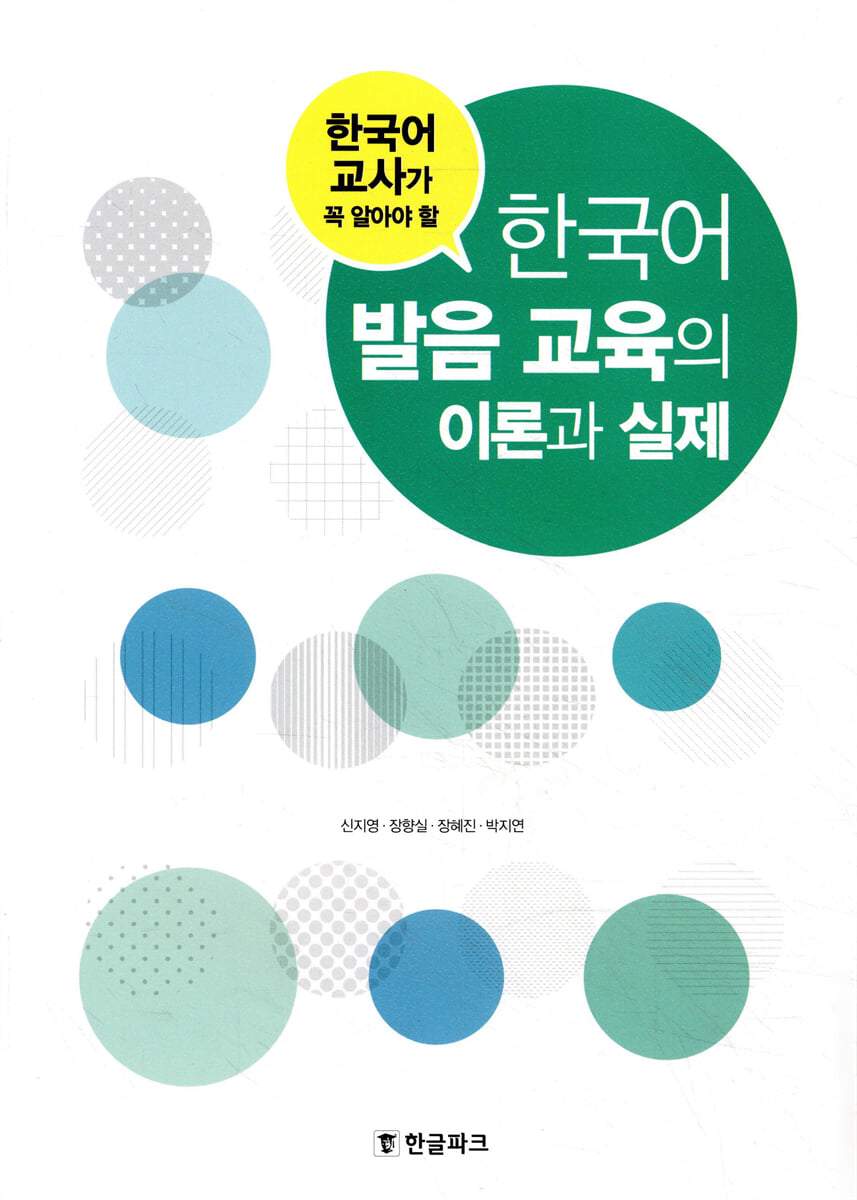
Theory and Practice of Korean Pronunciation Education
 |
Description
Book Introduction
This book provides a detailed explanation of practical methods for teaching pronunciation based on theoretical explanations of Korean phonology. It not only provides the basic knowledge of Korean phonology and phonetics that a Korean teacher should have, but also provides methods for teaching this effectively to learners, organized from the perspective of a Korean teacher.
index
Part 1: Theory
Chapter 1: The Need for Pronunciation Education
Chapter 2 Characteristics of Korean Speech Sounds
2.1 The sounds that make up the Korean language
2.1.1 Korean consonant system
2.1.2 Vowel System of Korean
2.2 Prosodic units in Korean
2.2.1 Syllable
2.2.2 Phonological words
2.2.3 Phonological structure
2.2.4 Intonation
2.3 Phonological phenomena in Korean
2.3.1 Phonological phenomena caused by structural constraints of speech sounds
2.3.2 Phonological phenomena caused by morphological conditions
Chapter 3: Presentation order of pronunciation education content
3.1 Phonemes and Syllables
3.1.1 Neutral vowels
3.1.2 Initial consonants
3.1.3 Final consonants
3.2 Phonological rules
3.2.1 Phonological rules requiring teaching and learning
3.2.2 Order of presentation of phonological rules
Chapter 4: Pronunciation Teaching Methods and Pronunciation Assessment
4.1 Principles of Pronunciation Education
4.2 Structure of Pronunciation Classes
4.3 Available teaching techniques and tools
4.3.1 Technique
4.3.2 Tools and Media Utilized
4.4 Pronunciation Assessment
4.4.1 Areas of Pronunciation Assessment
4.4.2 Criteria for pronunciation evaluation
Part 2: Actual
Chapter 5: Pronunciation Errors and Solutions for Korean Learners (I): Phonological Errors
5.1 Errors made by Chinese learners
5.1.1 Single vowels
5.1.2 Flat, hard, and aspirated sounds of initial consonants
5.1.3 Vowel /ㄹ/
5.1.4 Final consonants
5.2 Errors made by Japanese learners
5.2.1 Single vowels
5.2.2 Flat, hard, and aspirated sounds of initial consonants
5.2.3 Final consonants
5.3 Errors made by English learners
5.3.1 Single vowels
5.3.2 Flat, hard, and aspirated sounds of initial consonants
5.3.3 Final consonants
5.4 Treatment of phonetic errors
5.4.1 Single vowels
5.4.2 Flat, hard, and aspirated sounds of initial consonants
5.4.3 Vowel /ㄹ/
5.4.4 Final consonants
Chapter 6: Pronunciation Errors and Solutions for Korean Learners (II): Intonation Errors
6.1 Errors made by Chinese learners
6.1.1 Phonological structure
6.1.2 Intonation
6.2 Errors made by Japanese learners
6.2.1 Phonological structure
6.2.2 Intonation
6.3 Errors made by English learners
6.3.1 Phonological structure
6.3.2 Intonation
6.4 How to deal with intonation errors
6.4.1 Breaking up
6.4.2 Phonological structure
supplement
How to Use Phonetic Analysis Tools for Teaching Korean Pronunciation
Chapter 1: The Need for Pronunciation Education
Chapter 2 Characteristics of Korean Speech Sounds
2.1 The sounds that make up the Korean language
2.1.1 Korean consonant system
2.1.2 Vowel System of Korean
2.2 Prosodic units in Korean
2.2.1 Syllable
2.2.2 Phonological words
2.2.3 Phonological structure
2.2.4 Intonation
2.3 Phonological phenomena in Korean
2.3.1 Phonological phenomena caused by structural constraints of speech sounds
2.3.2 Phonological phenomena caused by morphological conditions
Chapter 3: Presentation order of pronunciation education content
3.1 Phonemes and Syllables
3.1.1 Neutral vowels
3.1.2 Initial consonants
3.1.3 Final consonants
3.2 Phonological rules
3.2.1 Phonological rules requiring teaching and learning
3.2.2 Order of presentation of phonological rules
Chapter 4: Pronunciation Teaching Methods and Pronunciation Assessment
4.1 Principles of Pronunciation Education
4.2 Structure of Pronunciation Classes
4.3 Available teaching techniques and tools
4.3.1 Technique
4.3.2 Tools and Media Utilized
4.4 Pronunciation Assessment
4.4.1 Areas of Pronunciation Assessment
4.4.2 Criteria for pronunciation evaluation
Part 2: Actual
Chapter 5: Pronunciation Errors and Solutions for Korean Learners (I): Phonological Errors
5.1 Errors made by Chinese learners
5.1.1 Single vowels
5.1.2 Flat, hard, and aspirated sounds of initial consonants
5.1.3 Vowel /ㄹ/
5.1.4 Final consonants
5.2 Errors made by Japanese learners
5.2.1 Single vowels
5.2.2 Flat, hard, and aspirated sounds of initial consonants
5.2.3 Final consonants
5.3 Errors made by English learners
5.3.1 Single vowels
5.3.2 Flat, hard, and aspirated sounds of initial consonants
5.3.3 Final consonants
5.4 Treatment of phonetic errors
5.4.1 Single vowels
5.4.2 Flat, hard, and aspirated sounds of initial consonants
5.4.3 Vowel /ㄹ/
5.4.4 Final consonants
Chapter 6: Pronunciation Errors and Solutions for Korean Learners (II): Intonation Errors
6.1 Errors made by Chinese learners
6.1.1 Phonological structure
6.1.2 Intonation
6.2 Errors made by Japanese learners
6.2.1 Phonological structure
6.2.2 Intonation
6.3 Errors made by English learners
6.3.1 Phonological structure
6.3.2 Intonation
6.4 How to deal with intonation errors
6.4.1 Breaking up
6.4.2 Phonological structure
supplement
How to Use Phonetic Analysis Tools for Teaching Korean Pronunciation
Publisher's Review
This book systematically covers the basic knowledge of Korean phonology that teachers need to know for Korean pronunciation education, methods for effectively teaching this to learners, and types of pronunciation errors by language group.
In Part 1, Theory
- Contains basic knowledge of Korean phonology that teachers need to know.
- We covered the pronunciation teaching methods that teachers need to know.
- The order of presentation of content elements, from sounds such as consonants and vowels to syllables, sound rules, and intonation, is presented.
In the second part, the actual part
- We covered the types of pronunciation errors, their causes, and solutions for Chinese, Japanese, and English speakers, who are representative foreign learners of Korean.
- We provide sample lesson plans for each area so that teachers can use them in actual classes.
In Part 1, Theory
- Contains basic knowledge of Korean phonology that teachers need to know.
- We covered the pronunciation teaching methods that teachers need to know.
- The order of presentation of content elements, from sounds such as consonants and vowels to syllables, sound rules, and intonation, is presented.
In the second part, the actual part
- We covered the types of pronunciation errors, their causes, and solutions for Chinese, Japanese, and English speakers, who are representative foreign learners of Korean.
- We provide sample lesson plans for each area so that teachers can use them in actual classes.
GOODS SPECIFICS
- Date of publication: August 7, 2015
- Page count, weight, size: 256 pages | 450g | 182*257mm
- ISBN13: 9788955186840
- ISBN10: 8955186843
You may also like
카테고리
korean


korean

![ELLE 엘르 스페셜 에디션 A형 : 12월 [2025]](http://librairie.coreenne.fr/cdn/shop/files/b8e27a3de6c9538896439686c6b0e8fb.jpg?v=1766436872&width=3840)


